Every now and again one comes across a piece of Ham Radio History. Anita and I had this experience recently during our vacation in Florida. For example, we can across an artifact that we had heard about from Charle, W1CBD but had never actually seen during a recent visit to Florida.
Pretty Basic HT Transceiver
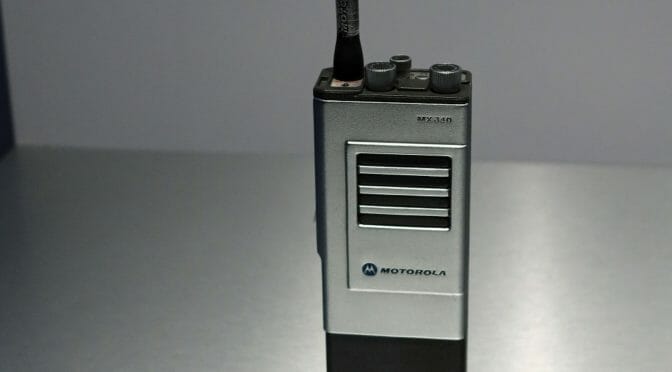
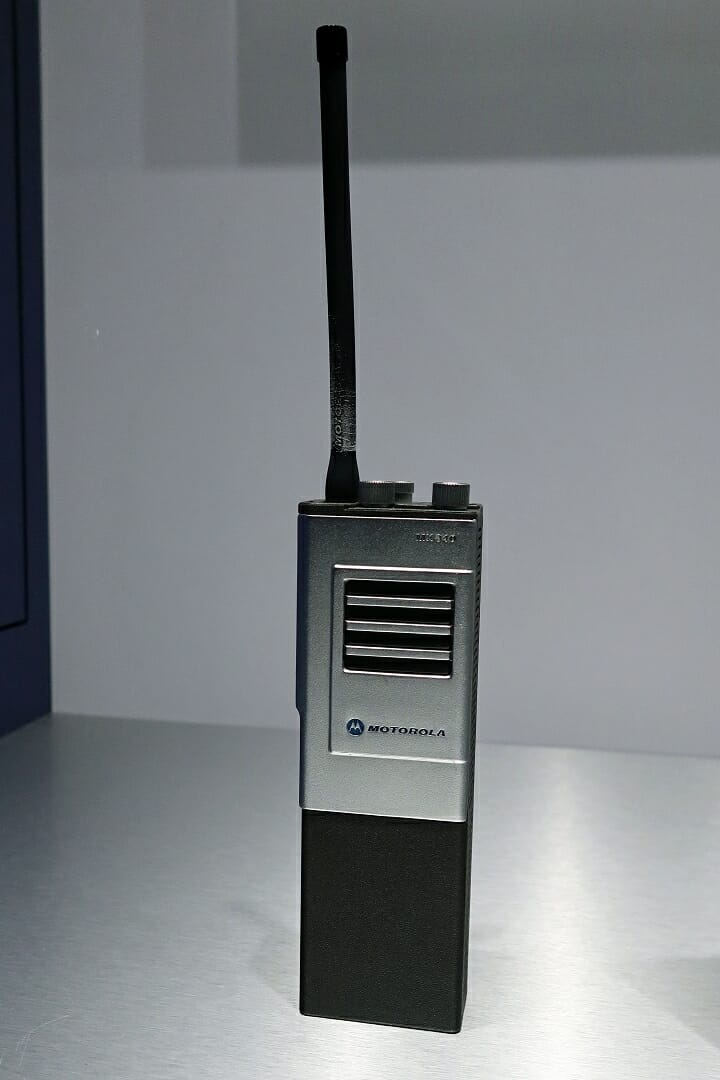
This is a Motorola MX-340. This radio was a 5w UHF (or sometimes VHF) FM rig that was popular for commercial applications in the 1970s. You can learn more about the rig here.
A Very Special HT Transceiver
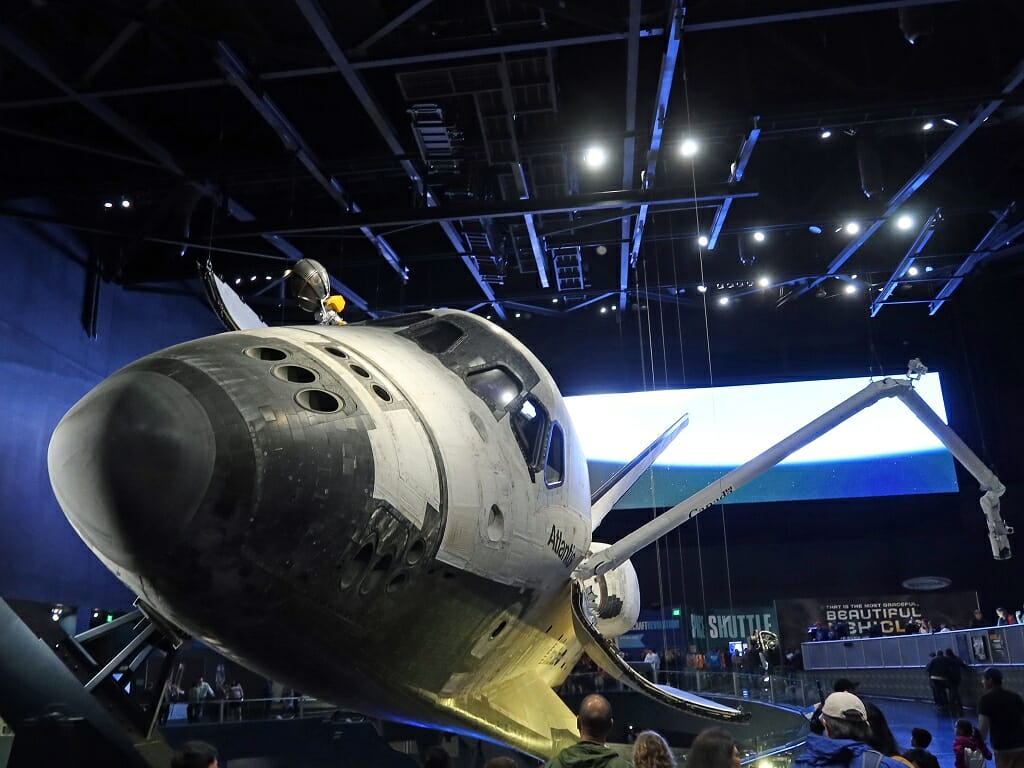
So I bet you are wondering “What makes this old HT so special? Why is it a piece of Ham Radio History?”. Well, here’s a hint – it flew aboard this:
Space Shuttle Atlantis On Display At The Kennedy Space Center, Fla.
Yup, the little HT flew aboard the Space Shuttle. Here’s more about our little HTs role via an excerpt from Wikipedia :
Ham Radio has been a STEM learning tool for a very long time. An early example of this was the Shuttle Amateur Radio Experiment (SAREX) program. SAREX was a partnership between NASA, ARISS, and the ARRL. Its success in bringing Ham Radio to schools and other educational venues led, in part, to the creation of ARISS.
How All Of This Effects NARS
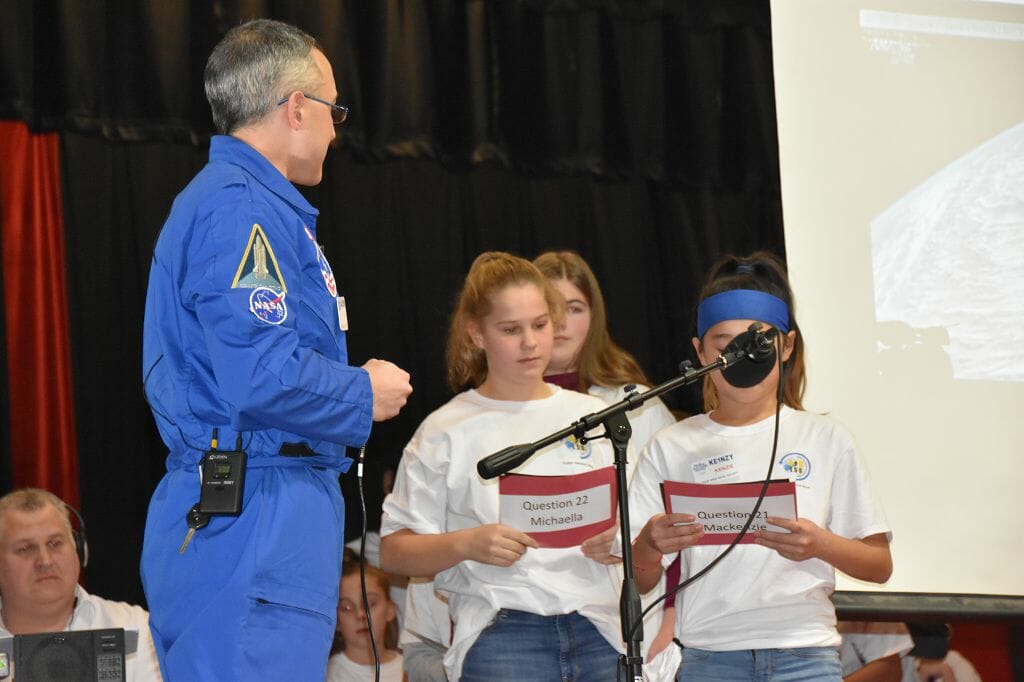
HMS Students Talking to the ISS
And ARISS, of course, has provided NARS the opportunity to be part of bringing contacts with astronauts aboard the International Space Station (ISS) to schools here in New Hampshire, around the United States, and around the world.
There are many such examples of Ham Radio History that resulted in great things for many people. Perhaps you know of one? If so, please consider taking writing about it here on our Blog.
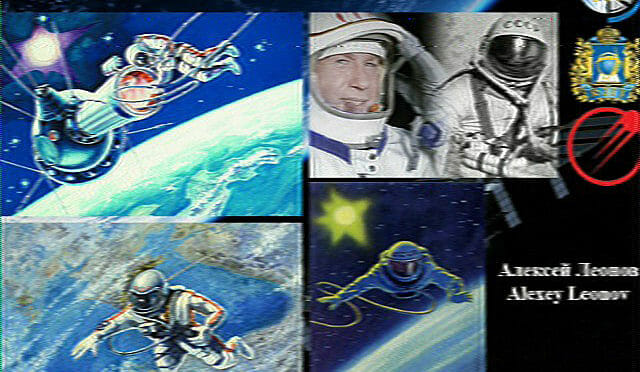
Slow-Scan TV from the International Space Station (ISS) was on the air again late in December 2019. The ISS SSTV event was in memory of cosmonaut Alexei Leonov.
Receiving SSTV Images From the ISS
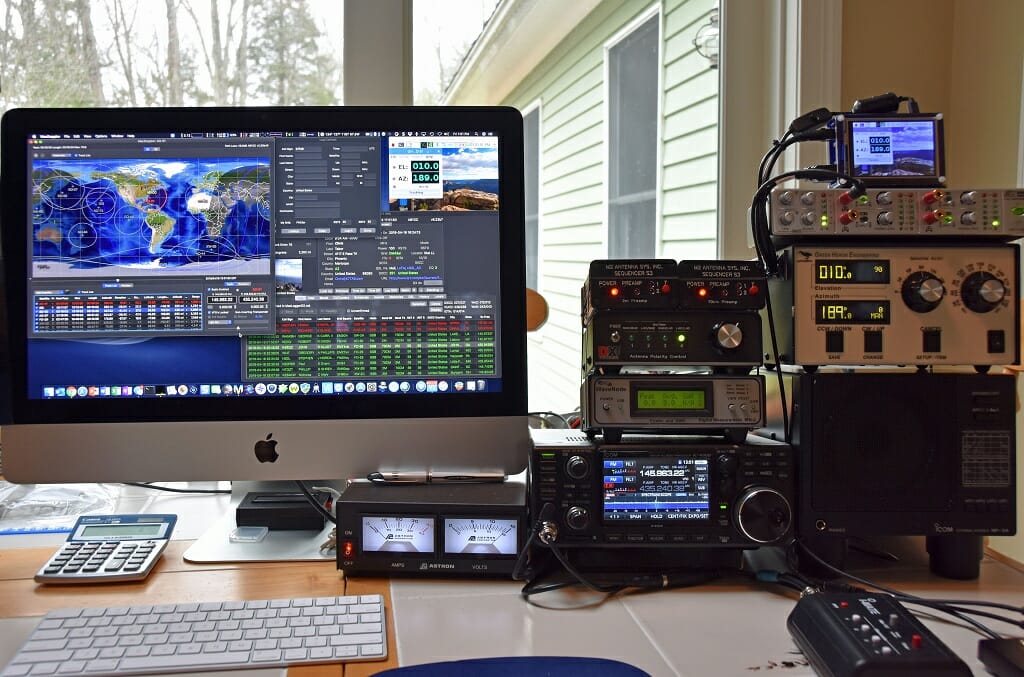
AB1OC-AB1QB Satellite Station 4.0
We had our satellite station running to track the ISS and capture the SSTV images during the event.
Dec 2019 ISS SSTV Image
There were quite a few good ISS passes over our area during the event and we were able to capture some nice images.
The video above shows the reception of an SSTV image from the ISS. The images are transmitted on the 2m band using a standard SSTV format. We use a program called MMSSTV to decode the transmissions and display the images.
We had fun receiving the SSTV event images. The gallery above contains all of the images that we received as part of the event. For future events, keep an eye on the ARISS SSTV Blog.
ARISS SSTV is currently on the air until 18:20 UTC on January 1st. The ISS SSTV event is in memory of cosmonaut Alexei Leonov.
ISS SSTV Image captured on 12/29/19
Here is an image that we captured on 12/29. The images will be sent continuously by the ISS and can be received during ISS passes over our area. You can find out the passes over your area by entering your grid square and elevation and choosing ISS at the following website: https://www.amsat.org/track/index.php
We hope you can have some fun receiving ISS SSTV event images. For future events, keep an eye on the ARISS SSTV Blog.
Radio Amateurs Developing Skills Worldwide
We use cookies to ensure that we give you the best experience on our website. If you continue to use this site we will assume that you are happy with it.