We received some very sad news recently. A long-time member and supporter of the Nashua Area Radio Society and Amateur Radio, Hamilton Stewart, K1HMS, has become a silent key.
I first met Hamilton at a NARS exam session where he earned his Extra Class license, by passing the Technician, General, and Extra exams all in one session. He became active with NARS and began contributing almost immediately. Hamilton made many contributions to NARS.
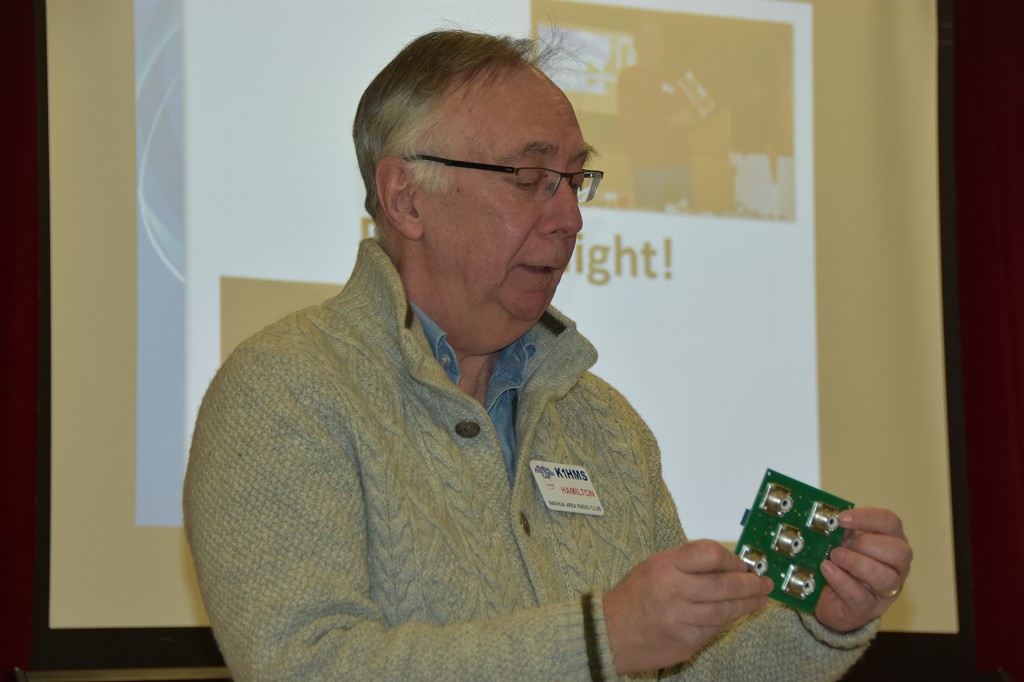
Hamilton served as an instructor for our license classes and presented some of the most difficult topics in a way students could understand. He was famous for his Yagi antenna demos, which will be missed at our license classes.
Hamilton explaining a design of his at Project Night
Hamilton was an engineer’s engineer – one of the best that I have had the pleasure to know. He would always take the time to patiently explain the most difficult ideas in simple terms, helping them master technical concepts. When members need help repairing a radio or another piece of gear, Hamilton helps them get back on the air. His workshop was impressive, and he really knew how to use his gear.
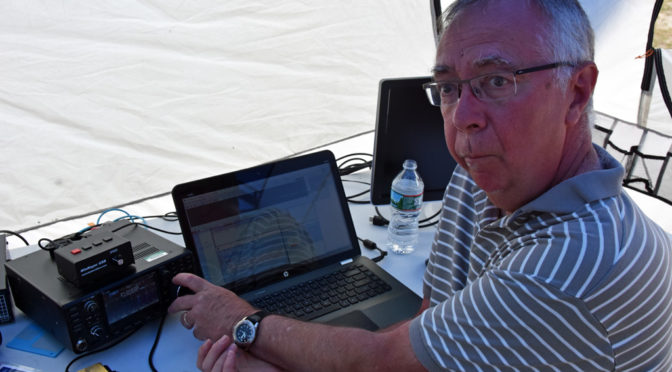
Hamilton, K1HMS Testing CW Stations
Hamilton loved Field Day and served as co-chairman. He was always there to help us build our stations and to operate them. We would find a way to pitch in and help with whatever the team needed to succeed at Field Day. He was always team-focused.
Hamilton was also a past Treasurer of NARS, and served on our non-profit incorporation/501(c)(3) committee
Hamilton loved to mentor and wrote many articles on our website to help newer folks learn about Amateur Radio station building, operating, and electronics. You can find his contributions in this area here.
It was a privilege to have known Hamilton. I have the highest respect for him as a person. Even when he was very sick and fighting to regain his health, he found time to continue contributing to NARS’ educational work and to share his knowledge and mentor others. I will miss him very much.
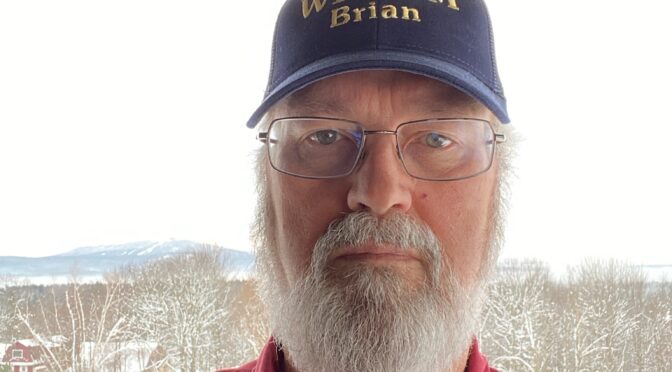
Bio for Brian Quick W1XMM: to understand how I got into HAM Radio, you first need to know when and why. I’d been an Amherst Fire Fighter and an Ambulance EMT for about 20 years. The Radios in the fire trucks were, in fact, HF (33MHz). We had a lot of interference from other statewide Fire Services. We did not have cell phones, or at least they were not popular yet. So, I wanted a backup communications method. I was first licensed in 2003 as a technician (no code) as N1PHO. I thought this would be an excellent way to communicate or at least be a good backup. I’d hoped that my wife would get her license, but that didn’t happen. Then, cell phones became a BIG thing, and the HAM radio gathered dust. I attended 2 Nashua Area Field Days in 2014/2015, mostly to help set up. During the 2015 field day a member told me that the radio does not make the station, the antenna does. You should spend three times more on the antenna than the radio. He told me to save up and buy a SteppIR when I could afford it. I became more interested and wanted to play in the big times, “HF.” So, I studied hard, and at the 2003 North East Boxborough EXPO, I went down to take my test and Passed. I attended Field Day 2016 but was too uncomfortable to man a station. But I found some nerve at my shack and got on the radio. My first antenna was a 4-band vertical, and my first radio was the same radio I have today, an Elecraft K3S. I’d spent three times more on the radio than the antenna, but I was saving up for that SteppIR. After a couple of OOPS transmissions on the extra band segments, I decided to get my Extra license. So, eight months after getting my General License, I passed my extra license with a little help from the club and their classes. I did get a SteppIR Vertical, and what a difference it made. Next was a used Mosely 3-band beam. That was awesome. And then, finally, a SteppIR DB18 Beam. What a HUGE difference! So much for the HAM in me.
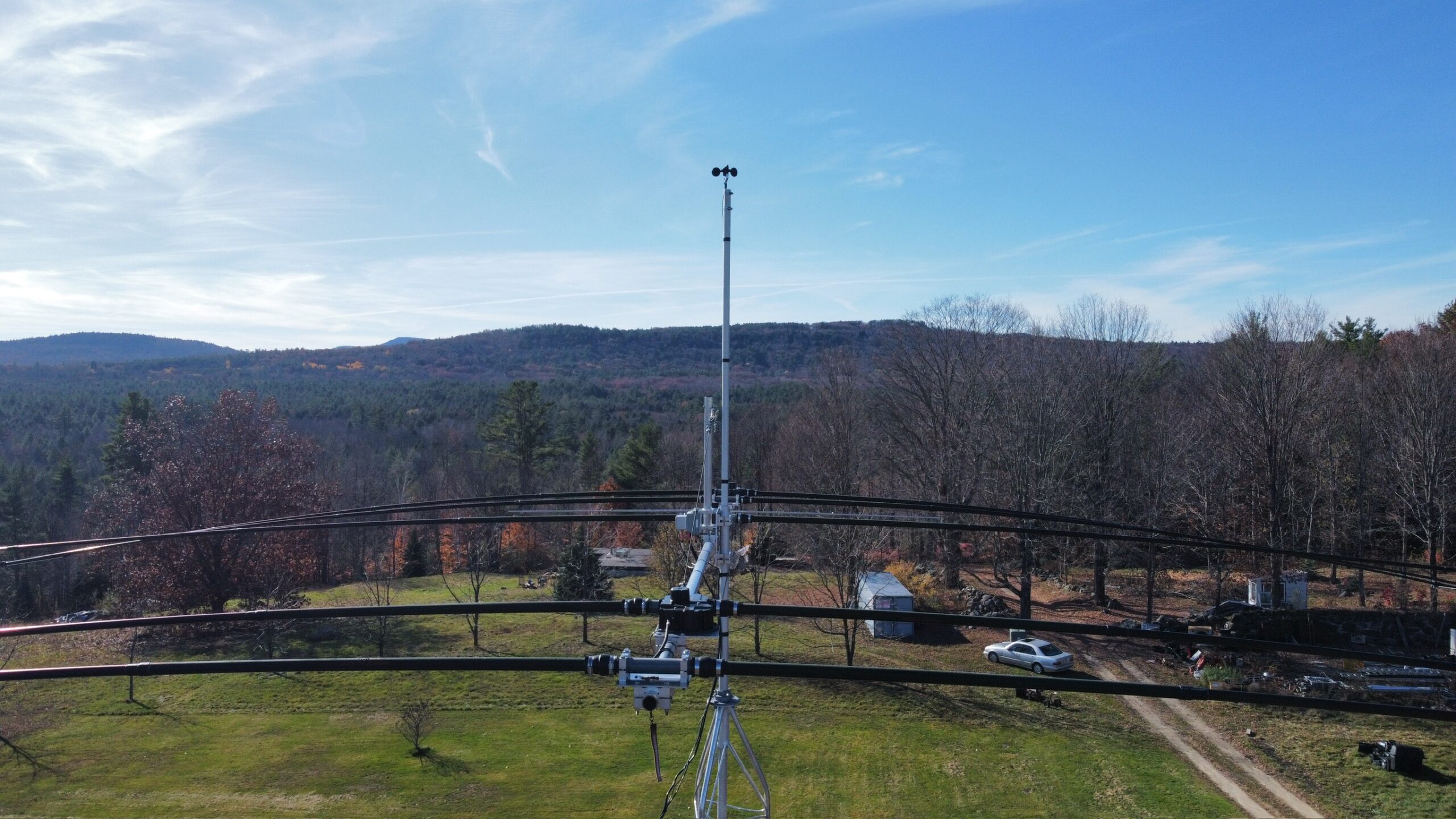
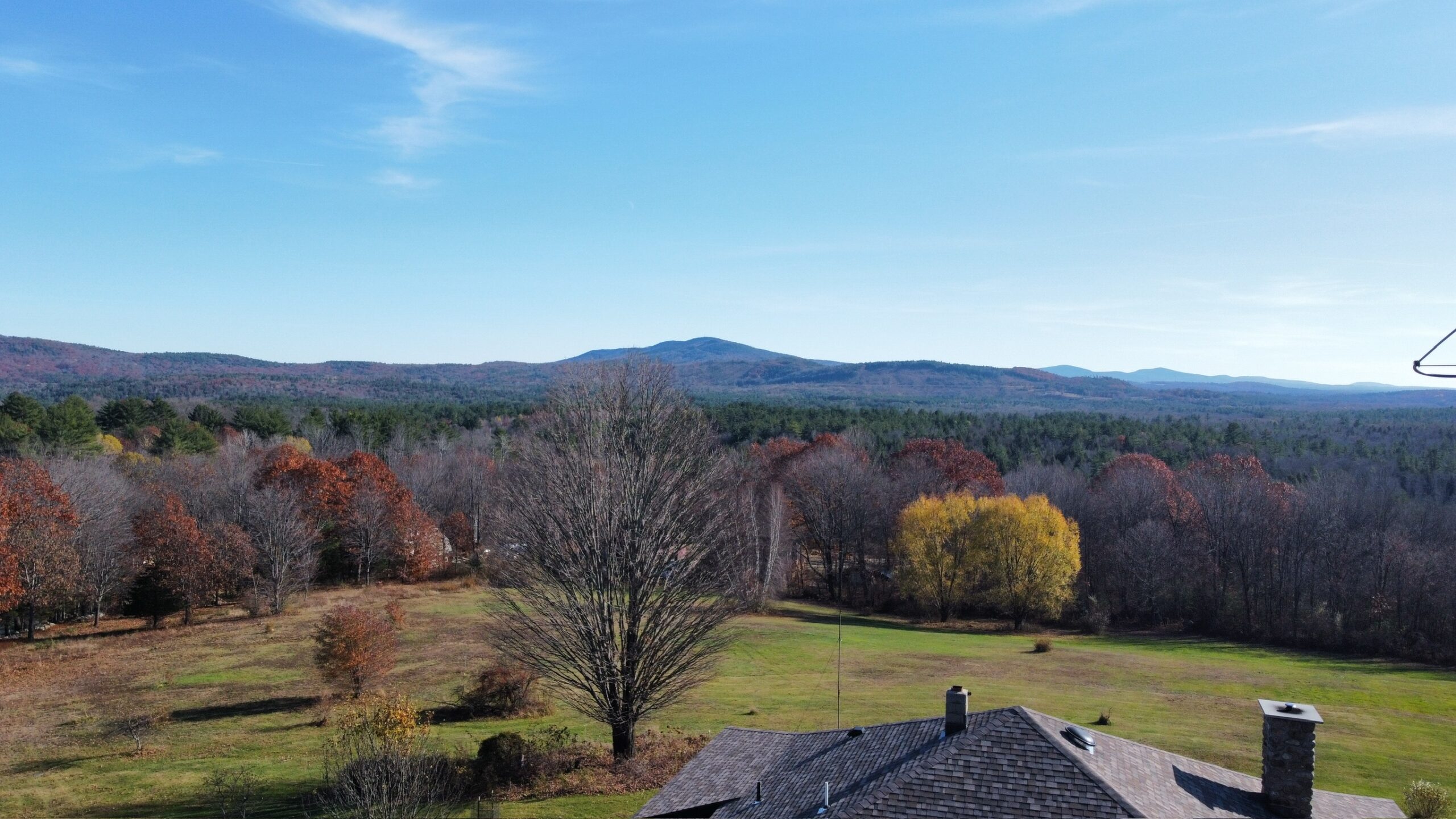
View from SteppIR DB-18 height, looking westDB-18 view looking South.
Now the BIO, I’m a Systems Engineer. Thirty-nine years with what is now BAE SYSTEMS. Prior to that, I was an Army ASA Intercept Radio Repairman (33C20). So, in a nutshell, I have a career in a field that listened to HF/VHF/UHF radio waves (Signal Intelligence), did the direction finding of that signal, and then JAM ’ed (prosecute) the intended receiver of that radio communications. Also known as Electronic Warfare. I “worked” on the hardware and did software integration and testing, but not as the operator. Of course, in order to do software integration, you need to know how to operate the system. There is a big difference between operating and knowing how to push buttons and testing that the system did what it was supposed to do. This is what really helped me make my superb station (yeah, maybe a little bias and/or pride). Understanding VSWR, signal loss due to cables, and a properly tuned antenna. I learned to use test equipment to test signal loss, VSWR, and power meters. It is so easy to over-drive an amplifier and not know it. This causes your signal to be distorted and/or creates clipping, and you, the operator, don’t know it because you don’t hear the transmitted signal.
What got me out of my stage fright was joining a NET. I found OMISS by accident and learned the communication skills needed to then work DX and finally contesting. I’m still not keen on the contesting because there are just too many rude people on HAM radio (maybe everywhere). OMISS Nets are structured; you can receive a call at any time and then call anyone on the NET when it is your turn. They use a free program (Netlogger) to see others on the NET and to see when it is your turn. It also has a feature allowing you to talk with the NET via text. They call it “Almost Instant Message” (AIM). It takes about 20 seconds to get broadcast to the whole NET. If you don’t understand something, ask via a text message. I now have Worked All States (WAS) on five different bands because of OMISS. They have NETs on eight different bands. 3 NETs every day: 20M, 40M, and 80M. Then, on the weekends, that’s when they have 10 NETs on those eight bands. 10M, 12M, 15M, 17M, 20M, 40M, 80M, and 160M, then a late 40M and late 80M. Many times, there are multiple DX stations with regulars from Hawaii and Alaska that join the NETs. OMISS is definitely a family of HAMs. Best of all, it’s only $10 for a lifetime membership. Yes, that was a sales pitch cause I’m a NET Control Station Operator.
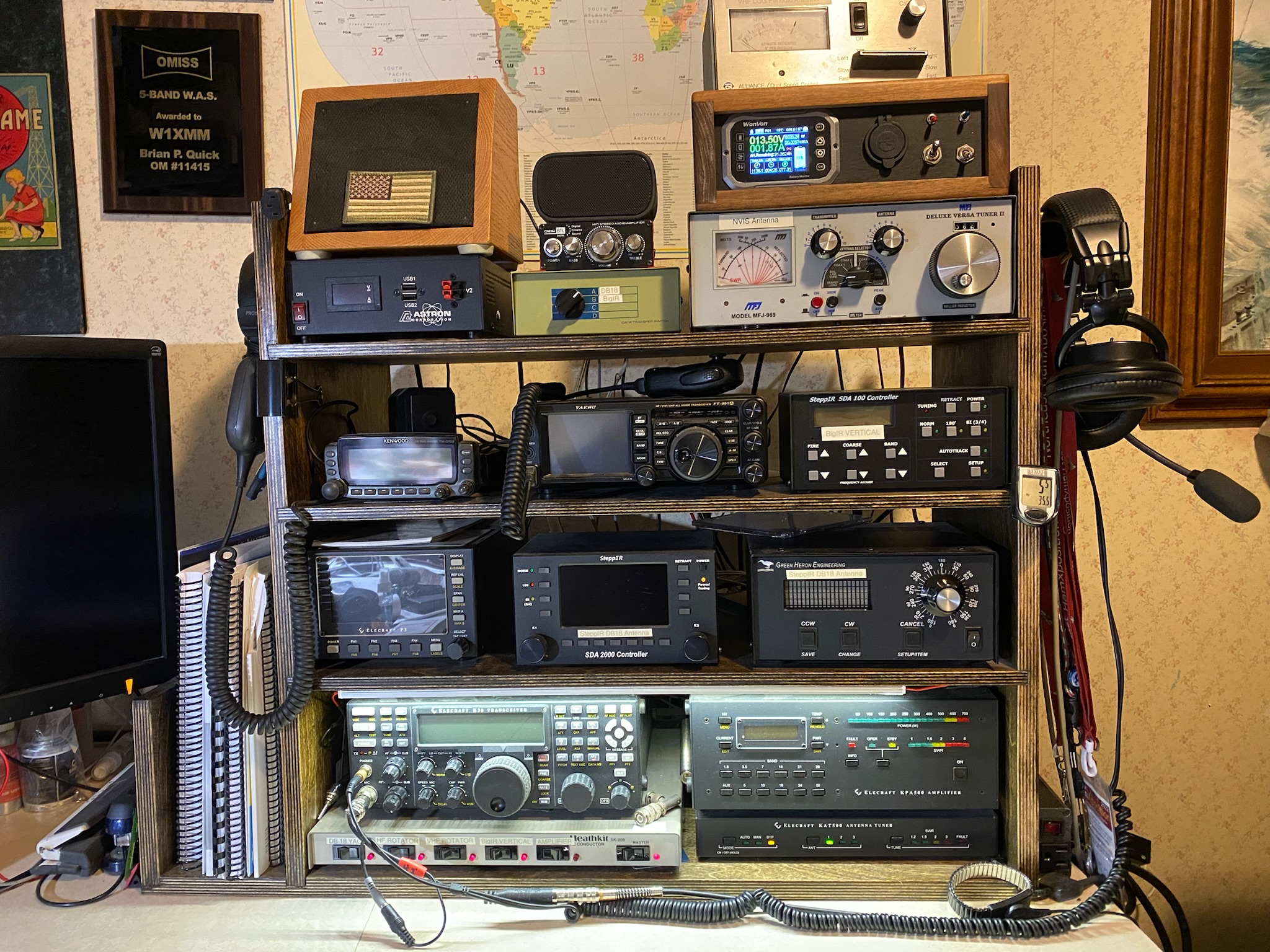
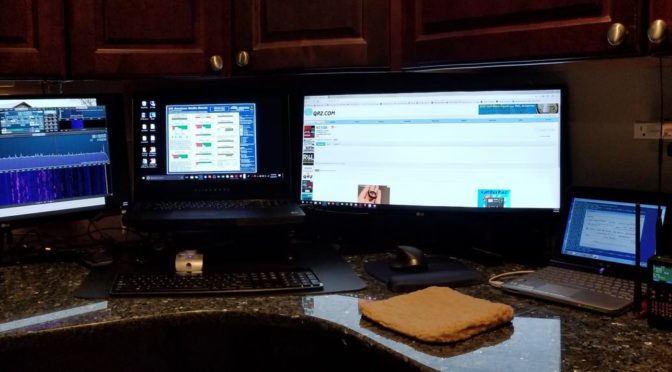
Ham Shack
I’m now retired and have that Elecraft K3S with a 500W amplifier connected up to a vertical SteppIR for when I work WSJT-X and the SteppIR DB-18 horizontal on a 40’ aluminum tower to work voice. I’ve moved to Antrim on top of a hill where I can see mountains in Massachusetts. What a view. Being away from the city and all of its electrical interference has made a huge difference. I picked a location where there were no power lines nearby, away from any automobile mechanics (their arc welding is a prime source of electrical noise), and on a hill.
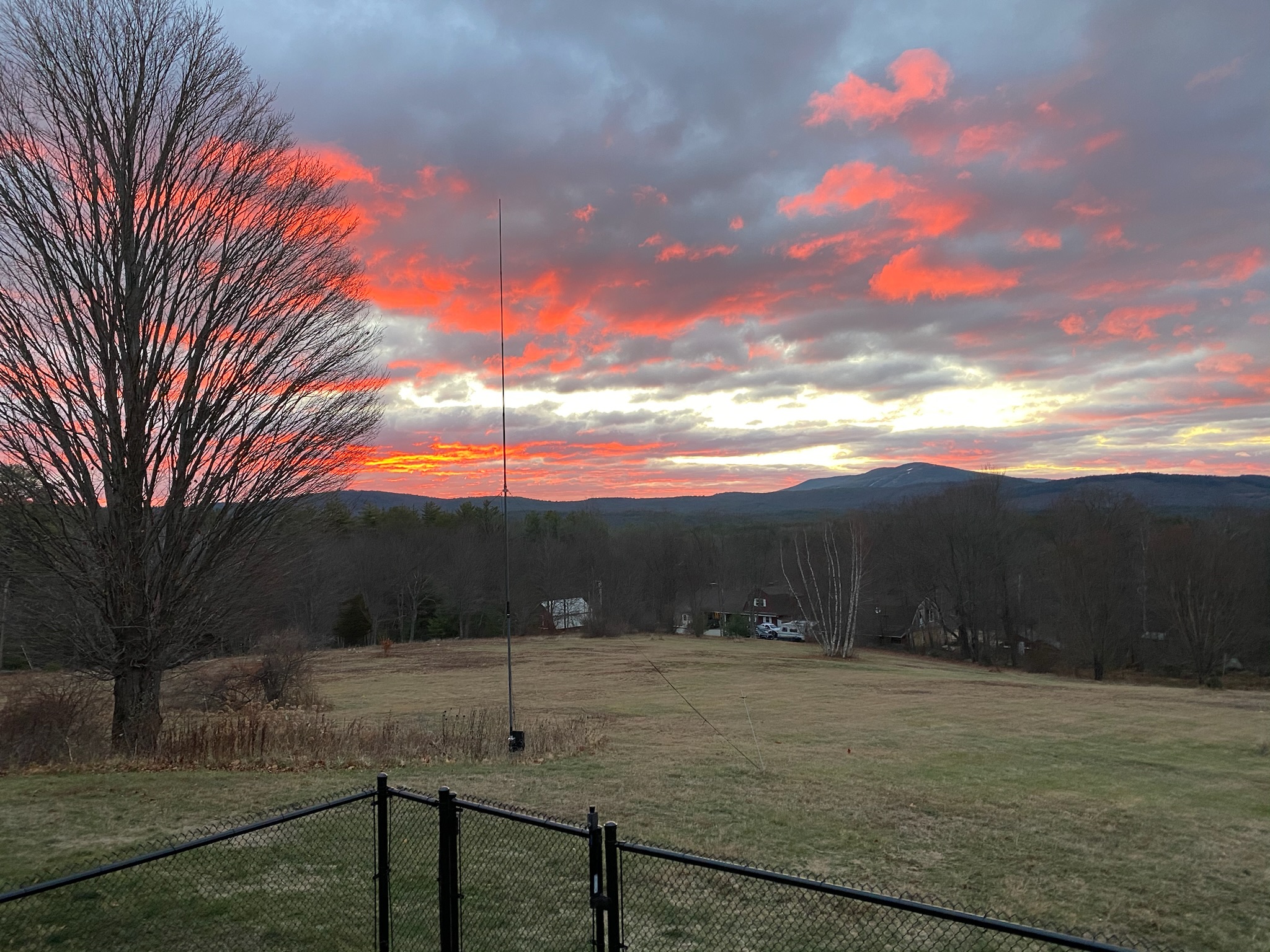
SteppIR Vertical in the backyard
Why a SteppIR antenna? The primary reason is that it always resonates at the frequency you are working. You see, a metal tape runs up and down the vertical hollow tube. The controller tells the stepping motor to reel out to 0.1-inch accuracy, which is the right amount of metal tape for the frequency at which you are working. You’ll never need a tuner with this setup. Is there a downside, yes. You can only work that frequency, unlike a tri-band antenna where, with some filters, you can work all three bands at the same time (like at our Field Day events). For the horizontal SteppIR that I have, there are 3 Stepping Motors that adjust two metal tapes at the same time but in opposite directions. Why 3, one for the director, one for the driven element, and one for the reflector. Now if you think about it, you can just as easily change the direction of the antenna by changing the director and the reflector antenna length. In fact, that is as easy as pushing a button on the controller “180˚ “. Now you’re talking to someone in Maine instead of the whole of the US. No waiting on a rotor to turn the beam around. In fact, they have a mode that makes your antenna bi-directional (no reflector).
I’m now trying very hard to learn CW. Our club has a severe lack of CW operators. It’s now February 2024, and I want to know the basics of CW by Field Day in June. It will be a huge commitment on my part to achieve this. In the Army, they give you eight weeks to learn it. I’ll be 70 this year and need the extra time. I started by using flash cards to learn the dits and dahs. DON’T DO THIS. CW needs to be learned by sound. I’ve joined “Long Island CW Clue” to help me learn CW. They have carousel classes (like steps), but you can join the class at any time and then move on to the next carousel. They start you at 15WPM. It allows you to learn the sound at a high speed, making it easier to move up in speed later. By learning the code via flashcards, my brain must translate the sound of dits and dahs to recognize the letter rather than the sound as a letter.
Nashua Area Radio Society activities.
· In 2016, I helped set up the towers
· In 2022, I was the Field Day Tower Lead guru.
· In 2023, I was the Field Day Leader.
· It’s now 2024, and I have been elected (I volunteered) to the position of Vice President. It’s a 2-year position.
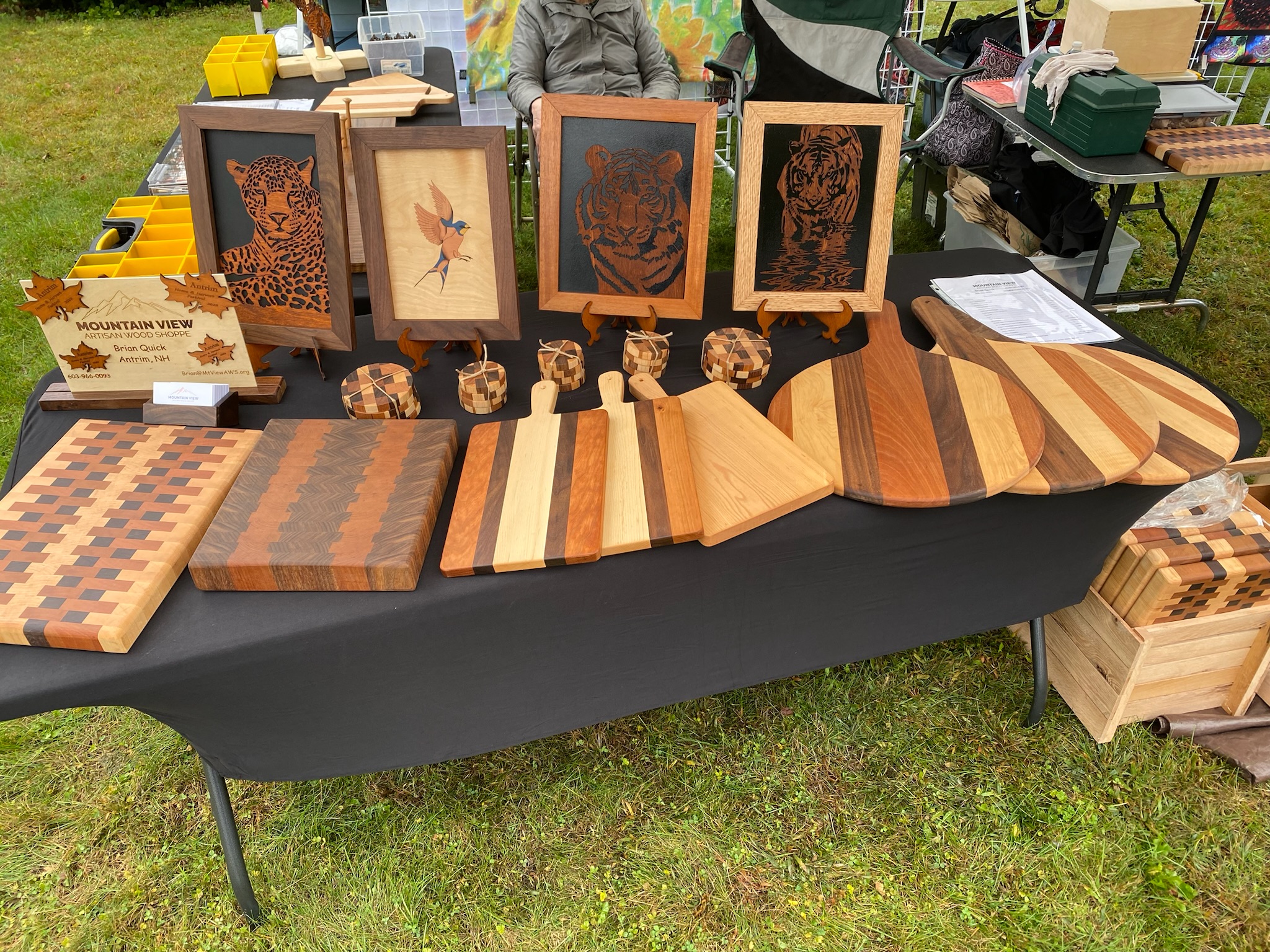
Other fun stuff I like to do is woodworking and DYI. I use a laser cutter to make wood inlays, Christmas Ornaments, Christmas lanterns, and other interesting things.
At the Antrim Craft Fair
Thanks and 73
Brian
W1XMM
This content is intended for the Nashua Area Radio Society’s use and not intended for worldwide web release.
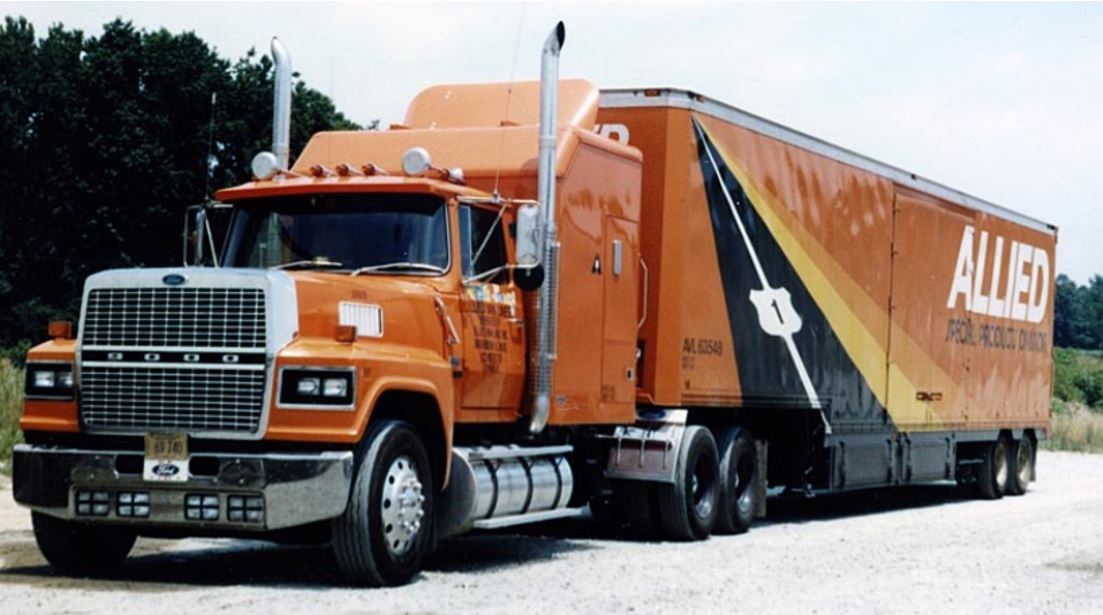
Hi, I’m Jon Turner, AC1EV and I’d like to tell you a bit about my Ham Radio Adventure. In late 2017, my wife Stephanie began pestering me to let her know what I wanted for Christmas. This was a perennial problem for us. I usually had problems thinking of something that was not ridiculous, like a new RV. I heard about a new thing called “SDR” radio and found out about the RSP1A SDR. It’s affordable and hooks up to a computer. There are lots of things to do with it. On Christmas morning, I had a new toy, and my adventure began. 30 years earlier I used to have a Sony ICF-2010 Shortwave radio that I listened to while I traveled the country in my job as an owner-operator trucker.
Jon’s 1984 Ford LTL 9000
In addition to the shortwave bands, it also had Ham bands and I explored them all. As a trucker, I also had a pretty good CB radio setup, including SSB so was not new to being behind the mike.
Training
After a month or so of listening to the RSP1A SDR, it was obvious to me that I needed to be able to join in on the conversations (now I call them QSOs) I was monitoring. After trucking, my second career was in IT, so I was very familiar with using internet resources to learn new technologies. I self-studied and prepared for the Technician exam, which I took with the Billerica Amateur Radio Society in Chelmsford, Ma at the end of February 2018. Already in study mode, I kept going and studying for the General exam. My self-study program was a combination of the ARRL Exam Prep books, ARRL Exam Review for Ham Radio™, and YouTube videos produced by the Hurst Amateur Radio Society in Texas. After I passed that exam, I began to build my station. I often visited Ham Radio Outlet in Salem, NH to buy items to build or improve my station. One day in mid-April I was talking with another customer there and mentioned that I was studying for the Amateur Extra test. He told me that his club, Nashua Area Radio Society was putting on a boot-camp license training for Extra the upcoming weekend! I was about halfway through my own studying for the test and decided to sign up for the training. That decision turned out to be one of the most significant of my life. Sure, I got the license that weekend, which was great, but more important was that I ended up joining the club.
Welcome to NARS
As a new ham I was eager to engage with the hobby and make contacts to far away exotic locations. I knew the basics of what Hams can do but didn’t realize how much more was available or what being a member of a first-rate ham club could offer to me. First, I started with building a station. I didn’t realize at the time that this part of the hobby would never really end. There is always something that needs to be tweaked or improved. When I began, I worked on getting my new IC-7300 and a 63-foot end-fed antenna to work.
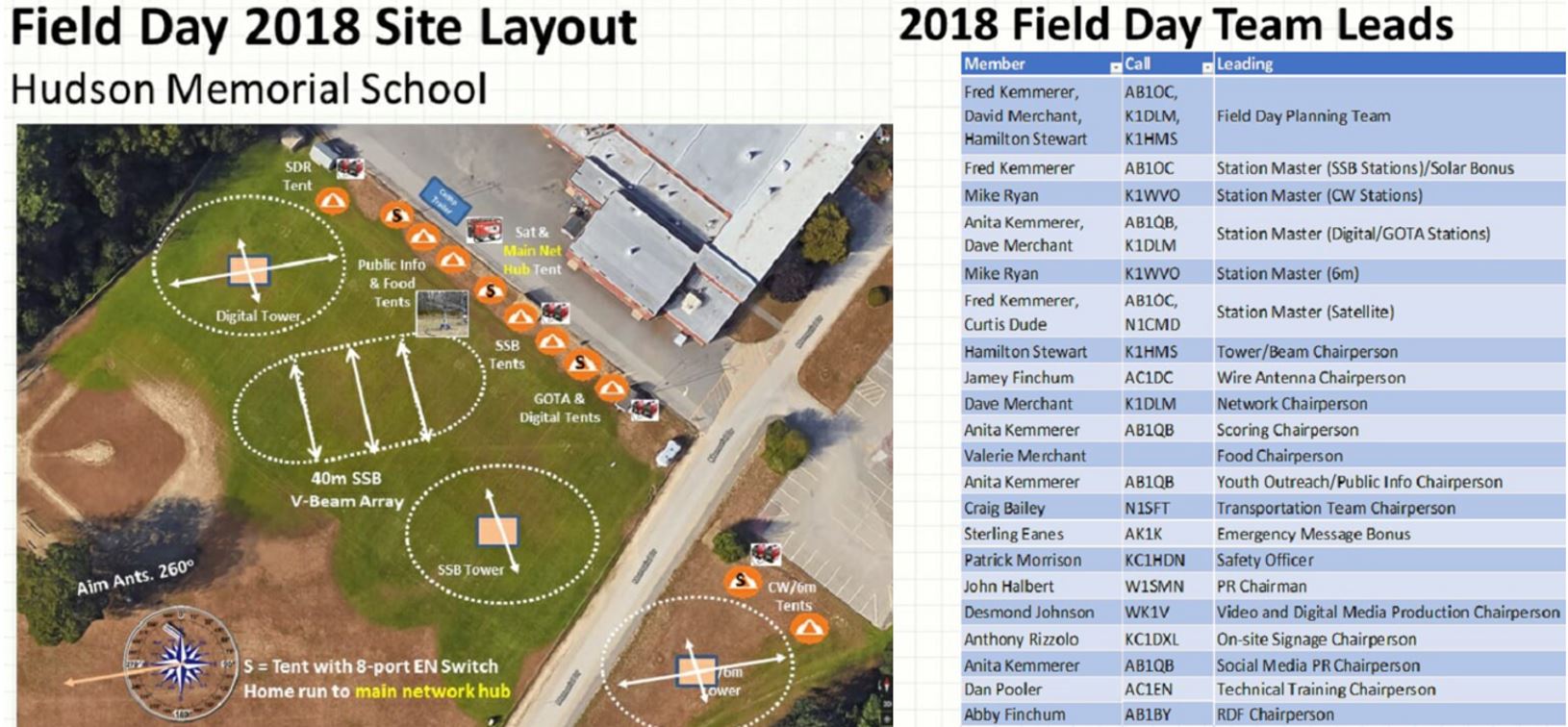
Field Day 2018
At the same time, the club was getting ready for Field Day 2018 and 13 Colonies. As a new member of the club and living 30 miles away, I hadn’t been involved with working on club projects and events by then. I went to visit Field Day to see what was going on and spent a few hours there with the club checking out the setup and taking pictures. The club had 10+ stations, 3 towers, and a 40-meter V-Beam and made over 2000 contacts. I had no idea of the scope of this event or how much planning and work was involved in it.
Field Day 2018 and Team Leads
Wow, once I saw this and had some time to think about it, I decided I wanted to be a part of it next year and also to join in on other projects and events with the club. It turns out I didn’t have long to wait.
I want to take a moment here to point out something about NARS, it is a primary goal of the club to give anyone who is interested in participating in any club activity the opportunity and support to help make that happen. Some organizations are so competitive that newbies are rarely allowed to have access to operate in special events or otherwise participate in the planning and setup of other club projects. I found out that Nashua Area Radio Society makes a deliberate effort to include all, especially new hams, or hams inexperienced with a particular technology in whatever activity is underway.
13 Colonies 2018
13 Colonies is a special event each year during the week of the 4th of July. This is an extremely popular event for hams around the world. In 2017 NARS was the top club and made NH the top state in the event, beating the next state, PA, by only 5 contacts! Only a few minutes of operating time over a 7-day event made the difference! An overly competitive club might want to restrict access to new or unproven operators to try and maximize the chances of repeating the win again. NARS’ philosophy was to bring as many members as interested in participating into the action and give them a chance to experience the event (and hobby) at the highest level.
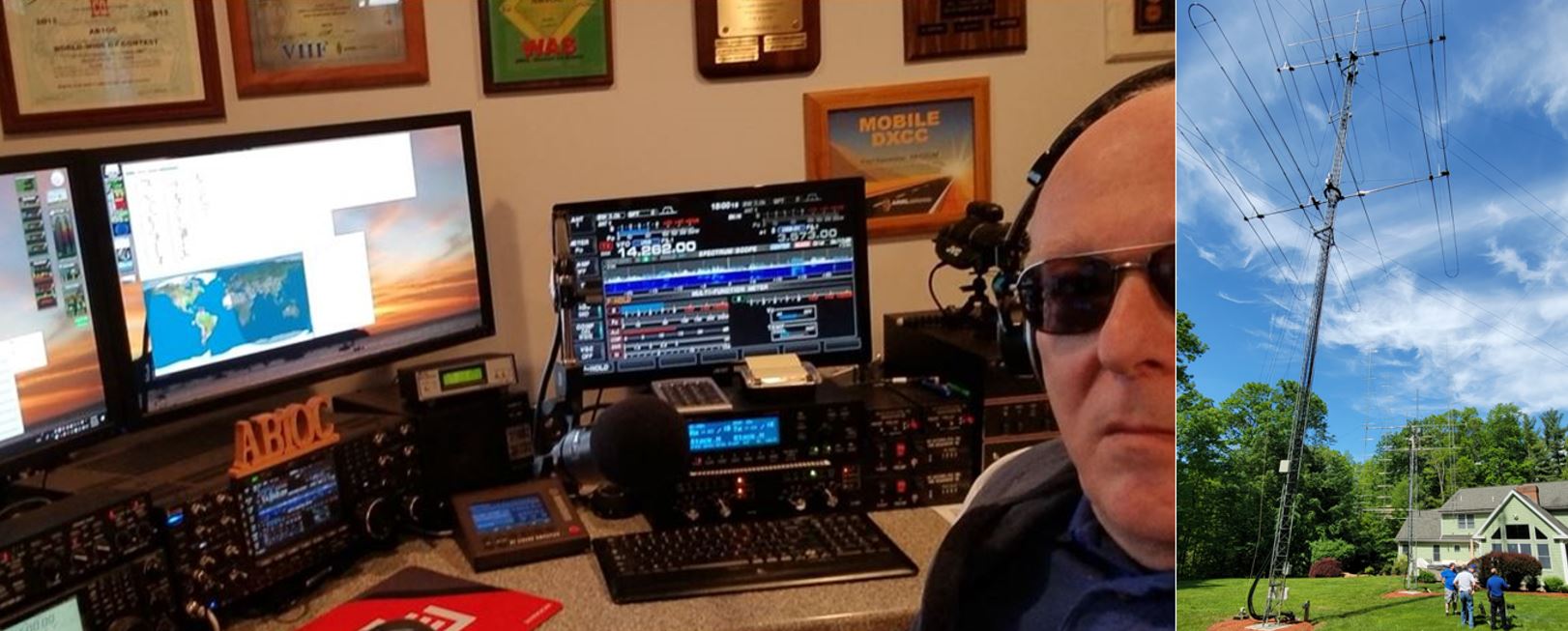
AC1EV at AB1OC-AB1QB Station
With only 2 months experience operating on HF SSB I had a chance to operate at the club’s president Fred (AB1OC) and wife Anita’s (AB1QB) world class station.
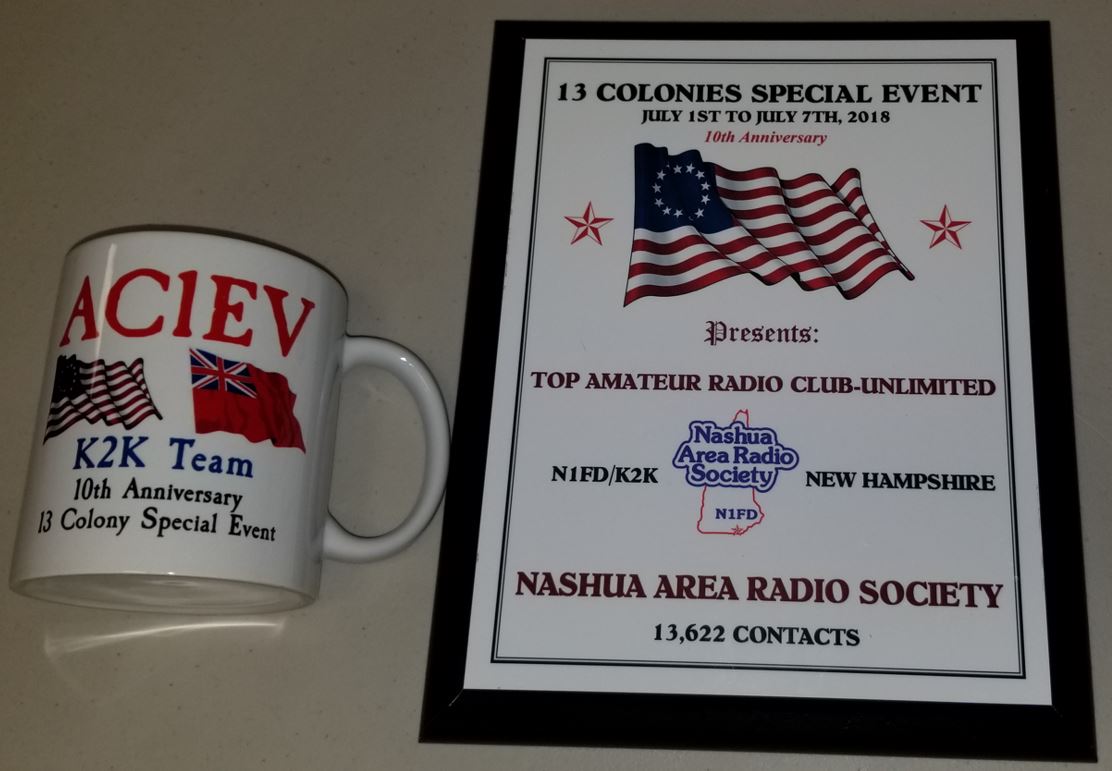
K2K Mug and Award
I was not just given a chance to operate, but to be included on the team of operators. I made a meaningful contribution to the club’s effort in the event. In July 2018 I had my Amateur Extra license for around 2 ½ months. According to QRZ.com, I had less than 250 QSOs in my log. Presently, I have 10,990 QSOs in my log. There are many more stories to tell about how I got here from there. This is just the beginning; I will continue my story in future posts.