2019 – A Hamvention to Remember
Fred, AB1OC and I have traveled to Dayton to the Hamvention just about every year since we were licensed in 2011. We have a great time each year, learning at Contest University and the Forums, visiting the vendors to check out our next purchase, and catching up with friends at the dinners and at the Hamvention. However, this year’s Hamvention will stand out as a Hamvention to remember in comparison to the rest as we had so many friends from the Nashua Area Radio Society to share it with.
Tuesday and Wednesday – Trip and Arrival in Dayton
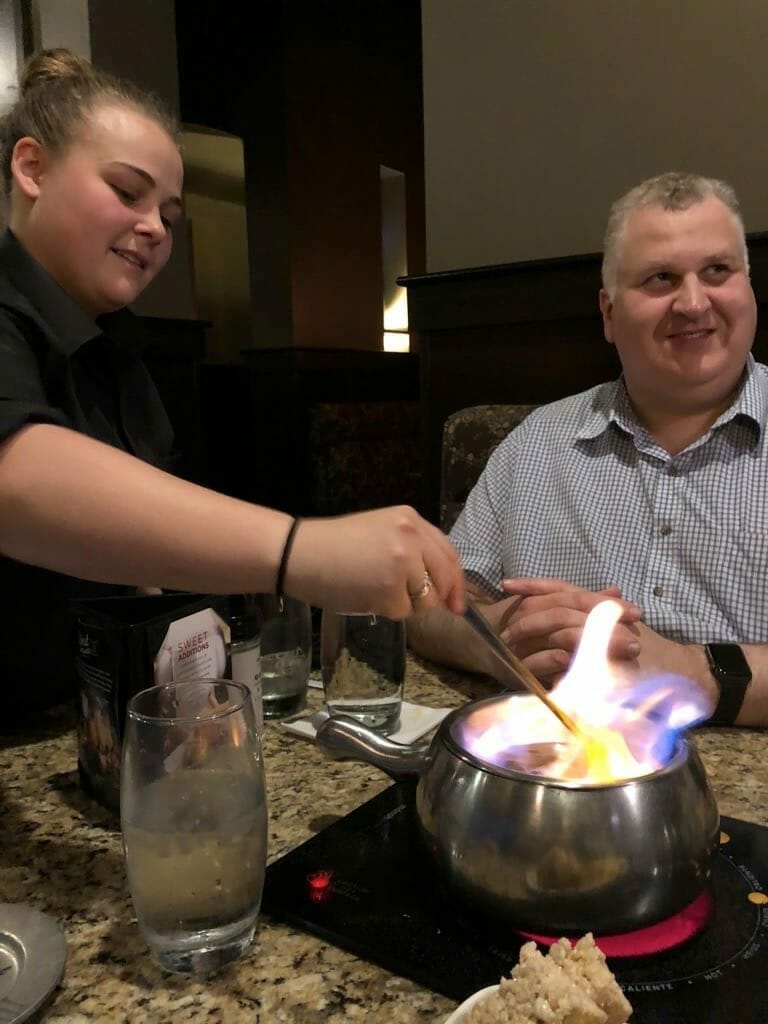
Fred and I drove to Dayton with Jamey, AC1DC, leaving Tuesday evening and arriving Wednesday midday. Thanks go out to Jamey, for putting up with and helping with the very long and tiring drive to and from Dayton. My birthday almost always falls during the Hamvention and Fred takes me out to eat at my choice of restaurants. Lately, my favorite has been the Melting Pot, a restaurant that serves fondue. They serve a four-course meal, with your choice of Cheese Fondue, Salad, Entrees, which you cook on a stick, and Chocolate Fondue for dessert. This year I was honored to be joined by Dave, K1DLM, Jamey, AC1DC and Tom, AB1NS in addition to Fred. I think that Fondue was a new experience for most and I appreciate that everyone was a good sport and joined along with us. This was definitely a birthday to remember.
Thursday – Contest University and Booth Setup
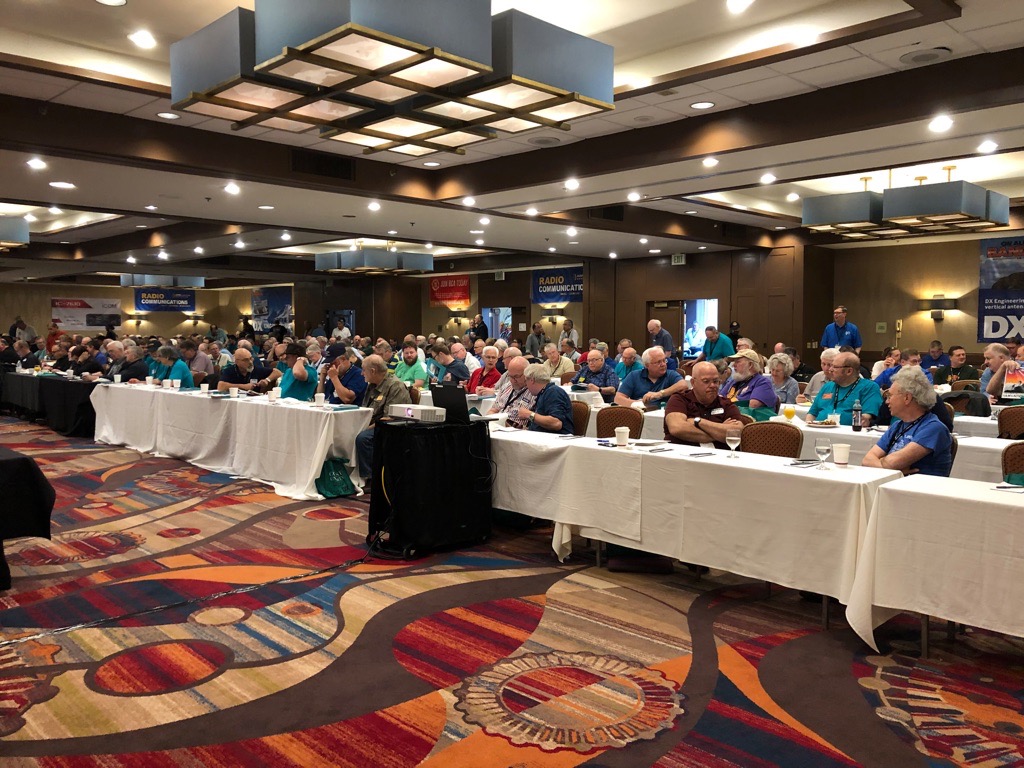
On Thursday, we attended Contest University, where we learned about Solar Weather and What is Known about Solar Cycle 25 and how the WRTC 2014 winners can work 300-400 CW QSOs per hour in the major contests. There is always a large crowd here and we learn something new every year.
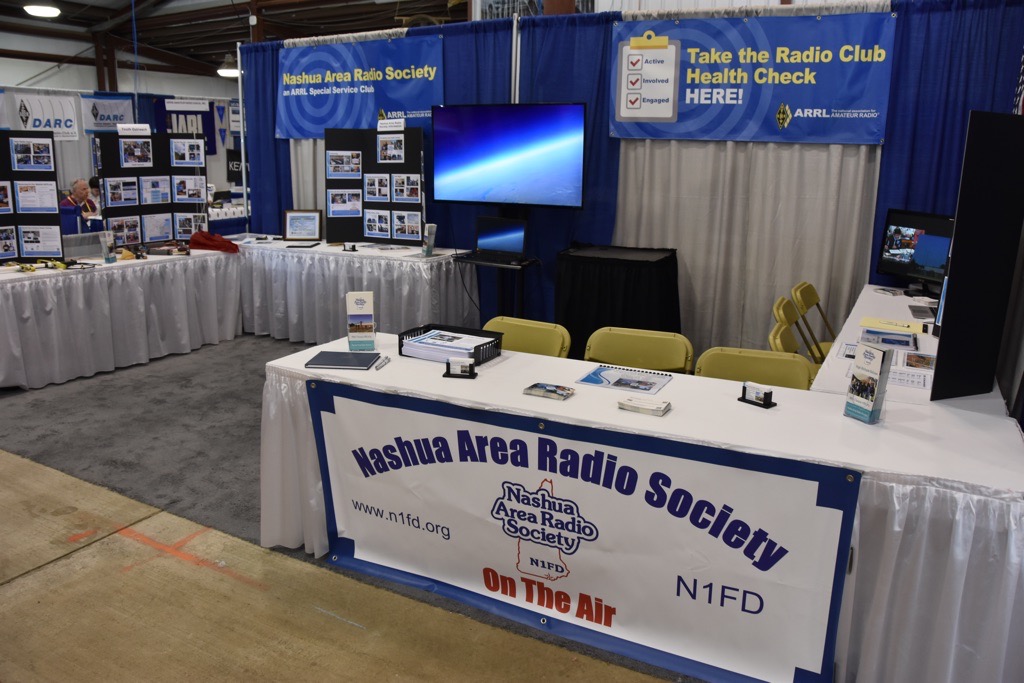
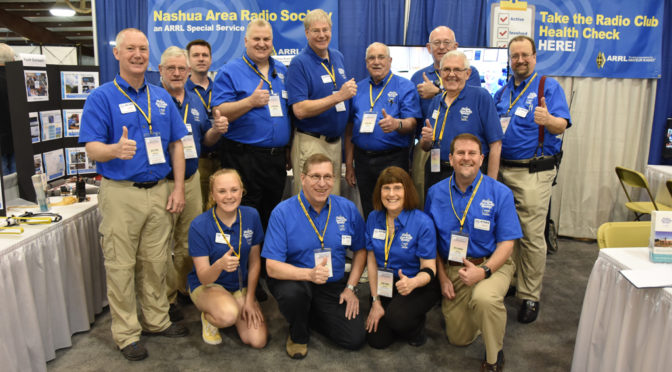
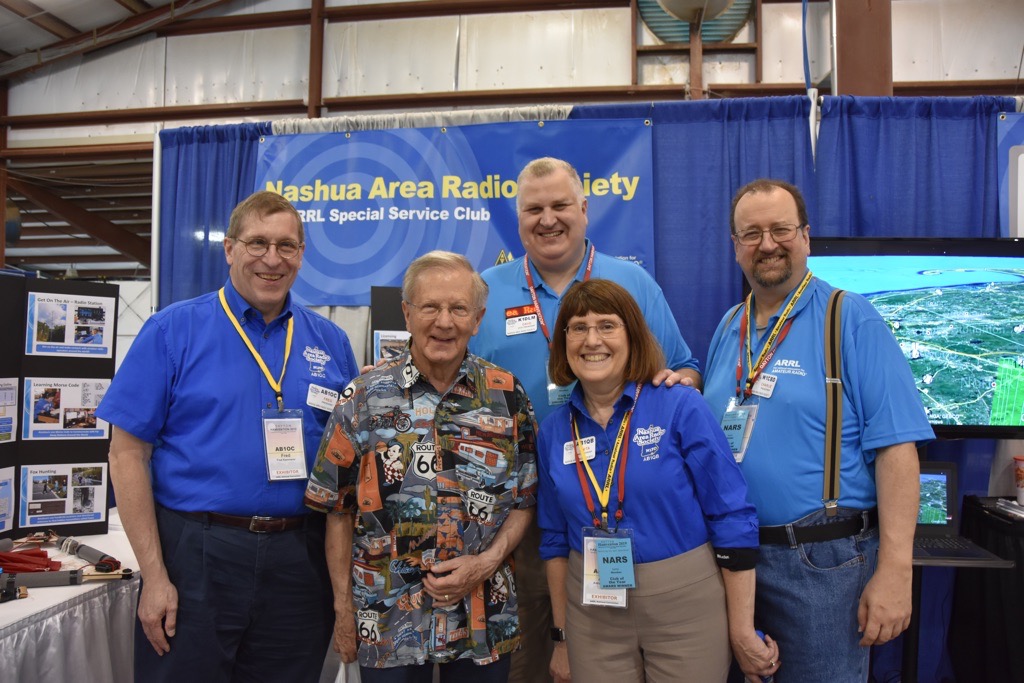
On Thursday afternoon, we headed over to the Greene County Fairgrounds in Xenia, the site of Hamvention. The ARRL invited us to be a spotlight club in their booth, which was also the 2019 ARRL Convention. It was time to setup the booth before the festivities begin on Friday. Thanks to Jamey, AC1DC, Sandy, XYL of NE1RD, and Burns, WB1FJ for helping with the booth. You can see how great it looked in the photo above. Additionally, we had a great spot, right next to the meet and greet for the ARRL executives and across from the RSGB.
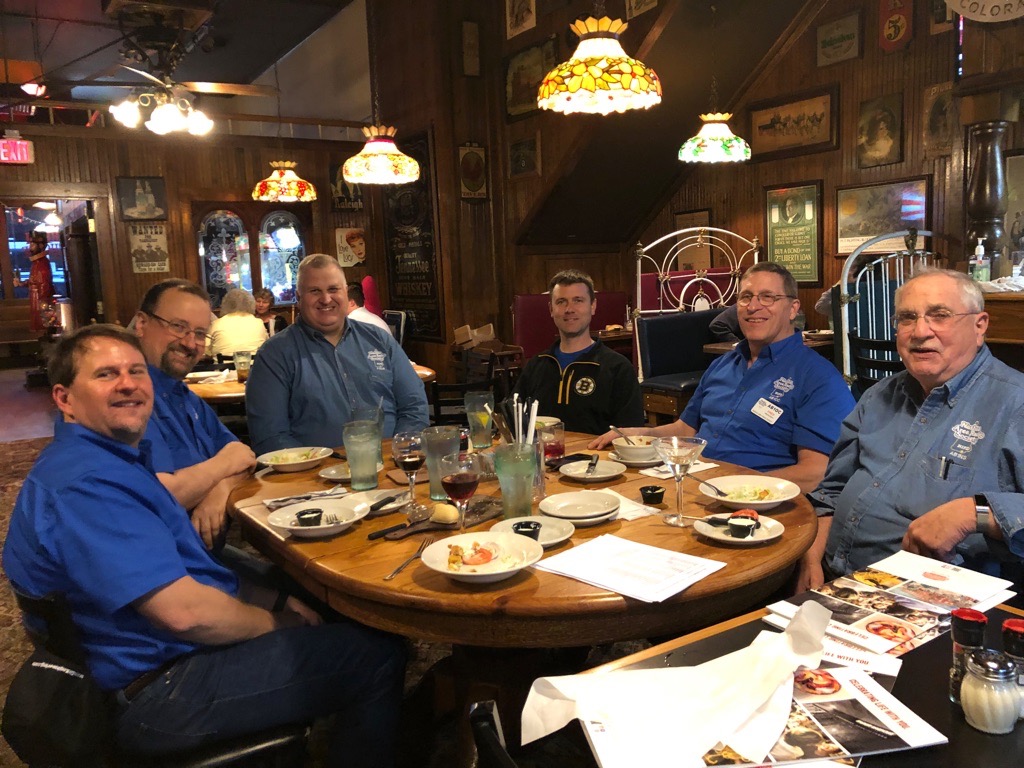
By Thursday evening, more of the NARS team had arrived. We met for dinner at the Spaghetti Warehouse, near the Crowne Plaza in downtown Dayton. Pictured above are Jerry, K1OKD, Charlie, W1CBD, Dave, K1DLM, Brian, W1BP, Fred, AB1OC and Tom, AB1NS.
Friday – Start of Hamvention!
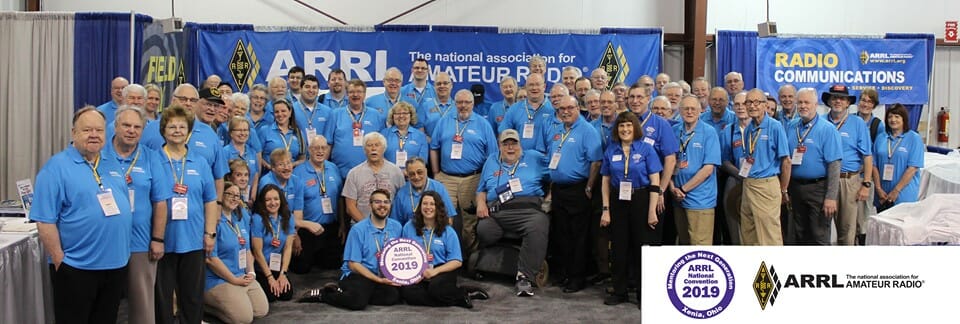
On Friday morning, everyone arrived bright and early for the opening of Hamvention. The ARRL invited us to be in their group picture before the crowds arrived.
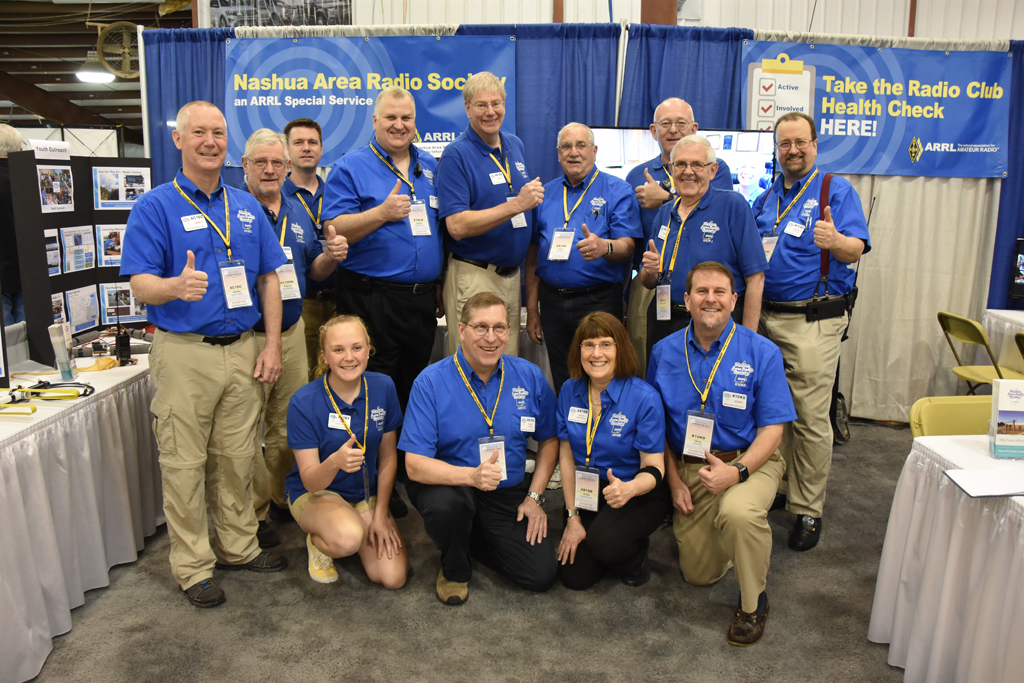
After the photo shoot, we returned to the booth and waited for the crowds to arrive. We had lots of visitors and plenty of club officers and members interested in learning about our club, our focus on mentoring, club activities, youth outreach, and of course, Field Day.
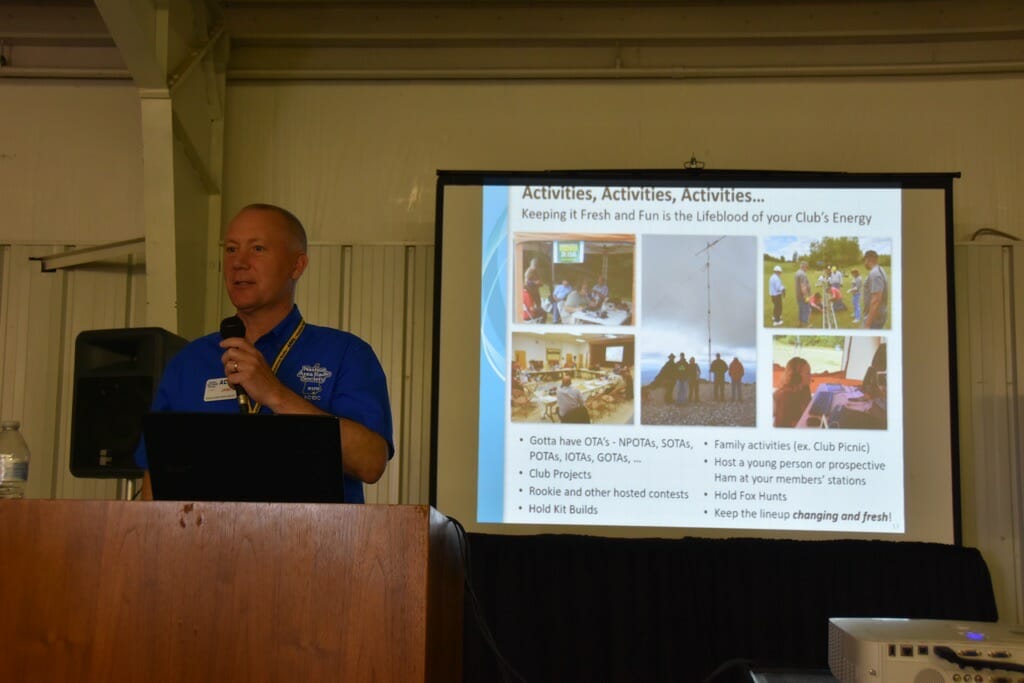
The ARRL invited us to do a presentation at one of their Forums on Friday morning – the ARRL Spotlight on Radio Clubs and Mentoring. The presentation was well received by the audience and afterwards, at our booth, we have been mentoring other clubs on how to improve their clubs. Thanks to the following members who were part of the presentation:
- Fred Kemmerer, AB1OC
- Anita Kemmerer, AB1QB
- Jamey Finchum, AC1DC
- Abby Finchum, AB1BY
- Dave Merchant, K1DLM
- Scott Andersen, NE1RD
A copy of the slides can be found in an article on our website. The ARRL video recorded the forum and we will make the video available to members once we receive it from the ARRL.
Saturday – Awards Dinner
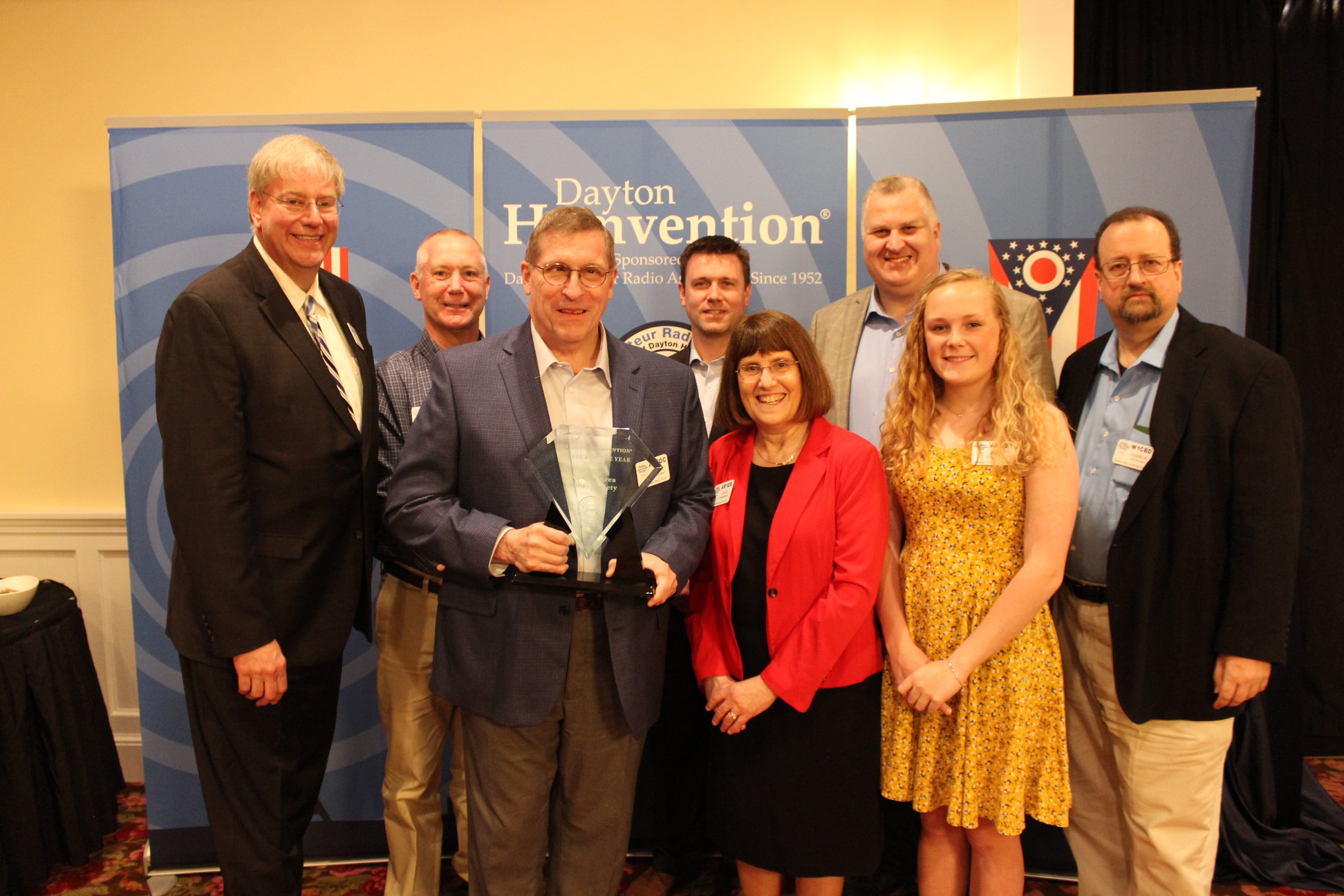
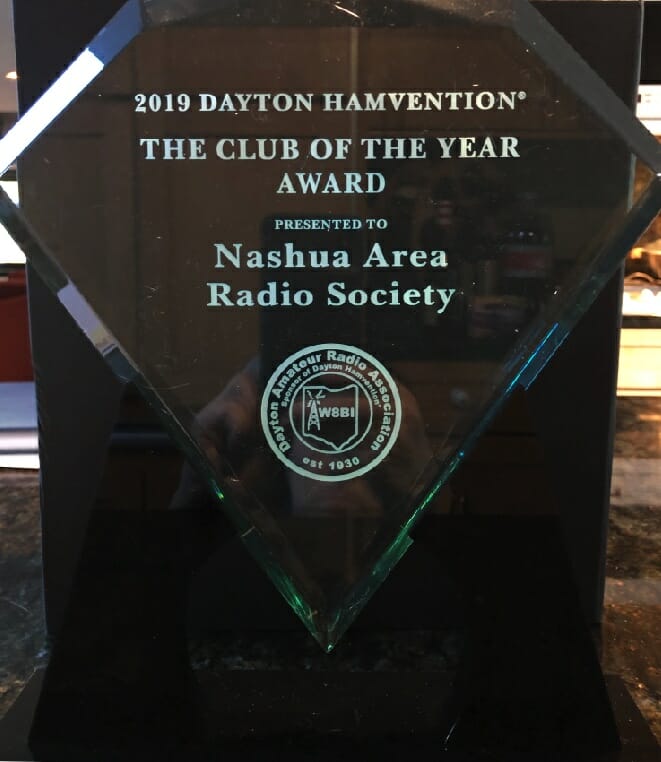
On Saturday evening, we attended the Hamvention Awards Dinner at the Mills Park Hotel in Yellow Springs, not far from Xenia, where we received the Club of the Year award. DARA (the Dayton Amateur Radio Organization, who runs the Hamvention) put on a great event.
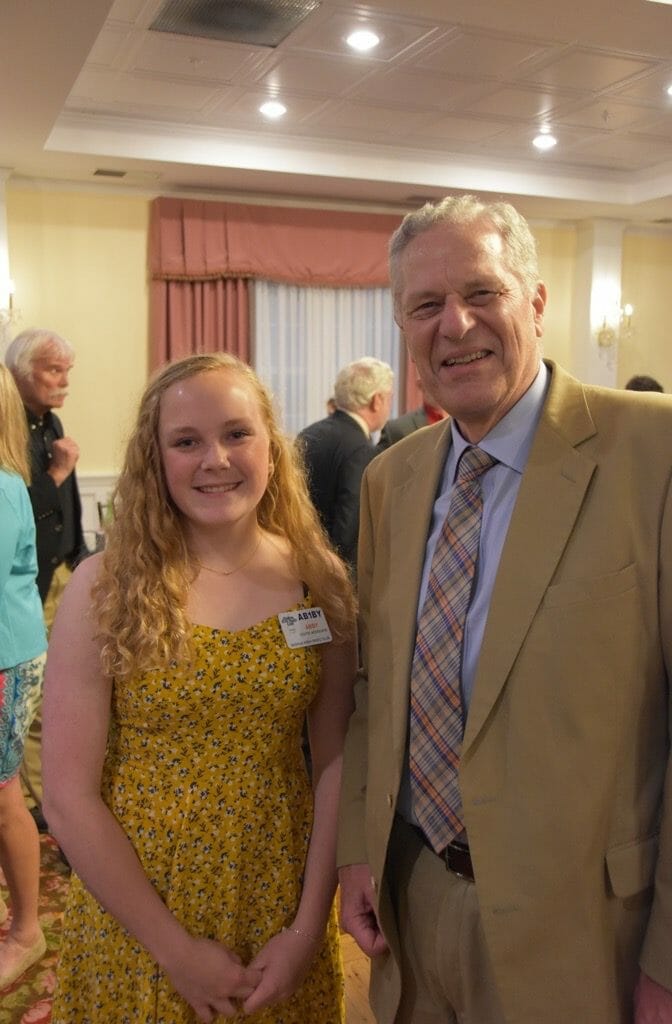
The food was excellent – and we got to dine with many dignitaries – ARRL President Rick Roderick and CEO Howard Michel, Nobel Laureate Joe Taylor, and Presidents and Officers of AMSAT, YLRL, DARA, DARC, and other prominent Ham Radio Organizations.
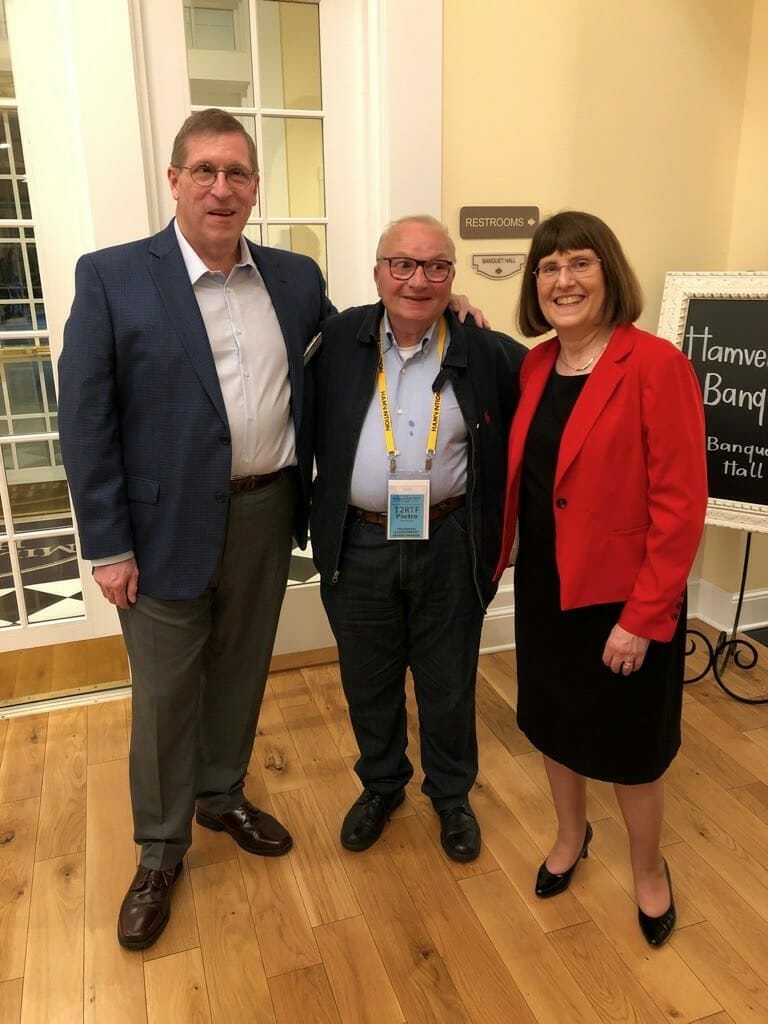
We also spoke to the other award winners, Chris Janssen, DL1MGB, the chair for WRTC-2018 in Germany, Pietro Begali, I2RTF, who makes the most beautiful and high quality CW keys and also contributes a great deal to Amateur Radio in Italy, and Nathaniel Frissell, W2NAF, founder and leader of the Ham Radio Science Citizen Investigation (HamSCI). For more on their stories, see the Hamvention 2019 Awards Page.
Sunday – Saying Goodbye and Heading Home from a Hamvention to Remember
Sunday was the last day of Hamvention. We continued to get lots of visitors to our booth, including Bob Heil, K9EID, host of Ham Nation and whose company, Heil Sound, makes high-quality Professional and Amateur Radio Audio gear.
Sadly, around noon, it was time to tear down the booth and pack up to go home. We attended the public awards ceremony, where we were again honored, and then we left to drive home. Thanks to our club photographer, Charlie, W1CBD for taking so many great photos during the event, many of which are in this article. Thanks to all of the members who traveled out to Dayton and spent time with us and helped out at Hamvention. This was truly a Hamvention to Remember. Thanks also to all members of the Nashua Area Radio Society for helping to make us an International Award Winning Club!
Anita, AB1QB