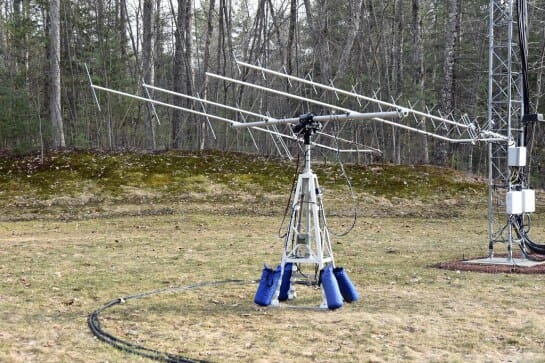
With the construction of our portable satellite station 3.0 complete, we’ve been looking forward to an opportunity to test the new setup. We chose the Nashua Area Radio Society’s recent…
Our next generation portable satellite station is complete and we tested it during our recent Tech License Class. We discovered a minor issue which was easily sorted out. The new antenna system includes switchable circular polarity and has performed really performs well during the first 50 or so contacts made using the 3.0 station. You can read more about the new station and the initial tests via the link above.
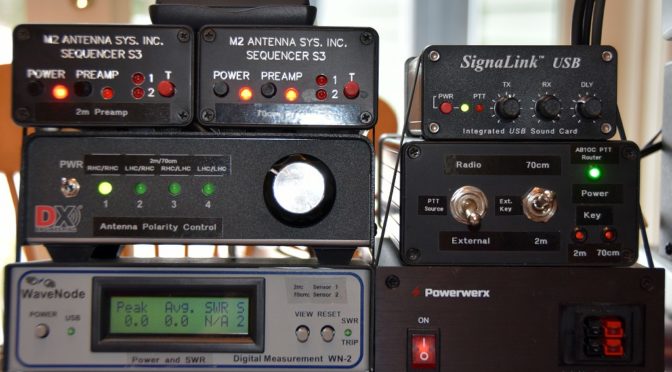
Our Portable Satellite Station antenna system uses a pair of Advanced Receiver Research Remote preamplifiers at the antennas to boost weak signals. These preamps have RF sensing and switching to protect…
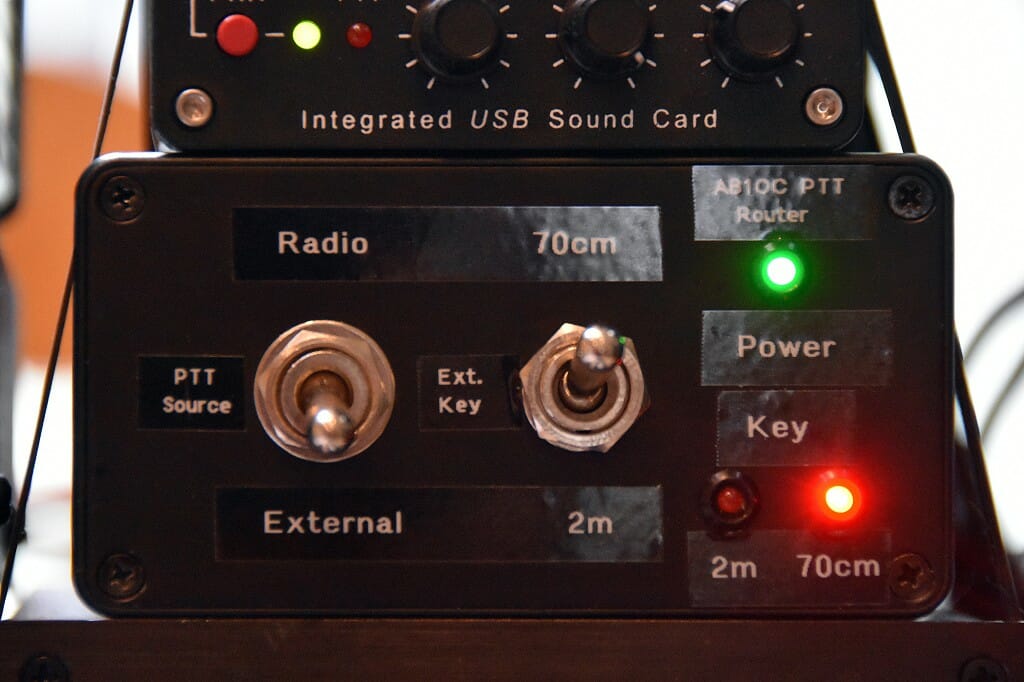
PTT Router Front Panel
Our Portable Satellite Station 3.0 is coming together and has been tested thanks to help from several NARS members. Part of the project is to improve the sequencing system which manages antenna mounted preamplifiers. These improvements involved the design and construction of a simple Push To Talk (PTT) router. The article above explains the design, construction, and integration of this PTT Routing devices. It was a great homebrew addition to our Portable Satellite Station setup.
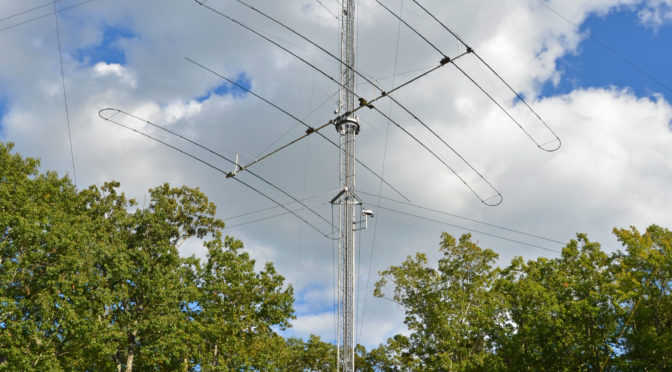
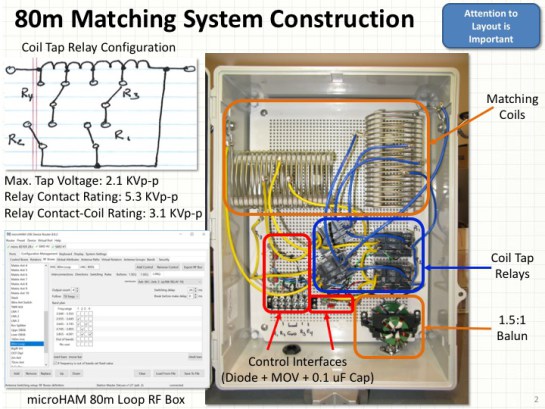
We installed a 75m loop for SSB operation on our tower when we built it. The loop is full size and is diamond shaped so that our lower SteppIR DB36 yagi can rotate inside of it. The loop is fed at the bottom corner about 20 ft up from the ground. It works great for SSB operation on 75m but we have often wished we could use it across the entire 80m band. This goal led to a project to create a matching system for the antenna. The idea was to use a set of loading coils in series at the feed point create a good match in all segments of the 80m band…
We shared this project at our project night meeting in January. I recently published an article explaining the design and construction of an 80m Broadband Matching System. The ideas used can be applied to many other matching system arrangements for many different types of low-band antennas.