Category Archives: Featured

This category is for featured articles that we want to include in the sidebars and other areas on our website.

A “Tech Night” To Remember – Our Visit To KC1XX

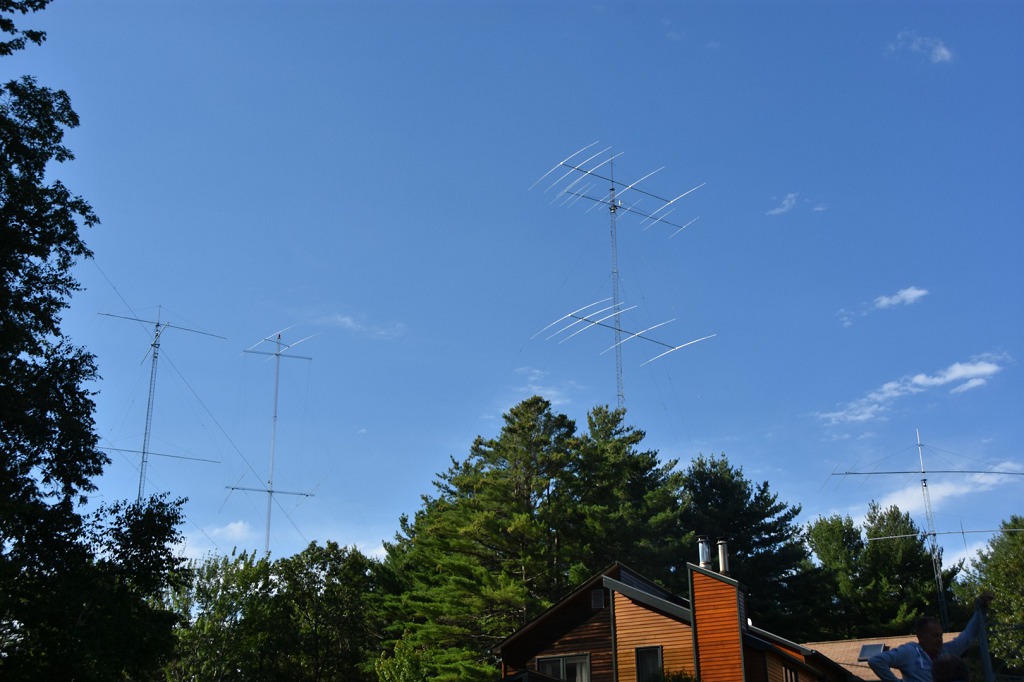
Our August “Tech Night” featured a Saturday visit to the Matt Strelow, KC1XX’s superstation. Matt’s station sits on top of a mountain in Mason, NH.

KC1XX QTH
Matt Strelow, KC1XX’s QTH

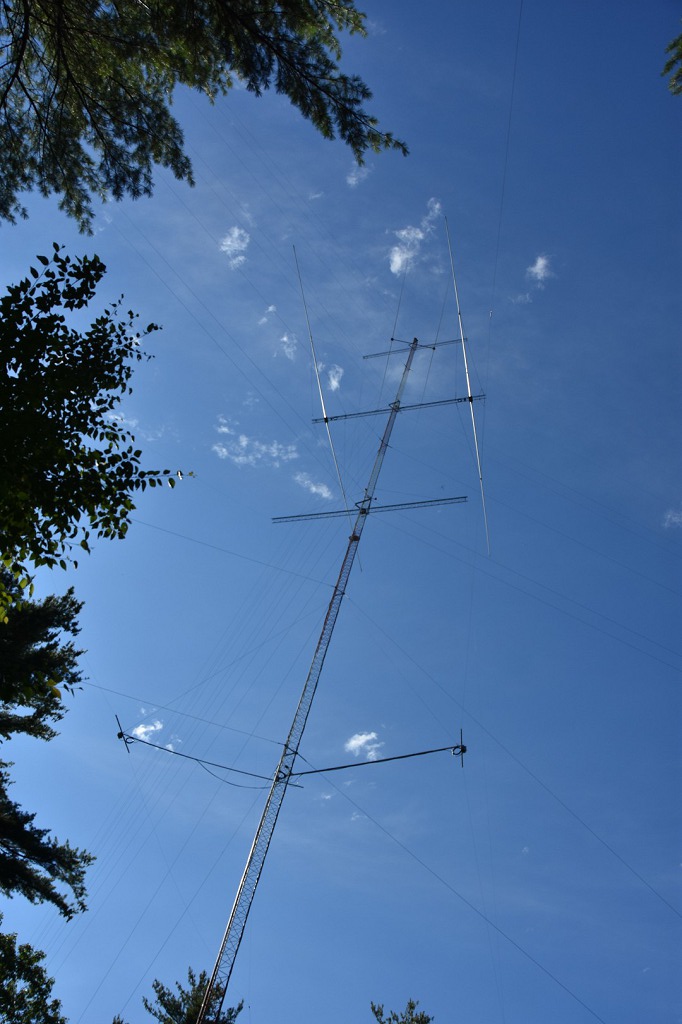
Our visit began with a tour of Matt’s antenna farm. Matt has a total of 13 towers and each one has a unique story and purpose.

300 ft Tower at KC1XX

Matt’s tallest tower is used for 80m as well as other bands. It is painted red and white and has a light on top!

Antennas and Towers 5
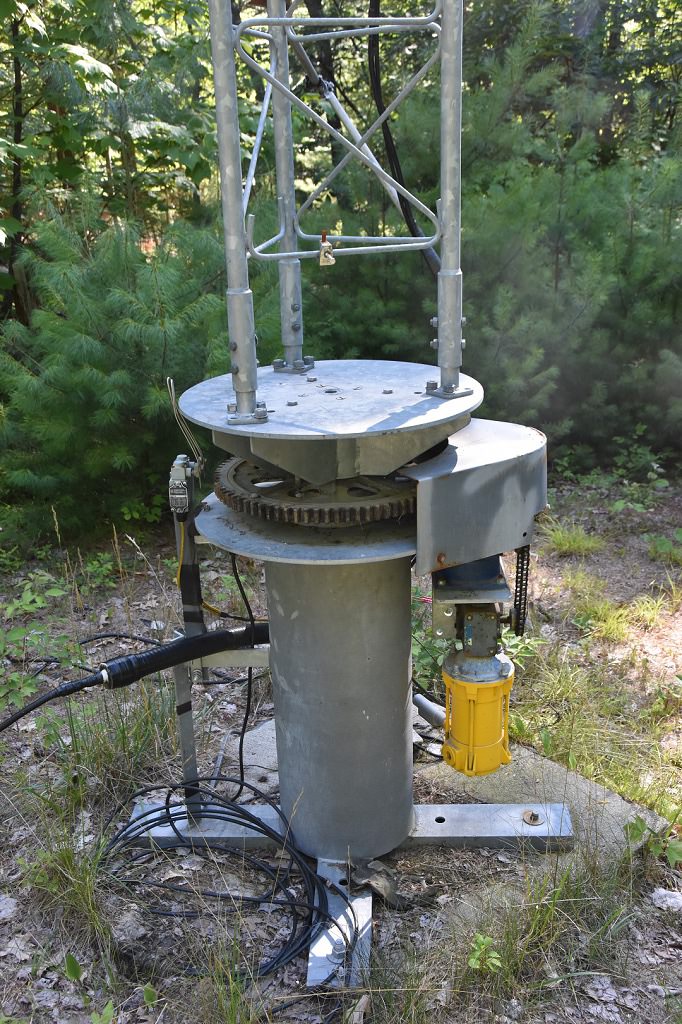
Base of Rotating Tower at KC1XX

Several of Matt’s towers are rotating ones with some serious tower turning hardware at the base.

Antennas and Towers 2
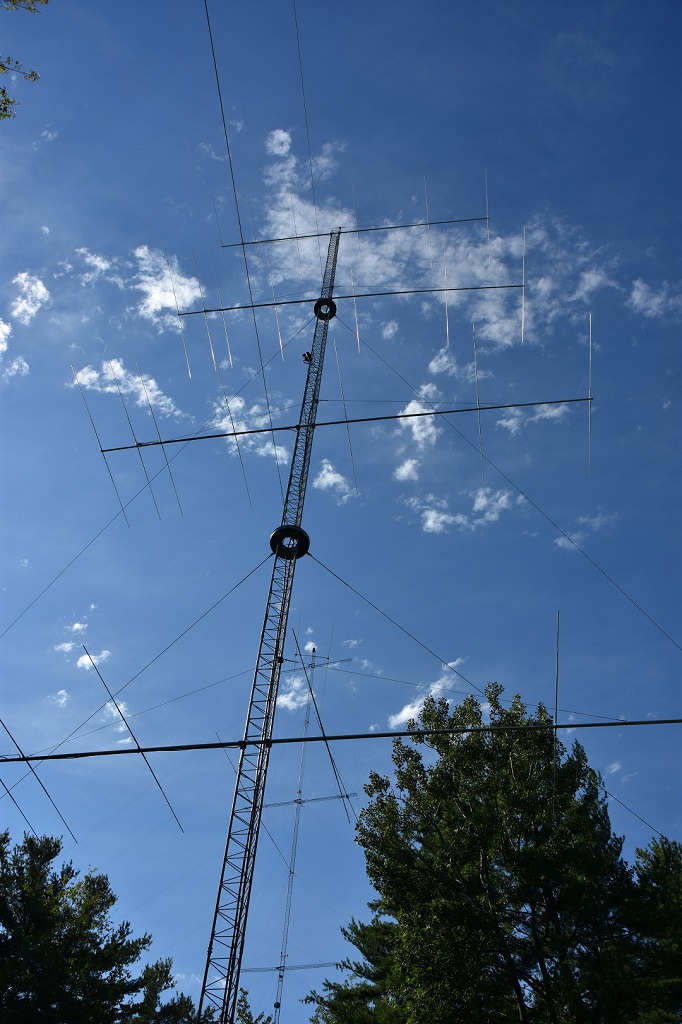
Rotating Tower Guy Rigging

Rotating towers use a special type of guy attachment ring which allows the tower to turn while being supported via guy wires.

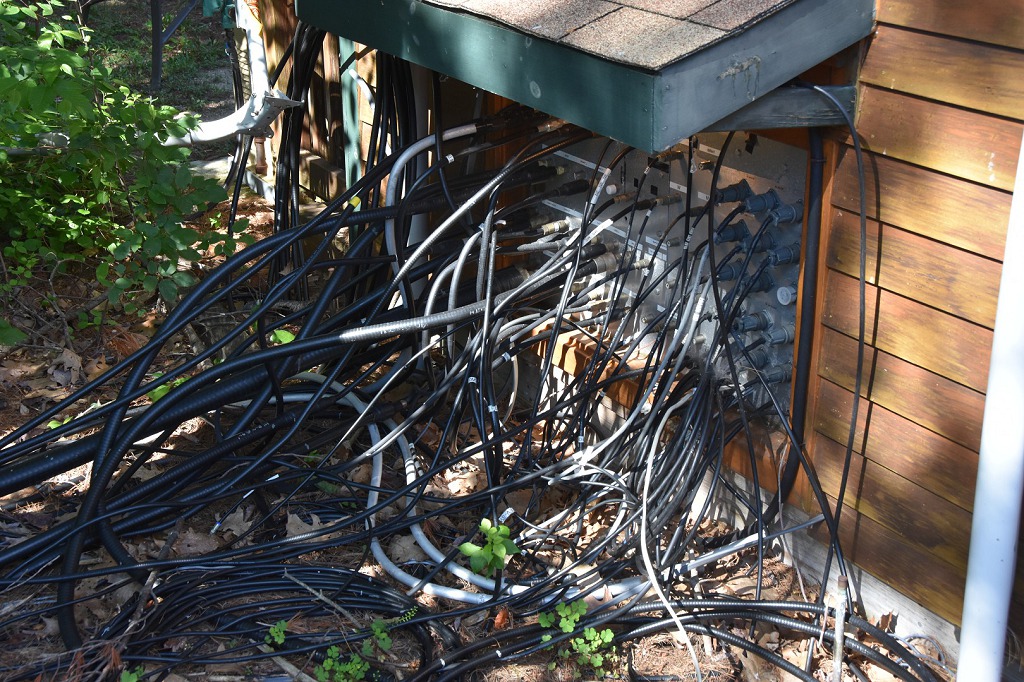
Coax Feedlines
Coax Feed Lines at KC1XX

Matt has built an extensive infrastructure which supports all of the antennas at his QTH. The picture above is a small building where all of the feed lines from Matt’s antennas enter his station.

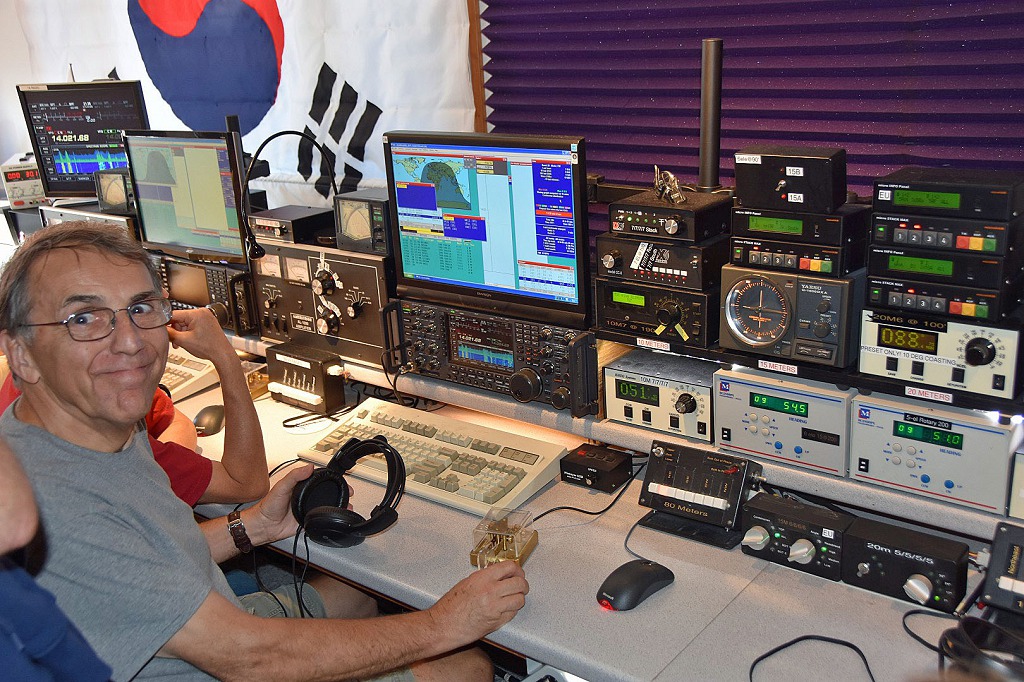
Dennis, K1LGQ Operating at KC1XX

After the tour of the antenna farm, we saw the KC1XX “shack”. Several of us had a chance to operate Matt’s station. How’s this for QRP Dennis?

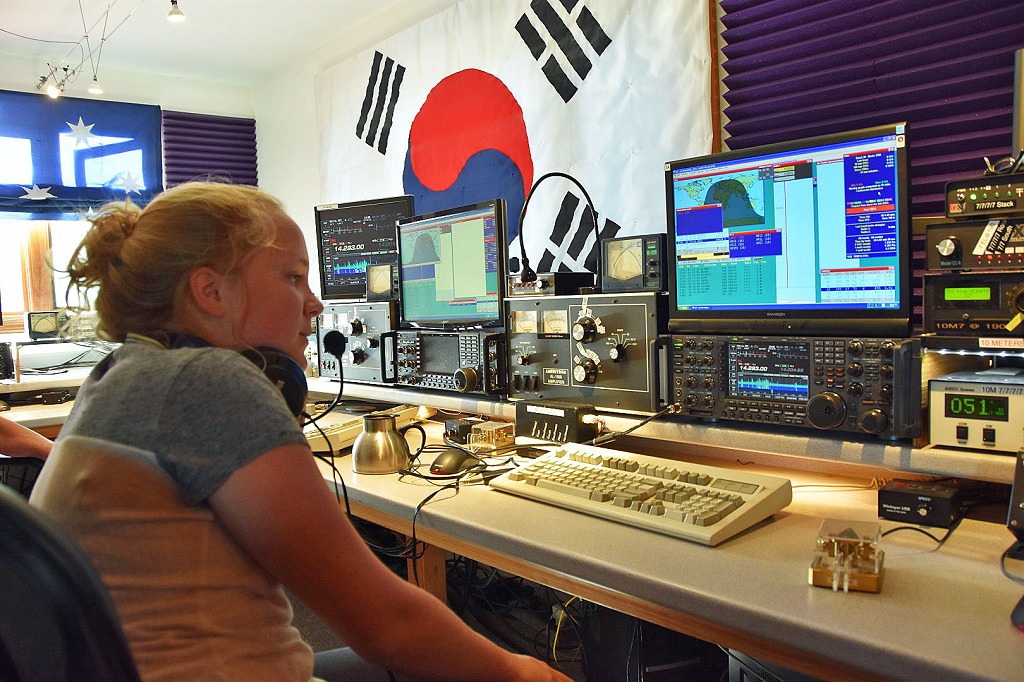
Abby, AB1BY Operating at KC1XX

Abby wasted no time in building her usual pile up. It easy to see why KC1XX has a pile up whenever they are on the air after just a short time spent operating from there.

After a great day of fun and lots of picture taking, See the gallery above for more pictures. Matt treated us to refreshments and some more conversation about his Amateur Radio experiences.

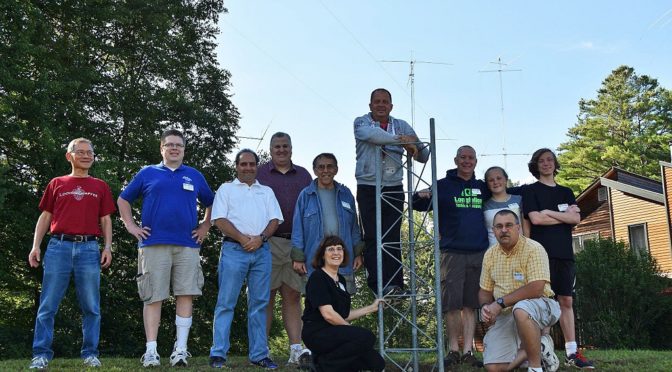
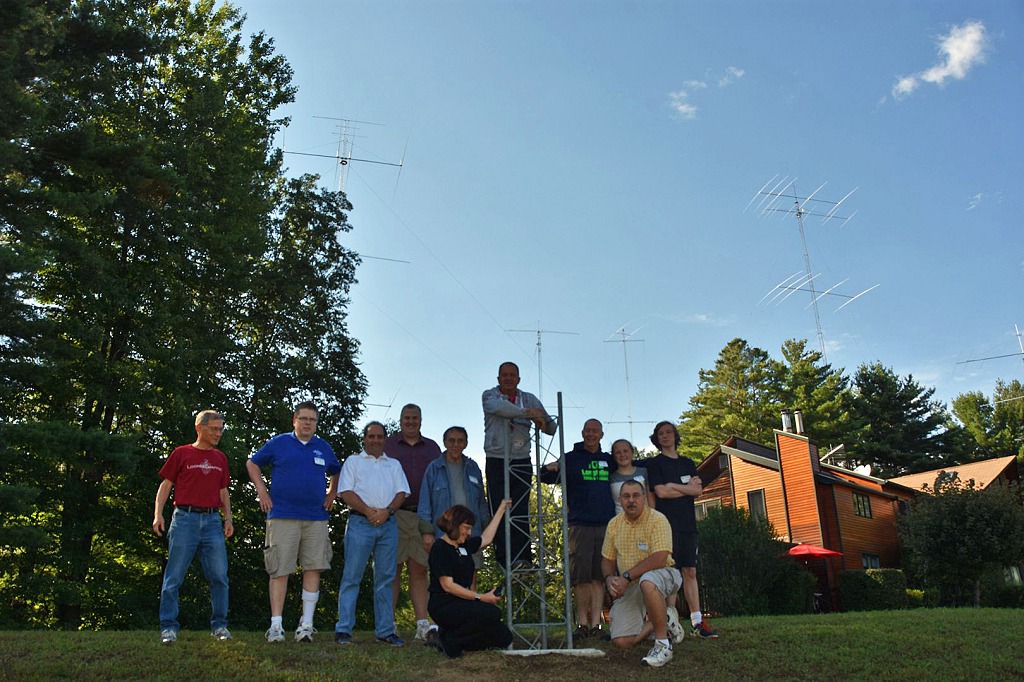
Nashua Area Radio Club "Tech Night" Group
Nashua Area Radio Club “Tech Night” Group

All of the members who made this memorable “Tech Night” had a great time and we’d all like to thank Matt for his gracious hospitality. We learned a lot!

Fred, AB1OC

FT8ful Encounter

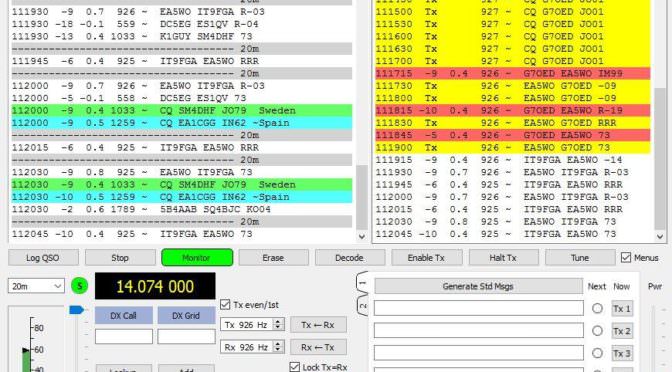
Hamming with a multi-band vertical on a small lot means having to compromise on what to do when it comes to being heard. The current down-slide in the sunspot cycle doesn’t help either. The emergence of weak-signal digital modes such as JT65 and JT9 a few years ago from Joe Taylor, K1JT has been a welcome addition to my operating tools. If you are familiar with Joe’s work, JT65 and JT9 are Taylor-made (sorry Joe) for modest stations and simple antennas. The modes sport S/N levels of -20 dB or lower for Q5 copy, far better than an S1 CW signal. I have been happily working DX over the past several months using the WSJT-X program that integrates with its companion JTAlert logging application to link to DXLab Suites.

Anyone who has used these digital modes knows there is a downside to them. They are SLOOOW. A typical QSO takes 6 minutes to complete with nothing more than a report, acknowledgment, and goodbye. It is like watching paint chip and peel. To keep from falling asleep between exchanges, Steve Franke, K9AN has collaborated with Joe to rev up the process.

Say hello to the new FT8 mode which is the designation of the Franke-Taylor 8-FSK digital mode that Steve developed to integrate with the existing modes supported by WSJT-X. It is sort of like JT65 with a turbocharger. An FT8 receive and transmit cycle each takes 15 seconds to complete compared to 60 seconds for JT65. A transmit cycle switches to the receive mode after 13.5 seconds. When compared to JT65 that allows 12 seconds between cycles for the operator to select a station or a macro, 1.5 seconds doesn’t leave much time to do anything. Fortunately, the mode supports an auto-sequence QSO mode wherein the next macro is automatically selected during a QSO. The result: a QSO can be completed in 90 to 120 seconds.

I first started using FT8 in late July after seeing a number of spots for stations running the mode. I had to update my version of WSJT-X to the current release. Fortunately, JTAlert also has been updated to capture FT8 for logging. I jumped in to work stations on the new mode and promptly screwed up. I tried in vain to manually select a macro when working a station only to find the previous macro being repeated. After a few busted QSOs, I discovered the program automatically switched to the correct macro in the QSO sequence. This is definitely a cool feature to have.

It did not take me long to realize that I could call a DX station off-frequency to avoid competing with stronger stations calling. If he/she answered me, the program would automatically QSY me to the DX station’s frequency. Slick!

The mode is also tolerant of poor band conditions where signal strengths can change as much as 10 dB between transmit cycles. There have been a number of times where I have repeated a macro several times before getting a response and moving on to the next macro. Under such circumstances a QSO may take three minutes to complete, still better than JT65.

To date, I have worked some 200 stations on FT8, including 49 states, most of Europe and a handful of Far East DX stations. I run 40 watts to a 6BTV multi-band vertical and a 17-meter Moxon in the attic of my garage. QRP purists may be aghast as such a QRO level. However, remember that signal strength is about ERP. A monoband beam with 5 watts beats a quarter-wave vertical at the same power level every time. Remember that a vertical with 200 radials situated on rich Iowa loam (Ok, a salt marsh is better) has a gain several dB below a simple dipole and well below a monoband beam.

As a related note, the club here in The Villages kicked off a friendly competition the first of August to see who could work all 50 states. While most folks have parked themselves on 20 SSB, I decided to go after the states using FT8. The JTAlert logging application maintains a running list of stations heard that includes their states so I don’t have to blindly call hoping I have worked a new one. Like shooting fish in a barrel. It is only a matter of time before my elusive Montana station pops up.

To encourage you to try FT8, why not initiate a club competition to work all 50 states? The modest station requirements and free software make it easy for anyone to give it a try. Finally, if you use Logbook of the World, the ARRL has added FT8 as a recognized digital mode so you can get another neat endorsement.

Ed, K2TE

How did I hang my dipole 50+ feet high in the trees?

Dipole Antenna Tree

I wanted to make an article that would explain to anyone who visits my home or QTH that would answer the question on “How did you get that rope so high in the trees and how did you get that rope over the perfect branch?

I started out with a fishing pole and a 4-inch long stick from the woods.  After a few attempts of getting the stick up and over the tree with the fishing line it finally made it over the tree and back to the ground.  I then reeled in all the fishing line while pulling a string over the tree.  After the string, I used it to pull over 3/8” poly rope.

I came up with the following idea to get a rope over the perfect branch.

Dipole Antenna Tree

The 3/8″ line holds an old branch from the woods in the center. The yellow rope to the left is the “control line” and the right side has a half rotten log as a weight secured with a slip knot as shown below.

Dipole Antenna Tree

In the diagram below the light blue line represents the yellow control line from the photo.  As you lift the whole unit you should consider that the weight of the control line may offset your balance as you go higher.    The magenta line shows the string with a slip knot.  When the half rotten log made it over the desired perfect branch by combinations of pulling the 3/8″ rope at either end (shown black) and/or the control line (shown light blue) I pulled out the slip knot and the half rotten log fell over the perfect branch along with the string (shown magenta).

Dipole Antenna Tree

I replaced the string with rope and then a wire rope loop (shown red). The wire rope will not fade and fall apart from the sun’s UV rays. The yellow circle represents a pulley for the poly rope that holds up the dipole. When the poly rope breaks down from UV, wear and tear it can easily be replaced by lowering the pulley.  I added weight to maintain proper tension on the dipole antenna as shown below.

Dipole Antenna Tree

In theory, the tension will remain the same even in wind storms when the trees swing back and forth. It turns out that an old cast iron rotor from my Toyota was the perfect weight for the application!

73,

Mike AB1YK


Radio Amateurs Developing Skills Worldwide