Category Archives: Featured

This category is for featured articles that we want to include in the sidebars and other areas on our website.

HAB-2 Launch This Saturday – How To Track Our High-Altitude Balloon

We are planning the second launch of our High-Altitude Balloon (HAB-2) this Saturday, October 28th at approximately 11 am ET.

You can view the story of our first launch here on our website and you can view the video from our first High-Altitude Balloon launch above.

High-Altitude Balloon Launch Site and Weather

The weather and Jetstream conditions look good for our HAB-2 launch!

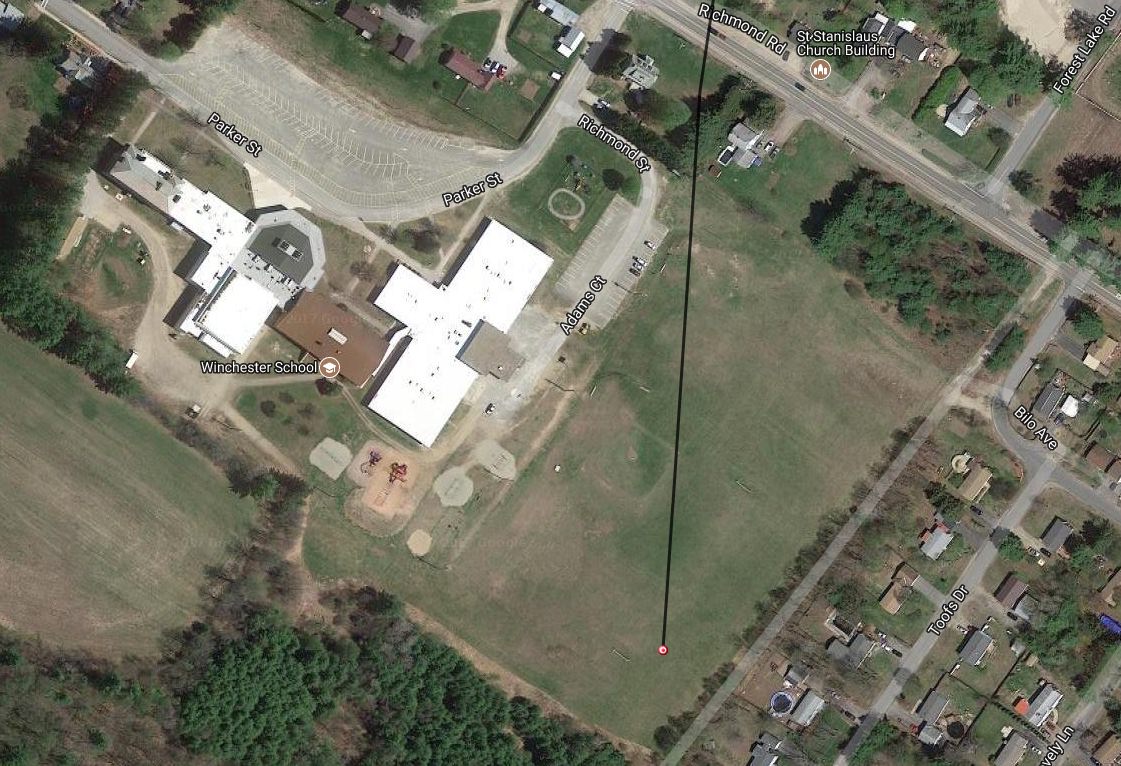
High-Altitude Balloon 2 Launch Site in Winchester NH
HAB-2 Launch Site in Winchester NH

We will be launching from the school in Winchester, NH at around 11 am ET. Nashua Area Radio Society members and friends are invited to join us for our launch.

High-Altitude Balloon 1 Launch!
HAB-1 Launch!

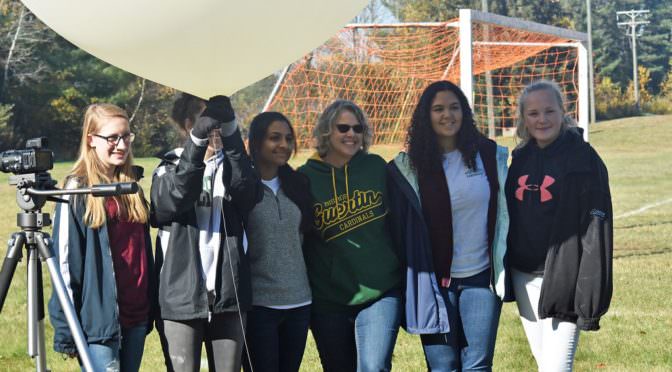
We have been working with the STEM club at Bishop-Guertin HS here in Nashua, NH. The students will handle HAB-2 launch preparations and the launch. Launch preparations will begin on site at 9:30 am ET.

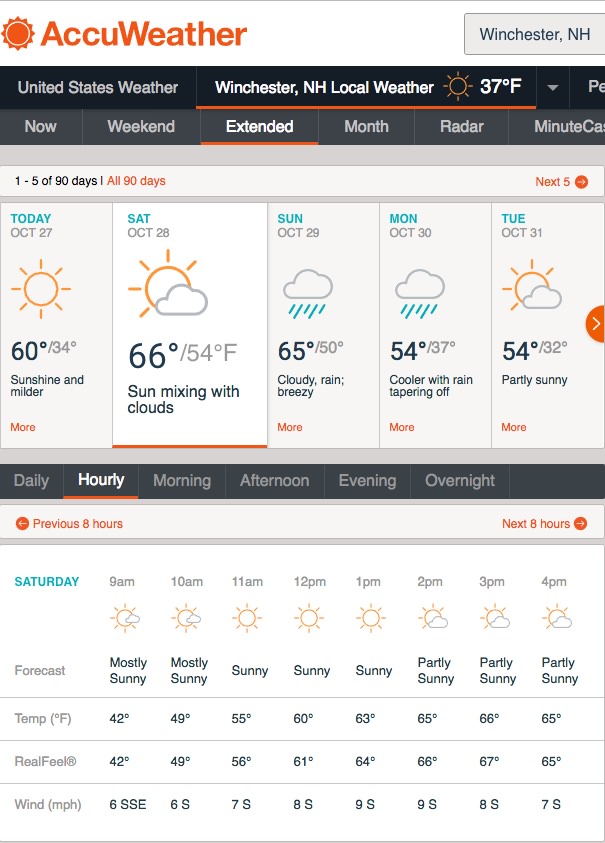
WInchester NH Weather Forecast for Launch
Winchester NH Weather Forecast for Launch

The weather forecast looks great for our launch on Saturday with clear skies and moderate winds. These conditions should enable us to capture some spectacular video from HAB-2 during its flight!

Tracking HAB-2

I wanted to share some information about tracking our HAB-2 as it flies. Our balloon will carry’s a GPS receiver and a 2m APRS Transmitter.

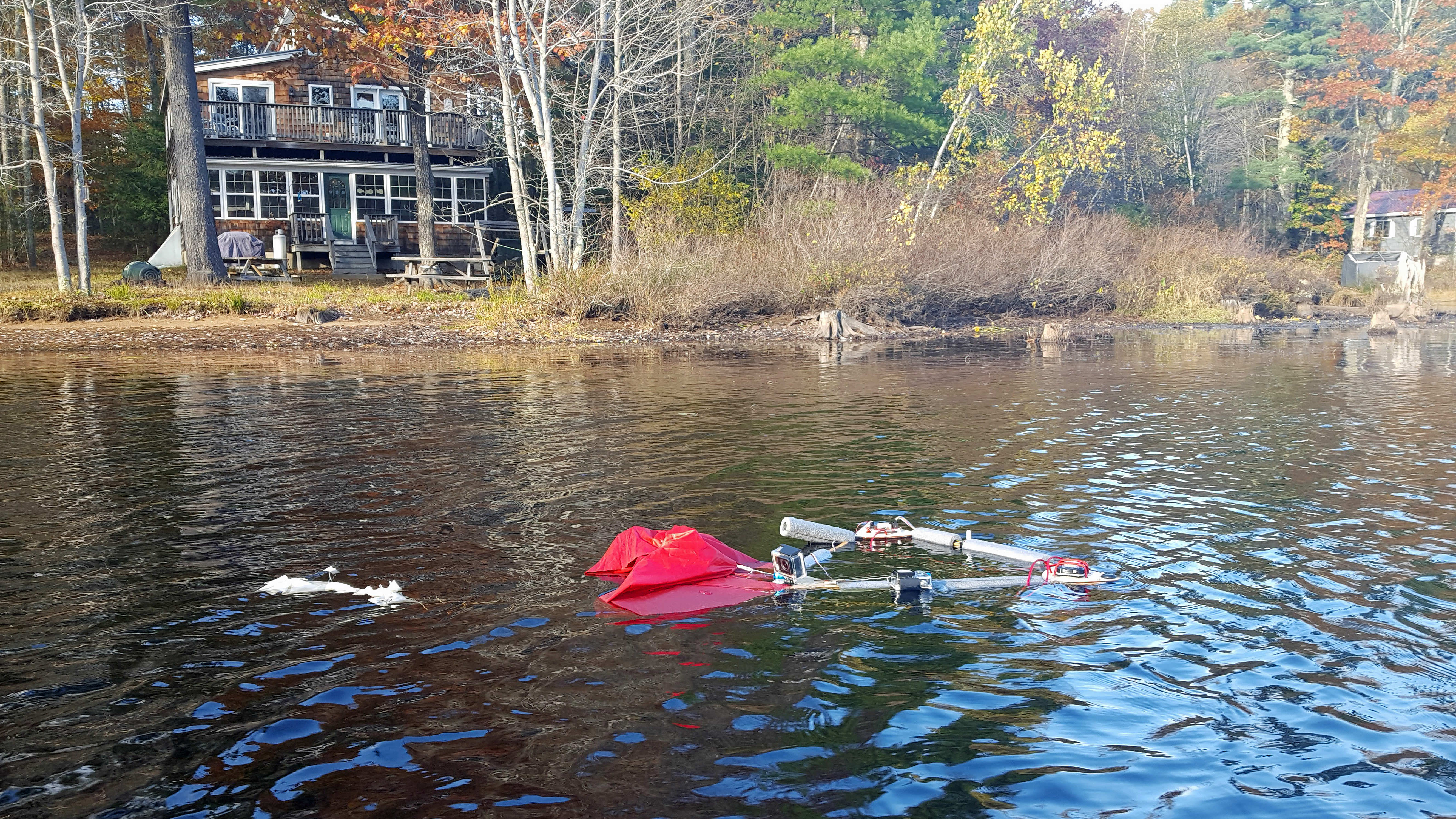
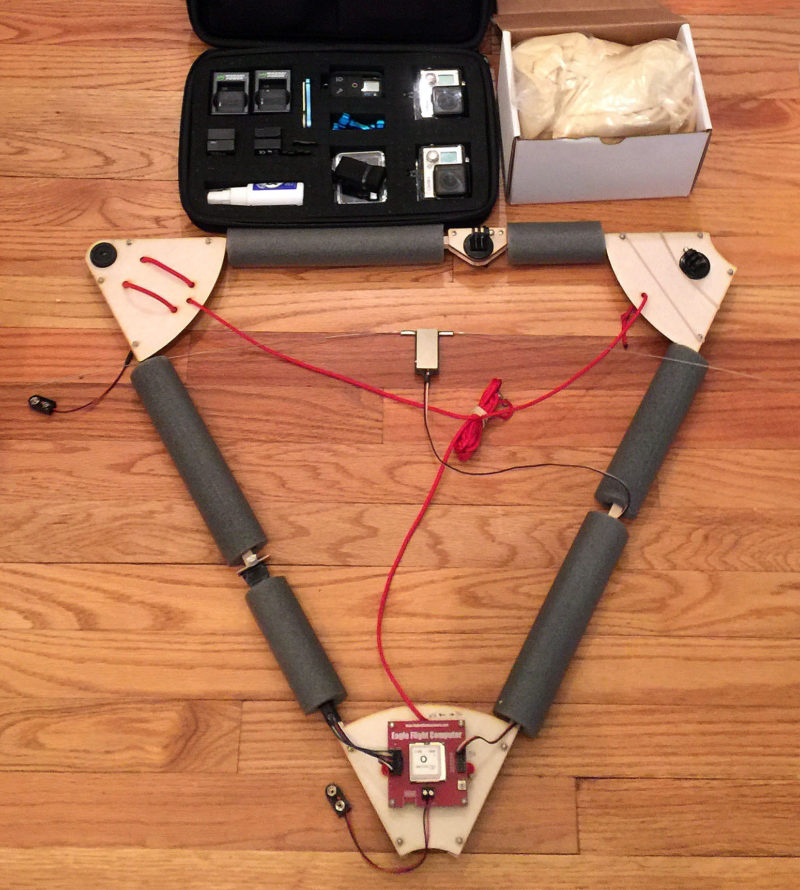
High-Altitude Balloon Flight Platform
HAB Flight Platform

The onboard APRS transmitter will operate on the Amateur Radio standard terrestrial APRS frequency of 144.390 MHz and will transmit our HAB’s position, heading, speed, altitude and other telemetry data every minute during HAB-2’s flight. The transmitter is battery-powered and generates a 250 mW signal into a dipole antenna suspended from HAB’-2s flight platform. HAB-2 will use N1FD-11 as its call sign.

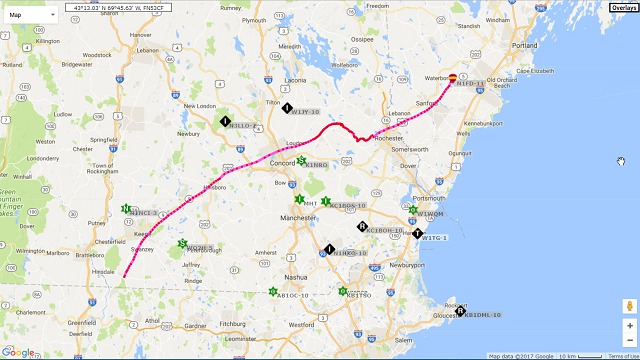
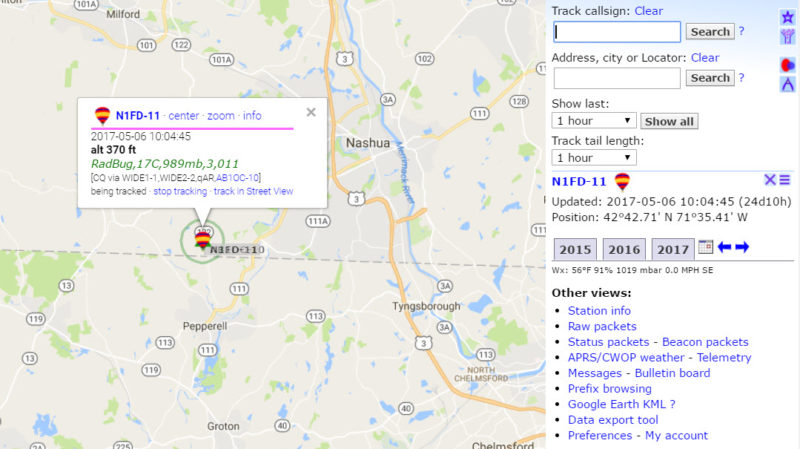
High-Altitude Balloon On Aprs.fi
HAB-2 On Aprs.fi

HAB-2’s APRS packets will be picked up by ground-based Digipeaters and iGates and will be relayed to aprs.fi where the HAB’s current location and flight path can be tracked.  You can click on the link in the previous line to see HAB-2’s current location and flight track.

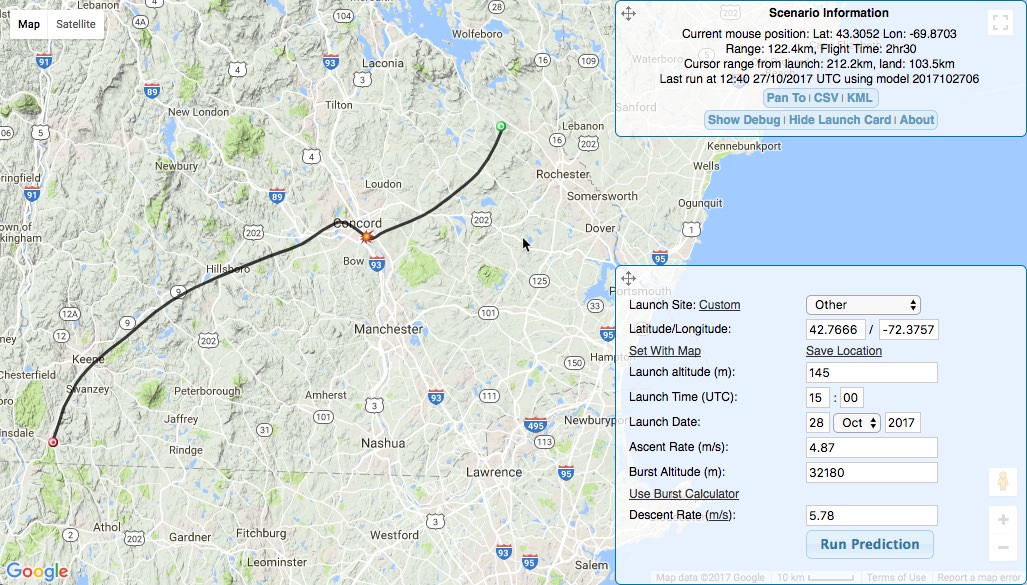
High-Altitude Balloon 2 Flight Path Projection
HAB-2 Flight Path Projection

Based upon online HAB flight prediction calculators that we have been using, we expect the HAB’s flight to last a little more than 2 1/2 hours. The HAB should reach an altitude of over 105,000 ft before the balloon bursts and the parachute on the flight platform brings HAB-2 back to the ground at a safe speed. The above predictions will likely somewhat different from HAB-2’s actual flight path. Based upon the predictions, HAB-2 will be traveling approximately 100 km between its takeoff point and landing near Maine.

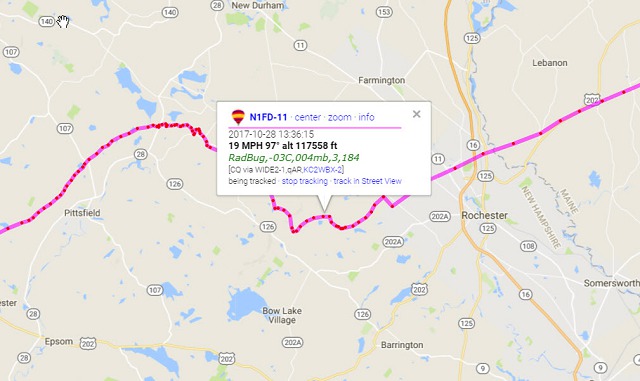
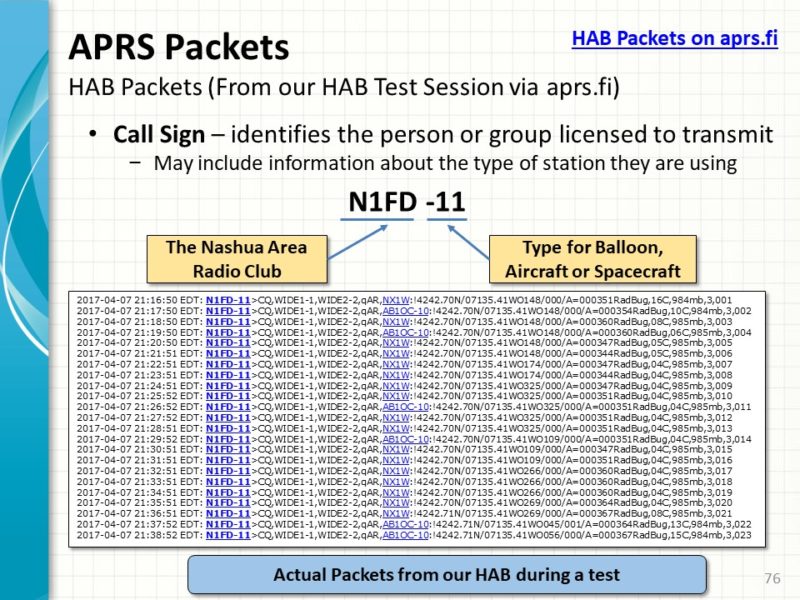
High-Altitude Balloon APRS Packet Information
HAB APRS Packet Information

Aprs.fi will store and display a copy of all of the APRS AX.25 packets transmitted by HAB-2 during its flight. Of particular interest to the STEM element of the flight will be the Balloon’s data on atmospheric temperature and pressure conditions at different altitudes.

All you need to track HAB-2 during its flight is Internet access and a web browser. Just click on one of the aprs.fi links here to see HAB-2’s current location and altitude. If you have an APRS ground station, you may also be able to receive HAB-2’s telemetry directly during the flight.

We will post updates on launch plans and the flight in the Youth Forum on our website.

T minus 1 day and counting until HAB-2 launches….

[waiting name=”Balloon Launch 2 Countdown”]


Fred, AB1OC

Member Spotlight – B. Scott Andersen, NE1RD

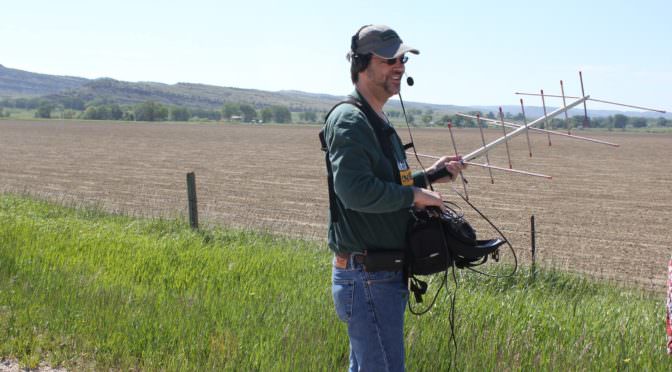
NE1RD on Mt. Wachusett

Bio of B. Scott Andersen, NE1RD

I got my start in ham radio not long ago. In 2002, after years of encouragement from a good friend, I finally looked into the hobby. “You’ll love it,” my friend said. “It’s right up your alley.” I confess I was skeptical, and even a little uncomfortable watching him make a simple call on a 2m radio he had in his car. “Go ahead and talk,” he said. I was well outside my comfort zone.

I’ve tried to remember those feelings as I show new people our world. It can seem strange, and aspects of it still seem strange, even after all these years. “It isn’t just one hobby,” my friend admitted. “It’s 99 different hobbies. You just pick the ones that interest you.”

I have taken his advice, and now I’m involved in some of the ones that most intrigued me. Not long after being licensed, I entered my first contest. It was October of 2002, the sunspots were still active, and I worked over three hundred stations in just a few hours. I was completely hooked on contesting! A lot of the things that made me nervous in the car that day were absent here. There were no long conversations; they just wanted my exchange (5905), and on they went!

The thing that really captured my attention, though, was a DVD of a DXpedition run by the Microlite Penguin team and their trip to South Sandwich Island and Southern Thule. These guys were amazing! Small radios, lightweight gear, well-conceived but modest antennas, and they worked the world. This was something I wanted to do.

So, in the next few years, I spent most of my free time thinking about ham radio, and lightweight DXpeditioning in particular. Contesting just helped me increase my DXCC totals, and hone my skills. The culmination of all that thinking was captured in my blog “The 100 Pound DXpedition.” You can get a PDF of all these brief articles from a link on my website www.bsandersen.com

As part of this DXpeditioning interest, I also spent a great deal of time thinking about antennas, and portable antennas in particular. My book “Buddipole in the Field” was the result of some of this work. You can get the free PDF from the Buddipole User Group on Yahoo!, or from a link on my website. The Buddipole has provided a good platform for many of my experiments, and DXpeditions.

I’ve always been a nerd, interested in electronics, physics, mathematics, and the like. Ham radio has provided me a way to transition from the abstract to the concrete. It is one thing to think about radio theory. It is another to build a working radio. I’ve been building kits since the 1970’s, but ham radio has given me many new opportunities. I’m particularly fond of Elecraft kits having built two K2s, three K1s, and two KX1s. They are all fabulous radios, and building them was deeply satisfying.

I am still working, so ham radio sometimes takes a backseat to my responsibilities, but it is never far from my mind. I’ve also learned just a little patience through all this. Building up a country list for DXCC, and chasing various radio awards must be done over time (usually years) and it has paid off. I now have 8-band DXCC, WAS in Massachusetts, New Hampshire, and the US Virgin Islands, ARRL Challenge, and various CQ WPX awards. They look great on my wall and are a reminder that anything worthwhile requires both hard work and patience.

After all this time, I’m still very much a student of the hobby. I’m shameless about asking questions and always try to take advantage of any opportunity to see and try new things. I can only hope that this passion continues through the coming years. It has been a joy for this first fifteen, certainly!

Radio Amateurs Developing Skills Worldwide