Category Archives: Antennas

Articles about Antennas, Feedlines, Towers and related equipment. Fixed, Portable and Mobile Antenna Articles are included.

Add SDR Capabilities to Your Radio [part 2]

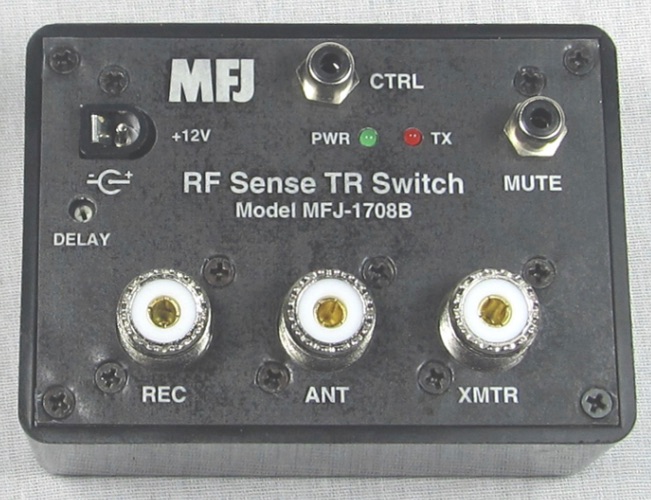
In my last post, I discussed how to add an SDR to your station using the built-in capabilities of your radio. If your radio doesn’t have this fancy antenna switching and selection feature, you can still integrate an SDR pan adapter into your shack using the handy MFJ-1708B or MFJ-1708B-SDRS devices.
SDR Capabilities
Antenna sharing device from MFJ

These devices can be used to allow your SDR to share the same antenna as your transceiver while protecting it from transmitted signals. It does this in one of two ways (or a combination).

  1. Key down input. Transceivers have a line that is used to trigger external amplifiers called key down or key out line. Usually, this line goes to ground when the transmitter is transmitting. (You should read your radio’s manual to verify this.) If you connect this device to this radio output then it will disconnect the SDR while you transmit.
  2. The device also has an RF sensing circuit that will disconnect the SDR from the antenna if it detects the transceiver transmitting.

Because these units use relays you might want to have a slight delay before reconnecting the SDR to the antenna after a transmission. That delay time can be selected by turning the “DELAY” control near the left edge.

The unit is simple to configure: connect power (12v) and your radio key out signal to “CTRL”,  then connect your transceiver, SDR, and antenna connections to the proper ports. Finally, adjust the delay control until it works for your style of operating. That’s it!

Here’s Pascal, VA2PV, with a quick overview of an earlier version of these devices.
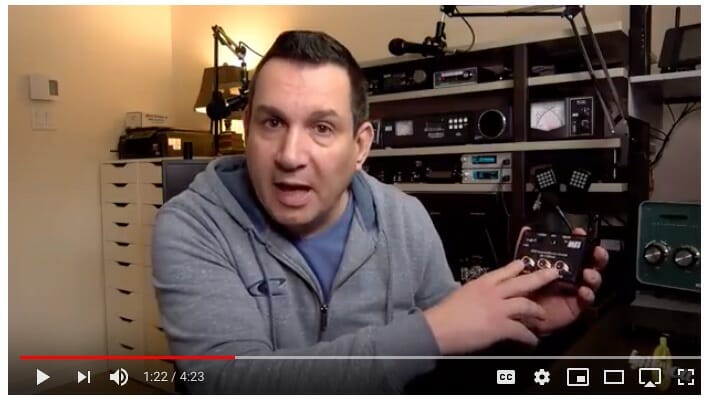
Click the video above to see Pascal describe these devices

Note that Pascal is reviewing one of the earlier models of this device. MFJ made some improvements to these units almost immediately after they began shipping. Be sure to get the one with a “B” after the numbers to ensure you get the new-and-improved model.

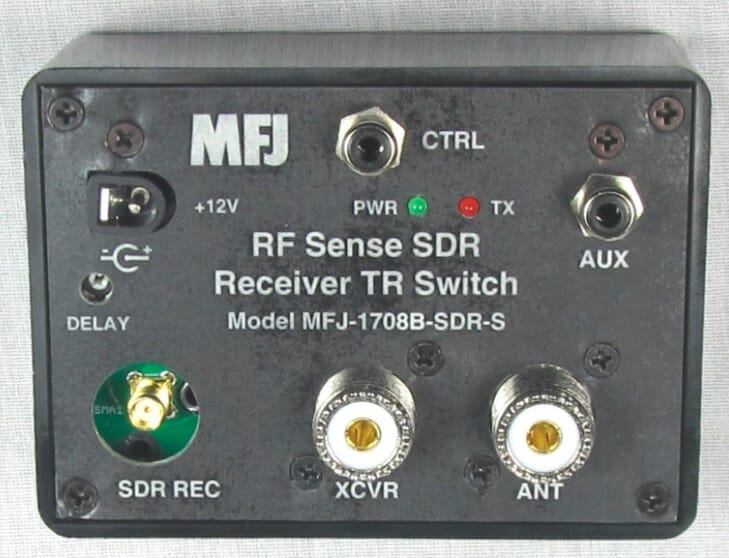
MFJ actually makes two versions of the new model: one with a regular SO-239 connector for the SDR, and one with an SMA connector for the SDR. The SMA version is shown below.
SDR Capabilities
SMA version of the unit

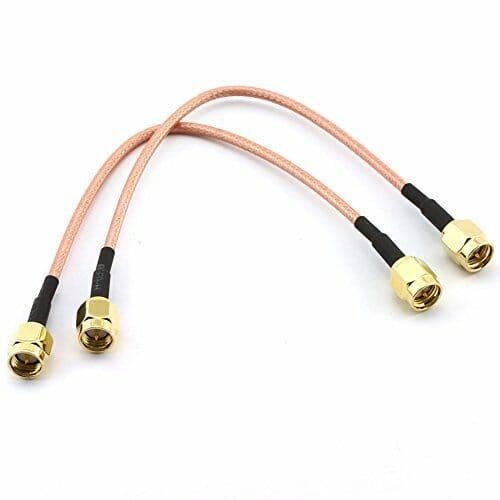
Amazon has some nice patch cables for very little money to complete the project.
SDR Capbilities
SMA patch cables

Note: If you do have an external amplifier be sure to put the MFJ unit between your transceiver and the amplifier!

I’ll post a few more notes on SDRs and uses for them in your shack over the next month or so. Please plan to join us for the December 11th Tech Night SDR workshop where we’ll help you get your computer and SDR talking.

When the Wind Blows

As most of my friends in NARS know, I have been using a Hustler 6BTV multi-band vertical for the past 2 and a half years. It is concealed inside a long piece of PVC pipe configured as a flagpole. An ugly flagpole but it still passes the deed restrictions and keeps the vigilantes off my back. I have a piece of rope about a third of the way up the pole that is intended to counter gusty winds that predominantly come from the North. This arrangement has served me well, allowing me to log over 200 countries.

A couple of months ago, I was out in the garage one afternoon watching an approaching storm. As is often the case, the rains came down in buckets. In less than a minute, the winds came screaming out of the West at near-hurricane force, driving the rain sideways. The winds subsided to almost dead calm almost as quickly as they ramped up. I stood there stunned at what apparently was a microburst. I peered apprehensively toward my flagpole and discovered it laying on my neighbor’s tree. Oh oh, this can’t be good, I thought. I looked around the neighborhood and noticed that a palm tree two doors down had been snapped in half. Good thing I did not have one on my property.

I went over to the leaning pole to try straightening it. The resistance I experienced told that the antenna inside was bent. I relaxed a little knowing that perhaps I could straighten it out. I tied a rope about halfway up the pole and proceeded to pull it back to vertical. I applied considerable force to pull the pole up. As I neared vertical, the pole suddenly swung around toward me and was now leaning close to the house. Yep, this definitely was not good. If it wasn’t broken before, I feared it was broken now.

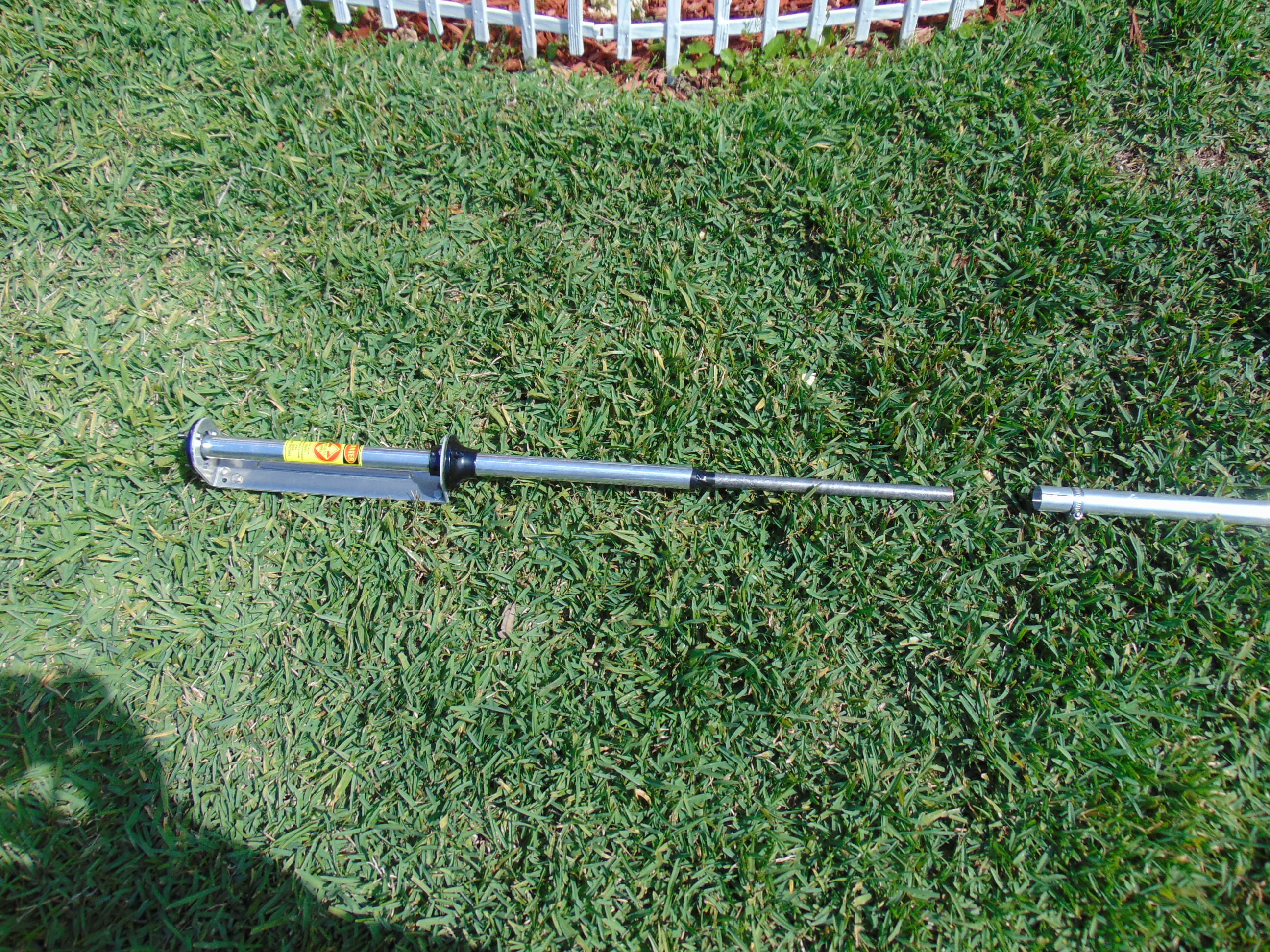
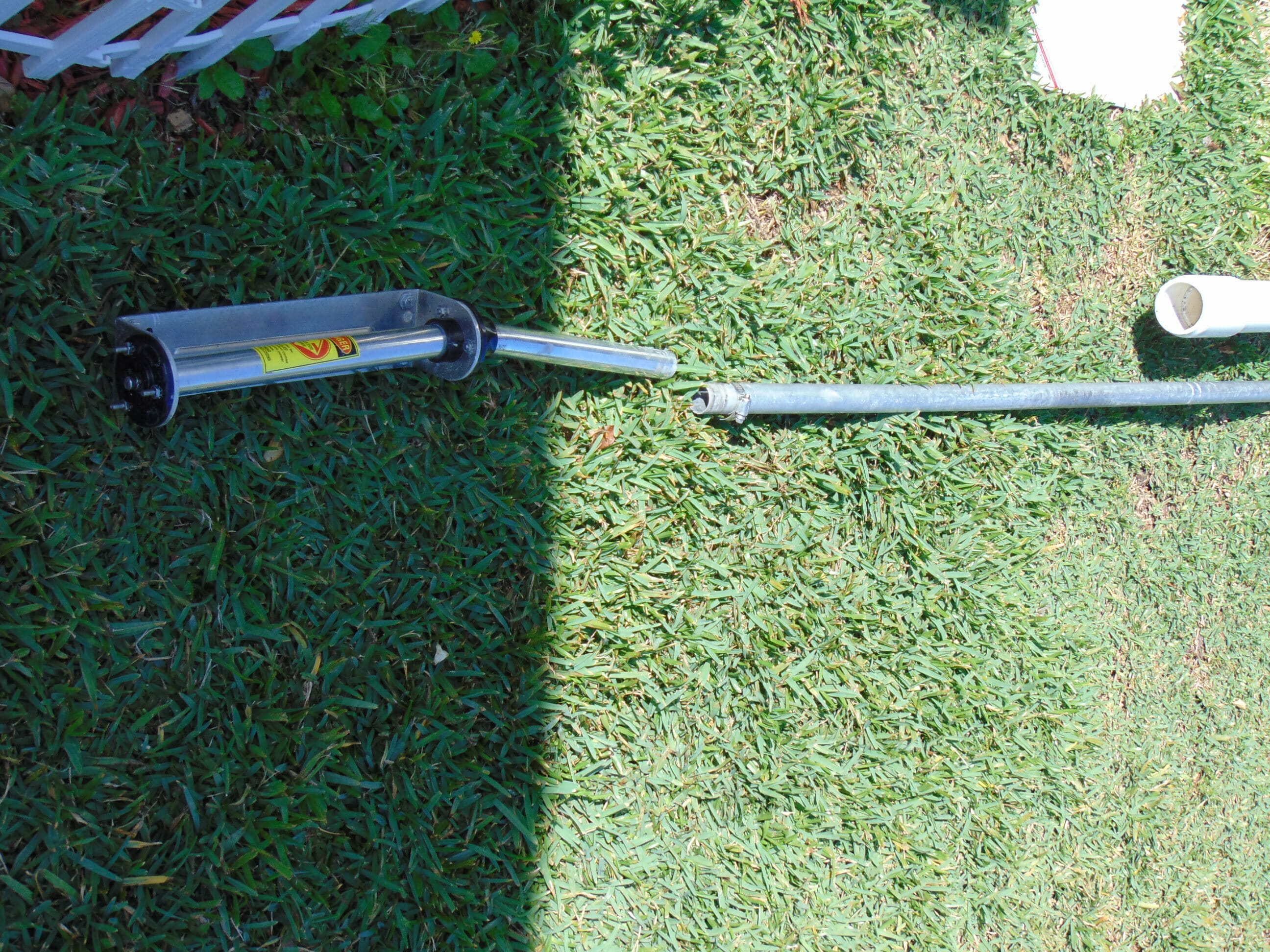
The next day my son and I lowered the stricken antenna to ground. As I pulled off the pipe, I noticed the mounting base support pipe was bent. The pipe is about a foot or so in length and inserts in the first section of the antenna. The wall thickness of the pipe is an eighth of an inch. The pipe had been bent to about 30 degrees from vertical by the wind load on the PVC. Figure 1 shows the damaged support as well as the first section that was also slightly bent.

Antenna
Figure 1 – Bent Antenna Support & First Section

The rest of the antenna was intact with no signs of damage. Normally, I would have used a large vice to Armstrong the bent pieces back to vertical. However, being workshop-challenged in The Villages, that was not to be. I have always believed a garage is for vehicles.

The next step was to contact DX Engineering to order a new base support and first section. While I was waiting for the new hardware to arrive, I thought of how I could strengthen the base to mitigate wind damage in the future. I recalled an article from an amateur in Colorado who strengthened his beams by inserting sections of tubing as the element junction points for increased rigidity. I borrowed this approach on my 40-meter beam to withstand the wind and ice of New England. After 20+ years the beam is still up and still straight. (At least it was when I sold the place.)

I made a trip to the local big box store and found a 3-foot piece of tubing that fits snugly inside the base support pipe and protruded about halfway out. The idea here is that, once the first section is clamped in place, the added piece acts as a stiffener that will prevent the first section from bending. I used this same principle when I installed my mast on my tower by inserting another pipe inside the mast. It too has never failed. Many thanks to John, WS1E for the idea. Figure 2 shows the modified configuration.

Antenna
Figure 2 – Modified New Base Section

I reassembled the antenna and slid it back into the PVC pipe. My son and I hoisted the pole back in place on my base mount. For future protection, I added another piece of rope to tie down to the West. (Don’t tell the XYL!) A check of SWR across the bands showed that I was back in business.

Now that things are back to normal, I leave you with these words of wisdom for your next antenna project:

When the wind blows,

Gently, my antenna will rock,

When the wind howls,

Down it will come with a hard knock.

Ed, K2TE

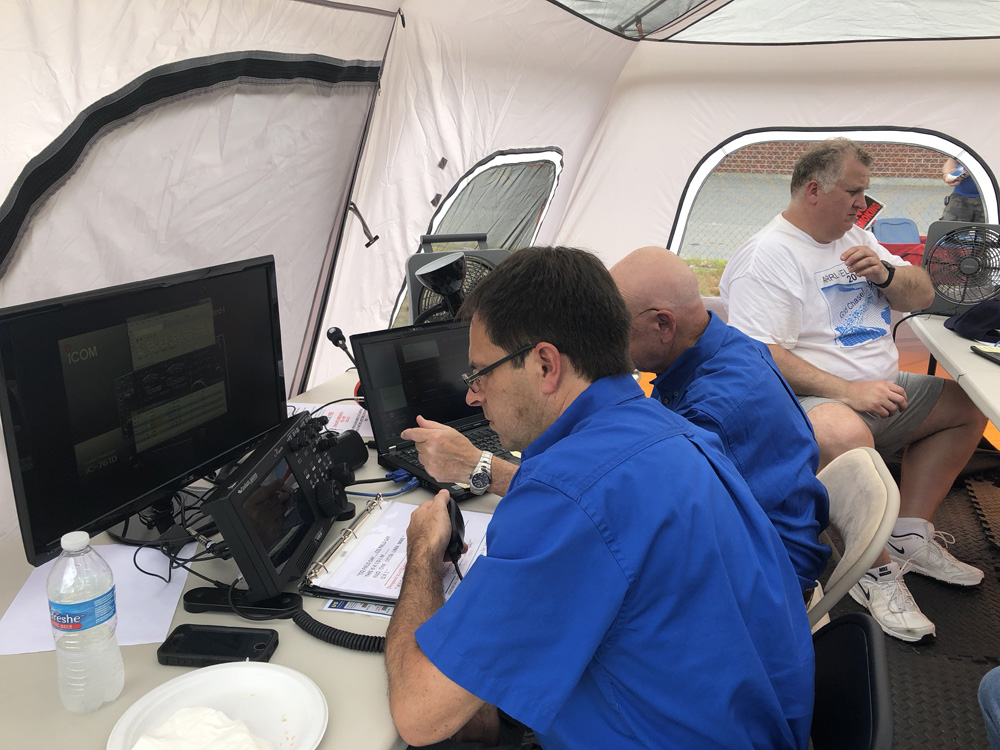
Sights from Field Day 2018

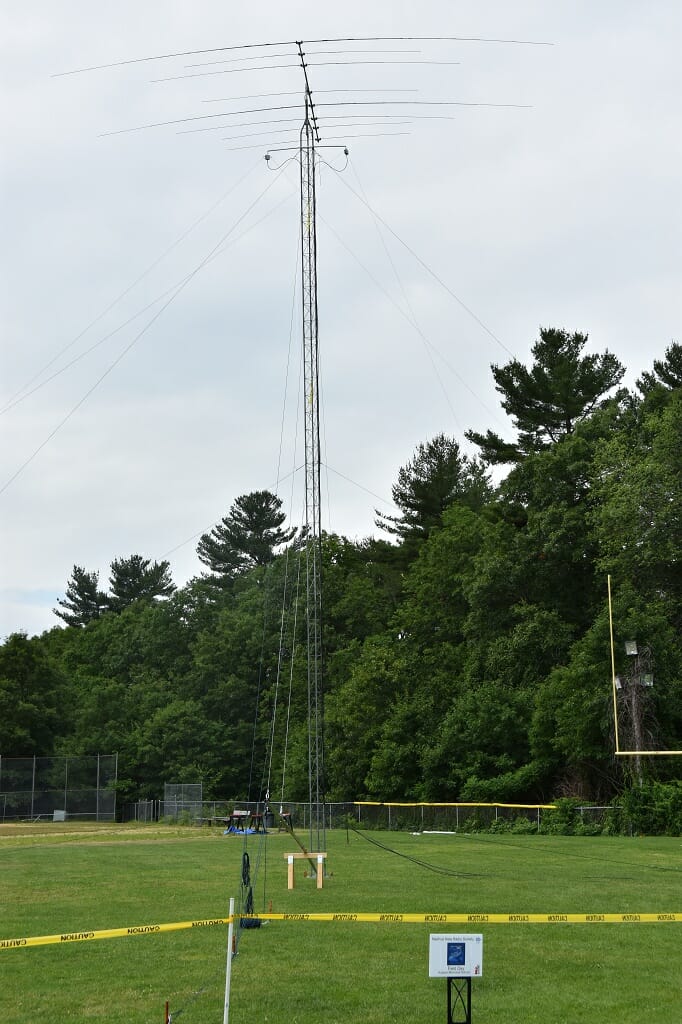
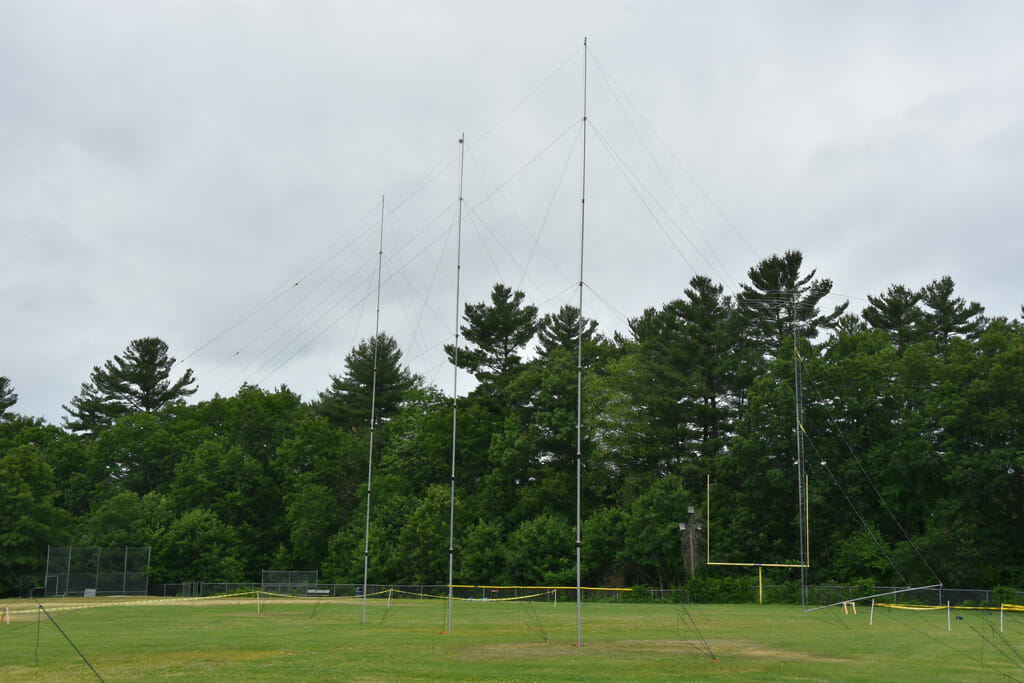
Field Day 2018 60 ft Digital Tower

We had a great Field Day this year at the Hudson Memorial School!  Thanks to our Field Day Chairmen,  Dave Merchant, K1DLM, Hamilton Stewart, K1HMS and Fred Kemmerer, AB1OC for putting together a great Field Day for us. 

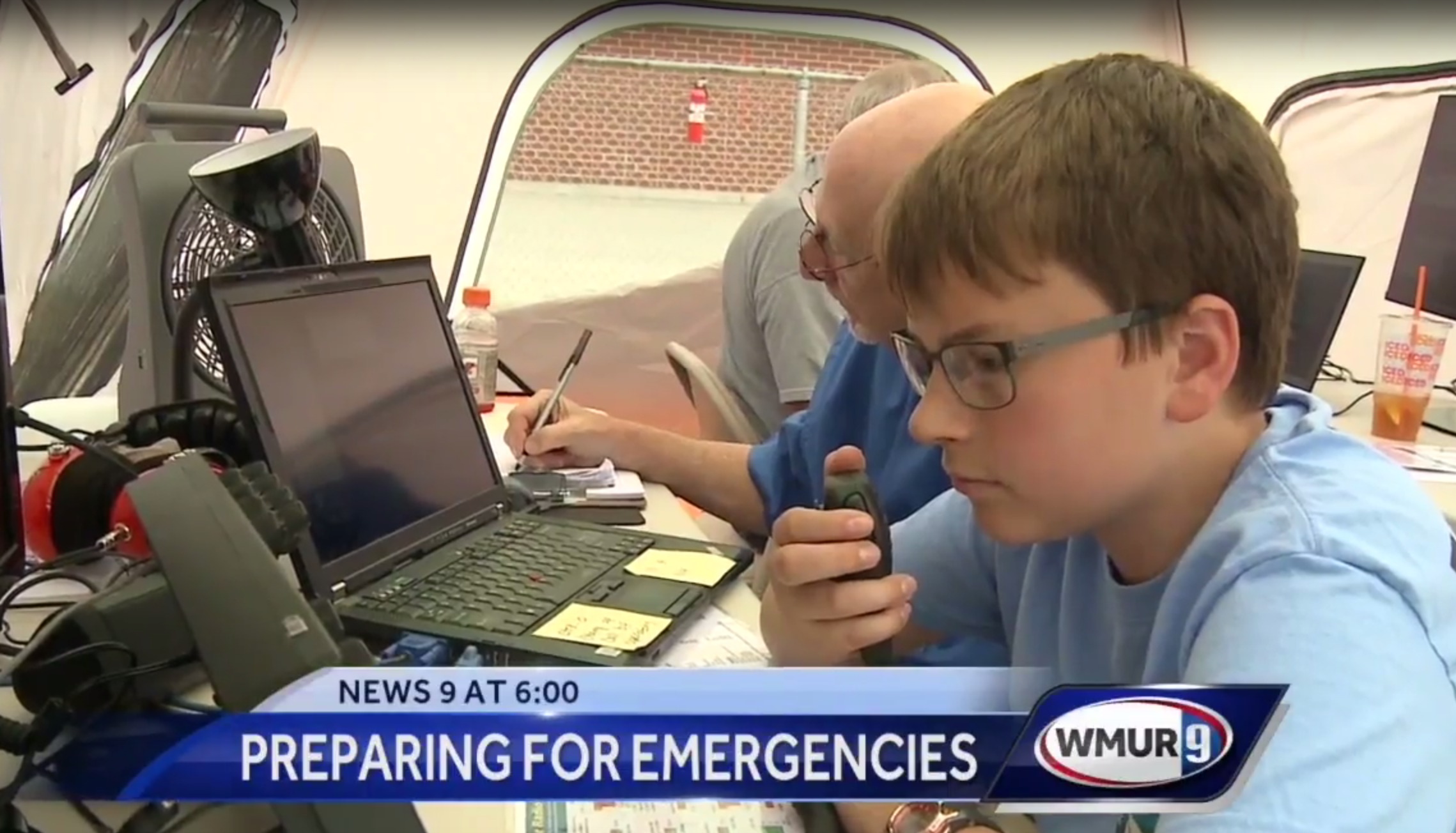
Our publicity chairperson, John W1SMN went above and beyond this year as we had coverage in print, video as well as on WMUR, the local Manchester ABC station!

NARS 2018 Field Day on WMUR

Here are links to our press coverage:

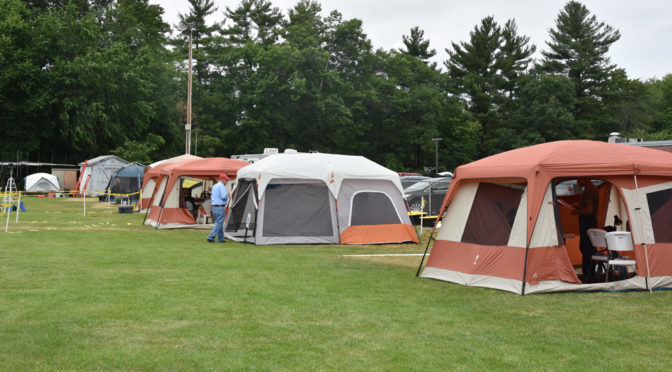
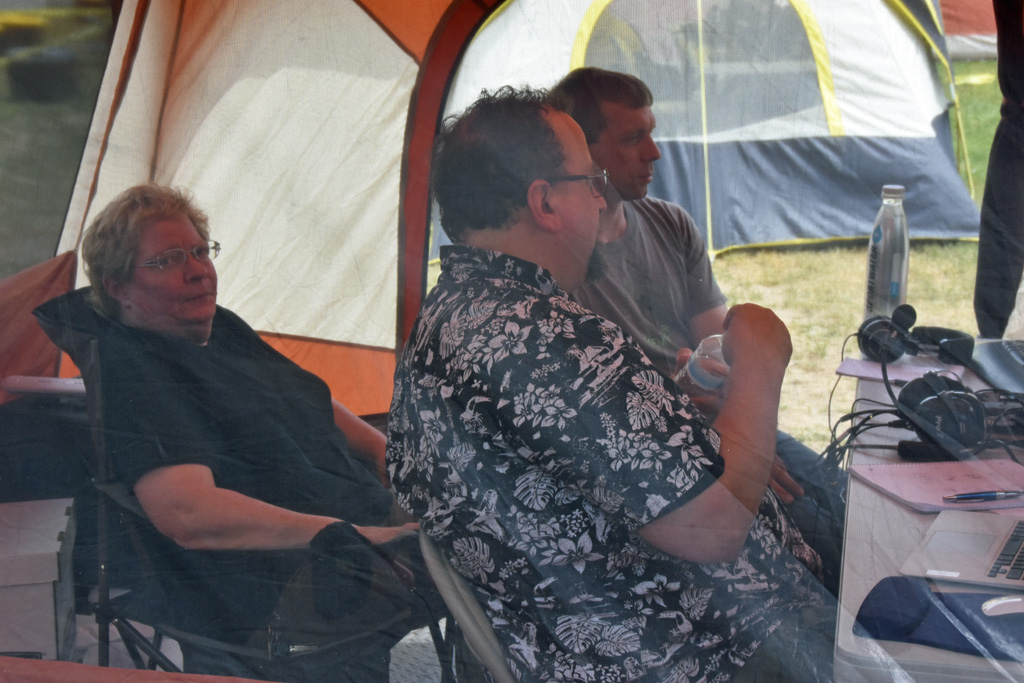
Here are a few of the sights from Field Day 2018.  Join our next Meeting on Tuesday, July 3rd at 7:00 pm at the First Church Nashua for the full readout!

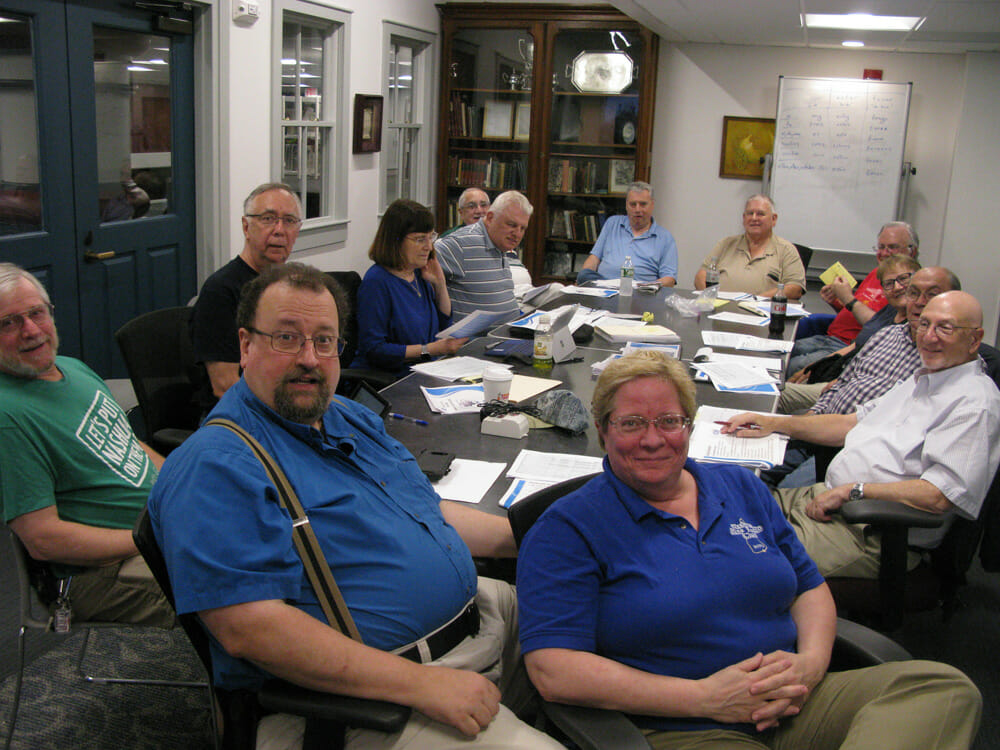
Field Day Planning Meeting

Thanks also to all of the committee chairpersons and all others who worked so hard to make this year’s Field Day a great experience!

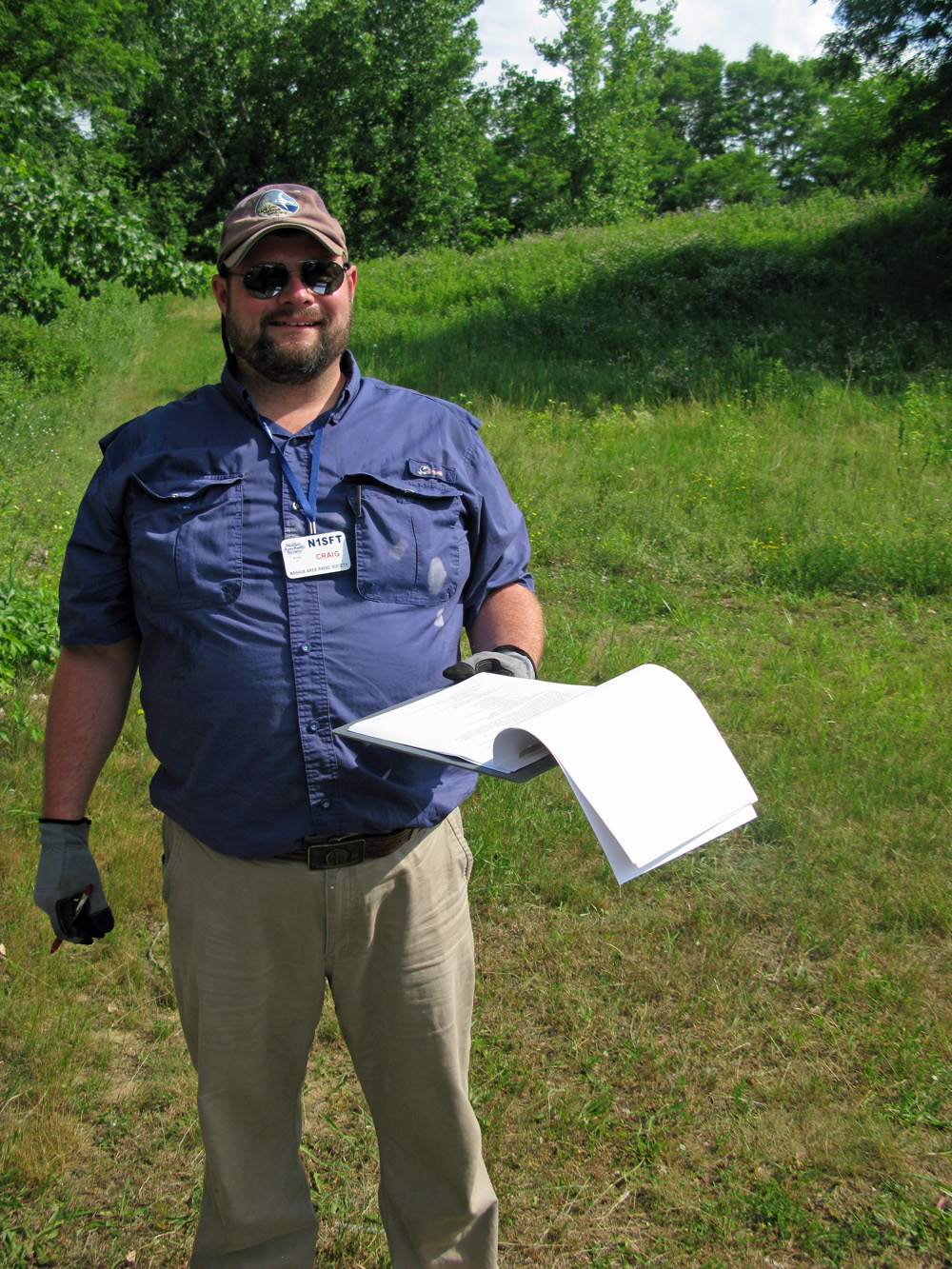
Craig, N1SFT, our Transportation Chairman

Step 1 is to get all of our Field Day equipment onsite from multiple locations.  Our transportation chairperson, Craig, N1SFT did a great job of planning and carrying this out.

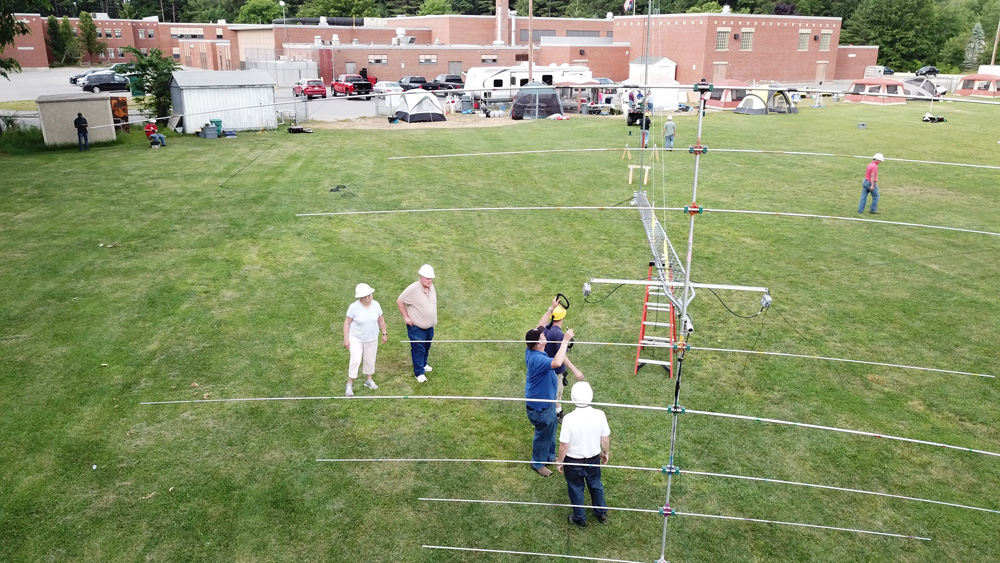
Birds Eye View of Antenna Setup

Many members came out on Thursday evening and Friday to set up 3 towers, with Yagis, the V-Beam, the Satellite Antenna and 13 stations!  Here is a shot that was taken by Desmond, WK1V from his drone.

40 meter V-Beam
40-meter V-Beam

The 40-meter V-Beam worked great and we got more QSOs on 40m SSB than any other band/mode in the event!

Satellite Antenna
Satellite Antenna

The Satellite antenna was impressive to watch as it rotates around to follow the Satellite passes.

Flex Radio Setup near 60 ft Tower

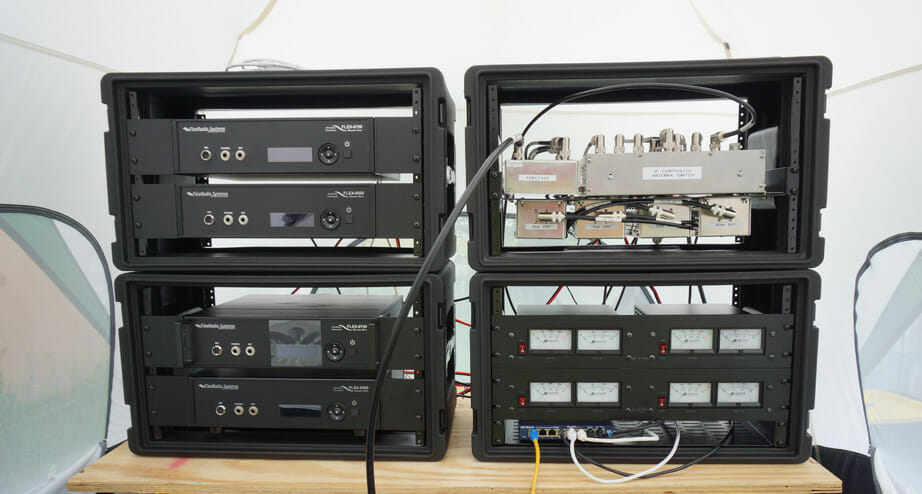
4 Flex Radios were the heart of our Digital and GOTA stations.  They were located near the 60-foot digital tower and accessed remotely via laptops and a Maestro in the Digital/GOTA tents.  Thanks to Bill Barber, NE1B and John Keslo, W1MBG for contributing their Flex Radios to the effort.  And most thanks to Dave, K1DLM for setting these up and keeping them and the network running for the duration of the event!

ARISS Training
ARISS Training

Adam Goldstein, a teacher from Hudson Memorial School and a sponsor of the HAB-3 effort at HMS gave us training on ARISS and how HMS was able to get a contact with the ISS, which will be this coming November.

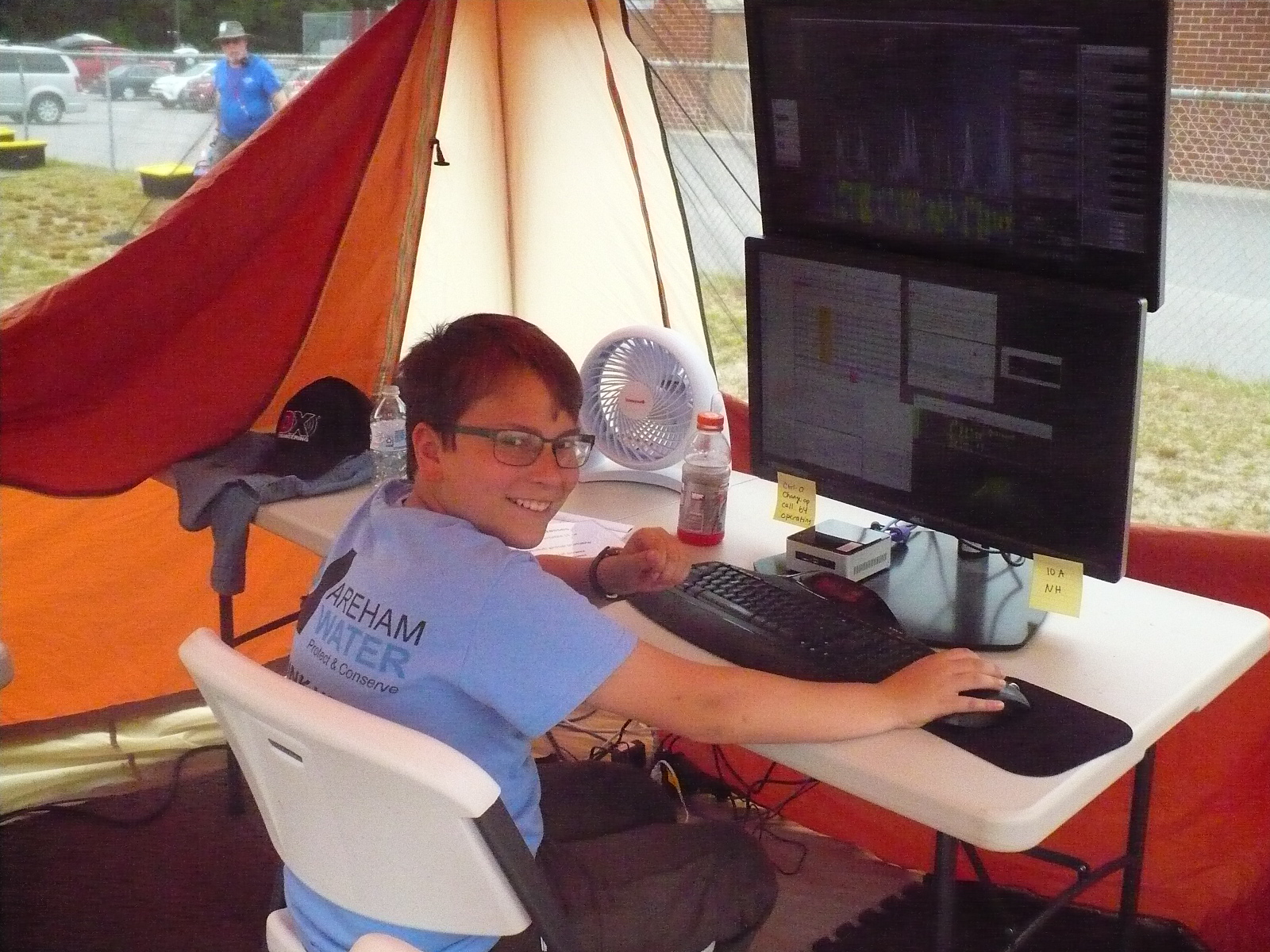
N1FD On The Air - 10A NH
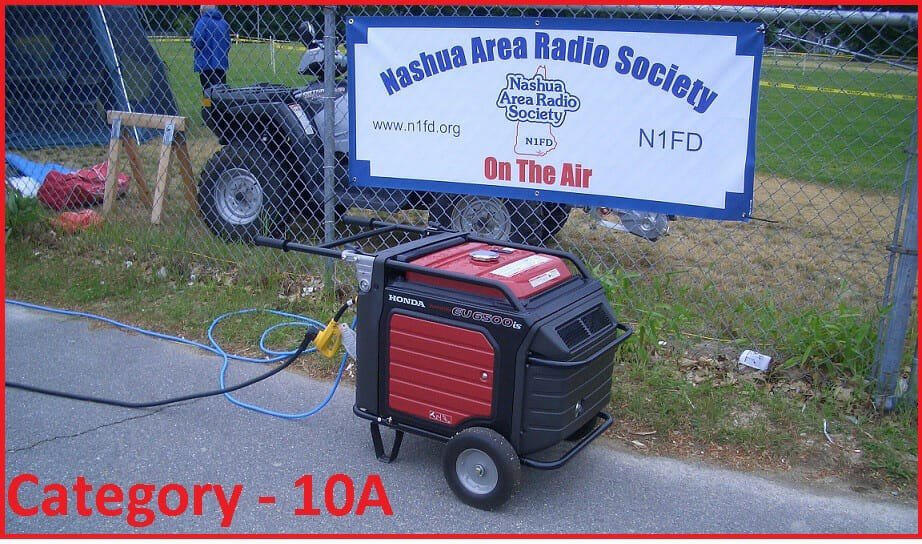
N1FD On The Air – 10A NH

Guests to Field Day were greeted by our new Banner!

Public Information Tent

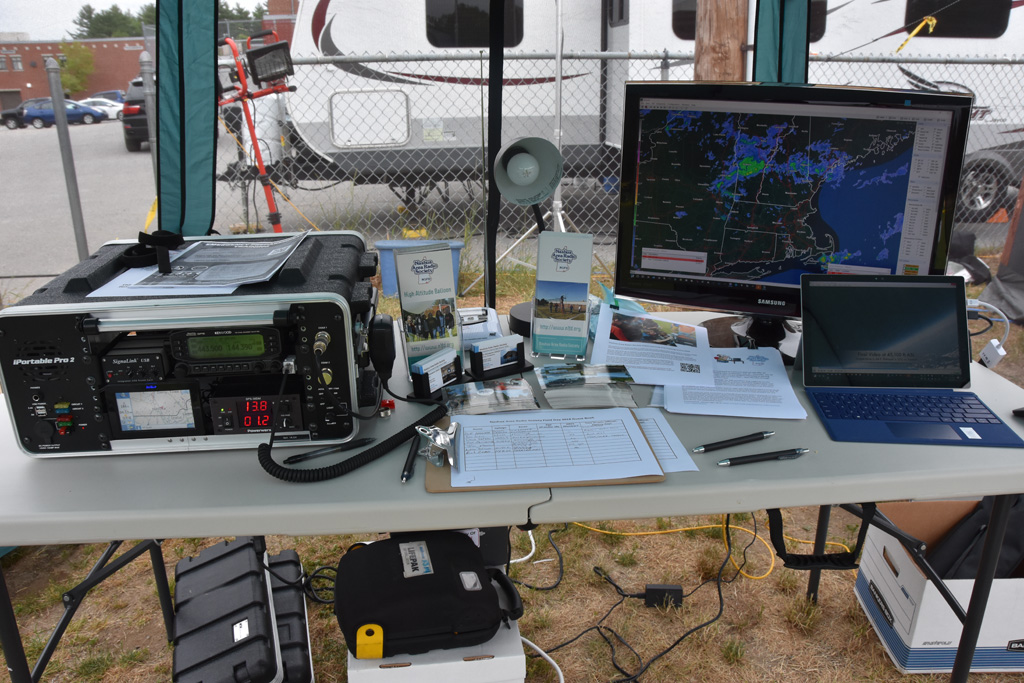
Guests could sign in and learn more about Field Day and the Nashua Area Radio Society at our Public Infomation Tent.  We also had an N1MM scoreboard and a weather radar display so we could be prepared for any incoming storms.

Team Finchum on the Air

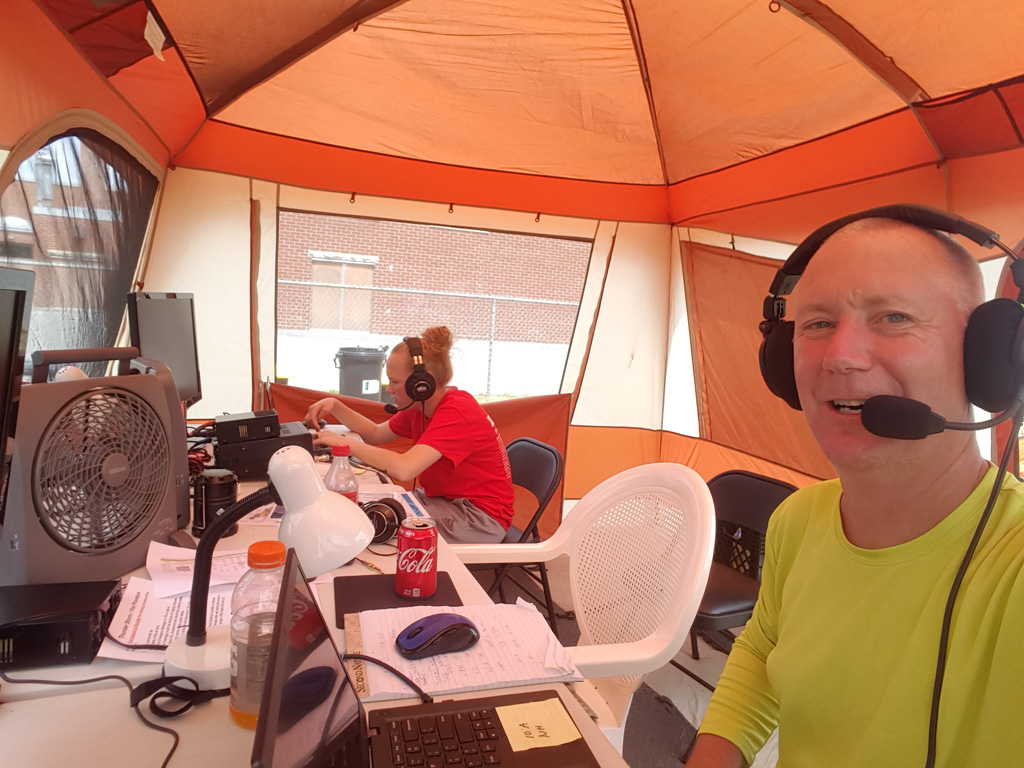
Jamey, AC1DC and Abby, AB1BY spent many hours on 20m and 40m SSB and made many QSOs!

Scott, NE1RD on 15 meter SSB

Scott, NE1RD was one of our top operators!

Keith, KC1IMK working Digital Modes

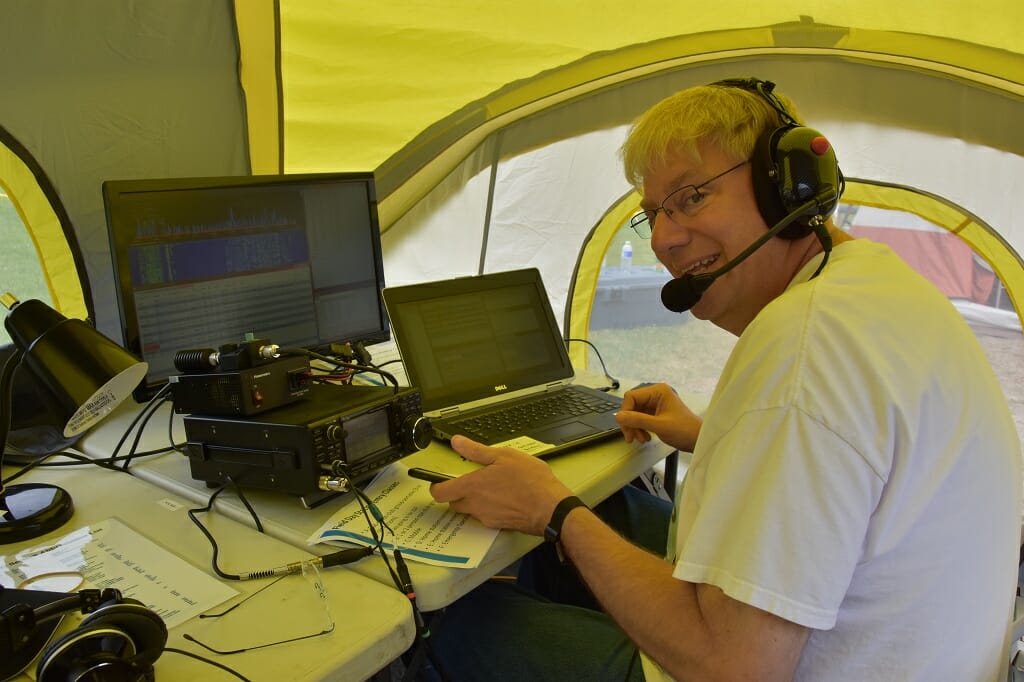
Keith, KC1IMK made his first digital contacts on PSK31.

CW at Field Day
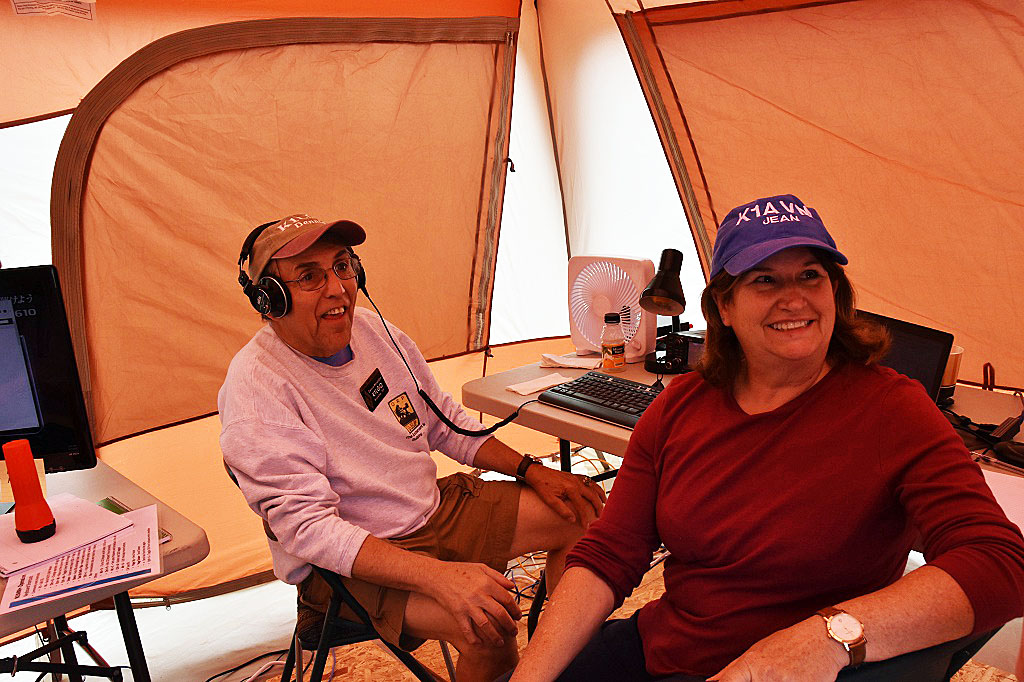
CW at Field Day

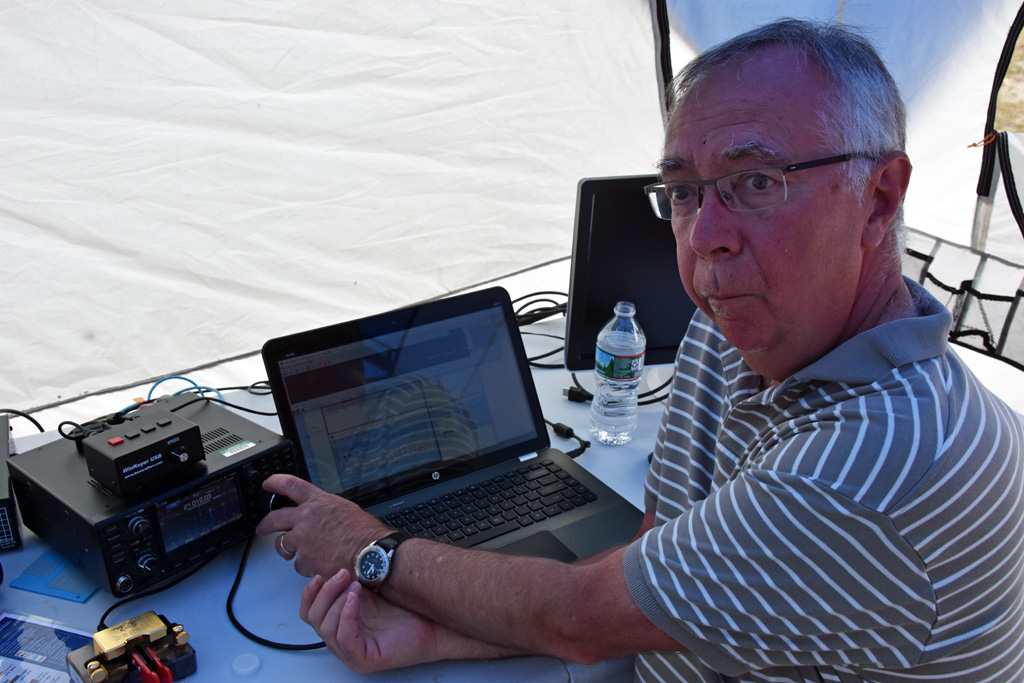
Dennis, K1LGQ and Jean K1AVM worked CW.

GOTA and 15 meter Digital Stations
GOTA and 15-meter Digital Stations

Here is Keith’s Dad, Mark, KC1IML with coach Ira, KC1EMJ making contacts on the GOTA station. Dave Merchant, K1DLM is working on the 15m Digital station.  Thanks to Dave for all the work he did in setting up and keeping the network and digital stations running!

Hamilton at the 10/15/80 meter CW Station

Hamilton, K1HMS, one of our 3 Field Day Chairpersons, worked CW QSOs on our 10/15/80 meter station.

Curtis, Charlie and Trish working the Satellites
Curtis, Charlie, and Trish working the Satellites

Curtis, N1CMD, Charlie, W1CBD, and Trish had fun working QSOs with other Field Day stations through Low Earth Orbit Satellites.

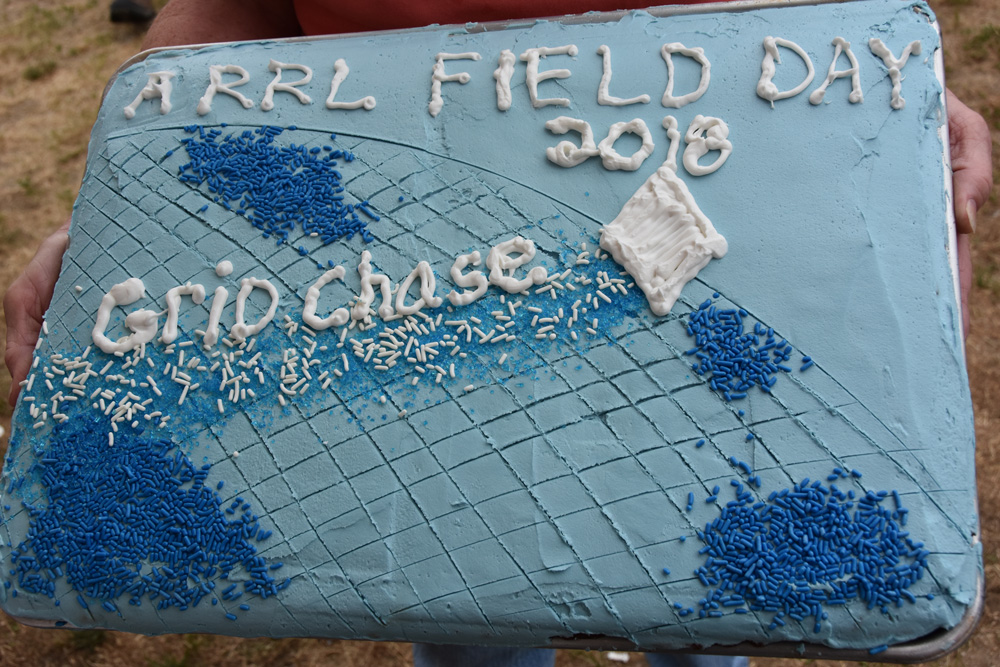
Field Day Cake
Field Day Cake

We had delicious food thanks to Valerie Merchant, who provide meals and drinks during setup as well as Field Day operations.

We are still working on the final scoring and we’ll have a final readout at the July 3rd membership meeting.

Please share any pictures or video that you have from Field Day to Fred, AB1OC.

Anita, AB1QB

Radio Amateurs Developing Skills Worldwide