All posts by Fred Kemmerer

I enjoy station building, contesting and helping new folks to join and have fun with our hobby.

A Potential New Project – A Nashua Area Radio Society Club Station

We are currently considering a new project for the Nashua Area Radio Society – potentially building a club station for our members to use. We know that many folks, particularly new and recently upgraded Hams would likely use and benefit from a club station if we had one.

Why Build A Club Station?

A club station would provide many opportunities for our members to build skills and have fun with Amateur Radio. It would also provide an important emergency communications resource to members of our community. Some additional uses of a club station might include:

Space Needs

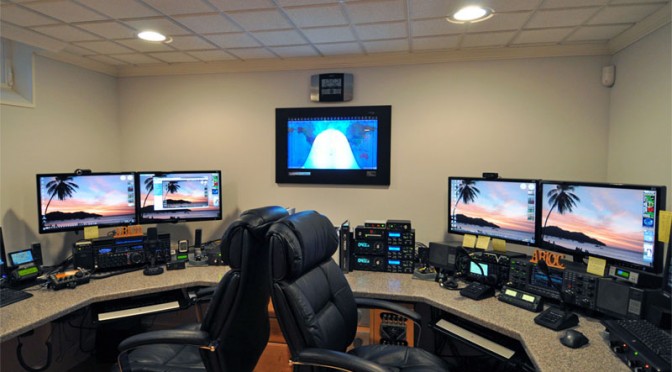
I wanted to share some ideas about what capabilities we are thinking about including in such a project. First, we’d certainly want to have a permanent space that our members could access and use to make contacts. This means that we’ need to find a location that could support 200 sq ft or more of space for equipment and operators. Space would need to be reasonably accessible to our members and have adequate power, light, heat, and Internet access available.

Possible Club Station Capabilities

Hex Beam Directional Antenna

A club station would be an on-going project that would likely evolve and grow with our club’s member’s interests and skills. Some capabilities that we might initially include would be:

  • A 100 w HF station for at least 40m – 10m
  • A combination of a wire (40m) antenna and a directional (Hex beam or a tri-band 20m-10m) antenna
  • An FM repeater transceiver and antenna
  • A computer for logging and other Amateur Radio activities such as Digital operations
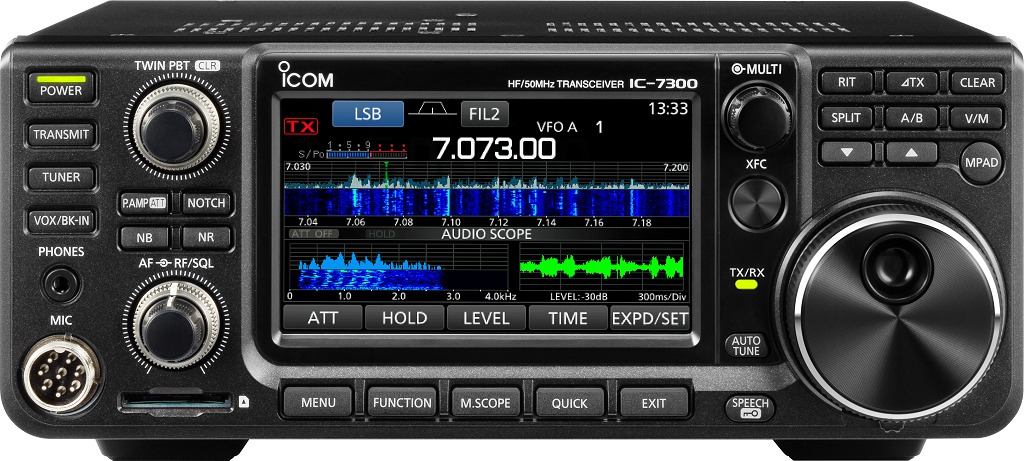
HF Transceiver - IC-7300 - Club station radio

100W HF Transceiver Example – Icom IC-7300

Longer-term additions might include:

  • 6m and 80m capabilities
  • Ability to operate the station remotely from home and other locations via the Internet
  • A satellite ground station
  • A 500w amplifier for HF
  • Additional contesting capabilities

Getting Started – What Do We Need?

We are exploring the idea of a club station at this time. The first step in the project would be to find a suitable space that we could use. We’re looking for a location that is centrally located in the Nashua Area. A Loft or similar space at someone’s QTH or a space that is part of an existing business, educational facility, or other public space would make great potential candidates for a club station.

Perhaps you have or know of someone who has a loft or other suitable space that we might use. The benefit to someone who could help us in this way would be ready access to a top-notch Amateur Radio Station along with the satisfaction that comes from helping our members develop their skills and support our community in times of emergency.

If you know of a space that you think we might consider, please contact us at [email protected]. We are also looking for members who would like to help us with this project. We hope to find a space and undertake a club station project in 2020.

Fred, AB1OC
Winter Field Day 2020 Final Station Test

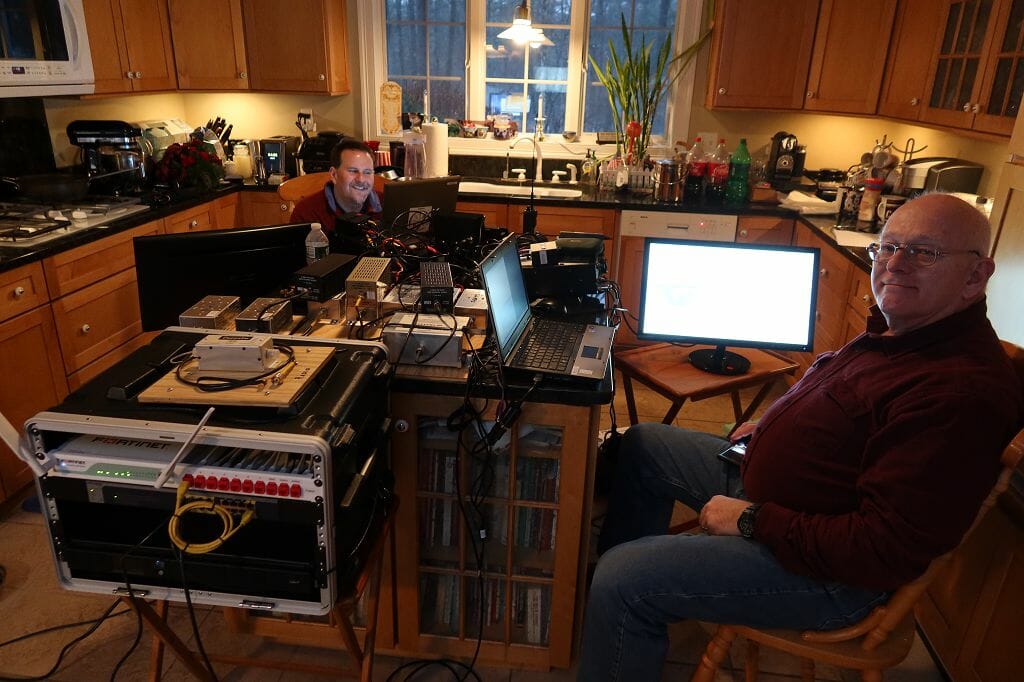
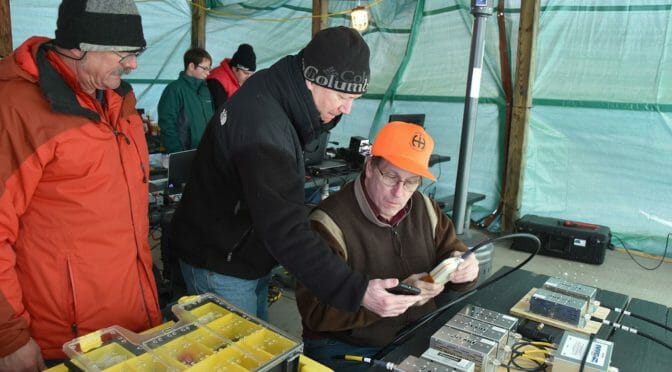
Winter Field Day 2020 is almost here! A few weekends ago, Jerry K1OKD, Jon AC1EV, Andrew NF1H, Anita AB1QB, and I got together at our QTH to complete the final station test for our planned 5O operation in Winter Field Day (WFD).

Portable Wireless Networking

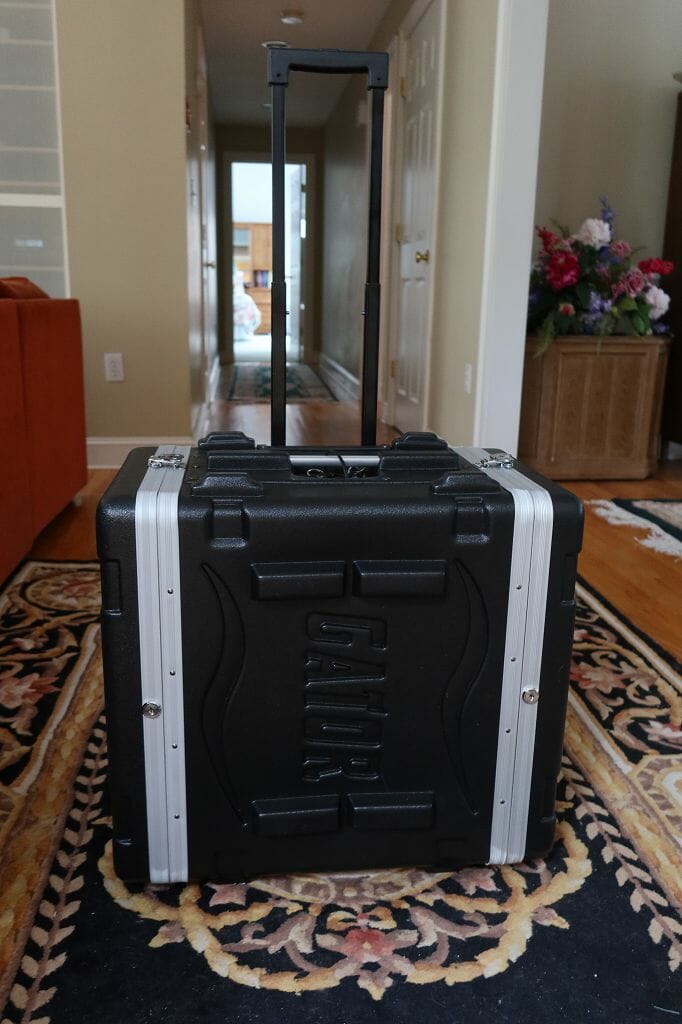
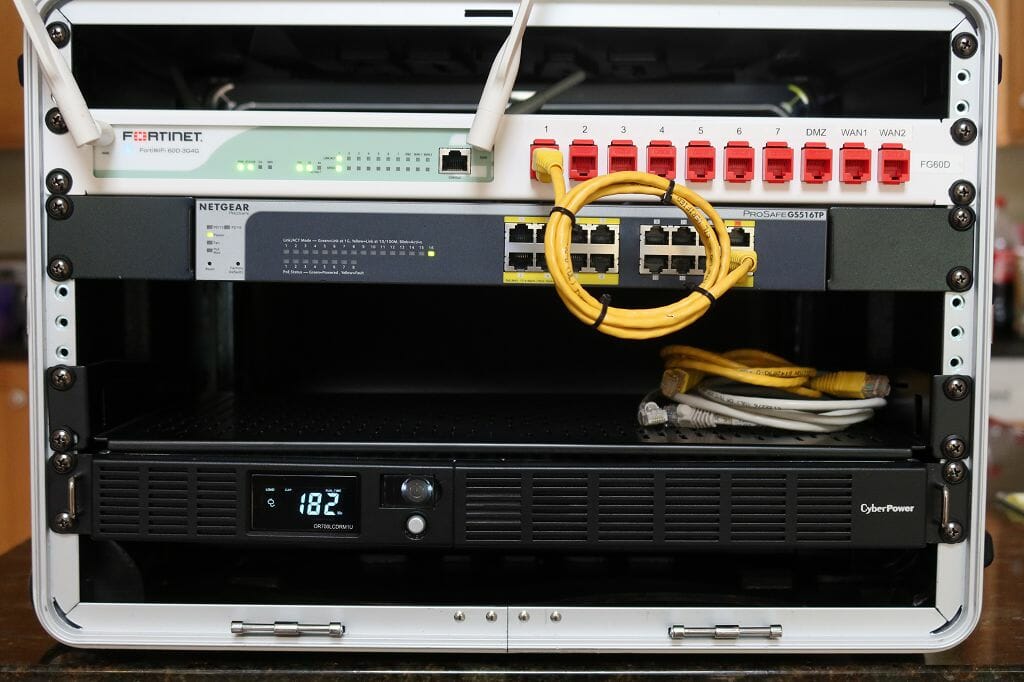
Portable Wireless Networking Pod

In preparation for WFD 2020 and our test, I built a new Wireless Networking Pod. This unit was made possible by a very generous donation of a router with LTE wireless access capabilities by Dave, K1DLM.

Networking Pod Details

The system consists of the following components:

Our Networking Pod will be used in a number of ways to support Nashua Area Radio Society activities including Youth Expos, Ham Bootcamps, Field Day Operations, Portable Operations, and others. It provides a wired and wireless (via WiFi) network capability including DHCP, DNS, Firewall and other IP services that can be used to network computers running the N1MM+ logger and other apps. It can also be used to provide wireless internet access via LTE in situations where we need this.

Station Testing

VHF Station #2 Test
VHF Station Test

We had already assembled and tested our two Winter Field Day 2020 HF/VHF+ Stations during a previous station test so the final test was focused on the three planned HF stations and the networking of the N1MM+ Loggers that we’ll be using.

Winter Field Day 2020 HF Station and Network Test
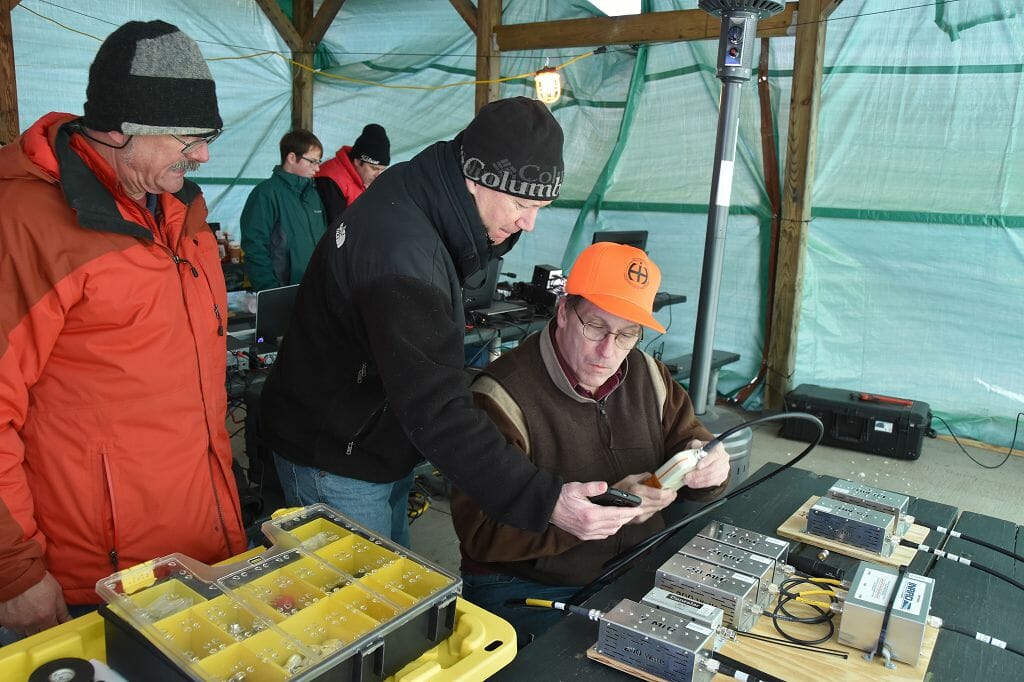
Jerry K1OKD and Jon AC1EV Perform an HF Station and Networking Test

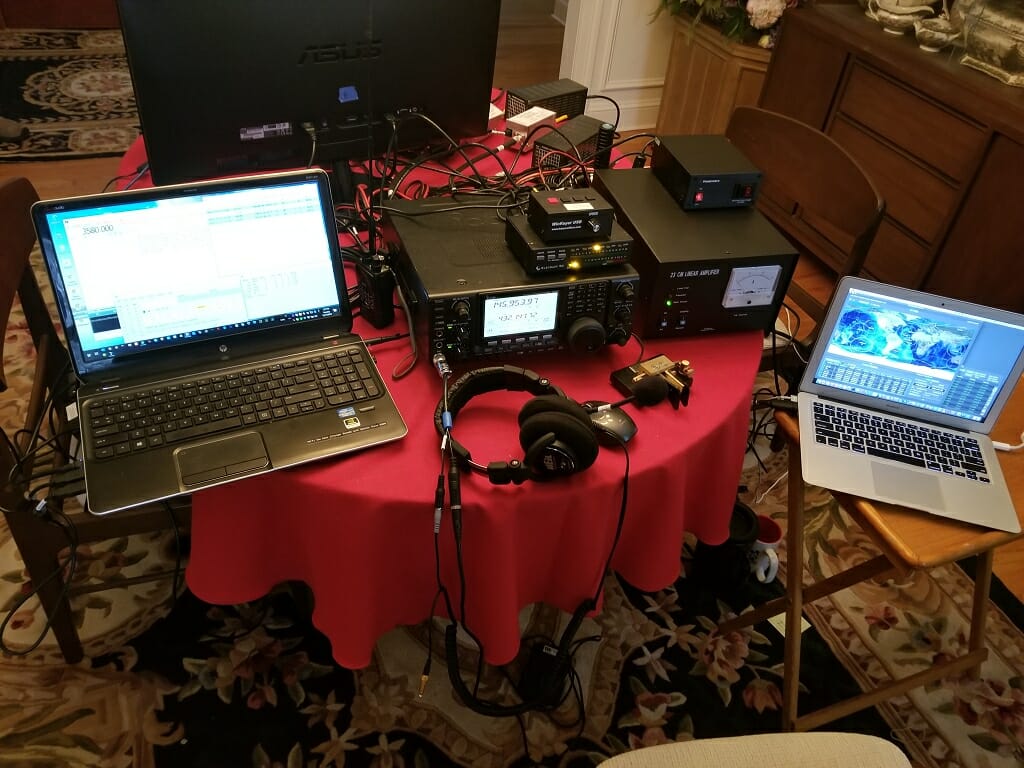
We set up the three HF stations and connected the associated laptop computers to the Network Pod for the test. Each of our HF stations includes:

WFD Station Building in Progress
Triplexer and Bandpass Filtering system at Winter Field Day

We also tested our Triplexer and Bandpass Filtering system along with the radios.

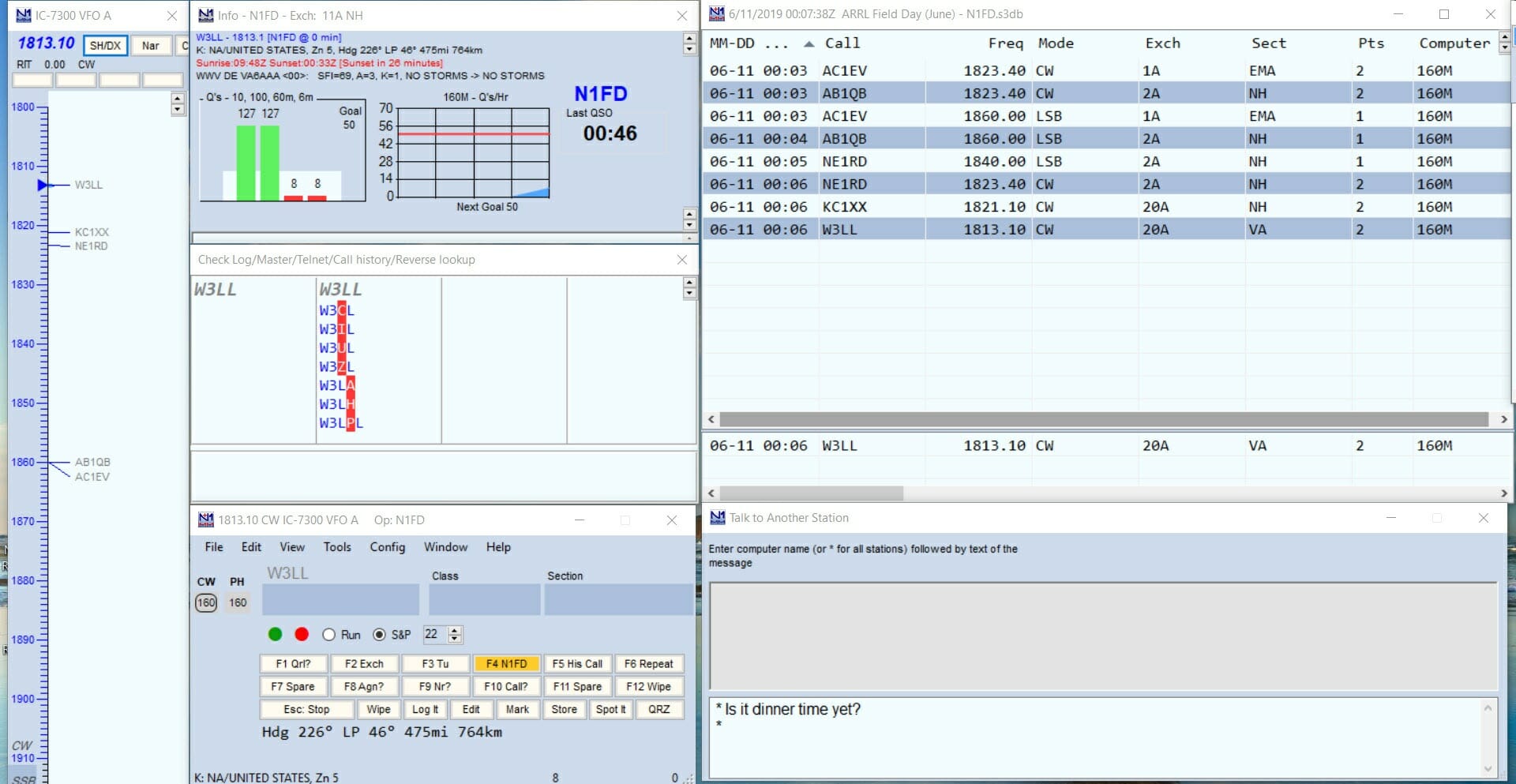
160m All-Mode Station Main N1MM+ Monitor

A big part of this test was to get the N1MM Logger+ working with the radios and in a network configuration using the Networking Pod. Networking N1MM+ enables us to maintain a common log across the 5 stations in our Winter Field Day setup. All of the stations were also set up for SSB Voice, CW and Digital operation via N1MM+.

All of the station tests are complete and we are ready for Winter Field Day! Come on out and join us for what I am sure will be a lot of fun!

Fred, AB1OC

December 2019 ISS SSTV Event

Slow-Scan TV from the International Space Station (ISS) was on the air again late in December 2019.  The ISS SSTV event was in memory of cosmonaut Alexei Leonov.

Receiving SSTV Images From the ISS

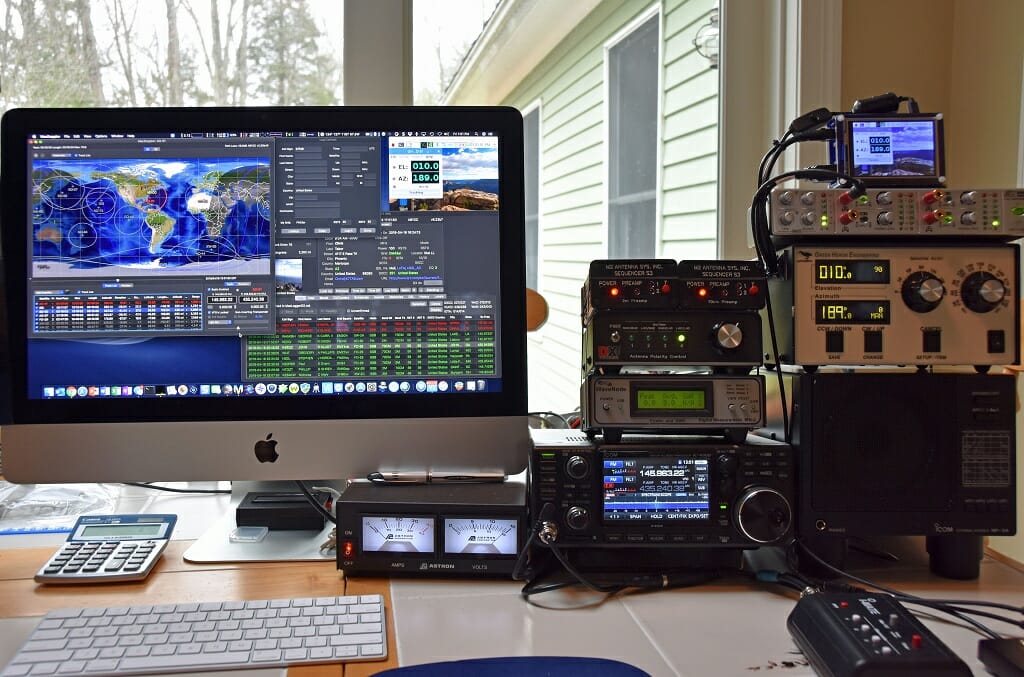
Satellite Station 4.0 with IC-9700
AB1OC-AB1QB Satellite Station 4.0

We had our satellite station running to track the ISS and capture the SSTV images during the event.

Dec 2019 ISS SSTV Image #6
Dec 2019 ISS SSTV Image

There were quite a few good ISS passes over our area during the event and we were able to capture some nice images.

The video above shows the reception of an SSTV image from the ISS. The images are transmitted on the 2m band using a standard SSTV format. We use a program called MMSSTV to decode the transmissions and display the images.

It’s pretty easy to receive these images – it can be done with an HT, hand-held antenna, and a laptop. The video above shows how to receive an image from the ISS this way. You can read more about what’s involved in setting up equipment and software to receive and decode these images here.

Image Gallery

We had fun receiving the SSTV event images.  The gallery above contains all of the images that we received as part of the event.  For future events, keep an eye on the ARISS SSTV Blog.

Anita, AB1QB and Fred, AB1OC

Radio Amateurs Developing Skills Worldwide