Tag Archives: Youth Outreach

Sights From Field Day 2017

Field Day 2017 is but a memory for us now. Dave, K1DLM, our Field Day Chairman, and the entire Field Day team did a great job with putting together our Field Day operation this year.

We are still adding up our score and collecting pictures and video from everyone. I wanted to get something out quickly so that we could begin to enjoy some of the memories. So here is my quick Sights from Field Day 2017….
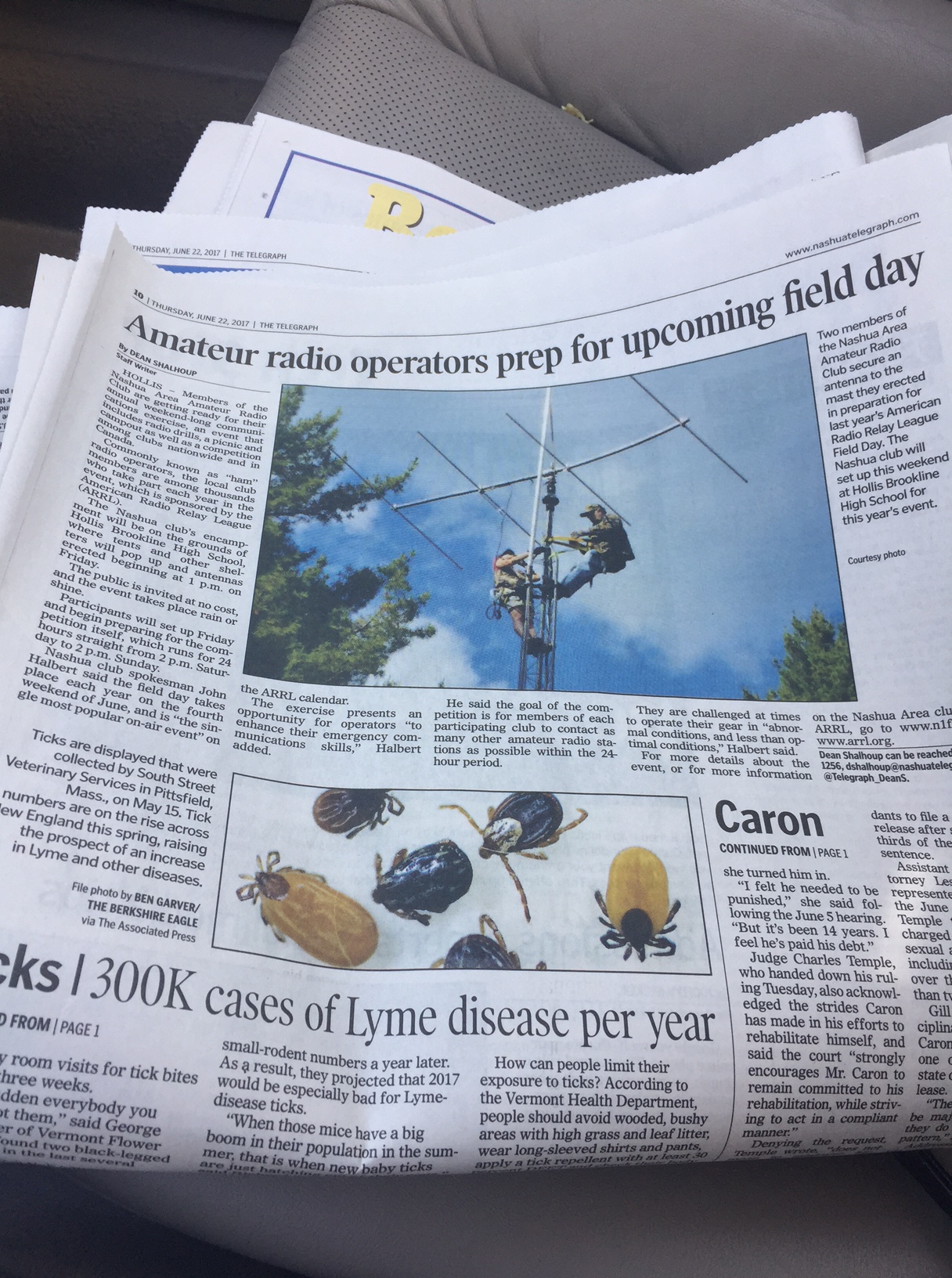
Field Day 2017 Telegraph Article
Our Field Day Telegraph Article

We did a fantastic job on publicity this year…
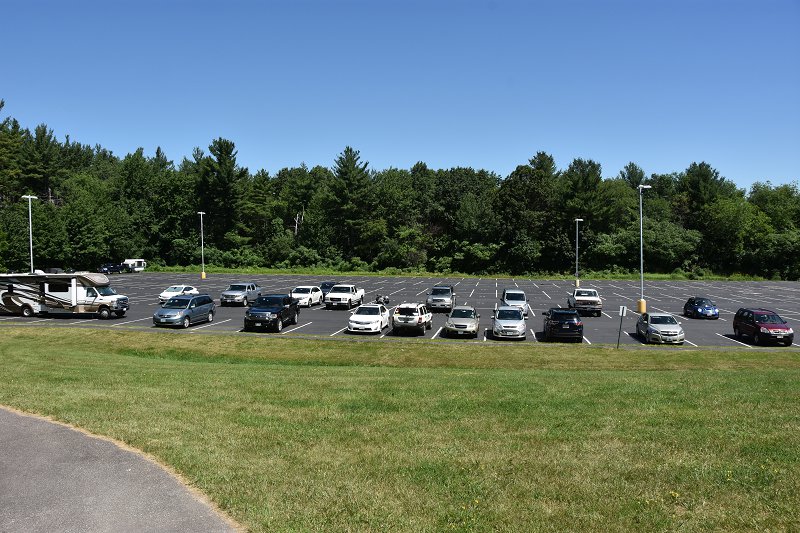
Field Day 2017 - Parking Lot Was Full
The Parking Lot Was Full

and the parking lot was full of visitors and members on Saturday and Sunday.
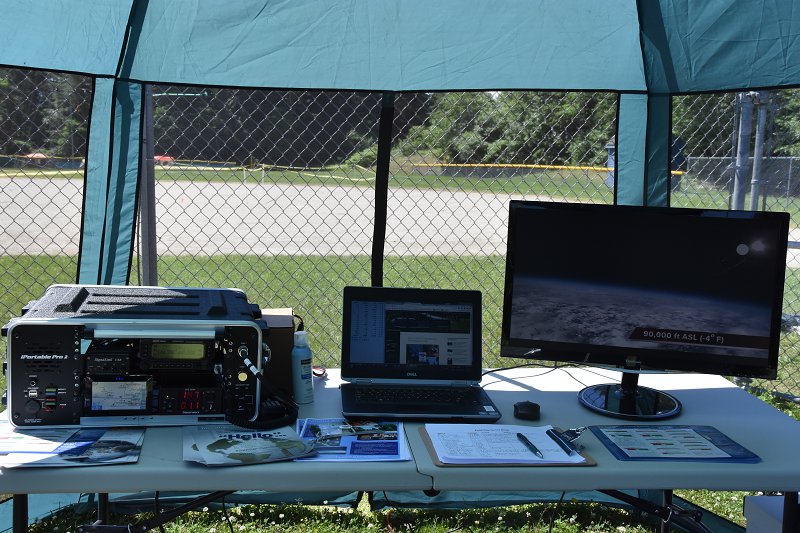
Field Day 2017 Public Info Tent Was A Hit
Our Public Info Tent Is A Hit

Our updated Public Information Tent was a hot spot for our many visitors (over 45 visitors signed our guest register)!
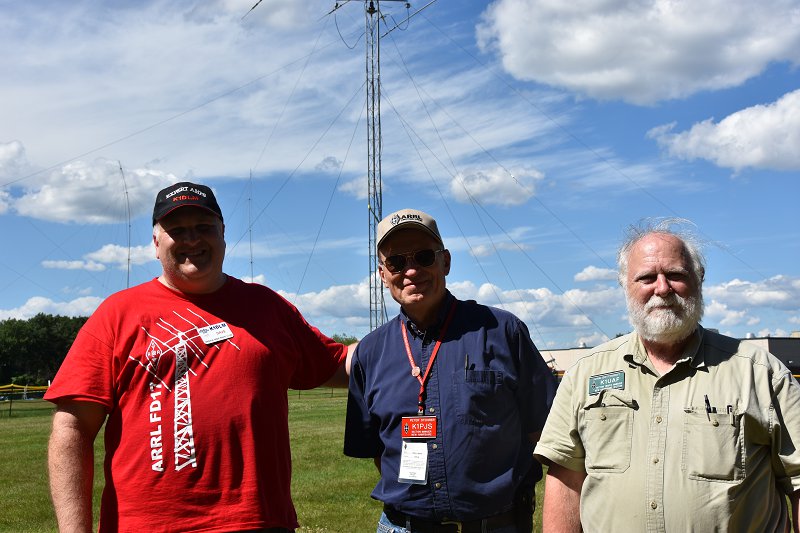
Field day 2017 Visitors - ARRL Section Leaders - Peter, K1PJS And John, K1UAF
ARRL Section Leaders – Peter, K1PJS And John, K1UAF

The ARRL “brass” came out early to congratulate Dave, K1DLM our Field Day Chairman, and to tour our site.
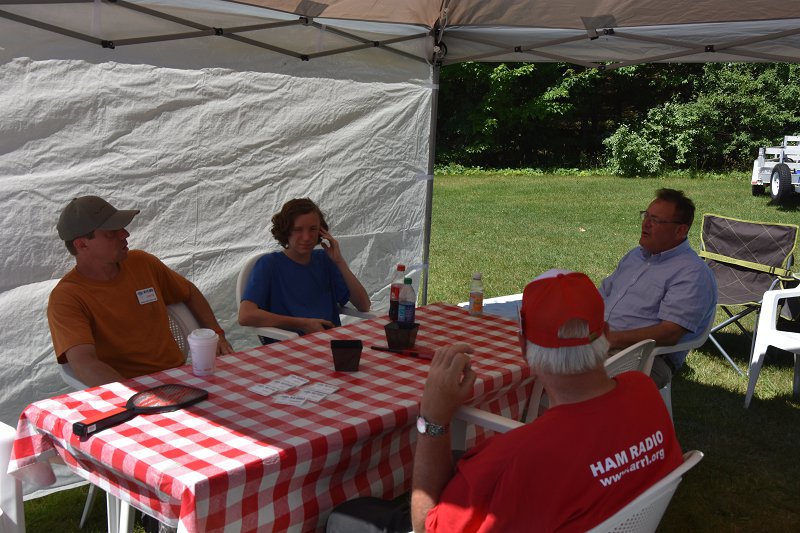
Field day 2017 Food Was Awesome!
The Food Was Awesome!

The food was unbelievably good – thanks, Valerie!!! And the N1FD cafe’ was a hot-spot as usual.
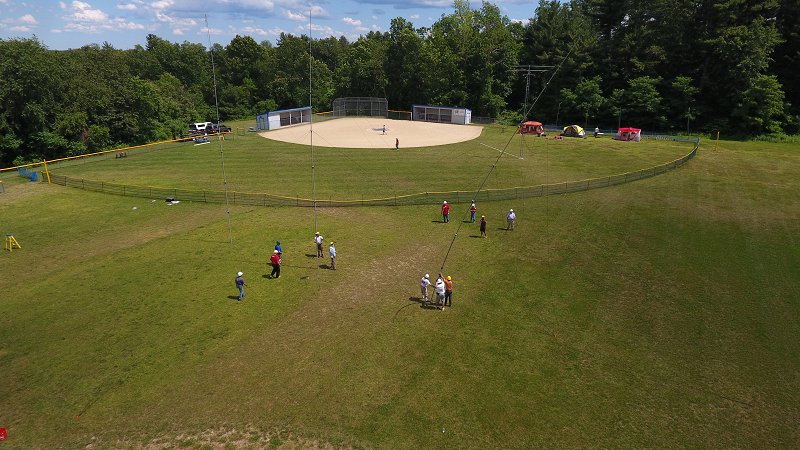
Field Day 2017 Site Setup On The Upper Field
Site Setup On The Upper Field

Site setup at Hollis-Brookline High School began with the 40M V-Beam.
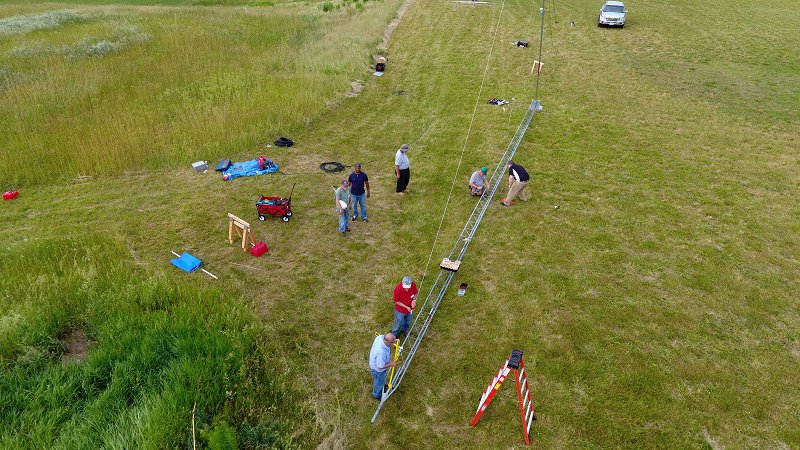
Field Day 2017 Site Setup On The Upper Field - The 60 Ft Tower Coming Together
Site Setup On The Upper Field – The 60 Ft Tower Coming Together

The tower team began on the lower field by setting up the new 60 ft. tower.
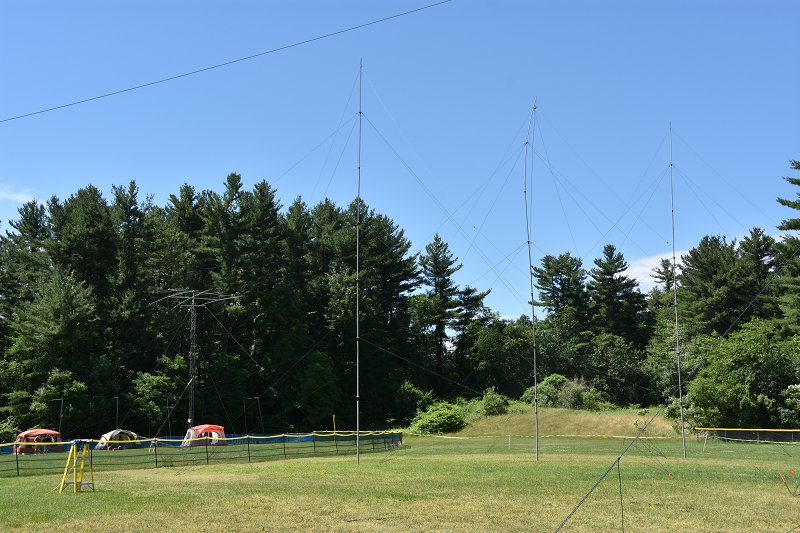
Field Day 2017 - The V-Beam Was Back
The V-Beam Was Back

The 40M V-beam was awesome as ever and went up in record time…

Field Day 2017 - A New 60 Ft Tower
New 60 Ft Tower

and our new 60 ft. tower was a sight to behold!
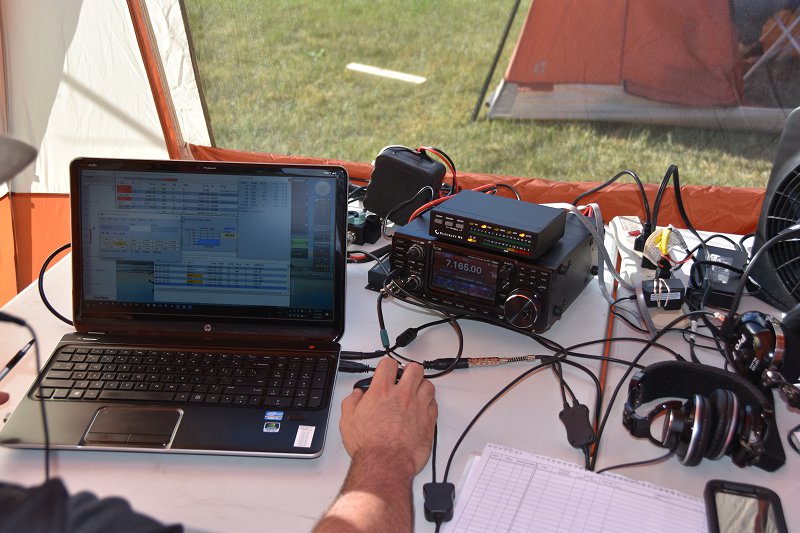
Field Day 2017 - 40M SSB Station
40M SSB Station

We built lots of stations – 3 SSB, 3 CW, a RTTY/PSK Digital Station, a GOTA station, a 6M Station with a new yagi, and a computer controller Satellite Station. We also setup a 2M/70cm Go Kit for talk-in and APRS demos. All totaled, we had 10 transmitters on the air! Our exchange was 7A NH.
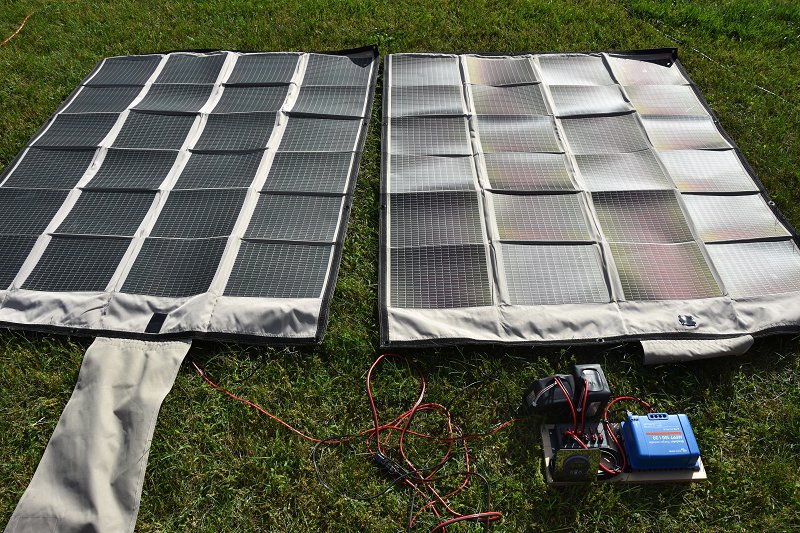
Field Day 2017 Solar Power Setup
Solar Power Setup

We got our Solar-Battery bonus late on Saturday.
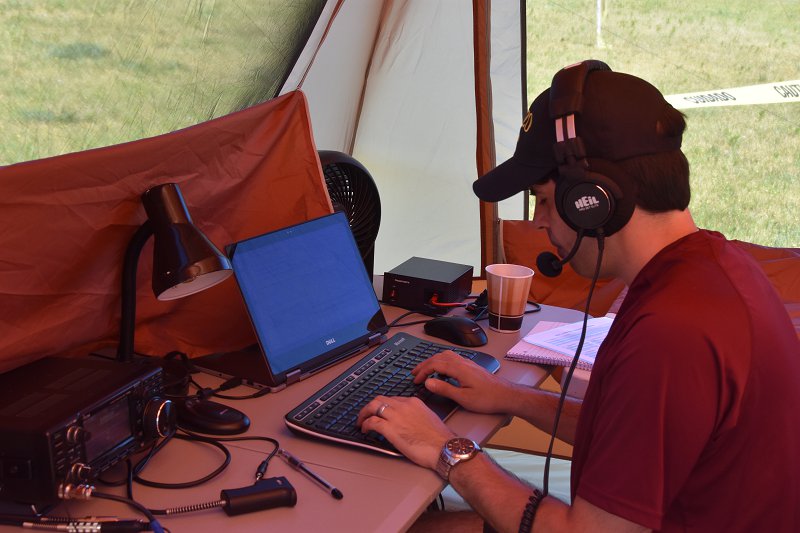
Field Day 2017 - Brian, AB1ZO Operating SSB
Brian, AB1ZO Operating SSB

Everyone operated very hard and we made more contacts than last year!
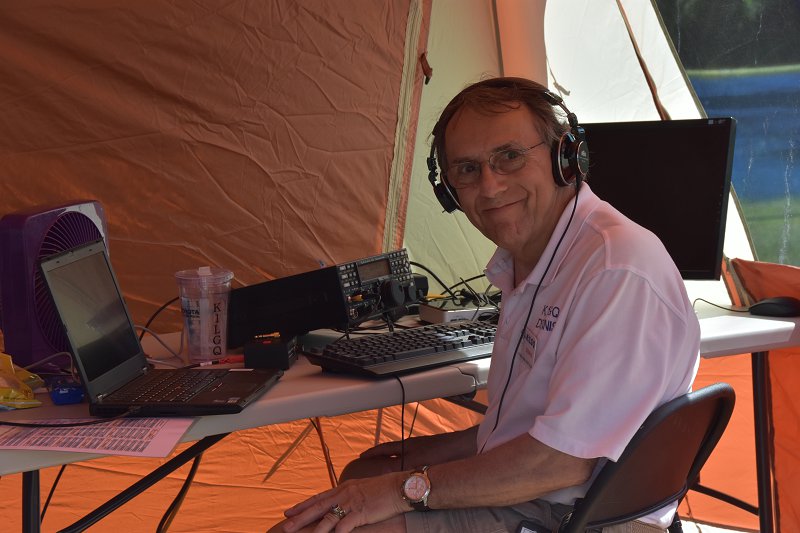
Field Day 2017 CW Ops - Dennis, K1LGQ
CW Ops – Dennis, K1LGQ

Our CW operators were amazing again this year. Here’s Dennis banging out CW QSOs. Dave, KM3T even operated SO2R for a period – calling “CQ” and working contacts on both 20M and 40M CW at the same time! Gene, W3UA brought his CW skimmer and we set up an OCF dipole to provide on-site CW spots.
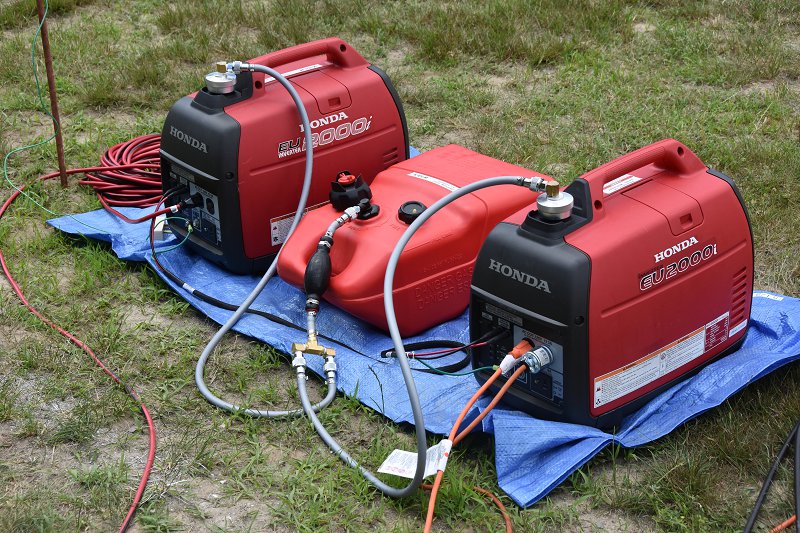
Field Day 2017 - And The Generators Played On...
And The Generators Played On…

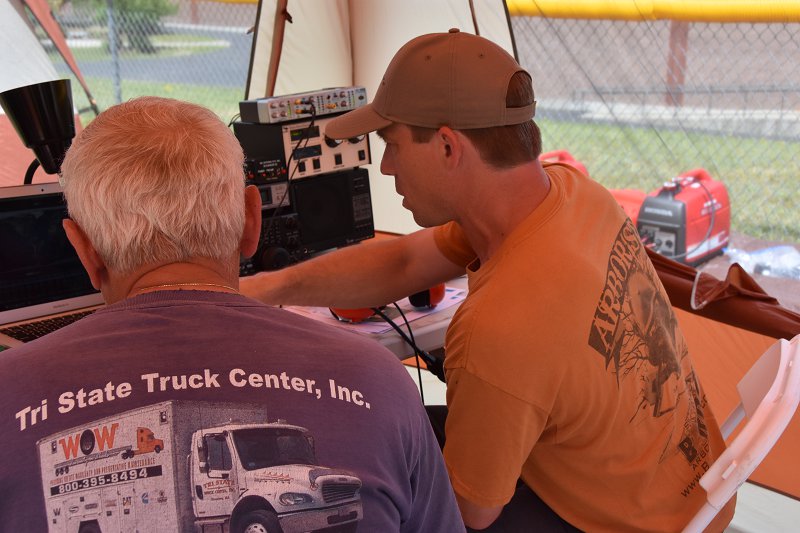
And the new generators worked flawlessly and were much easier to service.
Field Day 2017 - Curtis, N1CMD Making Satellite Fun!
Curtis, N1CMD Making Satellite Fun!

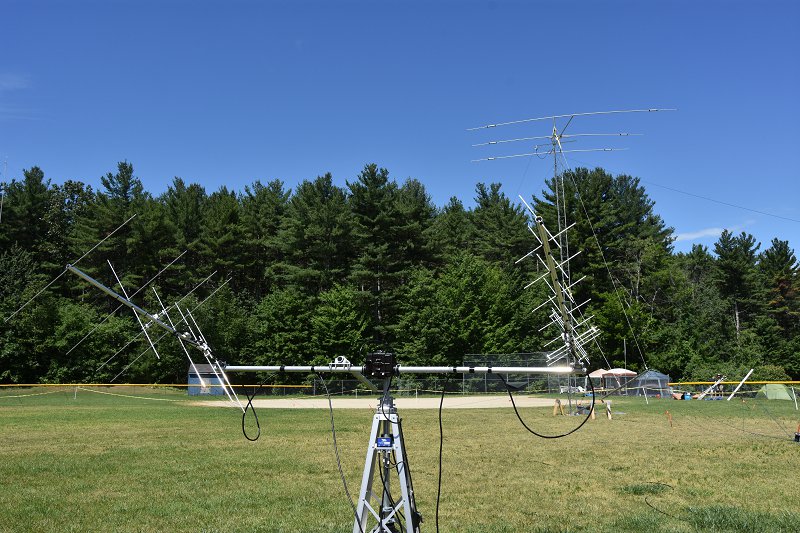
Curtis, N1CMD ran our Satellite Station 2.0 and wowed everyone while making satellite contacts….
Field Day 2017 Satellite Station 20 In Action
Satellite Station 2.0 In Action

and our visitors got a kick out of seeing the computer controlled satellite antennas.
Team Finchum In Action

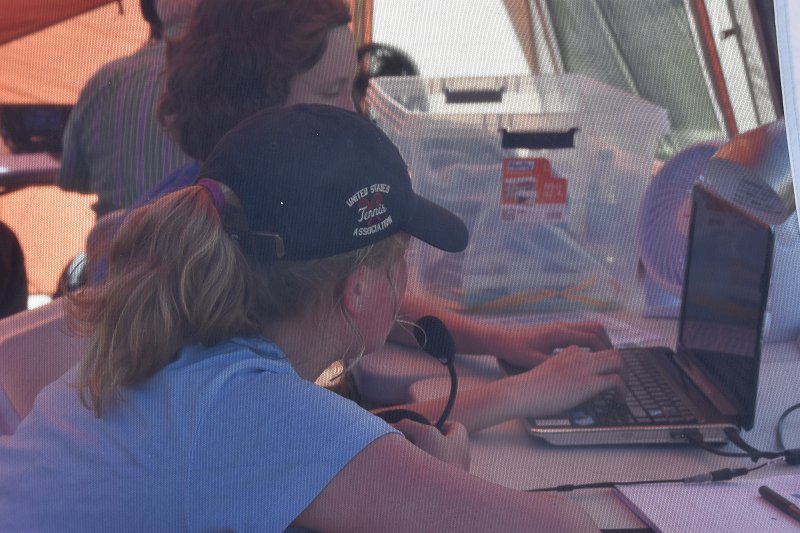
Team Finchum was in high gear as always – here’s Abby, AB1BY operating with her brother Connor, KC1GGX. It seemed like Abby was on every SSB station that I looked at all weekend long…
New Digital Station For Field Day 2017
New Digital Station For 2017

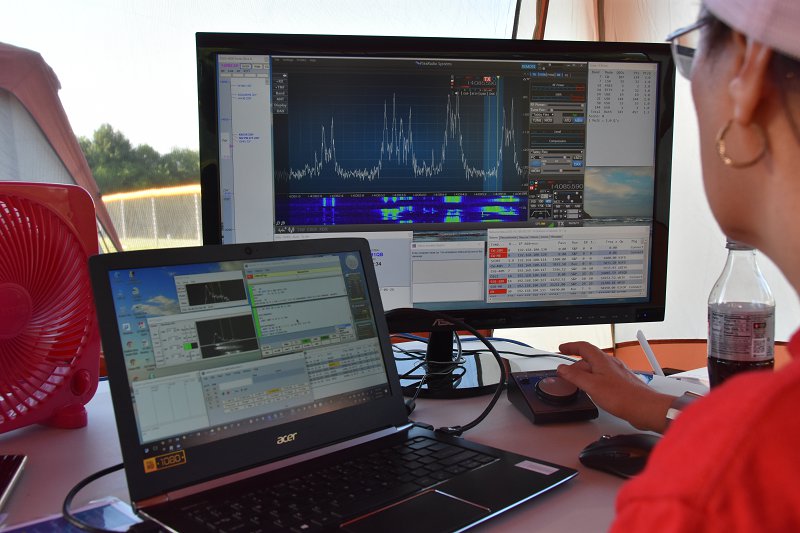
Our new SDR powered Digital Station worked well and we had lots of digital contacts using the antennas on the new 60 ft. tower.
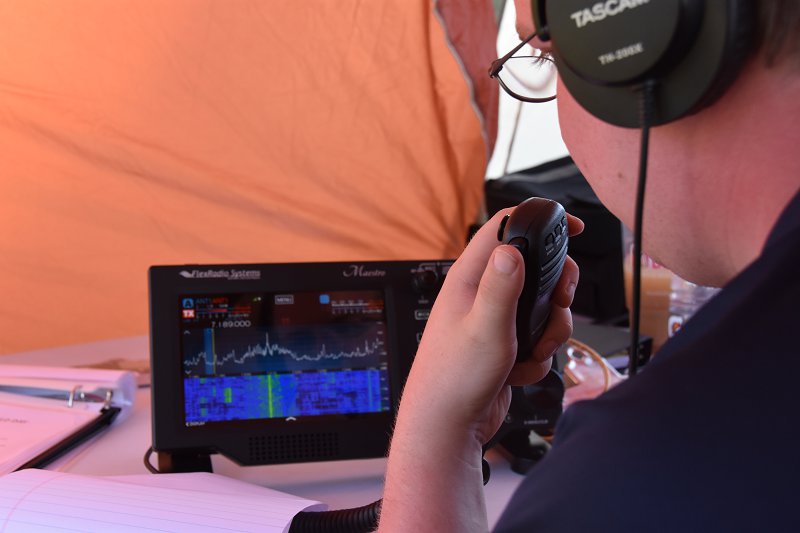
Field Day 2017 SDR GOTA Was Cool!
The SDR GOTA Was Cool!

The SDR-based GOTA station worked out super well. Ira, KC1EMJ was our GOTA coach and was busy on Saturday and Sunday introducing our guests and newly licensed members to “high-tech” Amateur Radio. We had many young people try Amateur Radio for the very first time on our GOTA station.
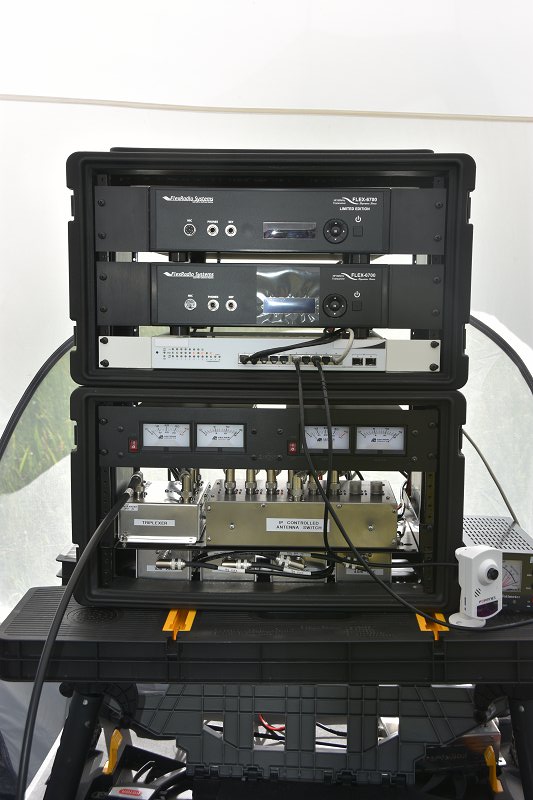
Field Day 2017 Remote SDR System
Remote SDR System

We operated the two SDRs for the Digital and GOTA stations remotely over a coax cable data link between the upper and lower fields. Pierce, K1FOP and Dave, K1DLM put together this high-tech setup and the underpinning data networking system.
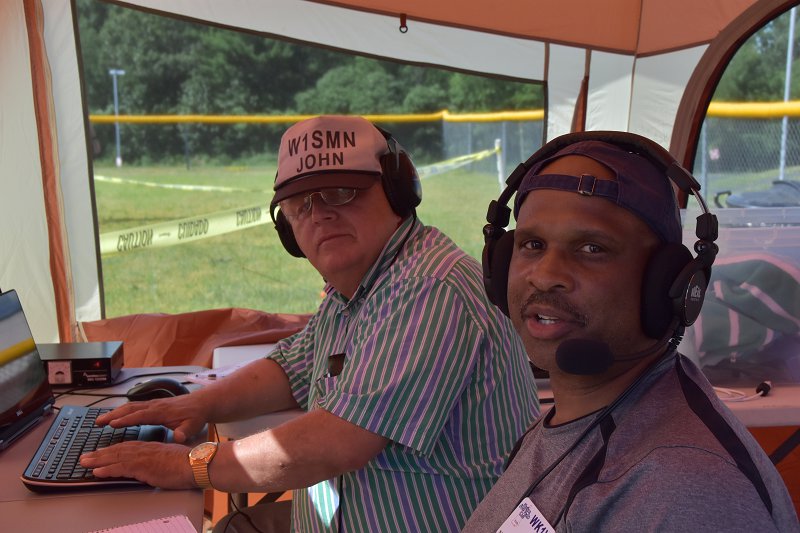
Field Day 2017 - John, W1SMN and Desmond, WK1V Operating SSB
John, W1SMN, and Desmond, WK1V Operating SSB

Did I mention that we operated hard making lots of QSOs?…
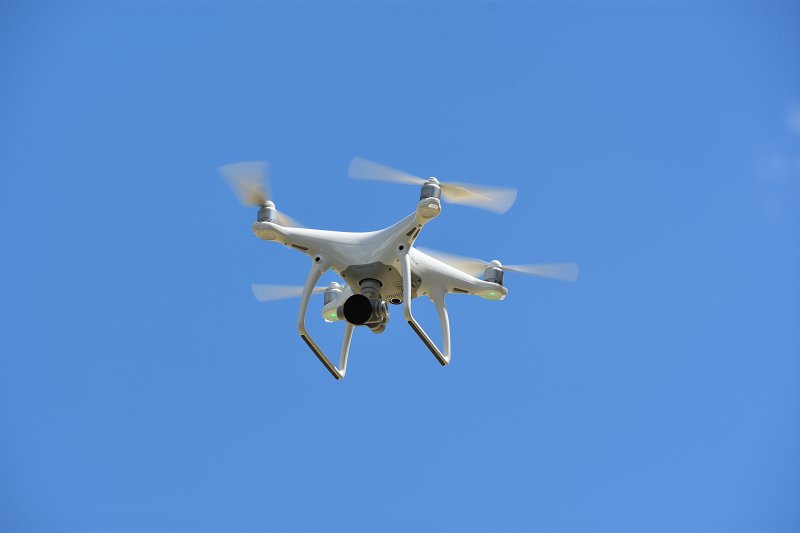
Field Day 2017 Drone Sighting
Drone Sighting

There were Drone sighting all weekend long…

and Desmond, WK1V got some amazing video from the air.

It was a lot of fun operating as N1FD, 7A NH!

Anita, AB1QB, our scoring chairman is still working on tallying up our score but it will be higher than last year.

Please take a minute and send me any photos or video that you have from Field Day 2017. We’ll be producing a video of all of the fun for the Field Day 2017 Recap at our club meeting on July 11th. Don’t miss it!

Fred, AB1OC

Hashtags: #ARRLFD #N1FD
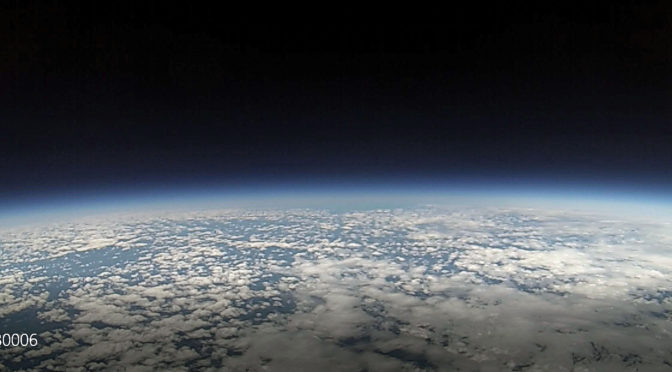
High-Altitude Balloon Project Update #3 – Launch!

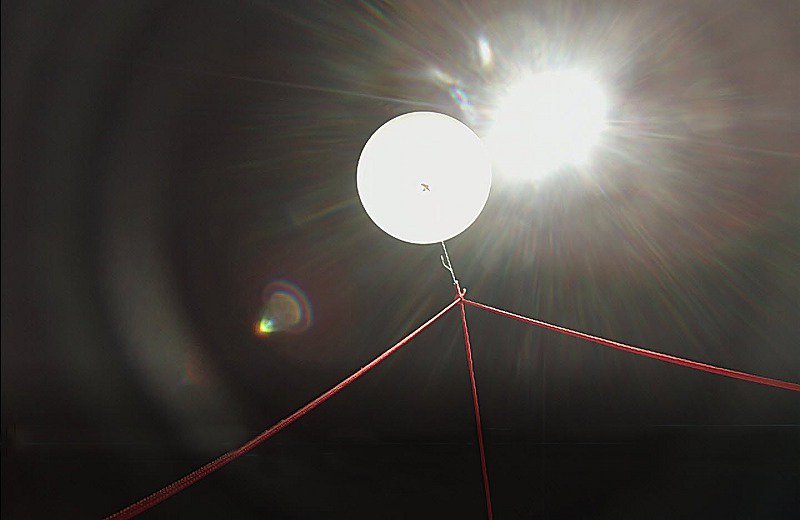
Our High-Altitude Balloon made it to the edge of space! The image above was taken from our HAB at an altitude of over 90,000 ft!

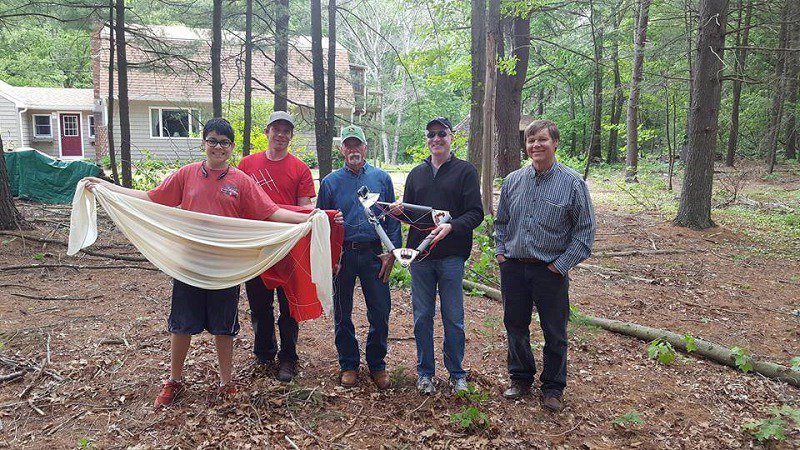
After many months of work, raising funds to finance the project, teaching STEM sessions in local High Schools, and an open-house to test the Balloon Platform and to learn about Amateur Radio; our High-Altitude Balloon Project (HAB) Team finally got the chance to launch and track our Balloon. We launched our Balloon from the Elementary School in Winchester, NH.

High-Altitude Balloon - Setting Up Our Gear On Site
Setting Up Our Gear On Site

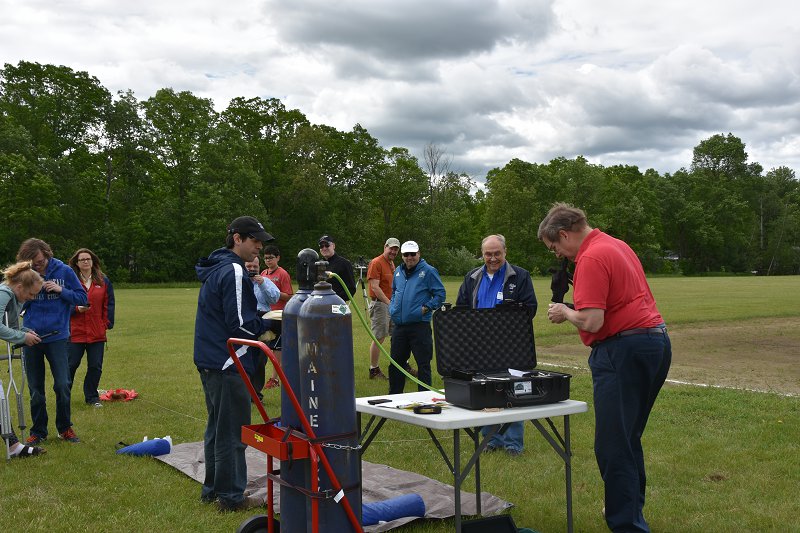
Students, Teachers and Club Members came out to be part of the launch and to track our HAB. The first step was to move all of our gear to the center of the athletic fields at the school and organize all of our equipment.

High-Altitude Balloon Flight Platform Final Assembly and Test
Flight Platform Final Assembly and Test

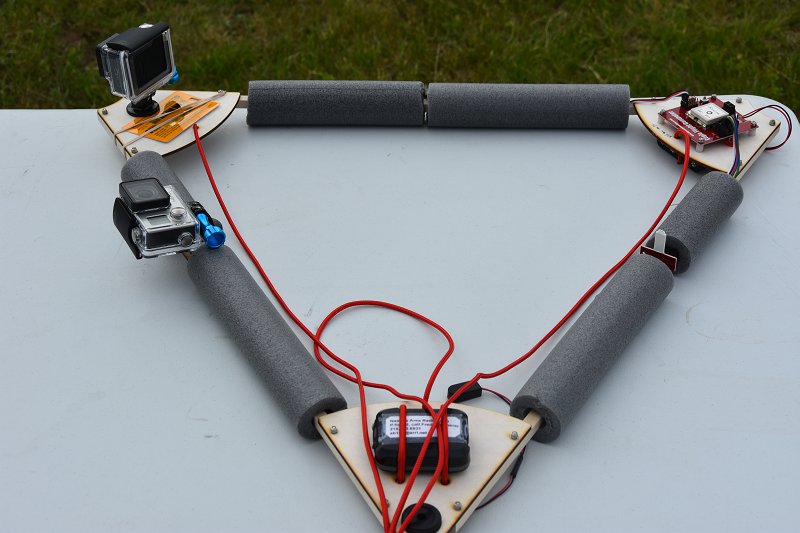
Next, we attached the GoPro video cameras, satellite tracker and the battery pack for the Flight Computer and 2M APRS transmitter to the flight platform. We used an APRS capable HT to confirm that the flight computer and APRS transmitter were working.

Rigging the High-Altitude Balloon Flight Line
Rigging the Flight Line

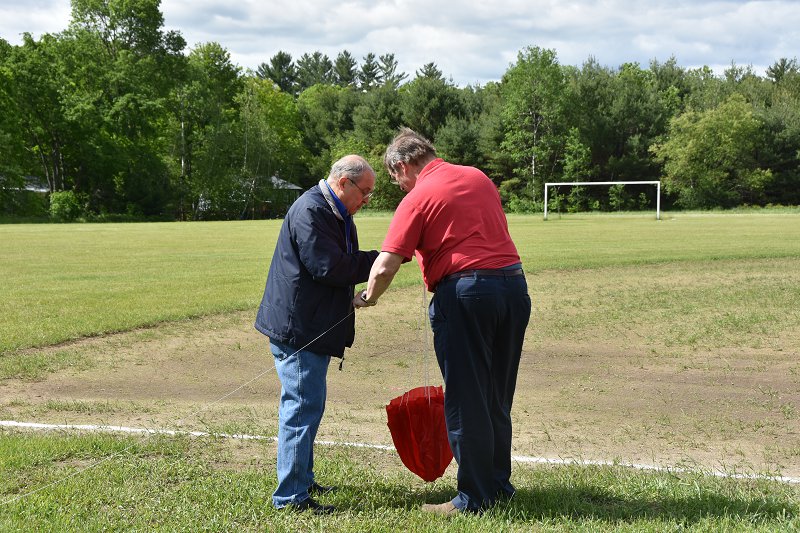
We rigged the 40 ft. flight line which connected the HAB’s flight platform, recovery parachute, and the balloon.

High-Altitude Balloon Inflation
Balloon Inflation

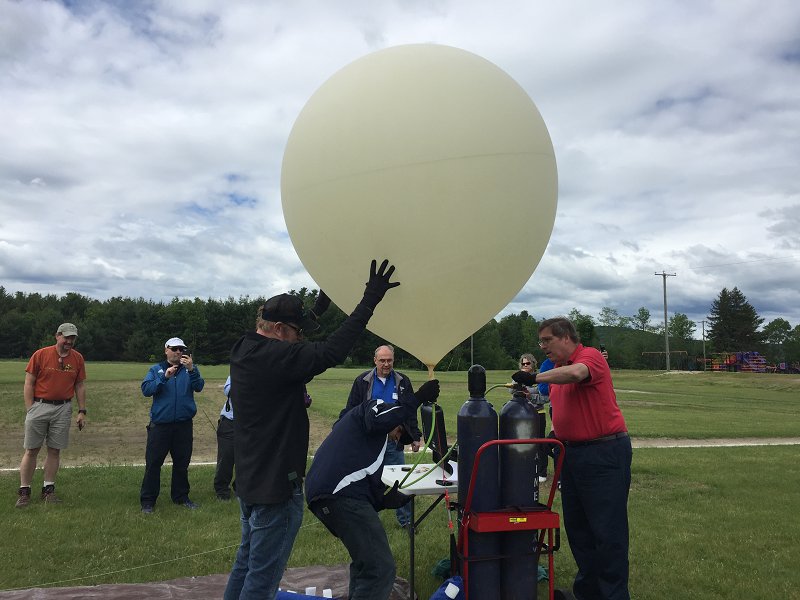
And then came the inflation of the balloon from the Helium tank. The winds were gusting to about 12 mph at this point which made inflating the balloon a little tricky. When filled, the balloon was about 6 ft. in diameter on the ground.

High-Altitude Balloon Launch!
Launch!

With both GoPro cameras running on the flight platform, we were ready to launch. A 10-second countdown and the balloon was up and away!

Tracking Our High-Altitude Balloon
Tracking the HAB

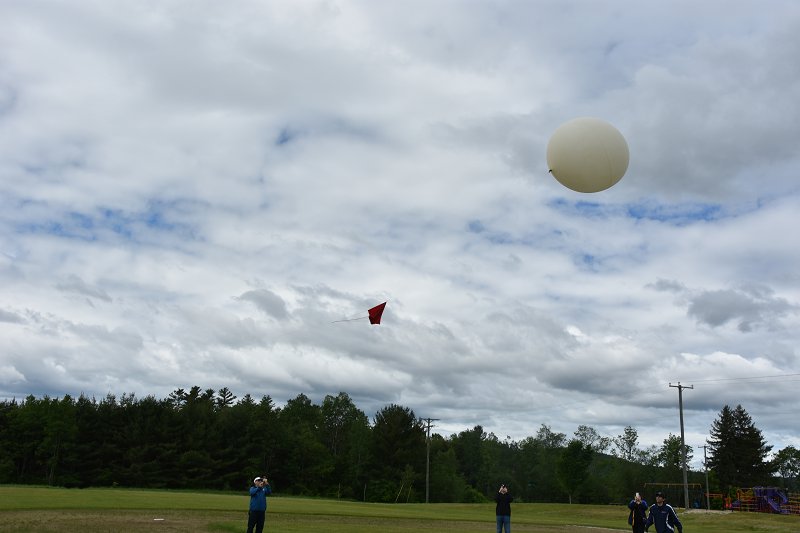
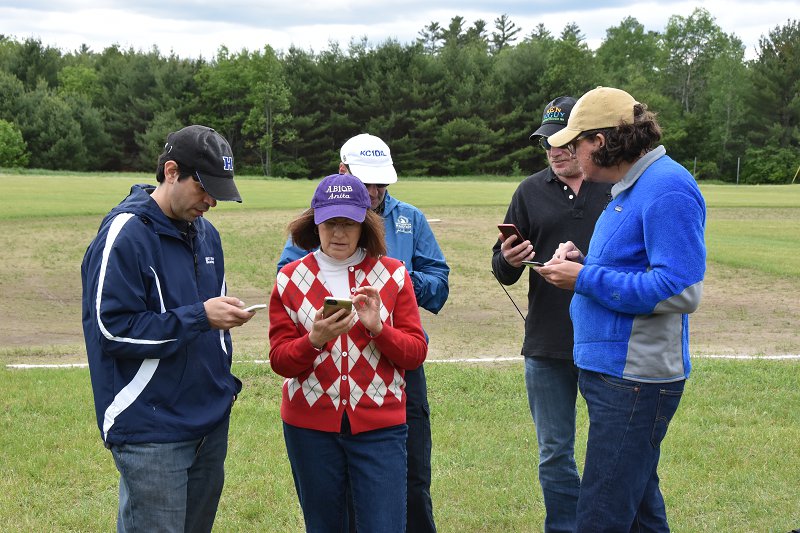
We watched the balloon from the ground as it soared off into the clouds. The 2M APRS tracking system worked perfectly and we spent the next several hours at the launch site, at lunch, and in our cars tracking the HAB on aprs.fi.

Tracking Our High-Altitude Balloon Flight Path On APRS.fi
HAB’s Flight Path On APRS.fi

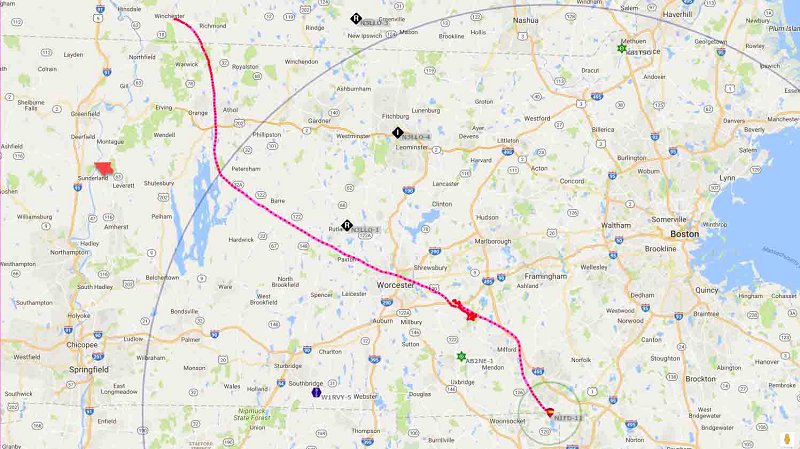
Our HAB’s flight path took it across Massachusetts where it reached a maximum altitude of 91,700 ft. above sea level (ASL).

Looking Upward at the High-Altitude Balloon (Near Burst)
Looking Upward at the Balloon (Near Burst)

The balloon reached a diameter of approximately 30 ft before it burst. After the balloon burst, the parachute deployed and the payload descended to a landing in the northeast corner of Rhode Island.

High-Altitude Ballon at Recovery Site in Rhode Island
HAB at Recovery Site in Rhode Island

A combination of the APRS transmitter data and the onboard sounder allowed the landing location to be pinpointed and the flight platform recovered with help from a local resident.

The onboard GoPro video cameras captured some awesome video during our HAB’s ascent! All of the media captured by everyone who participated in the launch as well as the APRS data allowed us to produce the video above. Turn up your speakers and give it a play in full-screen mode to enjoy the experience what we shared!

By the time we had launched, the school year was at an end so we will have to wait until the fall to work with the students and teachers who were part of our STEM project to analyze the data from the flight. All in all, our HAB project has been an amazing experience for all involved. We are planning another HAB STEM experience and launch with additional schools in the fall.

We want to especially thank all of our donors whose generous contributions made this project possible.

Fred, AB1OC

Hashtag: #N1FDHAB

Crossing A HAB Off The Bucket List….

Back in 2010, I was a postdoc in the particle theory group at National Taiwan University in Taipei. I was working with a buddy, a German fellow, and in the middle of talking about made up particles (actually they’re real) in imaginary time (this is an actual “thing”), he showed me a neat YouTube video that he found. As we watched, we saw two young fathers design and launch a high altitude balloon (HAB) to stimulate interest in their very young sons. Of course, the best part of this entire endeavor was the video footage they recorded during the ascent/descent. It was awesome; in the original definition of the word. I immediately developed HAB envy and wanted to do this myself. I told my future XYL, Anne, about this and she said if I came back to the U.S., she would help me design one.

Fast-forward to 2011. I came back home, and though Anne offered to help, I was adjusting to a new job in VA and had zero time to dedicate to it and coupled to that, zero money. The dream would have to wait.

Fast-forward to early winter 2016 (I think it was early 2016). Fred, Anita, Jamey, Tony, myself, and others were sitting at the Dartmouth-Hitchcock facility during one of our Youth Days. We had just finished lunch and were brainstorming ideas to engage young people in amateur radio. Fred had mentioned, how about a high-altitude balloon carrying APRS? Bing. Bang. Boom.  That was all I needed to hear. This was the opportunity literally right in front of me to check the box. So, as you can guess, I was in.

The team had a lot of work in front of us. Some of you have heard us proselytizing the good word at our meetings. This whole project would not work if it were just about a solitary, singular balloon launch. There had to be a hook; had to be something that would allow us to continually interact with the potential participating students. What we had decided was to create a STEM opportunity in the classroom. For those of you unfamiliar with STEM, it stands for Science, Technology, Engineering, and Mathematics. It represents a body of activities and teaching to foster and nurture this type of education in students. It takes the form of FIRST robotics, programming courses for kids, DIY electronics for kids. You name it, it’s probably a “thing” already. So this is what we tasked ourselves with.

To move forward, we had to establish a potential curriculum and target schools that we could work with and hopefully engender a long-lasting partnership with. The ideal case scenario we envisioned would be, to begin with, students as freshman and work with them until graduation; maybe even getting a senior thesis out of it.

I won’t bore you with all the details, but to name a few, we had bi-monthly WebEx conversations to discuss how to move forward, solicited schools, developed a presentation schedule, created a TON of PowerPoint slides to be presented in the classroom, ordered and tested the HAB and its components, organized an Open House at Fred/Anita’s QTH, and of course figured out a launch date — let’s talk about that next.

Ah, launch time. The culmination of 7+ years of waiting was actually going to happen. I could measure time by prepending the phrase “T-minus” to my system of units — Pretty cool. The morning of, many of us gathered at the requisite spot; the anticipation was pretty palatable. After the exact launch locale was ascertained, we prepped and began to inflate the balloon. Spoiler alert: We under-filled the balloon due to a misunderstanding of the instructions from the company which led to a longer flight time. The moment I let the balloon go, I swear my mind went through all the charts I made, all the prep work the team went through, and an overwhelming sense of pride at the accomplishment we achieved.

We quickly cleaned up and adjourned to a local restaurant where we viciously ate our food and just as viciously scoured the interwebz (aprs.fi) to get the latest update of the balloon’s telemetry. Since the update time was about one minute, it was obvious that Einstein’s theory of Special Relativity was at work; each minute felt like an eternity in my reference frame.

Finally, touchdown! In RI. Ok…sure. We predicted SE of Worcester, but it was RI. Fred called me a few times to update me on the HAB’s status after recovery. I asked him to let me know when the data would be available in the Dropbox. When I saw this, I instantly turned to MATLAB and created the following plots from the telemetry data on the flight computer. (Note: It’s update time is every 6 sec, so we get more accurate updates than APRS)

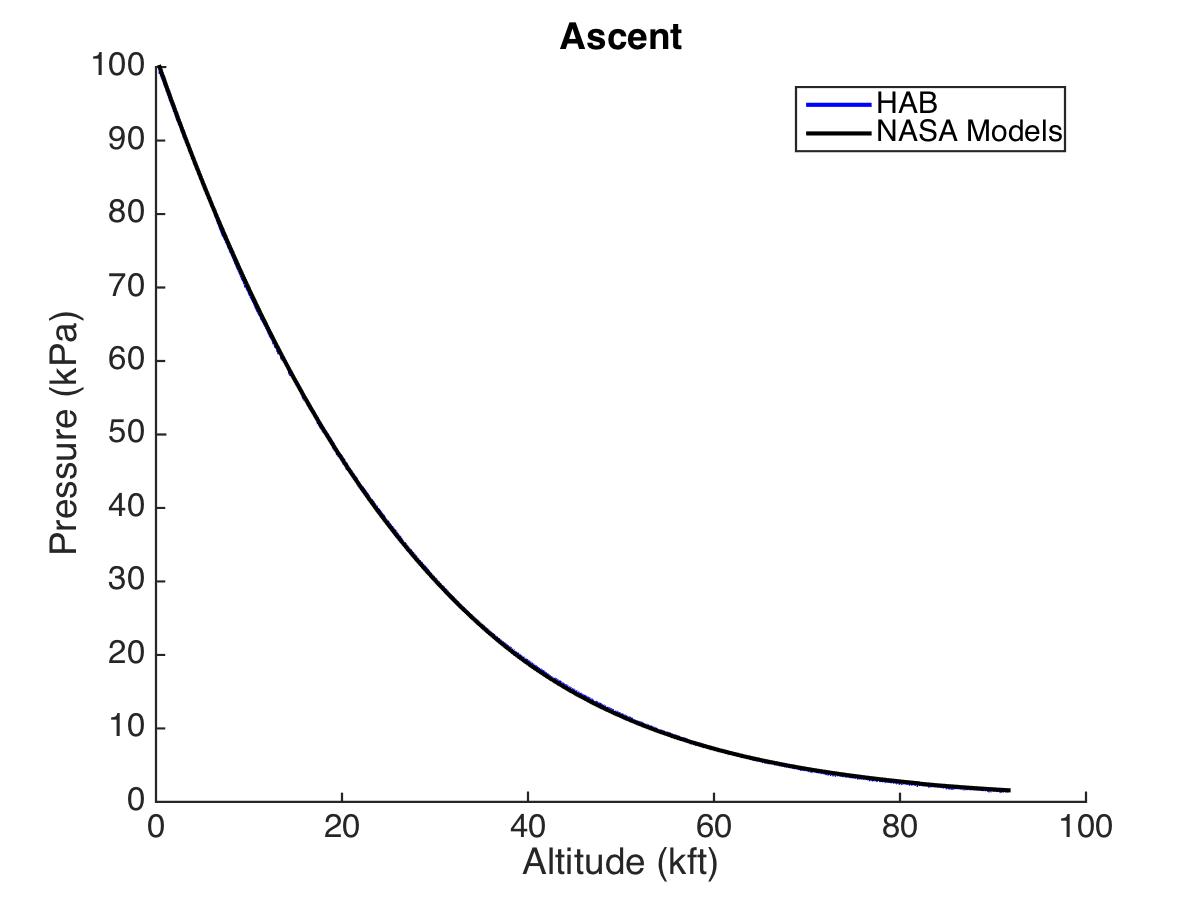
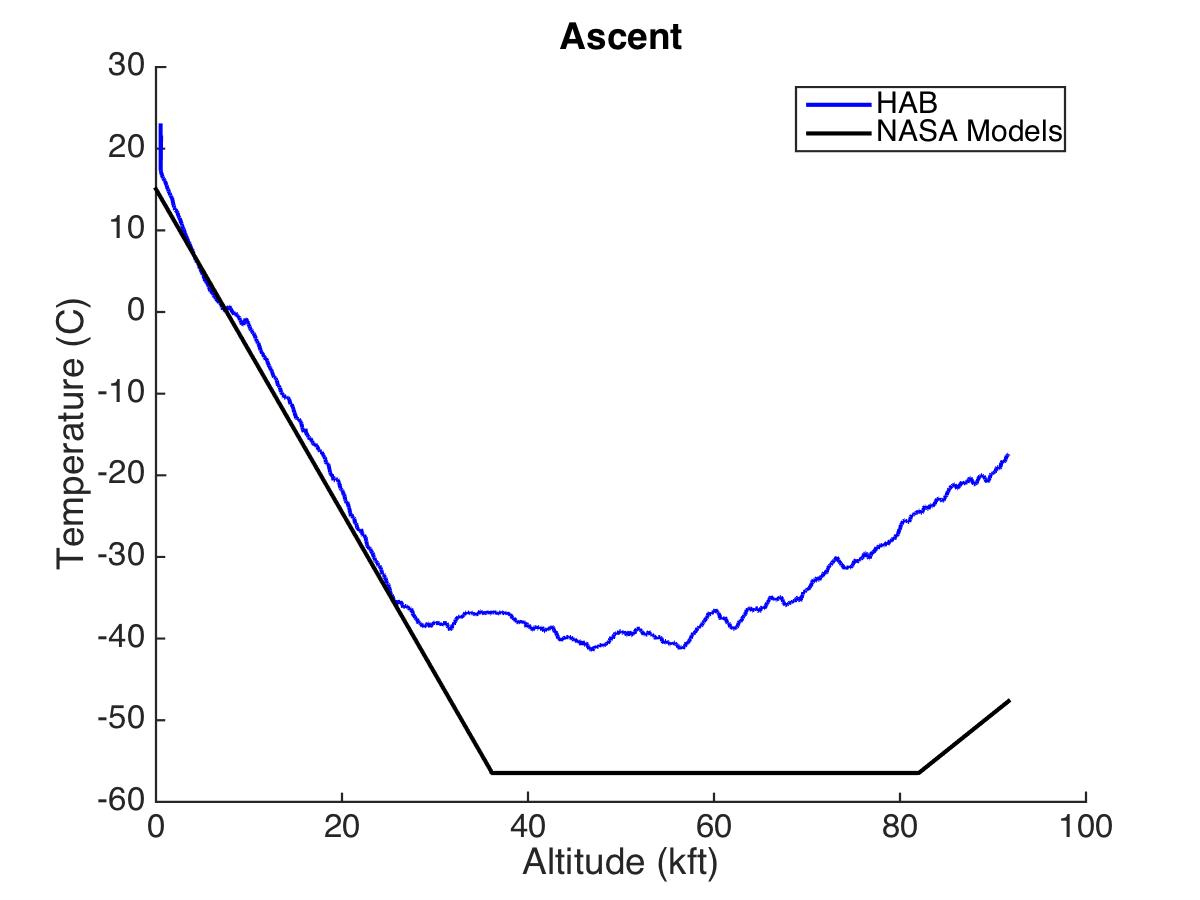
IMHO, I think the most interesting plots are those of the pressure vs altitude of the HAB and the temperature vs altitude. These are fascinating since:

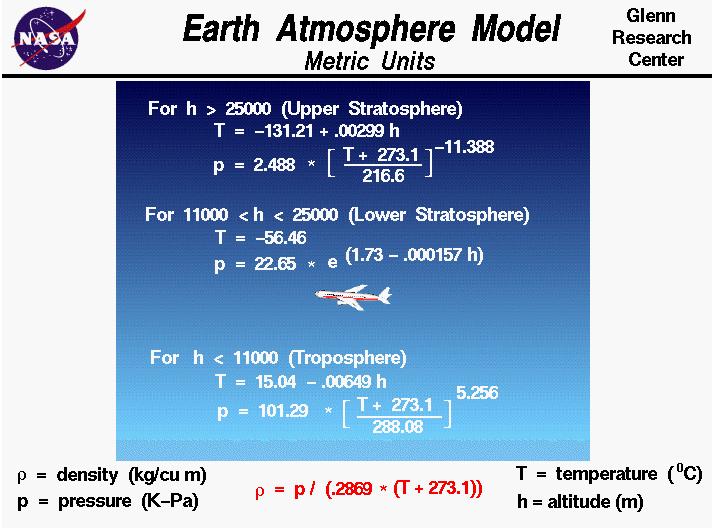
  1. We have theoretical models from NASA with which to compare with.
  2. It’s unfathomable we can record this data THAT HIGH UP with such simple tools.

Below, I’ll only show the results from the ascent. (The descent essentially looks the same). Also, for posterity, I included the NASA predictions which for those of you who are more mathematically minded (all of you, right?!) can sink your teeth into.

High Altitude Balloon

High Altitude Balloon

High Altitude Balloon

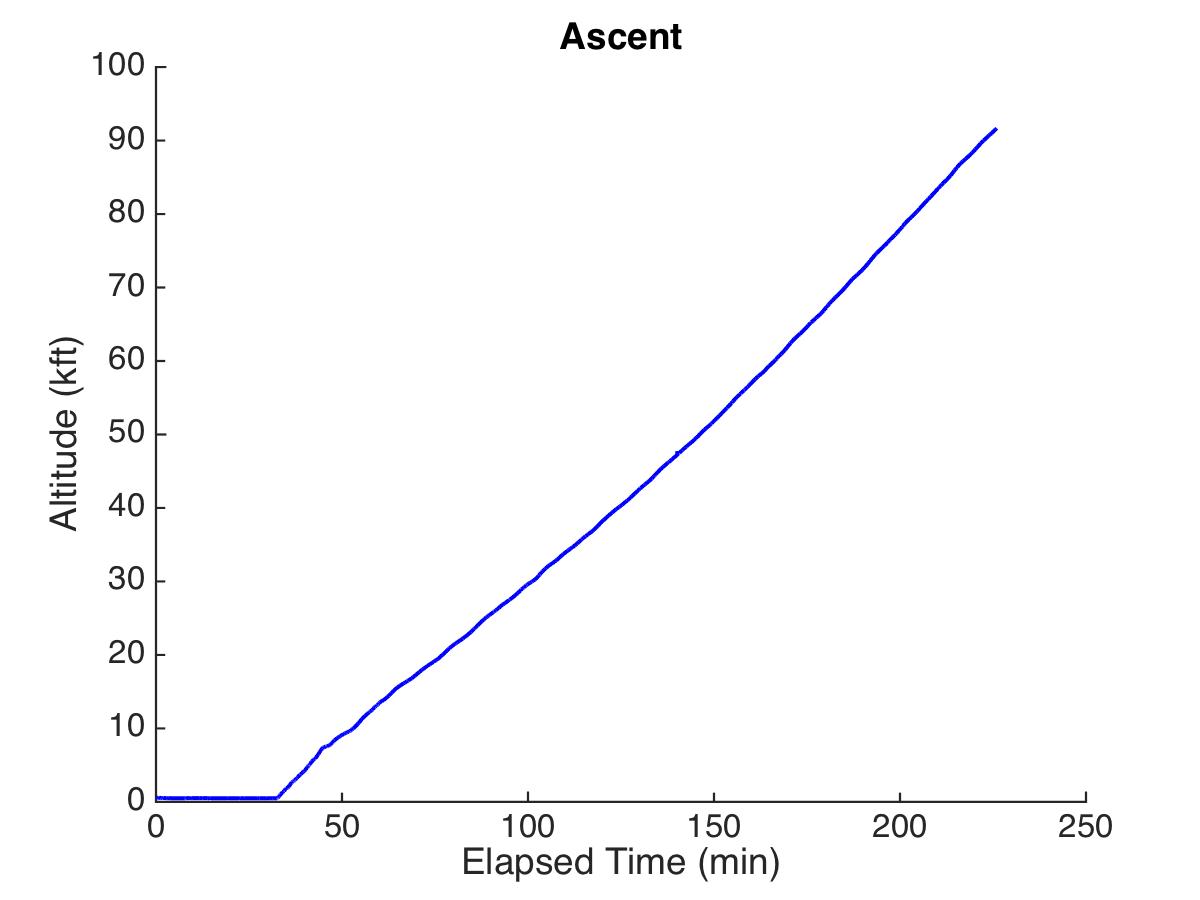
What I find fascinating is that the pressure the HAB recorded (shown in blue) lies essentially on top of the NASA predictions (shown in black). Moreover, the temperature shows good agreement qualitatively: namely a sharp decrease until a particular altitude, then it levels off, and finally begins to increase again. Where those boundaries occur differs between NASA and our local measurements from Winchester, NH. But, the trends are the same. Very encouraging. The next most interesting plots are those derived from the telemetry data. The first is the ascent altitude vs time:
High Altitude BalloonThe vertical speed seems to be essentially constant. This makes sense so long as the vertical lift force from the Helium balances out the downward force of gravity. And this is essentially what we are seeing here and is what is modeled by our HAB prediction website. On the way down, the curve looks a bit more interesting:

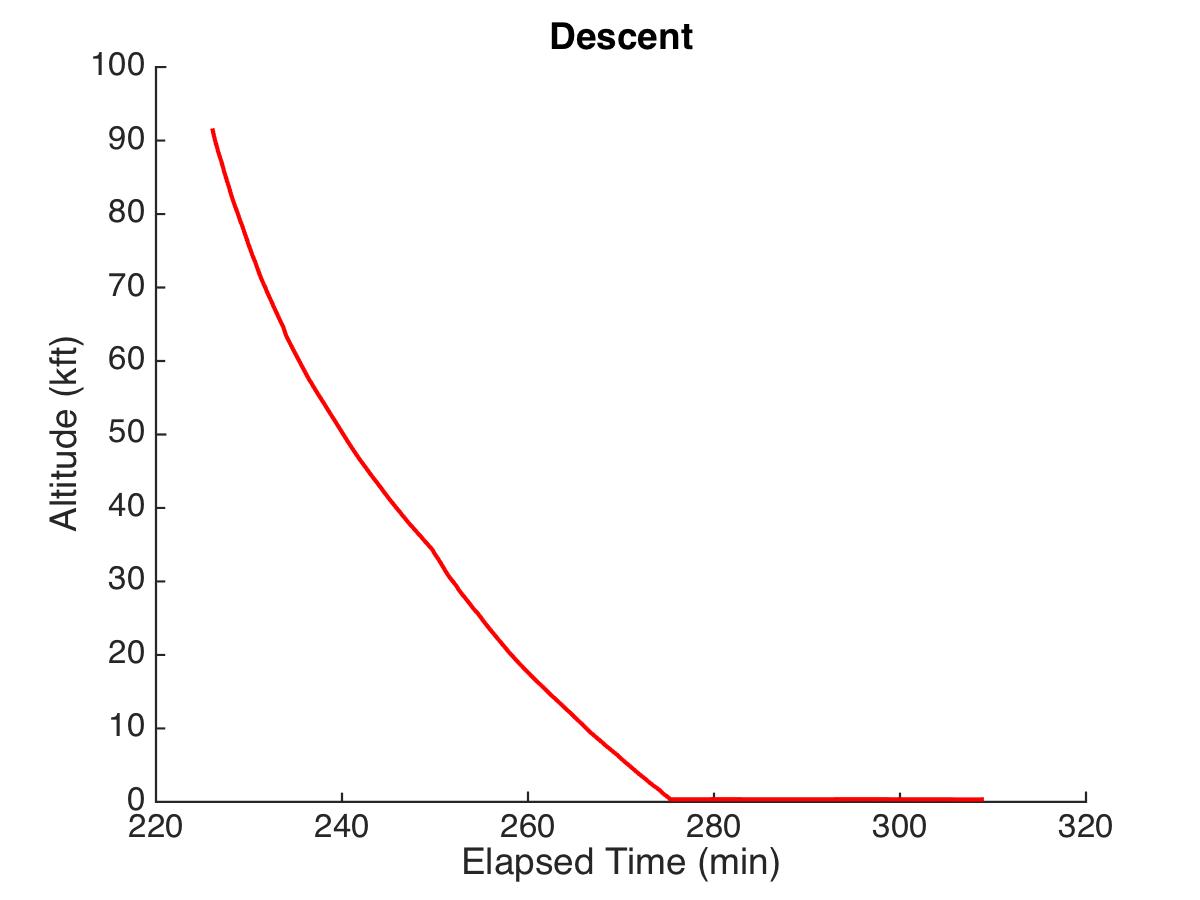
High Altitude Balloon

Initially, the HAB seems to be accelerating (since there is some curvature to the line until about 240 min of elapsed time), but after it encounters more air as it falls, it seems the parachute is deployed and therefore reaches terminal velocity (e.g. constant speed)


The upshot of all this stuff is I made a TON of plots on launch night (from the APRS data) and the following morning (from the flight computer data) which I have shown here. I won’t bore you with the other results, but there is a wealth of info one can calculate and learn about.

This entire experience has been an absolute pleasure to be a part of on many, many levels. I just hope we, the HAB team of NARC, have begun to inspire some kids in STEM and amateur radio due to our efforts.

Best and 73,

Brian, AB1ZO

Hashtag: #N1FDHAB

Radio Amateurs Developing Skills Worldwide