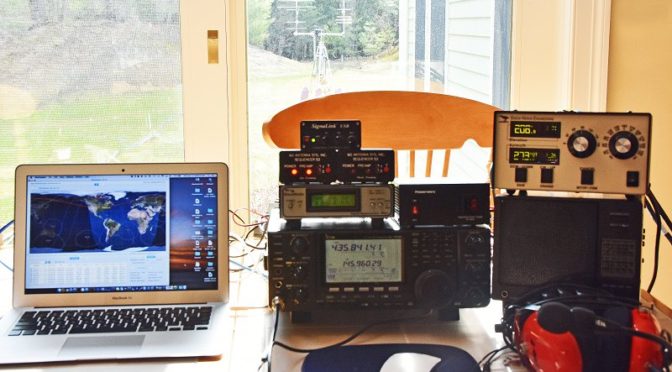
I’ve been having a lot of fun this past week learning to operate using satellites. It is amazing how many LEO satellites are operational right now!
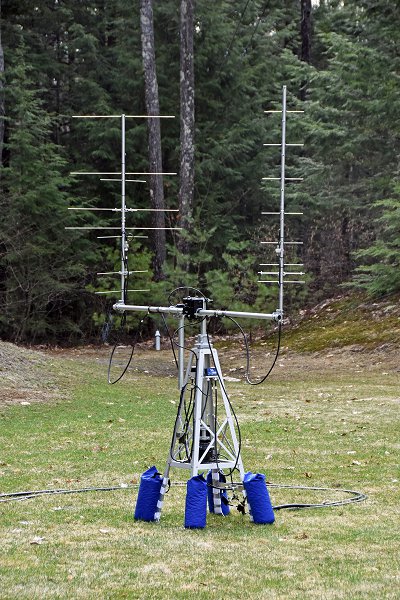
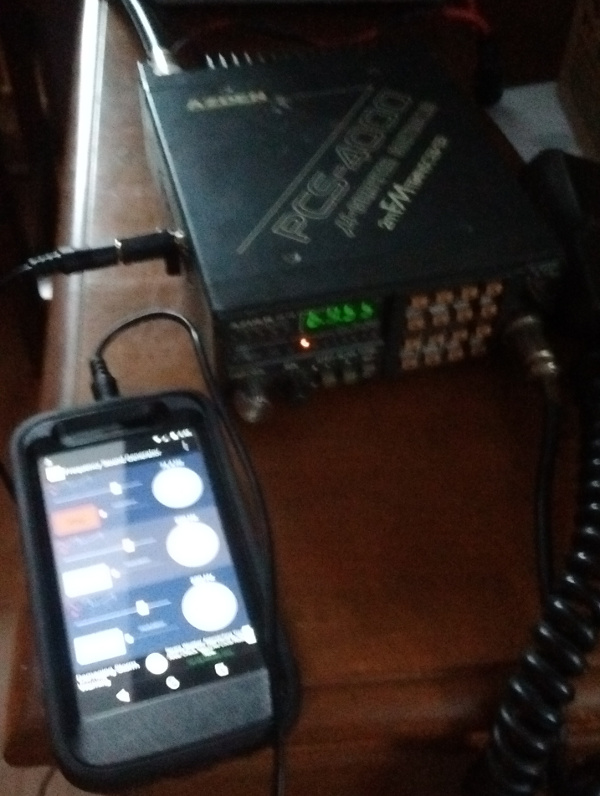
We built an improved portable LEO satellite station a little while back and used it for the first time during a Technician License Class that we taught earlier this spring.
We decided to set up the station in our back yard about a week ago. The idea was to spend some more time learning to operate the station and to improve our satellite operating skills.
The past week has been a productive one. Here are some stats for our satellite operations during the last 7 days –
- Contacts Made: 78
- Modes Used: SSB Phone, FM Phone, CW and Packet (APRS FM)
- Satellites Worked – 9 Total plus the ISS: AO-7, AO-85, ARISS (International Space Station), FO-29, SO-50, XW-2A, XW-2B, XW-2C, XW-2D, and XW-2F
- States Worked: 23
- Grids Worked: 49
The week began with a visit from Curtis, N1CMD who has quite a bit of experience with Digital Packet operation via the digipeater on the ISS. After some experimentation, Curtis helped me to find a setup using a SignaLink Sound Card and a second, windows computer that works well for Packet QSOs. I tested the setup using the terrestrial APRS network to get all of the hardware and software working correctly. The combination was then used to make a first packet contact using the ISS.
Operational LEO Satellites
The LEO satellites which are currently operational support a mix of split band modes. All of the satellites that we’ve worked so far use either 2M/70cm or 70cm/2M up and downlinks. The satellites support a variety of operating modes including via single channel FM, linear transponders, and APRS packet systems. Operating skills such as proper adjustment of up and downlink frequencies, Tx power management and setup of the digital packet system have been at least partially mastered this past week.
There are a great bunch of folks who are regulars on the satellites and we have made some new friends in our short time operating through satellites. The single channel FM satellites are usually too busy to support rag-chewing. The linear transponder satellites (there are many of these) support several conversations at the same time and we have had some nice rag-chew sessions on these birds.
There is also a good bit of DX to be had via satellites. This past week we have worked Patrick, FJ/N2IEN in Saint Barthelemy; Chris, 9Y4D in Trinidad and Tobago; Burt, FG8OJ in Guadeloupe; Fausto, HC9VF in Ecuador; and several stations in Canada.
We are planning to set up our portable satellite station at Field Day this year. Curtis will be the main operator/station master for our satellite station. If you are interested in learning more about satellite operations, please let Curtis or I know and we’ll help you to learn more during Field Day 2017.
Fred, AB1OC