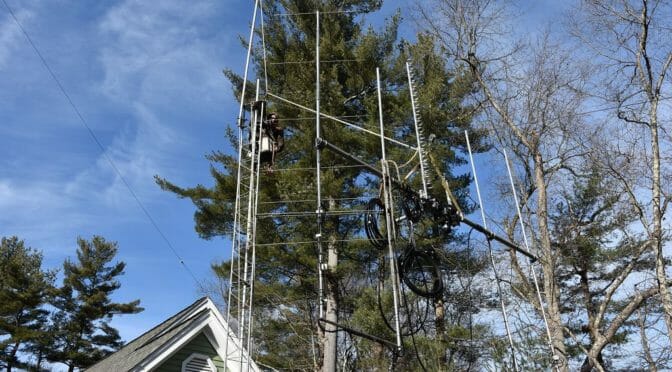
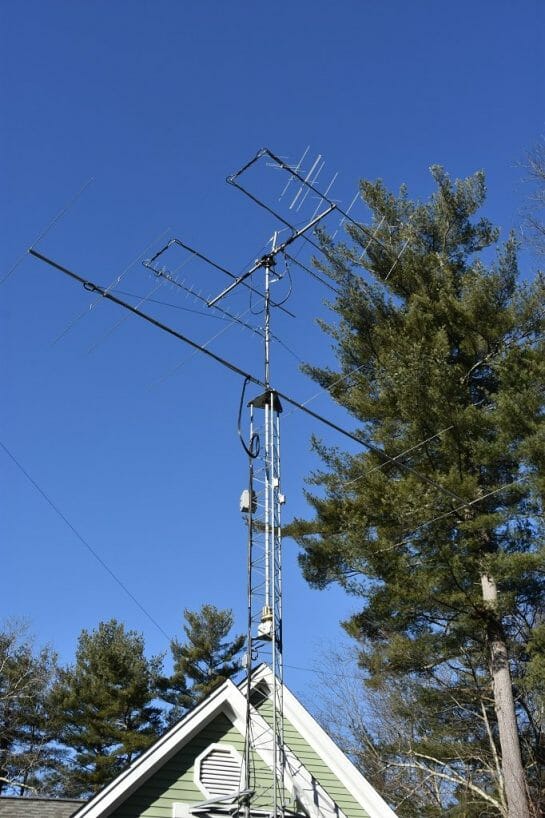
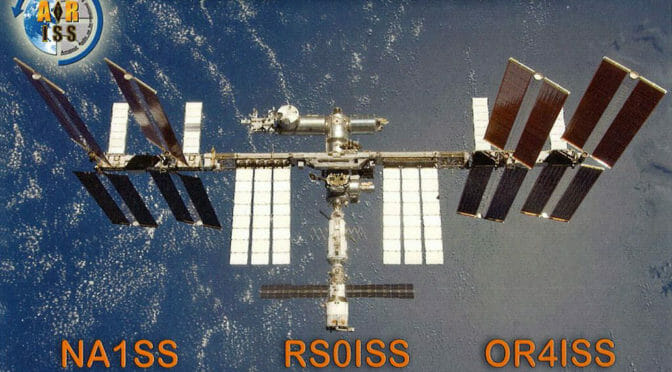
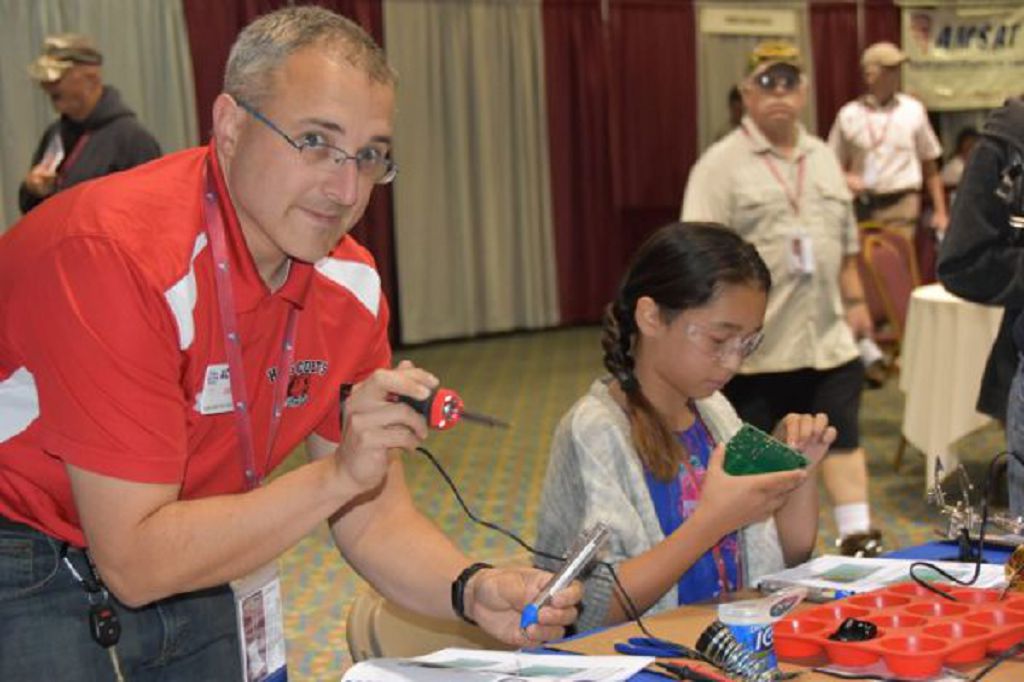
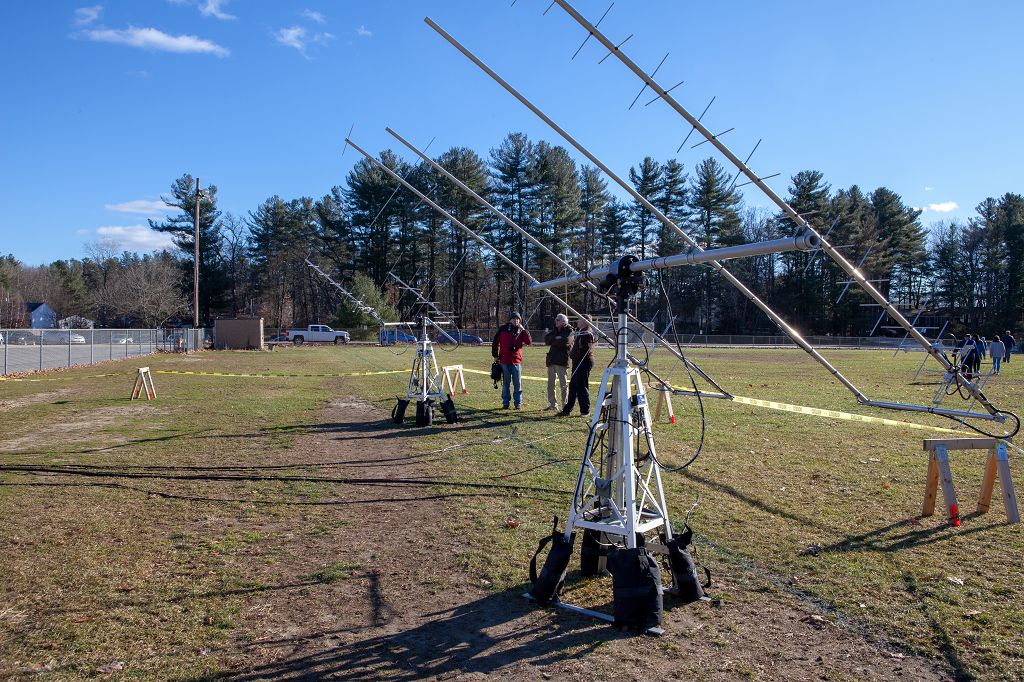
Our current Satellite 3.0 Antennas have worked well in their portable configuration. We’ve had them to License Classes, Field Day, Ham Fests, and ultimately to Hudson Memorial School for an ISS Crew Contact.
We have begun our Satellite Station 4.0 project with the construction of a new house-bracketed tower and the installation of our Satellite Antennas and a new 6 m yagi. You can read about our progress to date via the two links below…
The permanent installation of our Satellite Antennas and the associated new tower at our QTH is well underway. Here are two articles on the construction of the new antenna system. The project is based upon a house-bracketed Rohn 45G Tower. This is a good option for many Hams to consider when putting up a tower at their QTH.
Dan had been to Space Camp where he heard about an ARISS Crew Contact from a faculty member at another school. He asked if the Nashua Area Radio Society would consider supporting Hudson Memorial School (HMS) in their bid to secure and hold an ISS Crew Contact. Of course, I said YES and this was the beginning of what I am sure is one of the most memorable experiences in Anita’s and my lives. We talked about other possible projects that we could do around Amateur Radio and STEM learning and we agreed to look into those as well.
It is very difficult to secure an ISS Crew Contact. Only about 26 are awarded to US schools each year so we were cautiously optimistic about our chance. Dan and I had decided to do a High-Altitude Balloon (HAB) Project at HMS. We felt that this would provide a good STEM learning opportunity built on Amateur Radio if we did not secure a Crew Contact.
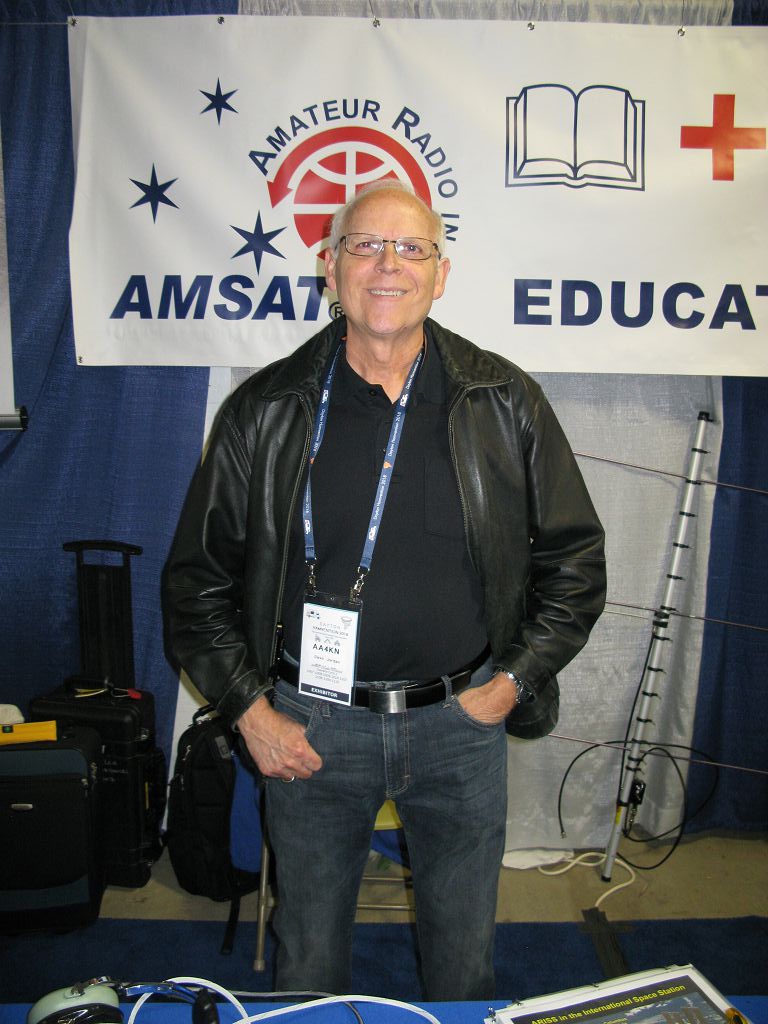
Dave Jordan AA4KN – Our ARISS Mentor
The first good signs appeared in January of 2018 when we were invited to a briefing about the ISS Crew Contact process. We also met Dave Jordan, AA4KN early on. Dave helped us to navigate the ARISS Crew Contact process and patiently answered Dan’s and my questions. These early events gave us a pretty good indication that we had made it through the initial cut of what must have been a long list of applicants.
HAB And Other Programs at HMS
HAB Programs at HMS
Dan, Adam, Rachel, and other faculty members at HMS and I were very focused on our HAB program at HMS in the Spring of 2018. This led us additional activities including holding our Field Day and a Special License class at HMS during the late spring and summer.
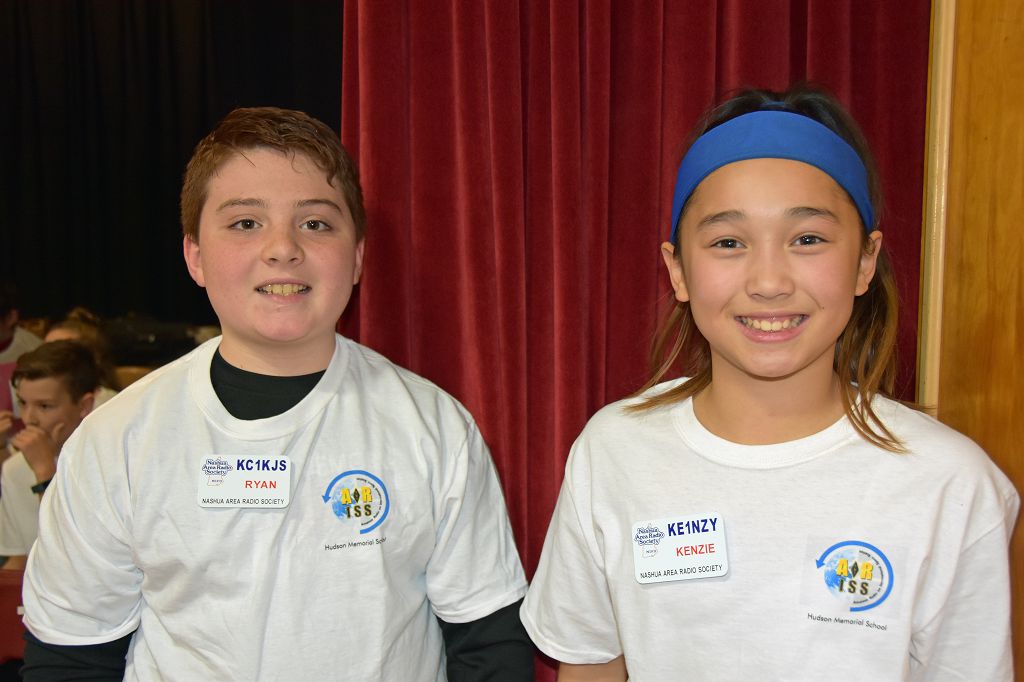
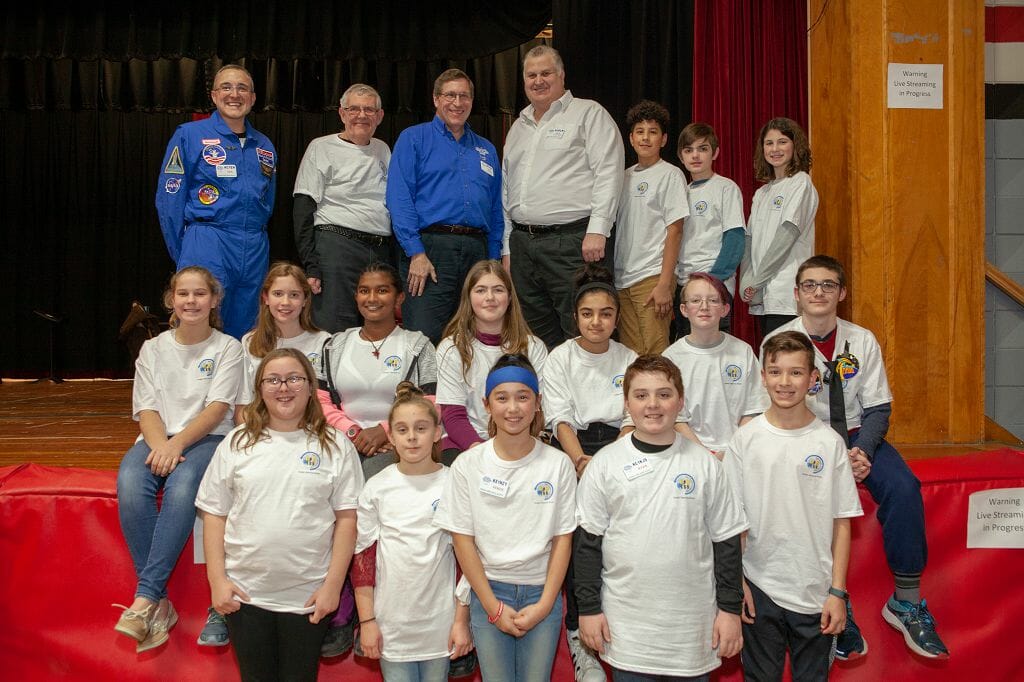
HMS Students at their ISS Contact Who Earned Their Licenses With NARS
We did a second HAB Program again in the fall as well and we continued our work to spark interest in Amateur Radio among the students and get some of them licensed. Dan, AC1EN and his daughter Mackenzie, KE1NZY both earned their Extra Class Licenses along the way. Kenzie became the youngest NARS member yet to earn an Extra Class License – she is only 10 years old!
Looking Good For A Contact – Time To Build Stations and Excite Our Students
In March of 2018, we received a strong indication that we were going to be selected for an ISS Crew Contact! This was tremendous news and it kicked many of our preparation activities into high-gear.
Building Space Comm Antennas
An ARISS Crew Contact requires two very capable Space Communications Ground Stations to be built – a primary and a backup. We already had a station that would meet most of the backup requirements. Because of this, the station building work for our contact focused on a new, primary station. An ISS Crew Contact only requires simplex communications on the 2m. Since we had a keen interest in satellite operations and the desire to include space comms demos in our license classes, we decided to construct both stations for both Satellite and ISS contacts.
Building Space Comm Ground Stations
Both stations are fully computer controlled and we tested them extensively at Field Day, License Classes, local Ham Fests, and at our QTH making over 900 satellite contacts in the process. All of this work provided a great learning opportunity for us and for NARS members who helped so much to build and test the stations. You can read more about the design and construction of our ground stations here.
In July, we hit a pretty major speed bump. Due to ISS scheduling problems, we were asked to switch from a Direct Contact via an Amateur Radio station at HMS to a Telebridge Contact using a Ham station somewhere else in the world. This was a tremendous disappointment to all of us.
After discussing the situation with Dan, we decided to ask the ARISS folks to reschedule our contact and keep it as a Direct one. We took a big risk in doing this. Our decision could have resulted in our losing our Crew Contact all together. In the end, Dan and I both felt that Amateur Radio was an integral part of the STEM learning experience at HMS and we wanted to take the risk. Dave Jordan, our ARISS mentor, understood the situation. I believe that he helped a great deal to get our contact rescheduled to December when we could hold our contact using radio equipment at HMS.
Final Countdown – We Are GO For A Contact!
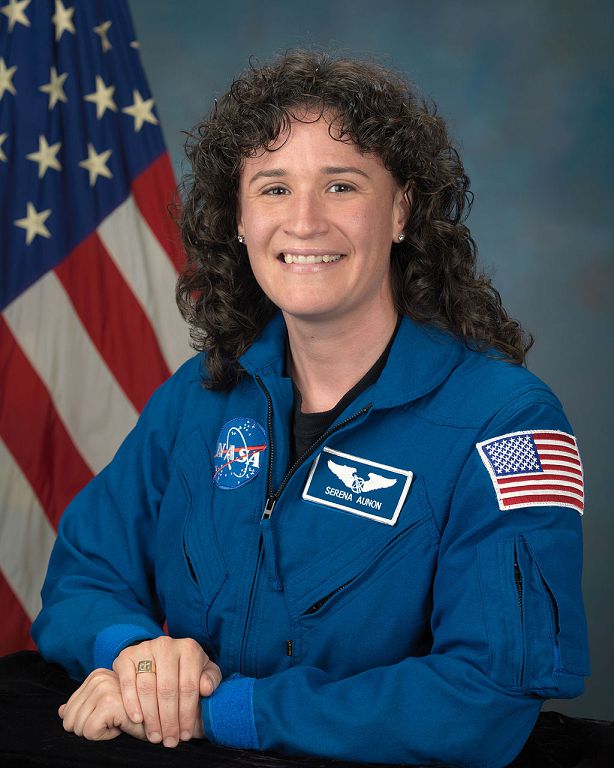
Our Contact with Serena Aunon-Chancellor is a GO!
The way the ARISS Crew Contact Process works, one is never certain that one has an actual contact until a list of ISS pass dates and times is received to be prioritized. This finally happened on October 30th. We were presented with seven candidate ISS passes, to prioritize, all of which occurred during the first week in December. We were obviously ecstatic when we received this information!
Final Station Testing
With our contact now a certainty, our final preparations kicked into high gear. While we had tested both the primary and the backup stations individually, we had never had the chance to test both together. We also wanted to add a professional grade Audio-Visual system which included Livestream and other video cameras to capture our contact. Dave Merchant, K1DLM and I got together and laid out plans for putting all of the gear together. We got together several times at our QTH in November to set up all of the gear at once and test it. The tests uncovered some problems which we were able to successfully resolve. We were very glad that we had taken the time to test the full set up well in advance of our contact.
It Takes A Great Team
The NARS team began weekly calls to plan out all of the details of our contact during this time. We had a large team of members who helped us with the final preparations and with our contact. I cannot thank all of these folks enough for all that they did:
Final preparations and station setup began on Monday of our contact week. We transported the antennas and all of our gear to the school and began setting up our gear and testing our stations.
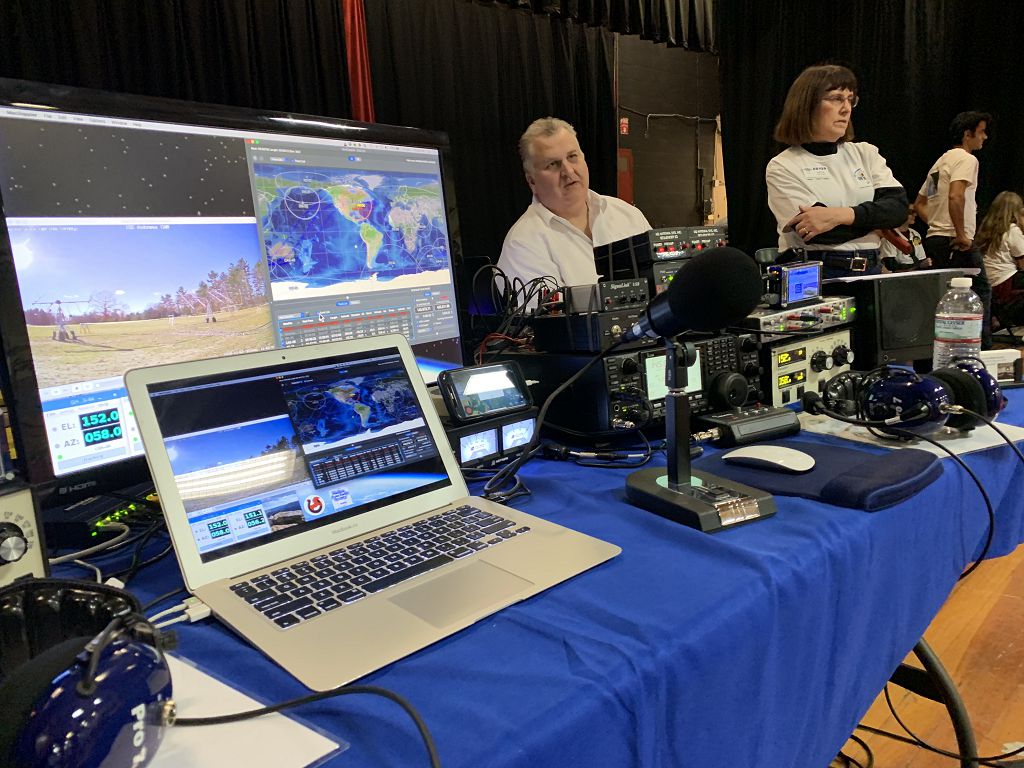
Setup at HMS – Radios and Support Gear
By the end of the first day, we had most of our equipment working. We made a few satellite contacts using it as a way to check things out. We also connected our equipment to the sound and projection systems in the gym at HMS and tested with them.
Setup at HMS – A-V System
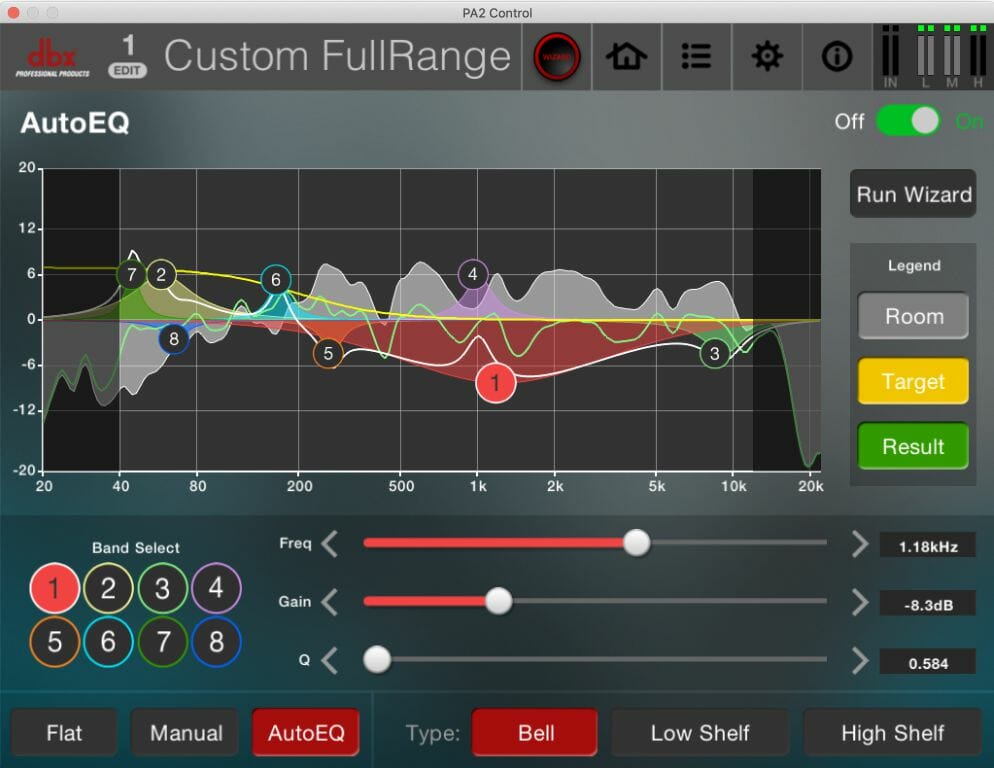
We did run into some pretty serious problems with the acoustics in the gym at HMS. The room was very live and we had problems with feedback and echo to the point where we felt it would be difficult for the students and visitors to hear what was going on during our contact.
Adaptive Room Equalization Curves
Fortunately, Dave was able to secure an adaptive room equalizer just two days before our contact. We used it to solve the audio problems in the gym. With this step complete, we were ready for our contact!
Contact Day – It’s Finally Here!
The Day Finally Arrives…
The NARS setup team arrived at the school early on Friday to begin final setup for our contact in the afternoon. Our coax and control cable ran across the driveways at the school. We began our day by putting our cables out and connecting them to our antennas. We also set up our sound and projection links. Thanks to all of our preparations, there was very little drama on Contact Day!
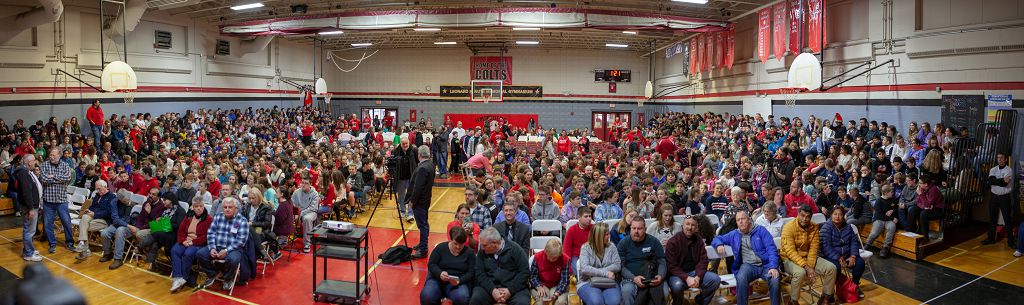
The Crowd File In
We had quite a crowd of visitors at our contact. I would estimate that we had about 700 people in the room with us. There were another 300 or so in other schools in the district watching the contact via Livestream video through the N1FD Facebook Page.
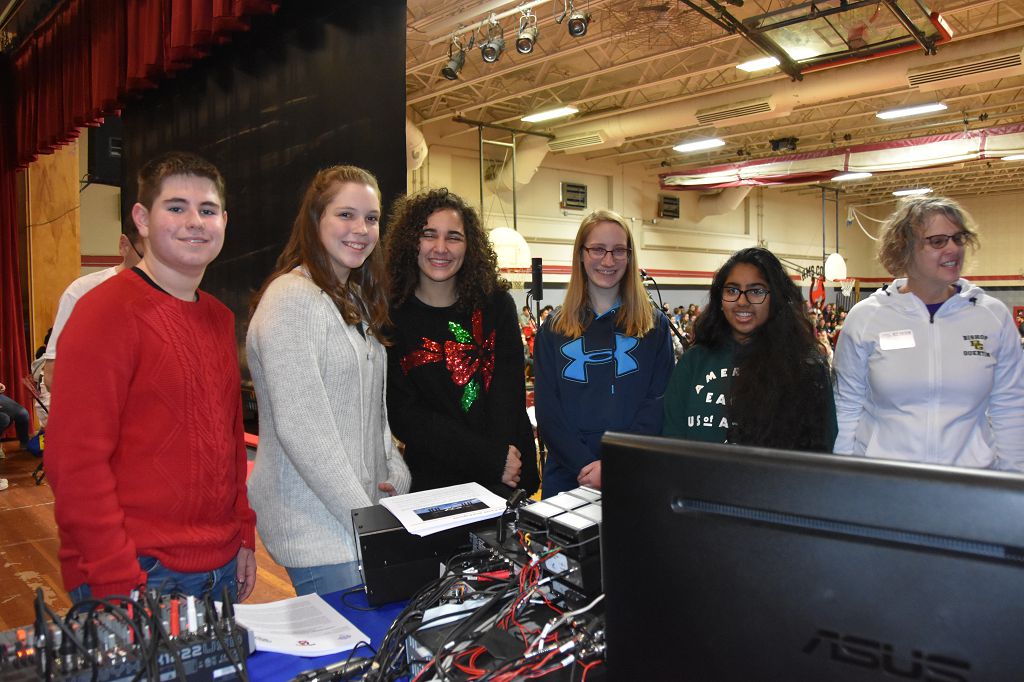
The BGHS STEM Club Joins The Experience
We worked with several other schools on HAB projects during the time that we were preparing for our contact. The Bishop-Guertin H.S. STEM club was one of our partners during this time. They joined us to experience our ISS Crew Contact and got a tour of the equipment that we used. World Academy, another HAB school, watched the contact via Livestream Video as well.
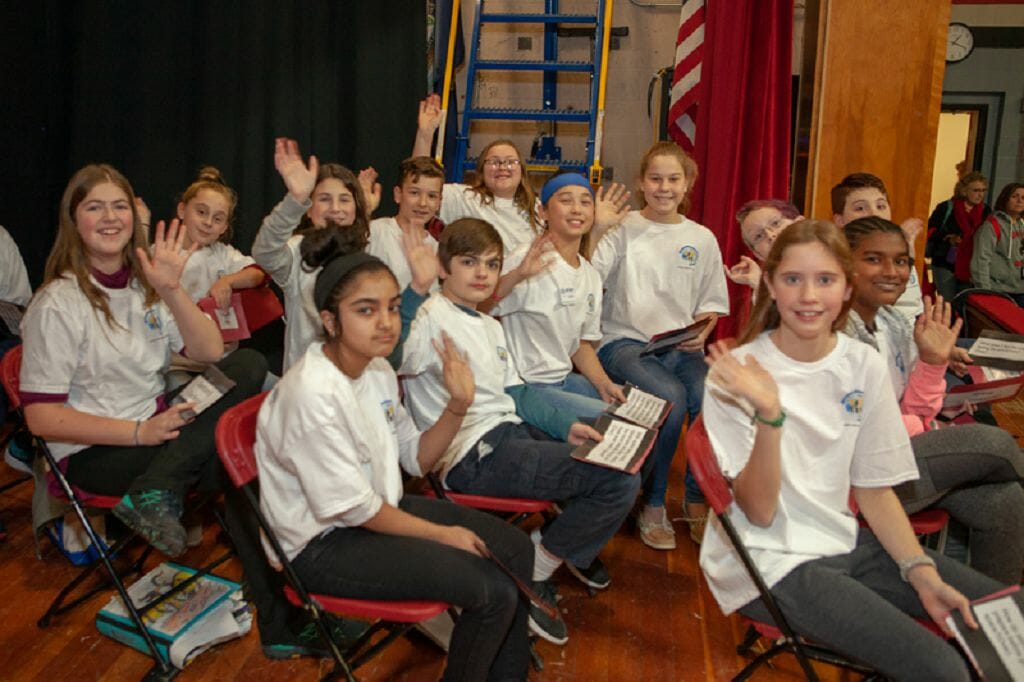
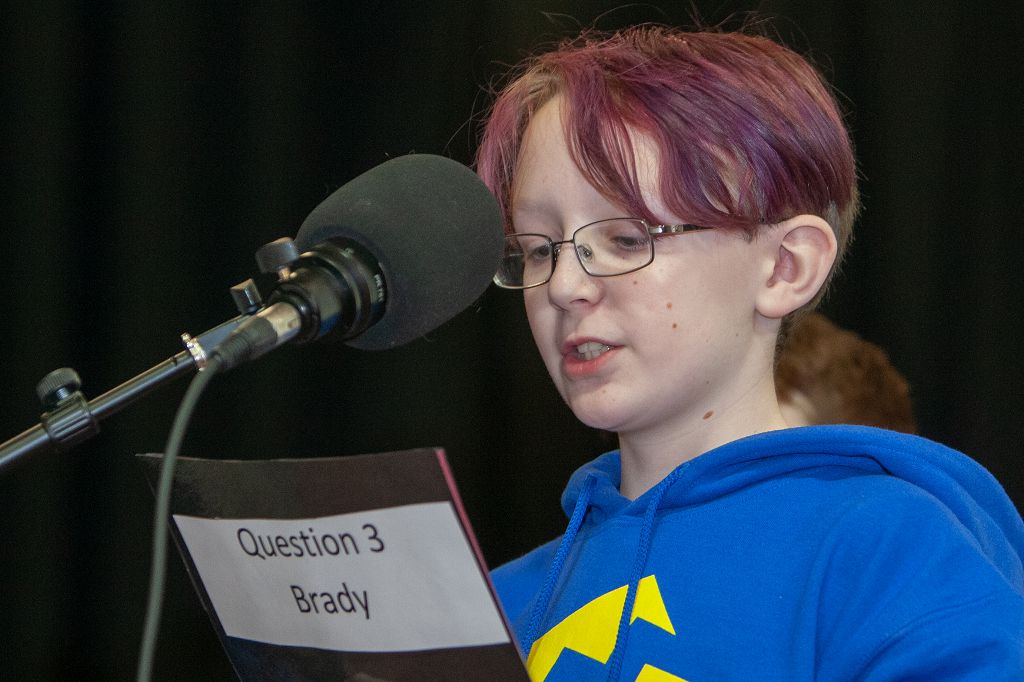
The HMS students that would ask questions during the contact took their seats on stage as the time for our contact approached.
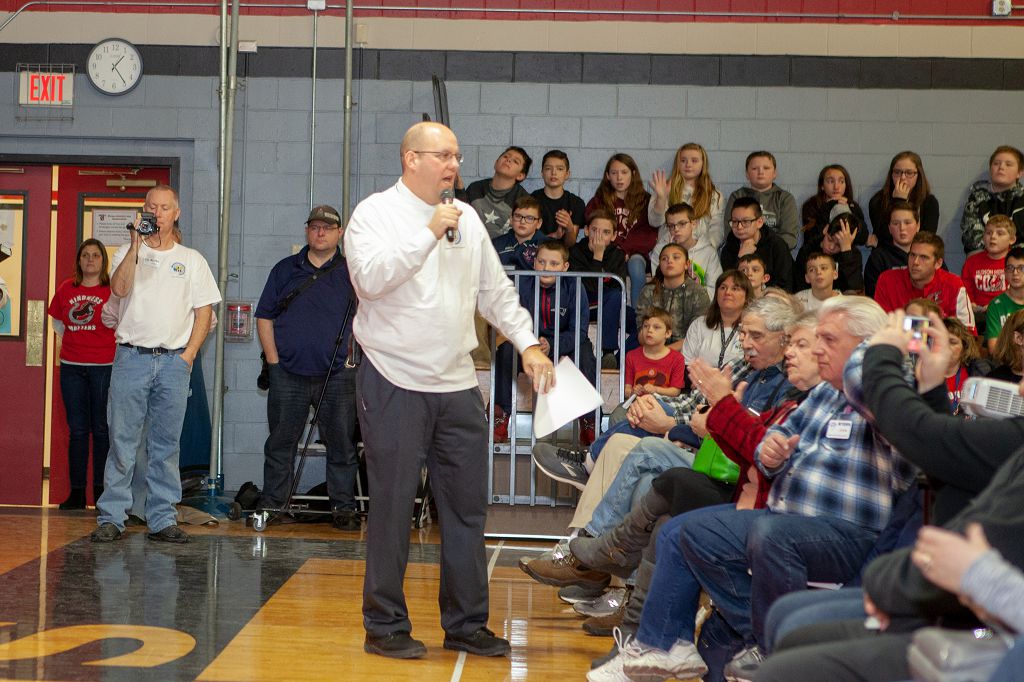
A Memorable Introduction by Keith Bowen
Keith Bowen, the Principal at HMS gave a nice introduction to the event and thanked everyone involved in making our contact happen.
Dan and Fred Set the Stage
Dan with some help from myself gave the audience an overview of what went into our contact and what would happen while it took place. You can view the presentation here.
Our Contact Begins and Students Ask Their Questions
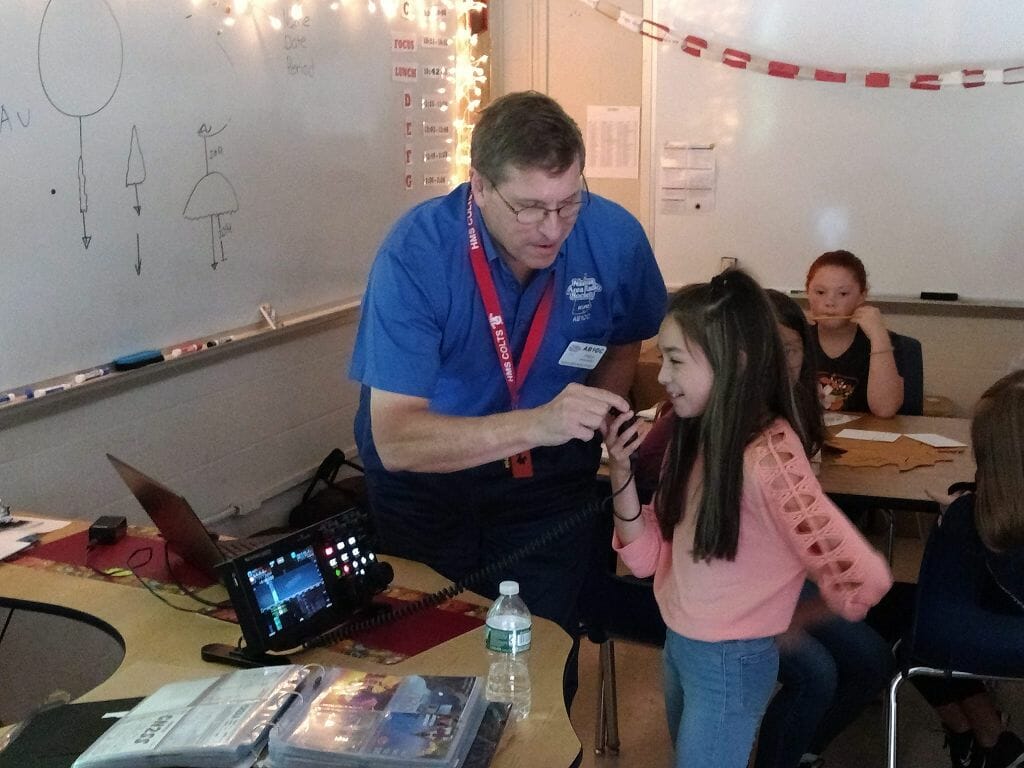
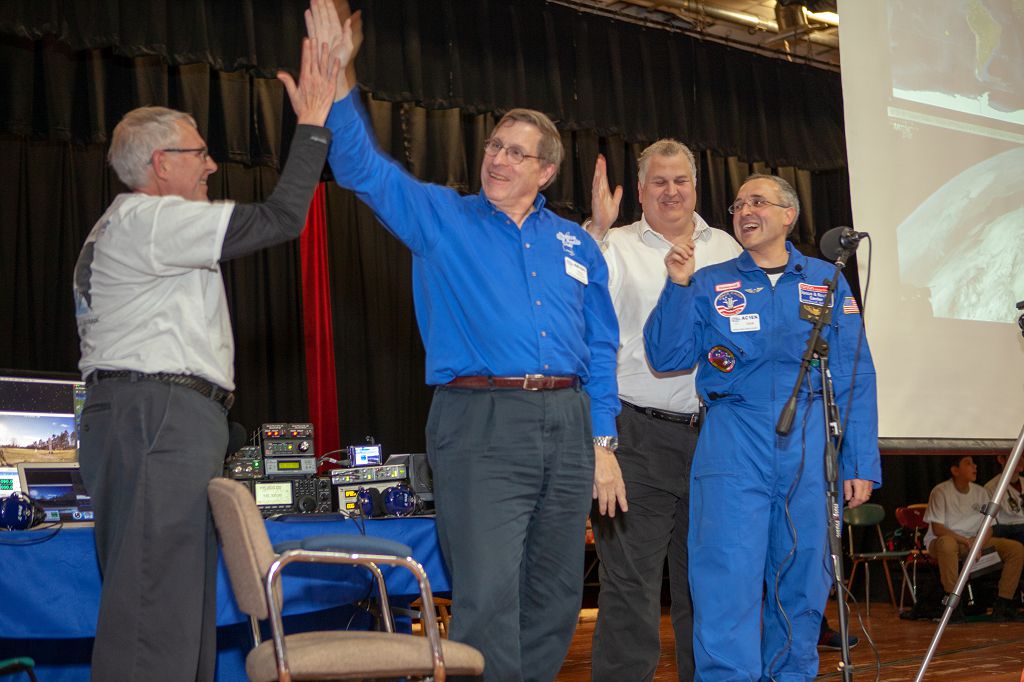
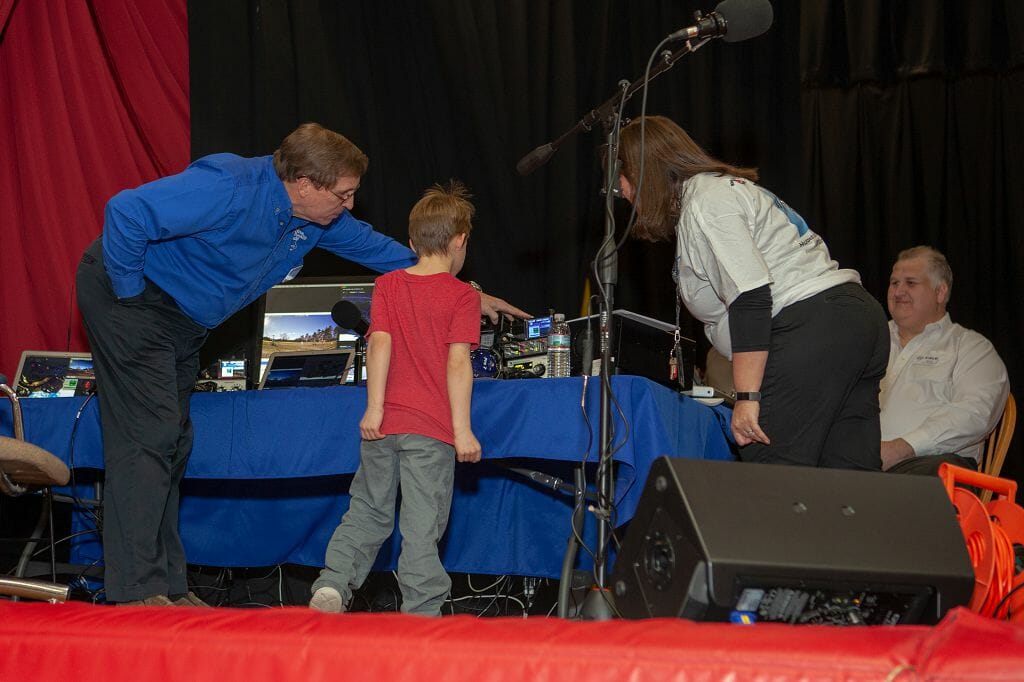
With all of the preliminaries complete, we began to call the ISS. After a minute or so, Serena answered our call and our ISS Crew Contact began! The students took turns asking their questions and Serena answered them over the air. It was an experience that everyone involved will never forget!
Finally, our contact came to the end and we said goodbye to Serena and signed off. All of us on stage were elated about the experience that we had.
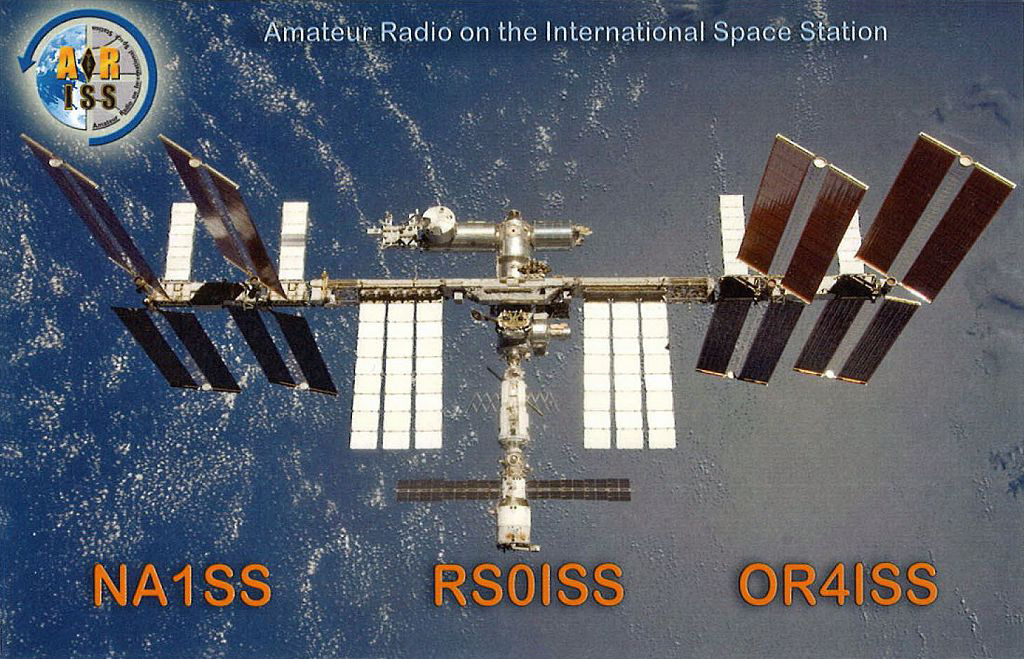
ISS Crew Contact QSL Card
The folks at ARISS have provided us with a QSL card to commemorate our contact. This will be one of my most special QSLs for sure!
Students and the NARS Operator Team
Thinking back about all that happened over the last year and a half leading up to our contact, I now, more than ever understand the following quote:
“It’s not about the destination, it’s all about the Journey”
I can only hope that I have the chance to walk this path again sometime.
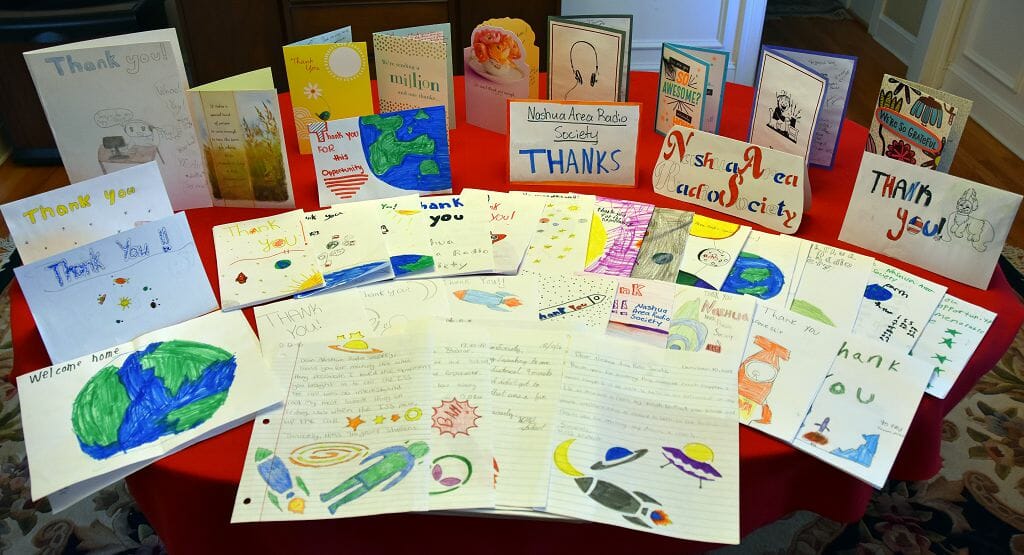
Thank You Cards from Students and Faculty Members at HMS
The students and Faculty Members at HMS created a personal set of Thank You cards which contain many, many cherished words and memories associated with our experience. I really enjoy reading these time and time again.
A Chance to Inspire Young People
Several people have asked me “What part of the whole contact experience was most memorable for you Fred?”There are so many memories, friendships, and experiences that occurred along the way that created lasting memories. For me, there is really only one real answer – It’s all about the chance to inspire young people to pursue an exciting career related to Science and Technology.
Again, there are many, many folks who contributed greatly to our successful ISS Crew Contact. Thanks to some great work by Charlie, W1CBD, Bob, W1OLD, and Jamey, AC1DC, we have some great photo and video memories from our contact. You can view the photos from our contact here and the video is viewable above.
The Nashua Area Radio Society (NARS) meets every first Tuesday except in August when there is no meeting. (Note that months where the first Tuesday falls on a holiday the two monthly meetings may be pushed out a week.) The monthly regular meetings typically feature a speaker from outside the club that brings something interesting from the ham radio community, the world of science and technology, or local interest. There is also a January Show-and-Tell meeting, and the Field Day planning and retrospective meetings held in June and July.
Here is a quick run-down of the presentations made to NARS over the last year.
February
Global Ionosphere Radio Observatory
Dr. Ivan Galkin, University of Massachusetts Lowell
We use the ionosphere for HF communications, but did you know that changes to the ionosphere can also affect GPS systems? Dr. Galkin described his groups work creating a system of Ionosonde stations to measure the ionosphere. And all this is done just up the road at the University of Massachusetts, Lowell.
March
Theory and Repair of Astron Power Supplies
George Allison, K1IG
Linear power supplies will eventually fail, but they can be repaired easily if you have a little know-how. George Allison walked through the design and theory of these devices and showed how easy it can be to get a dead unit back on the air.
April
The Current State of the D-Star Evolution
Terry Stader, KA8SCP
The proliferation of digital radio hotspots using Raspberry Pi and Arduino computers has been astounding. Terry Stader walked through some of the advancements of the D-Star ecosystem and other digital radio platforms.
May
MIT Haystack Observatory
Phil Erickson, W1PJE
One of the nation’s premier observatories is located just miles from Nashua. Phil Erickson gave us a virtual tour of the facilities.
September
BITX and µBitX Transceivers
Andy Stewart, KB1OIQ
Ashhar Farhan, VU2ESE, created a very low-cost transceiver that could be constructed by anybody in his native India with commonly sourced parts. The designs became an instant sensation in the QRP radio community. (Farhan was recently inducted into the QRP Hall of Fame.) Andy Stewart gave us a good overview of the BITX and µBITX technologies and even showed us some extensions for the radio to support visually-impaired operators.
October
Working the ISS and Satellites
Fred Kemmerer, AB1OC
Here at the bottom of the solar cycle it is good to broaden your experiences. Fred Kemmerer gave an excellent overview of the basics of satellite communication, including working the International Space Station.
November
Nashua Emergency Coordinator
Justin Kates, KB3JUV
Communications is an important part of any emergency situation planning. Justin Kates briefed club members on the planning and preparation Nashua makes for any emergencies.
December
Plane Tracking with ADS-B
Thomas Kavanaugh, KC1ELF
Most aircraft are now fitted with a system called ADS-B, part of the new system of anticollision technologies. Data is broadcast by each aircraft on 1090 MHz and that data can be received and decoded by a simple ground station you can build on a computer as simple as a Raspberry Pi. Thomas Kavanaugh gave the club an overview of this technology.
Tech Nights
NARS holds a second meeting of the month a week after the club’s regular meeting. “Tech Night” is a chance for club members to exchange ideas and share their knowledge and experiences. Many of these meetings are captured in video and archived on the NARS website https://www.n1fd.org You can access the video collection here https://www.n1fd.org/video-collection/ Remember that you must be logged into the website to have access to these web pages and materials.
January
Building a Mobile HF Station
Fred Kemmerer, AB1OC
Video available
February
Kit building night
Paddlestick touch keyer by K1EL
March
Antenna Modeling I
B. Scott Andersen, NE1RD
Video available
April
Basic Kit Building Techniques
Steven Elliott, K1EL
Video available
May
Portable Operating and Gear
Video available
June
All About Field Day
Video available
July
Raspberry Pi and Ham Radio
Anita Kemmerer, AB1QB and Jamey Finchum, AC1DC
Video available
August
WSJT-X
Fred Kemmerer, AB1OC
Video available
September
DMR Radios and Programming
Bill Barber, NE1B
Video available
October
Frequency Measurement Challenge
George Allison, K1IG
Video available
November
Remote Operation
Fred Kemmerer, AB1OC
December
RTL-SDR workshop
B. Scott Andersen, NE1RD
Club members were encouraged to bring their SDR solutions to the meeting and either seek help from other club members or provide help to those seeking to get their systems running. There were many newly working SDR systems at the end of the evening.
NARS 2018 Meeting Topics
Date
Meeting
Topic
Presenter
January
Regular
Show-and-Tell
Club members
January
Tech Night
Building a Mobile HF Station
Fred Kemmerer, AB1OC
February
Regular
Global Ionosphere Radio Observatory
Dr. Ivan Galkin, UMass Lowell
February
Tech Night
Kit Build: Paddlestick Touch Keyer
Club members
March
Regular
Theory and Repair of Astron Linear Power Supplies
George Allison, K1IG
March
Tech Night
Antenna Modeling
B. Scott Andersen, NE1RD
April
Regular
D-Star + Bishop Guertin Robotics team
Terry Stader, KA1SCP, and students from Bishop Guertin High School
April
Tech Night
Kits
Steven Elliott, K1EL
May
Regular
MIT Haystack Observatory
Phil Erickson, W1PJE
May
Tech Night
Show and Tell
Club members
June
Regular
Field Day Planning Meeting
Club members
June
Tech Night
Field Day Skill Builder
Club members
July
Regular
Field Day Retrospective
Club members
July
Tech Night
Raspberry Pi and Ham Radio
Anita Kemmerer, AB1QB, and Jamey Finchum, AC1DC
August
Regular
** No meeting this month **
August
Tech Night
WSJT-X and FT-8
Fred Kemmerer, AB1OC
September
Regular
BitX40
Andy Stewart, KB1OIQ
September
Tech Night
DMR Radios and Programming
Bill Barber, NE1B
October
Regular
ISS and Satellites
Fred Kemmerer, AB1OC
October
Tech
Frequency Measurement Challenge: Ideas and Strategies
George Allison, K1IG
November
Regular
Nashua Emergency Coordinator
Justin Kates, KB3JUV
November
Tech Night
Remote Operation
Fred Kemmerer, AB1OC
December
Regular
Plane Tracking with ADS-B
Thomas Kavanaugh, KC1ELF
December
Tech Night
RTL-SDR Workshop
Club members
Radio Amateurs Developing Skills Worldwide
We use cookies to ensure that we give you the best experience on our website. If you continue to use this site we will assume that you are happy with it.