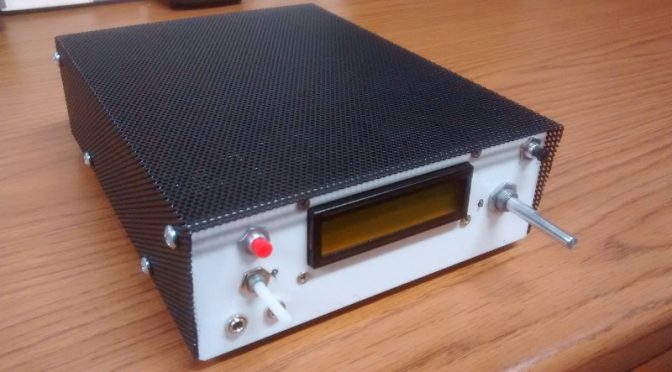
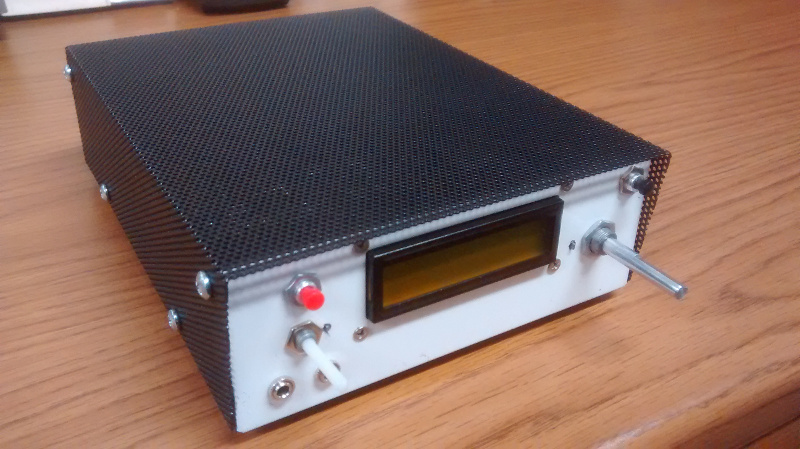
Below is a photo of my BitX-40 kit from Ashhar Farhan VU2ESE in India with my very own custom designed case. The kits are available from http://www.hfsigs.com/
The top cover shown is powder coated steel mesh.
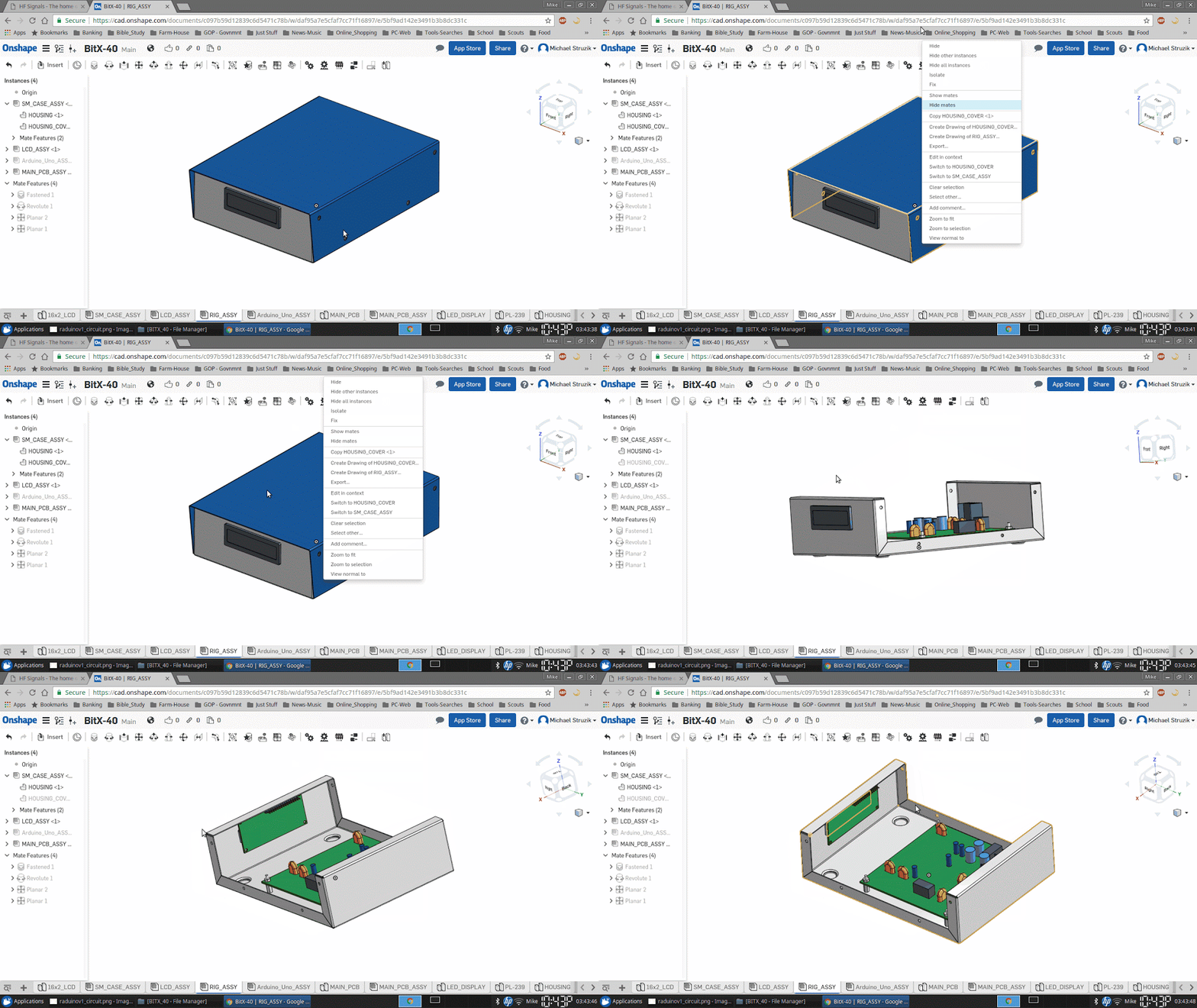
The sheet metal housing was designed in a solid modeling software package called Onshape. This web based software is free to use if your designs are to be available to anyone who signs into an account. This design is “in the cloud” and considered “open hardware”, available to anyone who would like to use it. Below is a screen capture of my Linux desktop running Onshape within a web browser.
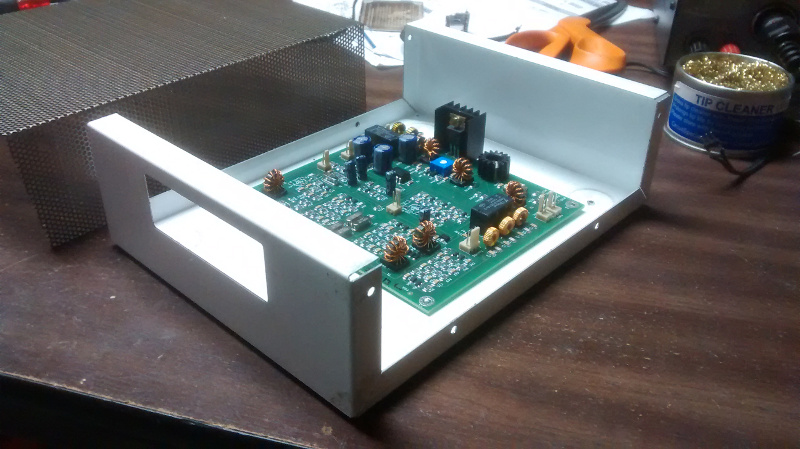
With access to a CNC punch press and a 90-ton brake press, a coworker of mine helped out with a bit of “government work”!
I left out some of the detail in the housing to let others enjoy the use of a drill and allow for some creativity with a customized placement of components.
Some of the wires are not needed but may be useful in future “hacks”. The image below shows some of the wires removed from the “Molex” connector. A small sharp object can be used to push in on the barb to remove the contact for a future project.
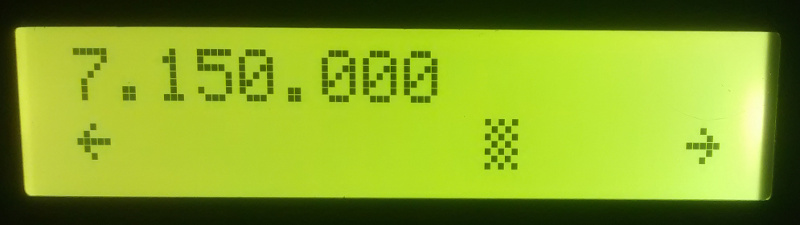
I used my sketch to drive the LCD screen and the SI5351 chip using the Adafruit library. The checkered block moves left and right between the arrows to indicate when I am at or near the end of travel with the tuning potentiometer.
Stationary
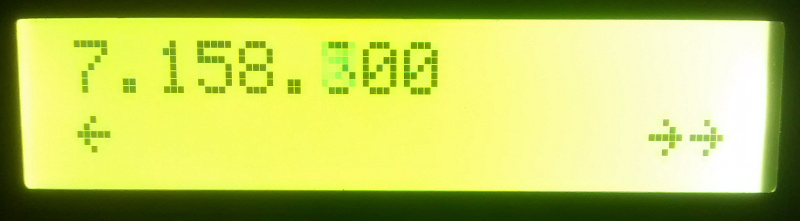
When I move the block all the way to the right with the potentiometer it turns into an arrow and automatically increases the frequency. To make it stop just turn the potentiometer to the left.
Frequency rising
I like the ability to scan the band without having to turn a knob!
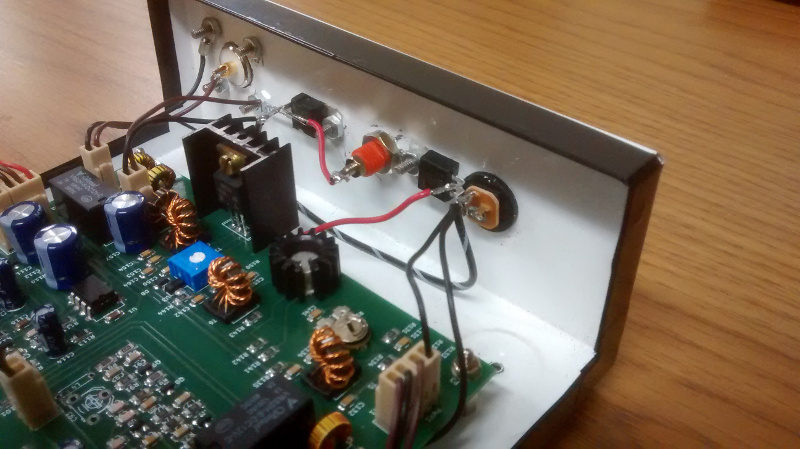
Below is an image showing 12v and 24v voltage regulators and electrical tape on the housing tabs. 12v is for the majority of the wiring and I used 24v for the IRF510 PA. The black tape looks nice behind the black mesh cover. while testing I measured about 4W RF output with 12v feeding the PA and 16W RF at 24v.
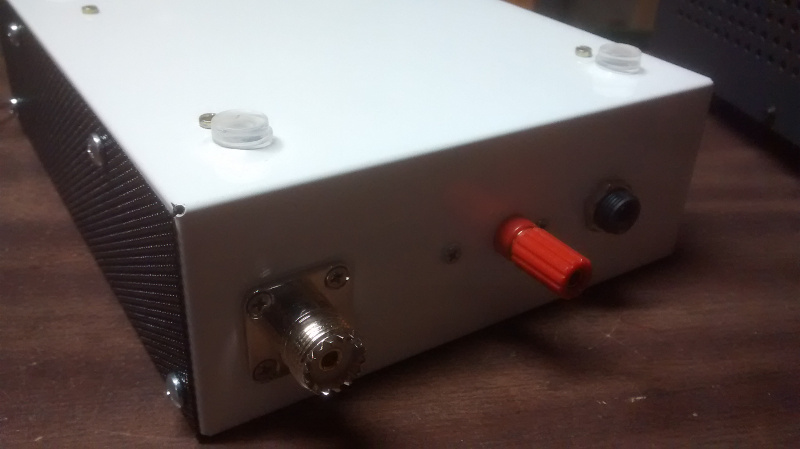
The bottom has extruded “feet” along with stick on feet to keep the rig from sliding.
I used an SO-239 connector for the antenna. I saved the BNC connector from the kit for test gear. The red terminal post is connected to 32v from a repurposed HP printer power supply. The barrel jack is connected to 16v from the same supply.
For more information on the case, you may contact me through my QRZ page.
The highly publicized event — the event of the month — went off with a bang! On Jan. 28th, the Nashua Area Radio Club paid a visit to MakeIt Labs to promote Amateur Radio with maker folks. It’s a natural union if you think about. Technologists/scientists/engineers/self-taught DIY’sters and amateur radio folk are essentially one in the same beast. So why shouldn’t they be interested?
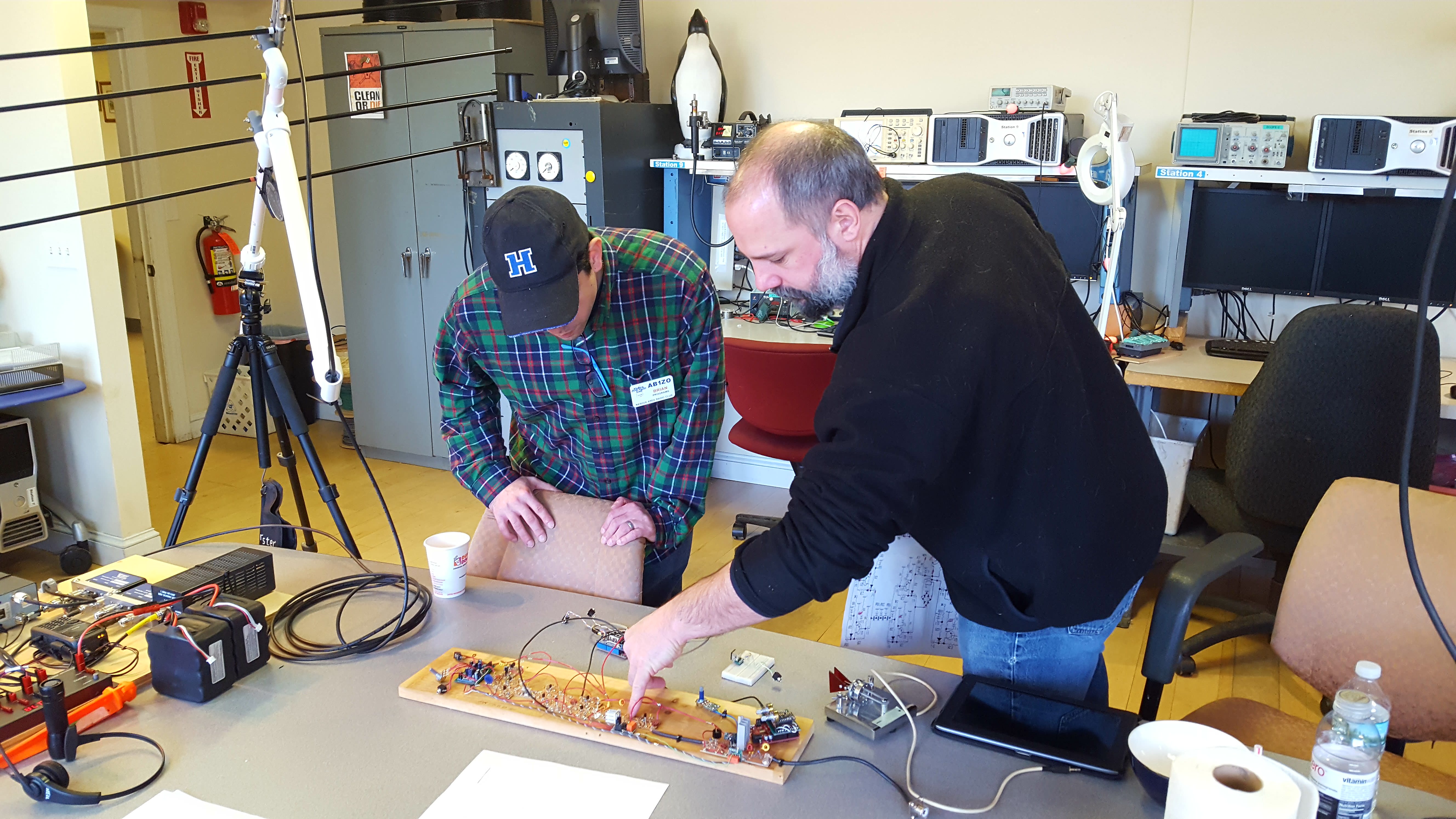
Brian (AB1ZO) and Mike (AB1YK) discussing details of Mike’s home-brewed transceiver
We had a super great turn out from many in the club and those external to the club or from MakeIt Labs itself. Representing the Nashua Area Radio Club, we had Fred (AB1OC), Anita (AB1QB), Jamey (KC1ENX), Abby (KC1FFX), Connor (KC1GGX), Brian (AB1ZO), Mike Struzik (AB1YK), Bill (W1TWO), Mike Ryan (K1WVO), Mike Rush (KU1V), and Tom (AB1NS) (Forgive me if I forgot you).
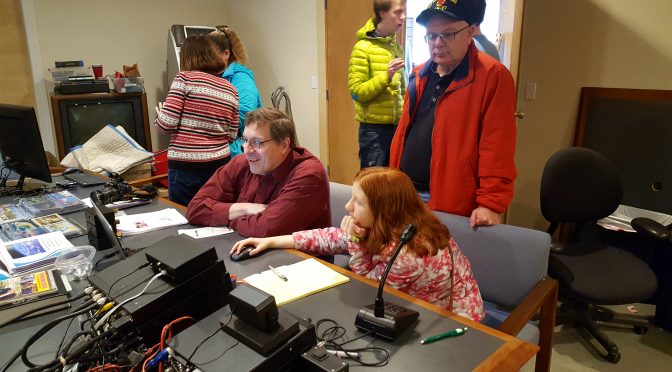
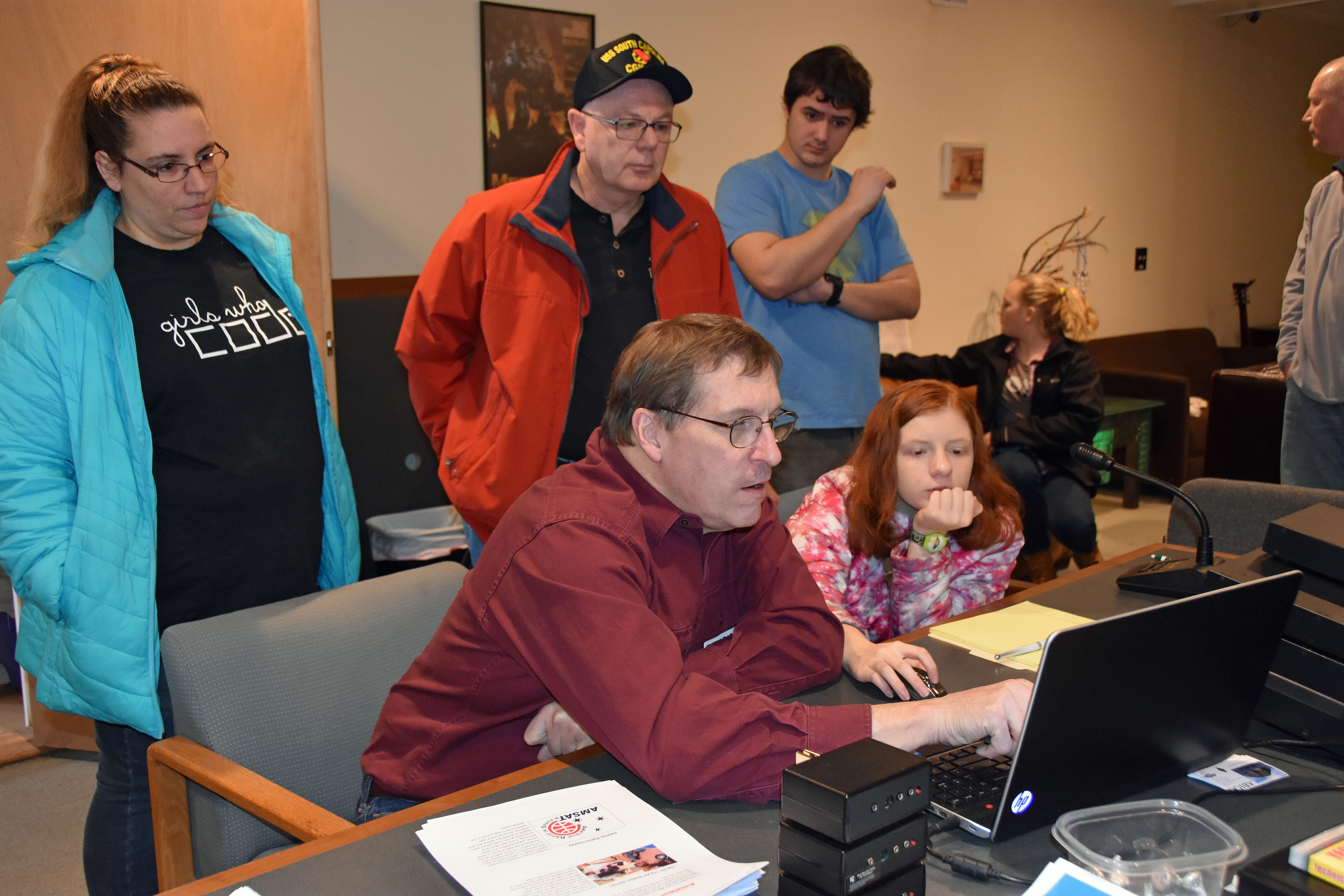
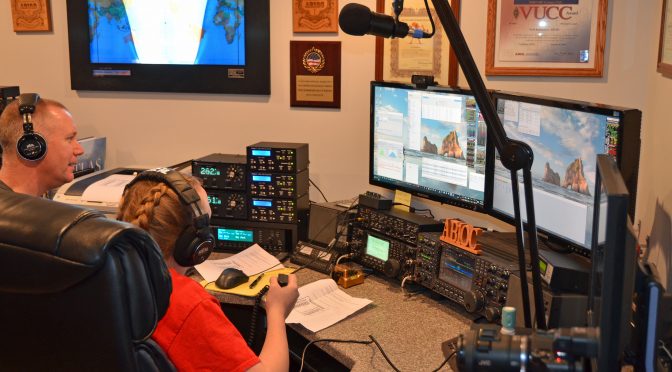
Fred (AB1OC) explaining the nuances of digital operation to a young, budding HAM.
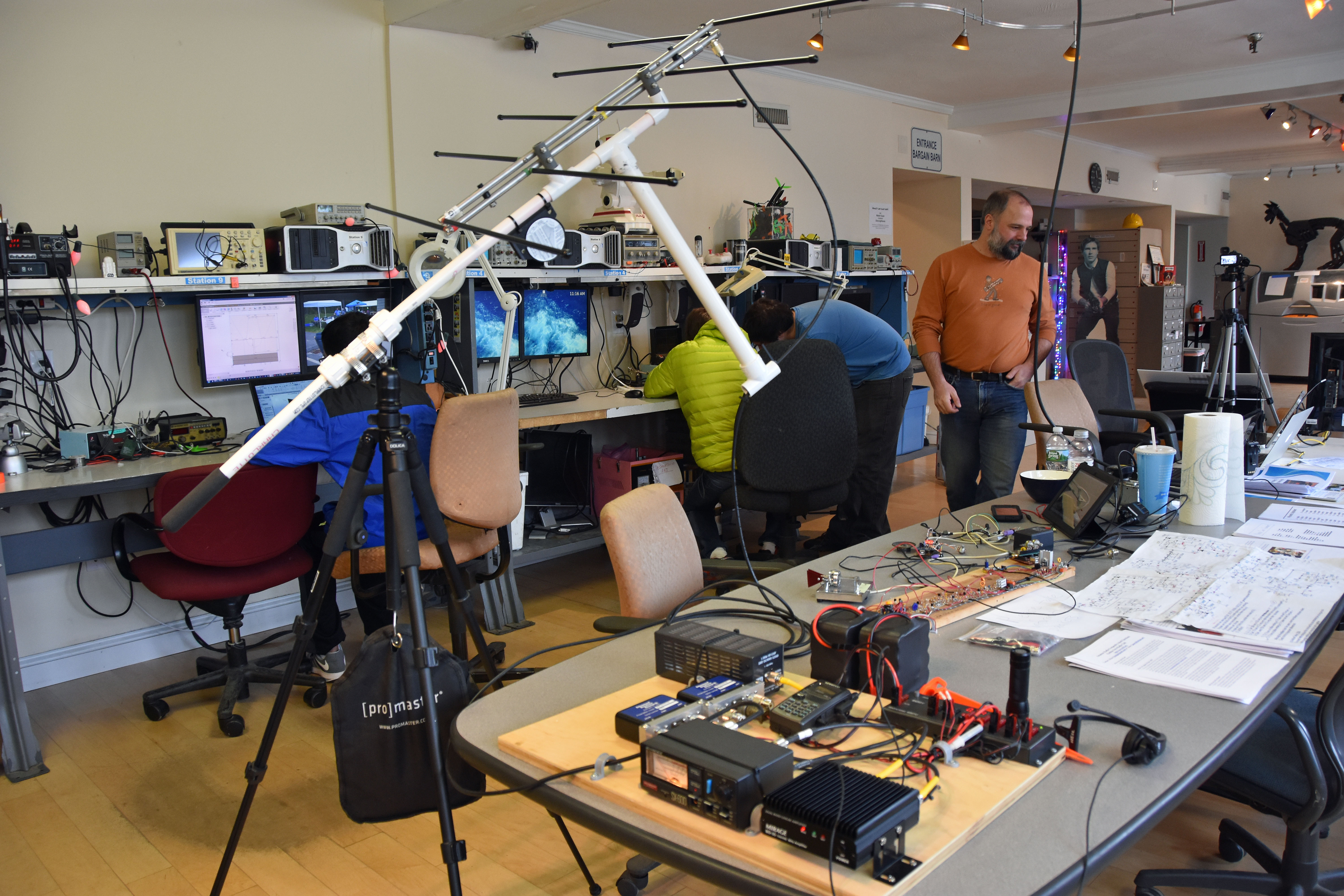
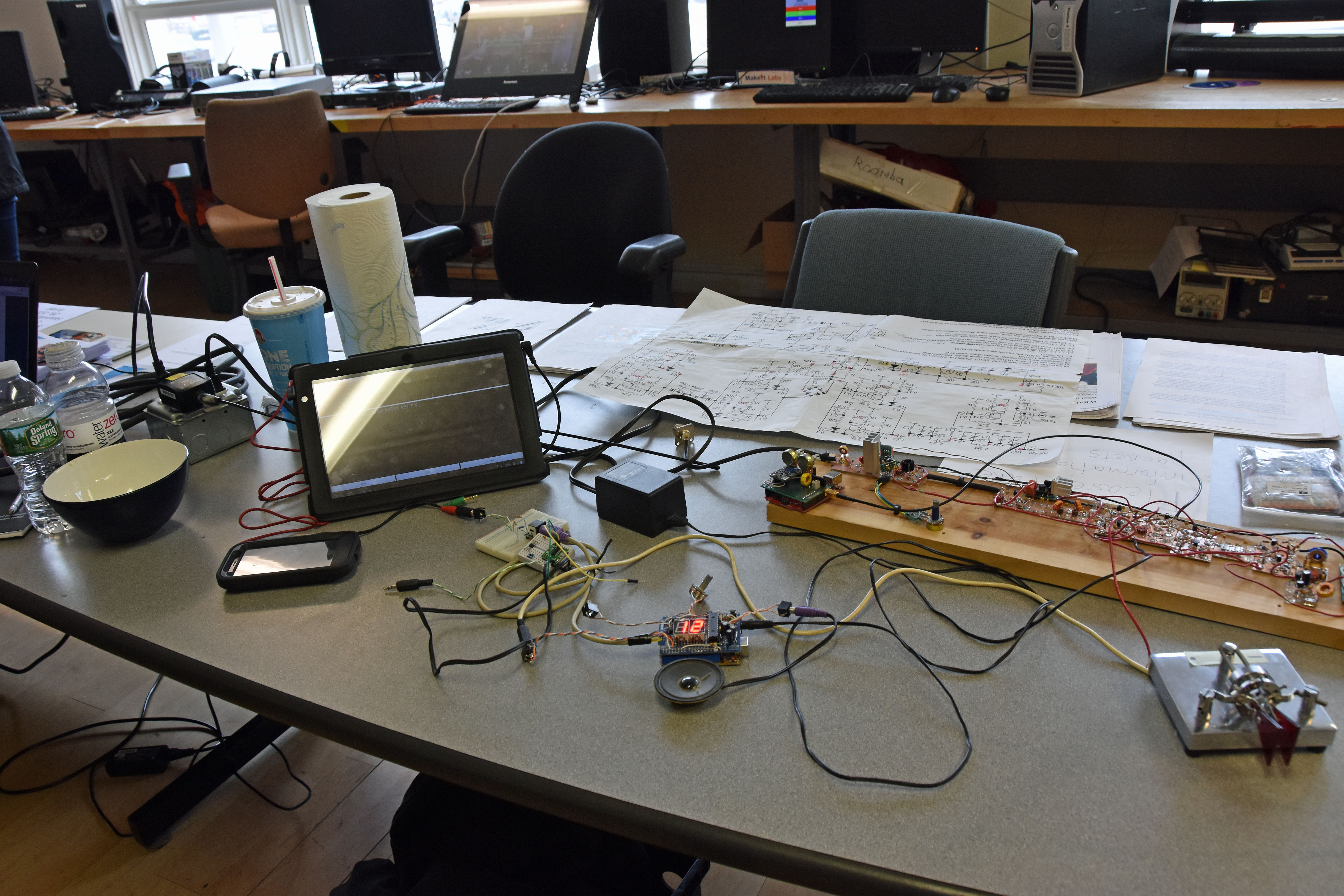
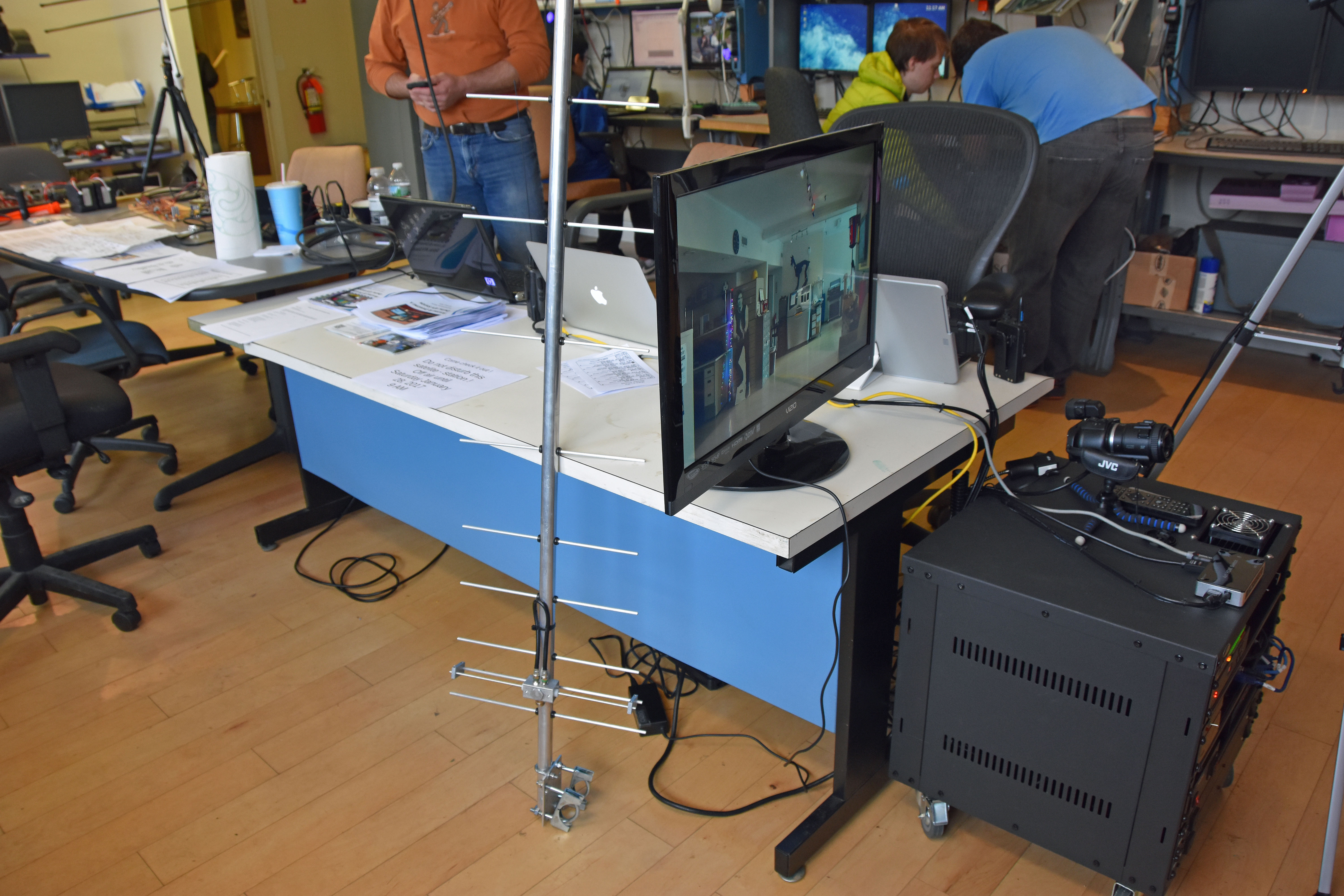
The idea was to set up the every-popular GOTA station, but also demonstrations of other amateur radio technology to hook the masses with. As a result, we had Fred’s digital amateur TV station, a tabletop satellite station, and Mike Struzik brought along his home-brewed BitX20 transceiver complete with plans, schematics, and a demo keyer. (Talk to Mike for further details/websites. He’s awesome about answering questions and exposing people to what they need to do to get started.)
A view of the satellite station
We spent a solid 6-7 hours at the facility, even roping in some new interest from folks who happened to see our advertisements for the event both online and in stores/businesses around Nashua. It’s clear that word is spreading about the work that the Nashua Area Radio Club is trying to do; we are engendering interest slowly, but steadily. Essentially, the trend is upwards.
Close-up of Mike’s (AB1YK) home-brewed BitX20 transceiver
We hope that down the road, we can enjoy a lasting partnership with MakeIt Labs and encourage more members of our club to drop in, see the facility, hang-out for a bit, and explain to new folks about how this hobby is damn close to one of the best hobbies out there!
Fred’s (AB1OC) DATV station
So, until next time, and until my next posting (and hopefully that one will be a bit witty’er — didn’t have enough coffee today), make sure you eat, sleep, “repeat”! (That’s what my t-shirt says that my wife bought me)
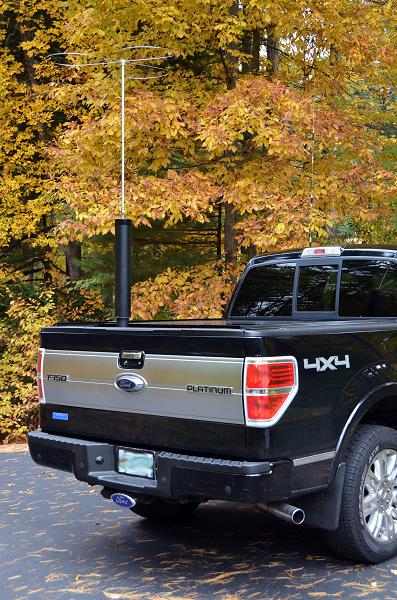
Sometimes I drive Fred’s truck into work and people ask me what that big antenna on the back of the truck is for. I explain to them that it is for Ham Radio. But the reply is usually “Why ham radio?” Isn’t that outdated technology? We have cell phones and IM, etc…what do we need Ham Radio for? Here are my thoughts as a relatively new Ham about why I enjoy spending much of my time with Ham Radio.
Amateur Radio for Public Service
Public Service
The number one reason we still need Ham Radio along with all the other technology is for public service. When there is a disaster and cell phones, television, … are all not working, Ham Radio operators provide critical communication.
Ham Radio operators help locally to keep hospitals and first responders in contact with each other to help those affected by the disaster.
We also use our ability to communicate around the world to help family members to get in touch with loved ones affected by a disaster.
Ham Radio operators have been on the scene helping in every disaster from the earthquakes in Nepal to the recent flooding in California.
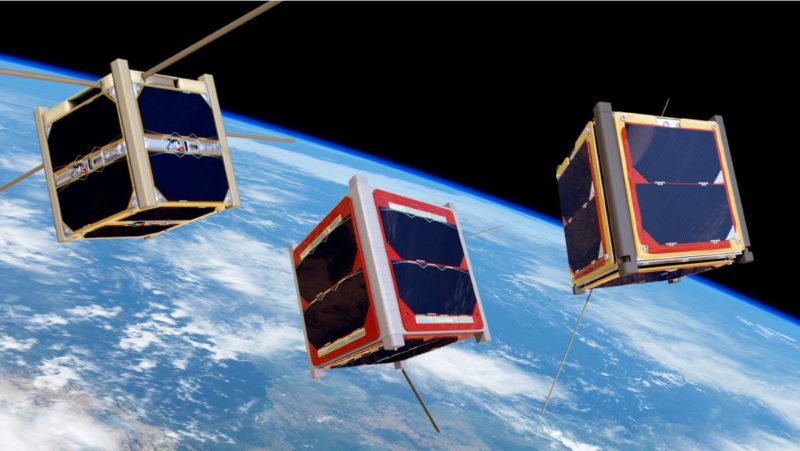
Amateur Radio Cube Satellites
Technology and the Maker Movement
I only became a Ham 5 years ago but many of my fellow Ham Radio operators got their license when they were in their early teens. Some have used what they learned to launch their careers. Many have had successful careers in STEM fields, all launched by their interest in Ham Radio at a young age. As technology advances so does the technology used in our hobby. We even have a Nobel laureate, Joe Taylor K1JT who is a ham. Joe has developed weak signal digital communication modes that let us communicate by bouncing signals off the moon!
As technology has advanced, so has the use of it in Ham Radio. Most Ham Radio operators have one or more computers in their shack. Many also have a software designed radio (SDR), where much of the radio functionality is implemented using Software. Hams use sound cards to run digital modes, which are a lot like texting over the radio. We use the internet extensively as part of operating. We can also make contacts through satellites orbiting the earth and even the International Space Station.
Homebrewing
Most hams love do-it-yourself technical projects – building a station, home brewing an antenna, building a radio or other station component. In my day job, I am a program manager for software development projects. It has been a while since I have built anything myself. As a Ham, I taught myself how to code in Python and about the Raspberry Pi and I built the DX Alarm Clock.
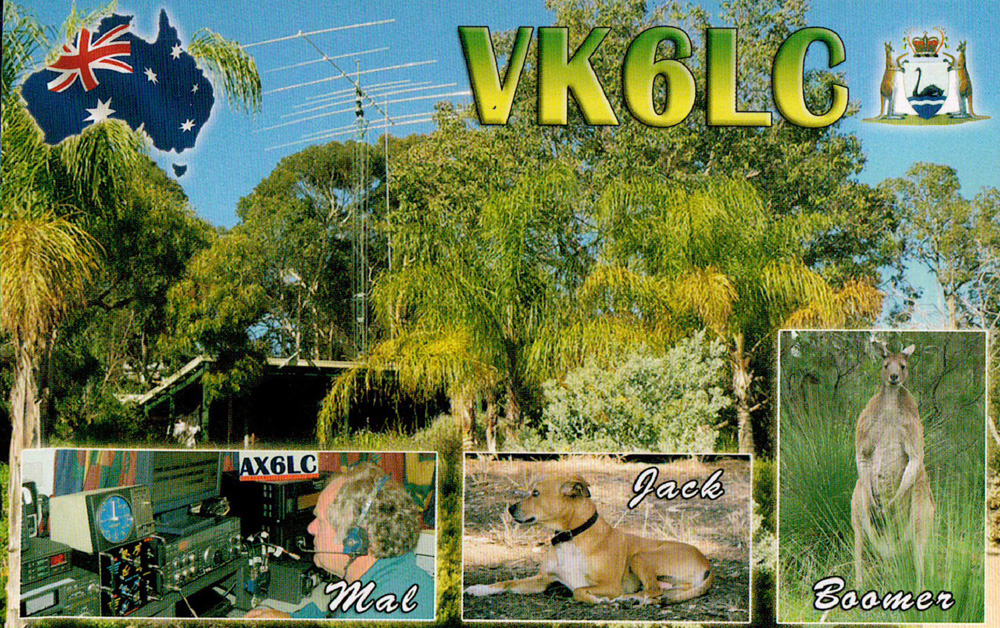
QSL Card from VK6LC in Western Australia
International Camaraderie
One of the coolest things about being an amateur radio operator is that you can communicate with other hams all over the world. Ham Radio is an international community where we all have something in common to talk about. That is our stations and why we enjoy ham radio. The QSL card above is from a memorable QSO with Mal, VK6LC, from Western Australia, who was the last contact that I needed for a Worked All Zones award. I must have talked to him for 1/2 hour about his town in Australia and his pet kangaroos!
Amateur Radio Map of the World
Geography Lesson
I have learned much about geography from being on the air and trying to contact as many countries as I can. There are 339 DX Entities, which are countries or other geographical entities. I have learned where each one is in order to understand where propagation will allow me to make a contact. I have learned a great deal about world geography. Through exchanging QSL cards often get to see photos from so many areas of the world.
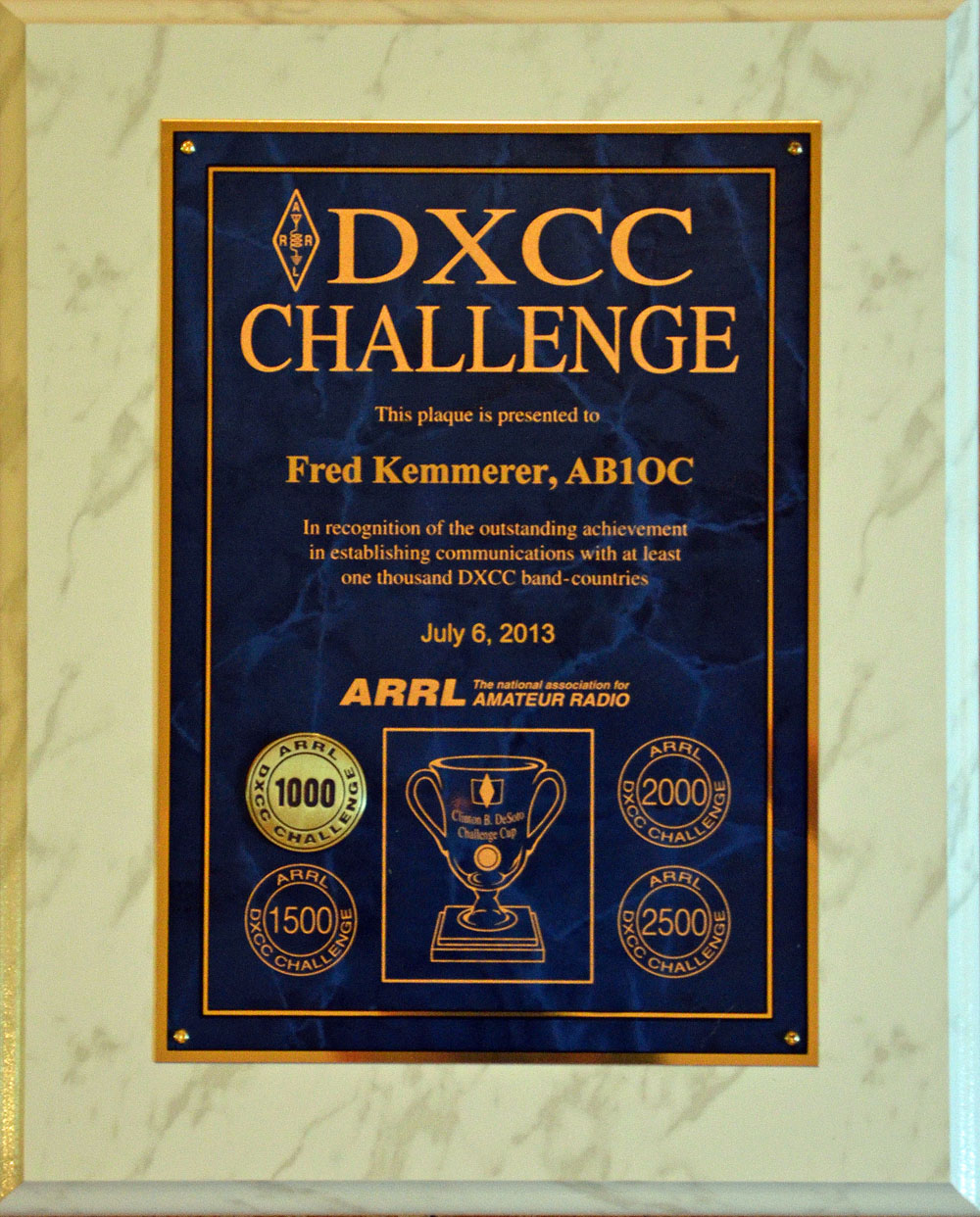
DXCC Challenge Award Plaque
Achievement – DXing and Contesting
DXing and Contesting provide a sense of achievement and exciting opportunity for competition. Many Hams work toward operating awards. You can get an operating award for contacting all 50 states or contacting 100 or more countries. There are also awards for contacting Islands, cities in Japan, countries in Asia, or anything else you can imagine. Each of these operating awards provides a sense of accomplishment and helps to build skills. Contesting builds skills through competition among Hams to see who can make the most contacts with the most places in 24 or 48 hours. Contesting also improves our operating skills and teaches us to copy callsigns and additional data accurately.
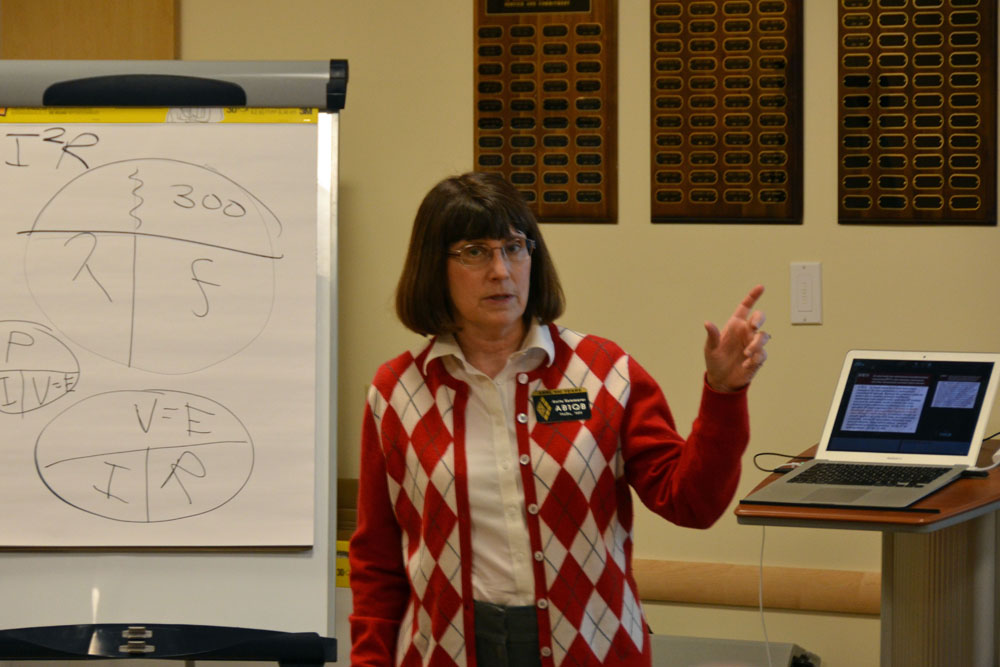
Teaching a License Class
Teaching Licensing Classes – Passing it On
Recently I joined a team of club members who teach license classes to others who want to get licensed or upgrade their existing licenses. Teaching provides a way to improve my presentation skills. It also helps me to really understand the material that we teach about Amateur Radio. It is a thrill at the end of the class to see many people earn their licenses or upgrades.
There are so many interesting aspects of Ham Radio which are what makes it such a great hobby. Getting your license can open up a world of possibilities. Upgrading to a new license class provides more opportunities to communicate over longer distances. Our club provides many resources to help you get your first license, upgrade to a new license class, and learn about the many aspects of our hobby.
We use cookies to ensure that we give you the best experience on our website. If you continue to use this site we will assume that you are happy with it.