Tag Archives: Arduino-Raspberry Pi

A Raspberry Pi Video Player for Expo Displays

We are continuing to provide our Ham Radio Youth Expo displays at local Hamfests. We are always looking to simplify to delivery of our Ham Expos displays.

Raspberry Pi Video Player
Youth Expo Kits and Computers Display

Dave, K1DLM recently suggested a great simplification idea. His idea is to replace the multitude of Laptop Computers that we’ve been using to display videos at our Expos with Raspberry Pi Computers. I wanted to share how we went about building our Raspberry Pi Video Players so that others might have the information needed to duplicate what we did for other applications.

Raspberry Pi Video Players

Raspberry Pi Video Player
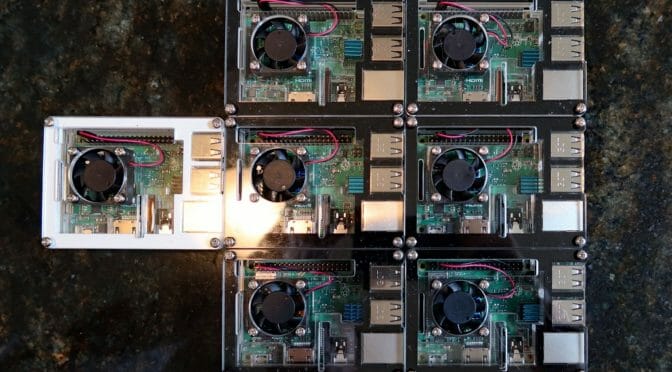
Completed Raspberry Pi Video Players

We’ve been using a total of 8 laptop computers as part of our Ham Expo displays and most of these only play video content. Many of these computers can be replaced with a simple and compact Raspberry Pi Computer.

Raspberry Pi Player Close-up

The image above shows a closeup view of one of the completed Raspberry Pi Video Players. All that is required to use our new players is to connect the player to an HDMI display. Power is provided via a small USB power supply.

Raspberry Pi Video Player Display

The players produce a very nice display on an HDMI monitor. We also connect the players to a small USB powered speaker to provide audio.

Player Hardware and Packaging

Our video players are relatively inexpensive and easy to build. Here’s a bill of materials:

The parts cost a total of about $60 new on Amazon. Fortunately, we had most of the parts required on hand except for the cases which significantly reduced the overall cost of the project.

Raspberry Pi 3 B+

The current build of the Raspian OS includes a copy of the VLC Media Player which we use to play our videos. Playing high-resolution videos does stress the capabilities for the Model 3B+ that we are using and a few of our videos needed to be downscaled to 720p resolution to play smoothly. The downscaling was done using QuickTime Player on a Mac. Our monitors are 27 in or smaller and there was no noticeable loss of video quality at 720p resolution.

Case, Power Supply, Fan, and Heatsinks

The processing load associated with continuously playing videos causes the Raspberry Pi to generate a good bit of heat. To deal with this and also to provide a nice case for our players, we chose an enclosure package which includes a fan and heatsinks. The package also includes the required USB power supply with an on-off switch.

Player Software

RPi Desktop via VNC

We enabled the Raspberry Pi VNC Server on our Video Players to provide keyboard and mouse access via Windows and Mac computers. This allows a single PC to configure and start the VLC players on all 7 of our Video Players used in our Ham Expo Display. We use the RealVNC connect client on the controlling PC to access our Raspberry Pi  Video Players.

Raspberry Pi File Sharing on a Windows PC via Samba

We also installed the Samba file sharing package on our Video Players. Samba allows a Windows or Mac PC to access the drive on the Players to load our videos.

The Model 3B+ provides both wired and WiFi access and we use the wired connection for loading our videos because it is much faster than WiFi. The Raspberry Pi’s WiFi connection is great for VNC access to start out players at our Expos.

Planned Use Of Our Players

The Raspberry Pi video players create an inexpensive and easy to use System for playing videos as part of our Ham Expo Displays. We will be using them for the first time at our Ham Expo Display at HamXpostion at Boxboro in September.

The resulting Raspberry Pi are very capable systems and I expect that we will find other applications for them as we go forward.

Fred, AB1OC
Project Night 2018

Every January Meeting we hold Project Night, where members bring in and share recent homebrew projects that they have built. This year’s Project Night was full of interesting projects built by our members.

Member Projects
Scott NE1RD Kits
Scott NE1RD Kits

Our Programs Chairperson, Scott, NE1RD led it off by showing us some kits he had built, including the K1EL PaddleStick Keyer that we will be building for the February Tech Night.

Bob KB1TEK - QRP Kits
Bob KB1TEK – QRP Kits

Bob, KB1TEK brought some QRP kits that he had built.

Dave K1DHP - VLF Detector
Dave K1DHP – VLF Detector

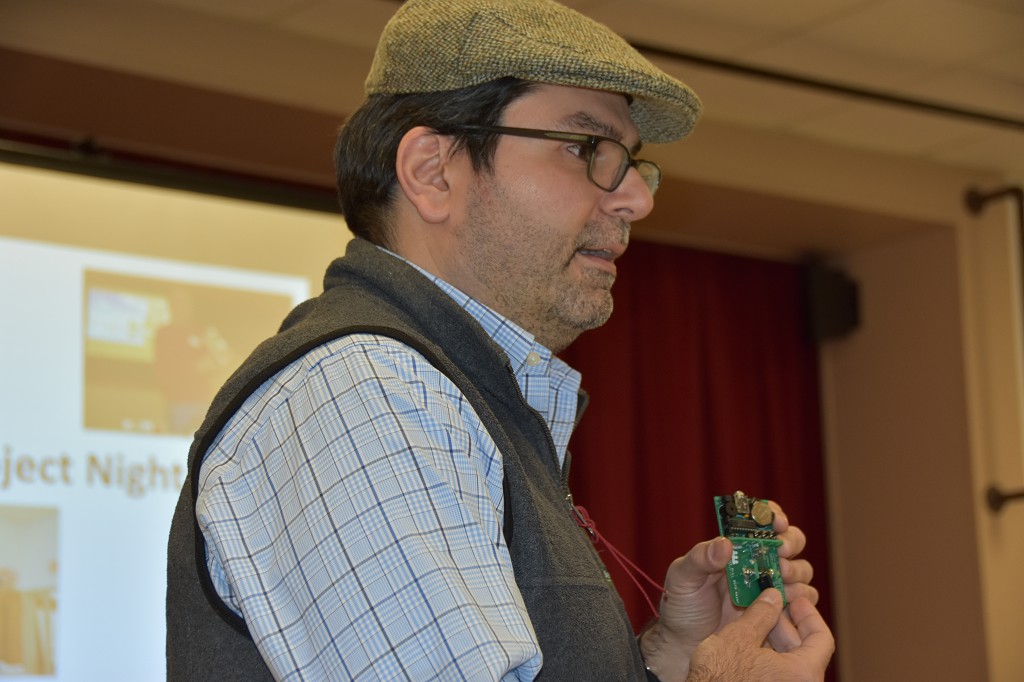
Dave, K1DHP showed us the VLF Detector that he built.

Hamilton, K1HMS – Antenna Switches

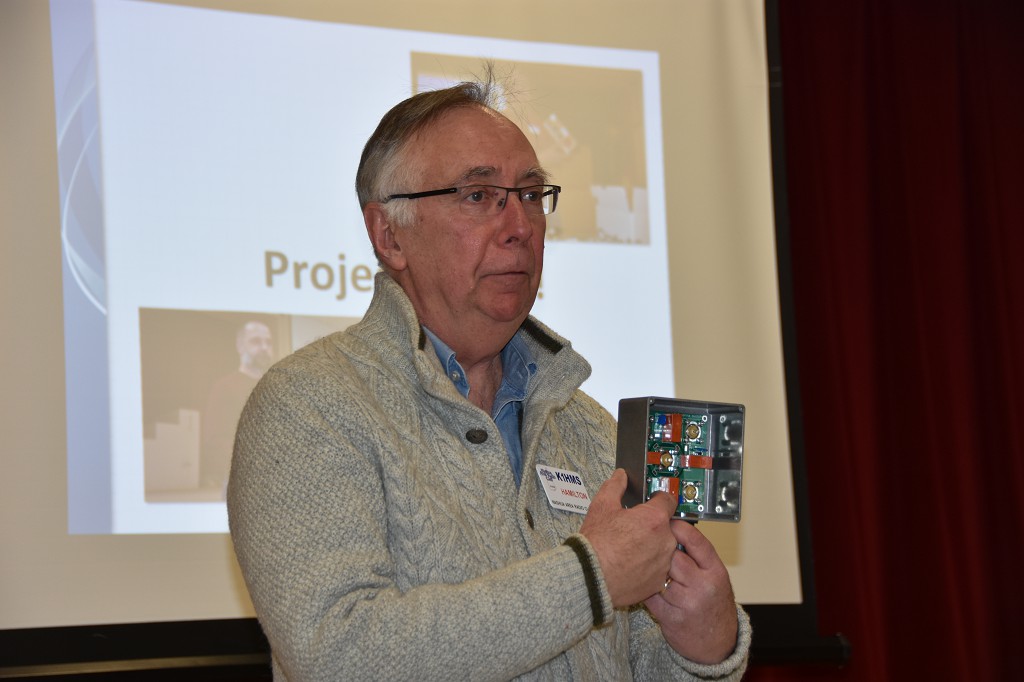
Hamilton, K1HMS brought Antenna Switches that he had built.

Dave K1DLM - Heakthkit
Dave K1DLM – Heakthkit

Dave, K1DLM showed us a Heathkit that he plans to build.

"<yoastmark

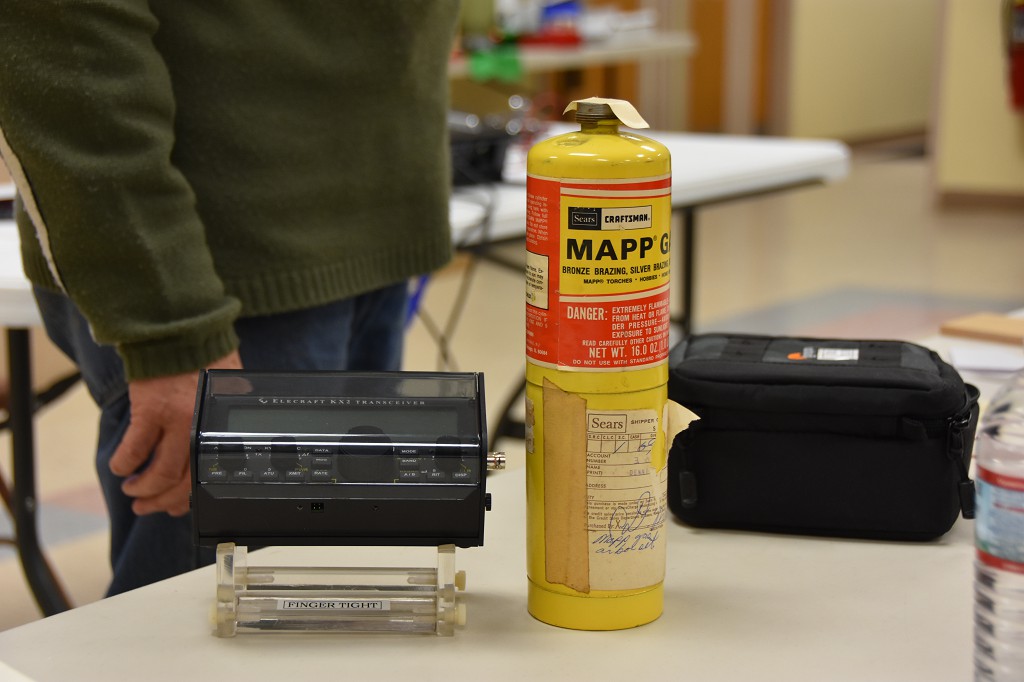
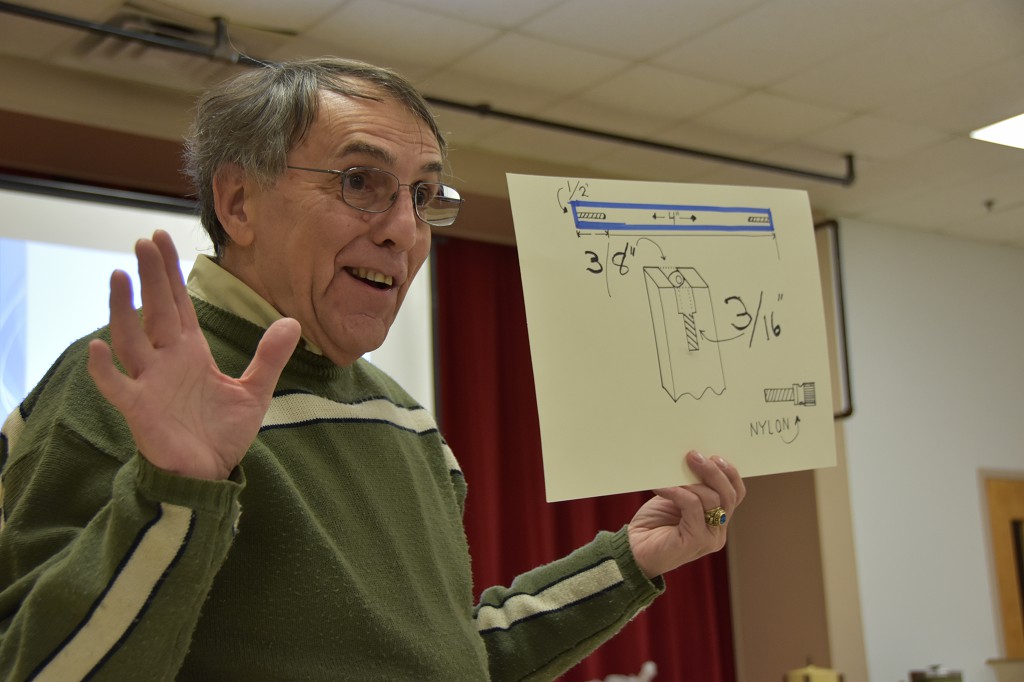
Dennis, K1LGQ had another explosive presentation when he showed us a KX2 stand that he built.

Dennis shows plans for his KX2 Stand
Dennis hows plans for his KX2 Stand


Fred AB1OC - Low-Band Match
Fred AB1OC – Low-Band Match

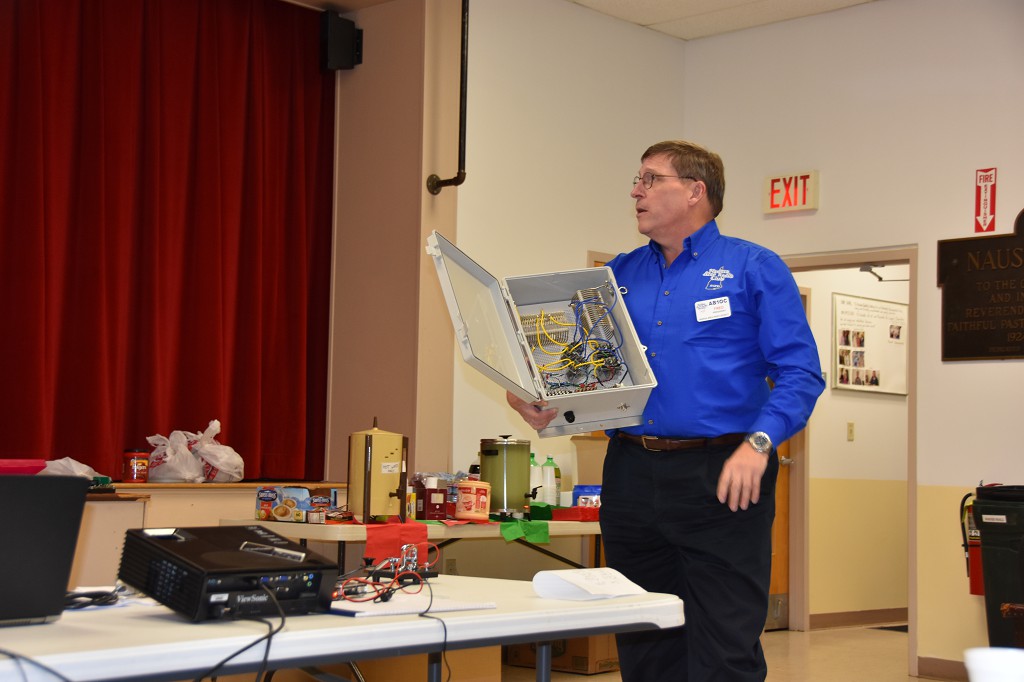
Fred, AB1OC brought an 80m band matching system that he will install in order to make our 80m delta loop be resonant across the band.  He has programmed our MicroHam system to automatically have the box switch the matching system as we tune through the 80m band.  I’m looking forward to using this to get the last 20 80m contacts for my 5 Band DXCC!

Anita AB1QB - CW Pi
Anita AB1QB – CW Pi

I (AB1QB) demonstrated a Raspberry Pi project that I built over the holidays.  It is called a Morse Code Virtual Radio.  When you hook up a monitor and a straight key to the Raspberry Pi, it will decode what you key in.  This was a big hit with the kids who visited us for ARRL Kids Day.

Mike, AB1YK - Panadapter
Mike, AB1YK – Panadapter

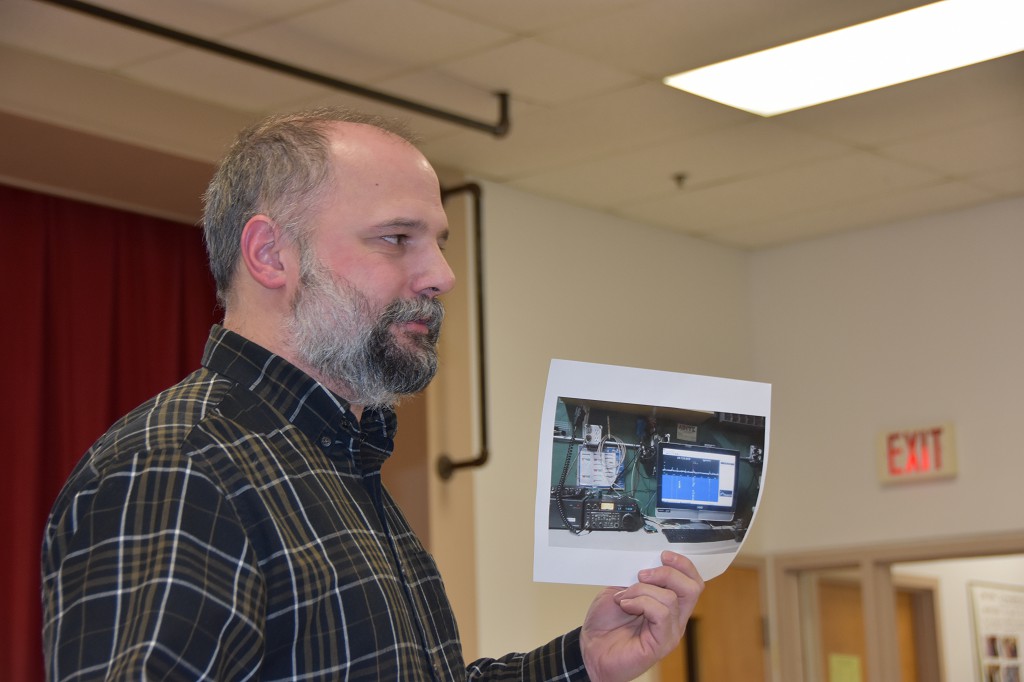
Finally, Mike, AB1YK brought in a number of projects that he has done including a Panadapter and a CW Generator.

Overall it was great to see all of the projects that our members have been working on. The gallery above contains more pictures from Project Night.

Anita, AB1QB

2018 Tech Night Survey Results

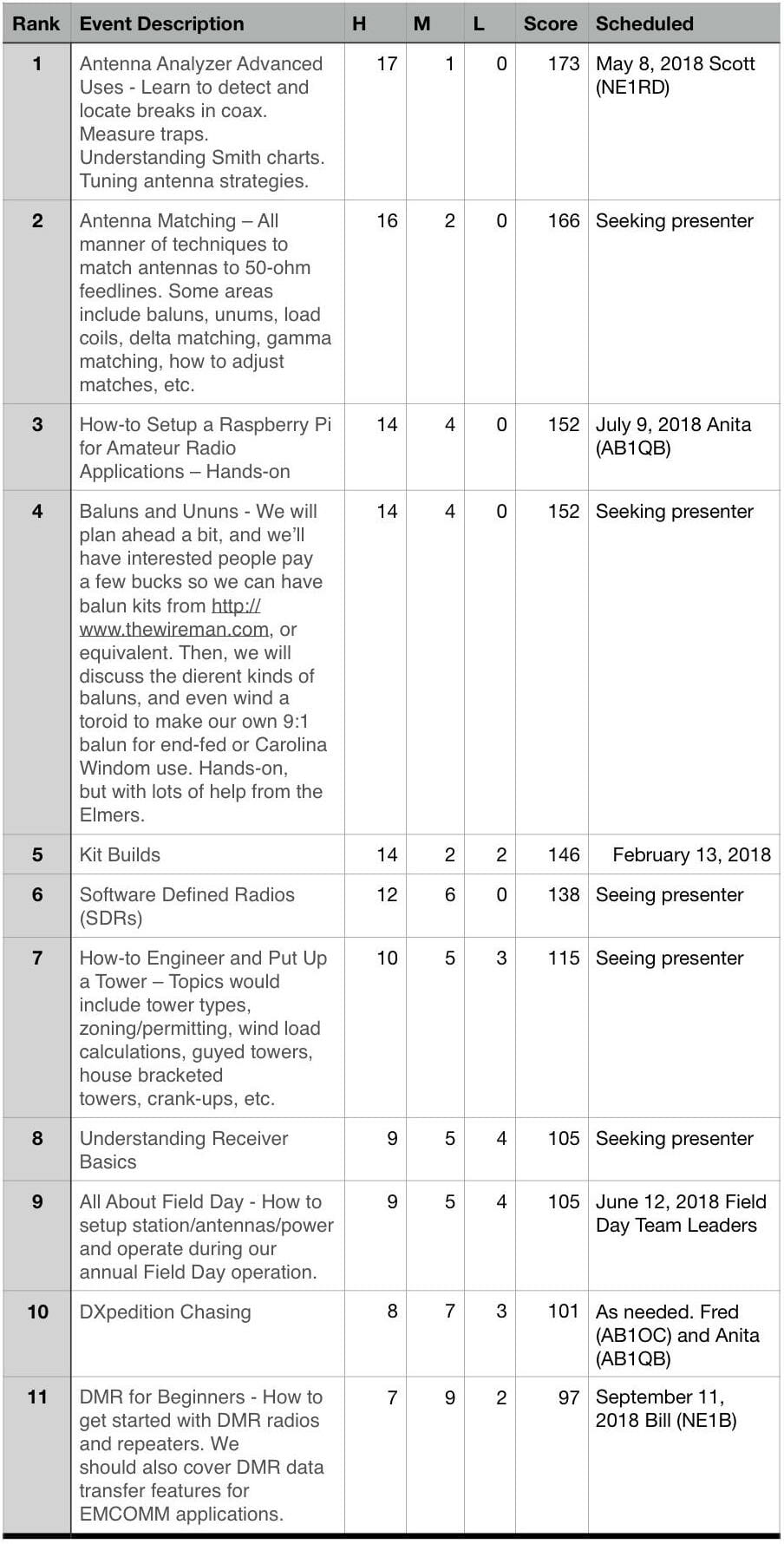
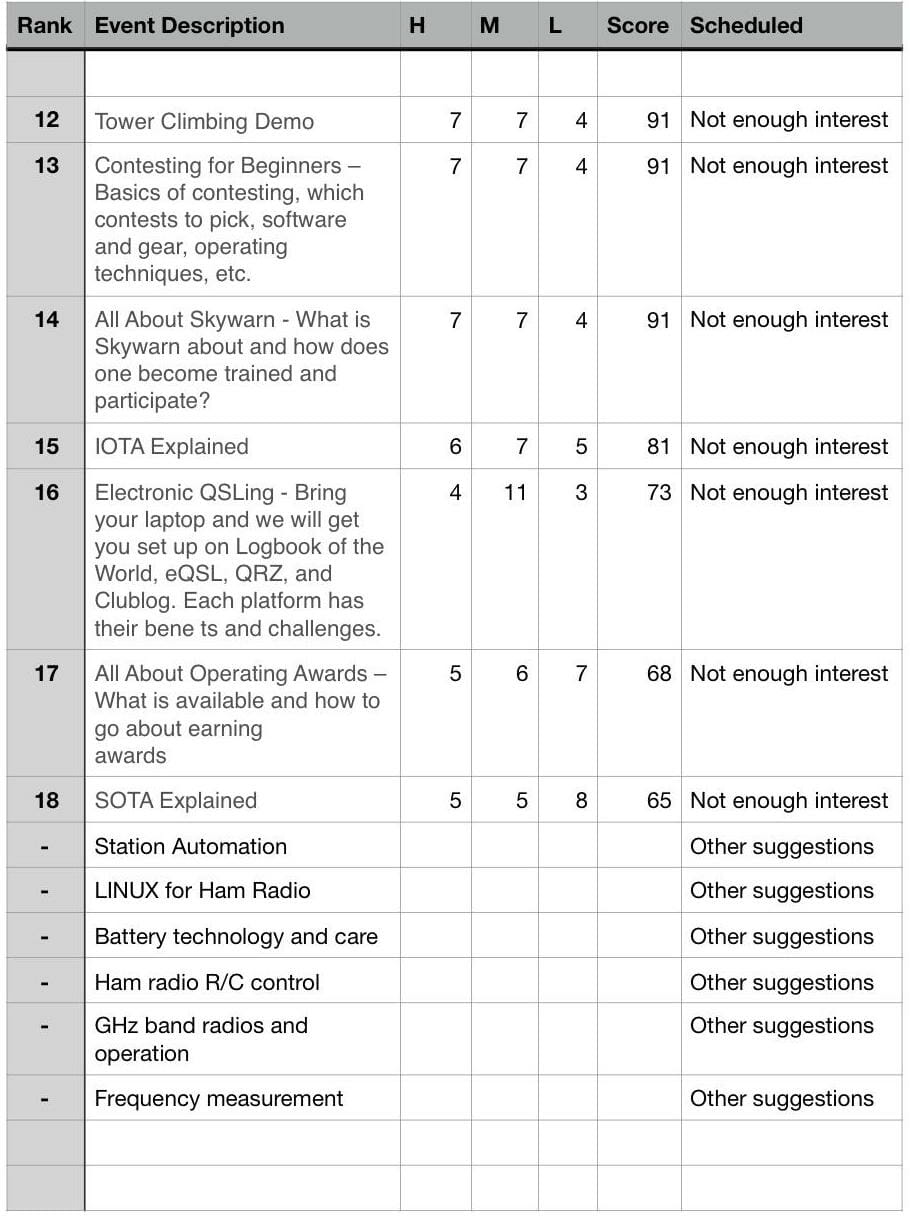
The results are in for the Tech Night program survey. We had 18 respondents and several volunteers to help with presentations.

In order to produce a meaningful ranking, a weight was given to votes for High, Medium, and Low. High was assigned a value of 10. Medium was assigned a value of 3. Low was assigned a value of zero. The score for each idea was then tallied, and the table sorted by score. Anything with a score below 95 was considered uninteresting at this time. Note that future surveys may have these very same ideas, and new members (or even old members) may rate the ideas higher later. Just because an idea didn’t get scheduled this year doesn’t mean it is off the table for next year.

I’m happy to say that five of the ideas that ranked highest have already been scheduled. We are also doing an Antenna Modeling program two nights, and a two-night kit build event in January and February to round out the package. As for the other popular ideas, we’ll be seeking out presenters for these in the coming weeks and months.

Here is a list of the ideas that made the cut:

Here are the remaining issues ranked, and a few more that were suggested during the survey.

Our hope is to bring interesting speakers and ideas to Tech Night. If you have ideas for program topics, or if you’d like to present at a Tech Night, please contact me.

Scott, NE1RD

Radio Amateurs Developing Skills Worldwide