Tag Archives: Antennas

2017 Field Day Prep – New Tower Test

We decided to put up a third tower as part of our 2017 Field Day operation. The new tower will support a tri-band yagi and wire antenna for use by our Digital and GOTA stations this year. Our Field Day plans call for this tower to be located on the middle-level soccer field at the Hollis-Brookline High School. To overcome terrain limitations, we decided that our new tower should be a 60 ft setup.

The project began with some mechanical design and planning for a new, heavy-duty Falling Derrick System. Mike K1WVO, Dave N1RF and I secured the necessary materials and hardware to make the new Falling Derrick System.

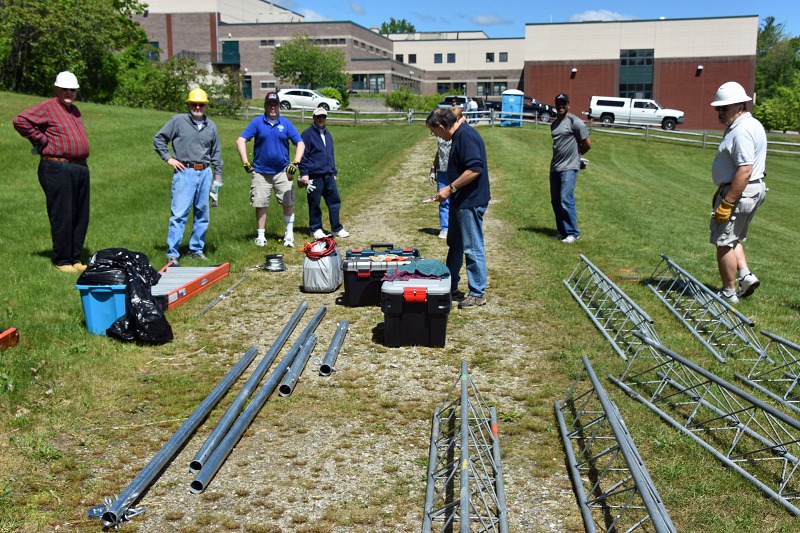
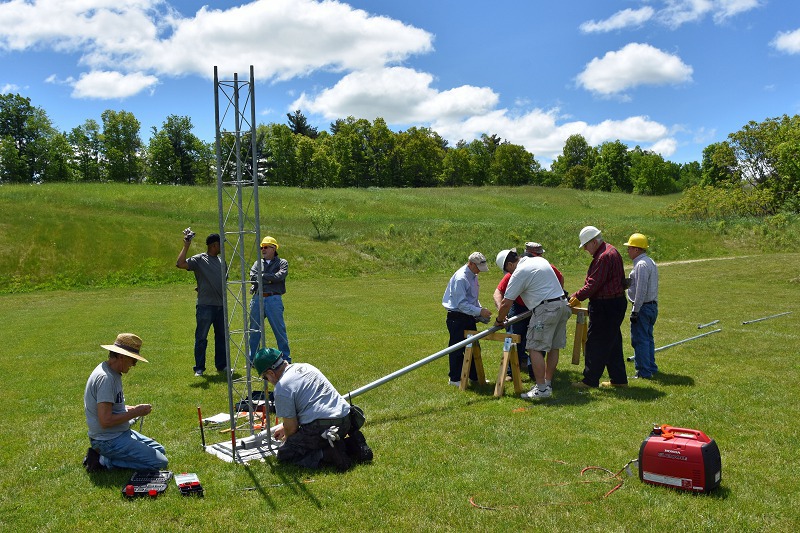
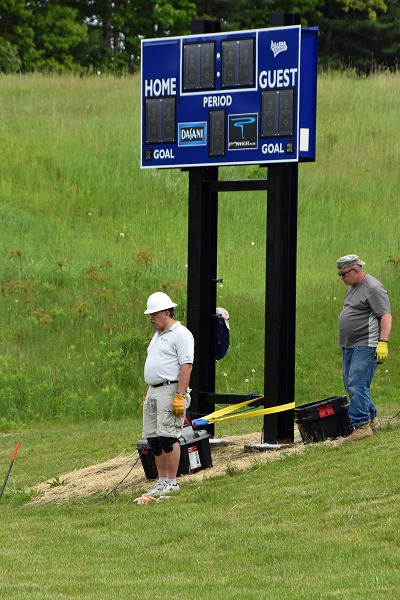
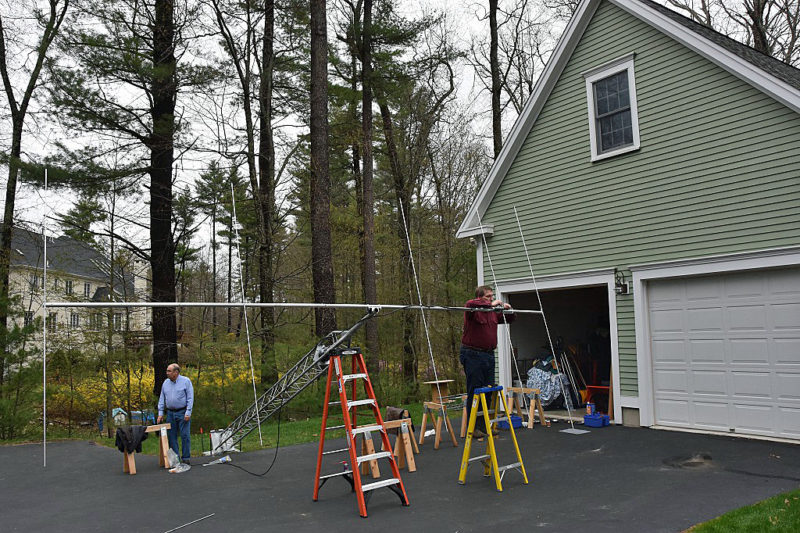
Tower Test - Equipment And Tools On Site
Equipment And Tools On Site

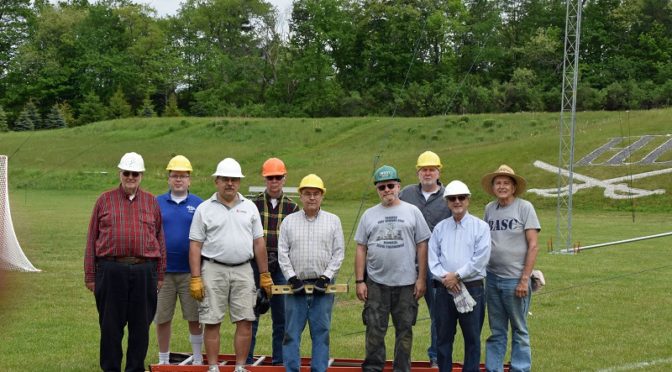
The team in the two pictures above met at our QTH this past weekend to transport all of the equipment for the new tower to the high school for a test setup.

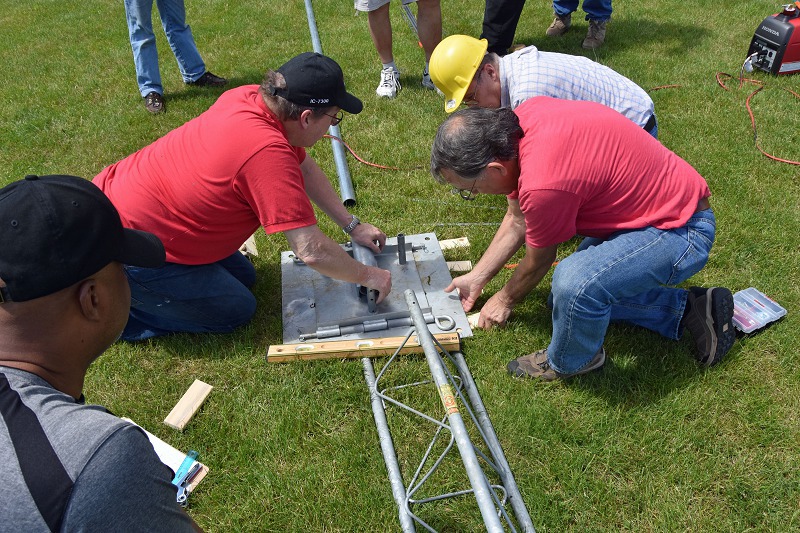
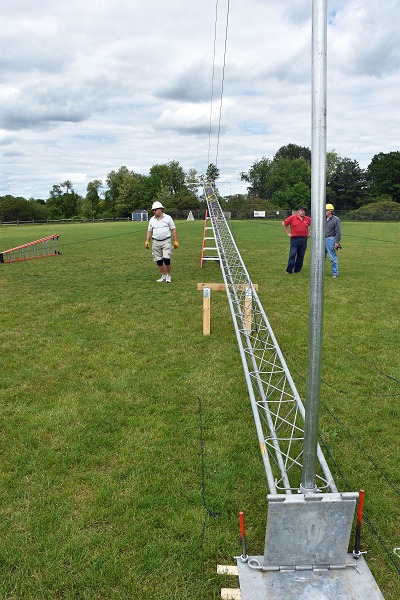
Tower Test - Setting Up The Tilt Base
Setting Up The Tilt Base

The first step in the test was to locate the tower base in the center of our test area and ensure that it was level. Steel stakes were driven and retainers added to secure the base to the ground.

Tower Test - Building The Derrick
Building The Derrick

Next, we assembled the falling derrick and the first section of the tower to the base.

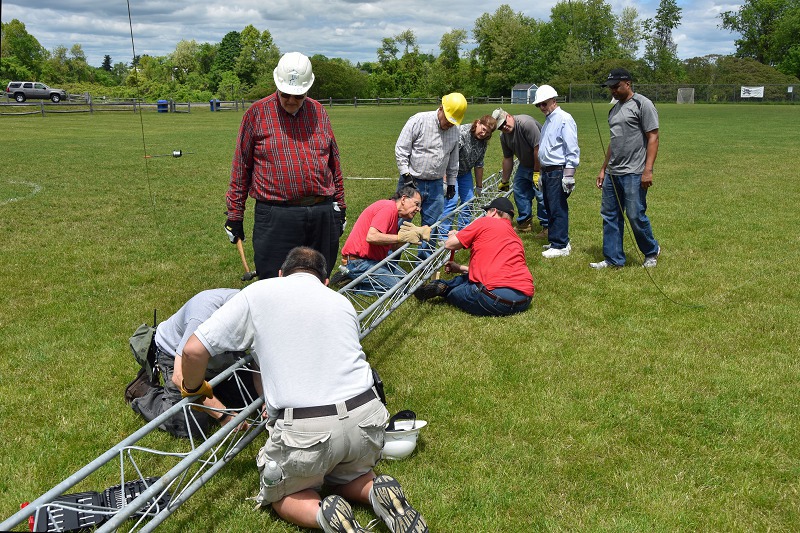
Tower Test - Assembling The Tower
Assembling The Tower

With the Derrick in place, we assembled the remaining sections of our 60 ft tower on the ground.

Tower Test - Driving Guy Anchors
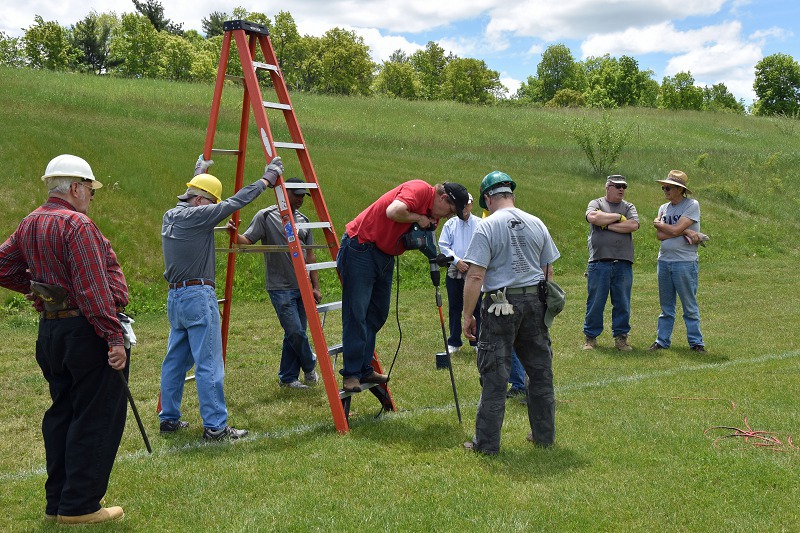
Driving Guy Anchors

WIth the tower, Derrick and base together; we carefully located and drove the steel stakes for guying the tower, the derrick and for anchoring the pulleys associated with the falling derrick system. With this done, we made up and attached two levels of guys between the tower and the anchor stakes.

Tower Test - Completed Heavy Duty Derrick System Ready To Lift
Completed Heavy Duty Derrick System Ready To Lift

The tower is lifted by two wire cables which run between the derrick and the tower. We made these cables up to length during our test session. Multiple cables are used to ensure that the tower is fully supported during the lift.

Tower Test - Completed Derrick System - A View of the Tower
Completed Derrick System – A View of the Tower

Here’s another view of the tower and Derrick prior to the lift. We supported the tower on a ladder to make the initial lifting easier. The ladder will also be needed on Field Day to allow our tri-band yagi to be installed on the tower prior to standing it up.

Tower Test - Capstan Winch Used To Lift Tower
Capstan Winch Used To Lift Tower

There is a considerable amount of rope that needs to be pulled through several pulleys to lift the Tower/Derrick system. The pulleys provide mechanical advantage and slow the lift rate to a safe level. We used a heavy-duty gasoline powered capstan winch to pull the considerable length of rope required to lift our tower into the full upright position

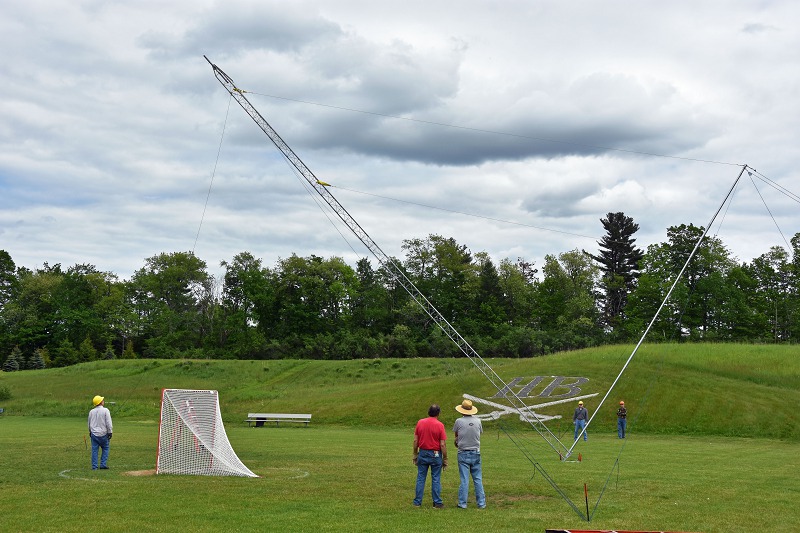
Tower Test - Lifting The Tower
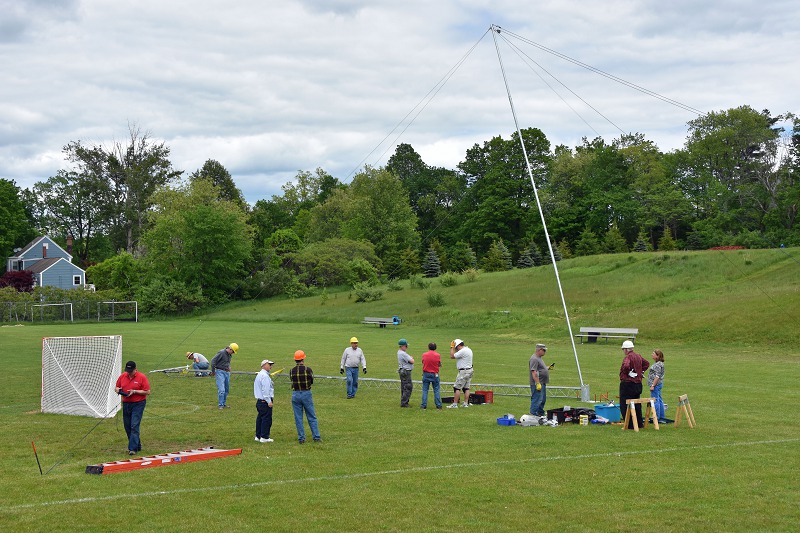
Lifting The Tower

With our crew fully briefed on the process and safety procedures, it was time to lift our tower. The picture above shows the lift in progress. Our setup ensures that no one needs to be in the tower’s fall zone during the lift.

Tower Test - The Tower Is Up!
The Tower Is Up!

Here’s a picture of the tower after it was up and fully guyed. Our new heavy-duty Derrick system worked very well and lifting the tower was completed smoothly and safely with very modest effort.

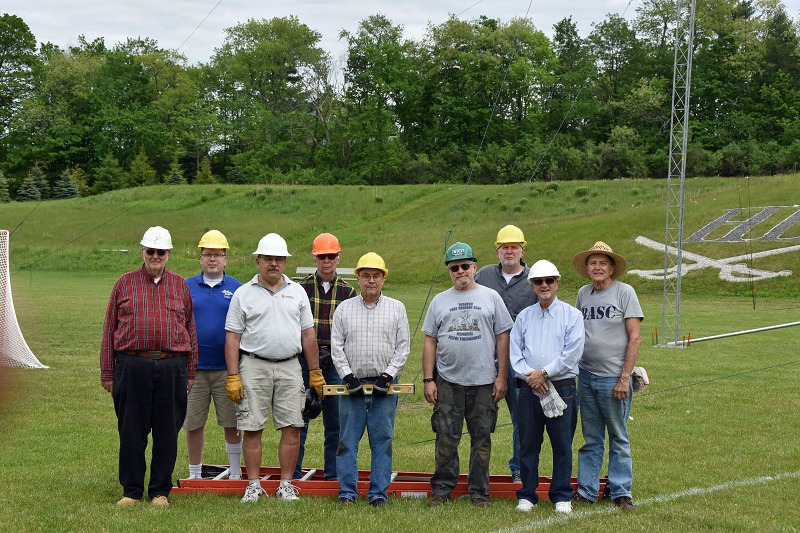
The Nashua Area Radio Club Tower Test Team

After a few pictures, we took the tower down and disassembled it. We had quite a few members turn out to help us with our new tower test. Thank you to everyone who pitched in to make our third tower project a success! We are looking forward to using it during Field Day 2017!

Notice: falling derrick tower systems can be dangerous if they are not engineered, built and used properly by a well-trained team. The tower system described here is unique and is not a standard falling derrick system. Significant steps and material choices were taken to ensure the safe use of the system described here to put up our tower Time was spent to train the team who used the Derrick system to use it correctly and safely. We do not recommend the system here to others as the engineering, materials, and training required for its safe construction and use may not be readily available.

Fred, AB1OC

Hashtags: #ARRLFD

Field Day 2017 Prep – Yagi Building Party!

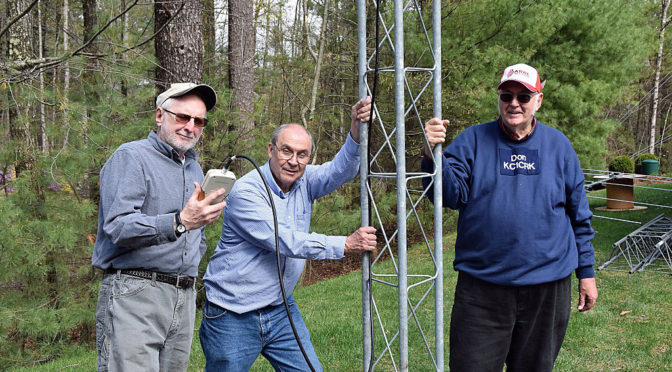
As Field Day 2017 approaches, Dave, N1RF; Mike, K1WVO, Don, KC1CRK and I got together to assemble and test two of the Yagi’s that we are planning to use for Field Day this year.

New 6M Yagi for Field Day
New 6m Yagi

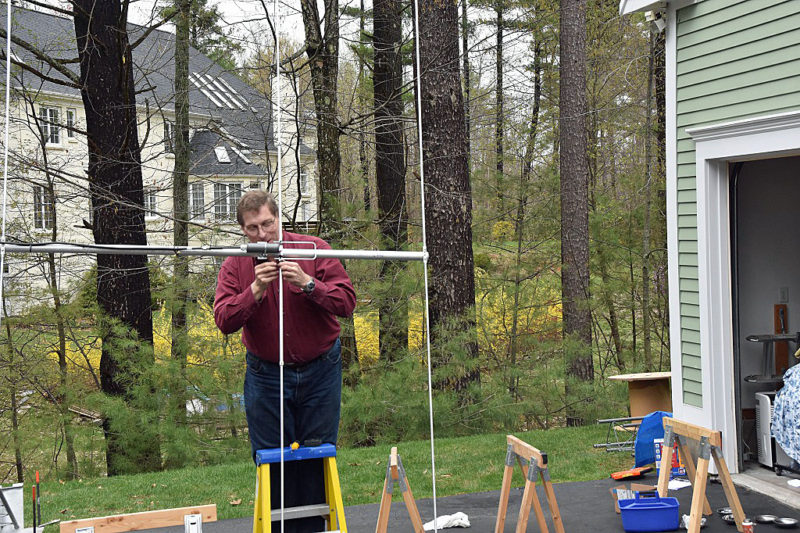
I’ve contributed a new 6m Yagi for Field Day this year – an M2 Antenna Systems 6M5XHP. This antenna has 5 elements on an 18 ft boom. This antenna is fairly lightweight for its size and performs great – perfect for Field Day.

New 6M Yagi for Field Day - Tuning the 6M Yagi
Tuning the 6M Yagi

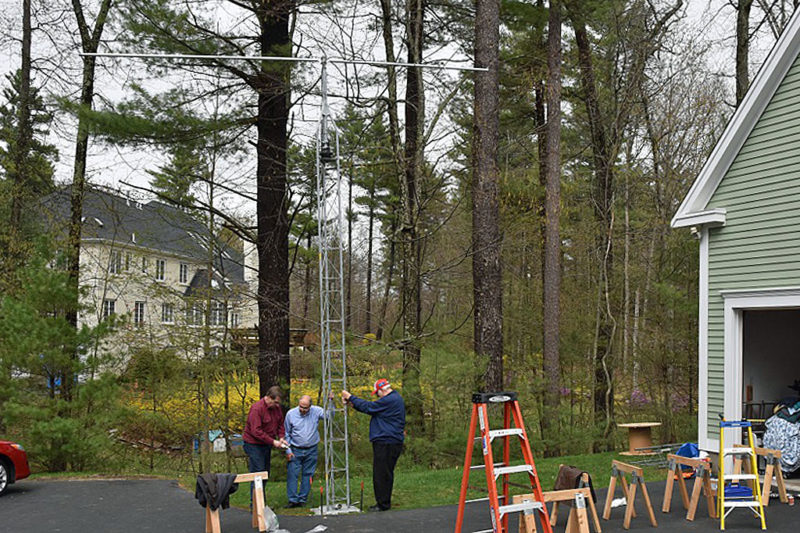
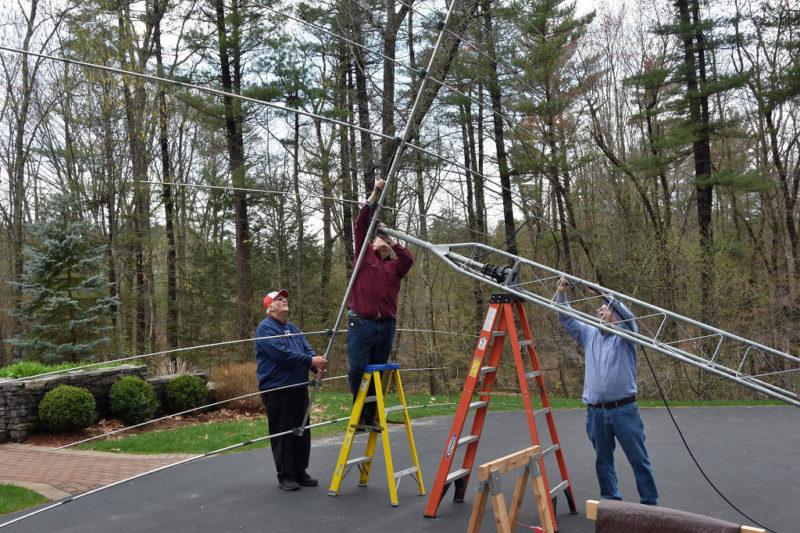
We installed it on two tower sections (20 ft) of so that we could properly adjust its tuning.

Final 6M Yagi Test on Tower

We found that we could adjust the antenna’s driven element and hairpin match for the best SWR performance with the tower tilted over and the antenna on its side. We got nearly the same SWR performance this way as we saw with the tower and antenna tilted up 20 ft off the ground.

Final 6M Yagi SWR
Final 6M Yagi SWR

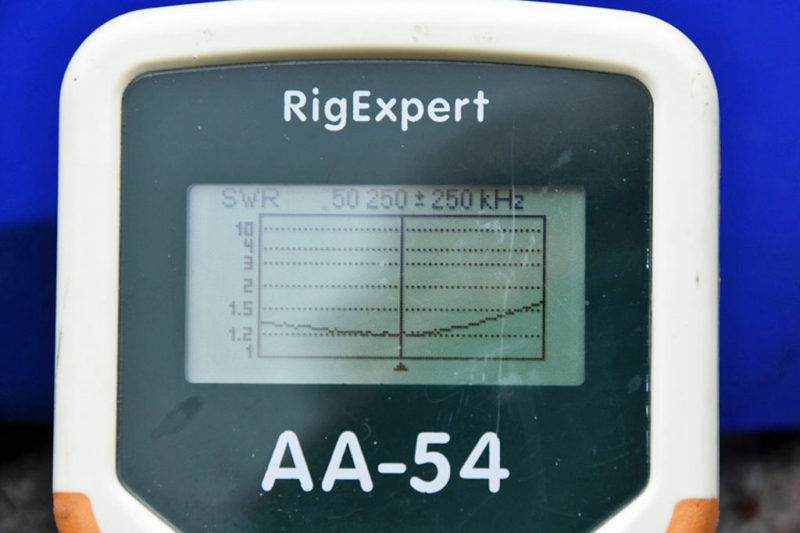
After several adjustments with the tower up and down, we finally came up with an SWR curve that looked good.

Installing the WRTC Tribander on the Test Tower

The club purchased a WRTC tower and Triband Yagi a little while back and this Field Day will be the first time that we’ve had a chance to use this combination. We found that the phasing system and feed point for the WRTC Tribander had been misplaced so we made a replacement for these parts and we wanted to test the WRTC Tribander’s performance with the new parts.

WRTC Tribander on the Tower

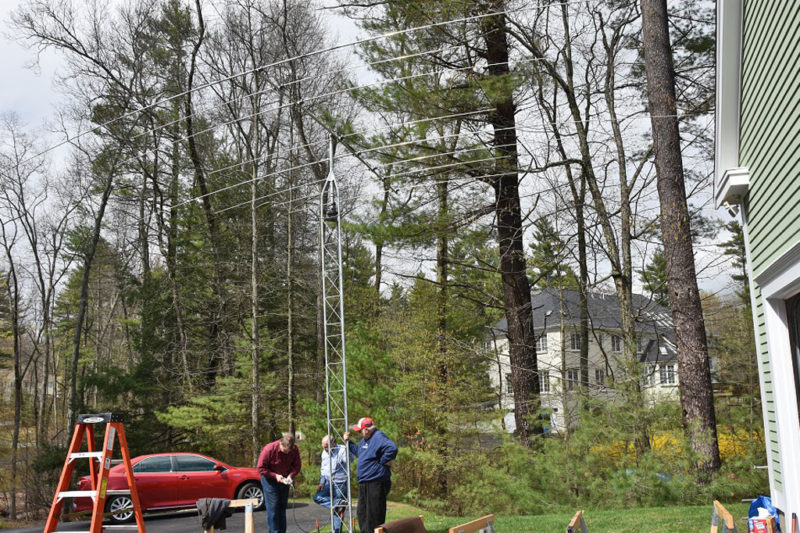
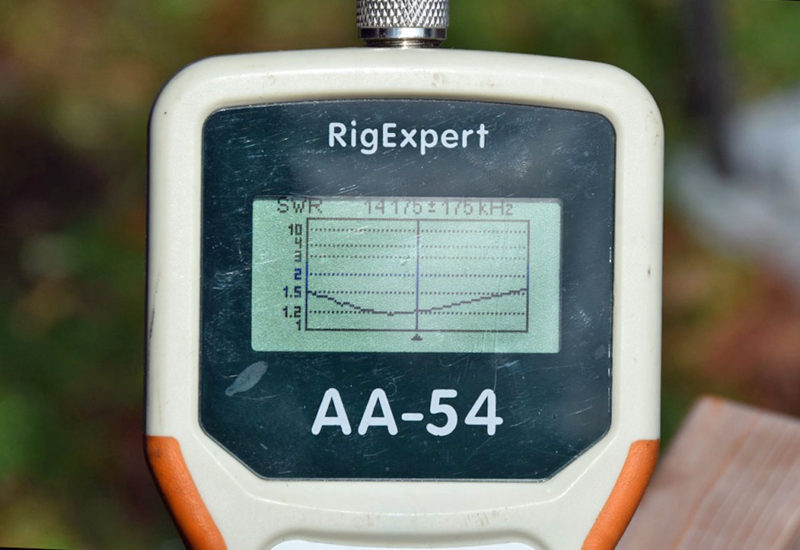
After a quick check of the WRTC Tribander’s SWR performance with the tower tilted over, we stood the tower up and measured its SWR performance on 10m, 15m, and 20m.

WRTC Tribander SWR on 20m

The antenna’s SWR performance with its new phasing lines and feed point looked great on all three bands!

We ended the day by disassembling the two Yagi’s and taking down the tower. With this project done, we’ll be working on a falling derrick system for our third tower for Field Day.

A big Thank You! to Dave, Mike, and Don for helping with this project. It was a lot of fun!

Fred, AB1OC

Hashtags: #ARRLFD

Making Contacts Through LEO Satellites

I’ve been having a lot of fun this past week learning to operate using satellites. It is amazing how many LEO satellites are operational right now!

LEO Satellites - Antennas
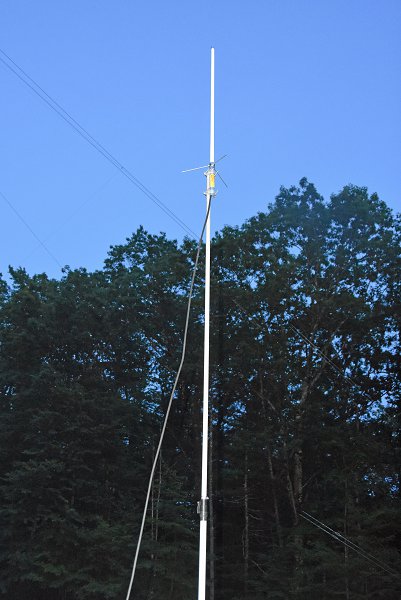
Satellite Antennas

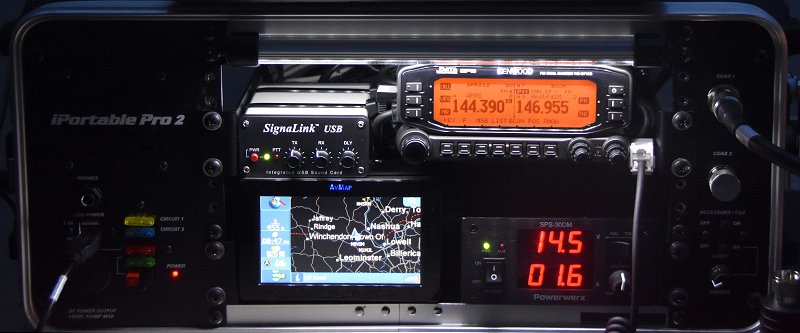
We built an improved portable LEO satellite station a little while back and used it for the first time during a Technician License Class that we taught earlier this spring.

We decided to set up the station in our back yard about a week ago. The idea was to spend some more time learning to operate the station and to improve our satellite operating skills.

The past week has been a productive one. Here are some stats for our satellite operations during the last 7 days –

  • Contacts Made: 78
  • Modes Used: SSB Phone, FM Phone, CW and Packet (APRS FM)
  • Satellites Worked – 9 Total plus the ISS: AO-7, AO-85, ARISS (International Space Station), FO-29, SO-50, XW-2A, XW-2B, XW-2C, XW-2D, and XW-2F
  • States Worked: 23
  • Grids Worked: 49

The week began with a visit from Curtis, N1CMD who has quite a bit of experience with Digital Packet operation via the digipeater on the ISS. After some experimentation, Curtis helped me to find a setup using a SignaLink Sound Card and a second, windows computer that works well for Packet QSOs. I tested the setup using the terrestrial APRS network to get all of the hardware and software working correctly. The combination was then used to make a first packet contact using the ISS.

Operational LEO Satellites

The LEO satellites which are currently operational support a mix of split band modes. All of the satellites that we’ve worked so far use either 2M/70cm or 70cm/2M up and downlinks. The satellites support a variety of operating modes including via single channel FM, linear transponders, and APRS packet systems. Operating skills such as proper adjustment of up and downlink frequencies, Tx power management and setup of the digital packet system have been at least partially mastered this past week.

There are a great bunch of folks who are regulars on the satellites and we have made some new friends in our short time operating through satellites. The single channel FM satellites are usually too busy to support rag-chewing. The linear transponder satellites (there are many of these) support several conversations at the same time and we have had some nice rag-chew sessions on these birds.

There is also a good bit of DX to be had via satellites. This past week we have worked Patrick, FJ/N2IEN in Saint Barthelemy; Chris, 9Y4D in Trinidad and Tobago; Burt, FG8OJ in Guadeloupe; Fausto, HC9VF in Ecuador; and several stations in Canada.

We are planning to set up our portable satellite station at Field Day this year. Curtis will be the main operator/station master for our satellite station. If you are interested in learning more about satellite operations, please let Curtis or I know and we’ll help you to learn more during Field Day 2017.

Fred, AB1OC

Radio Amateurs Developing Skills Worldwide