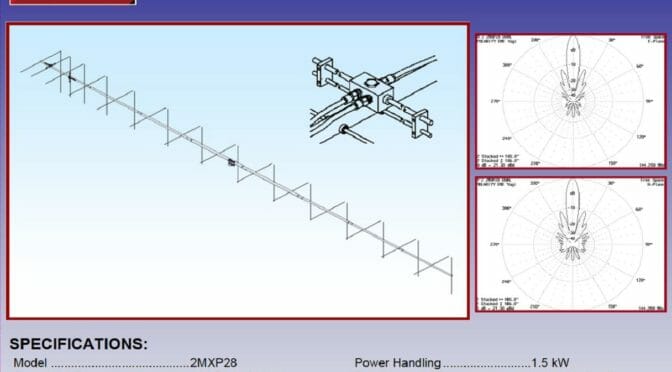
The next step in our EME project is to assemble the four M2 Antenna Systems 2MXP28 Yagis. The four EME Antennas in our array will have a total of 112 elements! These antennas are large, cross-polarized yagis. They feature 28 elements each on 34 1/2 foot booms…
We are building four M2 2MXP28 Antennas to be mounted on an M2 Antennas 2X2 H-Frame. It is important that the four antennas be identical so they operate properly as an array. This includes things like symmetrical mounting and alignment of each antenna’s vertical and horizontal elements and the associated feed points.
The article in the link above covers the steps, tips, and tricks that we are using to assemble four of these large, 2m X-pol Yagi Antennas. The approach, tools, and techniques are applicable to a wide range of VHF and UHF Yagi antennas.
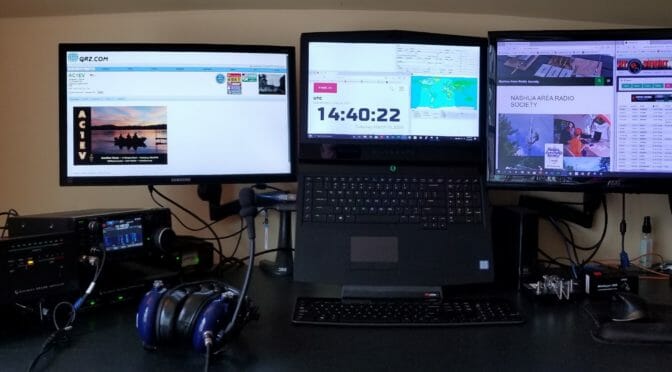
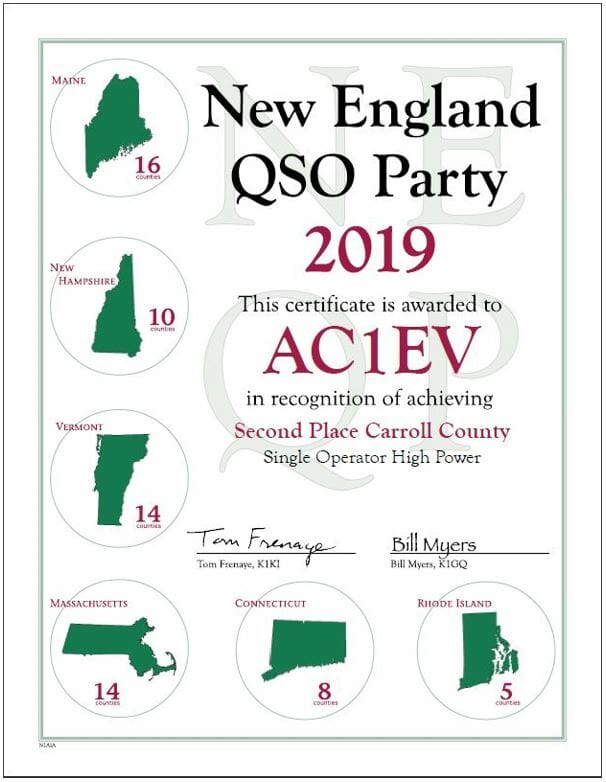
At the end of April this year I wrote an article about my experience with the New England QSO Party. The event took place in May 2019. At the time, my station at my NH QTH was IC-7300, 500 Watts, and EFHW antenna at 50 feet. When I received the certificate from the NEQP it was for second place in Carroll County, NH, and I got a big kick out of it. I examined the details of the event and learned more about my competition. I found out that there was a total of 4 entries from Carroll County and only two of us were in the HP category. This means that I also came-in the last place for High Power! Still, I had fun and a certificate, so no complaints. It also prompted me to enter the 2020 NEQP as Low Power, which would give me a chance to come in first in that category for Carroll County.
Checking on results from other contests
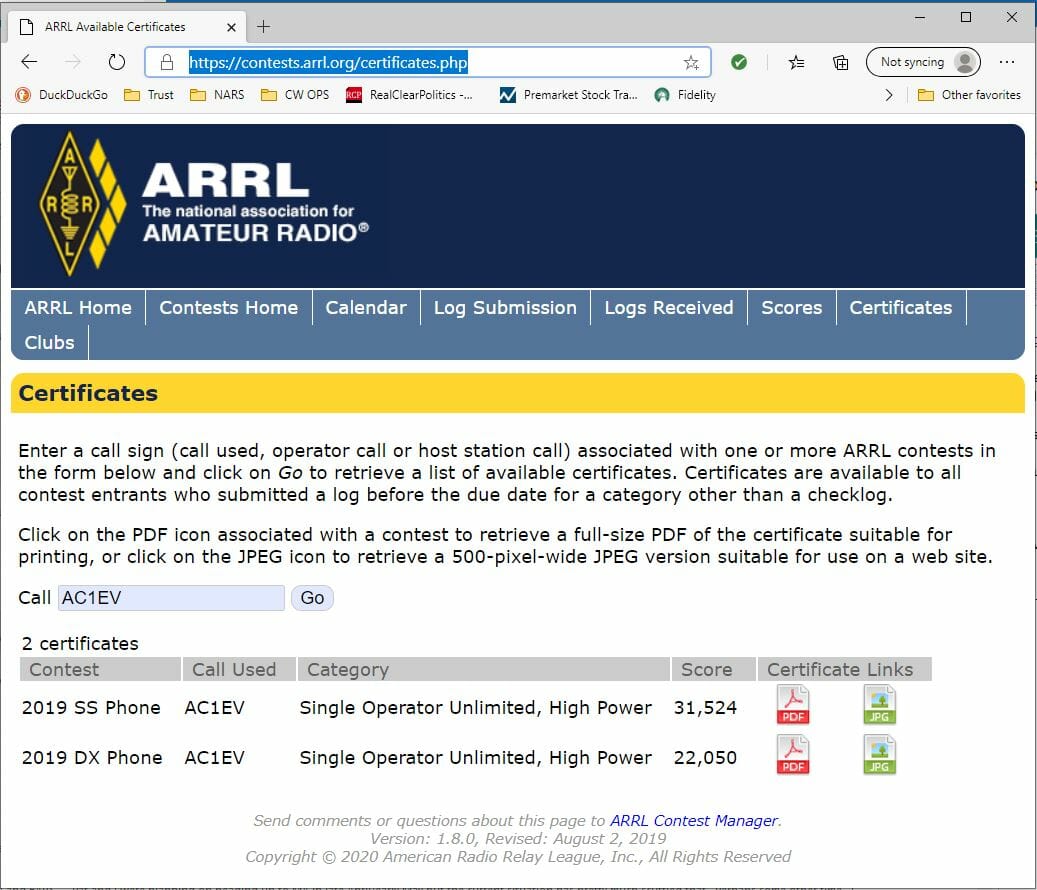
Not all contests will send you your results. I expect the big guns who finish at the top may hear something, but not every contest will let each minor award winner know about it. A fellow ham sent me this link to use to check on results from ARRL events.
https://contests.arrl.org/certificates.php
Enter your call and you will get a list of PDFs suitable for printing or framing. Any that you earned a certificate for as well as any multi-operator stations you have participated with. Be sure to also enter any of your ex-calls. I found 2 certificates that I did not know about!
ARRL Certificate SearchARRL Certificates
When I entered these ARRL contests my goal was to make QSOs and then import them into my QRZ log. I did not really participate at a serious level and probably spent less than 10 hours on each one. I wanted my contacts to count for the other participants, so I logged with N1MM+ and submitted the logs as if I was in it to win it. When I entered the 2019 CQ World-Wide DX Contest SSB, I decided to give it more effort and operated for 15.2 hours out of 40 hours available.
Rookie Contesting
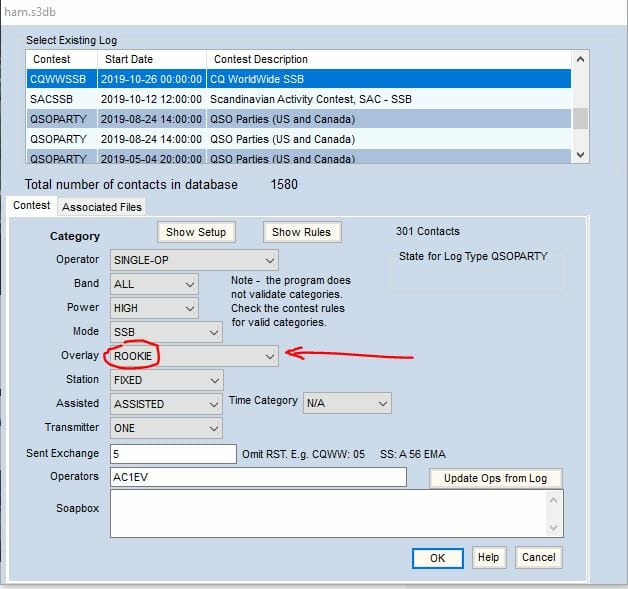
Many contests have an option for operators who have their licenses for under 3 years to enter with a Rookie Overlay. I highly recommend that any hams who qualify for this do it. In addition to competing against all the entrants in the contest, your score will also be ranked against just Rookies. Competing against highly experienced operators with advanced contest stations is tough and there are many that are in that class. Entering as a Rookie may give you a chance to compete against other operators who match your skills and equipment. You can set the option in the contest set up in N1MM.
Rookie Overlay
I Raised my Antenna for Better Performance
The 2019 CQ World-Wide DX Contest SSB was held in October. I obtained spousal approval to put in more time on this one than any other contests I worked. I was operating from my NH QTH with my IC-7300 and 500 Watts of power. My 8010 EFHW antenna was installed at 50 feet. My previous experience with the antenna was OK and I made many QSOs with it. When I tried in the contest environment, it was not meeting my expectations. I could not break into pileups reliably. On 80 meters, I was only able to make QSOs out to around 1500 miles. I decided to take the end of the antenna down from the tree at 50 feet and use my new Bigshot Slingshot Throwline Launcher to raise the end as much as possible. I wrote about this in an article I posted on the NARS website. It took me around an hour to raise the antenna to 70 feet and it made a BIG difference! All bands showed noticeable improvement with 80 meters being the most dramatic. My first QSO on 80 was to Ukraine, over 4000 miles away.
NH QTH Topography
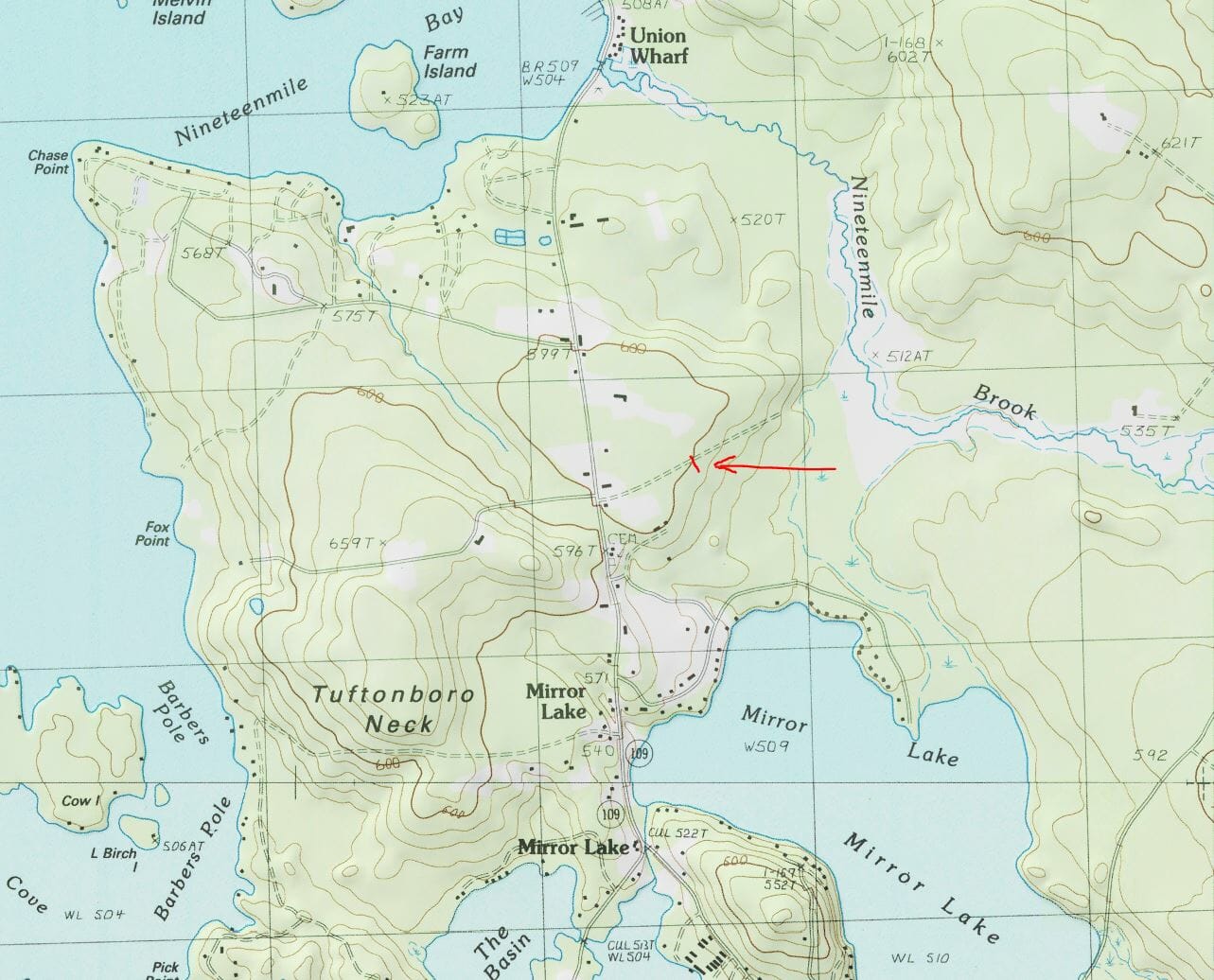
My QTH in Mirror Lake, NH is located close to the top of a long ridge. The land falls off sharply from 80 to 100 feet within a half-mile or less to the NE to SW. It falls off less sharply for most of the rest of the compass points. The arrow points to my antenna and how it is oriented below.
NH QTH Topographic Map
I am not sure precisely how much this added elevation adds to the apparent height of my antenna, but I’m pretty sure it makes it seem like it is even higher than the 70 feet it is up in the tree. Additionally, the ground under the antenna is moist and mineral-rich and should be better than the average ground.
My Results!
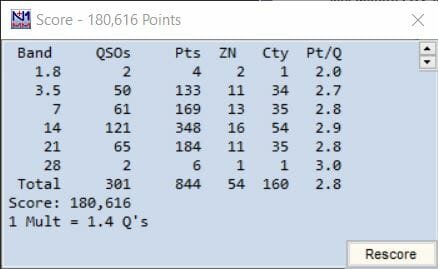
Raw Score
Here is my raw score from N1MM for the contest. I only had 301 QSOs, but many multipliers, and that really boosted the score. The contest organizers sent me an email a few months after the contest. They asked me to provide details about when I was first licensed. I replied to them with my info and a screenshot of my ULS listing. After that, I just forgot about it. Once I learned about checking on results with the ARRL link, I decided to check and see how I did in the 2019 CQ World-Wide DX Contest SSB contest.
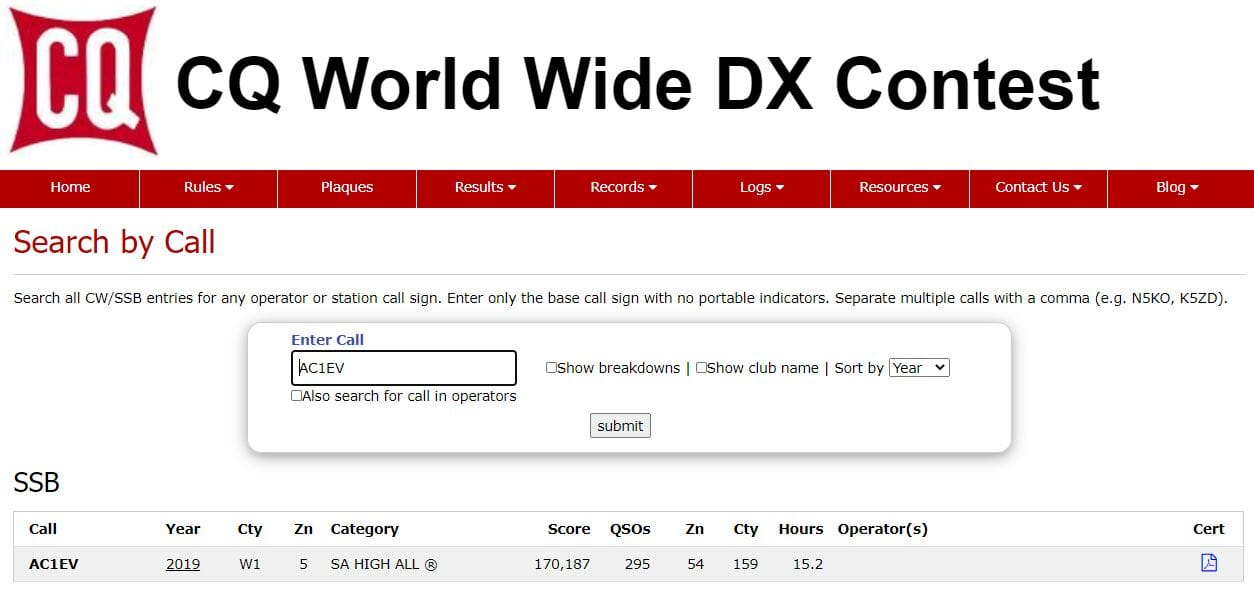
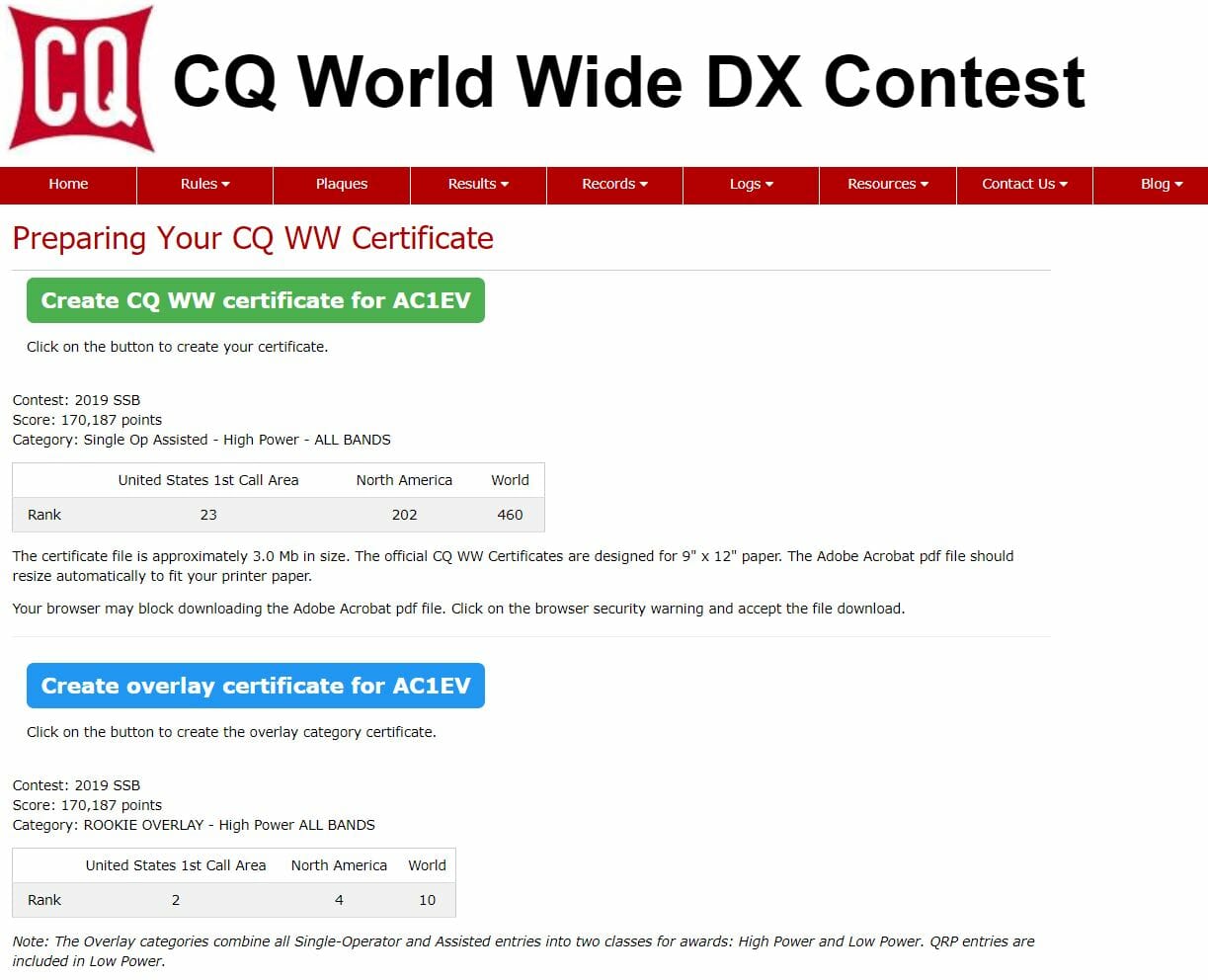
CQ DX WW SSB lookup
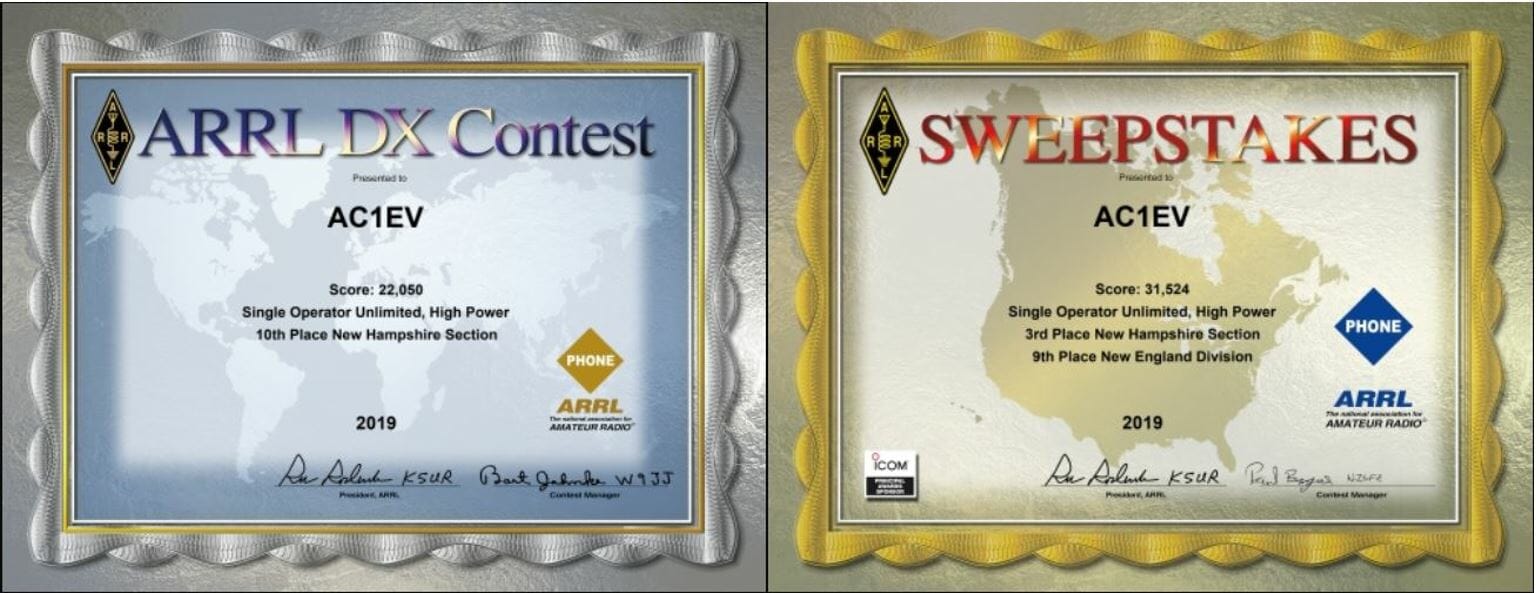
I saw there was a Cert available, so something was good. I downloaded the certificate and found out I did way better than come in second out of two entrants in my small county. Here is how I did:
CQ WW DX Contest Results
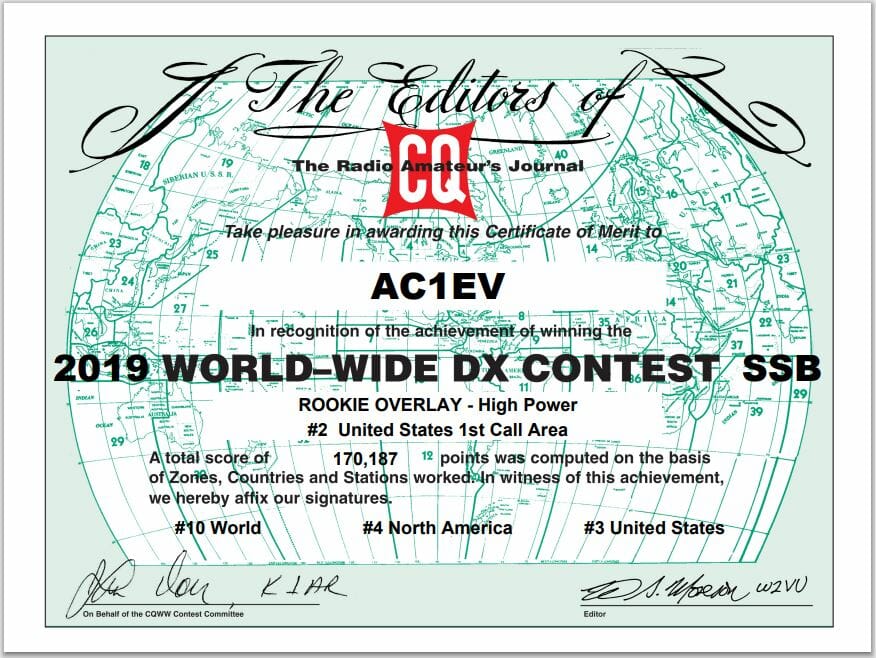
I printed this certificate, suitable for framing!
Certificate of Merit
I was thrilled to see this and am very motivated to give maximum effort for the upcoming 2020 contest. Now I plan to upgrade to a HEX Beam or Spider Beam for my NH QTH. If the location worked so well with an EFHW antenna I can only imagine how well it will work with a Yagi. If I add more time in the chair and operate for closer to the maximum allowable time, I should be able to improve on this result dramatically.
Try Rookie Contesting
I would have been quite happy with my results scored without the Rookie Contesting Overlay but having a competitive result as a Rookie is very motivating and satisfying. My three years as a Rookie last until the end of the year so I intend on entering a few more contests while I can. If you qualify as a Rookie, you should try this out.
One of the enjoyments of ham radio is being able to throw your QRP rig into your car – at the spur of the moment – and heading out to a lake or along a river or to a mountaintop and Working the HF bands mobile from right where you are.
Ready to Go On The Air
Field Day Mobile
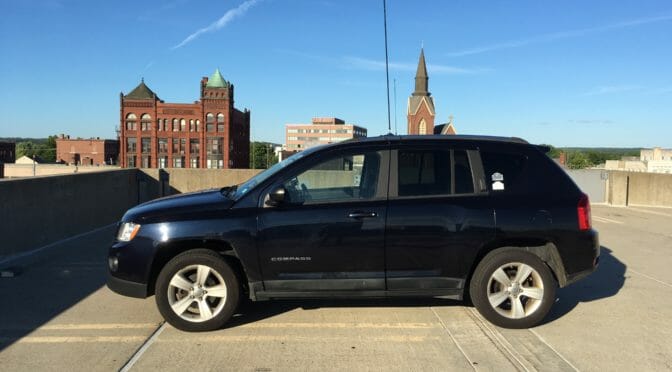
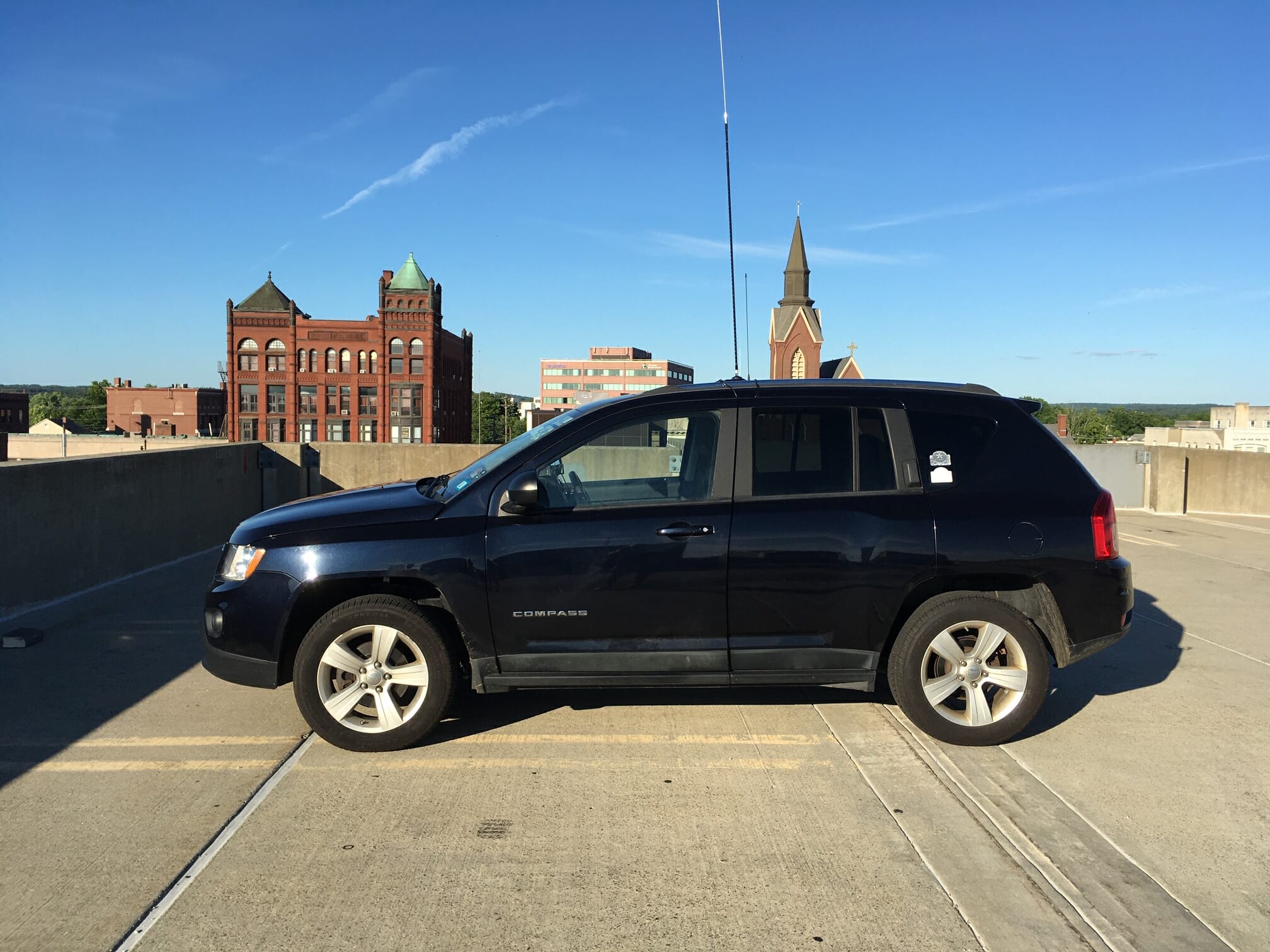
For part of Field Day, I’m going to do something like this. I’m going to work “mobile” at another outdoor spot which some of us from NARS has done before – the top of a five-story parking garage in downtown Nashua, New Hampshire. We jokingly call this our P*GOTA — Parking Garage On The Air.
Five Stories Up Over Beautiful Downtown Nashua
I do like to work from this site. It’s close by and easy to set up. There disadvantages, however, with all sorts of electrical noises and some reflection off of neighboring buildings. But for me, just being up 50 feet, to start with, is a big plus.
My Rig
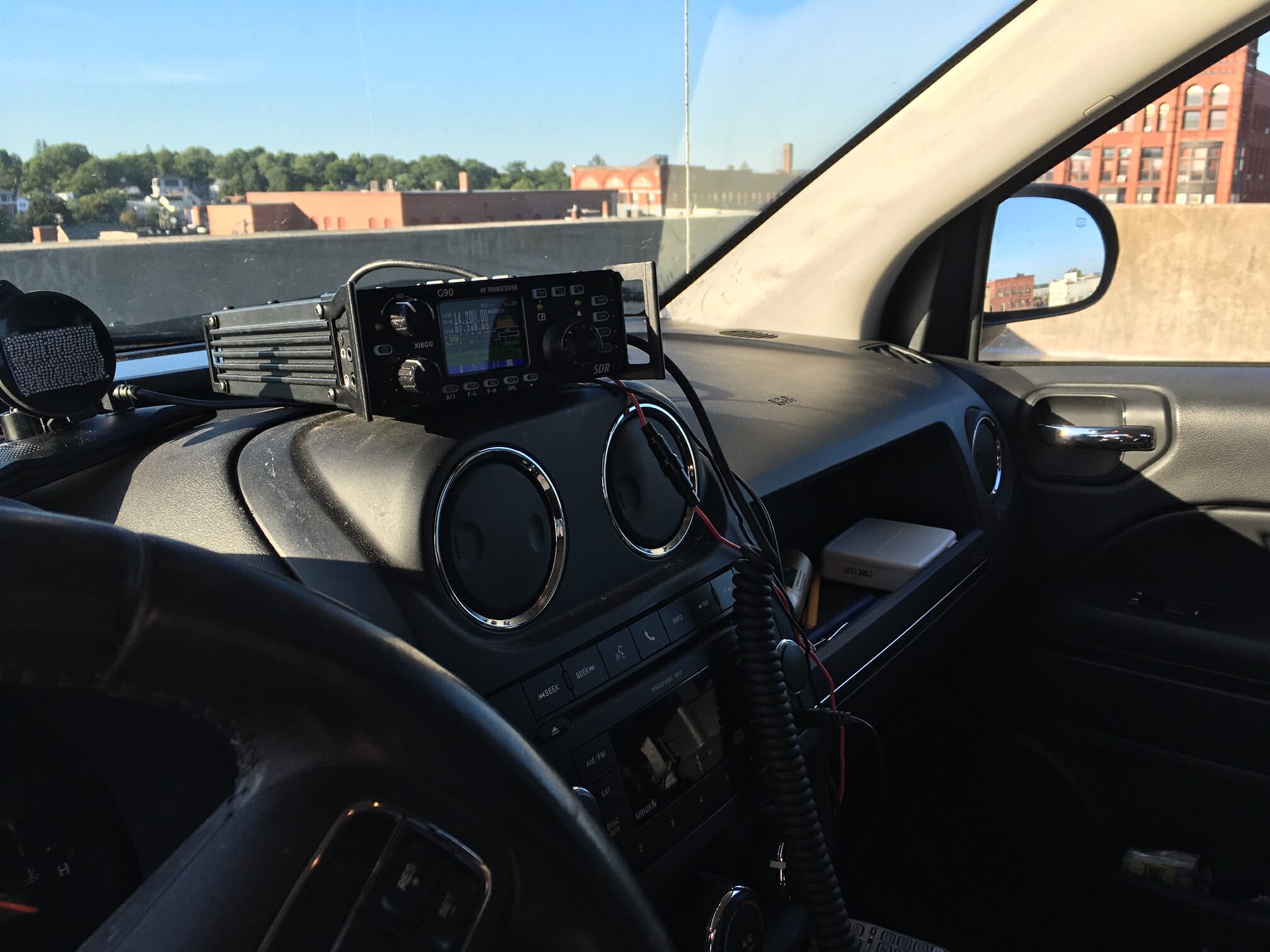
The G90 On The Dash
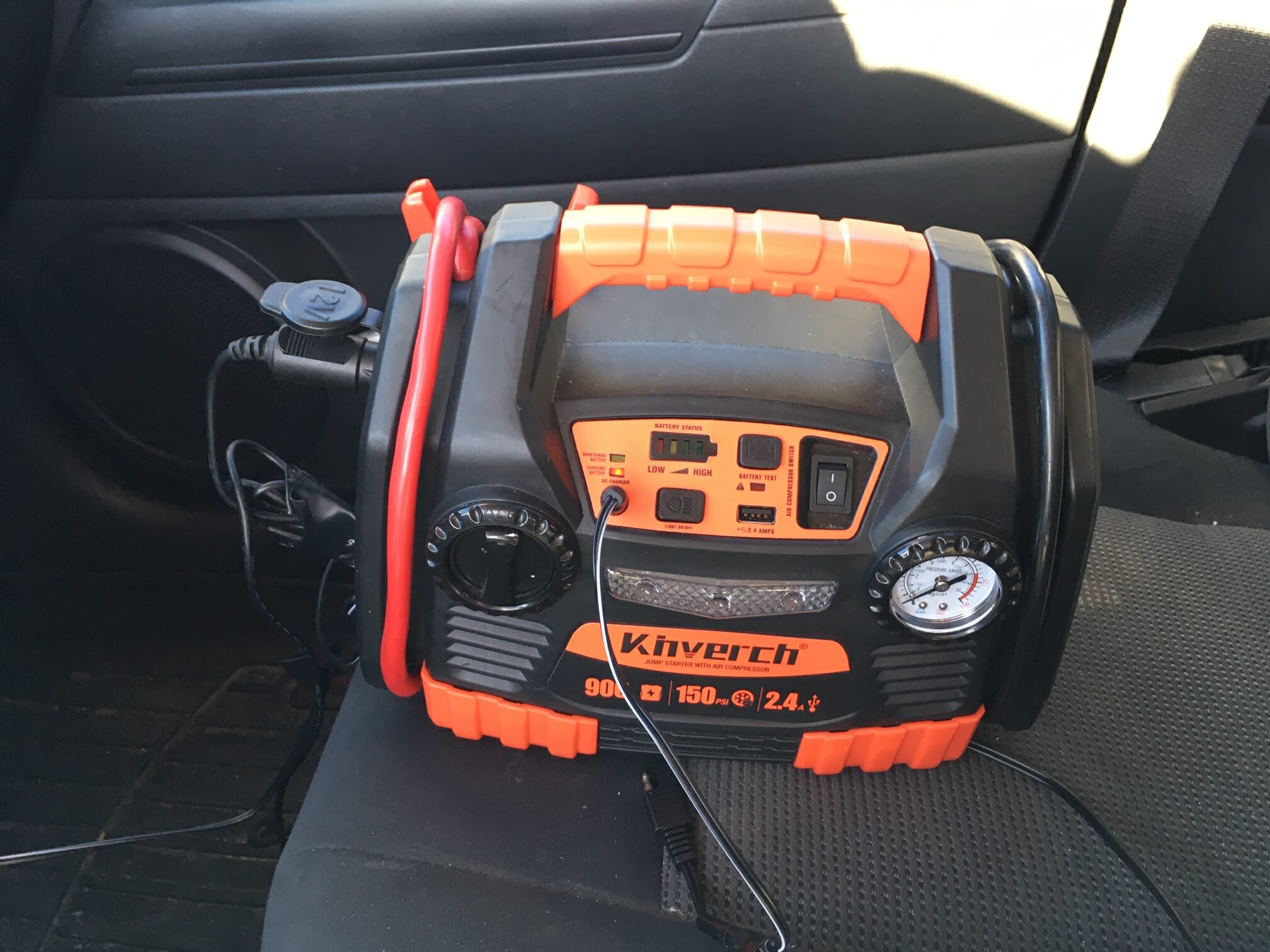
I like to keep things simple and easy to use. My mobile transceiver is a Xiegu G90. It covers 160 to 10 meters with AM, SSB, and CW, from 1 to 20 watts. It has a built-in antenna tuner if needed. The maximum current draw is about 3 amps, so it works great off of the low-cost battery pack I use. The radio plugs right into the battery with a 12-volt adaptor; and I use a solar panel connected to the battery, keeping it charged. This really gives me the “off the grid ” experience.
3 in 1 Battery Pack. The radio plugs into the side, the solar panel from the front
The Antenna
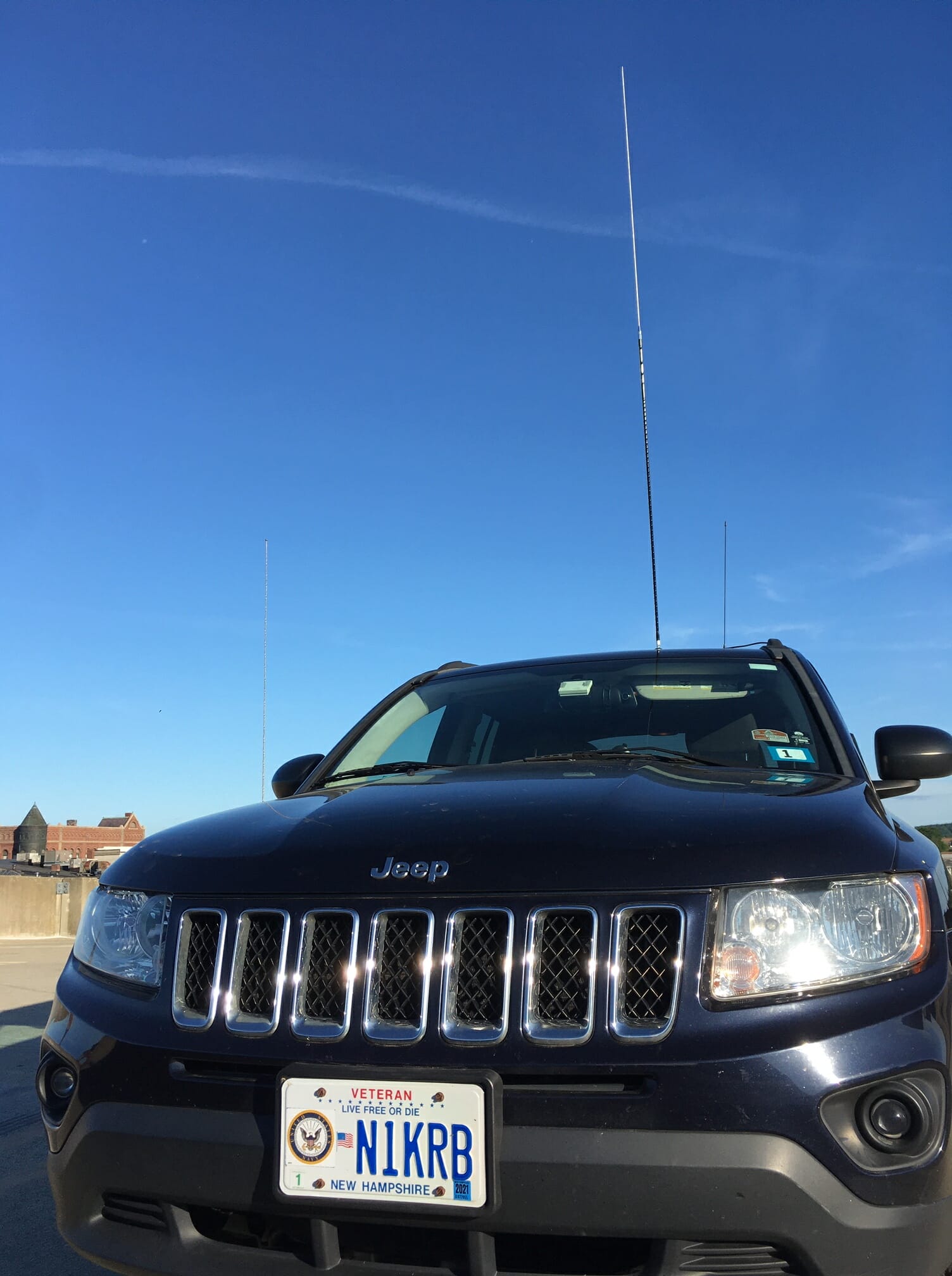
The key to getting onto the air quickly mobile is to use a ham stick, screwed into a magnetic mount. I have one stick for 20 meters and another for 40.
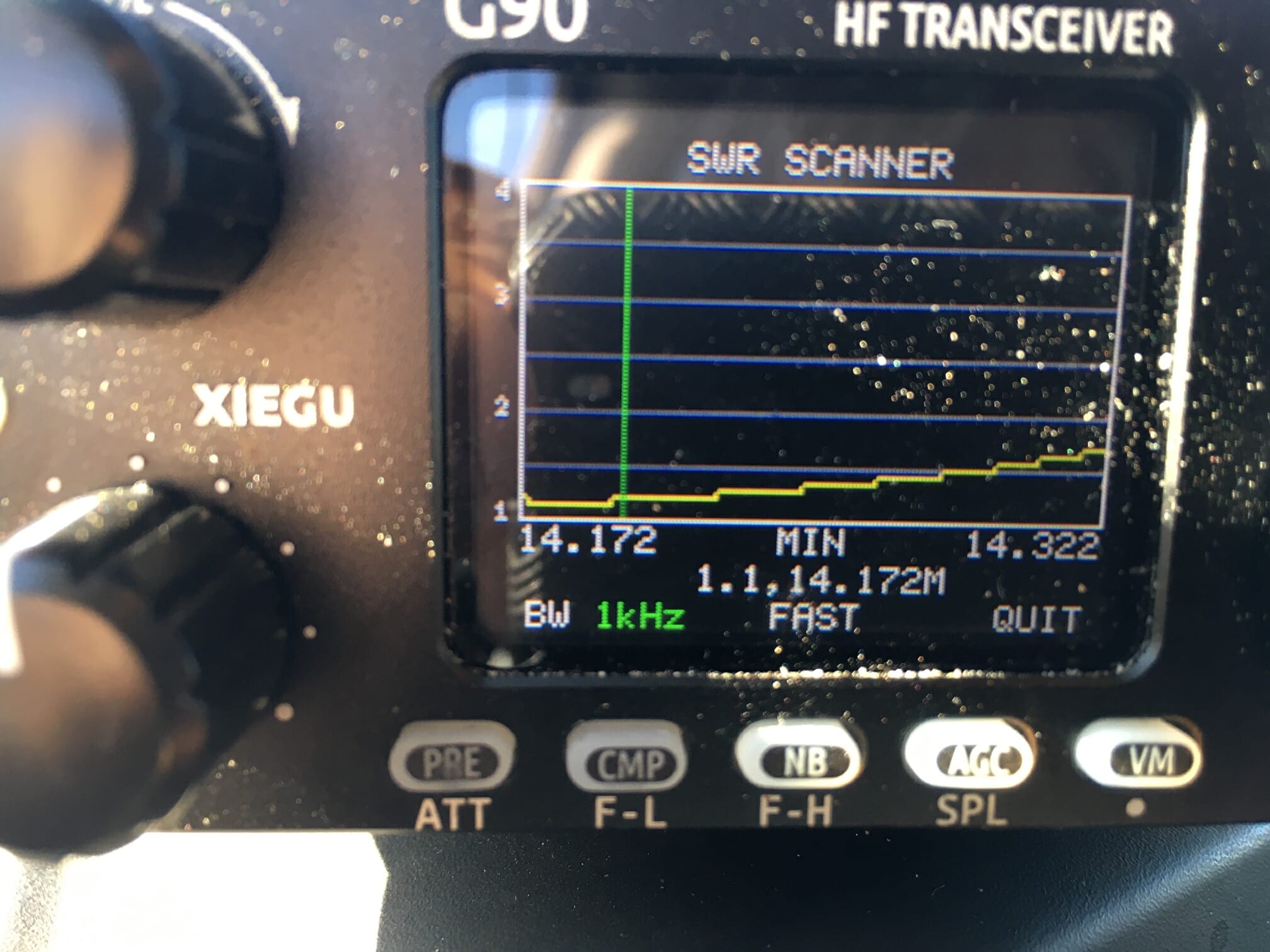
Some say “mag mounts” really do not take care of grounding issues with HF like they do with VHF and UHF. However, I’ve found my set up works just fine. The SWR Sweep below shows the results with the mag mount on the roof. Before I put the magnet on the top of the car, the SWR level was over 5.
The SWR Level After Tuning the Antenna and Placing the Mag Mount on the Roof
It’s always an adventure working “mobile” – running off a battery and solar – which gives you a chance to try all sorts of things. I suppose it would be more comfortable, sitting in one’s shack, with a large, powerful system and a finely tuned antenna …. but where is the fun?
I enjoy being up on an exotic spot and giving my CQ. And then telling the ham on the end, “my QTH is somewhere between High and Factory Street – downtown Nashua – November Hotel … five stories up”.