Category Archives: Station Equipment

Articles about Radios, Amplifiers, Tuners and related Ham Station Equipment. Fixed, Portable and Mobile Station Equipment Articles are included.

Small Software Defined Radios – Part 2: Software

Small software defined radios have never been more affordable. Free and Open Source Software (FOSS) makes integrating one of these radios into your shack easy. This article is a follow-on to the SMALL SOFTWARE DEFINED RADIOS ~ PART 1 article on hardware published last month.

Basic Tuner and Pan Adaptor

Most of us will use one of these SDRs with our computer (instead of creating a Raspberry Pi or other small computer for a dedicated solution). This section will give you some ideas for your Macintosh, LINUX, or Windows PC. There are many offerings for each of these application areas. I can only cover a  few here.

CubicSDR is a cross-platform and open-source software-defined radio application. This runs on Macs, LINUX, and Windows (both 32 and 64-bit versions). A screenshot for this application appears at the top of this article. The software supports about a dozen types of radios including the little RTL-SDR radio mentioned in the other article.

With CubicSDR you can see a spectrum view of a frequency range and listen in on the signals tuning with frequency, bandwidth, and modulation type (FM, AM, etc.). This is a great program to try if you are new to SDRs.

GQRX

Gqrx SDR is an open software application for SDRs that is available for LINUX and MacOS X. If you want to run on a Raspberry Pi this is a good place to start.

Watching Airplanes
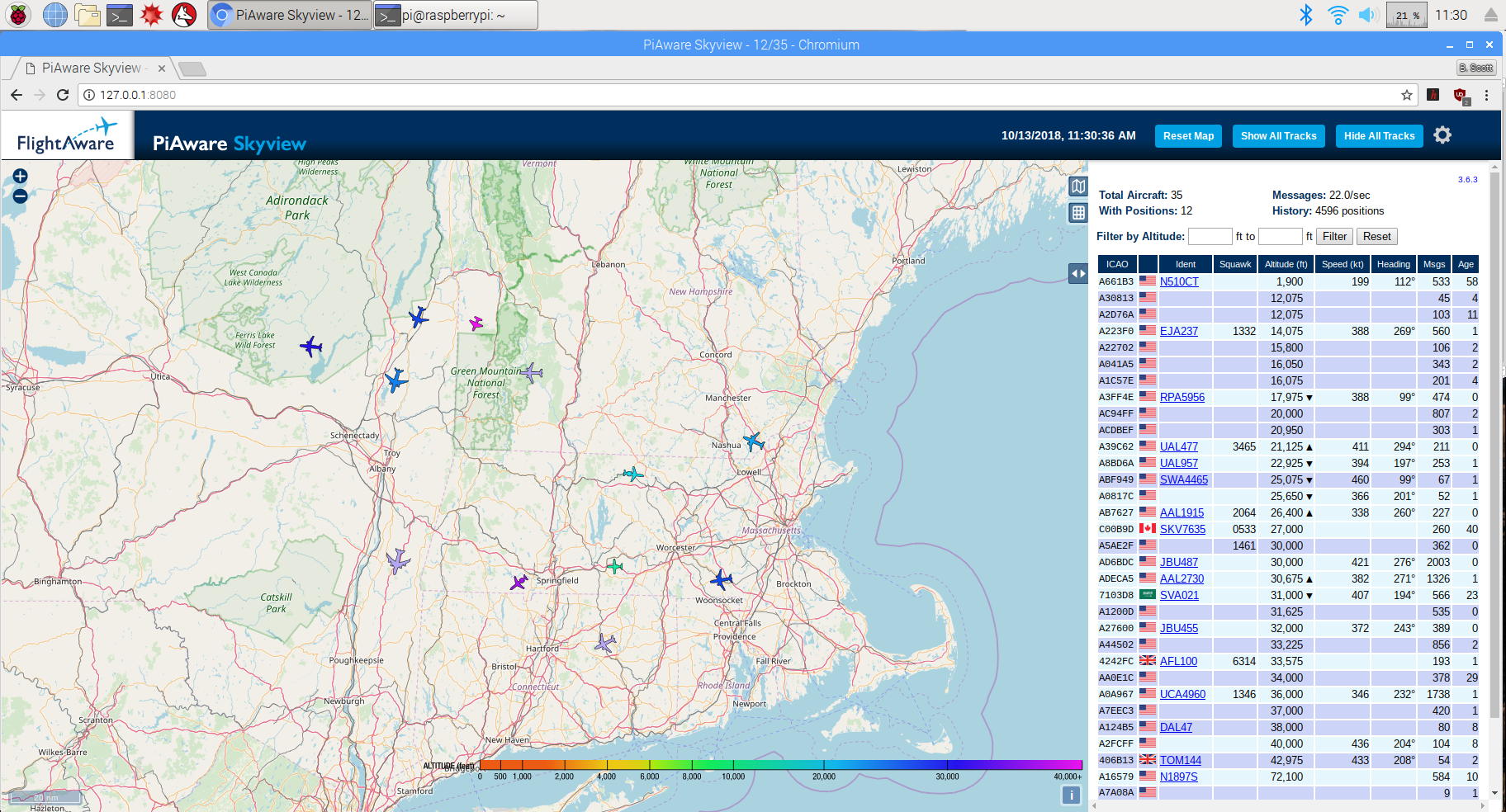
One of the really fun things that can be done with these inexpensive SDRs is tracking aircraft data. FlightAware has a package that can be installed on a simple Raspberry Pi computer that will not only monitor transmitted data on 1090 MHz, but will also upload that data to the FlightAware servers. This crowdsourced data is then used to drive their Apps. Piaware produces a display like the above (this is a screenshot from my setup). This is a standalone project that can be completed for less than $100.

There is a version of this called dump1090 that is open source and the original program that FlightAware enhanced. The RTL-SDR website has a write-up for this using Windows. Macintosh users can visit Black Cat Systems for Cocoa1090.

Just the tip of the iceberg

These programs are a great place to start, but there are many more offerings available. My advice is to get things working with something simple, then try one of the more elaborate programs.

I hope to see everybody at the December 11, 2018 Tech Night where we’ll apply all this to radios you bring. See you there!

# # #
Small Software Defined Radios ~ Part 1: Hardware

There are some exciting things going on in the software defined radio (SDR) world. In December (2018) I’ll be doing a Tech Night SDR workshop encouraging everybody to get familiar with these little gems. Use this article as a shopping guide to prepare for that meeting.

The SDR Stick

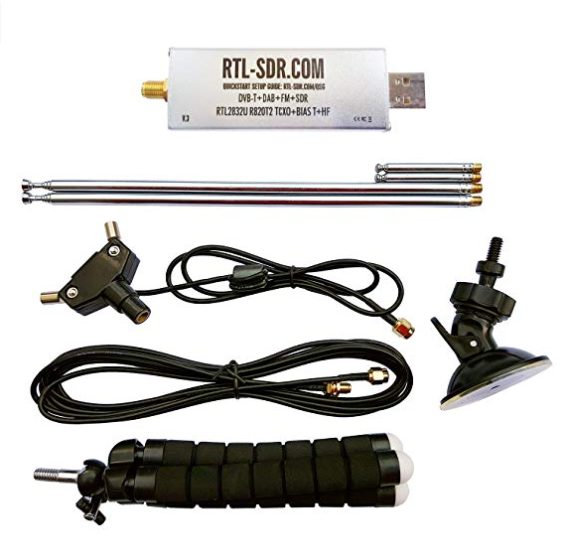
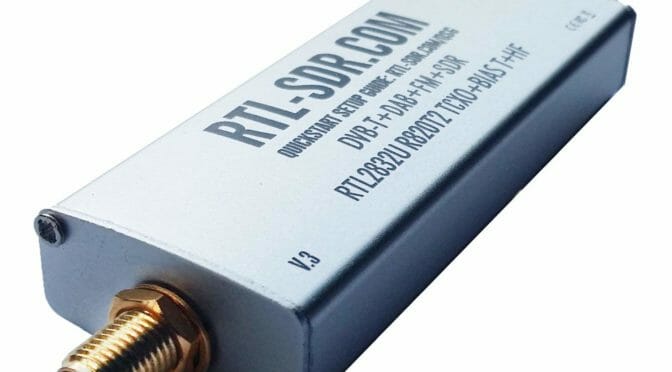
The workshop will concentrate on the USB stick style SDR. The most popular is probably the RTL-SDR unit based on the DVB-T TV tuner and the RTL2832U chipset. Sure it can be used to decode digital TV, but some innovative soul recognized that it could also be a general purpose receiver with a range of about 25 MHz to 1.5 GHz. Figure 1 shows that USB device along with a kit of handy parts to get started. This is available from Amazon here for about $28.


Figure 1. The starter kit for the RTL-SDR

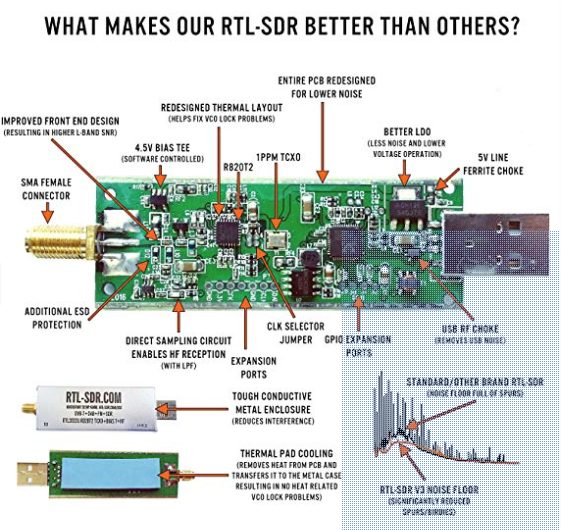
 Figure 2 shows the circuit board inside the little dongle.


Figure 2. Inside the RTL-SDR stick

With this and your computer you can have a bunch of fun and learn about pan adapters, SDR tuners, and even watch for aircraft data.

Antennas for the Sticks

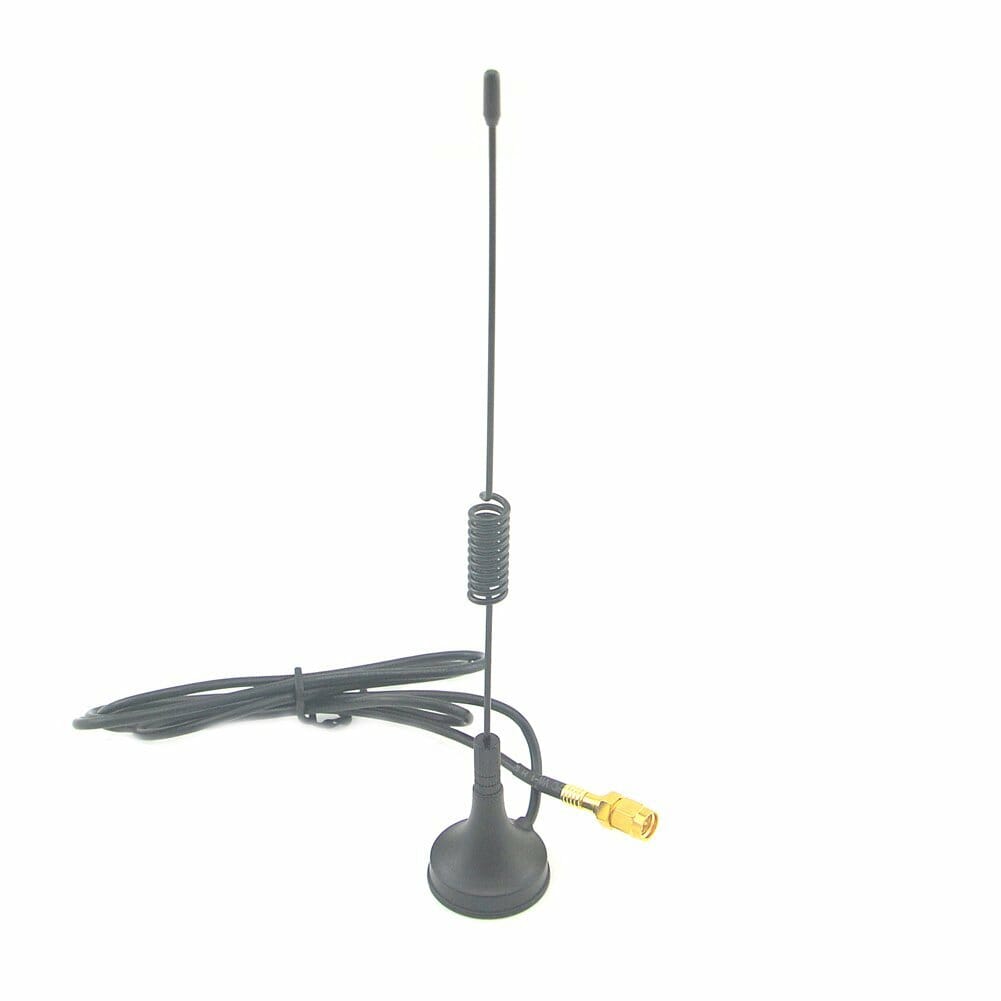
The starter kit comes with collapsable whips, a suction cup mount, a small lightweight tripod mount, and feed line. You can do quite a bit with just these parts. If you wanted to use this for a particular purpose (like monitoring aircraft) you can get an antenna specifically for that band or frequency. For example, this antenna is used for doing ADS-B aircraft monitoring. It is available from Amazon here for $8.


Figure 3. ADS-B monopole

Then again, you can make your own antennas easily enough for this purpose or others. See another article I wrote Homebrew ADS-B Antenna for Airplane Tracking for more information on that.

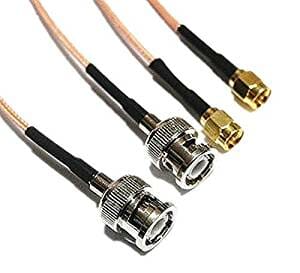
It is possible to use an existing antenna as well. The RTL-SDR dongle accepts an SMA type connector. A converter from SMA to BNC can be handy. Amazon has a set of two here for $11. See Figure 4.

Figure 4. SMA to BNC connectors

No Computer? No Problem!

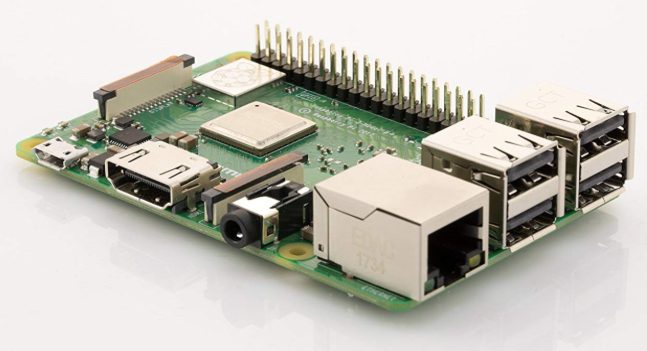
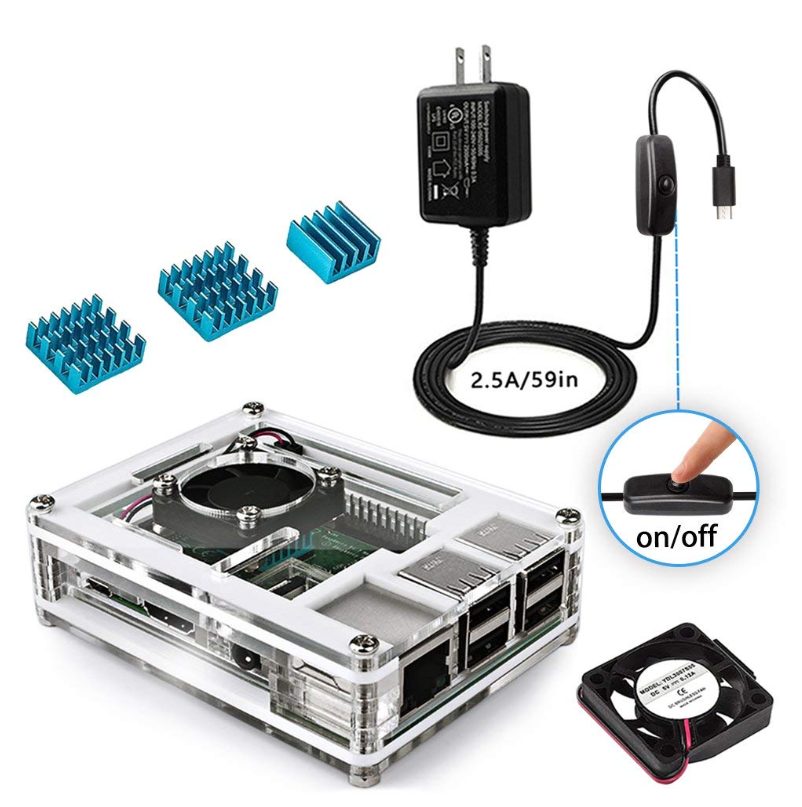
An excellent way to explore these small SDR devices is with an inexpensive Raspberry Pi computer. I recommend getting one of the higher end models of these single board computers with a little extra horsepower. Processing SDR signals takes a lot of CPU power and that generates heat. My first Raspberry Pi unit was underpowered and it overheated within minutes. I’ve switched to a newer and faster model that handles the task easily. And, I’ve put it in a case with a small fan to increase airflow. See Figures 5 and 6.

Figure 5. Raspberry Pi 3 B+ motherboard

Figure 6. Kit with case, power supply, and heat sinks

These two items are available from Amazon. The Raspberry Pi 3 B+ board is $39 here. The kit that includes a case, fan, heatsinks, and power supply can be found here for $16.

Amplifier

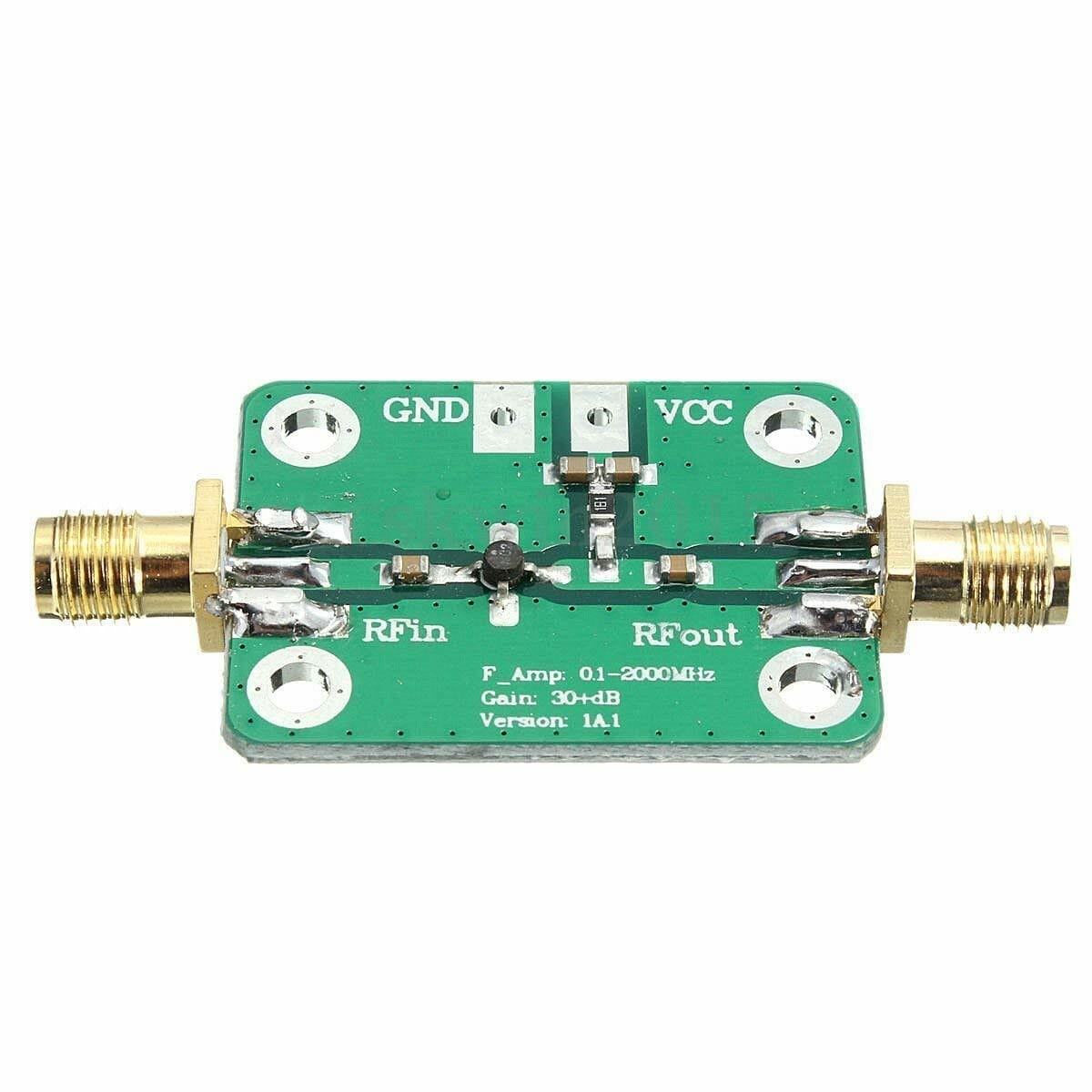
A small device called an MMIC is a broadband RF amplifier that can bring signals up 30 dB. One of these is available on Amazon mounted on a board with two SMA connectors (in and out) here for $11. See Figure 7.

Figure 7. MMIC amplifier for RTL-SDR use.

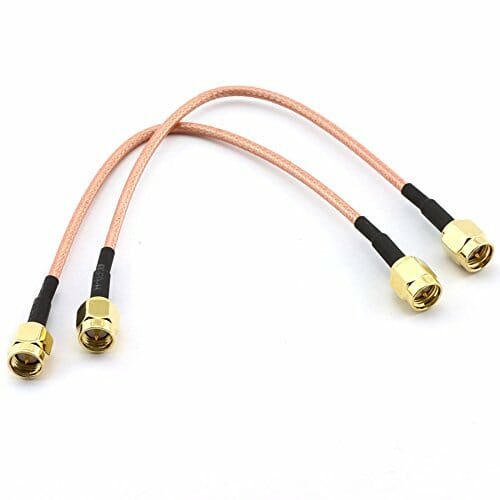
You’ll also need a jumper to go between the amplifier and the SDR. An SMA to SMA jumper (set of 2) is available here for $4.59. See Figure 8.

Figure 8. SMA-SMA jumper

Aircraft Tracking

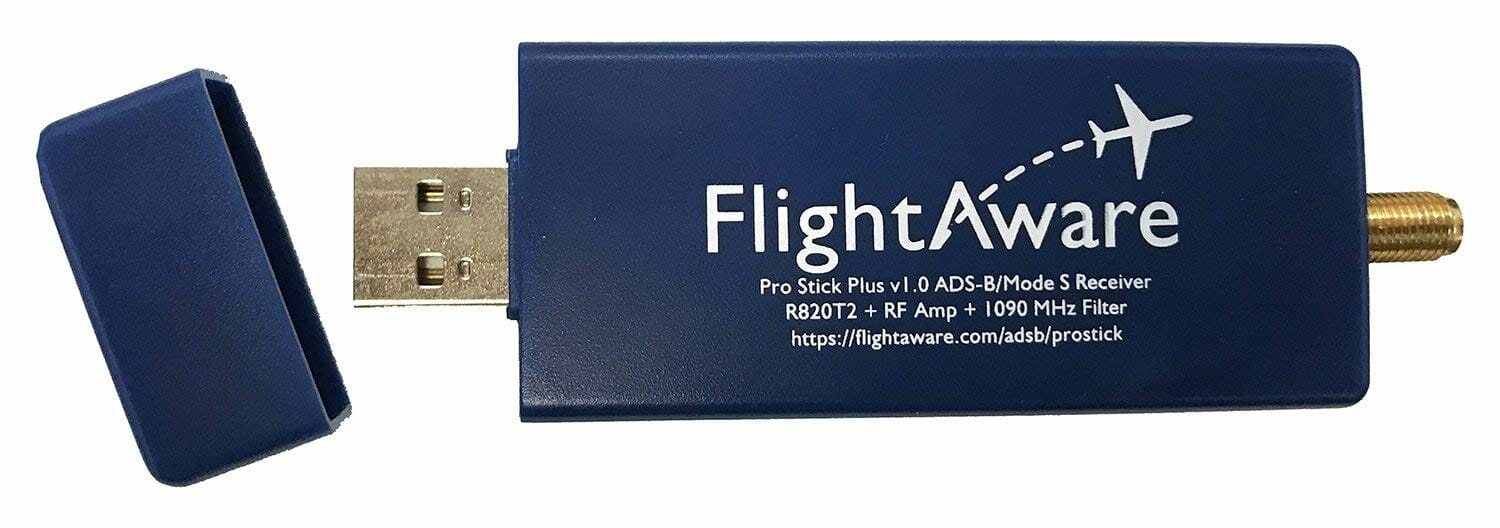
If you enjoyed the aircraft tracking talk given in the regular meeting by Thomas R Kavanaugh, KC1ELF, then you might be interested in the SDR stick sold by Flight Aware specifically designed for this purpose. It has an amplifier built in, and a filter centered around the ADS-B frequency. It is available here for $20. See Figure 9.

Figure 9. The SDR bundled solution for flight tracking

Smile!

Don’t forget to use the Amazon Smile feature when buying your equipment to support NARS!

Next Time

I’ll cover software options for these SDR sticks in the next installment. I hope you’ll purchase an SDR kit and bring it to the Tech Night meeting in December. It is a workshop intended to help everybody get something running. See you there!

Winter Field Day 2019

Winter Field Day 2019
When: January 25th for setup, and January 26-27 on the air
Where: Milford, NH
Contact: Craig Bailey, N1SFT

A QST to all NARS Members!

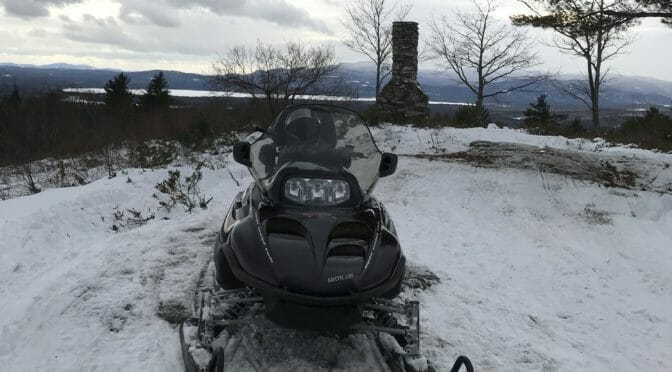
Ole’ man winter is right around the corner, and during winter, most hams tend to stick to the shack… BUT NOT THIS WINTER!    It is common knowledge that the winter doldrums are easily beat if you just get outside and get some fresh air.  The title picture (to grab your attention) of the Arctic Cat was taken while N1SFT was activating the “Chimney” in Freedom NH, last winter – it just proves that Ham radio often intersects with many other hobbies!

While we don’t anticipate the need for snowmobiles, the Nashua Area Radio Society is going to participate in Winter Field Day.

All members of NARS are asked to come out and participate – and don’t forget your sense of adventure!  Here’s the plan:

  • The last full weekend of January 2019.
    • Setup on Friday the 25th, and a 24-hour activation starting Saturday at 2 pm Eastern.
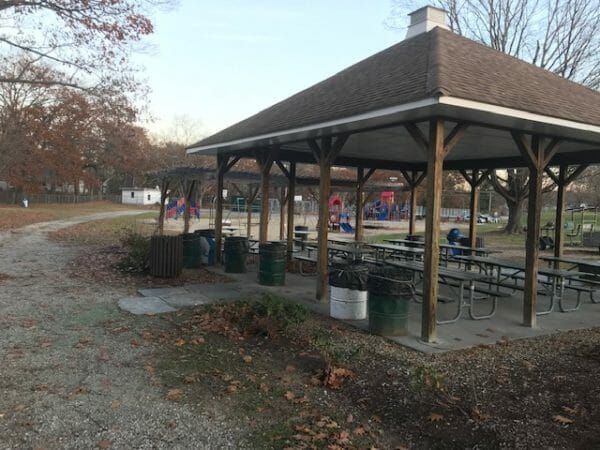
  • We have secured the use of Keyes Memorial Field in Milford NH. Click here for a Google map.  At Keyes Memorial, there is a 25’ x 25’ pavilion that we will be activating as N1FD. (See the pic below)
  • What Bands: 10m, 15m, 20m, 40m, 80m, and 160m. Plus VHF 6m, 2m, and UHF!
  • What modes: Sideband Phone, FM Phone, CW, and Digital, with Satellite coms!
  • Who: ALL MEMBERS are encouraged to come out and lend a hand, and do some operating!
  • Your planning team:
    • Craig Bailey, N1SFT & Jerry Doty, K1OKC – co-chairs
    • Charlie Dunn, W1CBD – Scoring chair
    • Fred Kemmerer, AB1OC – Wire Antennas
    • Dave Merchant, K1DLM – Computing & logging
    • Hamilton Stewart, K1HMS – Tower Master
    • Mike Ryan, K1WVO – CW Ops wrangler
  • Who else we need: Currently, we are looking for someone to assist with:
    • A person to guide setting up and running the “camp”, including the tarps and heaters, refreshments, and general lighting
    • A person to assist with power planning (generators, fueling, etc.)

We need some help with some items that we don’t generally need to worry about during field day… for example – the anchor rods will be driven into the frozen ground, and stringing up a wall system to block the wind and cold are just two challenges that we need to overcome.  If you are able to help us devise an extraction tool, please contact us.

The activation is intended for all club members to come and get some seat time, and there will be plenty of opportunities: we intend to have on the air at all times at least (5) stations, and the op will have their choice of modes to operate: phone, CW, or Digital.   We will be running under the N1FD call sign, which means all club members regardless of license class are welcome to come and operate on all the bands.

Winter Field Day is a contest, but it is more than just a contest; its something different, it’s a “back to basics” activation… sort of a field-day-lite.  Not to mention its during the winter – which is fun.   We Amateur operators are lucky to have so much spectrum to use while we burn up the ether, and part of that privilege is the ability to mobilize and assist in local, regional, and even global communications when called upon.  Testing ourselves and our equipment shouldn’t happen just during the summer!

Thank you very much!

Please email Craig Bailey as soon as possible to sign up for the part you want to play.

For more official information regarding Winter Field Day, please visit the official sponsor: The Winter Field Day Association.

The Pavillion to be activated

Keyes Memorial Field Pavillion

Craig, N1SFT

Radio Amateurs Developing Skills Worldwide