Articles and other information related to On The Air Operations, Special Events, Activations, DXxpeditions, Portable and Mobile On The Air Activities, Nets, etc.
The Nashua Area Radio Society has partnered with Bishop Guertin High School for several years on STEM and Amateur Radio activities. The latest activity is the Bishop Guertin ISS Contact.
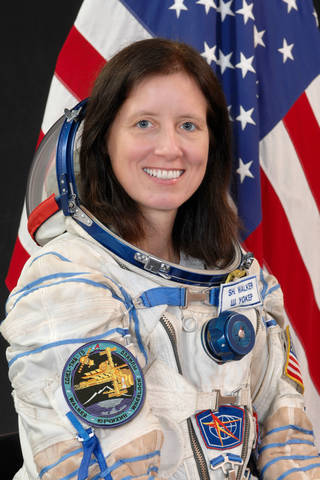
Astronaut Shannon Walker, KD5DXB
The recent Bishop Guertin ISS Contact with Astronaut Shannon Walker has had quite a bit of media coverage. There is news of the Contact everywhere that you look. You will find coverage of the students talking with Shannon Walker on the ISS on TV, in Newspapers, on the Radio, and on the Internet,
Television Coverage
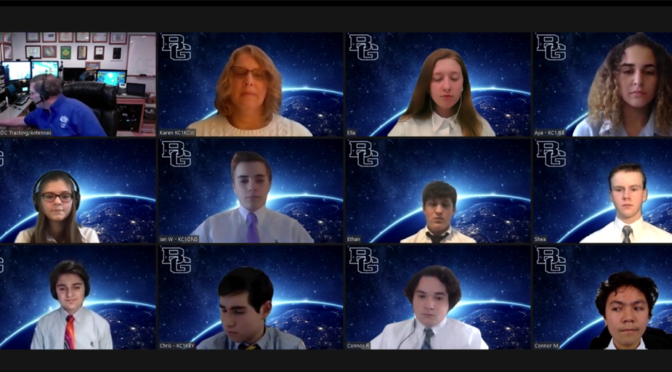
After the conclusion of the Contact, a reporter from WMUR interviewed the BGHS students over Zoom. The story was on all of their evening news broadcasts on Friday as well as Saturday morning. Readers can view the story below.
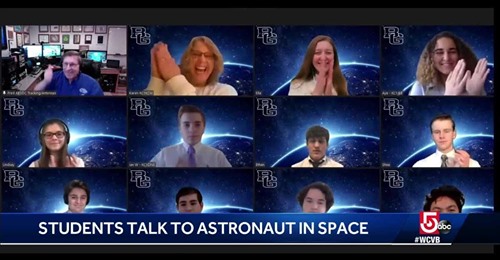
The Bishop Guertin Students were also interviewed for Boston TV.
The BGHS students and their partnership with the Nashua Area Radio Society were featured in a spot on WCVB News in Boston on Tuesday, February 23rd. You can view the video and an article about the contact at this link on their website.
The BGHS ARISS contact was also featured on the front page of the New Hampshire Union Leader newspaper. Here is a link to the article on the Union Leader’s website.
The Nashua Telegraph published an article announcing the contact on February 18th. The article can be found at this link.
On YouTube
You can watch the Contact in its entirety below. The video includes a great introductory program with a video made by the BGHS students.
We will keep an eye out for additional media coverage of the contact and add links to this article as we see them.
We have been working with the students and faculty at Bishop Guertin H.S. (BGHS) here in Nashua, New Hampshire for several years now. This is the story of their planned contact with the International Space Station (ISS).
Amateur Radio STEM Learning Projects
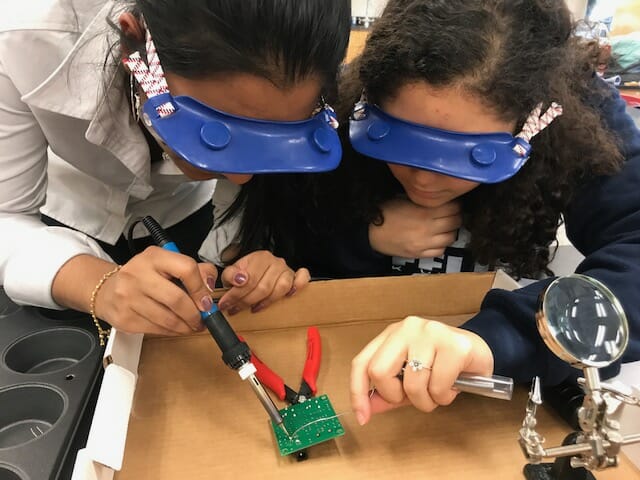
The STEM Club at BGHS has done quite a few Amateur Radio-related project with us.
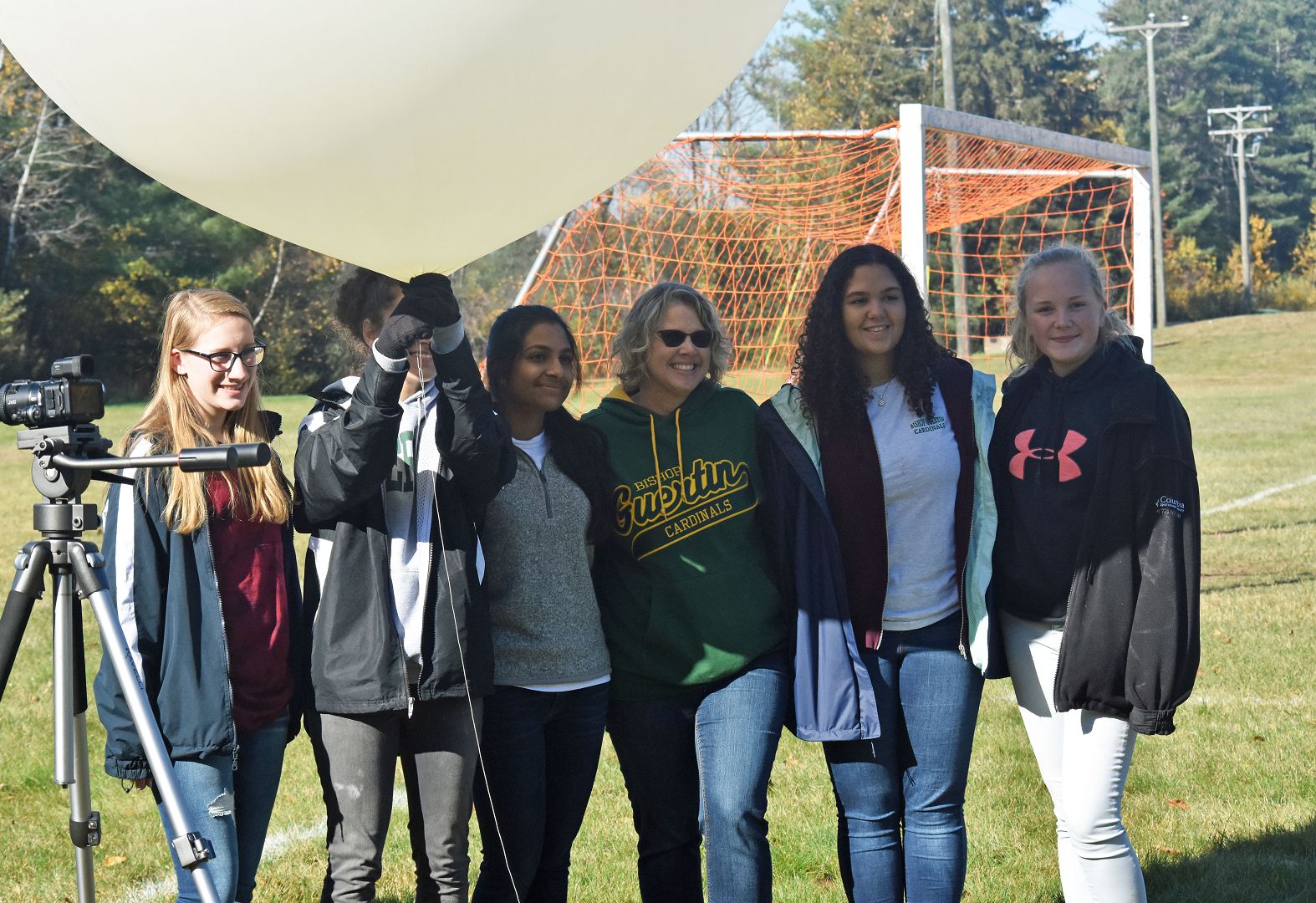
BGHS students and their Teacher Ready to Launch the HAB
All of this has led to several students and their teacher becoming licensed Amateur Radio operators.
A Contact with the ISS
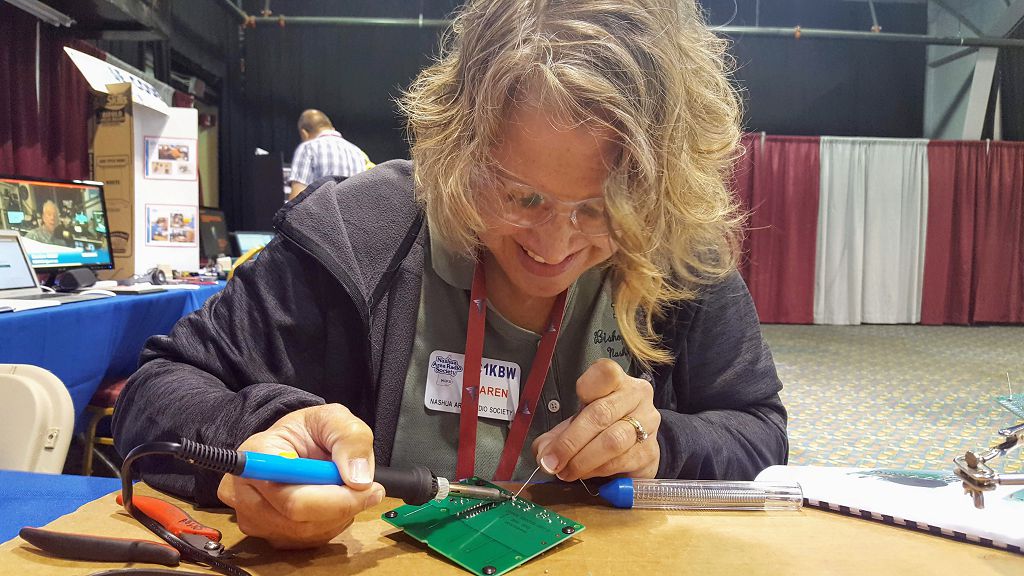
Karen KC1KBW – BGHS Teacher Building a Kit
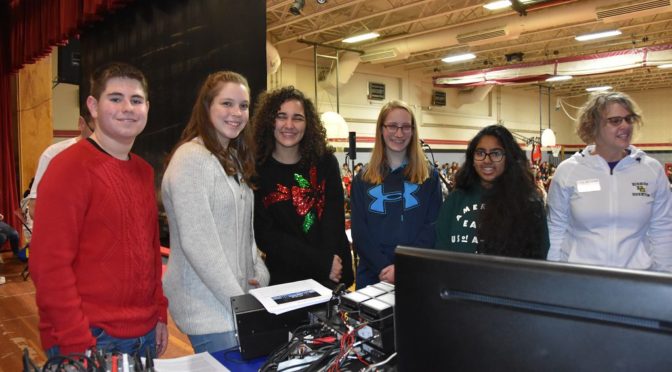
We owe a lot of thanks to Karen Crivac, KC1KBW who is a teacher at BGHS. Karen has been providing tremendous support and encouragement for our work to bring Amateur Radio to the students at BGHS. Karen holds a General Class Amateur Radio license.
The process of securing an ISS contact experience involved a lot of work to create a quality STEM-learning program leading up to and after a Contact with the ISS. Karen and the faculty at BGHS did a great job with this and were awarded a Contact late last year.
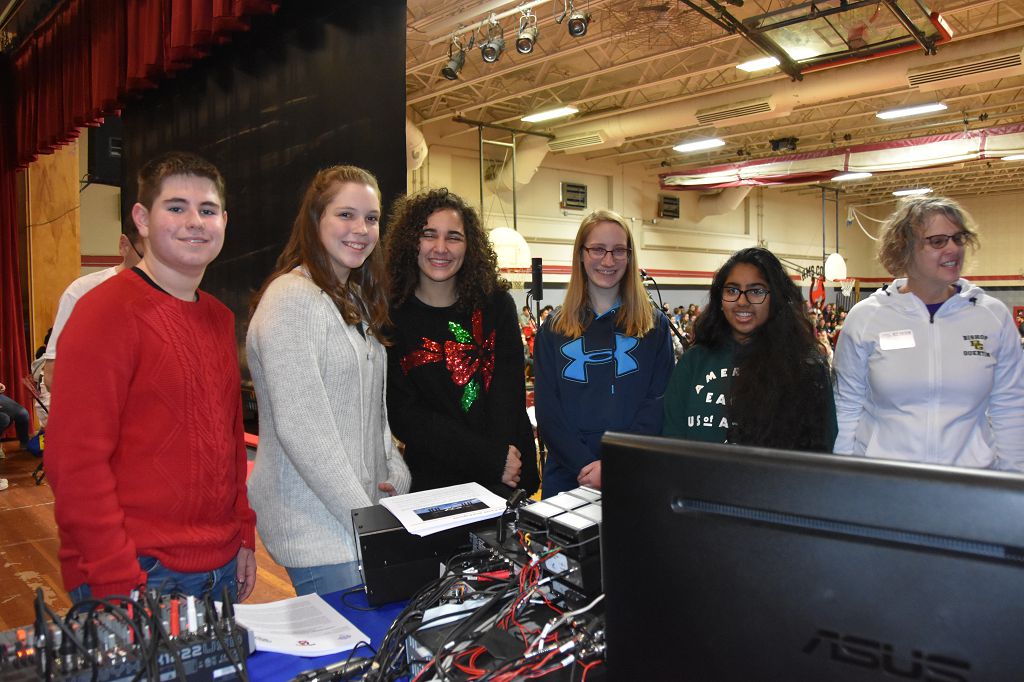
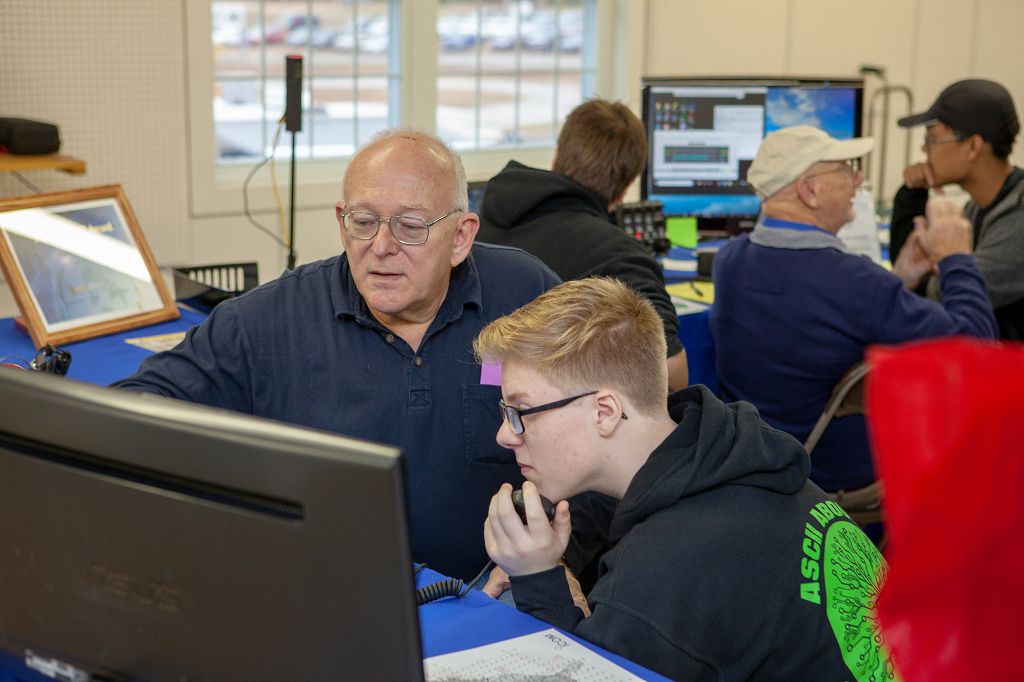
John, AC1EV Helps a Student Get On The Air
Contacts with the ISS are arranged by ARISS. I serve as both a Mentor and a Ground Staton as part of the ARISS program. I have had the pleasure of serving as the ARISS Mentor for the Bishop Guertin contact. The Nashua Area Radio Society is also BGHS’s partner Amateur Radio club. Jon Turner, AC1EV has been working closely with Bishop Guertin to help them to prepare for their contact.
BGHS Calling NA1SS, Do You Copy?
The students at BGHS have been working on creating questions to ask their Astronaut during their upcoming contact. Many BG students submitted candidate questions.
There is only time for about 20 questions to be asked during the actual contact so the students in STEM Club create the video above to answer some of the questions that did not make the final list for their contact. You can click on the video above to hear the questions and the answers from the STEM Club team.
Here are the questions that the students at BGHS are planning to ask their Astronaut:
Aya, KC1JEB – What landmark on Earth looks the most amazing from space?
Shea – What day to day task is most challenging in space?
Brandon – What inspired you to become an astronaut?
Ian, KC1ONS – What experiments are you currently working on?
Christopher, KC1KBY – Can you share with us what you like best about being in space?
Ella – What does a typical day look like for you?
Connor- What is something new you learned in space?
Ethan – What did you bring from Earth to remind you of home?
Lindsay – What part of space travel is most exciting for you?
Connor – Does being in zero gravity feel like floating in the water?
Aya, KC1JEB – What are some recent discoveries the ISS has made from the experiments conducted in space?
Shea – Upon returning to Earth, how do you plan to re-adjust to gravity?
Brandon – What are your thoughts as you prepare for lift-off?
Ian, KC1ONS – As an experienced astronaut, what advice would you give to a new astronaut heading to the ISS?
Christopher, KC1KBY – How do you treat injuries or illnesses in space?
Ella – Do you have a favorite space food?
Connor – What is the most unusual thing you have seen in space?
Ethan – What part of your training was most challenging?
Lindsay – What happens to your tears in space?
Connor – How do the sun and stars look different in space than on Earth?
T = 0 for Calling the ISS from Bishop Guertin H.S.
Astronaut Shannon Walker, KD5DXB
The pre-contact program for Bishop Guertin’s Contact will begin on Friday, February 18th, 2021 at 12:20 pm eastern time (17:20 UTC). The students at BGHS will be talking with astronaut Shannon Walker, KD5DXB who is onboard the ISS. The ISS will come over the horizon here in New Hampshire, USA at about 12:56 pm eastern time and will plan to make initial contact with Shannon then.
You can view the contact by clicking on the video above.
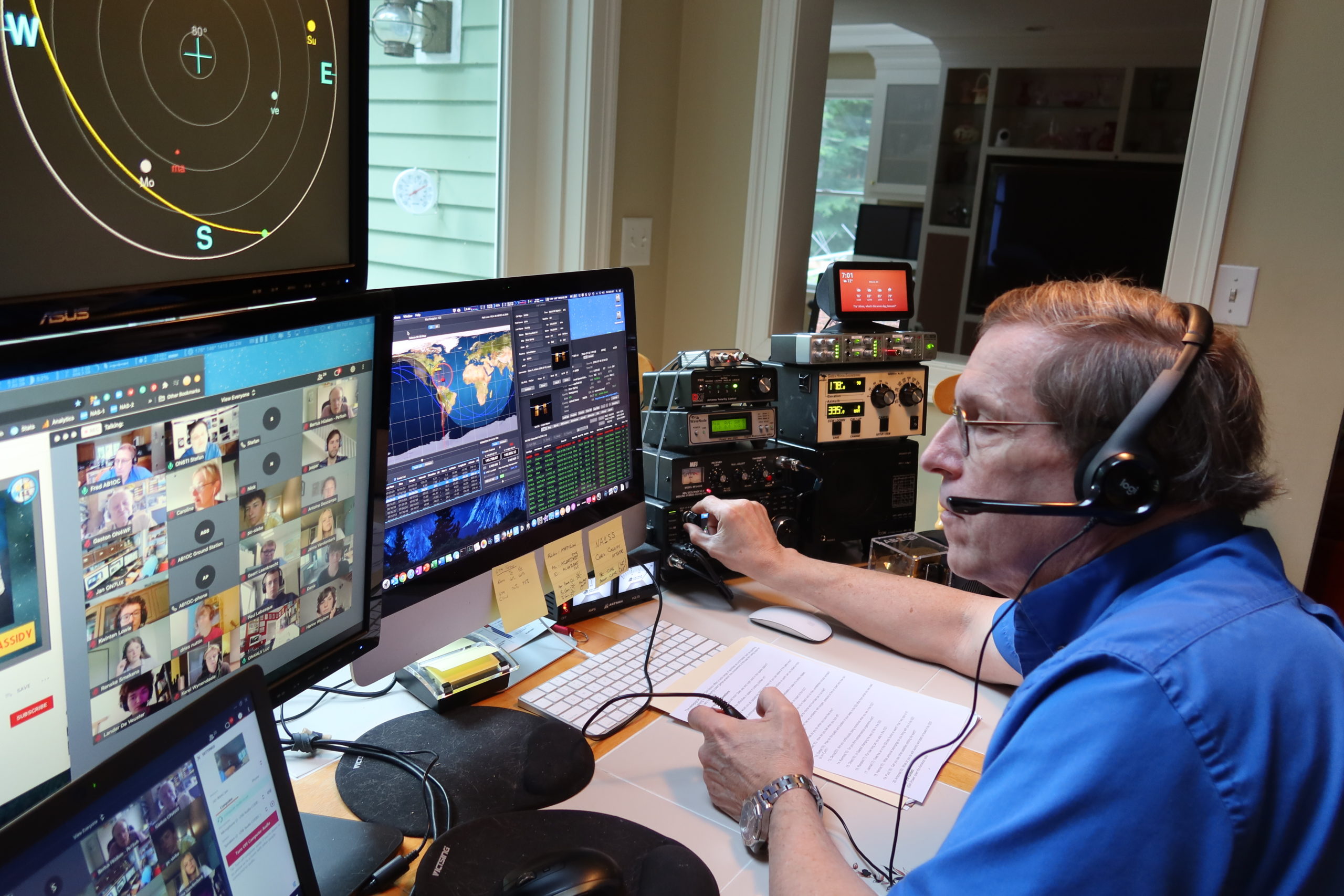
The Ground Station
AB1OC ARISS Ground Station
I also have the honor of serving as the ARISS Ground Station for BGHS’s contact. It will be my job to establish and maintain the radio link between the students at BGHS and the Shannon on the ISS while the students ask their questions.
The students have been learning much about space and radio technology in preparation for their contact with the ISS. The faculty and administrators at Bishop Guertin have also poured a great deal of time and energy into their contact. I hope that you’ll join us via the live stream and watch the students at BGHS make history!
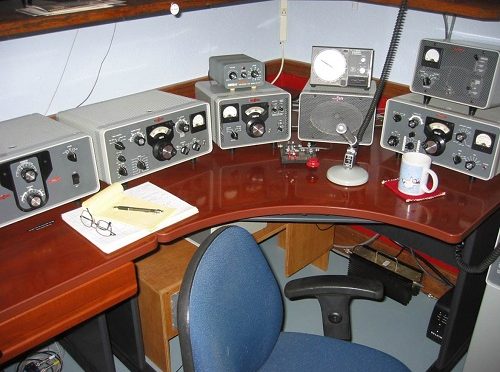
When I was first licensed in 1957, Collins was king of the hill in amateur radio equipment. Collins pioneered the practical application of SSB to both military and amateur radio communications and SSB was state of the art in 1957. The Collins S-line was just coming to market and I so wanted this gear over the 10 years I was active (1957-1967). (The S-line was in production from the late fifties to the early eighties.) However, as a very poor kid at the beginning of this 10 year period and a poor college student at the end, personal finances made this a no-go situation. When I returned to amateur radio in 2017, I resolved to relive to some extent the good old days from the fifties and sixties and was in a position to do something about it as 50+-year-old Collins gear is much cheaper today, adjusted for inflation, than it was then. IOW, a 75S-3B receiver sold for about $600 new in 1970, equivalent to about $4200 today, and sells today on the used market for about $600 in today’s dollars. So, I set out to find both the Collins and E.F. Johnson gear I would have given an arm for back in the day. I carefully researched the market for this Vintage Radio gear and when the opportunity presented, acquired a few of my favorites.
Collins S-line @ K8EZB
The Collins gear (75S-3B receiver, 32S-3 transmitter, KWM-2A transceiver, 30L-1 amplifier, 312B-4 station control, and 516F-2 power supply) was mostly working (the seller said) but was unrestored. It had been serviced 20 years previous by Dennis Brothers, a well-known Collins guru, and former Collins S-line production technician, but had been very little used by the seller and had been stored for at least 10 years. With this recent history and taking into account, these radios are 50+ years old, I decided to do some restoration work and updating before putting these on the air. Some of this work I did myself, but I lacked the knowledge, skills and equipment to do everything necessary. I had, by coincidence, at about the same time developed an online friendship with Dave Harmon, K6XYZ, through the Collins Collectors Association (CCA) forum. Dave is a Collins S-line guru and offered to take on the task of checking out and updating this gear as appropriate to make it a useable, reliable station. In early 2018, I packed this equipment to withstand a thermonuclear event and shipped it off to Dave in Sperry, OK. He installed new tubes (including substituting 572Bs for the 811As in the 30L-1 amp), new power supply boards in the Harbach style, replaced capacitors and resistors where necessary, did a comprehensive alignment, and tested as a station on the air. Dave turned around these repairs quickly and shipped the equipment back to NH where it sat on a shelf in my shop until recently.
After setting up and using a thoroughly modern station for a couple of years, as a diversion from the Covid mess and from DC (District of Confusion) politics, a few weeks ago I decided to get this gear back on the air. Despite Dave’s excellent work, a few gremlins had crept in which required some troubleshooting and minor repairs. Using a vintage EICO tube tester I had acquired and restored a few years ago, I was able to trace the problems to two bad tubes which were easily replaced. I also had to deal with a steep learning curve since I had not previously used a Collins transmitter and had not tuned a tube transmitter and amp since about 1965. Fortunately, the manuals, service bulletins, and much other useful information are available online at the CCA website. Also, many parts (new, NOS, and used) are available from multiple online sources, especially tubes, as this gear was used extensively by the U.S. military and there are large quantities of surplus NOS mil-spec tubes available at very reasonable prices. The exception regarding tubes is the 30L-1 572B final amplifier tubes which are now being made only in China and vary greatly in quality; a U. S. company, RF Parts, is importing, testing, and creating matched sets of these tubes, so adequate replacements are available at somewhat premium prices but are not unreasonable given current prices of other transmitting tubes from that era.
Vintage tube transmitters typically require high impedance microphones. To meet this requirement, I added a Heil Gold Elite Vintage mic to the station. This mic is a wide range low impedance dynamic mic with an on-board impedance matching transformer and is intended specifically for use with vintage tube gear.
So, after a few days of preliminaries (repairs, tuning into a dummy load, monitoring transmit signal, generous coaching via email by Dave Harmon, etc) I checked into a 40m net. Success! Excellent signal reports including some reports of “fantastic” audio. The 32S-3 transmitter uses a Collins 2.1 kHz mechanical filter to determine the transmit bandwidth, with no adjustment possible, unlike modern DSP-based transceivers which typically offer several BW choices, most wider than 2.1 kHz. I have by now made quite a few contacts with this station and continue to get excellent reports including a few S9+25 reports from NJ and VA-based stations. Out of curiosity, I have decided to add some W2IHY outboard audio processing gear to see if “fantastic” can be made even better. I doubt this will be the case given the narrow transmit bandwidth, where audio equalization may offer little benefit. However, this gear does also provide for adjustable audio compression, which, when added to the designed-in 10 dB compression in the Collins RF circuitry, may increase average power. We’ll see. In any event, this outboard audio gear will be more beneficial with the older vintage gear coming next. The 30L-1 amp is spec’d at 1000 watts DC input (nominally 500mA at 2000 volts) which translates to about 600 watts PEP output. I have added a modern CleanRF demodulator and RF sampler to the station to allow monitoring of the transmit signal for flat-topping and linearity using RF envelope and trapezoid patterns on a vintage Tek 485 scope. So far, all is working well, and this has been a great learning/refresher experience. Quite a contrast vs my FTDX-101MP and Acom 1200S modern station!
EFJ PacemakerEFJ Thunderbolt
Next up in my vintage radio adventures is substituting a Collins KWM-2A for the 32S-3/75S-3B combination. This should be an easy transition as the KWM-2A is essentially a 32S-3 and 75S-3B in one box. Then, something more challenging. Waiting on the shelf is a Collins 75A-4 receiver and Johnson Pacemaker transmitter, Thunderbolt amp, electronic TR switch, and KW Matchbox. This gear is from the generation preceding the Collins S-line and is a bit more primitive. The 75A-4 was restored a few years ago by Howard Mills, W3HM, another very well-known Collins guru (now reportedly retired from guru’ing), and the EFJ gear was restored by Chuck Hurley, K1TLI. Both of these guys are master craftsmen and their restorations are works of art (at least to some of us!). The Thunderbolt amp weighs 120 lbs so I am hoping I can move it to the station bench.
I suspect many NARS members were born after this gear went obsolete, and will find this topic of limited interest. However, for some of us old-timers (never thought this term would apply to me!) who were into amateur radio when this gear originally came to market, pretty cool stuff!
We use cookies to ensure that we give you the best experience on our website. If you continue to use this site we will assume that you are happy with it.