Category Archives: Homebrewing

Articles and other information related to Homebrewing, station building, kit building, and other custom Ham Radio projects.

My SSB BitX-40 build from VU2ESE

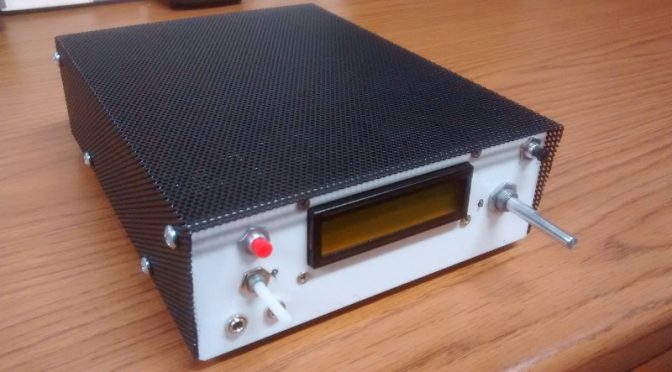
Below is a photo of my BitX-40 kit from Ashhar Farhan VU2ESE in India with my very own custom designed case.  The kits are available from http://www.hfsigs.com/

The top cover shown is powder coated steel mesh.
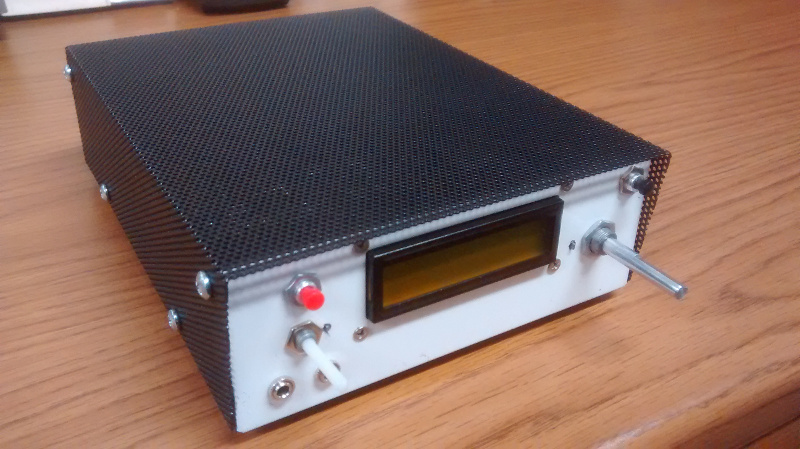
BitX-40 Enclosure

The sheet metal housing was designed in a solid modeling software package called Onshape. This web based software is free to use if your designs are to be available to anyone who signs into an account.  This design is “in the cloud” and considered “open hardware”, available to anyone who would like to use it.  Below is a screen capture of my Linux desktop running Onshape within a web browser.
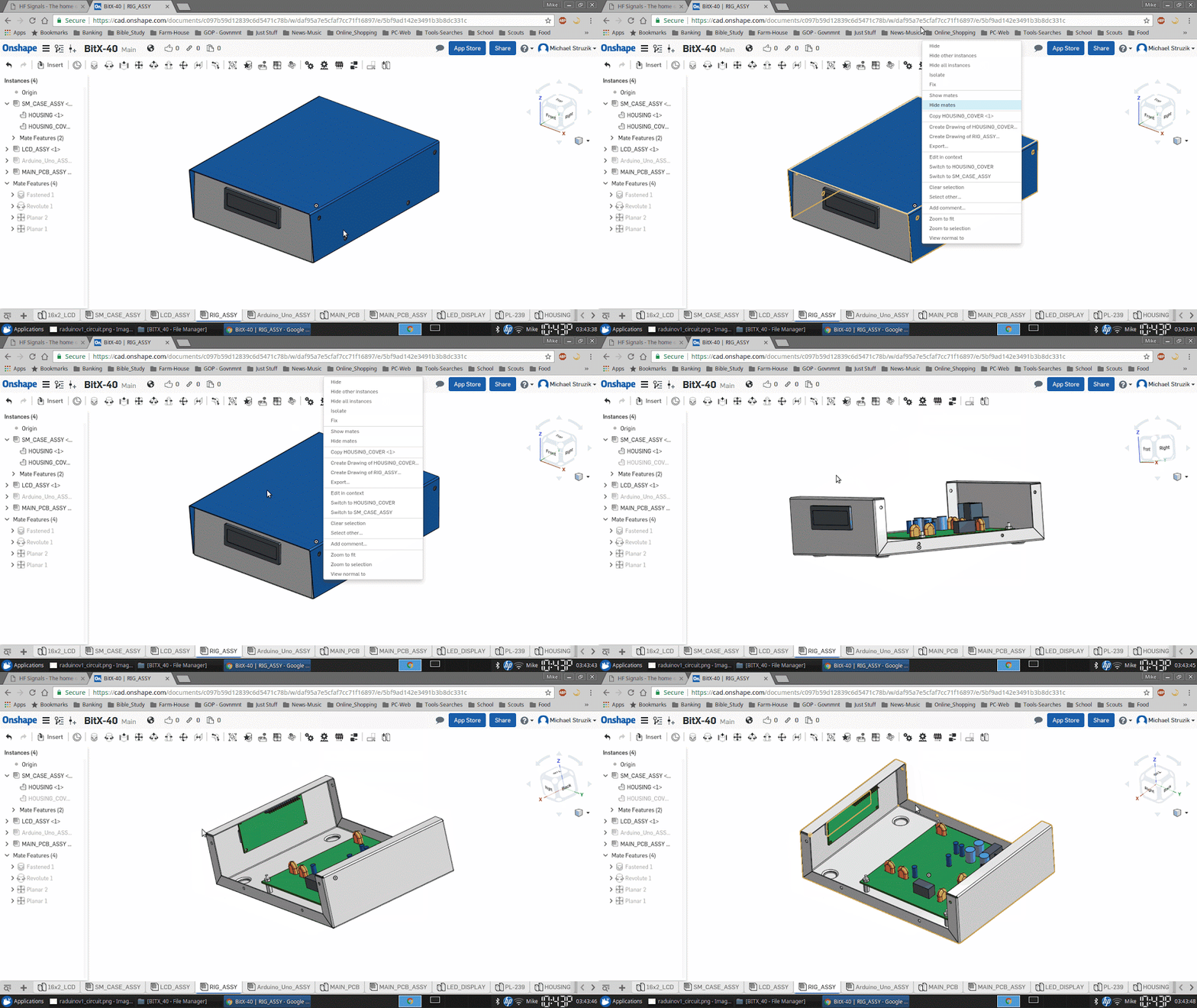
BitX-40 Enclosure CAD Design

With access to a CNC punch press and a 90-ton brake press, a coworker of mine helped out with a bit of “government work”!

I left out some of the detail in the housing to let others enjoy the use of a drill and allow for some creativity with a customized placement of components.
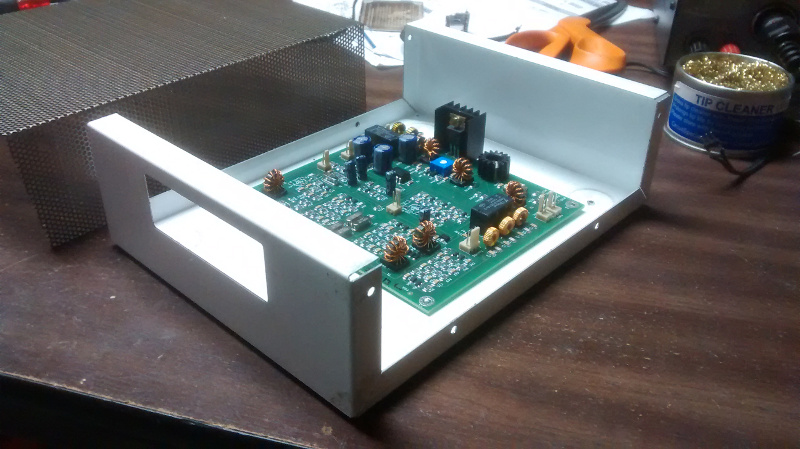
BitX-40 Enclosure with Board

Some of the wires are not needed but may be useful in future “hacks”. The image below shows some of the wires removed from the “Molex” connector.  A small sharp object can be used to push in on the barb to remove the contact for a future project.

BitX-40 Cables and Connectors

See http://bitxhacks.blogspot.com/

I used my sketch to drive the LCD screen and the SI5351 chip using the Adafruit library.  The checkered block moves left and right between the arrows to indicate when I am at or near the end of travel with the tuning potentiometer.
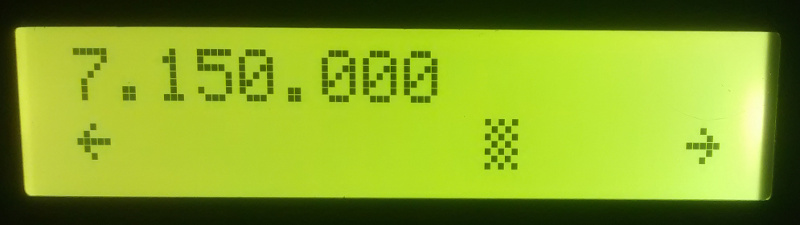
BitX-40 Frequency Stationary
Stationary

When I move the block all the way to the right with the potentiometer it turns into an arrow and automatically increases the frequency. To make it stop just turn the potentiometer to the left.
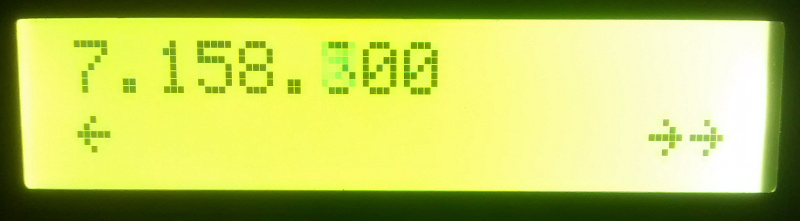
BitX-40 Frequency rising
Frequency rising

I like the ability to scan the band without having to turn a knob!

Below is an image showing 12v and 24v voltage regulators and electrical tape on the housing tabs.  12v is for the majority of the wiring and I used 24v for the IRF510 PA.  The black tape looks nice behind the black mesh cover.  while testing I measured about 4W RF output with 12v feeding the PA and 16W RF at 24v.
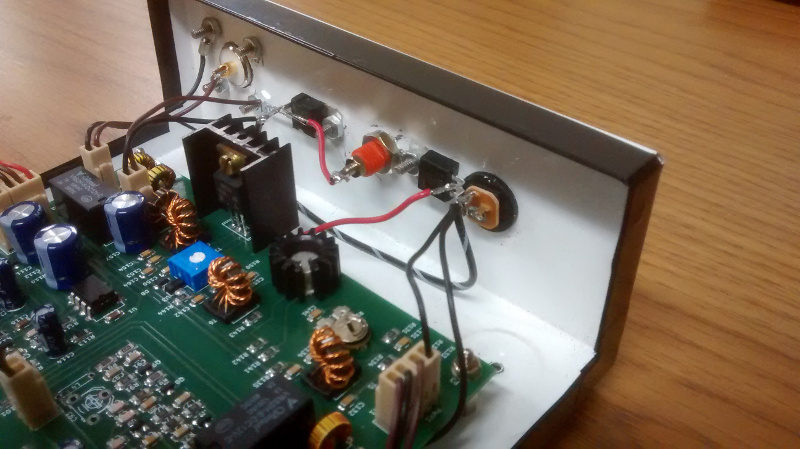
BitX-40 Enclosure

The bottom has extruded “feet” along with stick on feet to keep the rig from sliding.
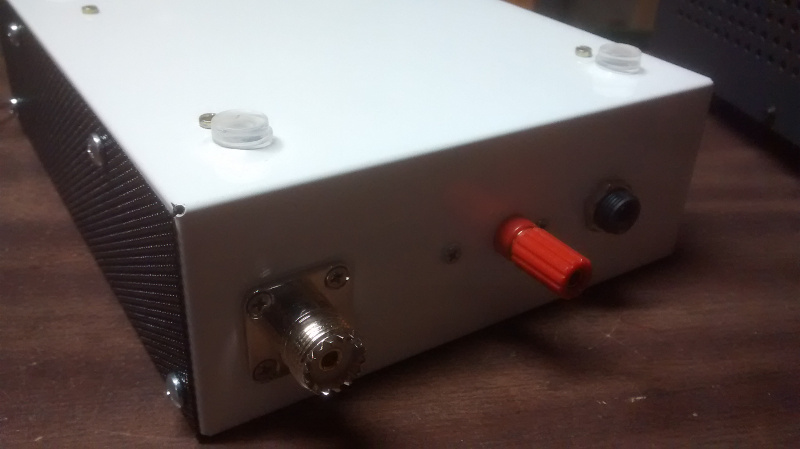
BitX-40 Enclosure

I used an SO-239 connector for the antenna.  I saved the BNC connector from the kit for test gear.  The red terminal post is connected to 32v from a repurposed HP printer power supply.  The barrel jack is connected to 16v from the same supply.

For more information on the case, you may contact me through my QRZ page.

73,

Mike (AB1YK)
Our January Visit to MakeIt Labs!

The highly publicized event — the event of the month — went off with a bang! On Jan. 28th, the Nashua Area Radio Club paid a visit to MakeIt Labs to promote Amateur Radio with maker folks. It’s a natural union if you think about. Technologists/scientists/engineers/self-taught DIY’sters and amateur radio folk are essentially one in the same beast. So why shouldn’t they be interested?

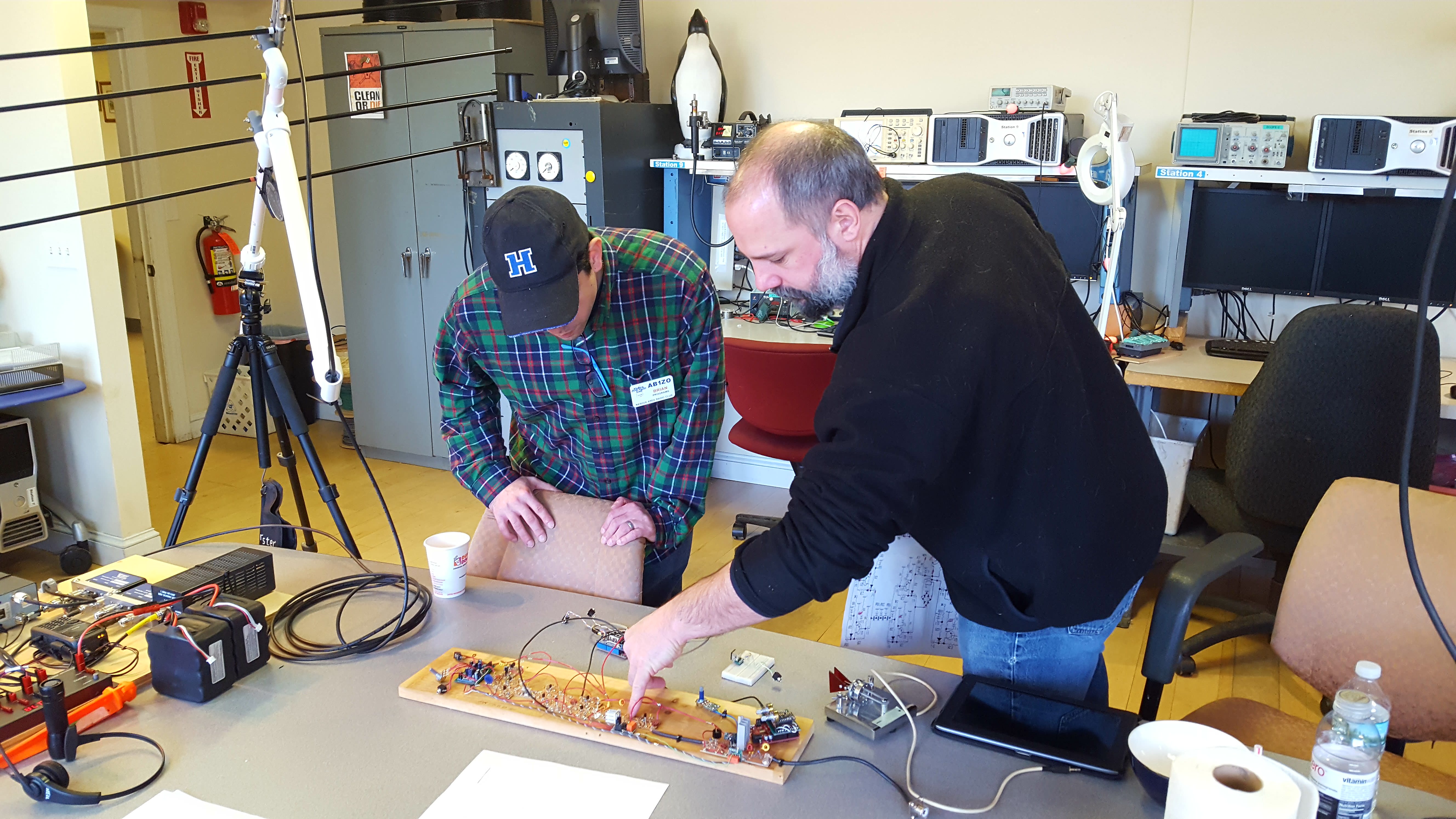
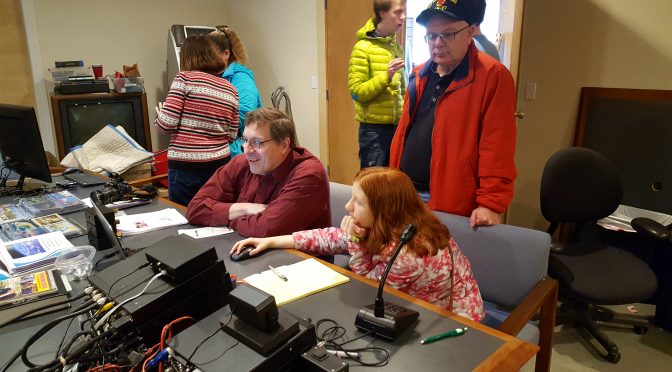
Brian (AB1ZO) and Mike (AB1YK) discussing details of Mike's home-brewed transceiver at MakeIt Labs
Brian (AB1ZO) and Mike (AB1YK) discussing details of Mike’s home-brewed transceiver

We had a super great turn out from many in the club and those external to the club or from MakeIt Labs itself. Representing the Nashua Area Radio Club, we had Fred (AB1OC), Anita (AB1QB), Jamey (KC1ENX), Abby (KC1FFX), Connor (KC1GGX), Brian (AB1ZO), Mike Struzik (AB1YK), Bill (W1TWO), Mike Ryan (K1WVO), Mike Rush (KU1V), and Tom (AB1NS) (Forgive me if I forgot you).

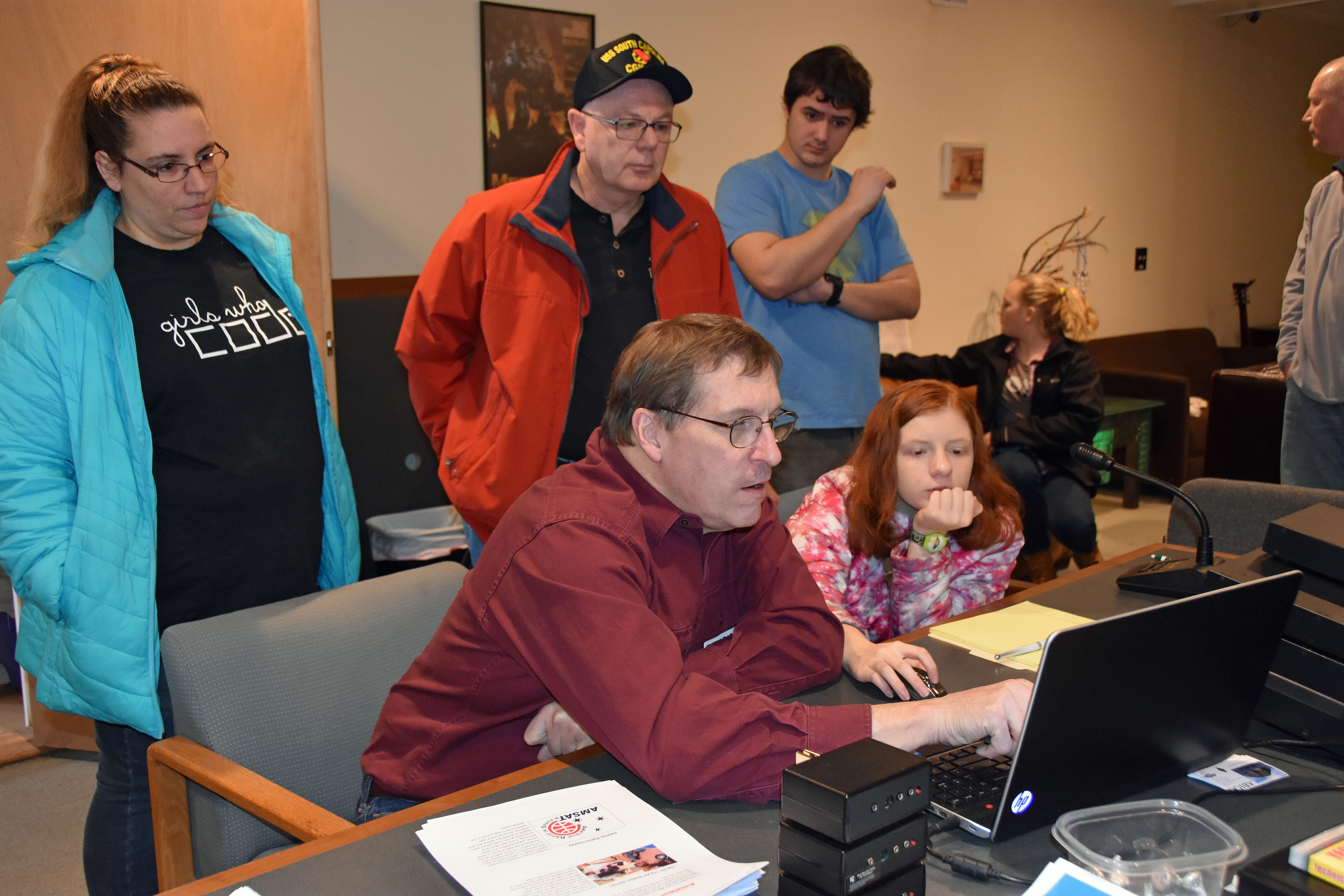
Fred (AB1OC) explaining the nuances of digital operation to a young, budding Ham at MakeIt Labs
Fred (AB1OC) explaining the nuances of digital operation to a young, budding HAM.

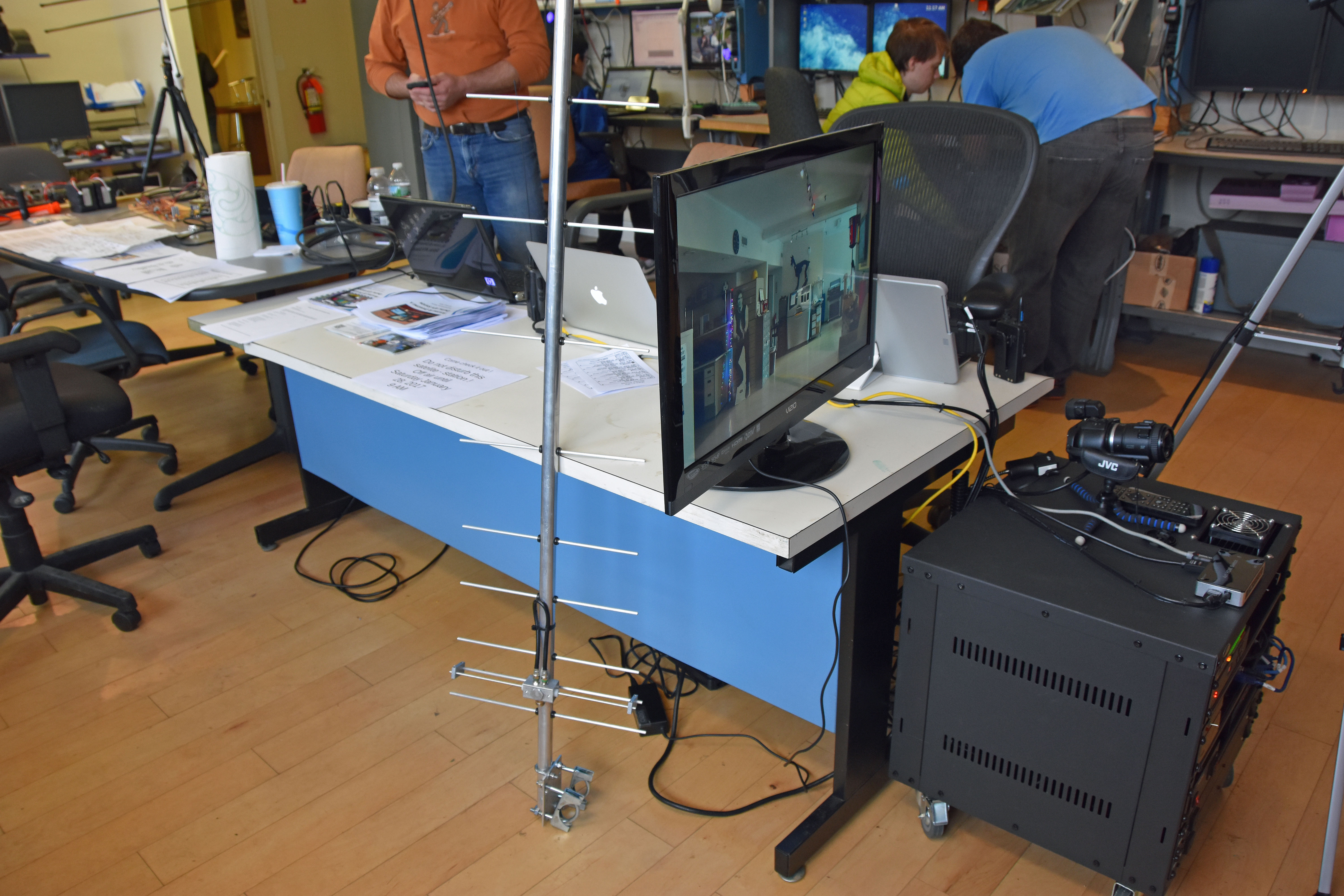
The idea was to set up the every-popular GOTA station, but also demonstrations of other amateur radio technology to hook the masses with. As a result, we had Fred’s digital amateur TV station, a tabletop satellite station, and Mike Struzik brought along his home-brewed BitX20 transceiver complete with plans, schematics, and a demo keyer. (Talk to Mike for further details/websites. He’s awesome about answering questions and exposing people to what they need to do to get started.)

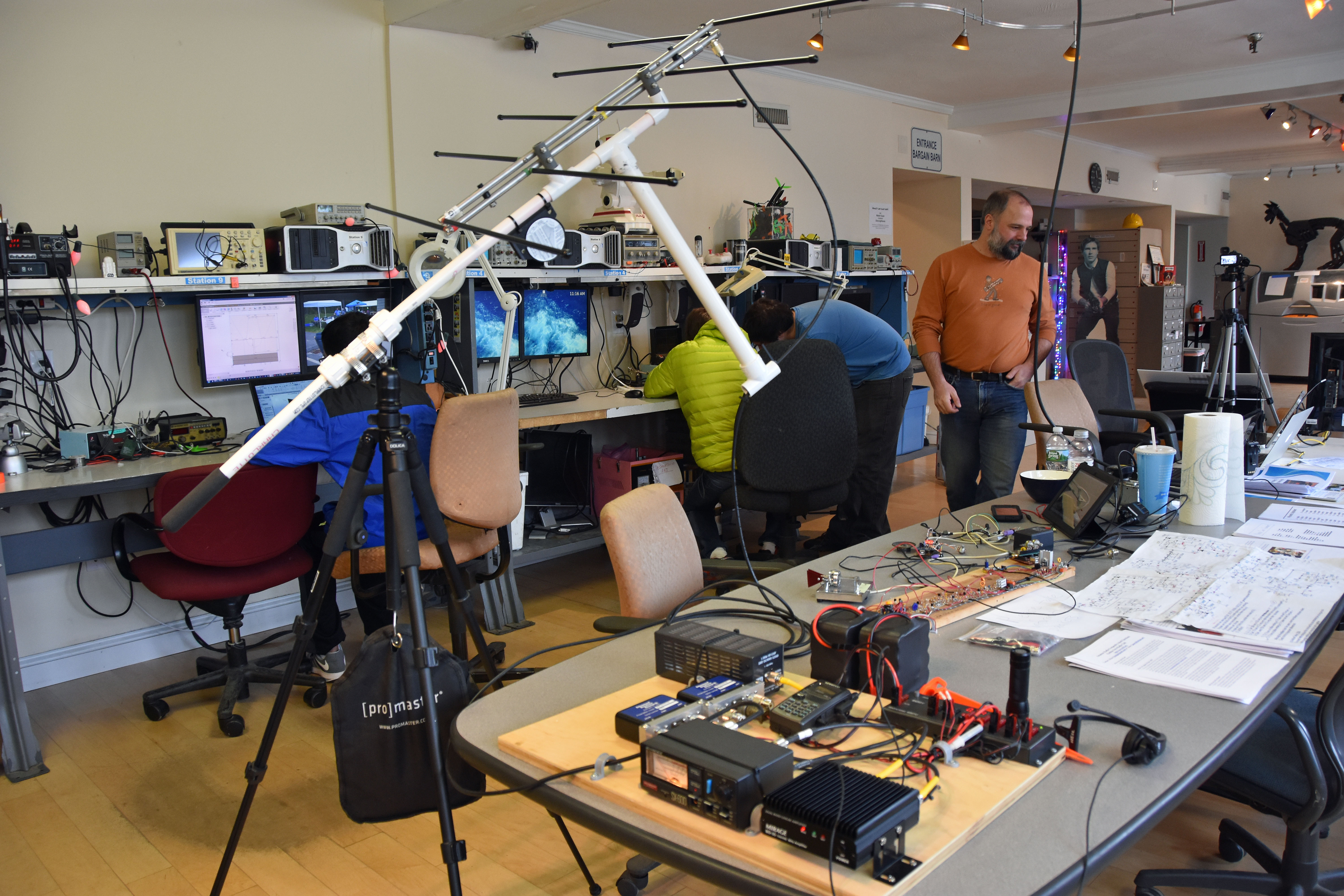
A view of the satellite station at MakeIt Labs
A view of the satellite station

We spent a solid 6-7 hours at the facility, even roping in some new interest from folks who happened to see our advertisements for the event both online and in stores/businesses around Nashua. It’s clear that word is spreading about the work that the Nashua Area Radio Club is trying to do; we are engendering interest slowly, but steadily. Essentially, the trend is upwards.

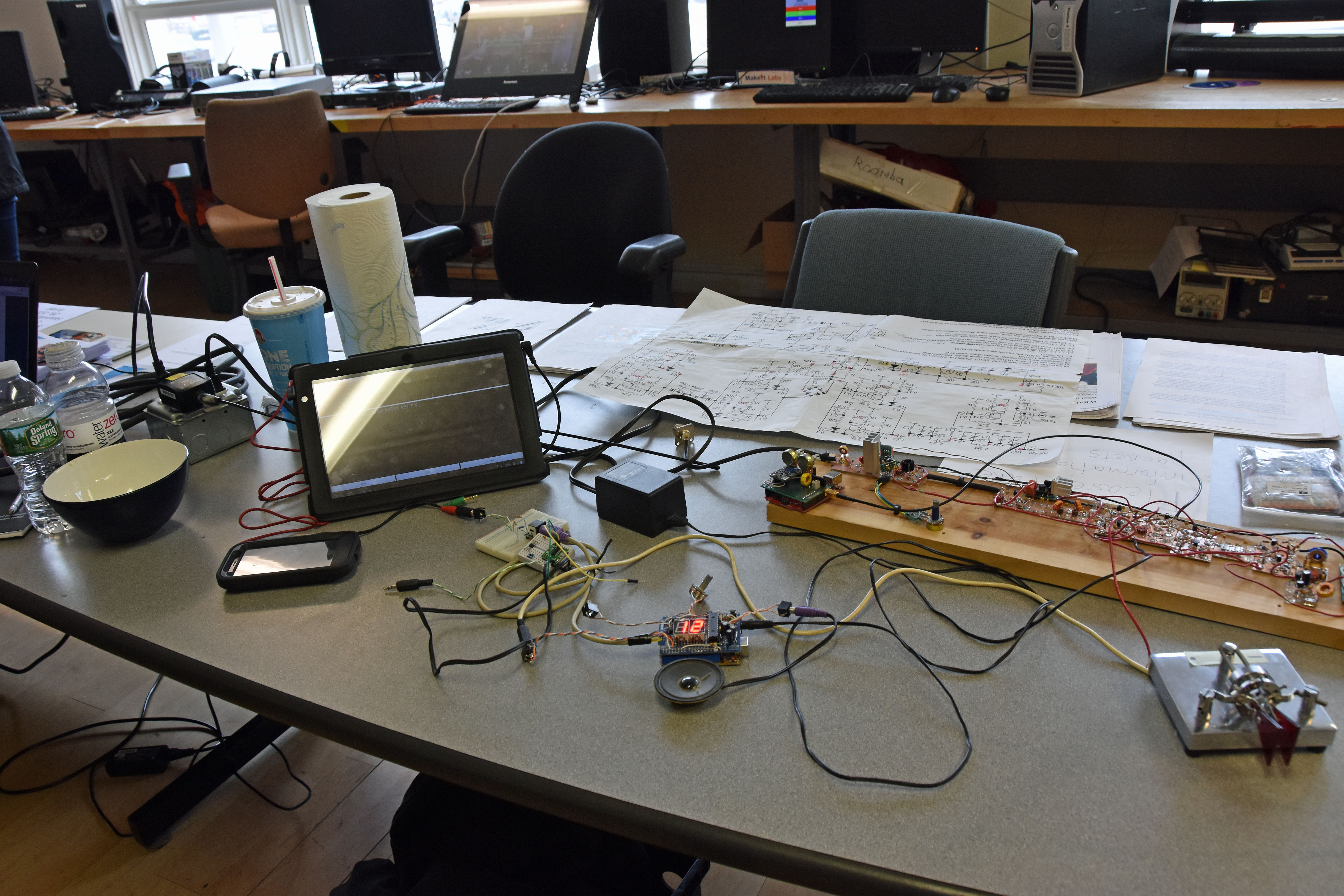
Close-up of Mike's (AB1YK) home-brewed BitX20 transceiver at MakeIt Labs
Close-up of Mike’s (AB1YK) home-brewed BitX20 transceiver

We hope that down the road, we can enjoy a lasting partnership with MakeIt Labs and encourage more members of our club to drop in, see the facility, hang-out for a bit, and explain to new folks about how this hobby is damn close to one of the best hobbies out there!

Fred's (AB1OC) DATV station at MakeIt Labs
Fred’s (AB1OC) DATV station

So, until next time, and until my next posting (and hopefully that one will be a bit witty’er — didn’t have enough coffee today), make sure you eat, sleep, “repeat”! (That’s what my t-shirt says that my wife bought me)

Brian, AB1ZO

Our Latest “Tech Night” – A DSO138 Oscilloscope Kit Build

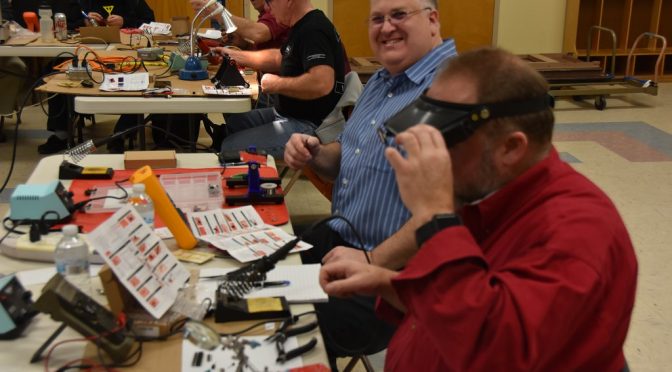
Our latest Tech Night became a Tech Day this past weekend. We got together on Saturday afternoon to build another kit – the DSO138 Oscilloscope. We had a great turnout with over 15 kit builders and helpers present.

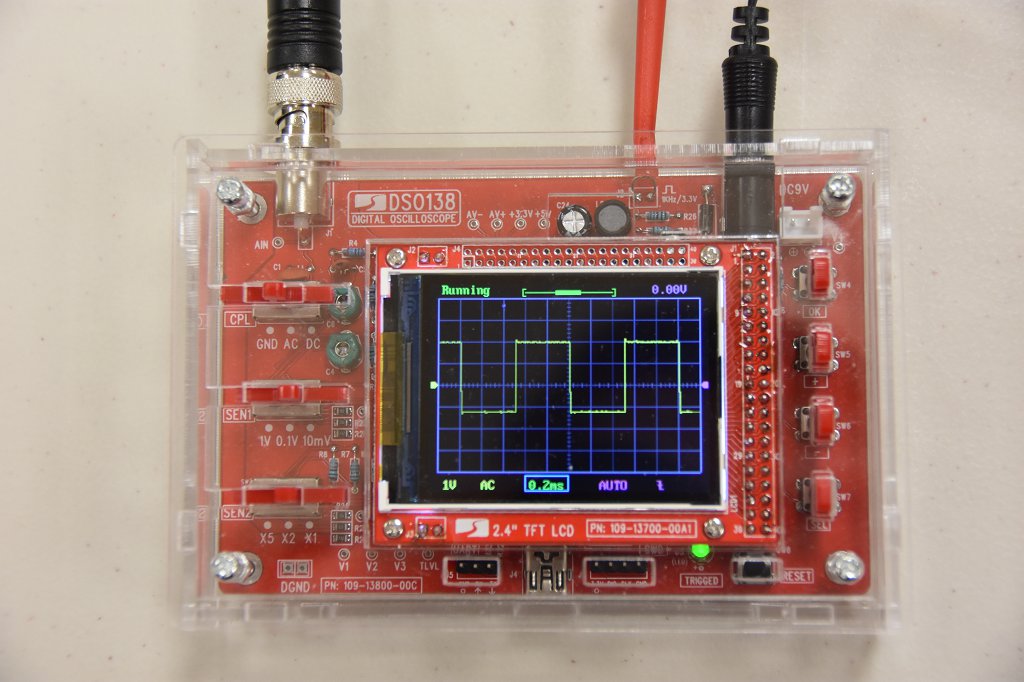
Finished Oscilloscope Kit
Finished DSO138 Scope Kit in case

Brian, AB1ZO choose this really cool kit for us to build. Here are some specifications for the finished DSO138 Oscilloscope kit:

  • Analog bandwidth: 0 – 200KHz
  • Sampling rate: 1Msps max
  • Sensitivity: 10mV/Div – 5V/Div
  • Sensitivity error: < 5%
  • Vertical resolution: 12-bit
  • Timebase: 10us/Div – 50s/Div
  • Record length: 1024 points
  • Built-in 1KHz/3.3V test signal
  • Waveform frozen (HOLD) function available

The kit came with all Surface Mount parts pre-installed.

The kit included a very nice case to finish off the project. This was a pretty big project to complete in a single afternoon but quite a few of our builders completed their kits and got them working!

The gallery below contains more pictures from our kit build. Everyone was very focused on the building process as we all wanted to get our kits to work in the time we had together.

Some folks did not quite get their kits completed and are planning to finish them at home. The following are some links and videos to help.

Here are some videos which show the assembly of the kit and its enclosure and the operation of the completed scope. The first video shows the kit in operation.


I know that Brian is planning to do more kit builds throughout the year so be sure to keep an eye on our Tech Night page to see what is coming!

Fred, AB1OC

Radio Amateurs Developing Skills Worldwide