We are currently considering a new project for the Nashua Area Radio Society – potentially building a club station for our members to use. We know that many folks, particularly new and recently upgraded Hams would likely use and benefit from a club station if we had one.
Why Build A Club Station?
A club station would provide many opportunities for our members to build skills and have fun with Amateur Radio. It would also provide an important emergency communications resource to members of our community. Some additional uses of a club station might include:
A station that members and student/teacher partners can use to operate
A 24-7 station for EMCOM work
Space Needs
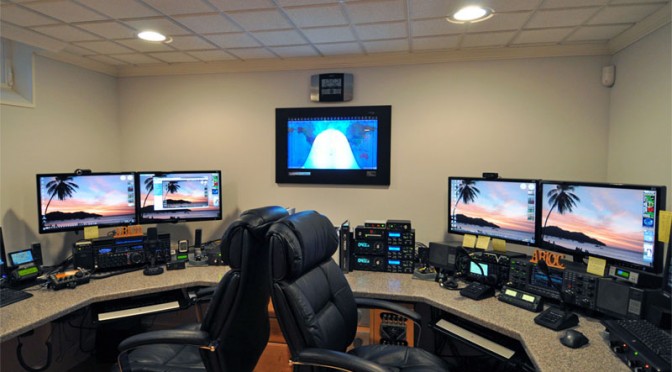
I wanted to share some ideas about what capabilities we are thinking about including in such a project. First, we’d certainly want to have a permanent space that our members could access and use to make contacts. This means that we’ need to find a location that could support 200 sq ft or more of space for equipment and operators. Space would need to be reasonably accessible to our members and have adequate power, light, heat, and Internet access available.
Possible Club Station Capabilities
Hex Beam Directional Antenna
A club station would be an on-going project that would likely evolve and grow with our club’s member’s interests and skills. Some capabilities that we might initially include would be:
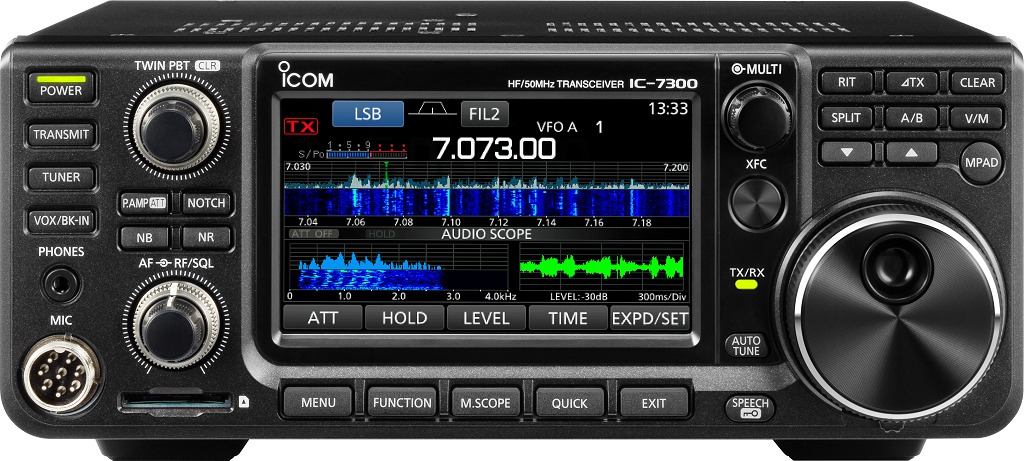
A 100 w HF station for at least 40m – 10m
A combination of a wire (40m) antenna and a directional (Hex beam or a tri-band 20m-10m) antenna
An FM repeater transceiver and antenna
A computer for logging and other Amateur Radio activities such as Digital operations
We are exploring the idea of a club station at this time. The first step in the project would be to find a suitable space that we could use. We’re looking for a location that is centrally located in the Nashua Area. A Loft or similar space at someone’s QTH or a space that is part of an existing business, educational facility, or other public space would make great potential candidates for a club station.
Perhaps you have or know of someone who has a loft or other suitable space that we might use. The benefit to someone who could help us in this way would be ready access to a top-notch Amateur Radio Station along with the satisfaction that comes from helping our members develop their skills and support our community in times of emergency.
If you know of a space that you think we might consider, please contact us at [email protected]. We are also looking for members who would like to help us with this project. We hope to find a space and undertake a club station project in 2020.
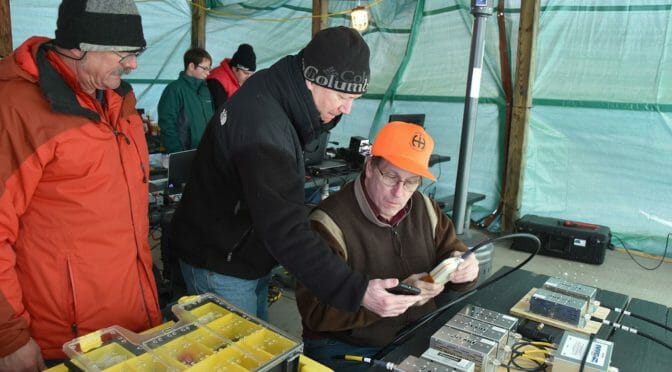
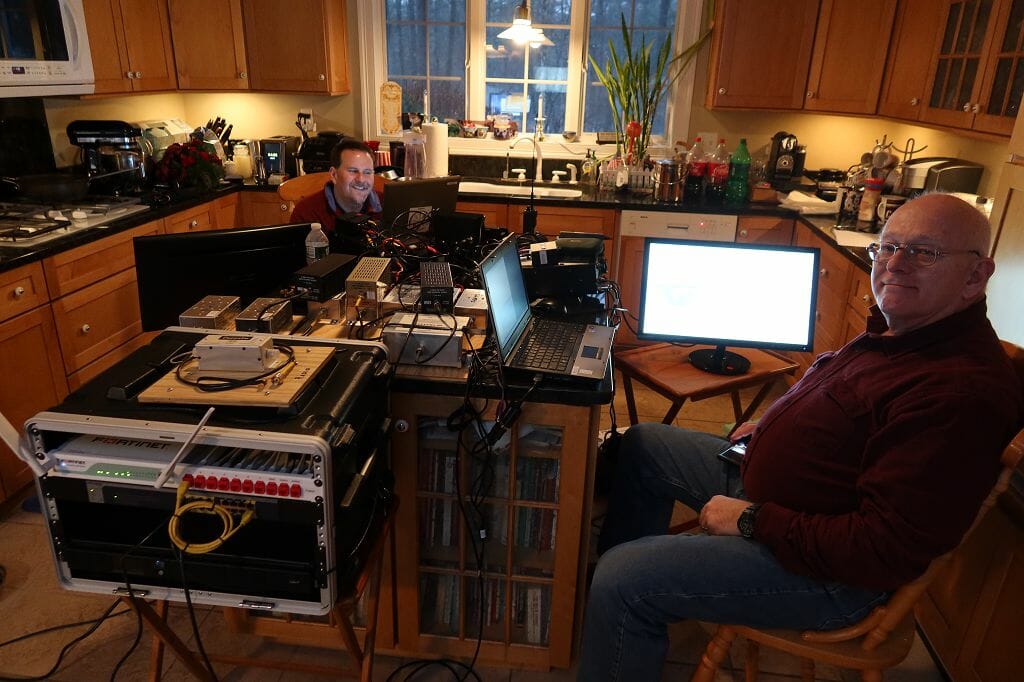
Winter Field Day 2020 is almost here! A few weekends ago, Jerry K1OKD, Jon AC1EV, Andrew NF1H, Anita AB1QB, and I got together at our QTH to complete the final station test for our planned 5O operation in Winter Field Day (WFD).
Portable Wireless Networking
Portable Wireless Networking Pod
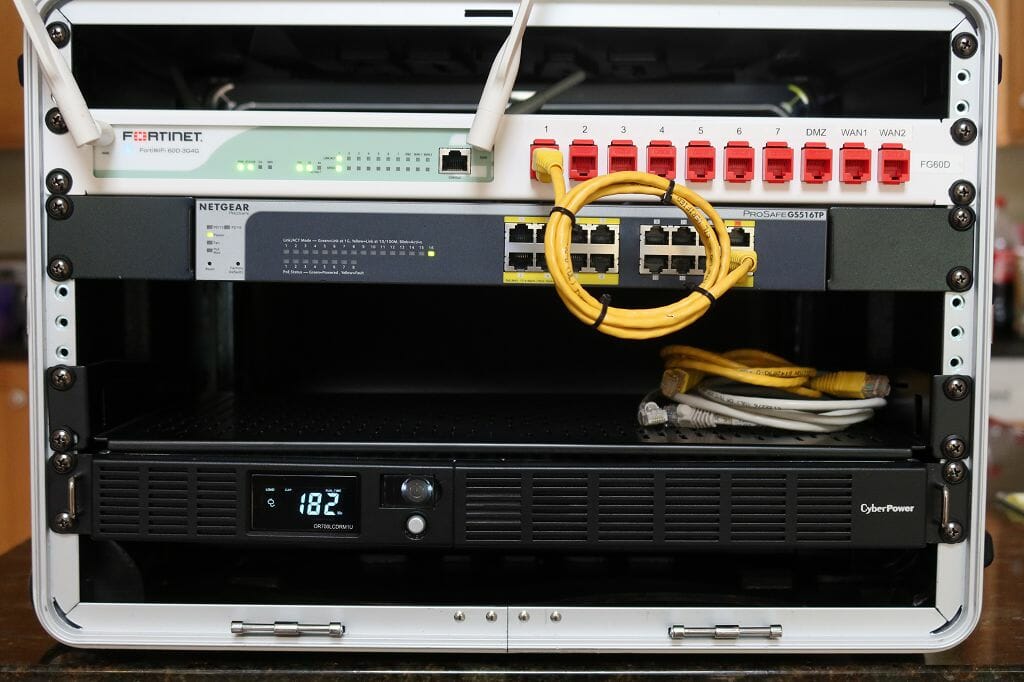
In preparation for WFD 2020 and our test, I built a new Wireless Networking Pod. This unit was made possible by a very generous donation of a router with LTE wireless access capabilities by Dave, K1DLM.
Networking Pod Details
The system consists of the following components:
A FortiWiFi 60D 3G 4G Router which includes an LTE modem for wireless internet access
A NetGear GS516TP 16-Port enterprise-grade managed Ethernet Switch with PoE
Our Networking Pod will be used in a number of ways to support Nashua Area Radio Society activities including Youth Expos, Ham Bootcamps, Field Day Operations, Portable Operations, and others. It provides a wired and wireless (via WiFi) network capability including DHCP, DNS, Firewall and other IP services that can be used to network computers running the N1MM+ logger and other apps. It can also be used to provide wireless internet access via LTE in situations where we need this.
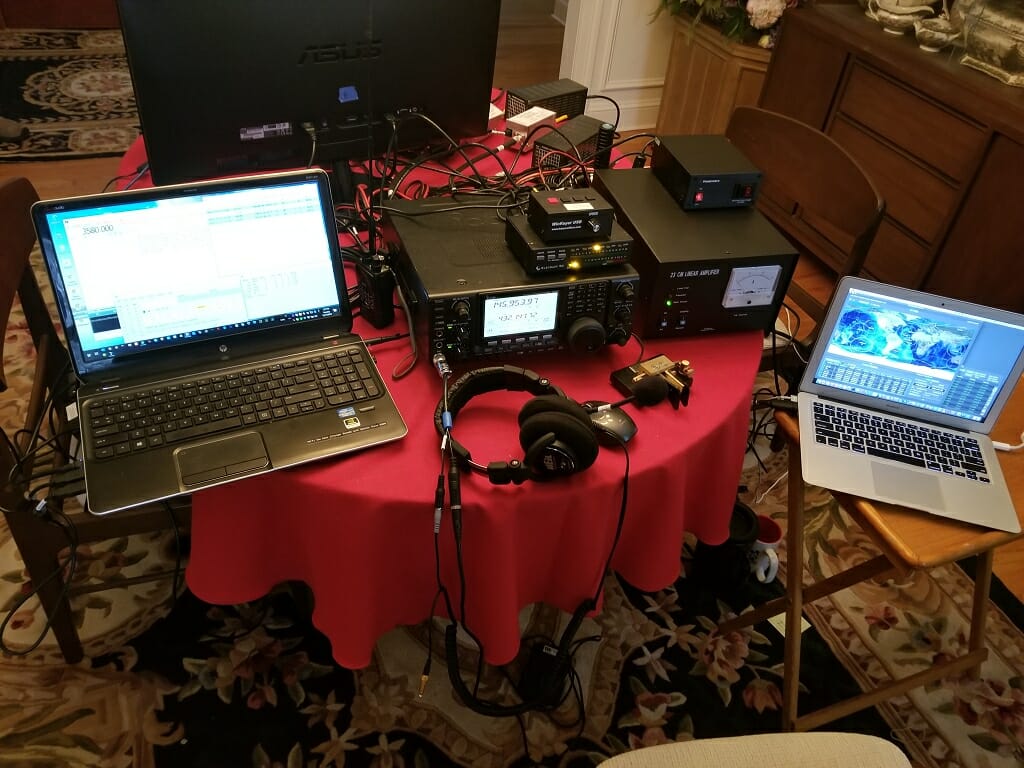
A Windows Laptop Computer with an outboard second monitor
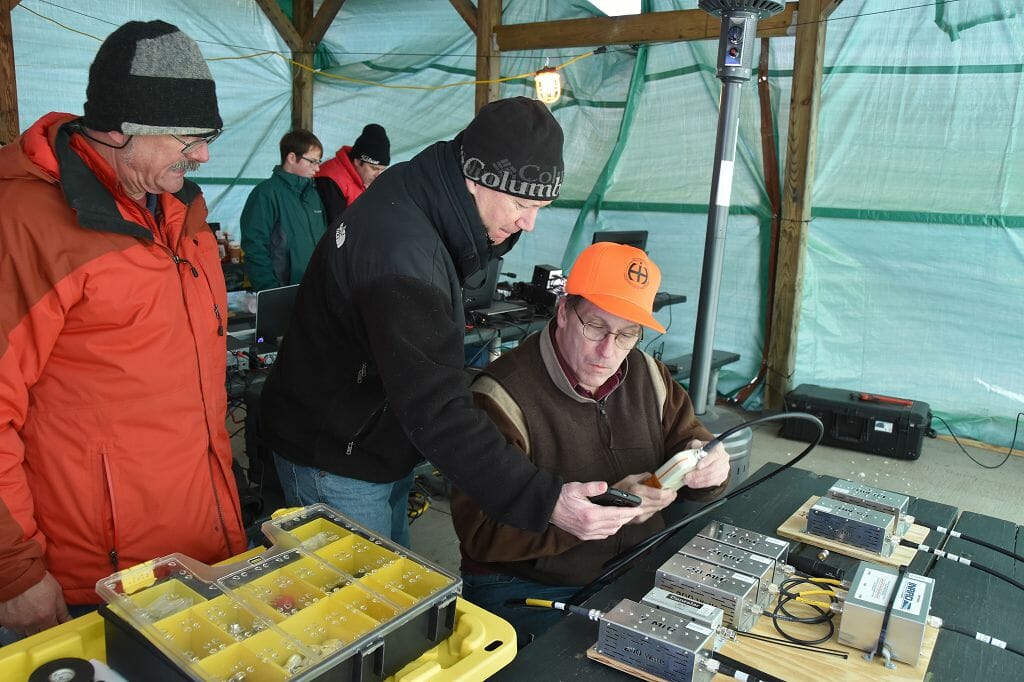
Triplexer and Bandpass Filtering system at Winter Field Day
We also tested our Triplexer and Bandpass Filtering system along with the radios.
160m All-Mode Station Main N1MM+ Monitor
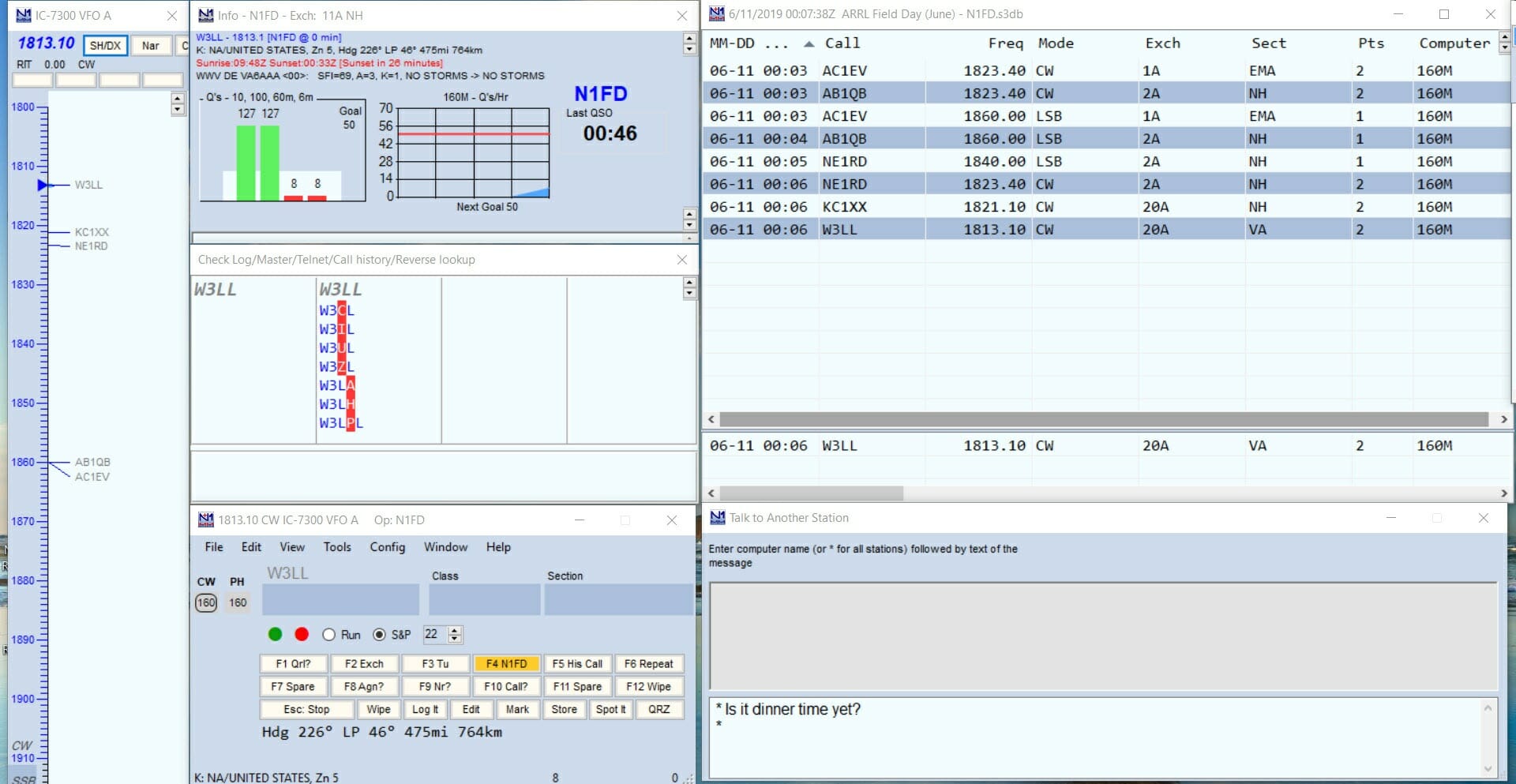
A big part of this test was to get the N1MM Logger+ working with the radios and in a network configuration using the Networking Pod. Networking N1MM+ enables us to maintain a common log across the 5 stations in our Winter Field Day setup. All of the stations were also set up for SSB Voice, CW and Digital operation via N1MM+.
All of the station tests are complete and we are ready for Winter Field Day! Come on out and join us for what I am sure will be a lot of fun!
I recently returned to amateur radio after an absence of 50+ years. My interest in amateur radio began around age 8 or 9 as a result of encouragement by my father who had been a ham earlier in his life but had been inactive for some time. He brought home a military surplus receiver covering the ham bands and gave it to me to “play” with. He later obtained a set of WWII Army 78 rpm code practice records and helped me build a crude code practice set using a junk box transformer, a door buzzer, and a straight key fashioned from a metal strip cut from a coffee can. First licensed as a Novice in 1957 and upgraded to General a year later. General reinstated May 2017 and original call sign K8EZB reissued as a vanity call sign; Amateur Extra as of December 2017. Current amateur radio interests include software-defined radio technology and vintage HF SSB equipment, mainly Collins and E.F. Johnson.
First QSO as a Novice utilized a homebrew one-tube xtal oscillator built on a piece of Masonite and a borrowed WWII German (Siemens) military receiver. The transmitter power supply was constructed with parts salvaged from discarded broadcast receivers picked from the neighborhood trash. My only xtal was in the 80m Novice band; antenna was a 15m dipole because that’s what I had! Worked a station in Michigan from my Cleveland, OH QTH – DX as far as I was concerned, and QRP (by necessity) long before it became trendy. Moved on to a Heathkit DX-35, Johnson VFO, and a National HRO receiver which was ancient even then. The final station before life intervened was a Collins 75A-1 and a Johnson Ranger.
While in high school, I became interested in an aviation career, but soon found my uncorrected vision wouldn’t cut it with the military or airlines. For this and other reasons, I chose a career in technology (with this choice strongly influenced by my amateur radio experience), went on to complete a Ph.D. in computer engineering at Case Western Reserve University, and began flying as an avocation while in graduate school. While working on the Ph.D., I was invited by my faculty advisor to join a new company he was starting. Up to that point, I had assumed I would follow my graduate school colleagues to Bell Labs – seemed like everyone in my department was going to Bell Labs – to pursue a career in industrial R&D. However, a taste of the entrepreneurial life changed my direction in a major way. Finishing my degree, I had an offer in one hand to join a computer architecture group at Bell Labs, and an offer in the other hand to join a small Cleveland company doing innovative work in point-of-transaction systems as VP Engineering. I chose the entrepreneurial route and never looked back. Along the way, I took time off to do an MBA at Harvard. This led to a progression of senior-level jobs in marketing and general management in technology companies, including President/CEO of the E. F. Johnson Company of Waseca, MN.
EFJ, a well-known manufacturer of amateur radio and CB gear until the early seventies, left these markets well before I joined the Company. We were focused mainly on land mobile radio and cellular during my tenure there. In addition to developing and marketing the LTR family of land mobile products, we did cell site radios and subscriber equipment for AT&T AMPS (first cellular service in the U.S.) and air and ground radios for the Airfone in-flight phone service under contract to Airfone, as well as continuing the legacy components business (connectors, tube sockets, variable capacitors, etc) which was the basis on which EFJ was started in 1923. Edgar Johnson (founder) was still living but was retired when I was at EFJ and we had some spirited conversations. While no longer active on a day-to-day basis, he continued in an informal role of an elder statesman. After multiple reincarnations in more recent years, EFJ continues today as part of JVCKenwood and no longer has a presence in Waseca, MN.
The most recent 25 years of my career have been as a founding partner (now partner emeritus) in a venture capital firm investing primarily in startup companies in Silicon Valley and New England. I worked from an office on Sand Hill Road, Menlo Park, CA (the heart of Silicon Valley) for much of the nineties, and later moved to the metro Boston area to establish an East Coast office for the firm. Over my time with the firm, we invested in several hundred early-stage companies in the areas of technology (telecommunications and computing), healthcare, and consumer products and services.
Active general aviation pilot since 1966; FAA Commercial Pilot certificate with Airplane, Helicopter, Glider and Instrument ratings, Douglas DC-3/C-47 type rating. Currently flying an Enstrom 480B helicopter. The 480B is a derivative of the TH-28 design which Enstrom developed in the early 1990s in response to an Army RFP for a new training helicopter. After losing this competition to Bell Helicopter, Enstrom civilianized the TH-28 to create the 480B while retaining much of the military required robustness of the TH-28 design. The 480B seats five and is powered by a 420 HP Rolls Royce turbine engine. There are now several hundred 480s in service around the world, including as training aircraft with several foreign militaries. Dean Kamen, a well known local entrepreneur, owns two 480s, and at one time owned the Enstrom Helicopter Corporation, as did note attorney F. Lee Bailey.
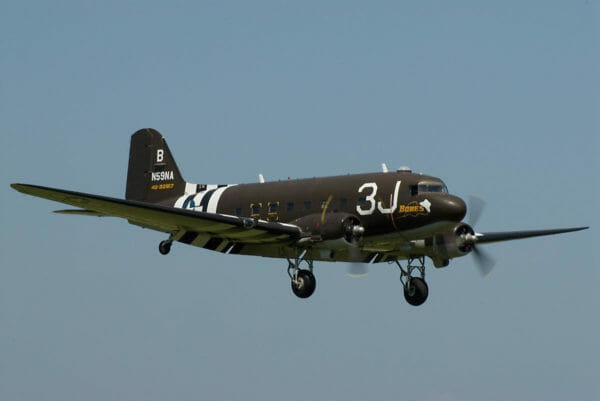
Shown below is the aircraft in which I did a DC-3/C-47 type rating, and it has a remarkable history. Flying this legendary aircraft was quite a thrill. After several recent changes in ownership, this aircraft is now based in Europe, is still flying, but is no longer painted in the military colors shown here. (A type rating is an aircraft type-specific FAA credential required to pilot an aircraft with a gross weight above 12,500 lbs. Obtaining this rating requires a pilot to complete a rigorous oral exam and flight test covering all phases of operation, administered by an FAA representative. My flight test included an unanticipated ILS approach to minimums in an unforecasted Spring snow squall – talk about pressure!)
Douglas DC-3/C-47 N59NA
Recently back on the air with an IC-7300 and IC-7610 (the SDR segment of my interests) and have discovered FT8, PSK31, and RTTY; with a newly erected multiband long wire I am having great success with these modes, working more DX in a few hours OTA than in my entire previous amateur radio experience.
Primary TX/RX: IC-7610/IC-7300/A1200S/04AT Other TX/RX: FT-1000D/FT-1000MP/32S-3/30L-1/Pacemaker/Thunderbolt/Valiant II+SSB Adapter/Invader 200/75A-4/75S-3B Antenna: MyAntennas EFHW-8010-HP long wire at 15 ft in horizontal “L” configuration Software: DX Lab Suite, HDSDR, WSJT-X, JTAlert, PSK Reporter, WSPR Other Equipment:TelePost LP-700, Heil PR-40, assorted vintage, and modern test gear Memberships: ARRL, Nashua Area Radio Society (NH), Order of the Johnson Viking
Rick, K8EZB
Radio Amateurs Developing Skills Worldwide
We use cookies to ensure that we give you the best experience on our website. If you continue to use this site we will assume that you are happy with it.