Bouvet lies at 54 degrees, 25 minutes South and 3 degrees, 22 minutes East. It’s the product of a volcanic eruption that last occurred in 4,000 B.C. Bouvet is 97% ice-covered, and with surrounding rocks and small islands, has an area of 19 square miles, with 18.4 miles of coastline. Its location, ice, rock cliffs, high seas, harsh climate and surrounding pack ice and icebergs isolate it from human presence. Jean-Baptiste Charles Bouvet de Lozier first saw the island in 1739. The island was not seen again until 1808. There was a disputed landing by Benjamin Morrell. But, the first documented landing was by the Norvegia expedition in 1927, which named the island Bouvetoya, and claimed it for Norway. More on the Bouvet Island DXpedition…
Source: The Bouvet DXpedition 2018
The Bouvet Island DXpedition will give us a chance a very rare one! Please consider supporting if you can.
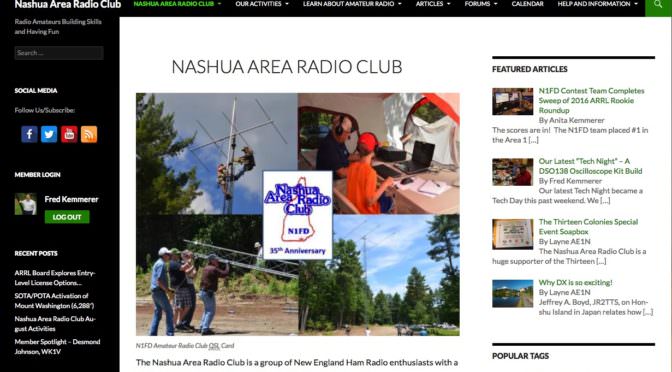
Ever wonder what goes into building and operating a modern website like n1fd.org? I thought that it might be interesting to share how we approached the design and operation of our club website, n1fd.org. A better understanding of how n1fd.org works will help you to get the most out of using it.
The Basics
The basics of how n1fd.org works are pretty simple. The video that follows tells this part of our story well.
We’re not going to get into the details of HTML, servers or DNS. These systems all work behind these scenes to make n1fd.org and other websites work.
Most modern websites are about delivering a content-centric user experience. Such sites are media rich and include graphic and video content, are very responsive and are easy to use. Also, continuously updated content is the hallmark of high quality, modern websites. The combination of these capabilities is referred to as a Content Management System or CMS.
We choose WordPress as the basis for n1fd.org because we wanted to create a modern website which made it easy for all of our club members to create and share media rich content about Amateur Radio. WordPress is a feature rich, open-source based system which is easily extended to do this and much more. WordPress is easily made secure, responsive, and it produces a great looking website.
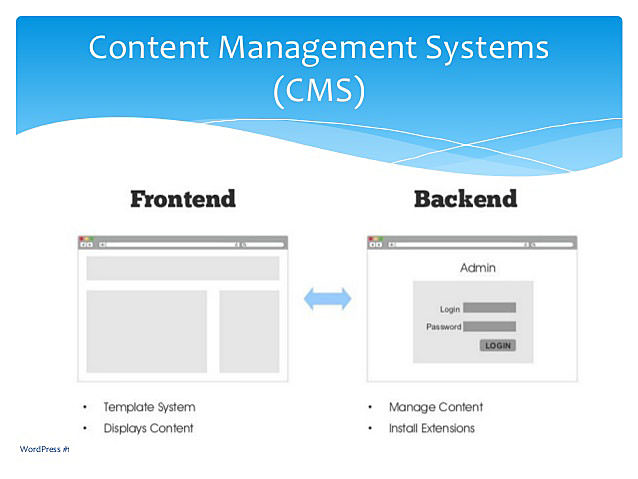
Most modern websites have two basic parts – a Frontend and a Backend. Most of us spend our time using with the Frontend to view content on a website.
CMS-Based Website Elements
The website’s administrators and the folks who create the content for the website use the Backend. If you have written an article on our Blog for our newsletter, you have already used n1fd.org’s Backend to create it!
Where Are The Page and Post Files?
This might be the first question you would ask if you have worked with a previous generation web server. The answer is, well, there aren’t any… WordPress generates pages on the fly as we click on links and other interactive elements on n1fd.org.
Basic WordPress Architecture
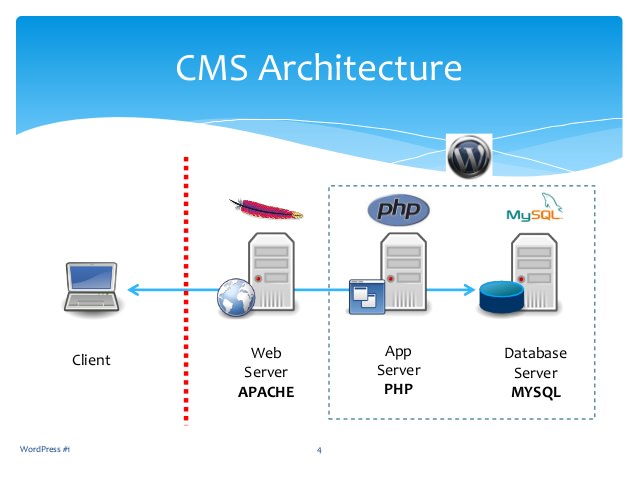
All WordPress websites including n1fd.org have three basic components that work together to generate the HTML pages that we view in our browser –
An Apache Web Server – orchestrates the steps to create and deliver web pages to our browser (client)
A PHP Applications Server – runs PHP scripts that generate the HTML and other dynamic web page elements
A MySQL Database Server – stores image and video metadata, text, configuration data, and user specific information. MySQL data controls the generation of the pages which we view in our browsers.
All of this seems kind of complicated doesn’t it? Fortunately, WordPress takes care of all of this technical stuff behind the scenes. All we need to do is work with the Backend of n1fd.org to create and deliver our content.
Extending WordPress Functionality
The PHP script and database approach that WordPress takes makes it very easy to extend to include new functionality.
WordPress Plugins Extend Base Functionality
Plugins provided by WordPress developers extend WordPress’s basic functionality. WordPress’s plugin architecture has spawned thousands of great plugins to do just about anything that you can imagine. More on WordPress plugins and themes in a future article in this series.
Website Look and Feel Through Themes
Did you know that WordPress powers over 43% of all websites on the Internet? This is a pretty amazing statistic when you stop to think about it.
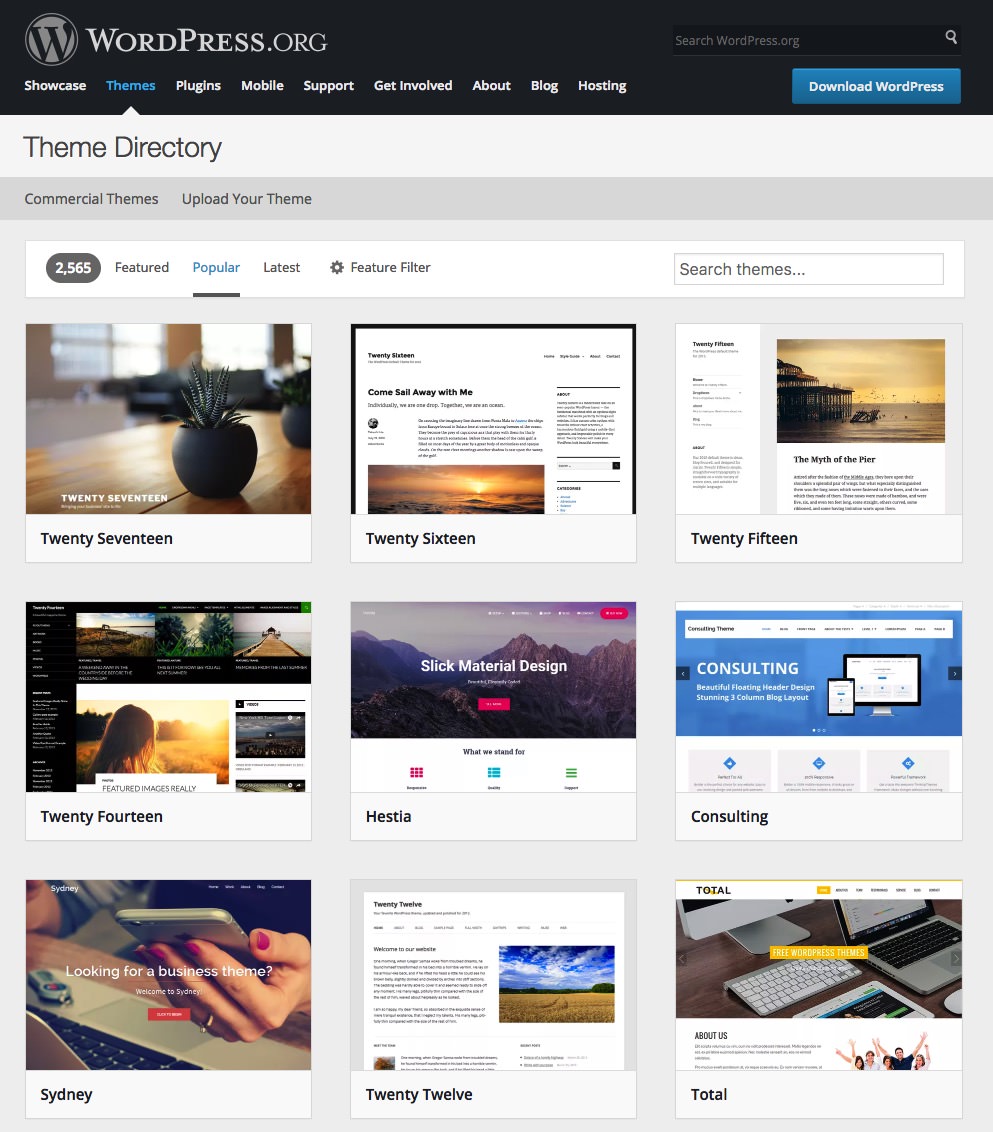
Themes on WordPress.org
So how can this be? Wouldn’t many of the sites on the Internet look similar if this were true? The final basic piece of every WordPress website is a Theme. Themes control the basic layout, look and feel of a WordPress website. There are literally thousands of Themes to choose from. A good WordPress theme will automatically adapt your content to work on mobile devices, TVs, and other devices, reformatting your content and adjusting for alternative input devices as needed. You can literally change the look and basic function of a WordPress website by simply changing the Theme used.
What Do We Mean By Dynamic Content?
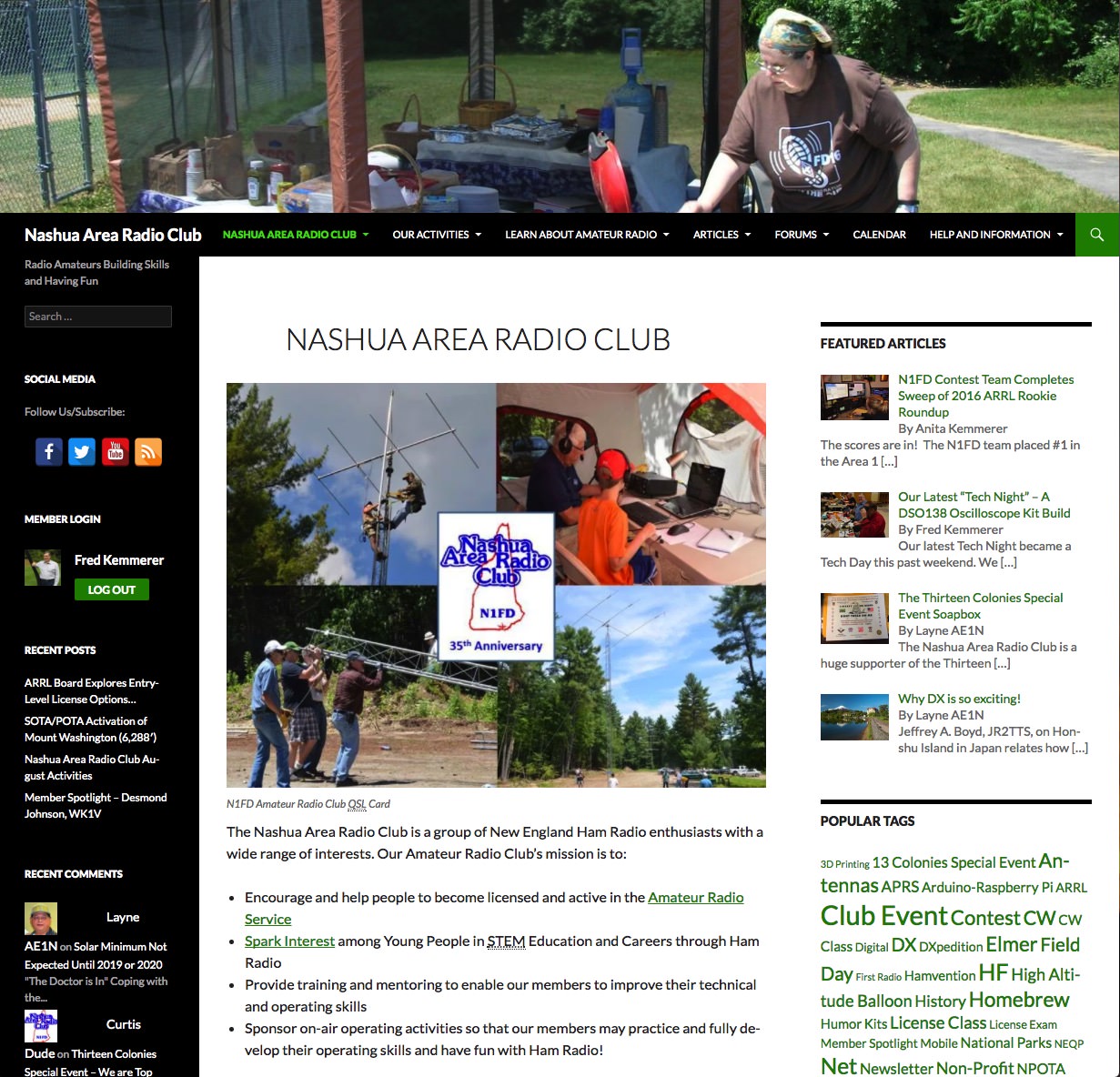
One of the coolest things about how n1fd.org works is the constantly changing content on each page. Header images, lists of articles, comments and forum posts, and many other things change constantly as we move from page to page.
Homepage on n1fd.org
It would be impossible to do this without WordPress’s use of applications server, database, and PHP scripts. There are literally thousands of lines of PHP code that are executed each time some visits n1fd.org!
We use the CMS capabilities of WordPress to allow everyone in our club to create new content (Articles, Forum Posts, Comments, Image Collections, Videos, …) and WordPress uses all of this constantly updated content to create a fresh experience for each of us each time we visit n1fd.org.
That’s it for this article in the How N1FD.ORG Works series. Next up, we’ll look at how we built n1fd.org’s basic look and functionality.
Looks like the ARRL Board is headed in the right direction on Amateur Radio License changes to make Amateur Radio more accessible to new people and you folks.
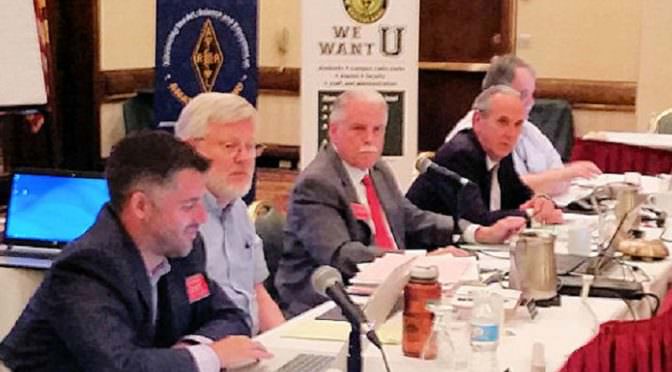
Meeting July 21-22 in Farmington, Connecticut, the ARRL Board of Directors took steps to chart a firmer future for Amateur Radio by enhancing the value of the entry-level license and by providing ongoing support for new licensees. ARRL President Rick Roderick, K5UR, chaired the second regular meeting of 2017.
“The general goal here is to have an entry-level license that offers a way for a newcomer to experience multiple facets of Amateur Radio,” the committee’s report said, “encouraging them to get on the air, meet other licensees, and engage in a lifetime of learning while using Amateur Radio.”ARRL New England Division Director Tom Frenaye, K1KI, presented the report of the Ad Hoc Entry-Level License Committee. He said the committee’s initial, informal survey attracted nearly 7,900 responses. A second random survey drew another 375 responses. “A clear majority favored a revision to the Technician rather than a new entry-level license,” the committee’s report said, noting that this would require no change to the Technician examination, which already covers more material than necessary for an entry-level examination.
“This choice requires the simplest revision to FCC rules,” the committee report said. The committee suggested expanded digital access on 80, 40, and 15 meters, where Technicians already have CW access, as well as the addition of Technician phone privileges on those bands. Frenaye pointed out that while the Amateur Radio population is growing, the annual rate of growth has stagnated at about 1%. “There is a general consensus…that something needs to happen,'” the committee’s report said, noting a generally favorable attitude toward attracting newcomers.
Later in the meeting, the Board charged the ARRL Executive Committee with developing a plan to implement the ad hoc committee’s recommendation to make the current Technician class license more attractive and useful by expanding its operating privileges on HF to include phone and digital modes. The Board asked the Ad Hoc Entry-Level License Committee to further research and develop the details of a second recommendation to improve successful outreach to prospective radio amateurs and help them through the licensing process.
We use cookies to ensure that we give you the best experience on our website. If you continue to use this site we will assume that you are happy with it.