Category Archives: Featured

This category is for featured articles that we want to include in the sidebars and other areas on our website.

Buddipole 15m 2-element Yagi with 8-foot boom

There was a query after the September newsletter was published regarding the antenna pictured in my 100 Pound DXpedition article. Here are the details.

15m 2-Element Buddipole Yagi

The standard Buddipole Deluxe kit can be augmented to produce a very effective two-element 15 meter Yagi. This antenna was used on St. Thomas, USVI, during the 2010 CQ WPX Phone contest by NE1RD to generate nearly 800 QSOs using only 5 watts (QRP). This note provides assembly instructions for this antenna.

Necessary Components

The components necessary to construct this antenna are:

  • 1x ~ Buddipole Yagi converter kit
  • 8x ~ 22” Antenna accessory arms
    • 2x arms for the driven element
    • 2x arms for the reflector element
    • 4x arms for the antenna boom
  • 2x ~ 11” Antenna accessory arms
  • 4x ~ 9.5 fool long Buddipole whips
  • Buddipole Deluxe System
    • Rotating arm kit (RAK) knobs with nylon washers
      • One knob holds the reflector to the end of the boom
      • The other knob holds the center IT adapter to the mast
    • Buddipole VersaTee
    • Coax feed-line with banana plugs
    • Velcro strap (and additional strapping to secure the feed line to the boom)
    • 8-foot mast
    • Tripod
    • Guying system or very heavy weight on the bottom of the tripod to prevent tipping

Antenna Design

The basic design of the antenna is illustrated in Figure 1.

Figure 1. Buddipole 15m 2-el Yagi

Construction Details

  1. Begin by constructing the boom. Locate one of the IT adapters that came with the Buddipole Yagi kit. Screw a 22” arm into each side of the IT adapter. Add a second 22” arm to each side to produce a boom nearly 8-feet in length.
  2. Construct the reflector by locating the second IT adapter. Screw a 22” inch arm into each side of the IT adapter. Attach an 11” arm to each side of this assembly. There should be approximately 34” of arms on each side of the IT adapter. Locate two 9.5’ Buddipole long whips and, with the whips collapsed, attach a whip to each side of the reflector assembly.
  3. Construct the driven element by locating the threaded 3/8” x 24 threaded rod. Screw this rod into the top of the VersaTee. Attach the Yagi collar to one end of the boom. Attach the VersaTee to the boom and mate with the Yagi collar. Be sure to have the VersaTee in the same plane as the boom’s IT adapter so that the elements will be horizontal with respect to the ground when the antenna is mounted. Attach 22” arms to each side of the VersaTee. Locate two 9.5’ Buddipole whips and, with the whips collapsed, attach the whips to the ends of those arms.
  4. Attach the reflector to the boom by first fixing the second Yagi collar on to the other end of the boom. Then attach the reflector, ensuring it is properly aligned with respect to the boom’s IT adapter, using one of the large RAK knobs.
  5. Attach the feed line to the VersaTee with black and red wires going to the corresponding colored banana plug mounts on the VersaTee. Secure with Velcro straps. (Additional straps, or other means of routing the feed line back to the center IT adapter may be necessary).
  6. Set up the tripod and mast as you would for a standard Buddipole deployment. Guy as necessary, or weigh down the tripod with a heavy rock or other weight.
  7. Locate the mast collar from the Buddipole Yagi kit and attach it to the top of the mast. Use the second RAK knob to secure the antenna to the mast.

Tuning The Antenna

The lengths of the elements are such that the antenna can be tuned easily. Extend each whip to full length, then retract the outer-most section 6 or 7 inches. Make small adjustments to the reflector to tune. The author found that even guesses (no rulers) for the element lengths were good enough for creating a good match.

SWR and 2:1 Bandwidth

A properly tuned antenna will provide a good match across the band. The two plots below are from the author’s installation on St. Thomas in March of 2010 (Figures 2 and 3).

Figure 2. 15m Yagi SWR plot

Figure 3. 15m Yagi Smith Chart plot

The small green line along the real axis between 50 and 75 Ohms is the plot for the antenna. Pure resistive load, no reactance, resonant.

Results From KP2/NE1RD Deployment

The author made 977 contacts on this antenna including 808 in the CQ WPX SSB contest (794  unique stations after duplicates were removed). He worked 48 states (missing ND and WY), and 58 DXCC entities in 17 zones in just a few days of operation. All contest contacts were made QRP (5 watts)!

Scott, NE1RD
Training Resources for Internet Subscribers and Members!

We’d like to welcome our Internet Subscribers to the Nashua Area Radio Society:

    • Bill, KM6BYD – Santa Rosa, CA
    • Stephen, KH6VK – Kailua Kona, HI
    • Bill, K8TE – Rio Rancho, NM
    • Gary, N1RNJ – Williamstown, VT
    • William, W3WTD – Easton, MD
    • Mark, N5CBF – Benbrook, TX
    • Gary, KD2PYB – Binghamton, NY
    • Susan, AI4VV – Huntsville, AL
    • Bill, KD8WMJ – North Kingstown, RI
    • Tatiana, KM6UVK – San Francisco, CA
    • Maximillian, KM6VDK – San Francisco, CA
    • Bryce, N4ZJW – Darien, GA
    • ​Joel, W6JKW – Crescent City, CA
    • Mark, W8EWH – Novi, MI
    • James, K3YMI – Columbia, MD
    • Bill, WD9GIU – Peru, IN
    • David, KJ7AKG – Puyallup, WA
    • Joe, K1VDZ – Cheshire, CT
    • Kevin, W9KEG – Peru, IN
    • Samuel, KG5FP – Georgetown, TX
    • Mike, KI8R – Lancaster, OH
    • Daniel, KA1BNO – West Warwick, RI
    • Tim, K5TGS – Roanoke, TX
    • Dennis, KL7HRO, Two Rivers, AK
    • Keith, KI7KEH, Clinton, UT
    • Paul, N1HOB, Newalla, OK
    • Chris, KC3QFN, Dover, DE
    • Barb, KD2UVG, Queens, NY
    • Jim, KN4UJW, Fernandina Beach, FL
    • Vincent, KD2TMJ, Sandyston, NJ
    • Paul, N5SJQ, Everett, WA
    • Joe, W2BCC, Cornwall, NH
    • Mark KL3MR, Anchorage, AK
    • John, KC3QHW, Swoyersville, PA
    • Walter, KB0URZ, Washington, DC
    • Chuck, KB3JIN, Newtown, PA
    • Robert, KN6CPT, San Diego, CA

Thank you for supporting our work to create materials to assist Hams in building their skills and learning new things. We hope that you are enjoying the Amateur Radio learning materials here on our website.

We’d also like to welcome a new partner club, the Barry Amateur Radio Association in Barry County, Michigan. BARA is partnering with us to use our training resources at their meetings.

I wanted to take a moment to highlight the material that is available to you, as an Internet Subscriber, here on n1fd.org. Don’t forget to log in to our website before trying to access these training resources.

Tech Night Training Materials

Scott, NE1RD at Tech Night

Our Tech Night Library contains over 100 hours of high-quality training materials on a variety of topics including:

2020 Tech Nights

  • Simple HF Wire Antennas by Fred Kemmerer, AB1OC
  • Mountain Topping and Portable Operations by Jamey Finchum, AC1DC
  • All About Antennas II by Spencer Webb, W2SW.
  • VHF+ Weak Signal Stations Part 1 – Overview and 6 Meters by Fred Kemmerer, AB1OC
  • How To Post on n1fd.org by Fred Kemmerer, AB1OC
  • Field Day From Home by Anita Kemmerer, AB1QB and Fred Kemmerer, AB1OC,  Sterling Eanes, AK1K, Jamey Finchum, AC1DC, and Jon Turner, AC1EV
  • Getting Started with Amateur Satellites (and Progressing to Linear Birds by Fred Kemmerer, AB1OC (a special How-To Session for CWA and Friends)
  • N1MM+ Logger by Anita Kemmerer, AB1QB and Fred Kemmerer, AB1OC
  • Getting Started in EME Communications by Fred Kemmerer, AB1OC
  • 2020 Project Night by NARS Members
  • Getting Started in Contesting by Anita Kemmerer, AB1QB and Fred Kemmerer, AB1OC

2019 Tech Nights

  • All About Winter Field Day 2020 by our Winter Field Day Planning Team
  • Almost Everything You Need to Know About Antenna Fundamentals Part 1 by Spencer Webb, W2SW and Steve Golson, W1SEG
  • Raspberry Pi for Portable Digital Communications by Jamey Finchum, AC1DC
  • HFTA, Feedline Design and Busting Pileups by Fred Kemmerer, AB1OC
  • QSL’ing and Awards by Anita Kemmerer, AB1QB
  • Fox Hunting: Radio Direction Finding for Beginners including a Tape Measure Yagi Build by Jamey Finchum, AC1DC
  • Surface Mount Technology by Hamilton Stewart, K1HMS
  • RF Design with Smith Charts, Building a First HF Station, and Begining with CW – Hamilton Stewart, K1HMS; Anthony Rizzolo, KC1DXL; and Jerry Doty, K1OKD
  • All About Field Day 2019 by our Field Day Planning Team
  • Putting up a Tower by Fred Kemmerer, AB1OC

2018 Tech Nights

  • Operating Your Station Remotely by Fred Kemmerer, AB1OC
  • Transceiver Frequency Measurement and Calibration by George Allison, K1IG.
  • DMR Radios and Programming by Bill Barber, NE1B
  • WSJT-X: FT8, WSPR, MSK144 and More by Fred Kemmerer, AB1OC
  • Getting Started with Raspberry Pi Computers by Anita Kemmerer, AB1QB, Jamey Finchum, AC1DC,  Brian McCaffrey, W1BP, Fred Kemmerer, AB1OC, and Craig Bailey, N1SFT
  • All About Field Day 2018 by our Field Day Planning Team
  • Portable Operating Gear – demonstrations by Nashua Area Radio Society Members
  • K1EL Kits by Steve Elliott, K1EL
  • Antenna Modeling I by Scott Andersen, NE1RD.
  • Building and Operating a Mobile HF Station by Fred Kemmerer, AB1OC

2017 Tech Nights

  • High-Altitude Balloons: Amateur Radio at the Edge of Space and was presented by our HAB Team.
  • Getting On The Air 2.0 by Fred Kemmerer, AB1OC, and B. Scott Andersen, NE1RD
  • All About n1fd.org – Getting the most from our Website by Fred Kemmerer, AB1OC.
  • Digital Modes: RTTY, PSK, and WSJT-X by Mike Struzik AB1YKAnita Kemmerer AB1QB, and Fred Kemmerer, AB1OC
  • Bonding and Grounding by Jeff Millar, WA1HCO and Fred Kemmerer, AB1OC.
  • All About Field Day 2017  by Dave Merchant, K1DLM, and our Field Day Planning Team.
  • Building and Operating a Satellite Ground Station by Burns Fisher, W2BFJ, and Fred Kemmerer, AB1OC.
  • DXing and QSLing by Anita Kemmerer, AB1QB; Bill Barber, NE1B; Fred Kemmerer, AB1OC; and Dick Powell, WK1J.
  • Weak Signal VHF and UHF Stations by Jeff Millar, WA1HCO and Bill Barber, NE1B.
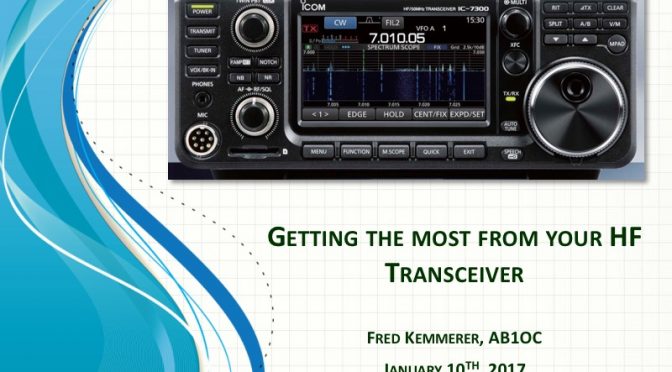
  • Getting the Most from your HF Transceiver and More by Fred Kemmerer, AB1OC, and Dave Michaels, N1RF.

2016 Tech Nights

  • Popular Loggers – Ham Radio Deluxe and DXLab Suite by Dave Merchant, K1DLM, and Fred Kemmerer, AB1OC.
  • Low-Band Antennas by Dennis Marandos, K1LGQ; Hamilton Stewart, K1HMS; Brian McCaffrey, W1BP; and Fred Kemmerer, AB1OC.
  • RF Simulation and Matching by Jeff Millar, WA1HCO
  • Directional Antennas by Fred Kemmerer, AB1OC; Dave Michaels, N1RF; Brian Smigielski, AB1ZO; and Greg Fuller, W1TEN
  • All About Field Day 2016  by our Field Day Planning Team.
  • Surface Mount Soldering and Desoldering, a Hands-On Presentation by Jeff Millar, WA1HCO
  • Building Your First Station and Getting On The Air by Fred Kemmerer, AB1OC, and Dave Michaels N1RF
  • Software-Defined Radios by Fred Kemmerer, AB1OC and Skip Youngberg, K1NKR
  • Advanced Repeaters (DMR, EchoLink, DMR, and D-STAR) by Anita Kemmerer; AB1QB, Fred Kemmerer, AB1OC; and Bill Barber, NE1B
  • Antenna Modeling with EZNEC by Fred Kemmerer, AB1OC

Sample Tech Night Video – Putting Up A Tower

Each Tech Night session is recorded and edited in HD video to produce a quality learning experience. The slide presentations that are used as part of our Tech Night sessions are also stored in online archives for your reference.

Online Q&A Forums

Nashua Area Radio SocieryNember Forums

As Internet Subscribers, you also have posting access to our most popular Forums to ask questions and receive advice from other Nashua Area Radio Society members. These forums include:

What’s Coming Next?

We have a great lineup of new Tech Night programs coming. You can see what we are planning on our Tech Night Page. We welcome ideas for new Tech Night programs from our Members, Internet Subscribers, and Partner Clubs. Please email us with your suggestions at [email protected].

Interested In Becoming An Internet Subscriber?

We created our Internet Subscription program so that Hams who live outside of New Hampshire and Massachusetts can share in our growing library of training materials and resources. You can learn more about becoming a Nashua Area Radio Society Internet Subscriber here.

Do You Live in New Hampshire or Massachusetts?

If you are local to us, you can become a Member of the Nashua Area Radio Society! In addition to all of the programs and training resources that are described here, you can also participate in our local events (ex. Field Days) and meetings. You can learn more about becoming a regular member of the Nashua Area Radio Society here.

Interested In Becoming A Partner Club?

The Nashua Area Radio Society’s mission includes helping Amateurs Worldwide to develop their skills and have fun with Amateur Radio. We have invested a great deal of effort in creating high-quality Amateur Radio Training material that can be used on-line. We’ve also begun working with clubs outside of our area to help them to provide world-class training using the content described here.

We also work with partner clubs on ideas and the development of new program projects that have helped us to grow. If your club is interested in partnering with us on training, membership growth, and/or Ham development, please contact us at [email protected].

Anita, AB1QB
Membership Chairperson

Get A Custom Program for Your HT

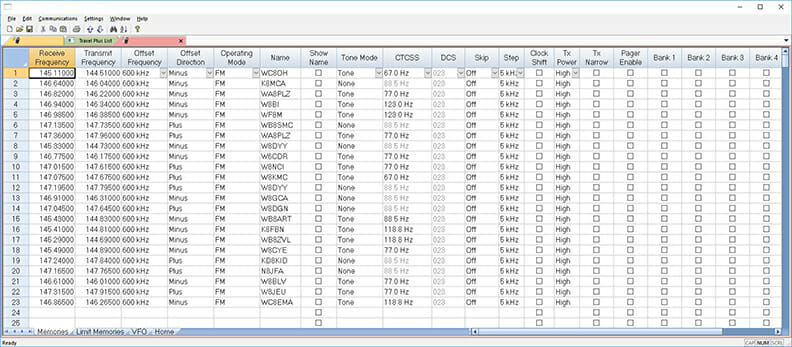
It seems that many Hams struggle a bit to get their HTs programmed with the right set of repeaters and other memory settings. The Nashua Area Radio Society will be offering a custom HT Programming Clinic at HamXposition @ Boxboro 2019 to help hams get their HT’s programmed.

HTs That We Can Program

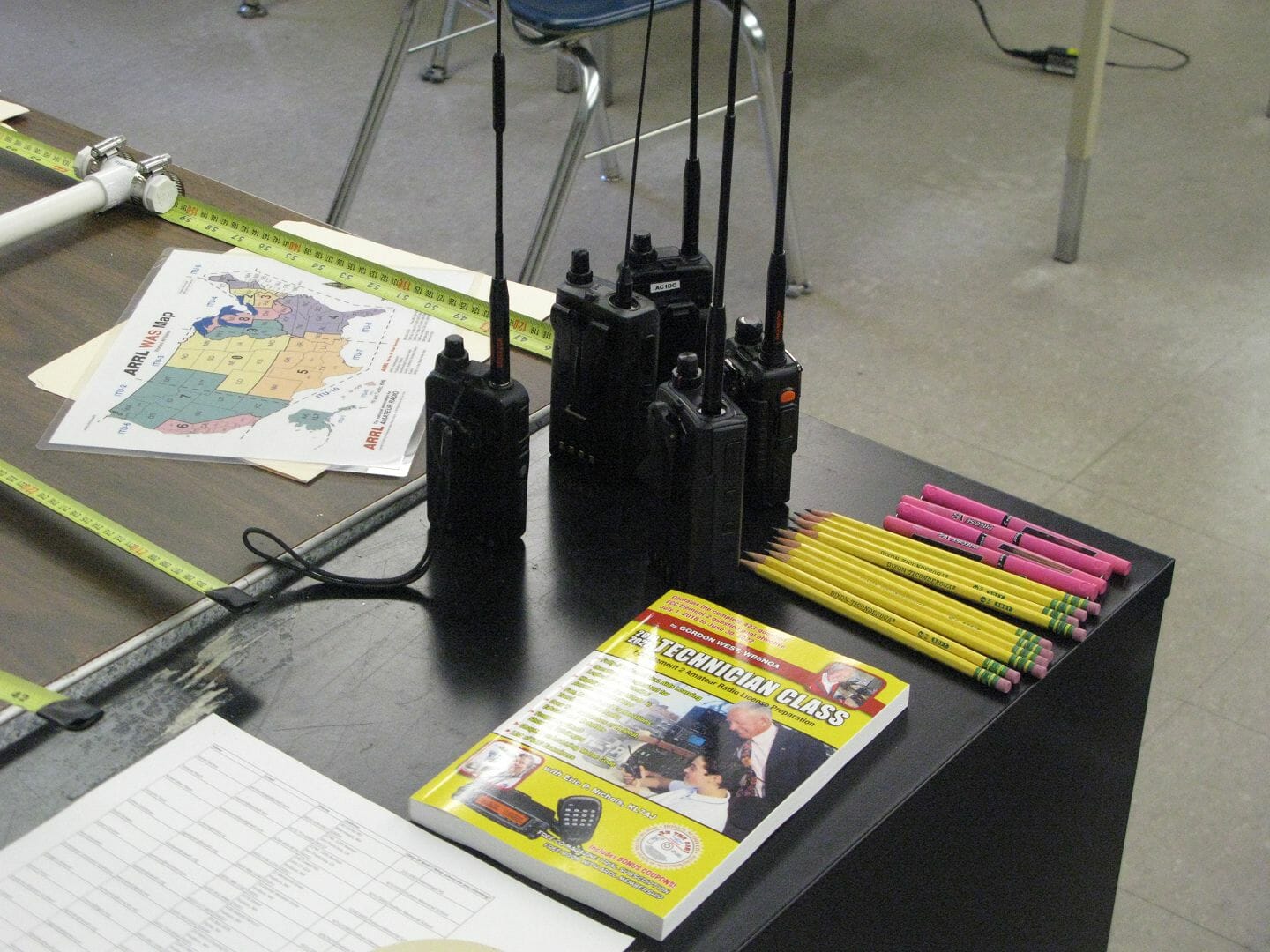
HTs at Tech Class - Amateur Radio Youth Outreach - HT Program
HTs at Tech Class

We will offer custom programming for the following HT models:

Icom HTs

  • ID-31
  • ID-51 (all models)

Kenwood HTs

  • TH-D72
  • TH-D74

Yaesu HTs

  • FT-4X and FT-4V
  • FT60
  • FT65
  • FT70D

BaoFeng HTs

  • UV-5R
  • BF-F8HP

TDXone

  • TD-Q8

How Will It Work?

HT Program
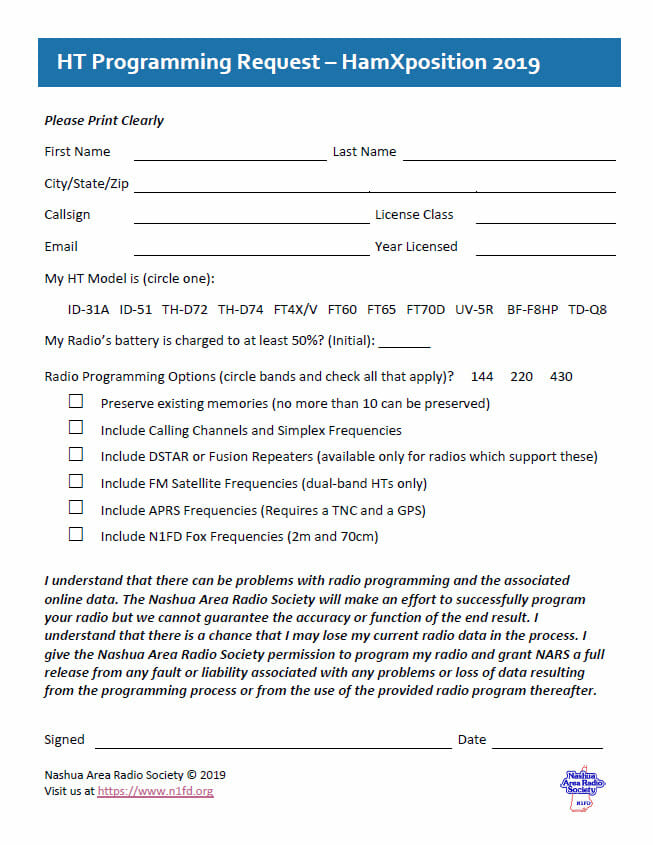
Custom HT Programming Request

The programming process will be with the completion of a request (shown above) that includes some basic information about the radio to be programmed. Each person can select from a list of options for their custom program which includes:

  • Preserving a limited number of existing memories in their radio
  • Calling Channels and Simplex Frequencies
  • Custom Repeater List for your location including DSTAR and Fusion Repeaters
  • FM Satellites Frequencies with Doppler Correction (AO-85, AO-91, AO-92, SO-50, and PO-101)
  • APRS Frequencies
  • The Nashua Area Radio Society’s Fox Frequencies

The NARS Member who is running the HT Programming Clinic will save a copy of the existing program as a backup and then use an RTSystems programmer to assemble the custom program from a combination of on-line apps and stored program components.

The user’s location is used to generate a custom list of repeaters with a 10-15 mile radius of their location. This list can include DSTAR and Fusion capable repeaters if the user’s radio supports these.

HT Program
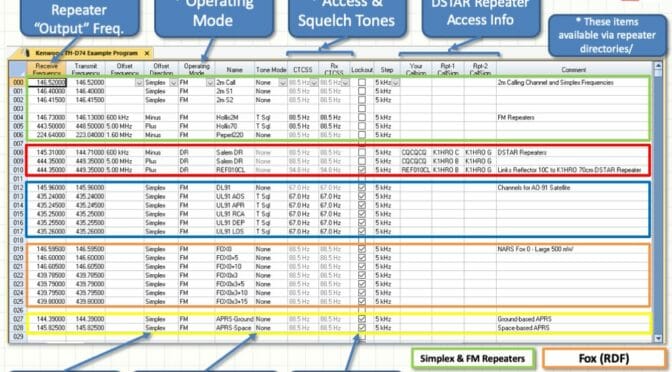
RTSystems Program for Yaesu FT65

The completed custom program will be loaded into the person’s HT and checked out.

We hope that you’ll stop by the NARS Display at HamXpostion @ Boxboro 2019 to get you HT programmed.

Fred, AB1OC

Radio Amateurs Developing Skills Worldwide