Category Archives: Featured

This category is for featured articles that we want to include in the sidebars and other areas on our website.

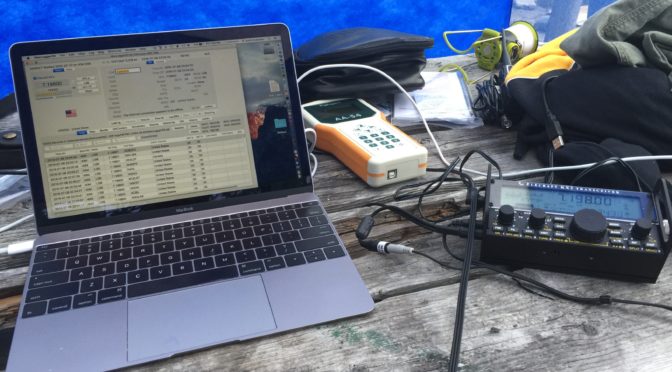
QRP operation from Boston Harbor Islands

The ARRL organized a National Parks on the Air program (NPOTA) in 2016 that made operating portably extra fun. But you don’t need a special event year like this to have a reason to get out and make QSOs. There are other programs that operate continuously that are good draws for these far away places. I made several trips to Boston Harbor Islands in 2016 to celebrate NPOTA, and help operators put some QSOs in the log for other awards programs as well. Here are a couple of programs that will continue long after NPOTA is over:

The British program Islands on the Air (www.rsgbiota.org) gives participants an opportunity to collect islands much like the ARRL’s DXCC program collects countries (entities). As it turns out, because there is no commercial power (mains) available to the public, the Boston Harbor Islands are somewhat rare (being claimed by only 30.2% of IOTA participants). It is a lot harder to get on the air and be heard when it is only battery and solar power driving things. That makes the challenge even more fun. And, when you are heard, you’ve often got a pileup!

The US Islands Awards Program (www.usislands.org) is similar to the IOTA program, except it accepts islands anywhere in the United States. (The IOTA program only counts islands that are true “sea” islands.) Lovells Island in Boston Harbor has the designation MA042S, and I was lucky enough to be the first to activate it for this program.

These mini-DXpeditions to Boston Harbor Islands begin at home, sorting, selecting, and packing the items needed for a successful activation. For day trips to Georges Island, the largest of the group, and the main destination for the Boston-to-island ferry service, I concentrate on packing just the bare essentials of radio, antenna, coax, rope, and so on.
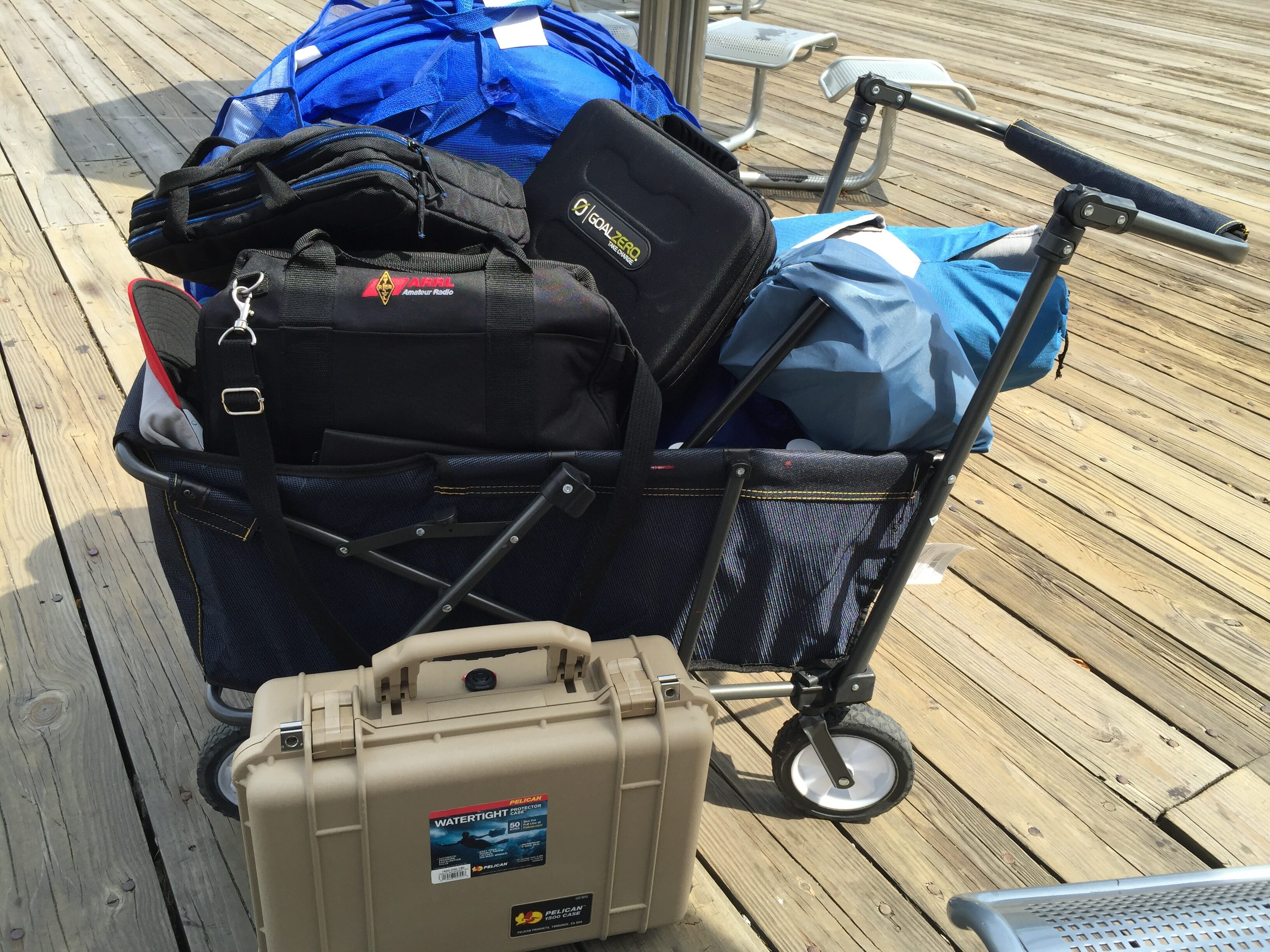
Cart full of gear
Maybe a little more than a 100 pound DXpedition this time. Lovells Island offers campgrounds but no water. You must bring your own. At about 8 pounds per gallon, things get heavy in a hurry.

Georges Island is about an hour long ferry ride from Long Warf in Boston, and it has been built up quite a bit just in the last ten years. It how has a snack bar, a new play area for young children, and hosts many festivals and events during the summer. The boats that once carried only a handful of passengers ten years ago are now often full of families and groups.  Everyone is friendly, and more than once I’ve had help from my fellow voyagers with my gear.

Once off the boat on Georges, I hike quickly to a picnic table near a tree. No trees on this island are very tall, so there are no prospects for running wire dipoles or other wire antennas. Instead, I build a vertical antenna from a mini-Buddipole (www.buddipole.com) kit. I will often lash the shock-cord mast to one of these short trees to hold it up. The wires from my home-brew four-wire radial kit also serve as guys for the setup. Assembly is usually quick (under ten minutes) and a quick check with an antenna analyzer confirms the antenna is resonant.
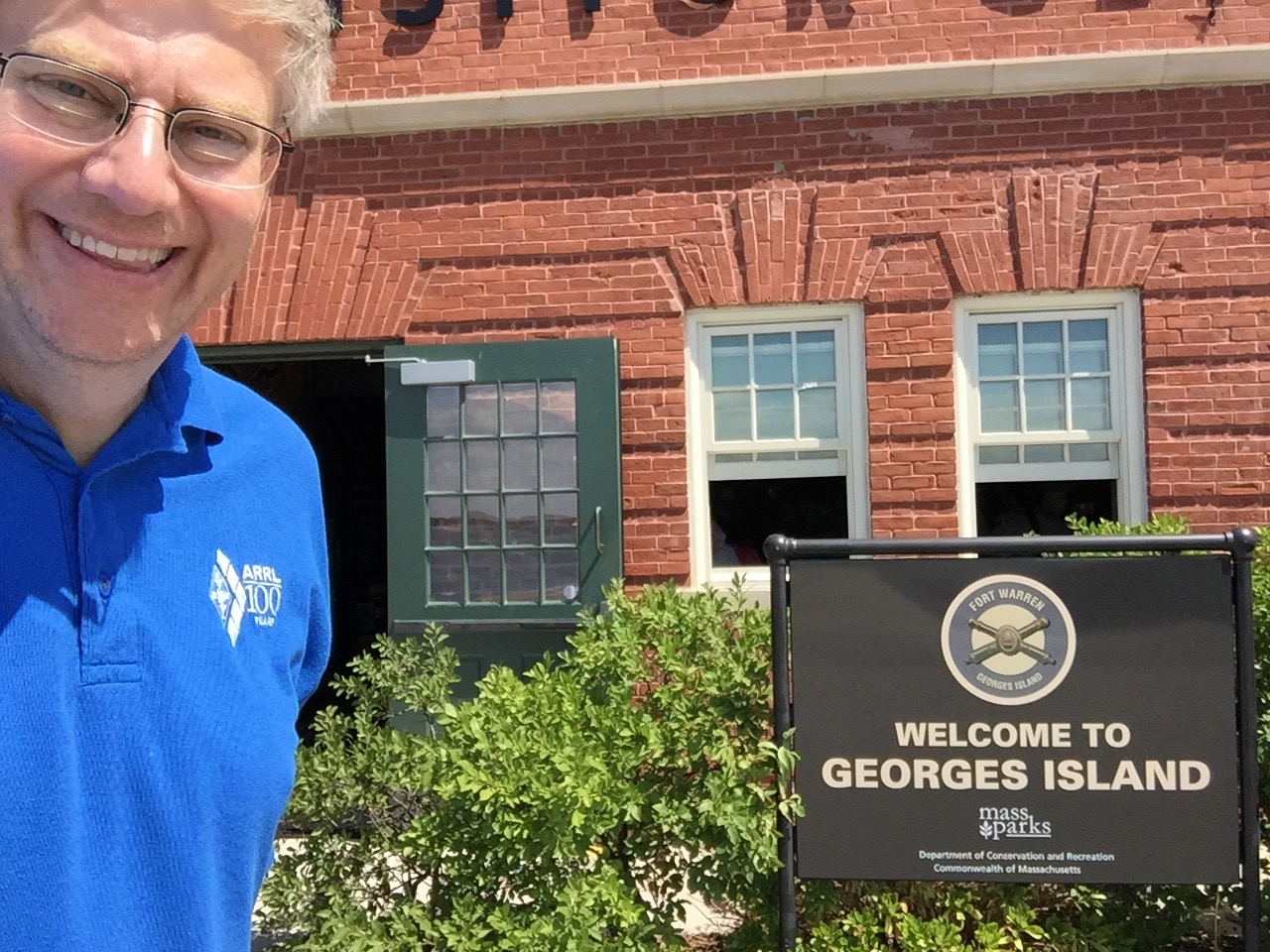
NE1RD in front of sign
Georges Island and Lovells Island are about seven miles out to sea in Boston Harbor. They offer a great day trip, or camping (on Lovells).

In previous years, daytime operations were typically on 20m, 17m, or 15m. Because of changing propagation conditions, in 2016 I only operated almost exclusively on 20m. Selecting an operating frequency can be a challenge when operating QRP. I’ve often been “pushed off” my calling frequency by another operator that likely couldn’t hear me. Oddly enough, I’ve had good luck operating near the top of the 20m band, well into the General segment, which has the additional benefit of increasing the number of people who can call you.

Day trips with only a couple of hours of operation need only a battery, but I find that I bring a solar panel out of habit. With the panel connected, I usually leave with my battery fully charged. Running without the panel would also work, but I’m unwilling to take a chance that my day would be cut short because of power problems.
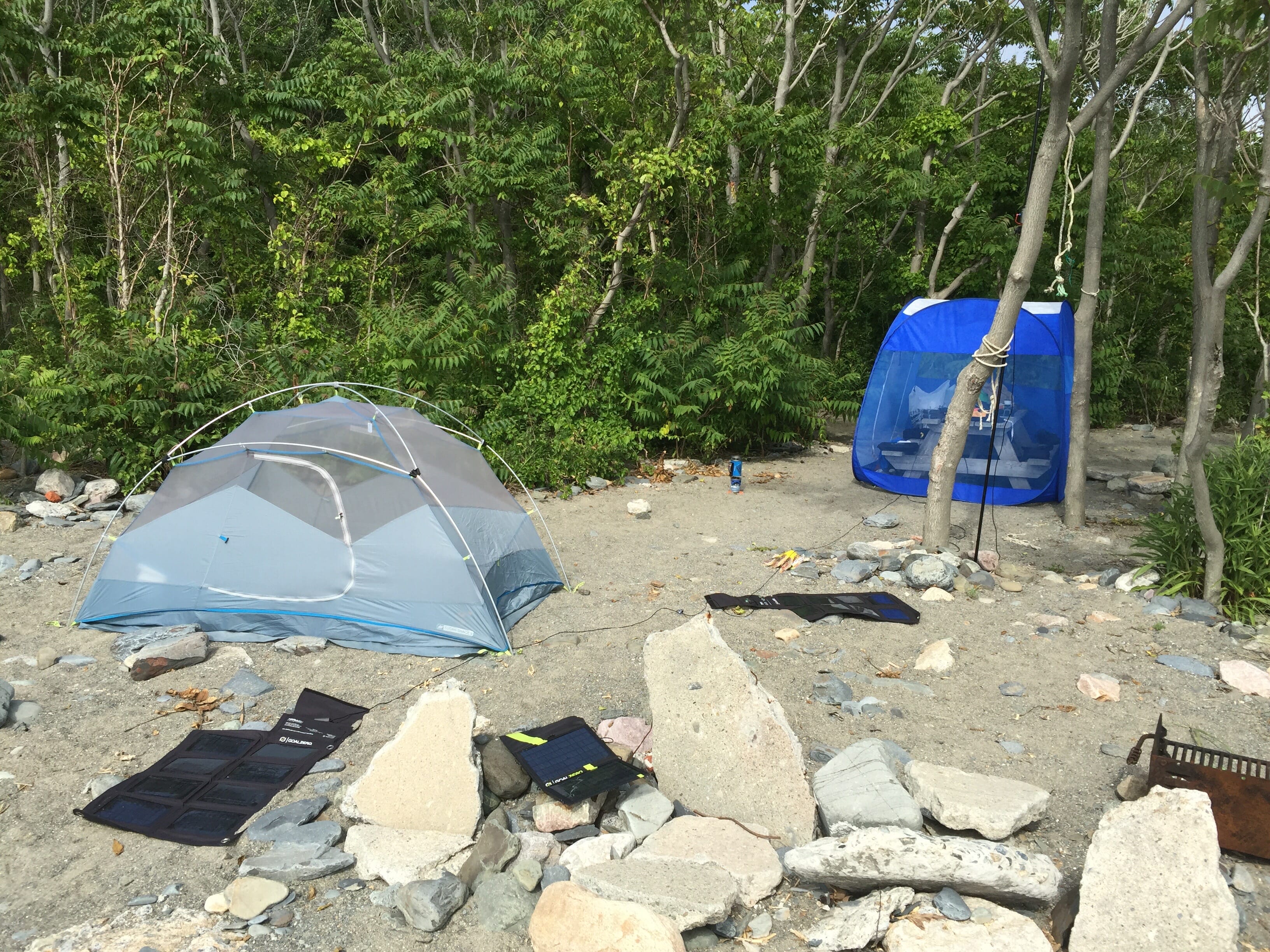
Tents
The operation on Lovells Island includes a pop-up enclosure that fits over a picnic table, and a tent for sleeping. Two 20-Watt and one 13-Watt solar panels are visible in the foreground among the rocks.

Camping trips are more involved. Lovells Island is the only place that both counts for the IOTA program and provides campsites. You need to plan ahead as campsites are allocated on a first-come-first-served basis, and reservations begin in January. I am rarely able to reserve all the dates I would like, and choosing dates seven months in advance means you’ll never know what kind of weather you’ll encounter. A severe thunderstorm over one of these islands is magnificent and terrifying!

Getting to Lovells is also more difficult. The ferry shuttles between Georges Island, a few other large islands, and Boston Harbor’s Long Warf. Connections to Lovells Island are made from Georges, and only occur three times per day. Once that last boat has left, you are stuck on Lovells until the next morning. You better have everything you need! That includes food, water, first aid supplies, power for your phone and radio, and anything else needed for a successful camping trip.
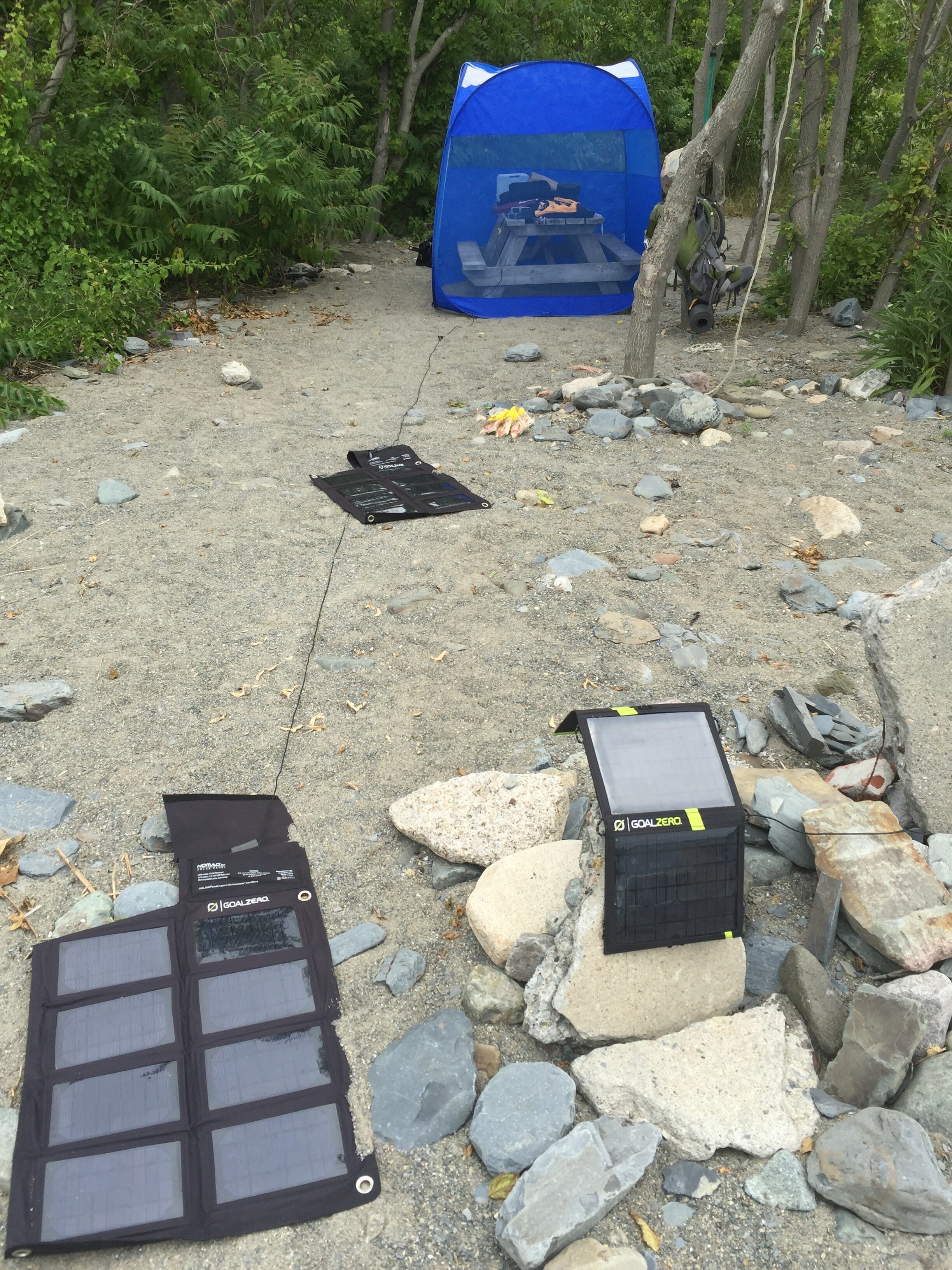
Solar panels
NE1RD Power and Light. Multiday QRP operations depend on a good power source. Two 20-Watt panels are connected in series to the GoalZero Sherpa 50 battery. The small 13-Watt panel on the rocks is recharging my phone.

[huge_it_maps id=”1″]

Lovells Island is covered in trees, many of them tall enough to easily support a wire antenna. That sounds convenient, but how long did it take you to hang your last wire antenna at home? Was it a several hour operation with a couple of friends? Given the short time available during one of these trips, I bring a backup antenna in case the wire antenna cannot be hung successfully (or hung high enough). My tool of choice is a throw weight and line like those used by arborists. Though the lead filled leather bag is heavy, it is compact and effective for getting a rope through a tree. An end-fed half-wave (EFHW) antenna is a good choice for this duty since it only requires one line high in a tree. The remainder of the wire that isn’t hung vertically can slope down to the ground and be tied off.

I’ve had good luck with two EFHW antenna models.  PAR EndFedZ antennas (www.lnrprecision.com) offer a trail-friendly antenna good for 10-20-40m that easily handles QRP power. This packs small and is light.

Intrigued by an advertisement on the ARRL website, I ordered and tried the MyAntennas (www.myantennas.com) EFHW-8010, a multiband antenna good from 80m through 10m that can also handle high power. On my last camping trip, I was very lucky to get my first throw through the tree in a good spot, and this EFHW antenna was up and running in about thirty minutes. It performed very well and will be in my pack on future trips.

Camping on Lovells is primitive. The park service offers chemical toilets, and cleared areas with picnic tables, but nothing else. You must bring your own water. Budget at least a gallon a day, and more if it’s hot. Suddenly, a three-day camping trip can get bulky and heavy! I’ve tried several “beach carts” and may have finally found one that is robust enough to handle the weight of all my gear, and the rough terrain of the island. Remember to bring everything you need to pack out your trash, too. Good campers leave nothing but footprints.
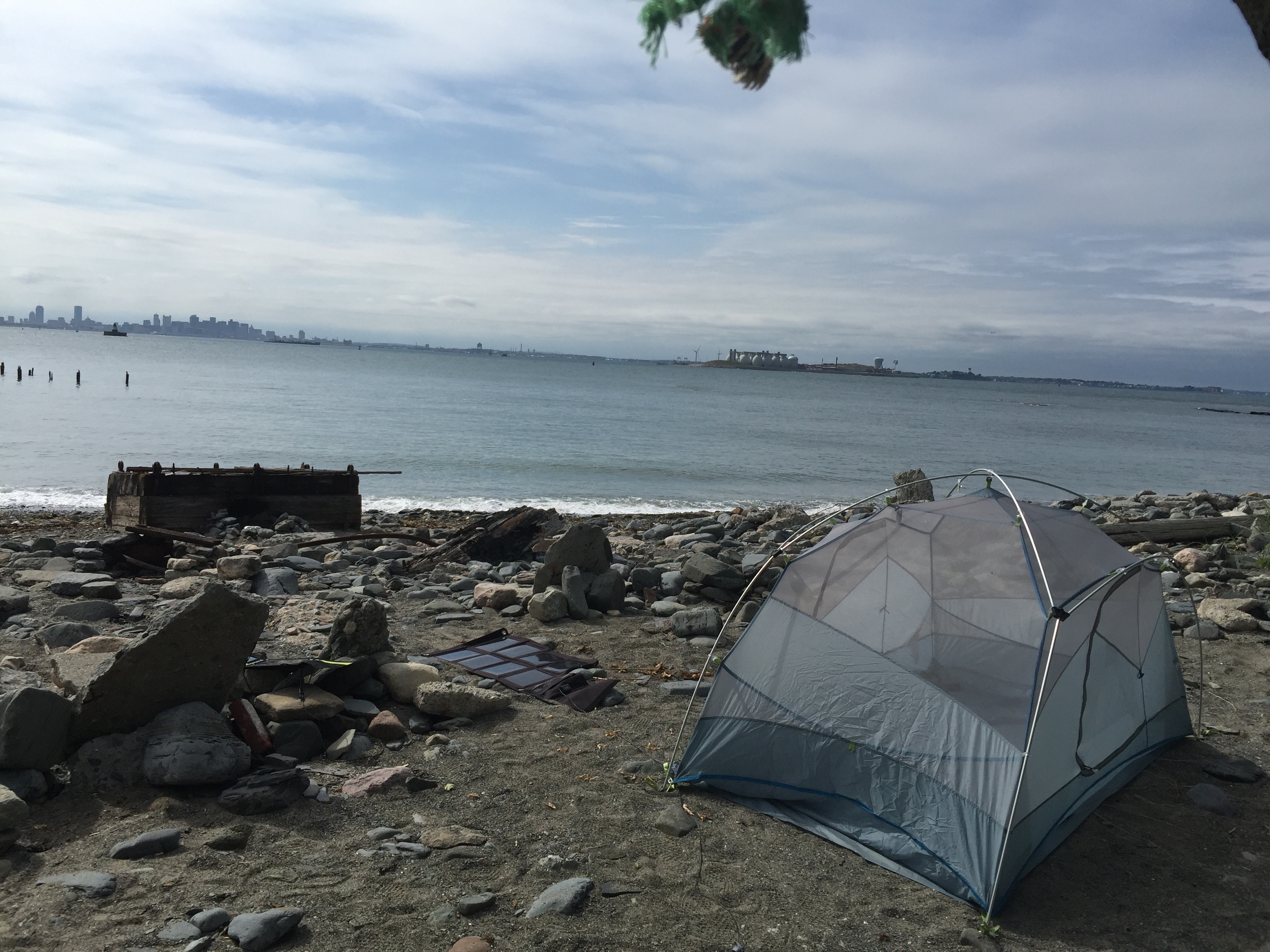
Ocean view
Boston to the left and Logan Airport to the right on the horizon. You can’t beat the view from Lovells Island.

Prior to each trip, I will array everything to be taken on the floor, and I’ll perform an inventory, thinking through each step and each thing that must be accomplished. Forgotten rope or even a forgotten connector might ruin an operation. Once everything is counted, the cart and my large backpack are filled.

Operating begins after camp is assembled, and I’ve had a short rest. These trips often happen in July or August, and it can be hot and sticky on these islands. Beware dehydration and overheating. When operating in a remote area, help may not be just a phone call away. It is important to take care of yourself first.

In three trips out to the islands in 2016, including two camping trips, I made 343 QSOs to 18 DXCC entities and 42 states. I’m going to work on completing my Worked All States award from these islands next year! That said, it isn’t just my awards program that keeps me going. I know that I’ve made it possible for other hams to work these islands for the IOTA program, the US Islands program, and even Worked All States. It is gratifying to hear, “Thanks for the new one!” several times during each trip.
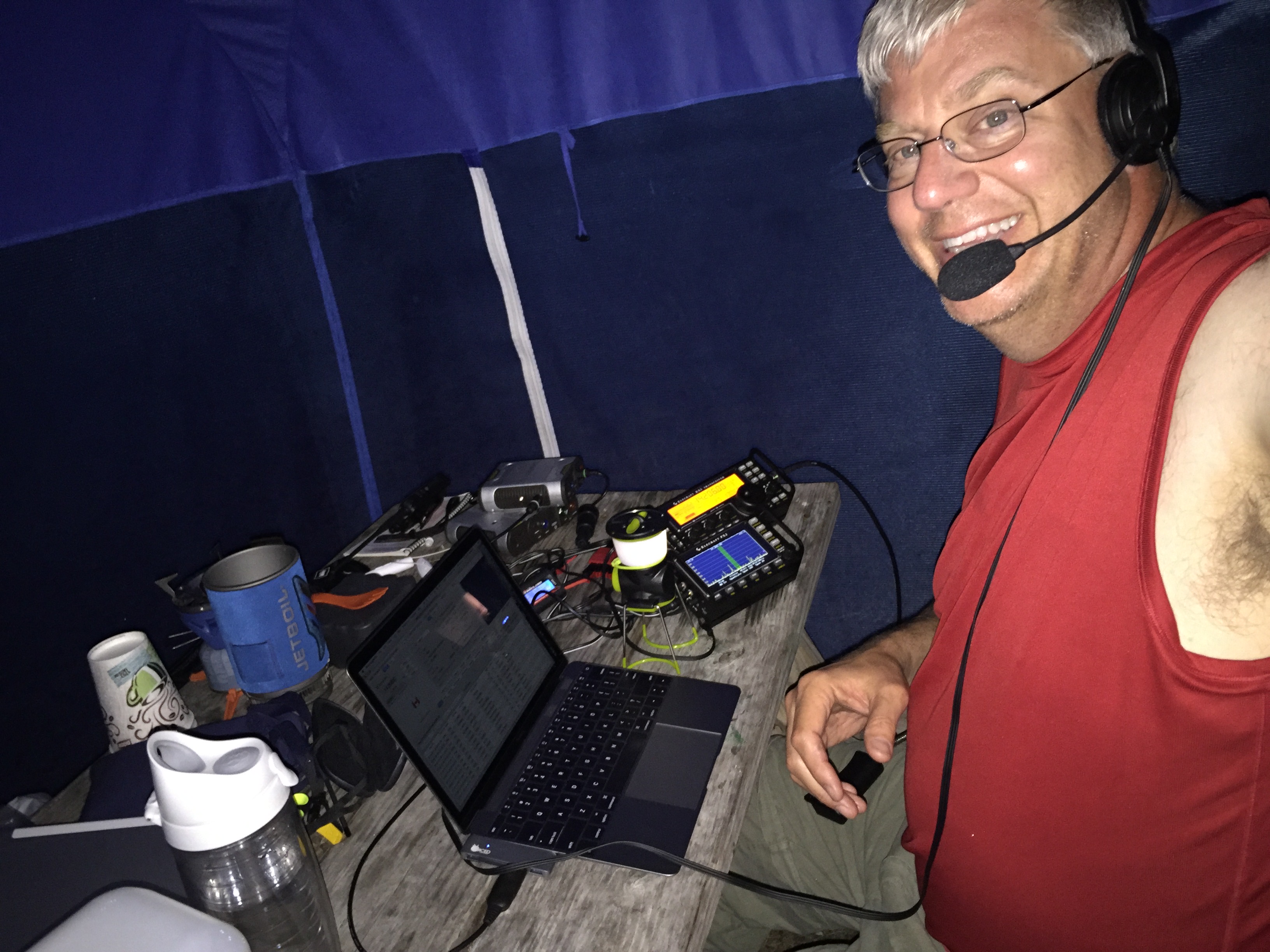
NE1RD operating
Nighttime is a great time to operate. The pop-up enclosure over the picnic table protects me from pests, even with the lights on.

I’m already planning next year’s trips. I operate as NE1RD/1 and have a fine QSL card that I would love to send to anyone I work. While Boston Harbor Islands are not exactly exotic, they are beautiful, and the act of planning and executing these excursions has made me a better DXpeditioner, and I believe a better operator.
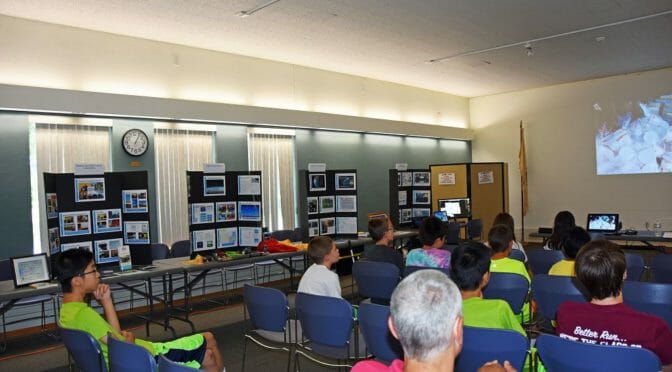
Youth Outreach Event at the Westford Public Library

The folks at the Westford Public Library reached out to us sometime back about hosting an Amateur Radio Youth Outreach day at the library.  This event gave us the opportunity to use the Amateur Radio Youth Outreach materials that we created for NEAR-Fest and to fine-tune them. The event took place in July and included an afternoon of presentations and hands-on activities about Amateur Radio. We had about 15 students and parents attend.

Youth Outreach Event Team

Several Nashua Area Radio Society members helped to set up and deliver the program at the library. A very big thanks to:

for all of their help!!

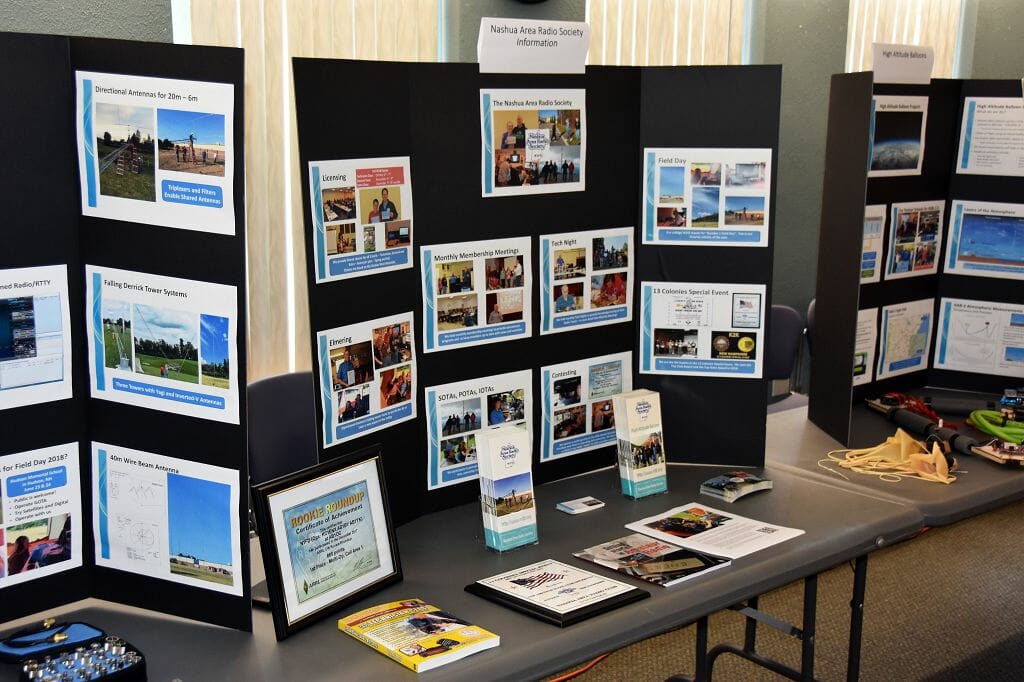
Our Youth Outreach Event Display

Our approach was to simplify and leverage the display that we created for our Youth Outreach at NEAR-Fest. We were able to bring almost all of our displays from NEAR-Fest and simplify them to the point where we could set everything up in about 2 hours. Our displays included the following:

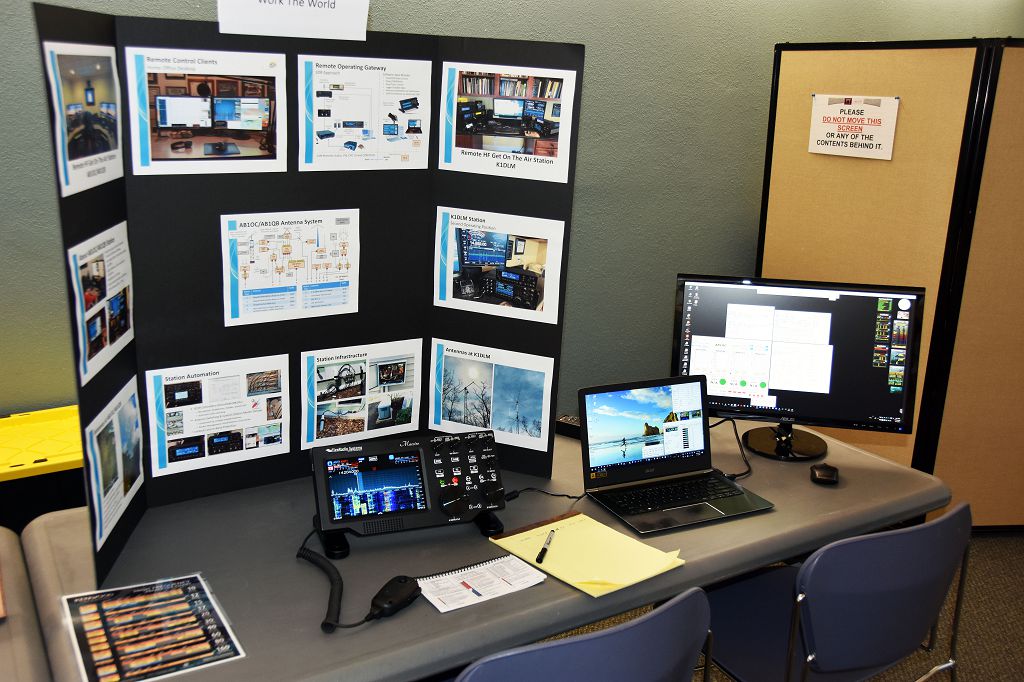
  • A Remotely Operated HF GOTA Station
  • A Satellite Communications Display
  • A Nashua Area Radio Society Activities and Licensing Display
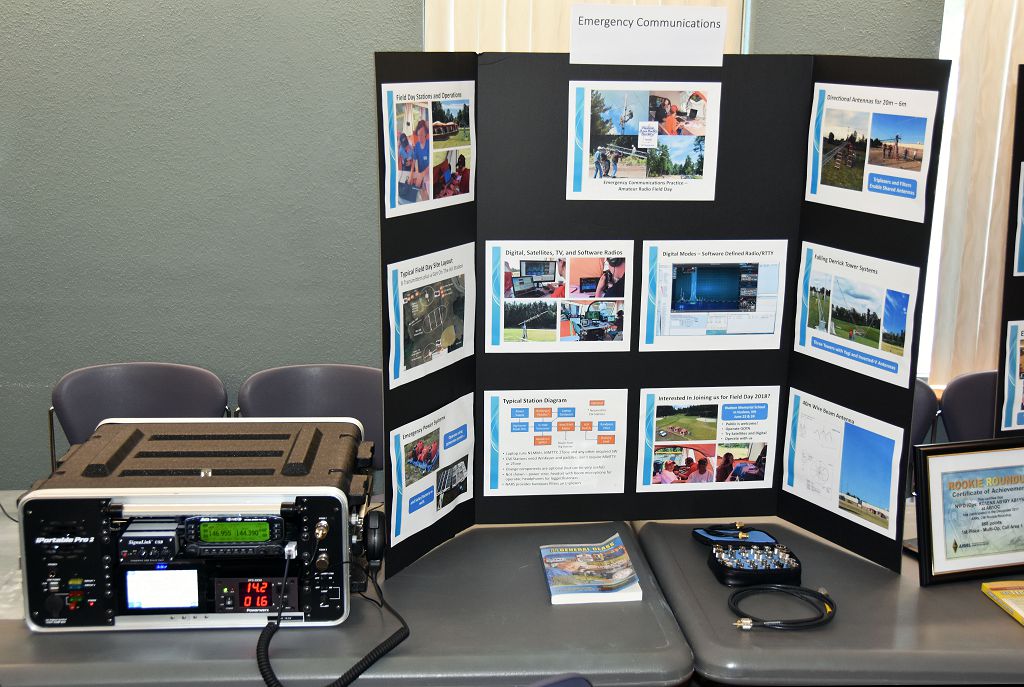
  • An Emergency Communications and Field Day Display
  • A Portable Operating Display and Digital HF Activity
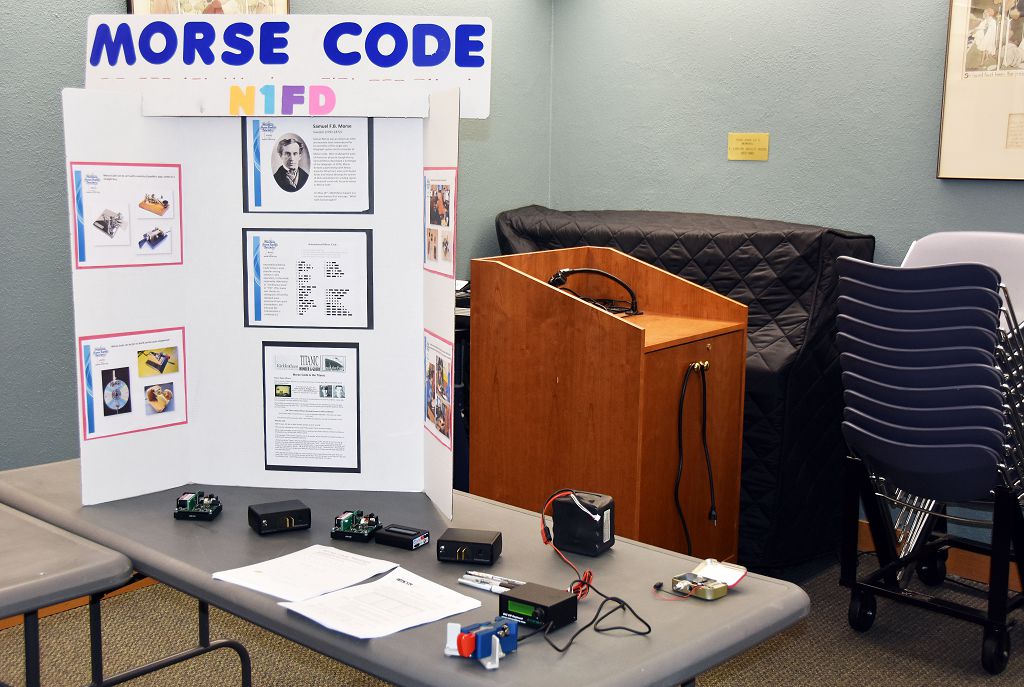
  • A Morse Code Display and Activity
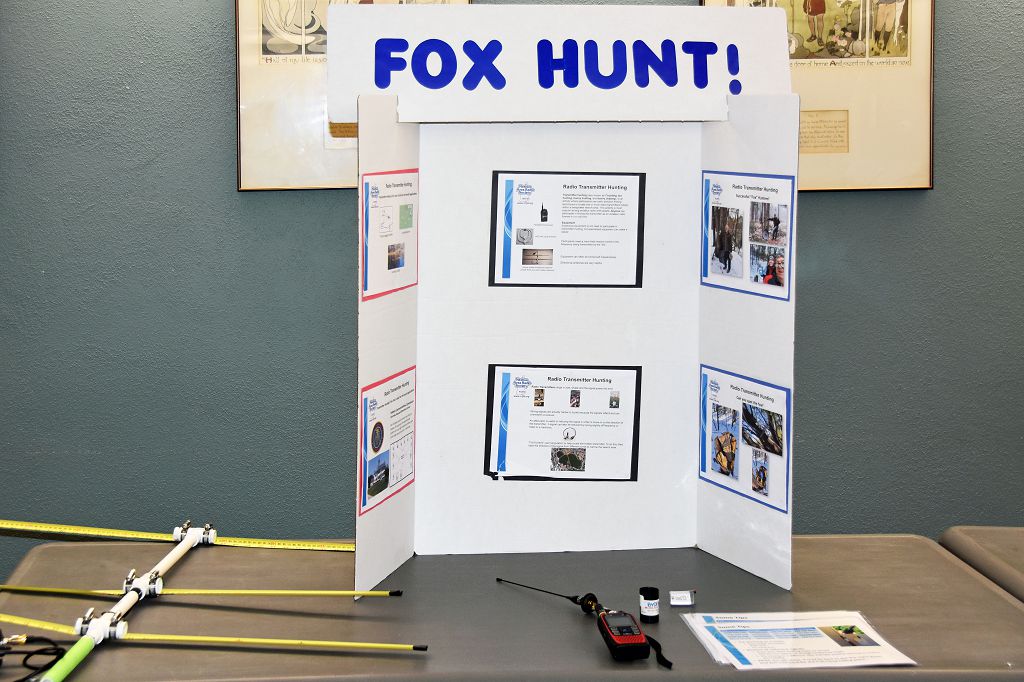
  • A Fox-Hunting Display and Activity

Our program consisted of presentations and videos about each of the displays followed by hands-on activities and a chance to take a closer look.

HF Get On The Air Station at WPL Youth Outreach Day
HF Get On The Air Station

The HF Remote GOTA was popular and provided a chance for folks to talk to Hams in Europe and across the United States. We used a Maestro and the Internet to run the AB1OC/AB1OC station remotely.

High-Altitude Balloon Display at WPL Youth Outreach Day
High-Altitude Balloon Display

Our High-Altitude Balloon Display was a hit. Folks were very interested in the video presentation from our flights and they asked lots of questions about our HAB programs.

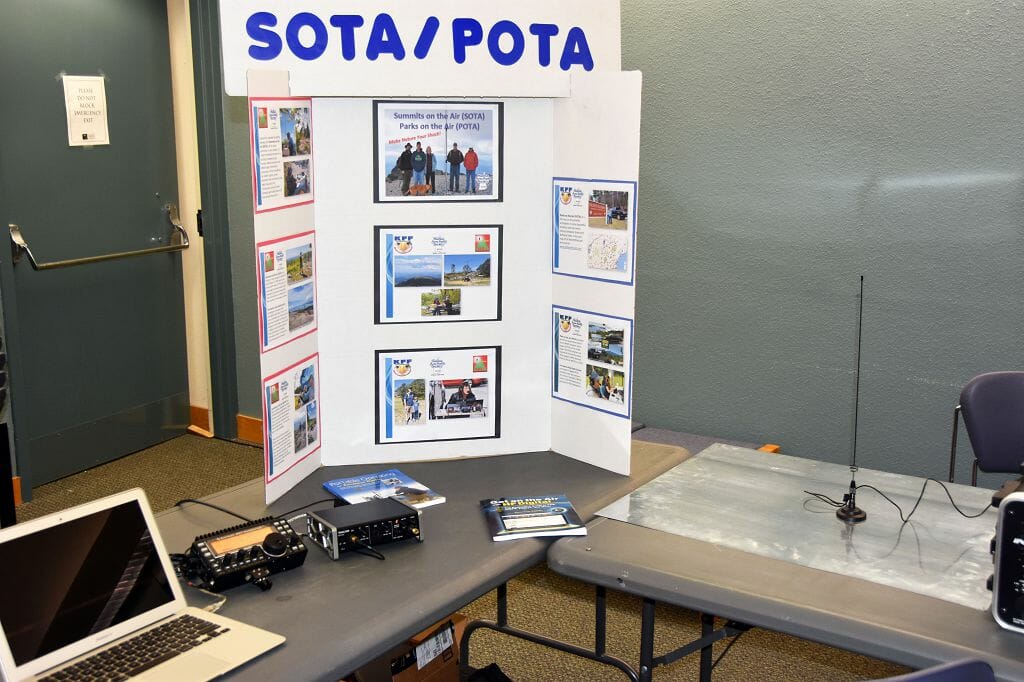
Portable Operating Display

Brian, W1BP brought his Elecraft KX3 Transceiver and Buddipole Antenna and set up an FT8 Digital GOTA Station at the event. Brian’s activity provided a great way for us to explain and demonstrate portable operations.

Emergency Communications and Field Day Display at Youth Outreach Day
Emergency Communications and Field Day Display

Our third GOTA station was part of an Emergency Communications and Field Day display. The GOTA enabled everyone to try to make contacts through local repeaters and to learn about EMCOM.

Morse Code Activity at Youth Outreach Day
Morse Code Activity

Tom, AB1NS hosted our Morse Code activity. We had a variety of keys, practice oscillators, and simple code activities for folks to try.

Fox Hunt Activity at Youth Outreach Day
Fox Hunt Activity

Marie, KC1RMS hosted a Fox Hunt and demonstrated Radio Direction Finding. Members of the group were able to locate the three Foxes that we had hidden on the library grounds.

Nashua Area Radio Society and License Information Display at Youth Outreach Day
Nashua Area Radio Society and License Information Display

Our final display highlighted the many STEM learning and other training activities that the Nashua Area Radio Society provides for young people. Two of the attendees at our youth day decided to join our summer Technician License Class the following week. Maximilian, KM6UVJ, and Tatiana, KM6UVK both earned their Technician licenses at the class – congratulations to both and welcome to NARS!!!

As you can probably tell, our Amateur Radio Youth Outreach event at the Westford Public Library was a success. We are looking forward to offering similar events at other local libraries and Ham Fests later this year.

Fred, AB1OC

My Week at the ARRL Teacher Institute on Wireless Technology

My Week at the ARRL Teacher Institute TI-1 in Newington, Connecticut

Being new to Amateur Radio I had no idea what to expect when I signed up for the ARRL Teacher Institute on Wireless Technology.  I only assumed that my week would be filled with radio communications and how to bring the concepts behind the radio sciences to the classroom.  What I got was a room full of new educator friends, connections were made to names and faces at ARRL, and a week of first class instruction on basic electronics and wireless technologies that I could bring back to my local radio club and students in the classroom.

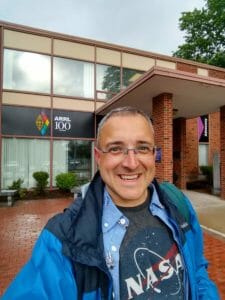
Dan arriving at ARRL Headquarters

From the first morning arrival at the Amateur Radio Relay League (ARRL) Headquarters I was embraced with kind greetings, welcoming faces, and an energy of excitement from the ARRL staff.  Upon entering the conference room at Headquarters where our instruction would occur we were greeted by a pile of resources that we would use over the course of the week.  For a novice in electronics and a newbie in the amateur radio world, the scene was quite overwhelming.

The first morning began with our instructor, Tommy Gober (N5DUX), introducing himself and others at the ARRL.  We were introduced to the two members of the education department Kris Bickell (K1BIC) and Ally Riedel (KM3ALF) who were responsible for putting together the impressive week of professional development.  I learned that of the other ten participants, five were also licensed in Amateur Radio and by the end of the week we would welcome two more participants to the ranks.  According to the Institute this may have been the highest number of participants that were licensed Amateurs in the Institute’s history.

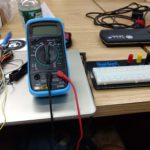
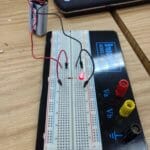
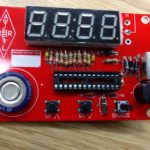
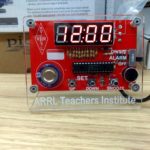
By midway through the first day of the institute we were already delving deep into the educational context for wireless technology, basic electronics, and soldering.  While I had some experience in these areas with my work in Amateur Radio and my experience at Space Camp the summer prior, this was just as exciting as experiencing it for the first time.  We opened our new Breadboard, connecting a circuit filled with wires, resistors, and LEDs, to help us understand the functions of our new Multimeter.  By the end of day one we opened our ARRL designed clock kits to accomplish our first task.  We were tasked with putting together the components of the clock from a kit and soldering the back of each piece.  This was supposed to become homework, but all participants were so excited to be working on this project that we all stayed at ARRL an extra two hours that night to complete our clocks.  The next morning, we were able to put the finishing touches of the base on the clock and plug them in to see that they worked.

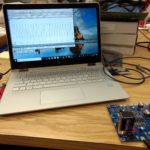
On day two, we opened our new Picoscopes and began to play around with two different circuit boards designed to allow us to see the various waves that occur and how they can be manipulated.  The Picoscopes being digital allowed us to download a program to our laptops quickly for a great interface to our new Oscilloscopes.   Day two also allowed us to take a tour of ARRL headquarters where we met members of the VEC department, walked through publishing, and the QSL bureau.  The tour continued through a museum of radio history and ended in station W1AW.

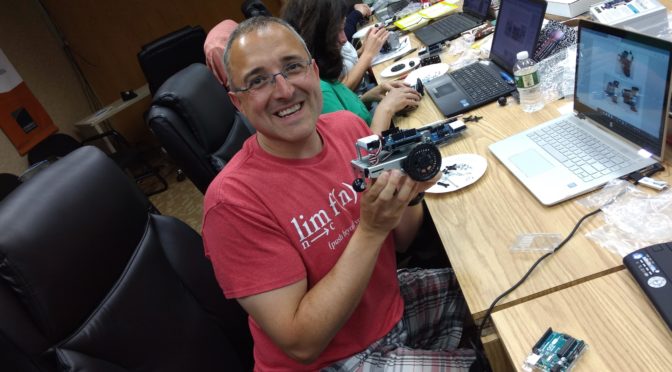
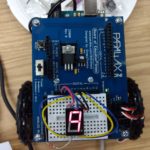
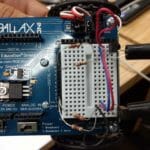
Day three begin with the introduction of the Arduino boards and the Bo-Bot Shield Robot build.  If things were not already exciting, this is where the excitement in the participants and staff at ARRL became amped up.  Participants followed instructions to build their bots from scratch.  Once robots were built, Tommy Gober, led participants with the use of their Picoscopes through making the proper electronic connections on their bot’s breadboard.  For this day, participants also downloaded the Arduino software onto their computers to begin to learn the C++ code that would allow them to progress to advance operations of their robots in the coming days.  By the end of day three, all participants’ heads were whirling from the extensive knowledge they had gained in the advanced instruction of coding they had in just a short time period.

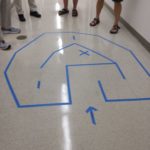
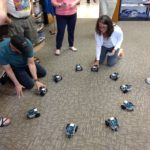
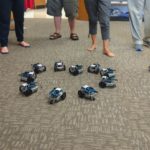
Day four and five concentrated more on the coding of the robots and the science behind infrared remote controllers that would ultimately allow us to drive our robots with a Sony TV remote.  Teachers learned to program the Arduino to display numeric digits 0 through 9 in progression, learned how to get their robots to move forward, backward, turn left, and turn right, program their robots with several lines of code to run a maze, and then learned to program the robots to be able to avoid obstacles through the use of LED sensors and other sensors like those used to collect data for APRS packets.  By the end of day five the participants were able to circle their robots together in the lobby of ARRL and have Tommy use one Sony remote to orchestrate the robots doing the Hokey Pokey.

One other exciting event occurred on day four that needs to be mentioned because of how special it was to the participants.  The teachers of the institute could go into station W1AW to operate the various radio stations.  Participants operated W1AW on 20 and 17 meters as well as, digital modes and Echolink stations.  Many participants were able to make connections with people from the local radio clubs.  Participants were able to ask Joe Carcia(NJ1Q), the W1AW station manager all the questions that came to their heads.  A few of us were able to take a handheld radio to the parking lot and use the 2-meter band and our own call signs to contact W1AW.  By doing this we would be in the station logs and be guaranteed a QSL card from the station.

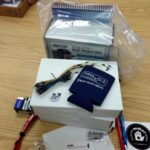
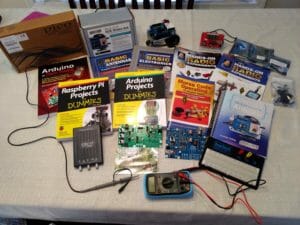
This is all of the materials I received when attending this institute. I was able to select 8 books from the ARRL catalog, a digital Picoscope, an Arduino Bo-Bot, a multimeter, several sensors, a clock kit, and several circuit kits.
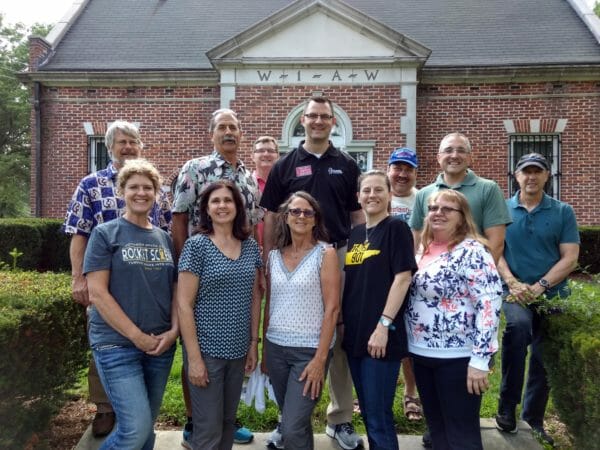
The particpants and instructor for the Teachers Institute on Wireless Technology in Newington, CT
The particpants and instructor for the Teachers Institute on Wireless Technology in Newington, CT                                       By the end of this educationally inspiring week I had a greater appreciation for all that Amateur Radio and wireless technology had to offer me and my classroom.  I cannot wait to take some of the knowledge and bountiful resources I have gained this week and put great activities it into place in my curriculum and in my STEM club that engage and excite students.  I also look forward to the possibility of being able to continue my education next summer at TI-2.   Thank you to the instructor, Tommy Gober for sharing all his knowledge, to Ally and Kris for putting their hard work into continuing to offer this great institute to further the radio sciences for our youth, and to the other members of my TI-1 cohort.  I not only extended my network of learners to people from various other areas of the US, but I have made new lifelong friends.   I know above all else, this week would not be possible without the generosity of ARRL members across the nation.  I want to personally thank those ARRL members who see the value in providing these great opportunities for educators.  It is because of the great generosity that we will continue to inspire students to pursue careers in the STEM field and grow Amateur Radio use among younger generations. 

Dan (AC1EN)

Radio Amateurs Developing Skills Worldwide