Category Archives: Featured

This category is for featured articles that we want to include in the sidebars and other areas on our website.

ISS Crew Contact – The Day is Almost Here

Our ISS Crew Contact with the students from Hudson Memorial School is only about a day away.  We have been testing on-site at Hudson Memorial School for the last 3 days. Our Primary and Backup stations are ready to go.

Primary and Backup ISS Contact Stations

Both the primary and backup antenna towers have been installed and tested.

Primary and Backup Antennas at HMS
Primary and Backup Antennas at Hudson Memorial School

We will be operating as N1FD and will be contacting astronaut Serena Aunon Chancellor, KG5TMT, who will be operating as NA1SS.

You can watch the Livestream of the contact via this link. We will be Livestreaming Video throughout the day.

We will be Livestreaming Video from the school all day on Friday. Here’s our planned timeline for the event. All times EST.

  • 8:30 am – Final Station Checkout Begins
  • 12:30 pm – Students, Parents, and Visitors can ask questions about our contact and enjoy a tour of our stations and antennas.
  • 1:15 pm – Dan, AC1EN with help from Fred, AB1OC will provide an introduction to our contact and will explain what will happen.
  • 1:45 pm – The ISS will come over the horizon and our contact will begin.
  • 2:00 pm – Students, Parents, and Visitors will have a final chance to look at our the stations and ask questions after our ISS Contact ends.

We will post a copy of the presentation materials that Dan and Fred will be covering before the contact here on our Blog tomorrow morning so that those who are watching our Livestream Video can follow along.

We will be sourcing at least two and possibly more live video streams during our contact. The main one will show the students communicating with the ISS. It will be the featured video at the top of the page at the link above. There will also be a video showing the primary and backup antennas as they track the ISS during our contact on this same page. There may be a stream from one of our members during the contact there as well.
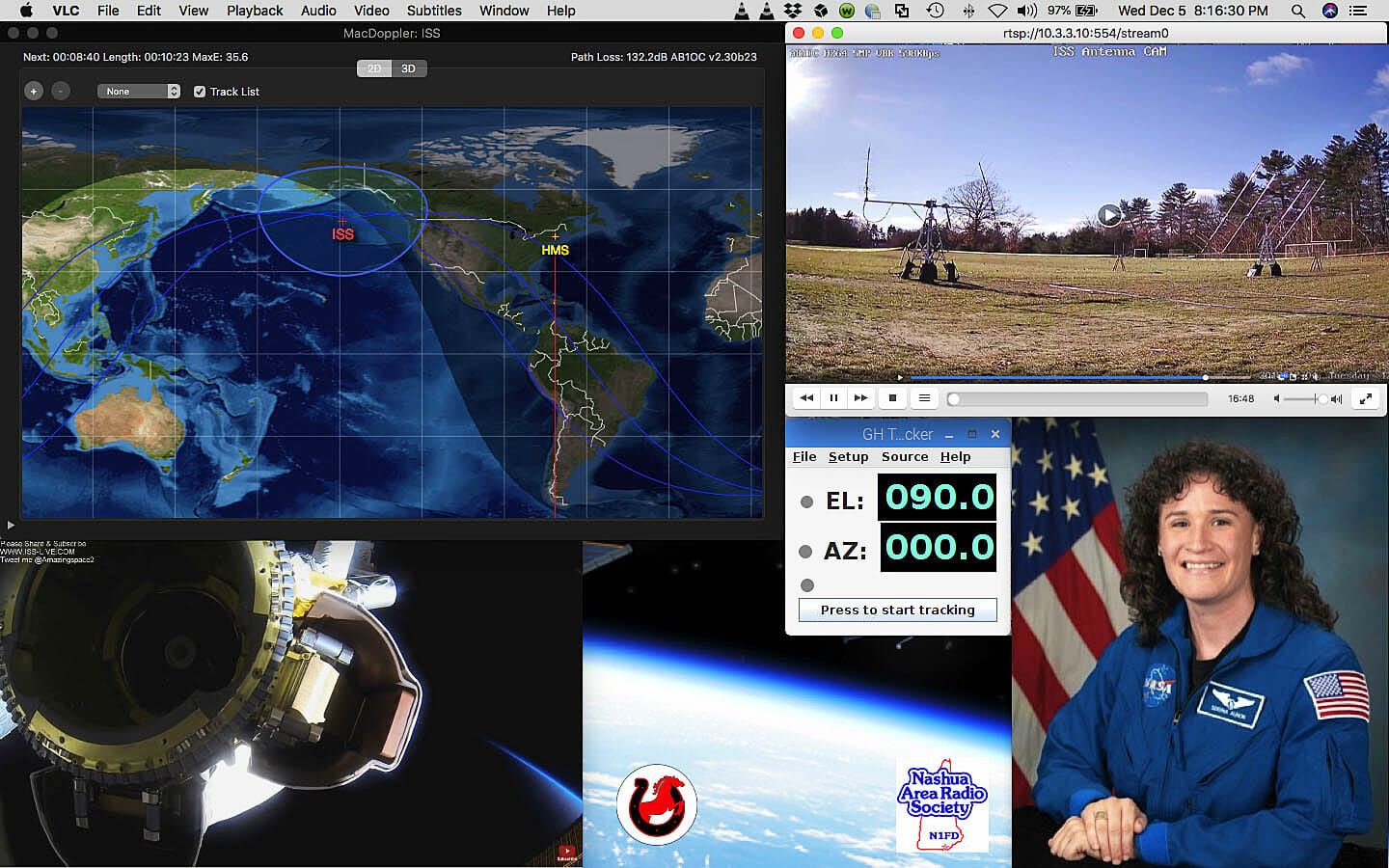
Screen Display During the ISS Contact
The students and parents in the auditorium will be able to see a live video of the antennas, a satellite tracking view from MacDoppler as well as the rotor display on a screen in the auditorium.  The display will be laid out as in the photo above.
Kenzie, KE1NZY earns her Extra License
Kenzie, KE1NZY (Shown with her Dad, AC1EN) earns her Extra License

One of the students asking a question will be Mackenzie Pooler, KE1NZY/AE, 10 years old, who just earned her Extra License last weekend!

Thanks so much to the NARS Team who has worked so hard this week to get everything set up and ready for our ISS Crew Contact!

We are all very excited about the contact and can’t wait to hear the Hudson Memorial School students have their questions answered by an astronaut on the International Space Station!

Anita, AB1QB

December 2018 Contesting Notes

CW WW
CQ Zone map used for CQ World Wide contests

End of the Year Contests

The big contests of the season: CQ WW and ARRL Sweepstakes are now behind us and we’re left with a set of smaller affairs that are still fun to do. The first to mention is the ARRL 10-Meter Contest to be held December 8 and 9 (UTC). At this point in the cycle 10 meters can be a tough band to work. But, openings happen and if you’re listening it can be an exciting time to work as many as you can before the band returns to its slumber.

The ARRL Rookie Roundup CW is held for a six hour stint on December 16th (1800Z – 2359Z). Check with Fred (AB1OC) and Anita (AB1QB) for opportunities to work that contest from their superstation. Don’t worry if you’re not that good at CW. You’ll have lots of help from others around you to copy. It’s a great way to learn.

As always, please check the www.contesting.com calendar for information on lots of smaller contests such as SKCC Weekend Sprintathon (December 8 and 9), or the QRP ARCI Holiday Spirits Homebrew Sprint (December 9 2000Z-2300Z).

Contester of the Month (October & November)

Without a doubt Layne (AE1N) gets the crown for last month. He put in good scores for CQ WW CW and phone, and ARRL Sweepstakes CW. From the looks of things it seems Layne might have also won the award for “had most fun on the air!”

If you participate in a contest and want to vie for a few club accolades then drop a note to [email protected] with your 3830 submission information and what category you competed in. I’ll highlight some of the best efforts each month in this column.

Good luck and CU on the air!


Small Software Defined Radios ~ Part 1: Hardware

There are some exciting things going on in the software defined radio (SDR) world. In December (2018) I’ll be doing a Tech Night SDR workshop encouraging everybody to get familiar with these little gems. Use this article as a shopping guide to prepare for that meeting.

The SDR Stick

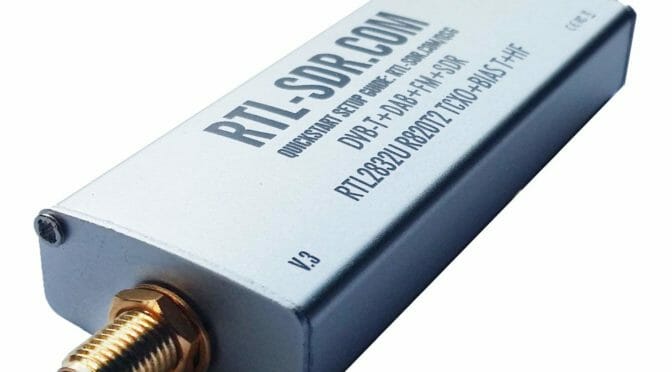
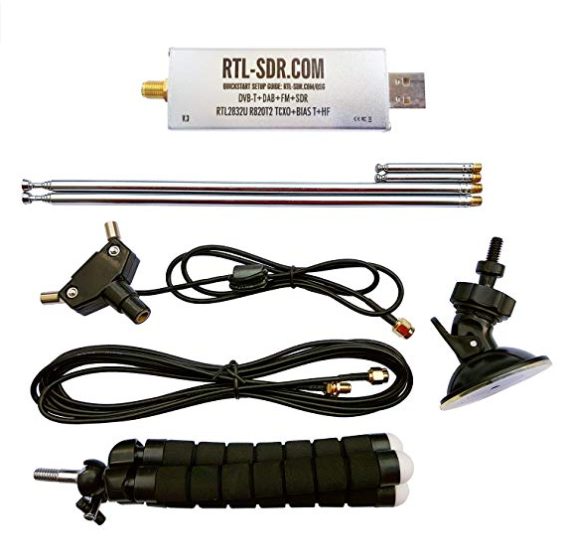
The workshop will concentrate on the USB stick style SDR. The most popular is probably the RTL-SDR unit based on the DVB-T TV tuner and the RTL2832U chipset. Sure it can be used to decode digital TV, but some innovative soul recognized that it could also be a general purpose receiver with a range of about 25 MHz to 1.5 GHz. Figure 1 shows that USB device along with a kit of handy parts to get started. This is available from Amazon here for about $28.


Figure 1. The starter kit for the RTL-SDR

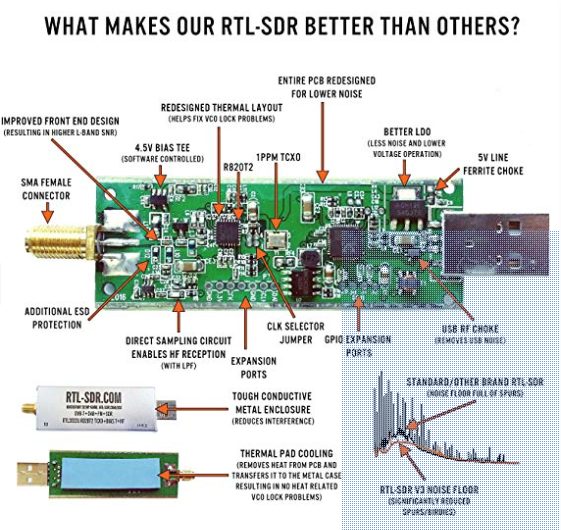
 Figure 2 shows the circuit board inside the little dongle.


Figure 2. Inside the RTL-SDR stick

With this and your computer you can have a bunch of fun and learn about pan adapters, SDR tuners, and even watch for aircraft data.

Antennas for the Sticks

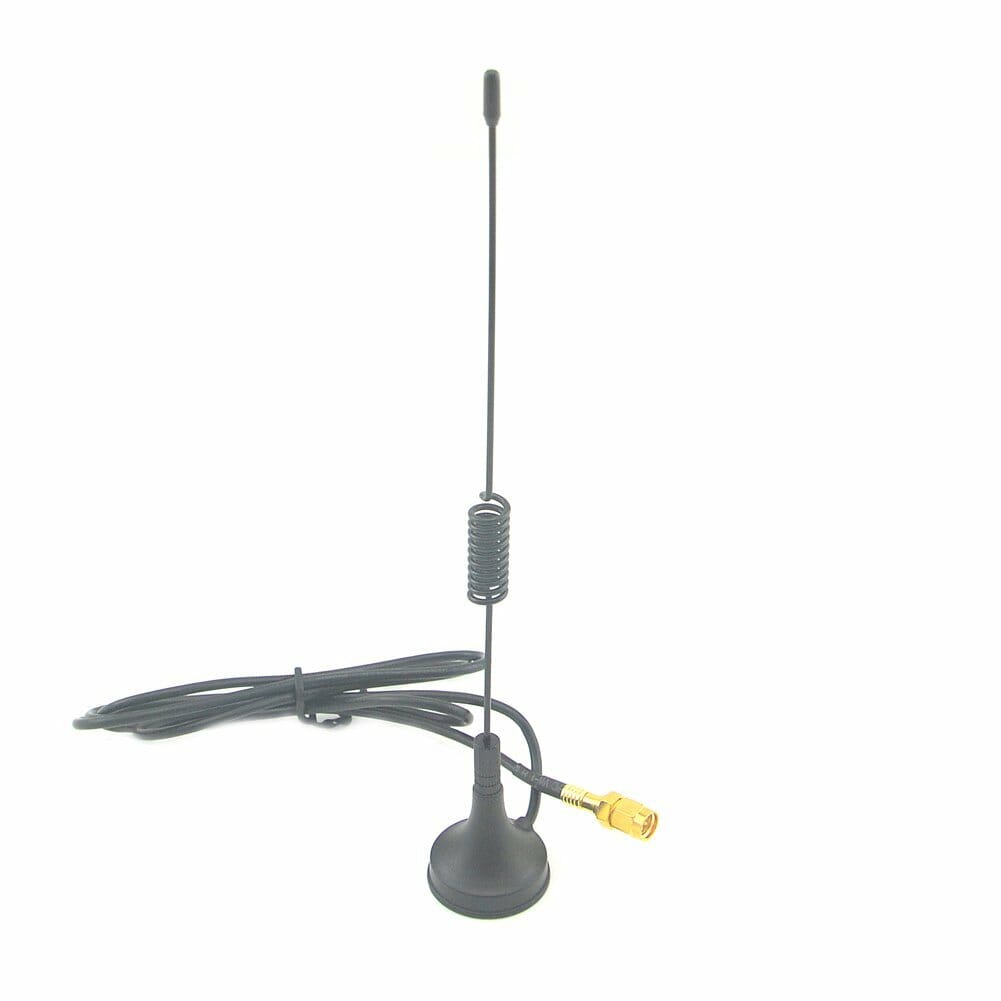
The starter kit comes with collapsable whips, a suction cup mount, a small lightweight tripod mount, and feed line. You can do quite a bit with just these parts. If you wanted to use this for a particular purpose (like monitoring aircraft) you can get an antenna specifically for that band or frequency. For example, this antenna is used for doing ADS-B aircraft monitoring. It is available from Amazon here for $8.


Figure 3. ADS-B monopole

Then again, you can make your own antennas easily enough for this purpose or others. See another article I wrote Homebrew ADS-B Antenna for Airplane Tracking for more information on that.

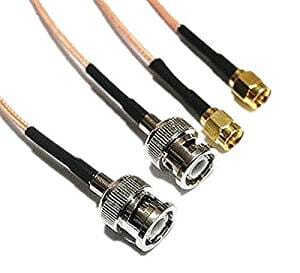
It is possible to use an existing antenna as well. The RTL-SDR dongle accepts an SMA type connector. A converter from SMA to BNC can be handy. Amazon has a set of two here for $11. See Figure 4.

Figure 4. SMA to BNC connectors

No Computer? No Problem!

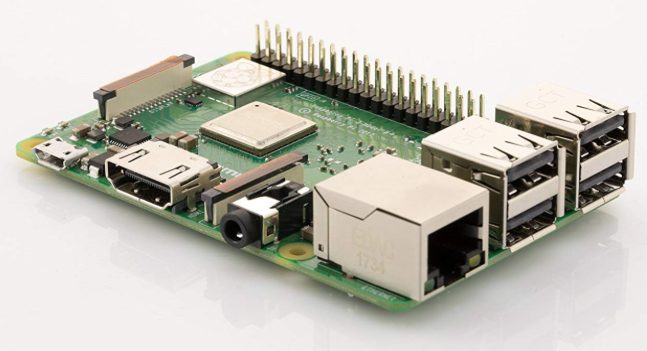
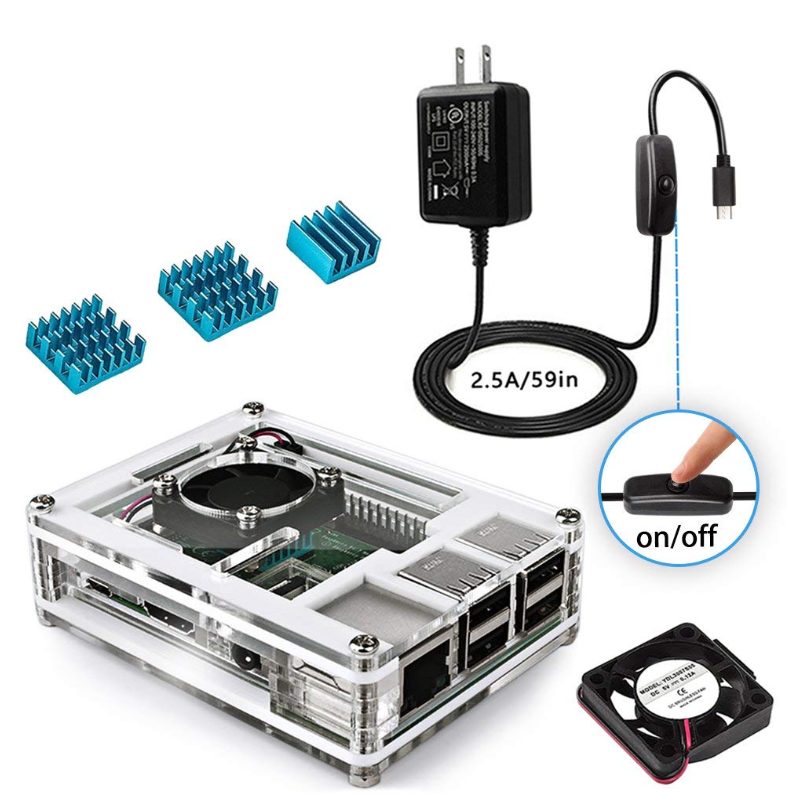
An excellent way to explore these small SDR devices is with an inexpensive Raspberry Pi computer. I recommend getting one of the higher end models of these single board computers with a little extra horsepower. Processing SDR signals takes a lot of CPU power and that generates heat. My first Raspberry Pi unit was underpowered and it overheated within minutes. I’ve switched to a newer and faster model that handles the task easily. And, I’ve put it in a case with a small fan to increase airflow. See Figures 5 and 6.

Figure 5. Raspberry Pi 3 B+ motherboard

Figure 6. Kit with case, power supply, and heat sinks

These two items are available from Amazon. The Raspberry Pi 3 B+ board is $39 here. The kit that includes a case, fan, heatsinks, and power supply can be found here for $16.

Amplifier

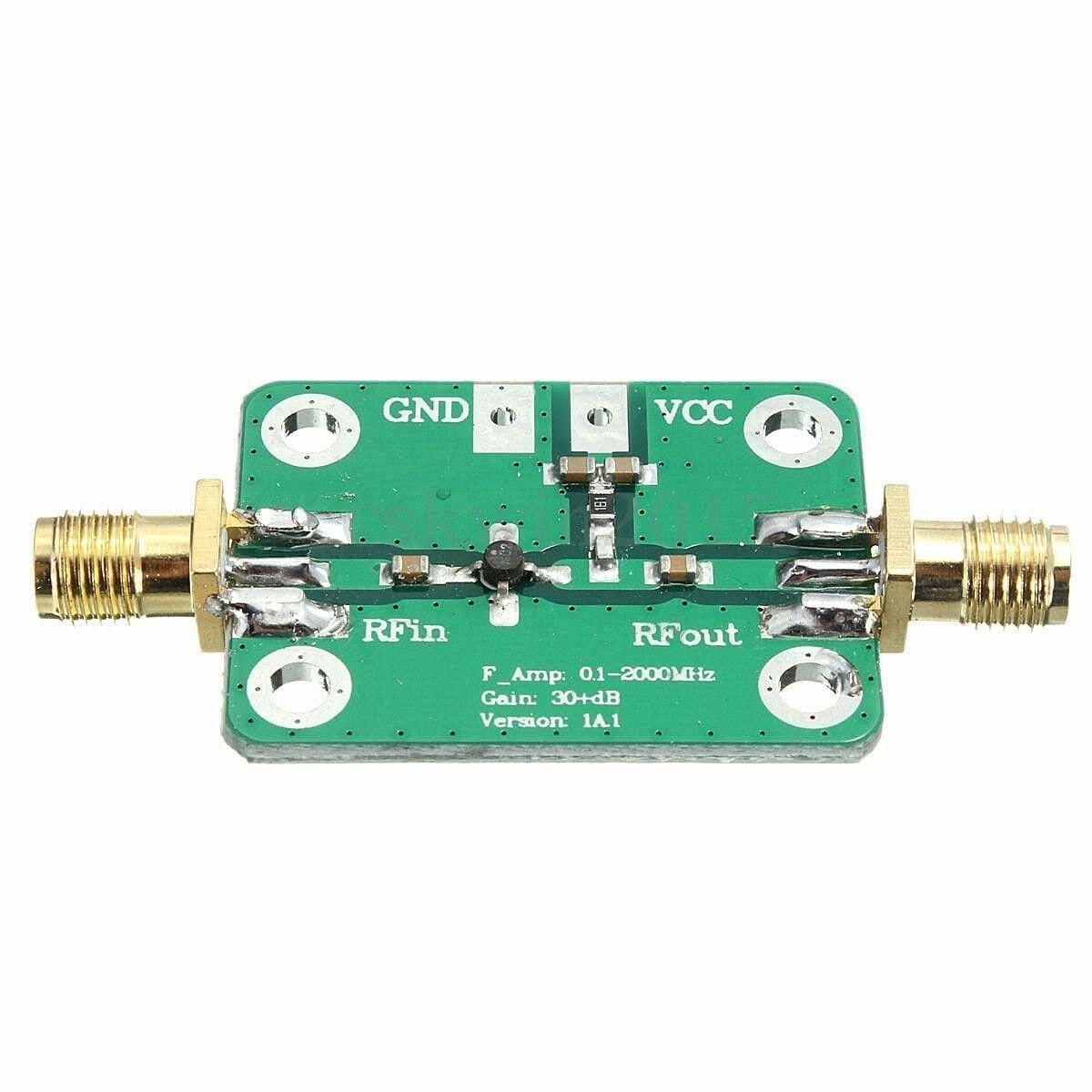
A small device called an MMIC is a broadband RF amplifier that can bring signals up 30 dB. One of these is available on Amazon mounted on a board with two SMA connectors (in and out) here for $11. See Figure 7.

Figure 7. MMIC amplifier for RTL-SDR use.

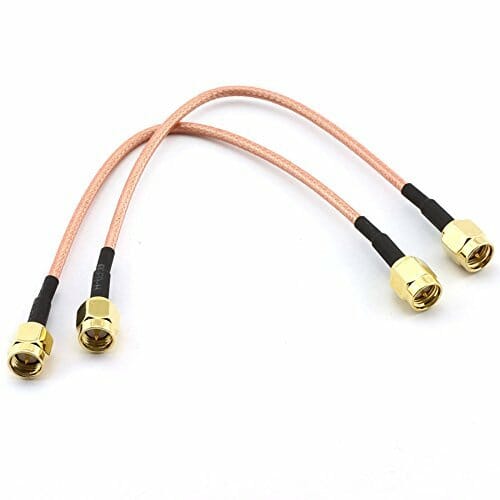
You’ll also need a jumper to go between the amplifier and the SDR. An SMA to SMA jumper (set of 2) is available here for $4.59. See Figure 8.

Figure 8. SMA-SMA jumper

Aircraft Tracking

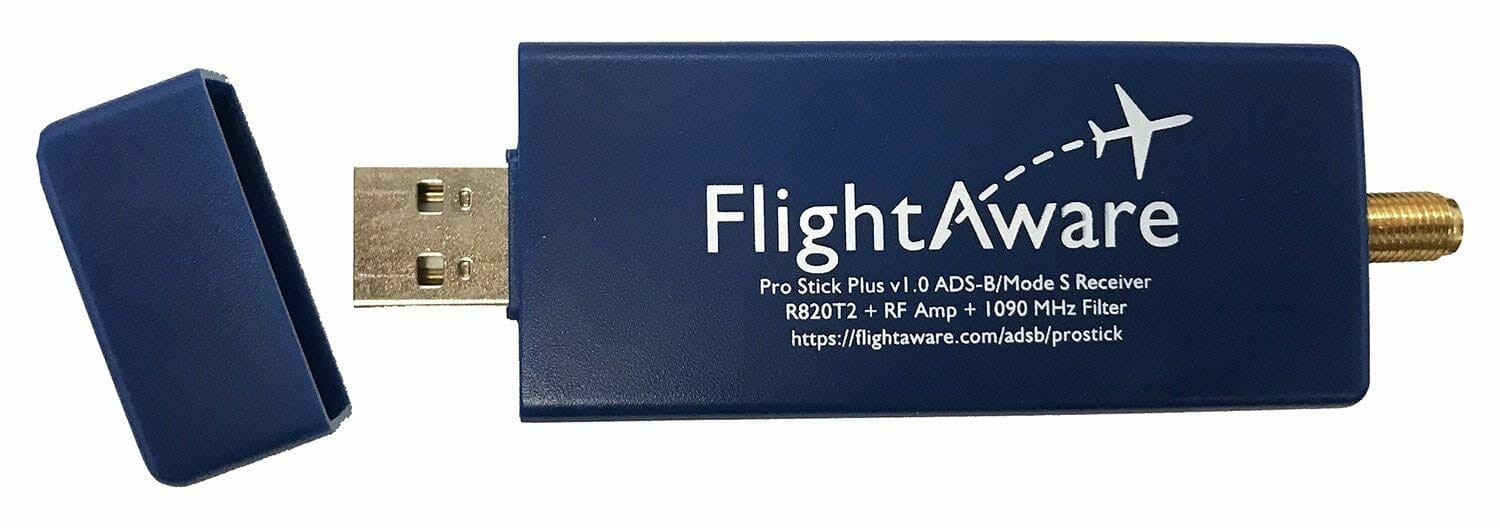
If you enjoyed the aircraft tracking talk given in the regular meeting by Thomas R Kavanaugh, KC1ELF, then you might be interested in the SDR stick sold by Flight Aware specifically designed for this purpose. It has an amplifier built in, and a filter centered around the ADS-B frequency. It is available here for $20. See Figure 9.

Figure 9. The SDR bundled solution for flight tracking

Smile!

Don’t forget to use the Amazon Smile feature when buying your equipment to support NARS!

Next Time

I’ll cover software options for these SDR sticks in the next installment. I hope you’ll purchase an SDR kit and bring it to the Tech Night meeting in December. It is a workshop intended to help everybody get something running. See you there!

Radio Amateurs Developing Skills Worldwide