Category Archives: Education and Training

Education and Training information is for folks looking for help to earn or upgrade their license, learn about Amateur Radio, and get help with Ham Radio questions.

Getting Ready for HamXposition 2022

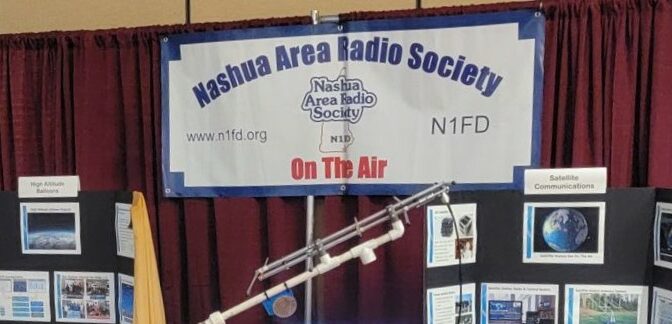
Next week is the Northeast HamXposition 2022 in Marlborough, Massachusetts.  Nashua Area Radio Society will host our exhibits on ham radio again this year. We presented our display at previous HamXpositions and at other venues such as NEAR-Fest.

HamXposition 2022
HamXposition

Here is an example from one of our past presentations.

Example
Example

Preparation and Testing

Our displays include much more than the basic trifold display board. We also include relevant items that are in the topic of each display and many displays have videos running with more details to inform and entertain our guests.

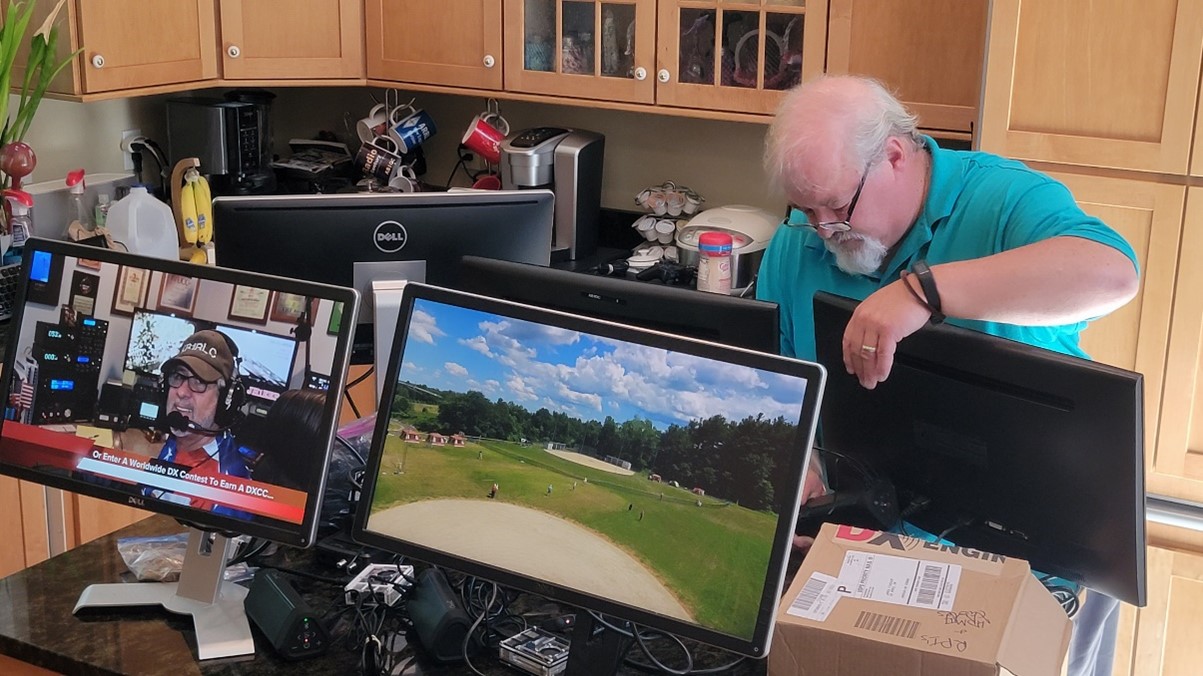
A few of us met last week to test out all of the video display components of our exhibit at Fred, AB1OC’s and Anita, AB1QB’s QTH. We will have 6 video loops running in our displays this year.  All are running from customized Raspberry Pi’s which are all networked together and can be controlled from a central PC for ease of management. Alan, KC1PWB is working here to prepare one of the displays for testing.
HamXposition 2022
Display Test

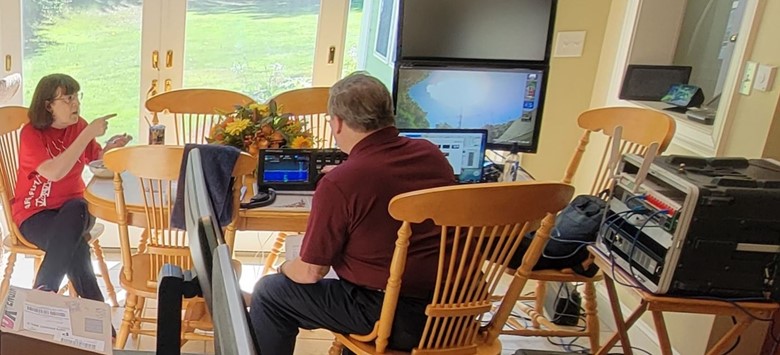
Here, Anita and Fred are testing the Flex Maestro we will use as our live demonstration radio at the event. It, along with the Raspberry Pi’s are all hard wired to the Network Pod seen on the right. Our testing in advance will make setup much easier on the day of the event. We did encounter some issues during testing and were able to take advantage having full access to all tools needed to troubleshoot and remediate the issues without any time pressure to get it done at the last minute.
Maestro Setup
Maestro Setup

Tasks

As is often the case, there are many tasks to manage behind the scenes before we have our first visitors come to see our exhibits. NARS has done this before and we have a good idea of how to manage things. Here is a high-level breakdown of some of the major tasks

  • Update Displays
  • Volunteer’s assignments
  • Plan Layout
  • Create Packing List
  • Transportation to HamXposition
  • Setup
  • Operation
  • Breakdown
  • Transportation from HamXposition
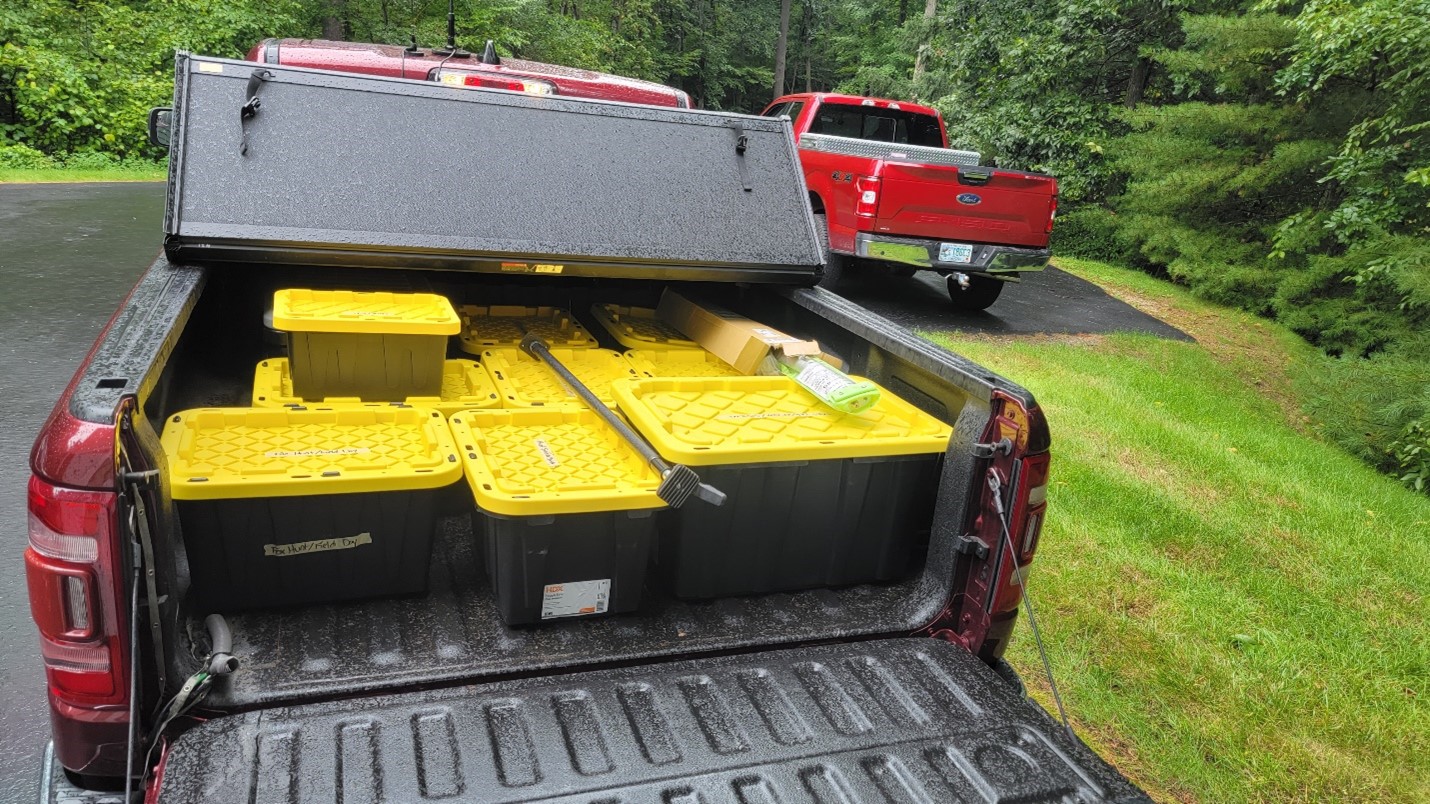
Transport Truck
Transport Truck

Many of us have pickup trucks and two of them plus a car is enough to handle transporting our exhibit.

Current Displays

  • Nashua Area Radio Society Information
  • Get On the Air Work the World
  • Kit Building / Raspberry Pi
  • Field Day and Emergency Communications
  • Satellite Communications
  • High Altitude Balloons
  • Fox Hunt
  • SOTA/POTA
  • Morse Code

Some of our displays were showing a bit of age and those have been updated and refreshed by Anita, AB1QB for this year.  This is what part of our exhibit at last year’s HamXposition looked like last year right before it opened.
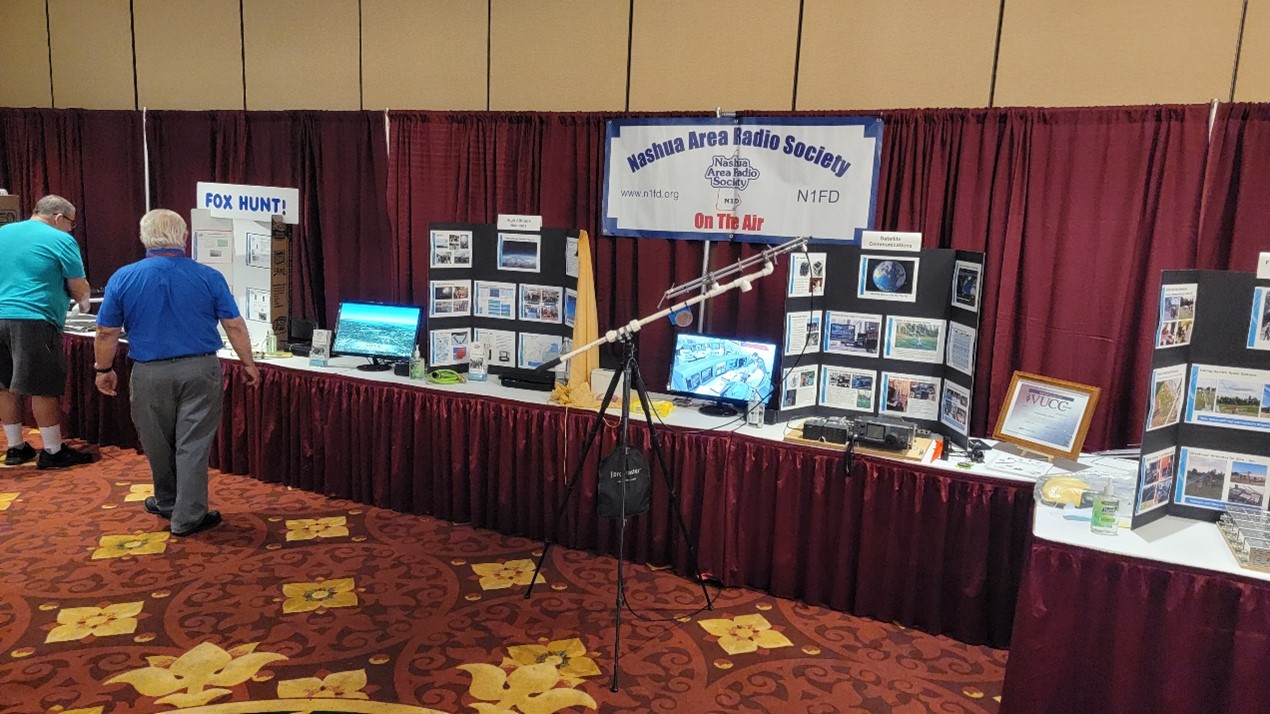
2021 HamXposition Display

Come and Visit

We are very proud of our exhibit.  It is the result of much effort over the years and is an excellent way for us to share our hobby with other people, whether they be hams or not.  More importantly, I am even prouder of the enthusiasm and support of this project from our member volunteers who will be guides during the event and gave their time and energy to sharing our mutual love for this hobby.
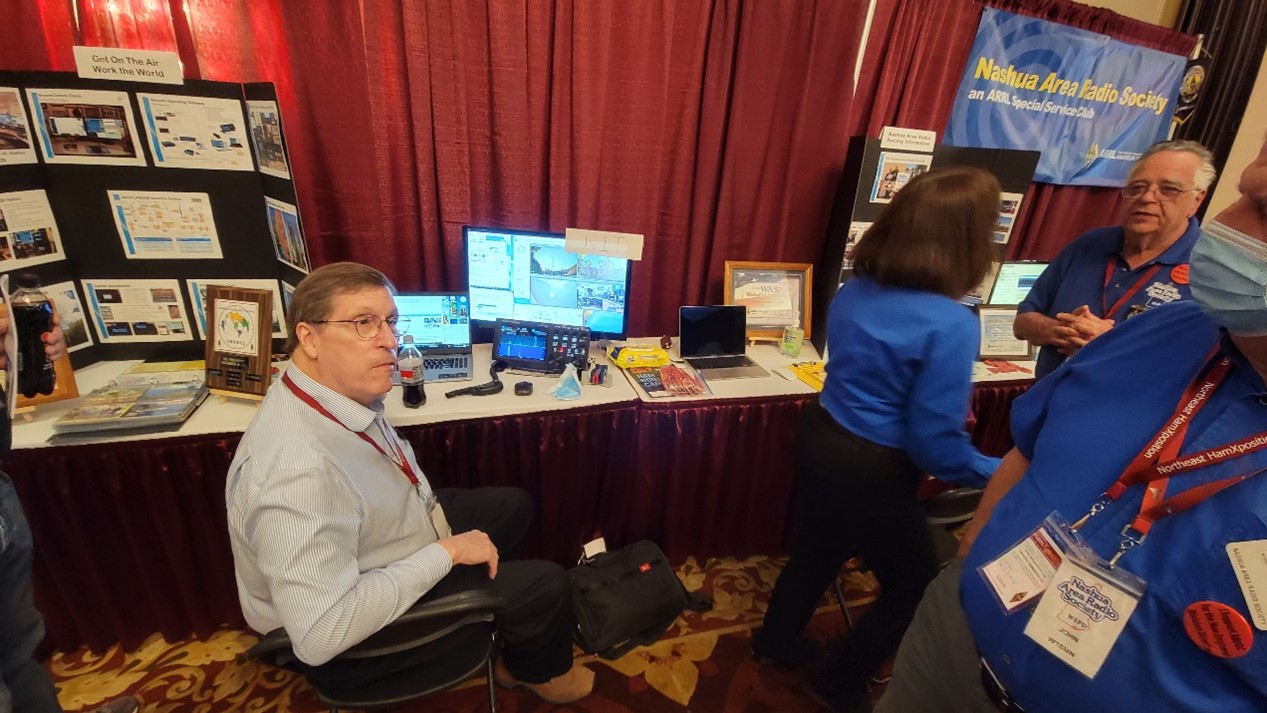
GOTA Display
GOTA Display

I look forward to welcoming you to our exhibit at HamXposition this year.

Scouts in Long Island, NY Contact the ISS via Amateur Radio

Long Island Scouts ISS

I once again had the pleasure to help a group of young people make contact with an Astronaut on the International Space Station this past week. Scouts from the Matinecock District in Long Island, NY, made a contact wi…

Source: Scouts on Long Island Contact the ISS via Amateur Radio

It was a lot of fun helping the Scouts of Sussex County, NY, talk to an astronaut on the International Space Station (ISS) this weekend. You can read all about the contact and see a video via the link above.

Fred, AB1OC

Hands On Tower and Beam Antenna Training for 2022 Field Day

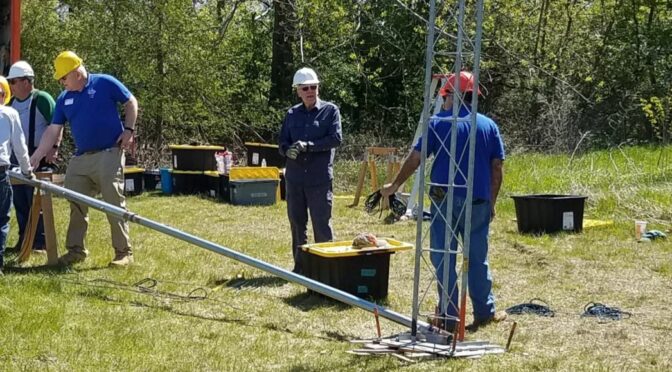
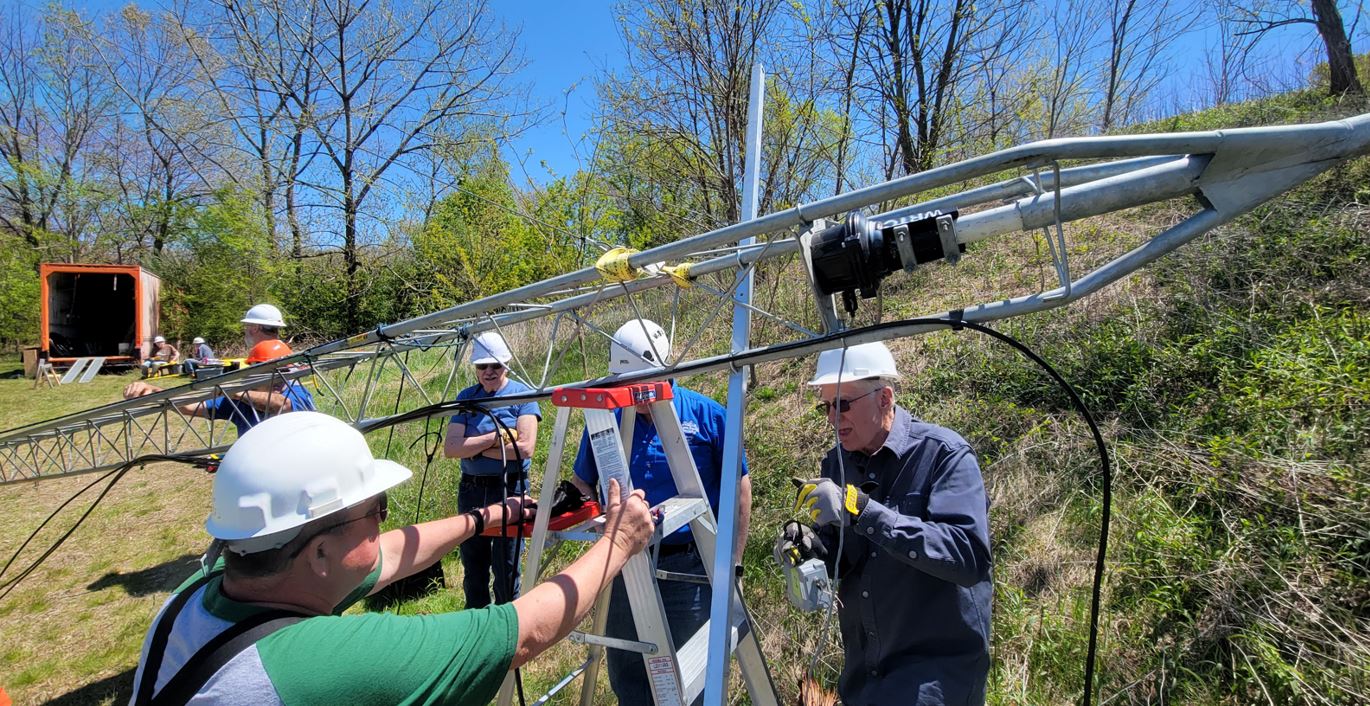
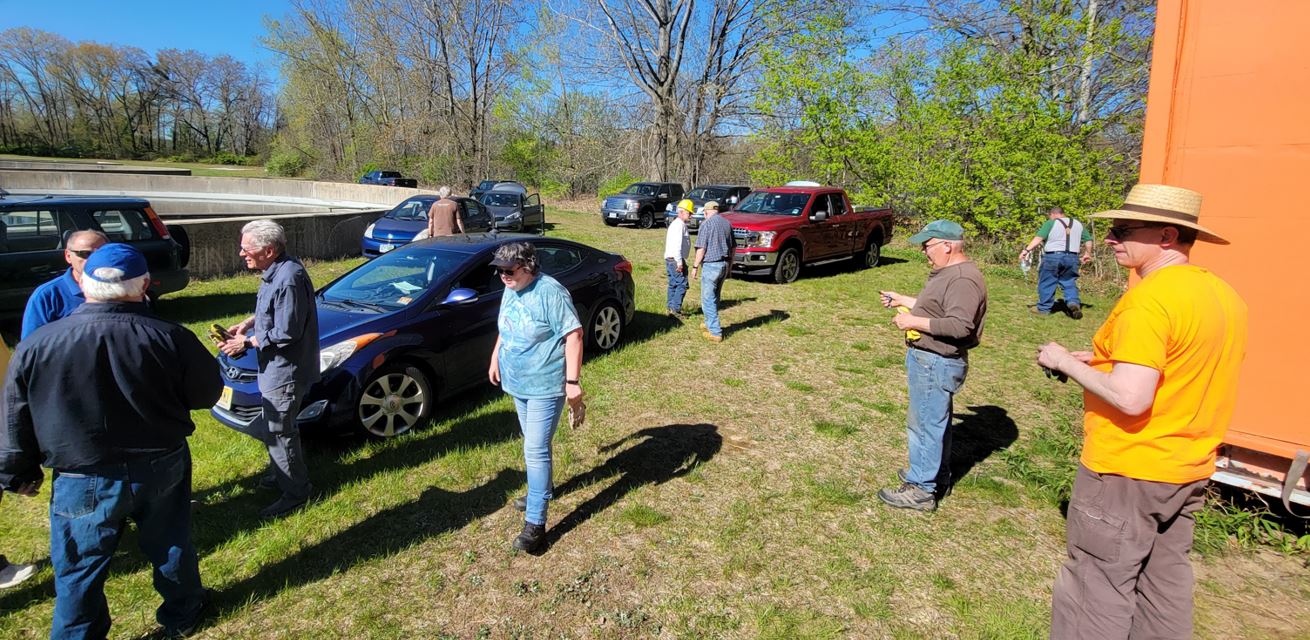
On May 11, 2022, members of the Nashua Area Radio Society 2022 Field Day Tower and Antenna Teams met at BOB for a hands-on training exercise led by Fred AB1OC.  BOB stands for Big Orange Box, the trailer that we use to store our gear. After obtaining approval from the facility where BOB is parked, we erected a 40-foot tower with a beam antenna and other peripherals to build our team’s skills prior to Field Day in June.  We met there at 8:00 AM and began our day by removing all of the storage bins from the floor of the trailer to give us access to the tower sections, antennas, and other gear we need for the exercise.

Preparation

Plan Base Location
Plan Base Location

The next step was to identify a level spot for us to place the tilt base for the antenna that would also allow us to have room for the boom, derrick, winch, and guy lines.  Our location for the training was compact but had enough room.  In June our Field Day location has much more room, so this will not be an issue.

Field Day Tower
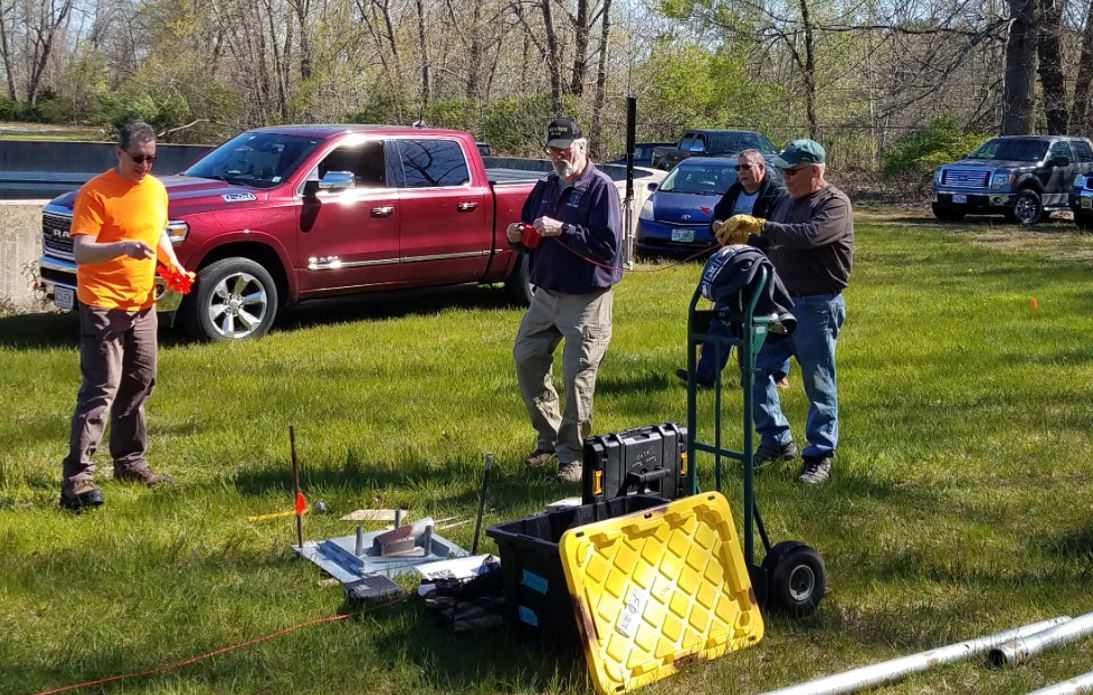
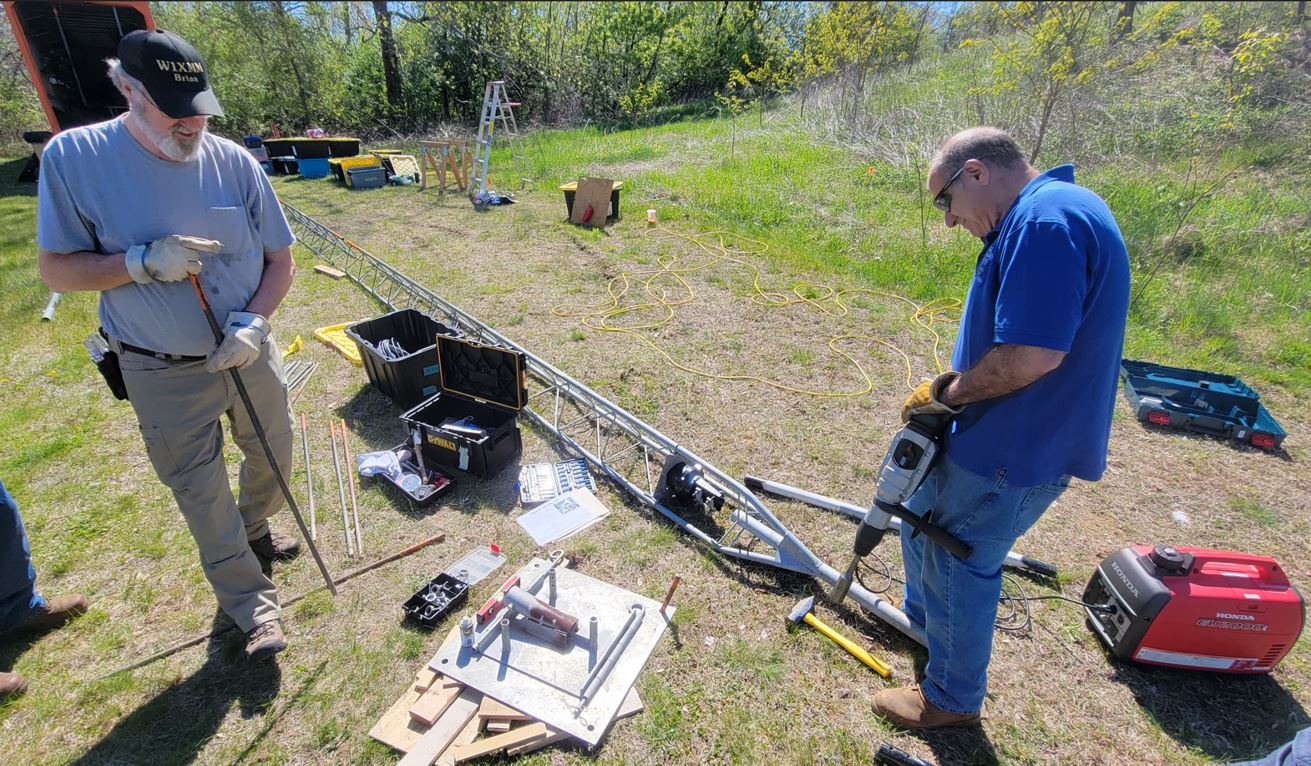
Prepare Base

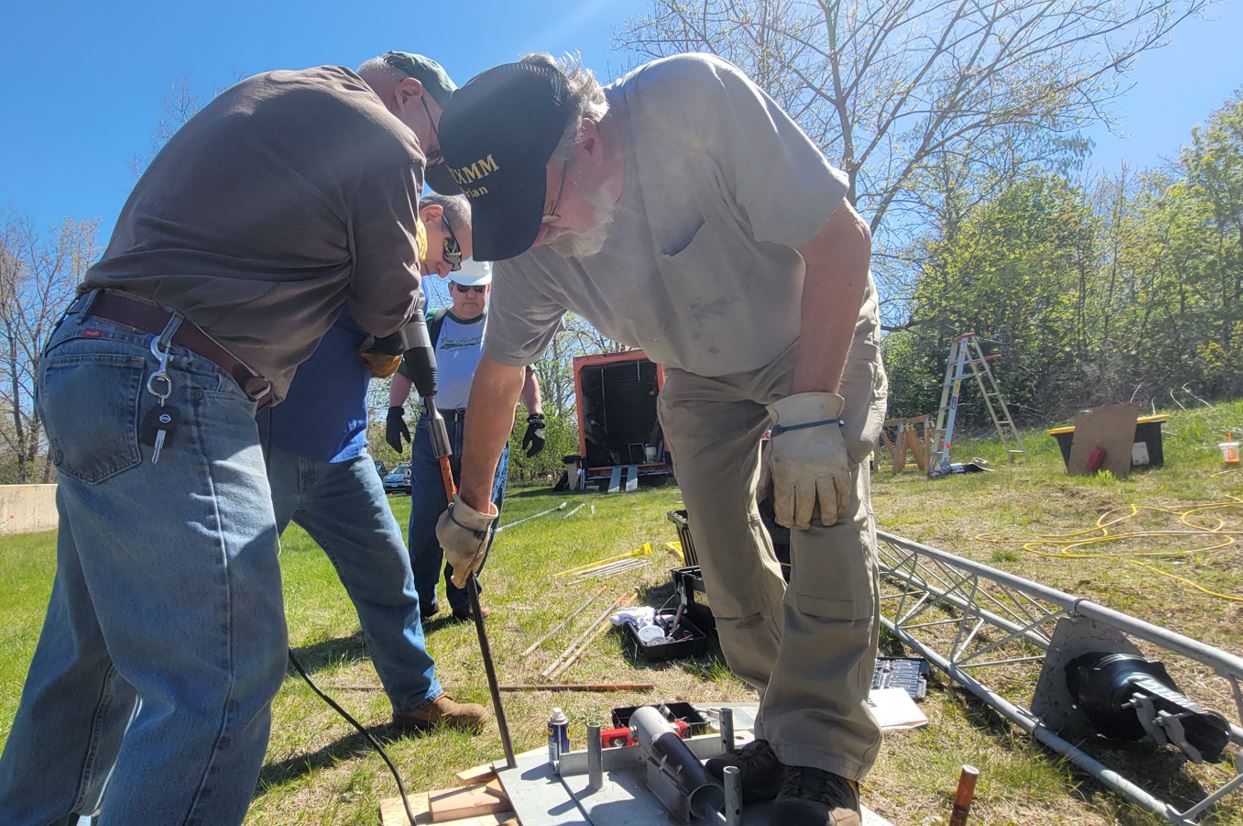
Using the impact hammer to drive in 4-foot stakes to secure the base plate to the ground. The base is subjected to a lot of stress and strain during the lift so must be level and tightly secured to the ground.

Drive Rods with Impact Hammer
Field Day Tower
Ready to Rig Falling Derrick

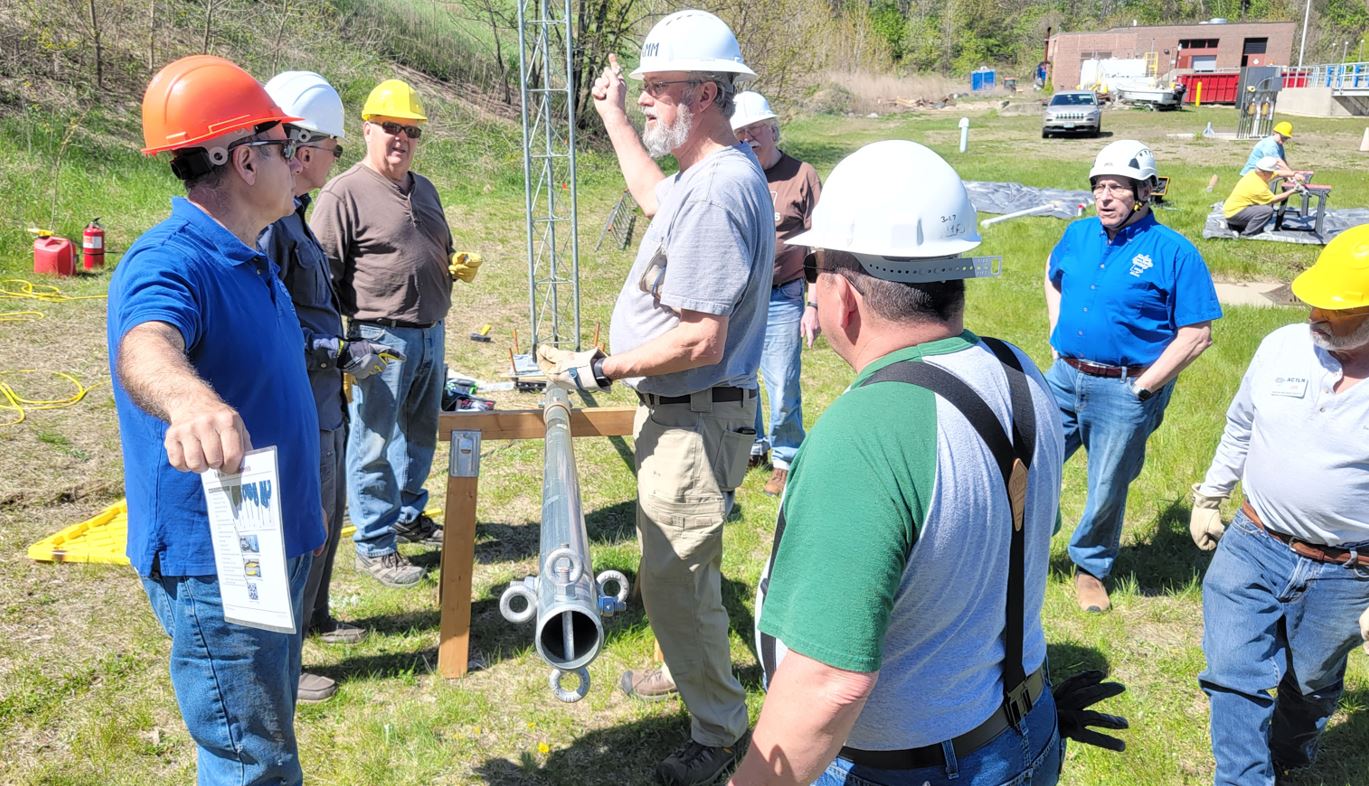
The team gathers around for a briefing on the next steps after assembling and installing the falling derrick pole and also setting the first section of the tower into the base.

Prepare to add tower sections

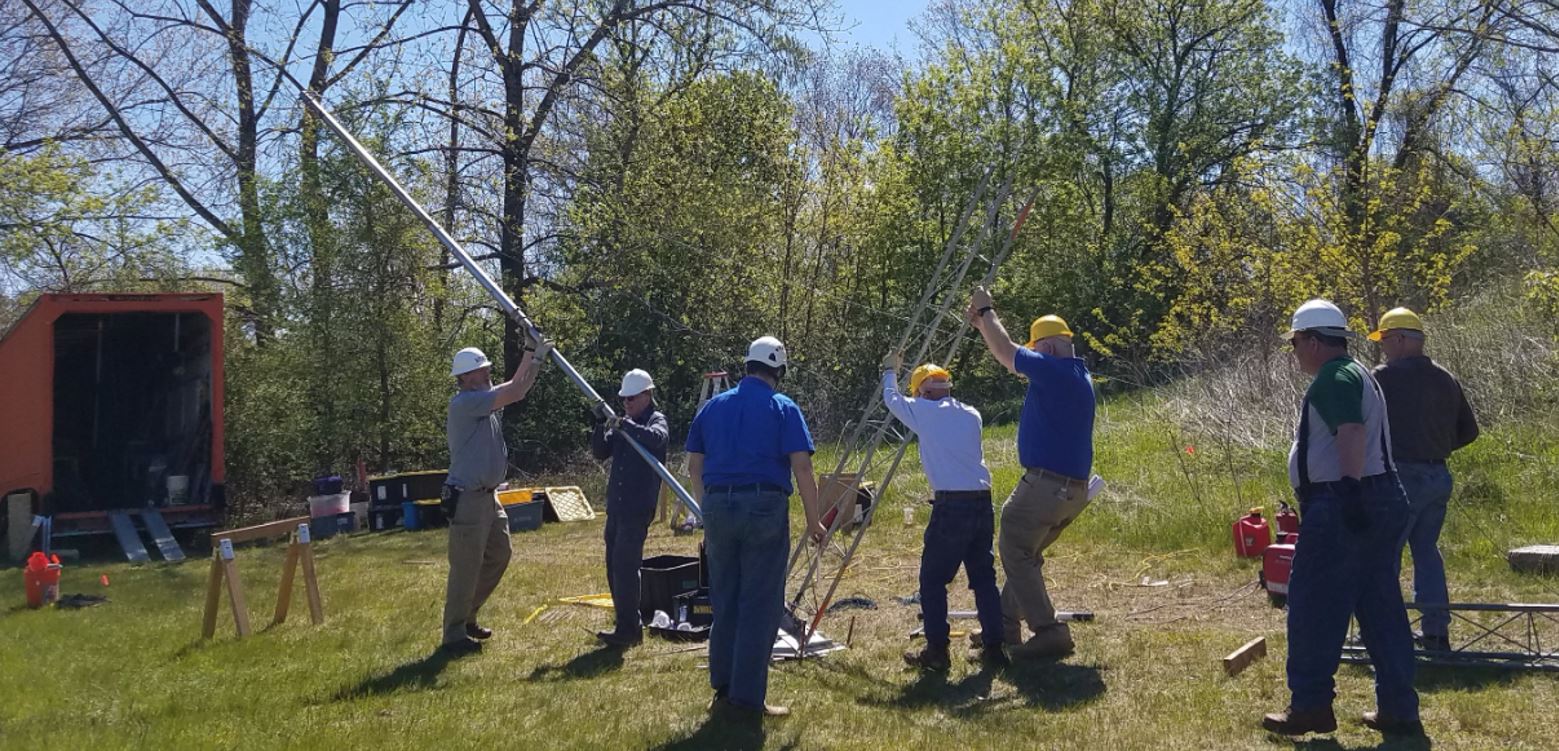
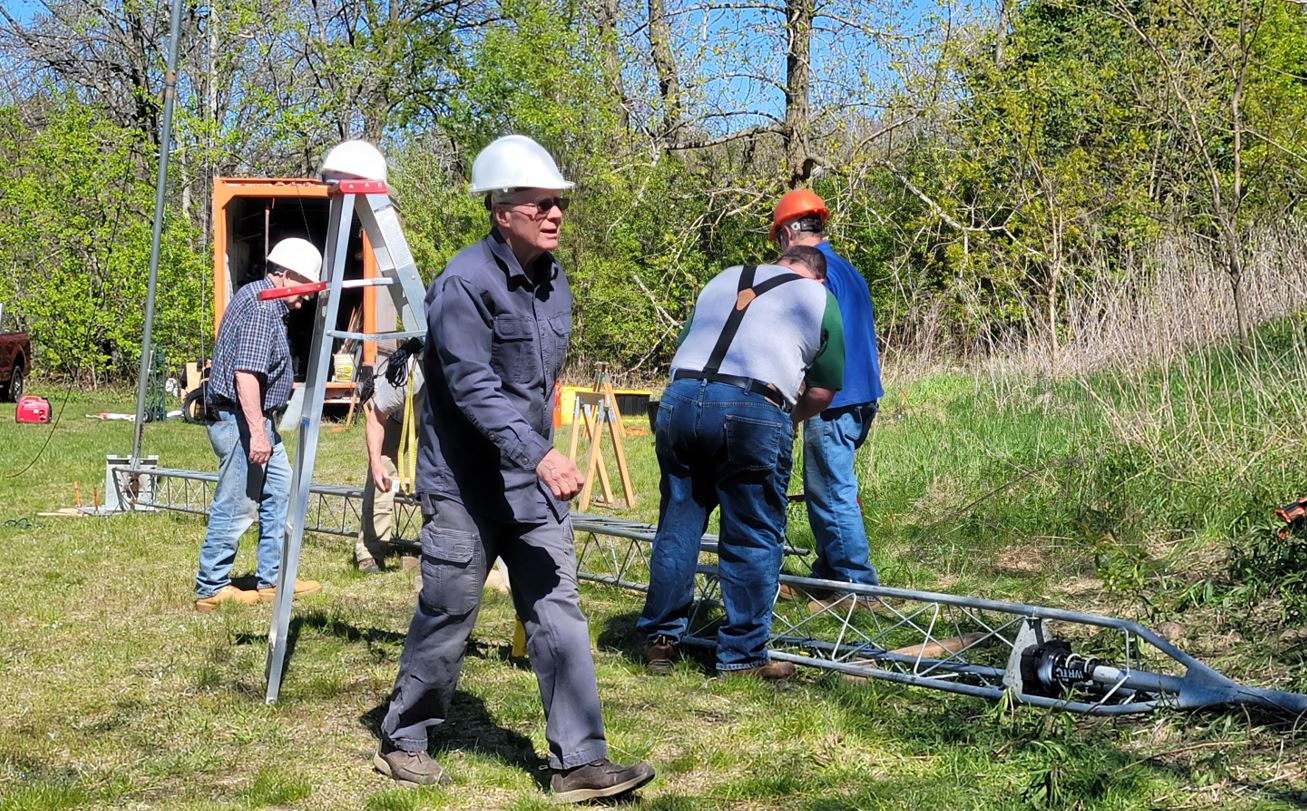
Once the falling derrick is fully configured with all guys and cables attached, we raise it to lower the first tower section so we can add the remaining sections to it while on the ground.  Here as in other stages of the construction Fred is guiding us and monitoring our progress.

Field Day Tower
Bolt Tower Sections

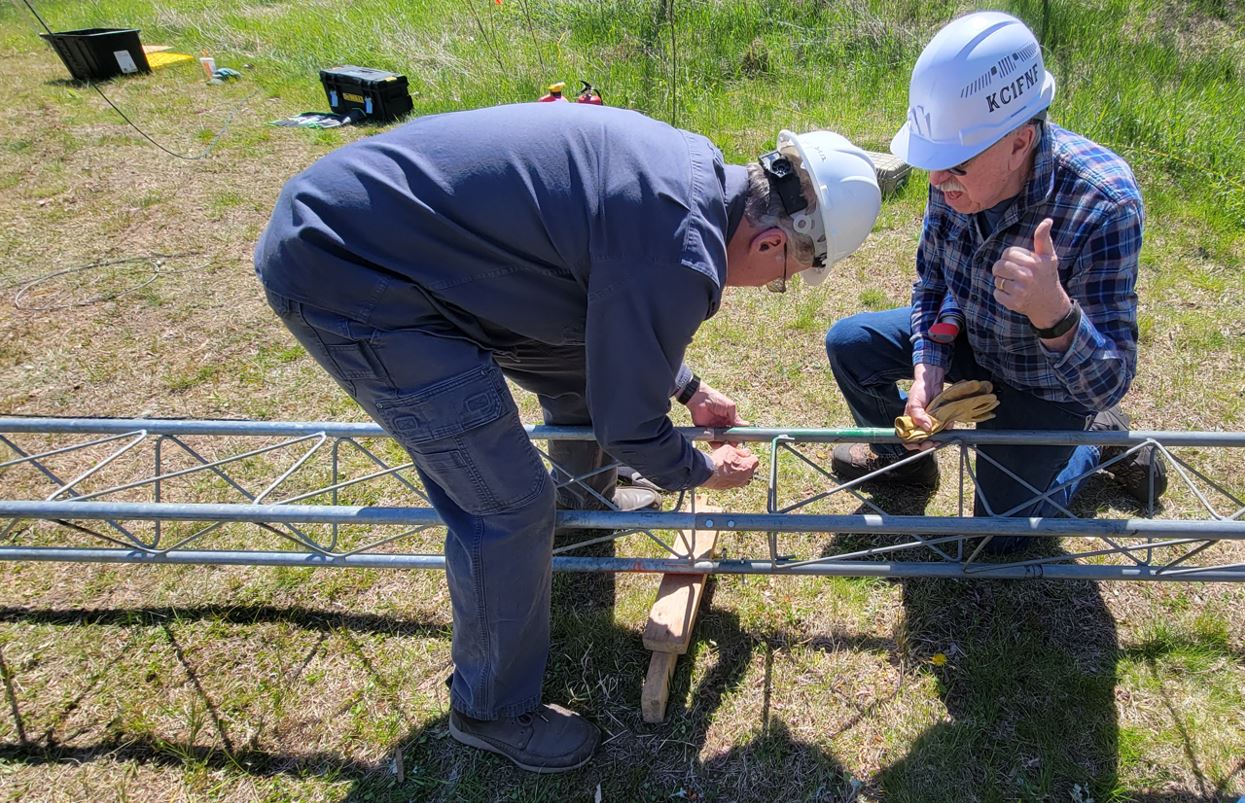
Tower team members bolt together the tower sections securely.

Add cables and other peripherals

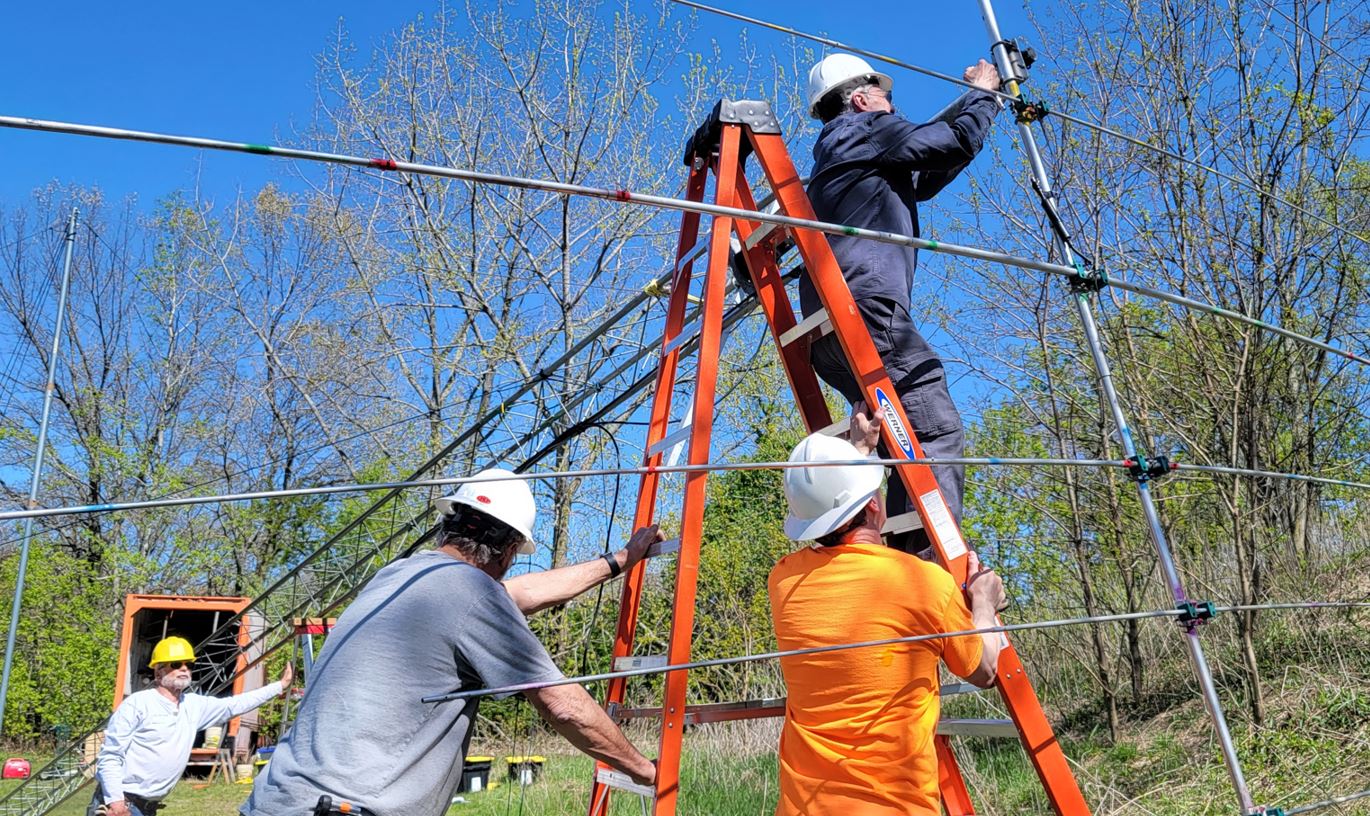
Prior to raising the tower, all of the peripherals need to be installed.  Here is the cross beam that will hold 40-meter and 80-meter dipoles.  The coax for the beam antenna and control cable for the rotator are secured to the tower as well.

Move Assembled Antenna to Tower

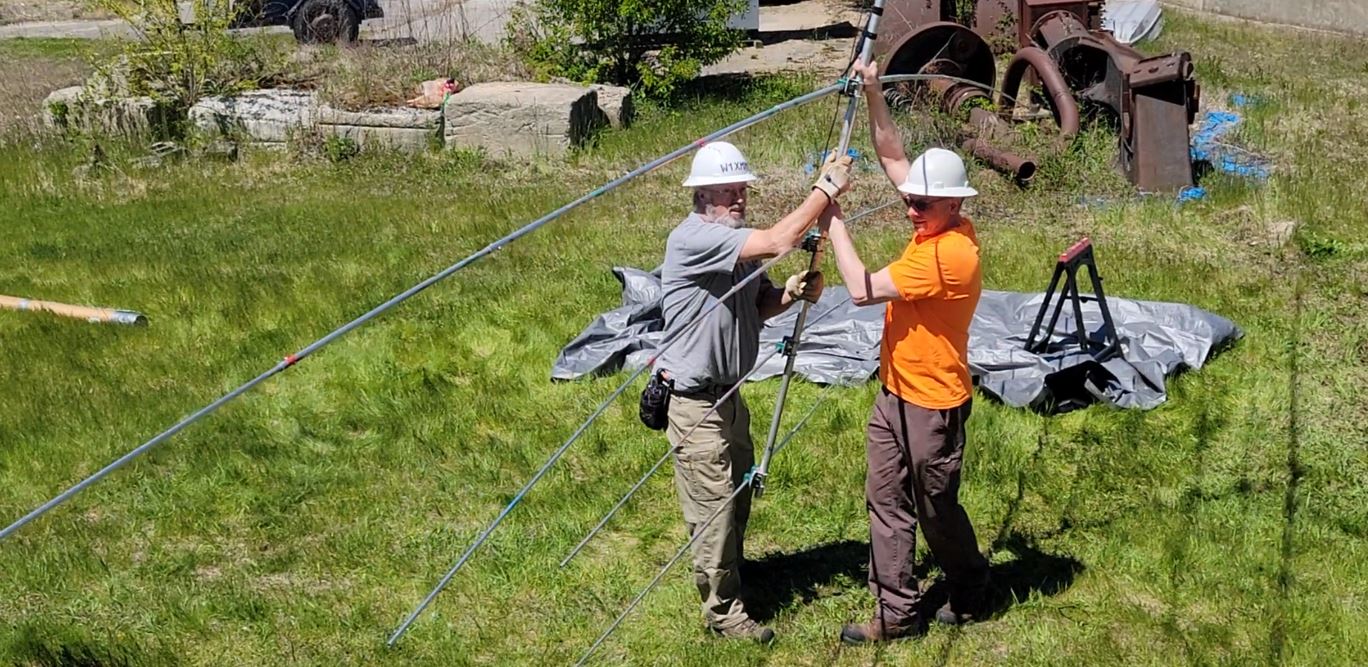
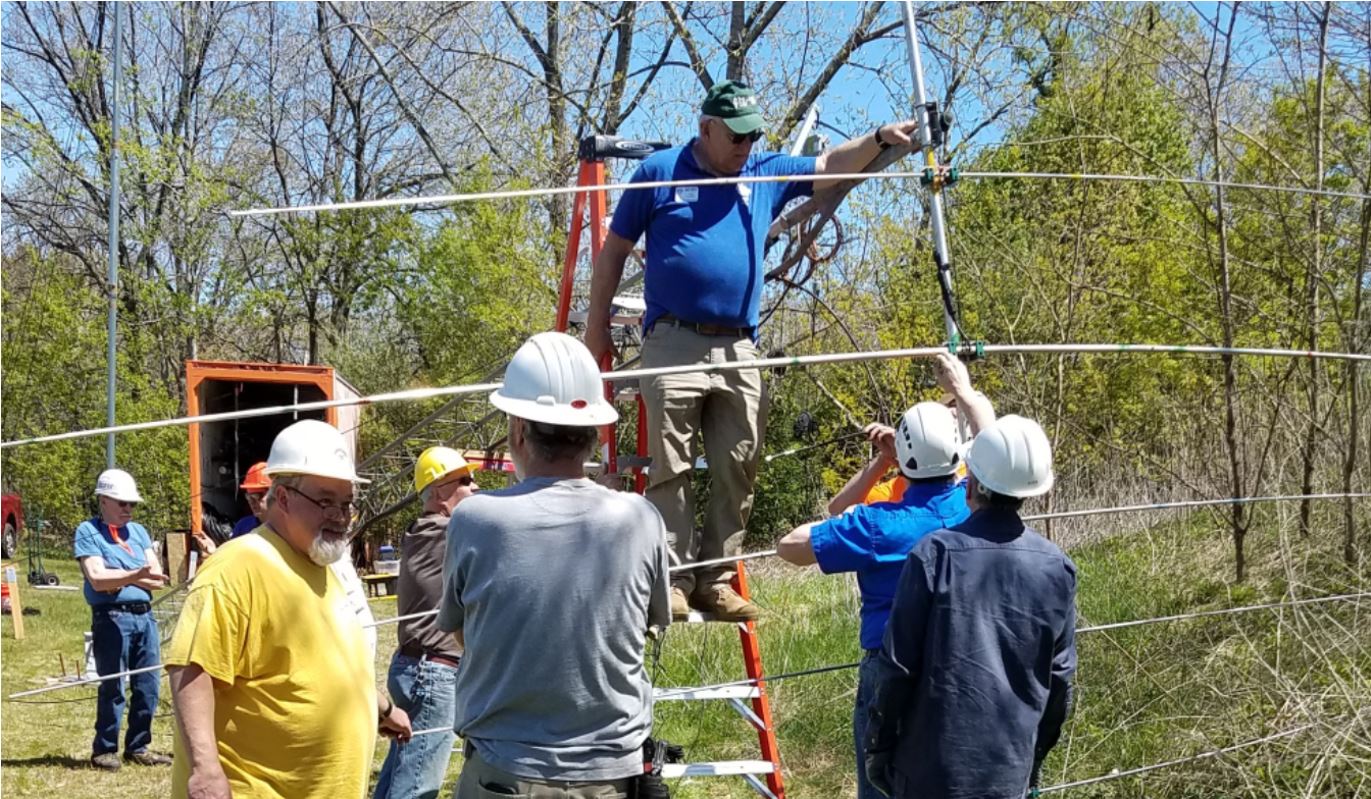
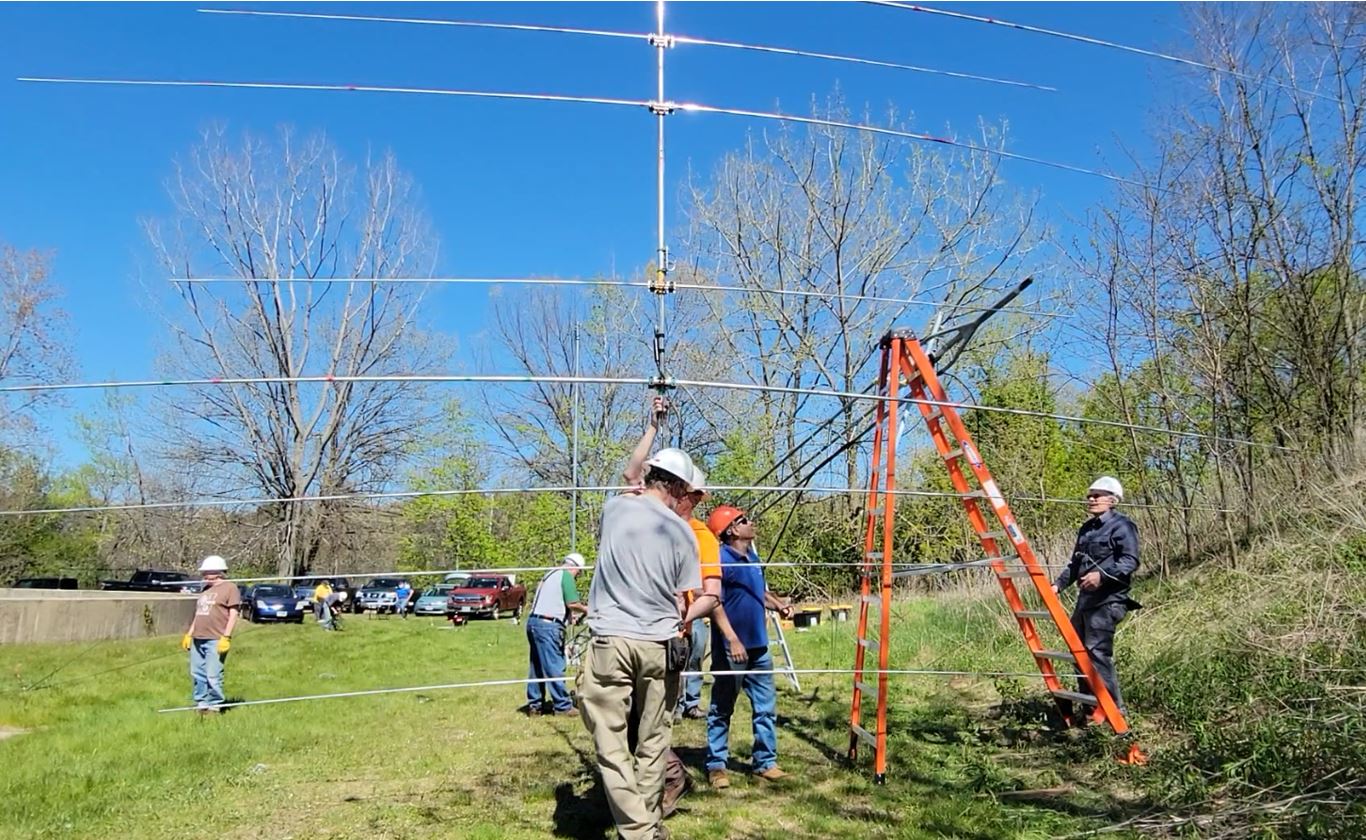
We orient the assembled beam antenna front down so when we raise the tower it is pointing in the proper direction. This is determined by how the tower is oriented and how the rotator is set prior to raising the tower.

Attach Antenna to Mast

We slip the U-bolts on the antenna onto the mast and tighten them.  Next, we connect the coax to the antenna with a long enough loop to allow for it to rotate more than 360 degrees.

Raise the Tower

View the Hyperlapse above

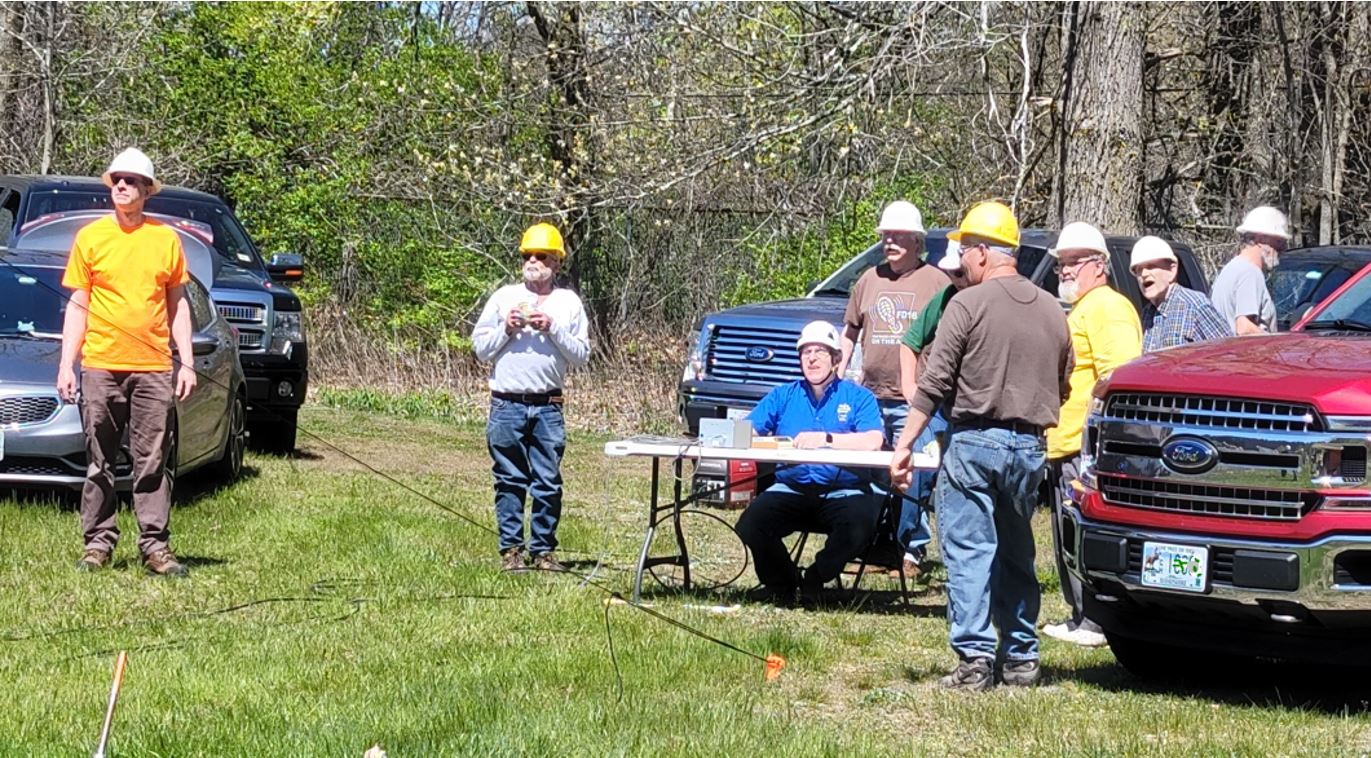
Watching Rotator Test

The crew watches as we test the rotator and confirm that there is enough loop to rotate without any interference or binding. The test was successful and afterward, Fred AB1OC made a few DX calls to Europe QRP with an IC-705 radio.  The beam worked great!

Disassembly and Storage

Prepare to Remove Antenna from Tower Mast

Around 2:30, after only 15 minutes of operating, we needed to reverse the process and disassemble the tower and antenna. Our target time for departing the facility was around 4:00 PM.

Remove Antenna from Tower

The Beam team removes the antenna and moves it for disassembly until Field Day. At the same time, the Tower team will break down the tower and peripherals.

Ready to Disassemble Antenna

We place a tarp under the antenna in case any small parts fall off.  It is easier to find them from the tarp than from the tall grass.  Working on it on the sawhorses makes it much easier to assemble or disassemble.

Breaking Down Tower Sections

The Tower Team breaks down the tower sections while carefully keeping track of everything so we can be sure we have what we need for Field Day at the end of June.

Gear Stowed and Ready to Leave After Successful Day

We are ready to leave after a successful day. Thanks to Fred AB1OC who guided us through the different activities. He helped us all to gain more information on how to perform this task safely and efficiently.

Field Day can be a complex project

Field Day provides clubs with a number of opportunities.  The obvious are to have a chance for members to gather and operate together.  Even though it is not a contest, per se, we do keep score. The event also provides a chance for members to participate in a complex group project.  Some of us had experience with projects of similar complexity in our careers but others never did.  Working together collaboratively on a project like this is a good basis for friendship and memories of the shared experience are long-lasting.

Building Skillsets in the Club

One of our goals as a club is to build a skill set within the club that persists as members move in and out of active participation in these activities.  We have members this year who have years of past experience doing this and others for whom this is their first exposure to it.  Members who were prime contributors a few years ago may no longer participate. After this Field Day, we will have a new core of experienced members who can handle these tasks and share their own experiences to mentor the new members who will follow them.  We strive to build a culture that continues to promote the continued building of the required skills in the club to share with future members.

Jon AC1EV

Radio Amateurs Developing Skills Worldwide