Category Archives: CW and QRP

Articles related to CW and QRP (low-power) operating and equipment. Articles related to learning and using Morse Code are also included here.

QRP operation from Boston Harbor Islands

The ARRL organized a National Parks on the Air program (NPOTA) in 2016 that made operating portably extra fun. But you don’t need a special event year like this to have a reason to get out and make QSOs. There are other programs that operate continuously that are good draws for these far away places. I made several trips to Boston Harbor Islands in 2016 to celebrate NPOTA, and help operators put some QSOs in the log for other awards programs as well. Here are a couple of programs that will continue long after NPOTA is over:

The British program Islands on the Air (www.rsgbiota.org) gives participants an opportunity to collect islands much like the ARRL’s DXCC program collects countries (entities). As it turns out, because there is no commercial power (mains) available to the public, the Boston Harbor Islands are somewhat rare (being claimed by only 30.2% of IOTA participants). It is a lot harder to get on the air and be heard when it is only battery and solar power driving things. That makes the challenge even more fun. And, when you are heard, you’ve often got a pileup!

The US Islands Awards Program (www.usislands.org) is similar to the IOTA program, except it accepts islands anywhere in the United States. (The IOTA program only counts islands that are true “sea” islands.) Lovells Island in Boston Harbor has the designation MA042S, and I was lucky enough to be the first to activate it for this program.

These mini-DXpeditions to Boston Harbor Islands begin at home, sorting, selecting, and packing the items needed for a successful activation. For day trips to Georges Island, the largest of the group, and the main destination for the Boston-to-island ferry service, I concentrate on packing just the bare essentials of radio, antenna, coax, rope, and so on.
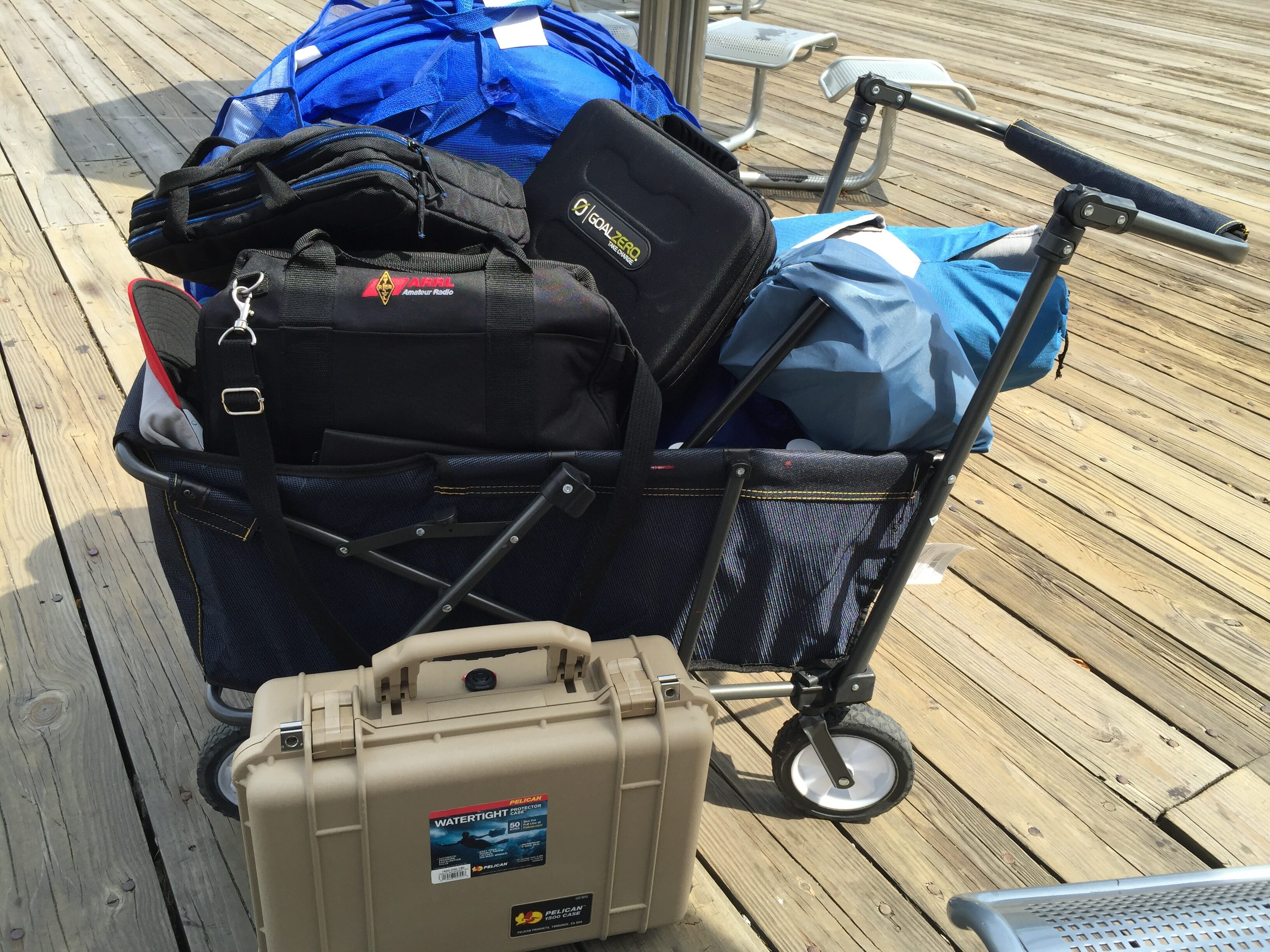
Cart full of gear
Maybe a little more than a 100 pound DXpedition this time. Lovells Island offers campgrounds but no water. You must bring your own. At about 8 pounds per gallon, things get heavy in a hurry.

Georges Island is about an hour long ferry ride from Long Warf in Boston, and it has been built up quite a bit just in the last ten years. It how has a snack bar, a new play area for young children, and hosts many festivals and events during the summer. The boats that once carried only a handful of passengers ten years ago are now often full of families and groups.  Everyone is friendly, and more than once I’ve had help from my fellow voyagers with my gear.

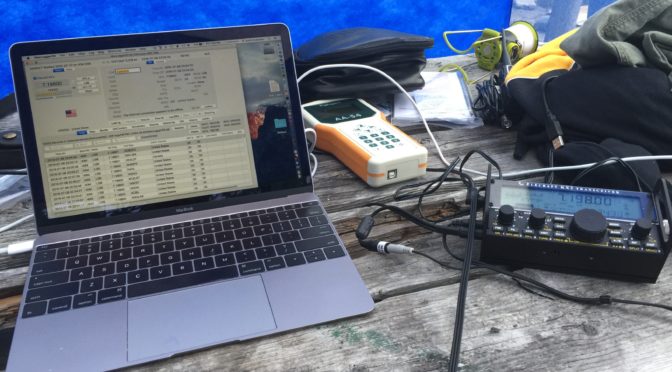
Once off the boat on Georges, I hike quickly to a picnic table near a tree. No trees on this island are very tall, so there are no prospects for running wire dipoles or other wire antennas. Instead, I build a vertical antenna from a mini-Buddipole (www.buddipole.com) kit. I will often lash the shock-cord mast to one of these short trees to hold it up. The wires from my home-brew four-wire radial kit also serve as guys for the setup. Assembly is usually quick (under ten minutes) and a quick check with an antenna analyzer confirms the antenna is resonant.
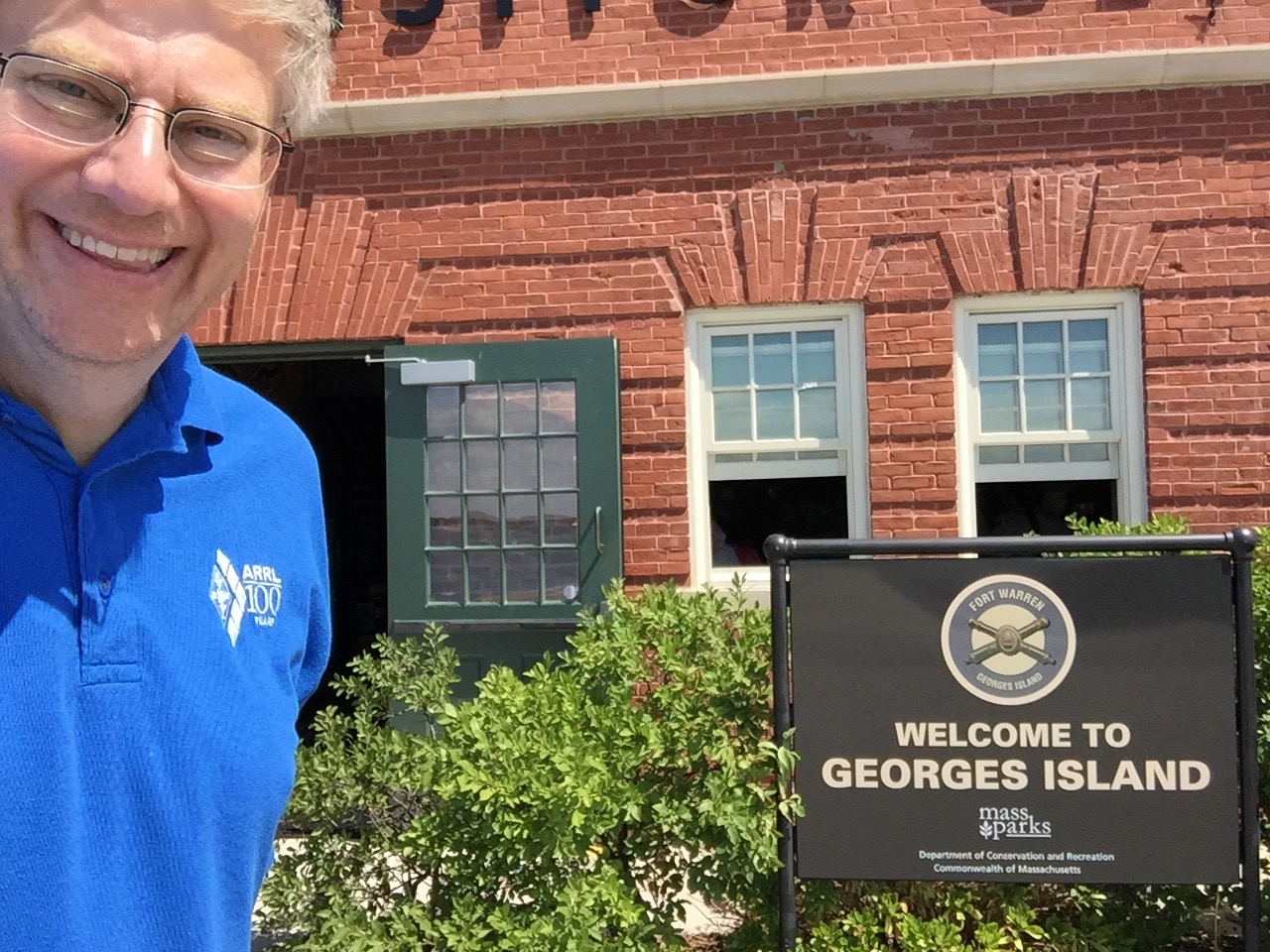
NE1RD in front of sign
Georges Island and Lovells Island are about seven miles out to sea in Boston Harbor. They offer a great day trip, or camping (on Lovells).

In previous years, daytime operations were typically on 20m, 17m, or 15m. Because of changing propagation conditions, in 2016 I only operated almost exclusively on 20m. Selecting an operating frequency can be a challenge when operating QRP. I’ve often been “pushed off” my calling frequency by another operator that likely couldn’t hear me. Oddly enough, I’ve had good luck operating near the top of the 20m band, well into the General segment, which has the additional benefit of increasing the number of people who can call you.

Day trips with only a couple of hours of operation need only a battery, but I find that I bring a solar panel out of habit. With the panel connected, I usually leave with my battery fully charged. Running without the panel would also work, but I’m unwilling to take a chance that my day would be cut short because of power problems.
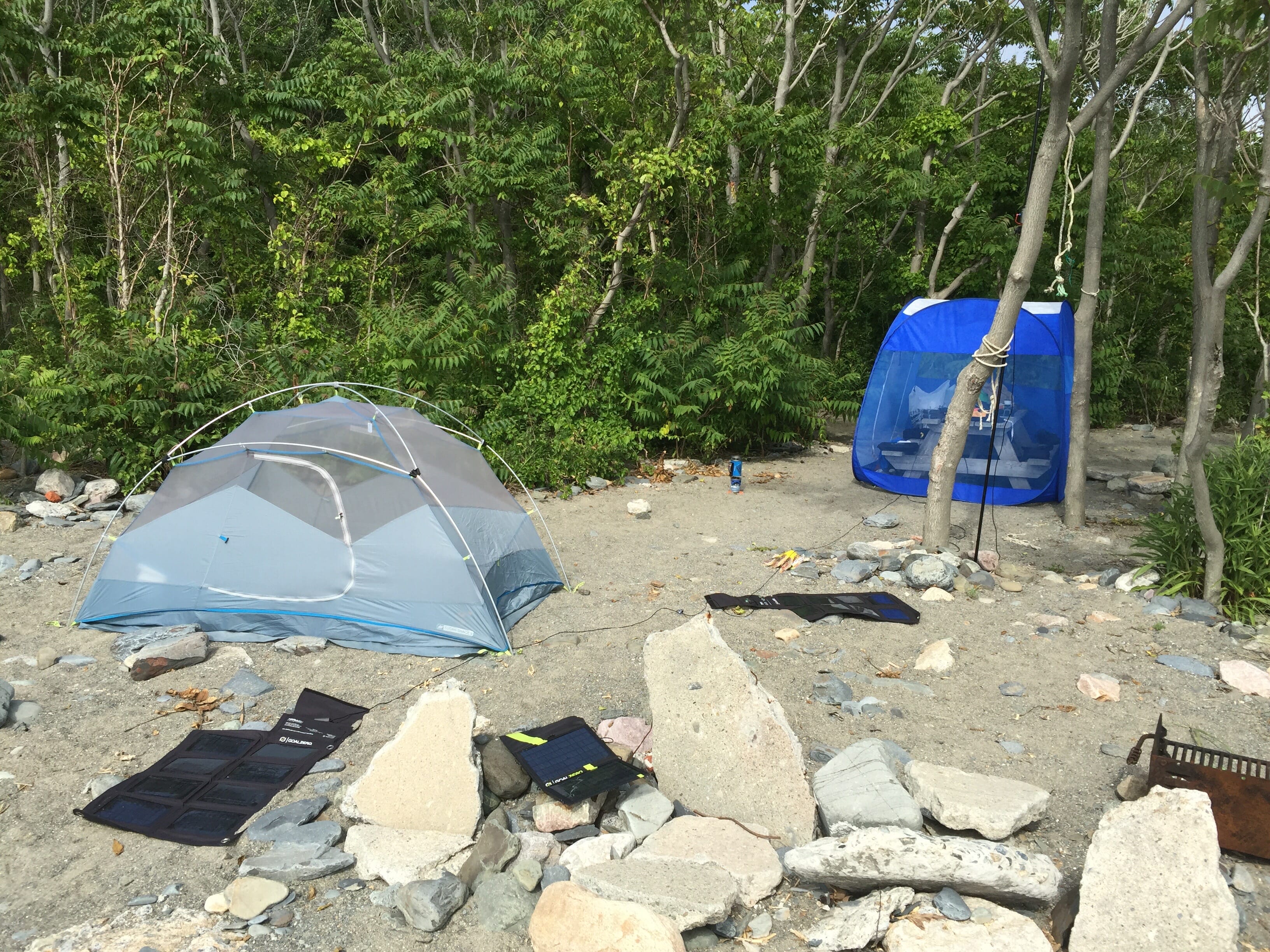
Tents
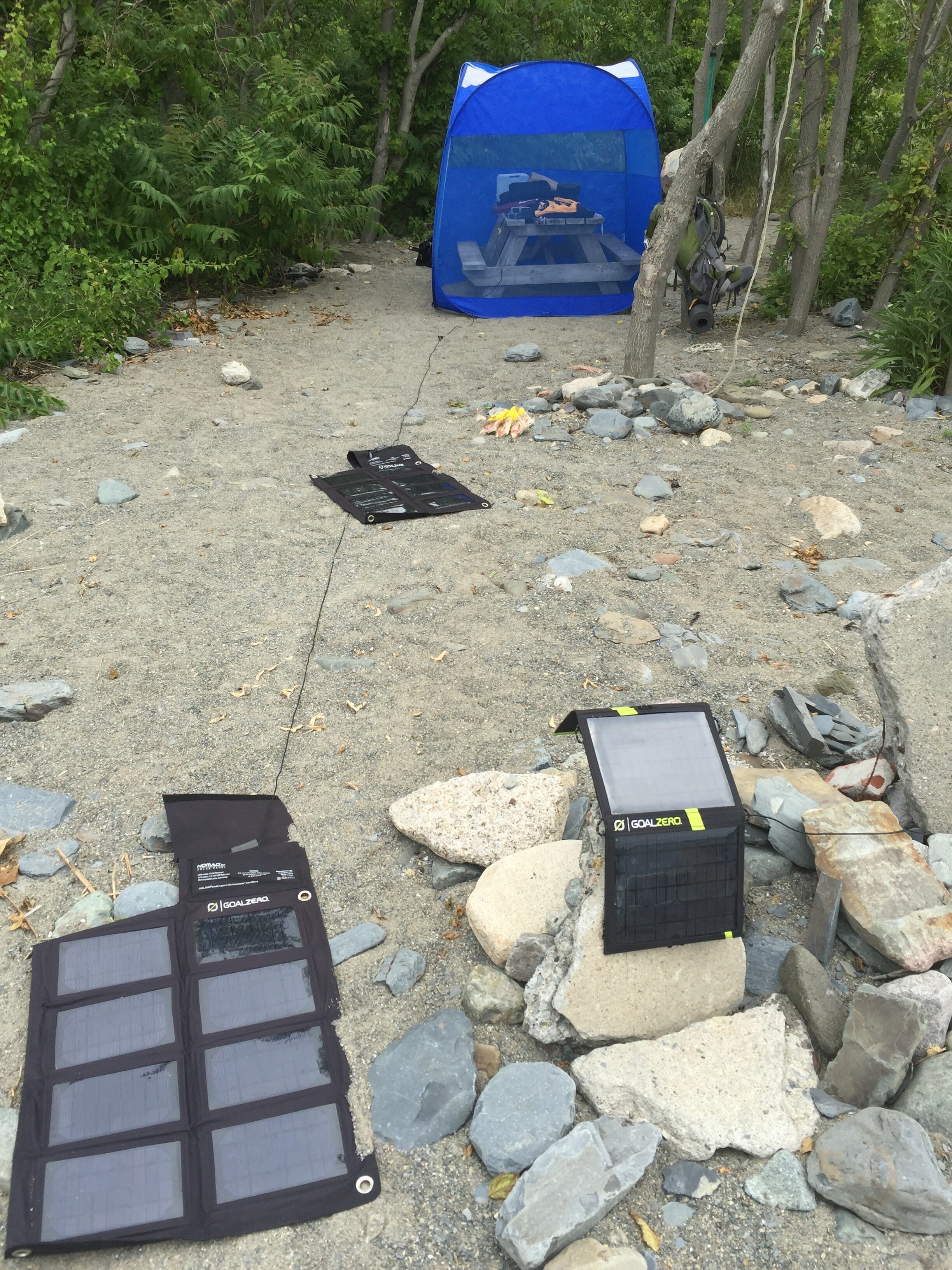
The operation on Lovells Island includes a pop-up enclosure that fits over a picnic table, and a tent for sleeping. Two 20-Watt and one 13-Watt solar panels are visible in the foreground among the rocks.

Camping trips are more involved. Lovells Island is the only place that both counts for the IOTA program and provides campsites. You need to plan ahead as campsites are allocated on a first-come-first-served basis, and reservations begin in January. I am rarely able to reserve all the dates I would like, and choosing dates seven months in advance means you’ll never know what kind of weather you’ll encounter. A severe thunderstorm over one of these islands is magnificent and terrifying!

Getting to Lovells is also more difficult. The ferry shuttles between Georges Island, a few other large islands, and Boston Harbor’s Long Warf. Connections to Lovells Island are made from Georges, and only occur three times per day. Once that last boat has left, you are stuck on Lovells until the next morning. You better have everything you need! That includes food, water, first aid supplies, power for your phone and radio, and anything else needed for a successful camping trip.
Solar panels
NE1RD Power and Light. Multiday QRP operations depend on a good power source. Two 20-Watt panels are connected in series to the GoalZero Sherpa 50 battery. The small 13-Watt panel on the rocks is recharging my phone.

[huge_it_maps id=”1″]

Lovells Island is covered in trees, many of them tall enough to easily support a wire antenna. That sounds convenient, but how long did it take you to hang your last wire antenna at home? Was it a several hour operation with a couple of friends? Given the short time available during one of these trips, I bring a backup antenna in case the wire antenna cannot be hung successfully (or hung high enough). My tool of choice is a throw weight and line like those used by arborists. Though the lead filled leather bag is heavy, it is compact and effective for getting a rope through a tree. An end-fed half-wave (EFHW) antenna is a good choice for this duty since it only requires one line high in a tree. The remainder of the wire that isn’t hung vertically can slope down to the ground and be tied off.

I’ve had good luck with two EFHW antenna models.  PAR EndFedZ antennas (www.lnrprecision.com) offer a trail-friendly antenna good for 10-20-40m that easily handles QRP power. This packs small and is light.

Intrigued by an advertisement on the ARRL website, I ordered and tried the MyAntennas (www.myantennas.com) EFHW-8010, a multiband antenna good from 80m through 10m that can also handle high power. On my last camping trip, I was very lucky to get my first throw through the tree in a good spot, and this EFHW antenna was up and running in about thirty minutes. It performed very well and will be in my pack on future trips.

Camping on Lovells is primitive. The park service offers chemical toilets, and cleared areas with picnic tables, but nothing else. You must bring your own water. Budget at least a gallon a day, and more if it’s hot. Suddenly, a three-day camping trip can get bulky and heavy! I’ve tried several “beach carts” and may have finally found one that is robust enough to handle the weight of all my gear, and the rough terrain of the island. Remember to bring everything you need to pack out your trash, too. Good campers leave nothing but footprints.
Ocean view
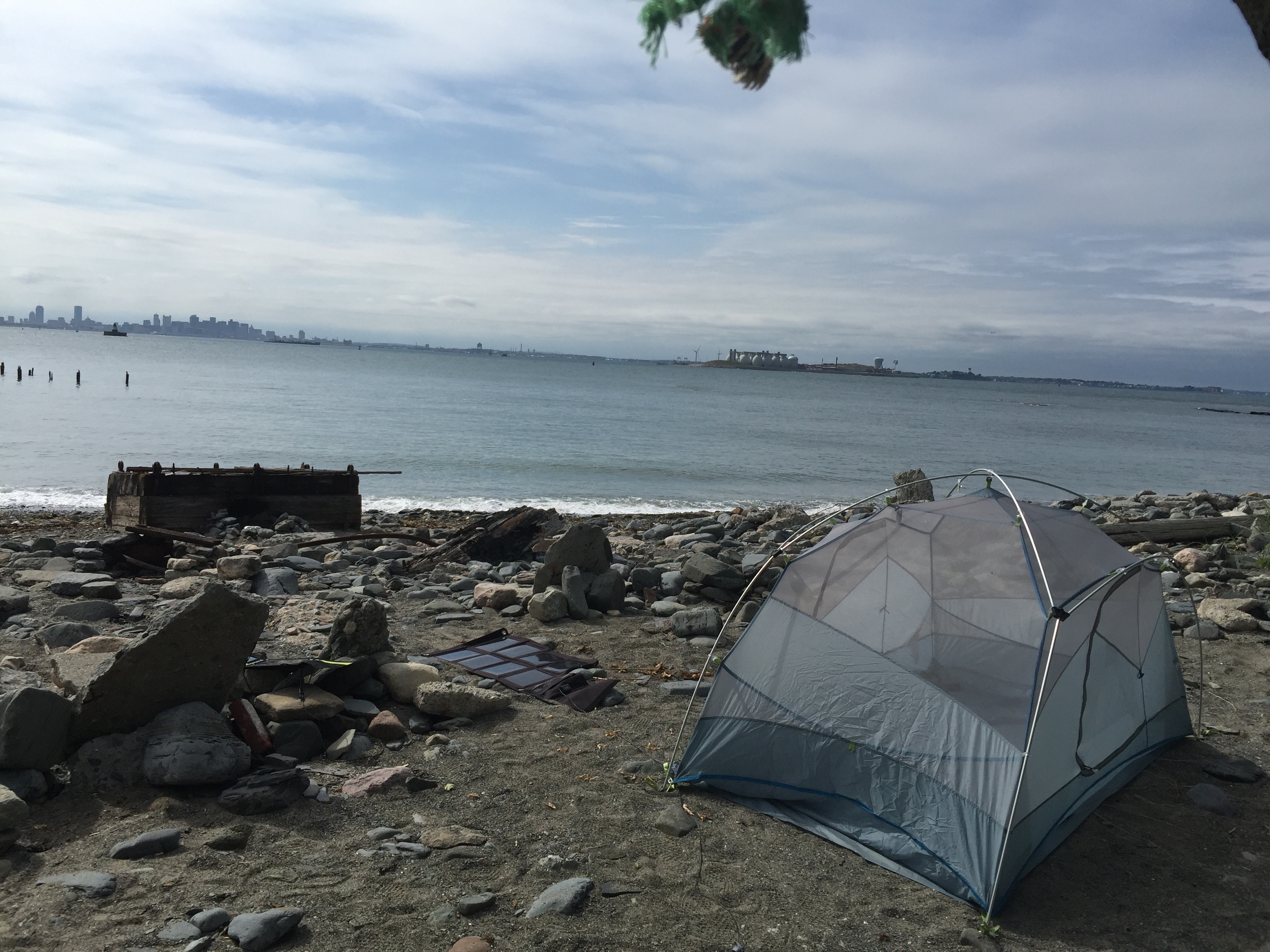
Boston to the left and Logan Airport to the right on the horizon. You can’t beat the view from Lovells Island.

Prior to each trip, I will array everything to be taken on the floor, and I’ll perform an inventory, thinking through each step and each thing that must be accomplished. Forgotten rope or even a forgotten connector might ruin an operation. Once everything is counted, the cart and my large backpack are filled.

Operating begins after camp is assembled, and I’ve had a short rest. These trips often happen in July or August, and it can be hot and sticky on these islands. Beware dehydration and overheating. When operating in a remote area, help may not be just a phone call away. It is important to take care of yourself first.

In three trips out to the islands in 2016, including two camping trips, I made 343 QSOs to 18 DXCC entities and 42 states. I’m going to work on completing my Worked All States award from these islands next year! That said, it isn’t just my awards program that keeps me going. I know that I’ve made it possible for other hams to work these islands for the IOTA program, the US Islands program, and even Worked All States. It is gratifying to hear, “Thanks for the new one!” several times during each trip.
NE1RD operating
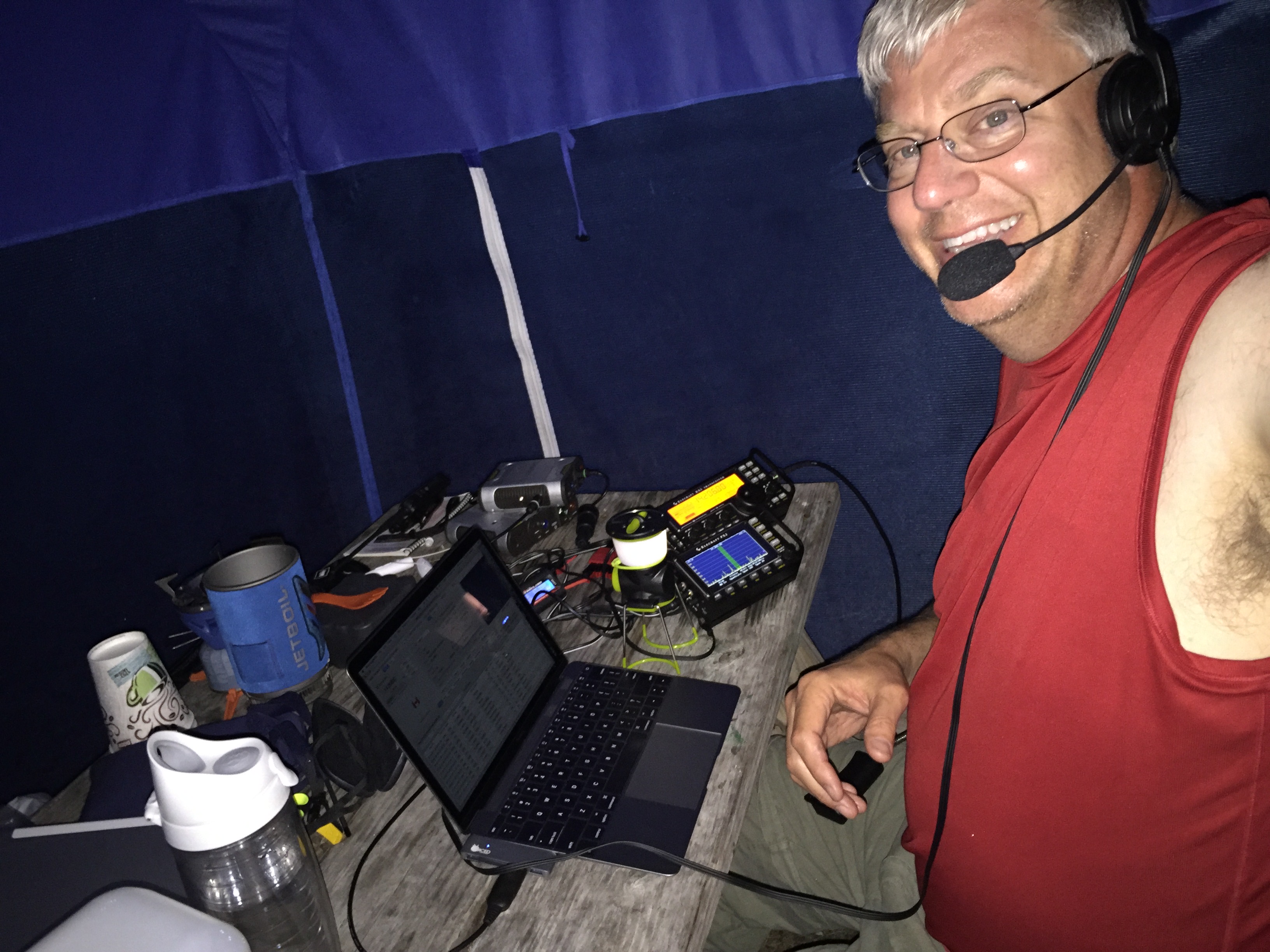
Nighttime is a great time to operate. The pop-up enclosure over the picnic table protects me from pests, even with the lights on.

I’m already planning next year’s trips. I operate as NE1RD/1 and have a fine QSL card that I would love to send to anyone I work. While Boston Harbor Islands are not exactly exotic, they are beautiful, and the act of planning and executing these excursions has made me a better DXpeditioner, and I believe a better operator.
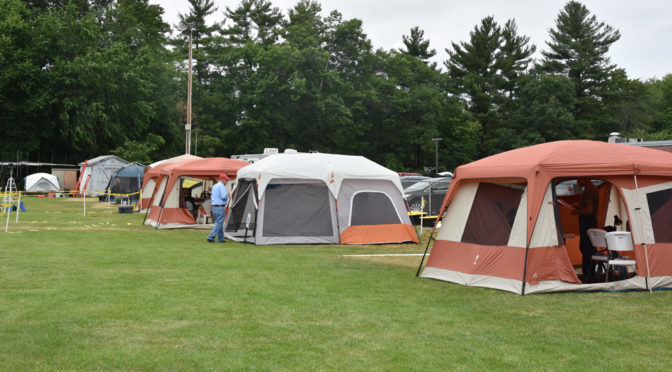
Sights from Field Day 2018

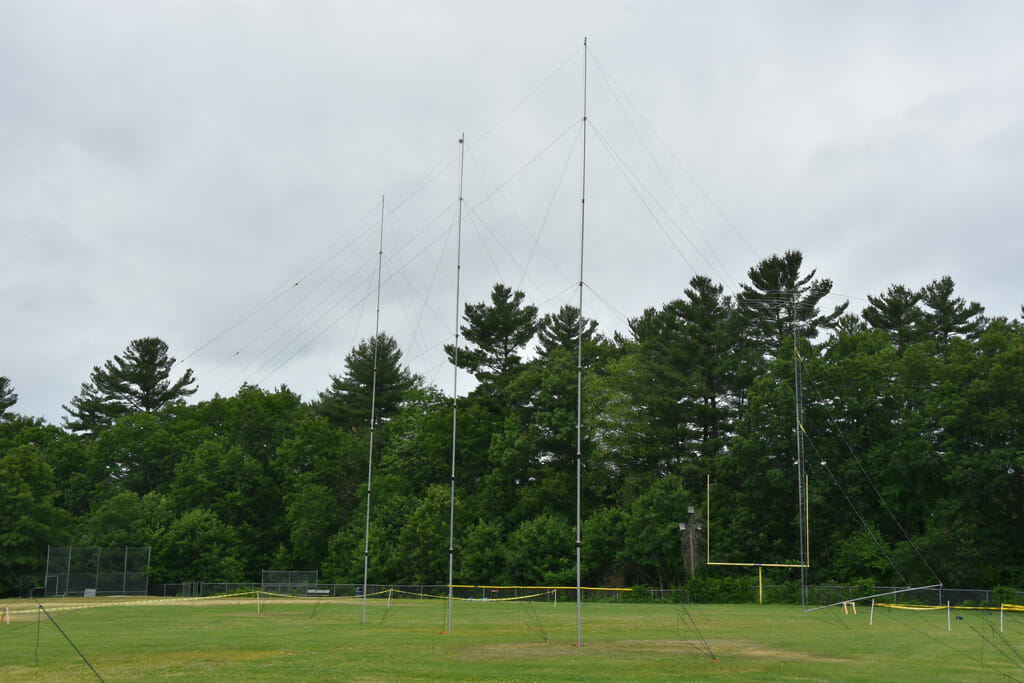
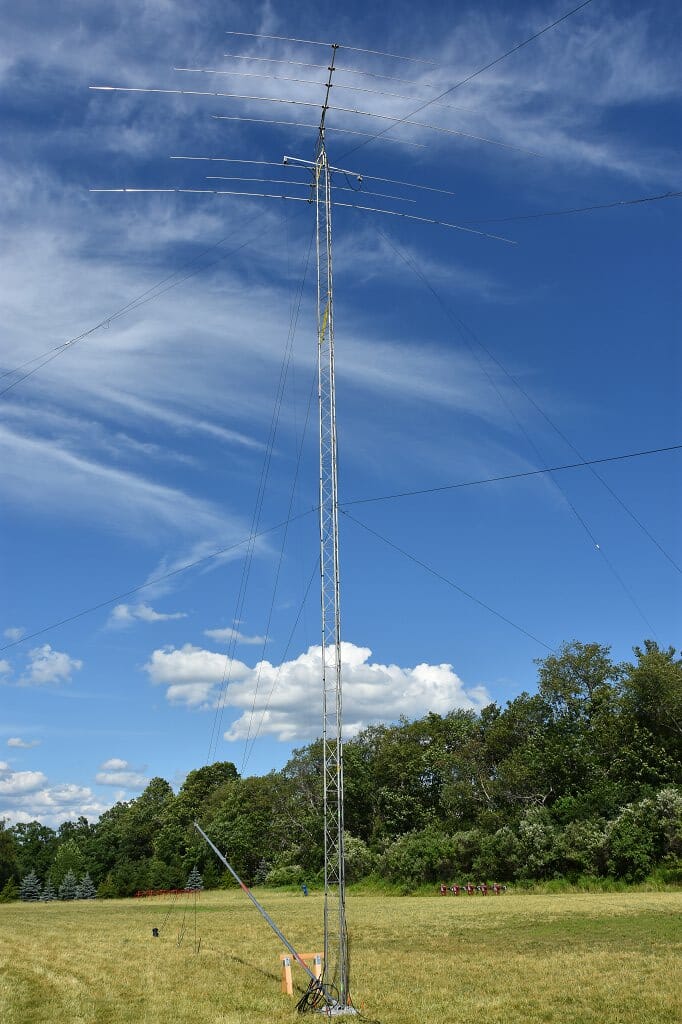
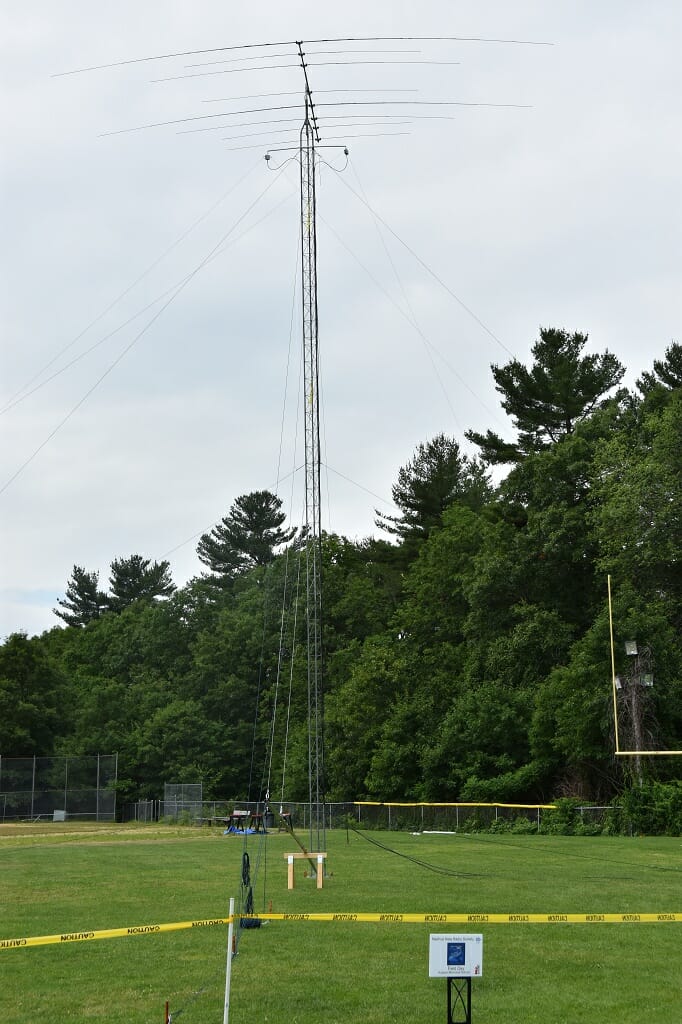
Field Day 2018 60 ft Digital Tower

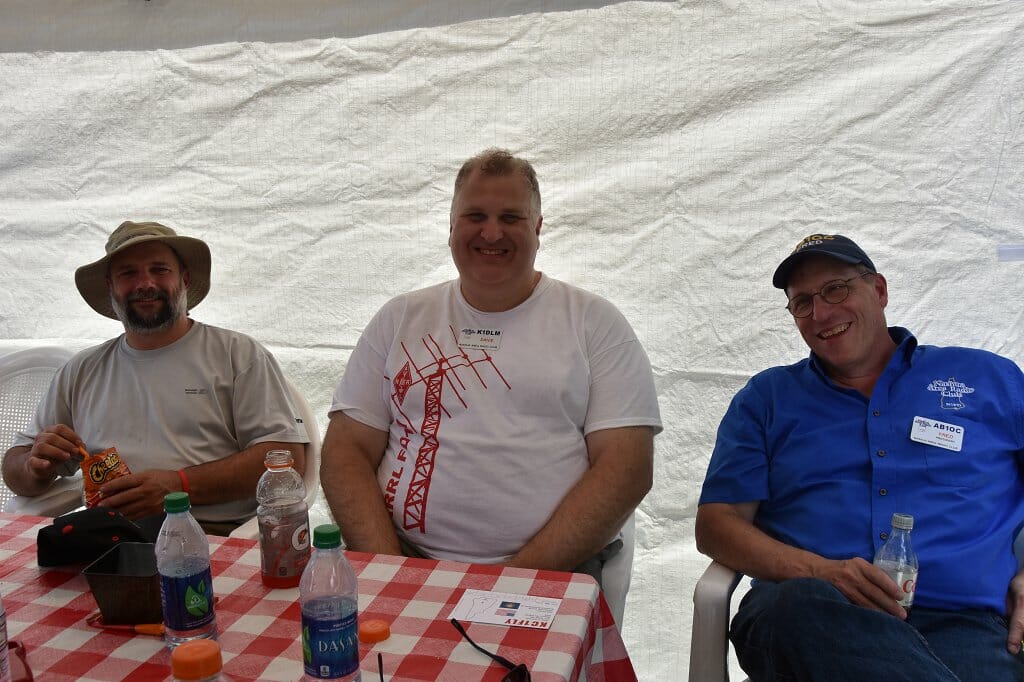
We had a great Field Day this year at the Hudson Memorial School!  Thanks to our Field Day Chairmen,  Dave Merchant, K1DLM, Hamilton Stewart, K1HMS and Fred Kemmerer, AB1OC for putting together a great Field Day for us. 

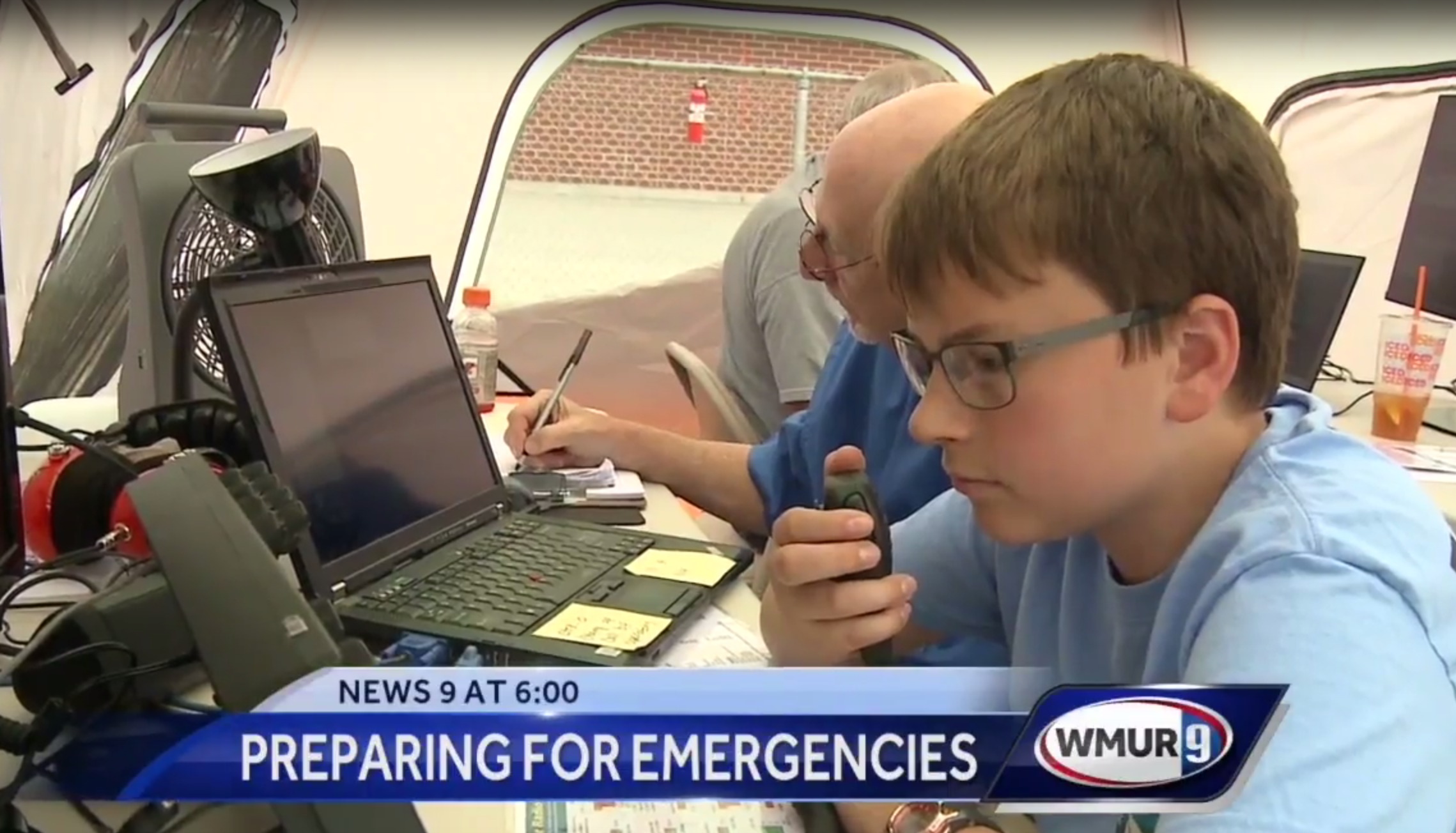
Our publicity chairperson, John W1SMN went above and beyond this year as we had coverage in print, video as well as on WMUR, the local Manchester ABC station!

NARS 2018 Field Day on WMUR

Here are links to our press coverage:

Here are a few of the sights from Field Day 2018.  Join our next Meeting on Tuesday, July 3rd at 7:00 pm at the First Church Nashua for the full readout!

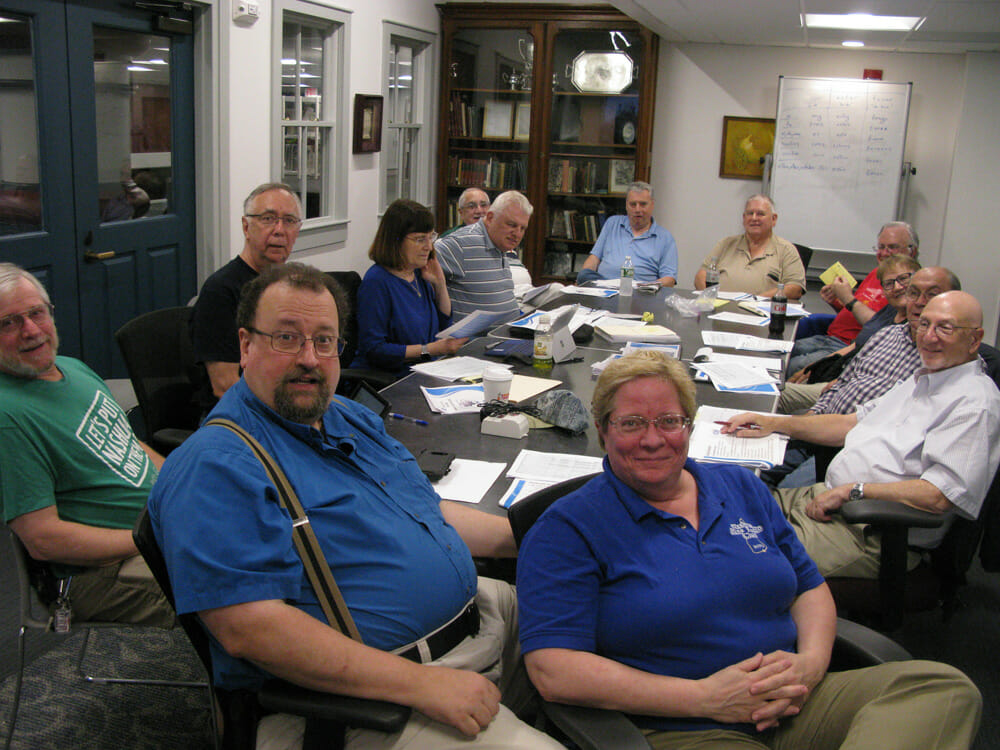
Field Day Planning Meeting

Thanks also to all of the committee chairpersons and all others who worked so hard to make this year’s Field Day a great experience!

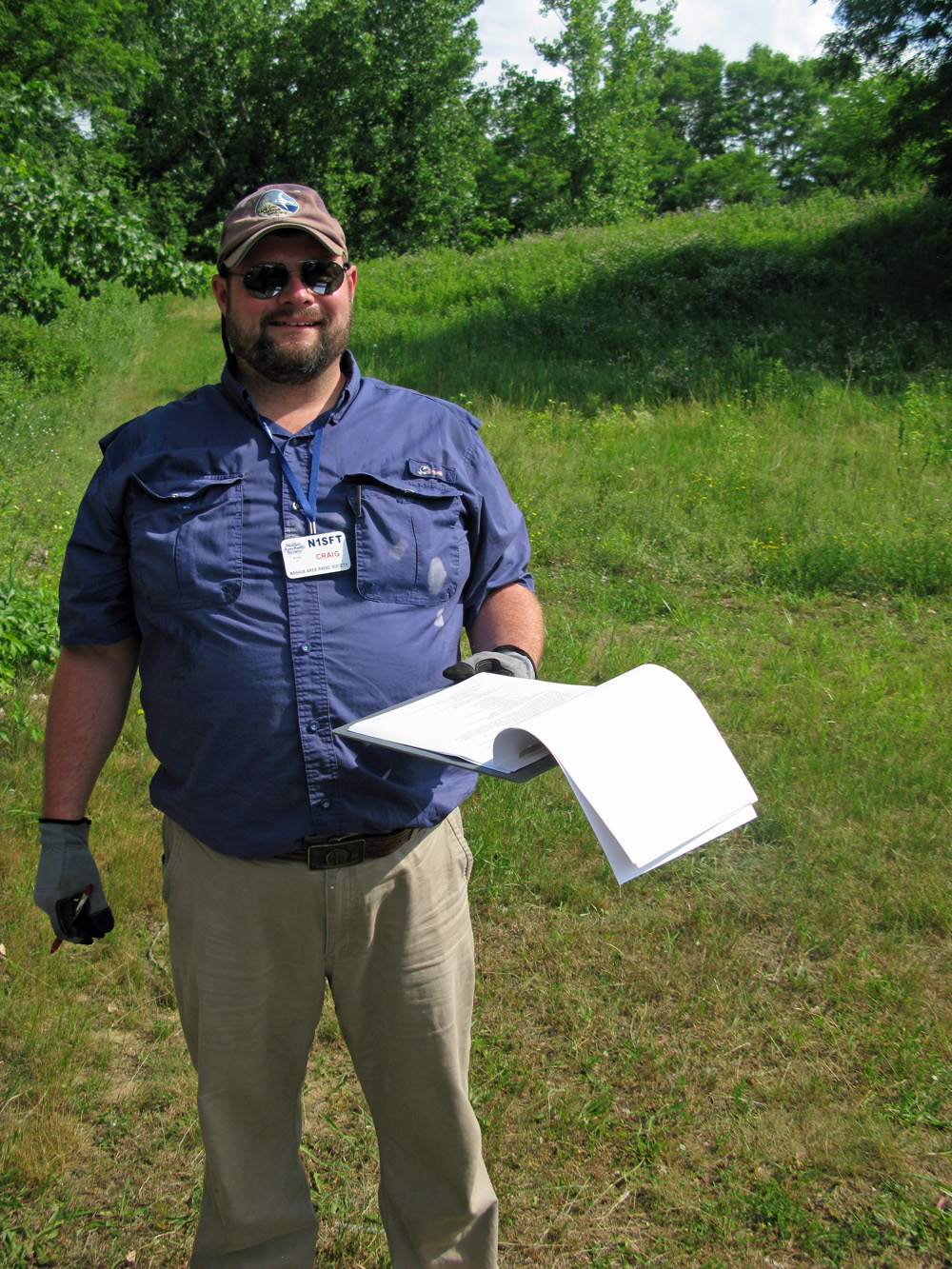
Craig, N1SFT, our Transportation Chairman

Step 1 is to get all of our Field Day equipment onsite from multiple locations.  Our transportation chairperson, Craig, N1SFT did a great job of planning and carrying this out.

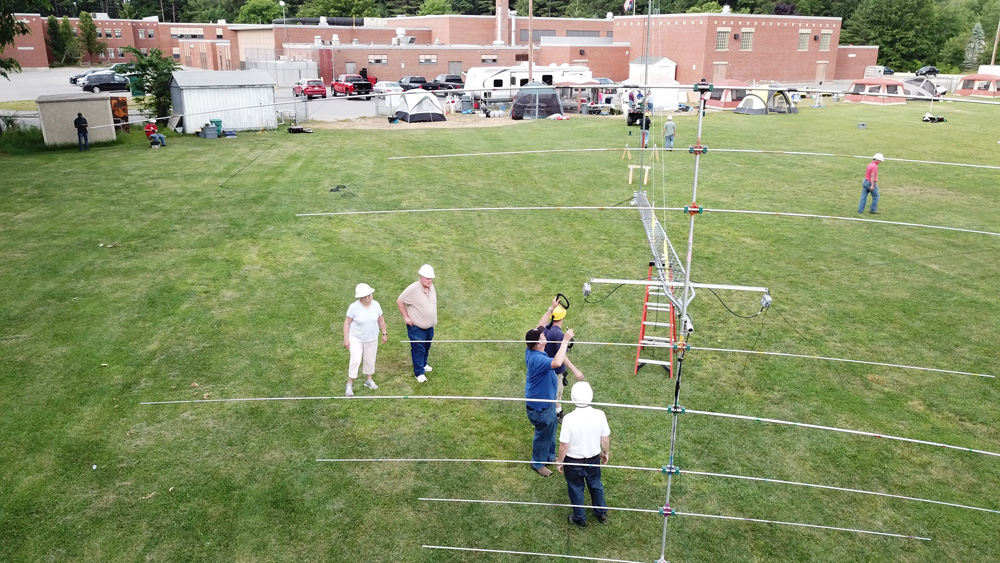
Birds Eye View of Antenna Setup

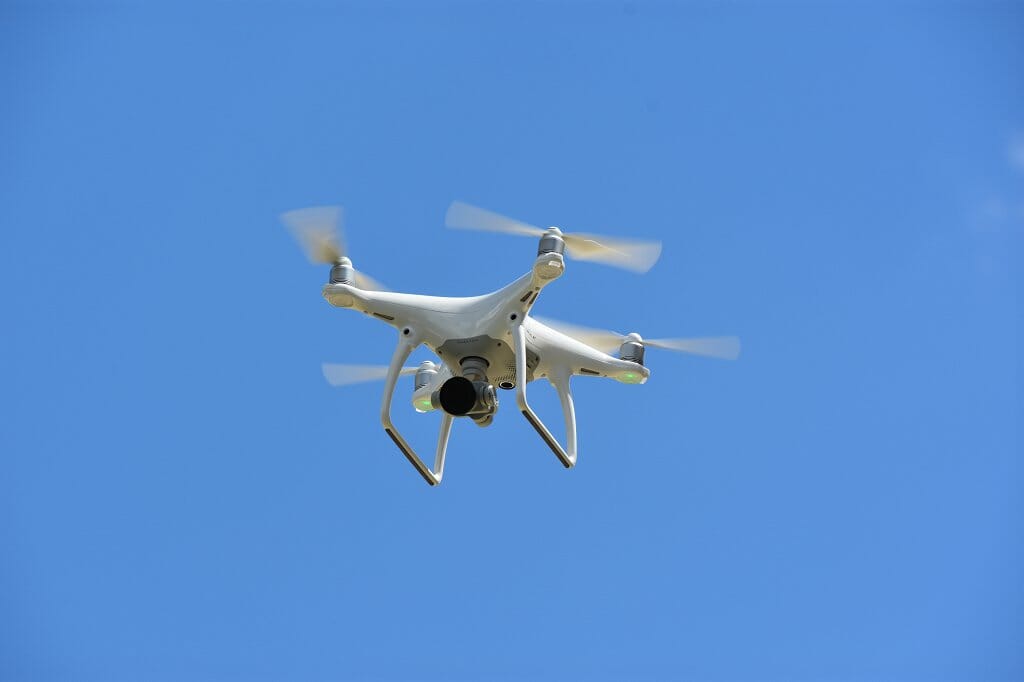
Many members came out on Thursday evening and Friday to set up 3 towers, with Yagis, the V-Beam, the Satellite Antenna and 13 stations!  Here is a shot that was taken by Desmond, WK1V from his drone.

40 meter V-Beam
40-meter V-Beam

The 40-meter V-Beam worked great and we got more QSOs on 40m SSB than any other band/mode in the event!

Satellite Antenna
Satellite Antenna

The Satellite antenna was impressive to watch as it rotates around to follow the Satellite passes.

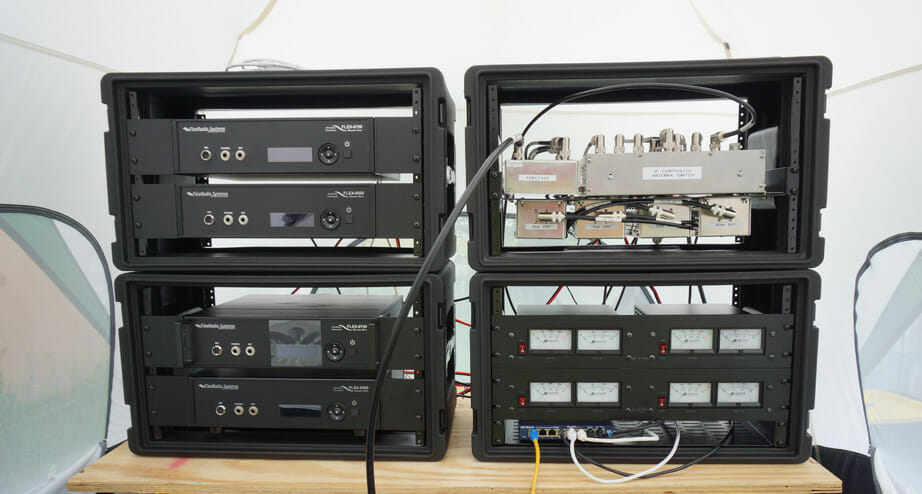
Flex Radio Setup near 60 ft Tower

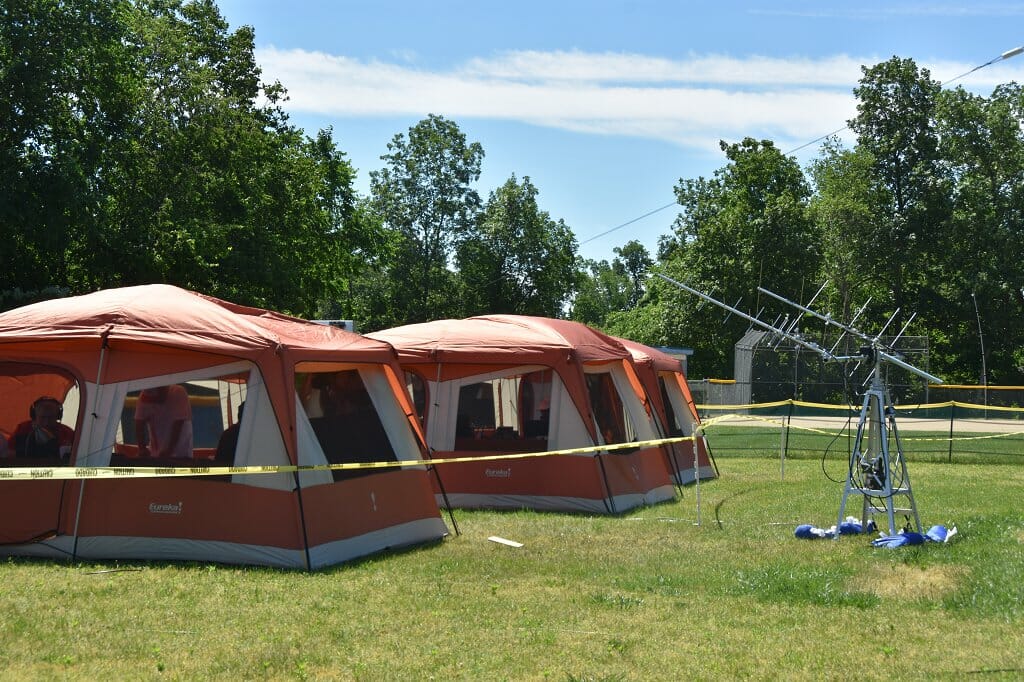
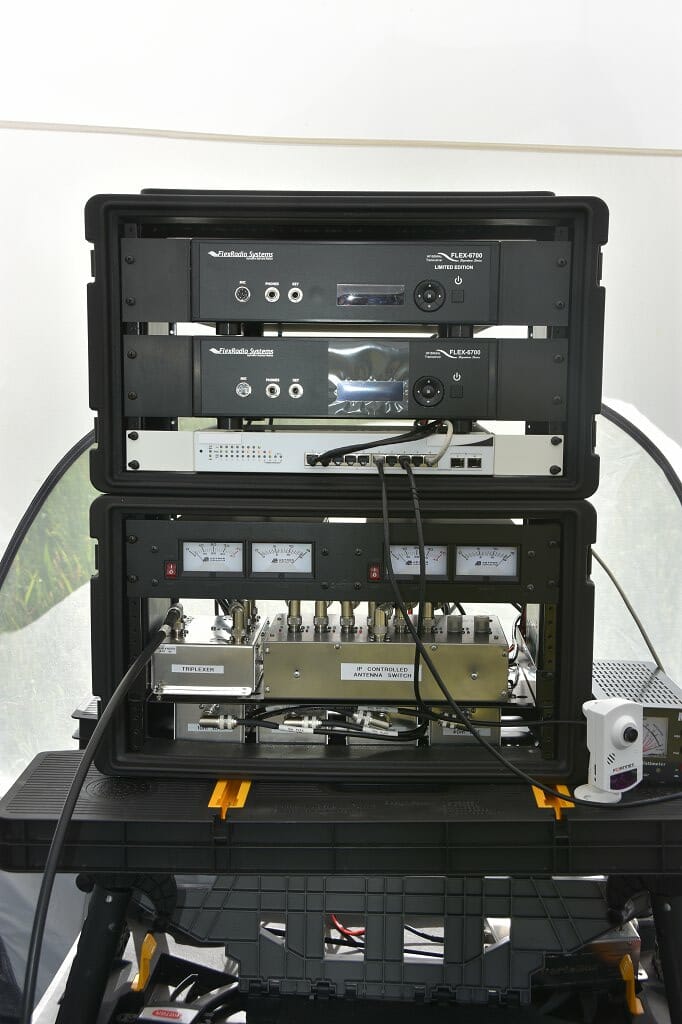
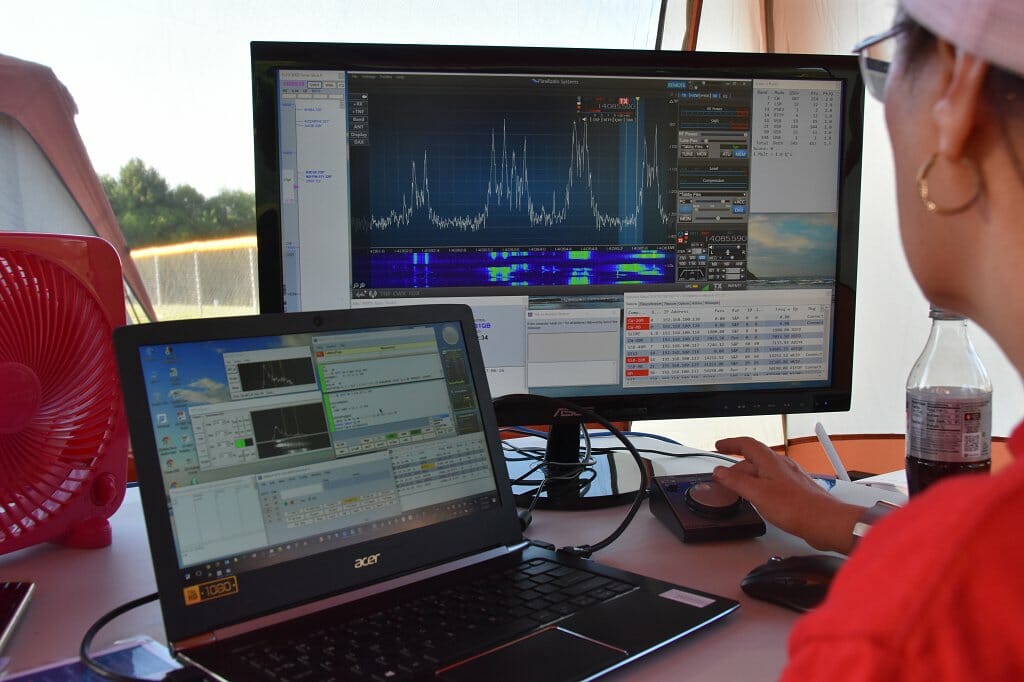
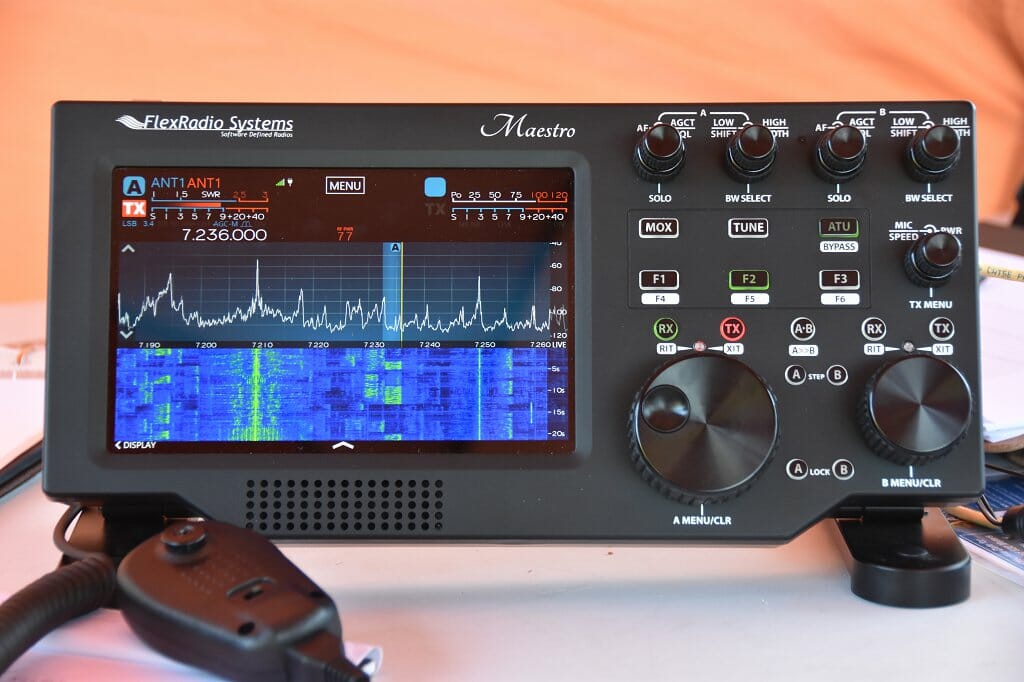
4 Flex Radios were the heart of our Digital and GOTA stations.  They were located near the 60-foot digital tower and accessed remotely via laptops and a Maestro in the Digital/GOTA tents.  Thanks to Bill Barber, NE1B and John Keslo, W1MBG for contributing their Flex Radios to the effort.  And most thanks to Dave, K1DLM for setting these up and keeping them and the network running for the duration of the event!

ARISS Training
ARISS Training

Adam Goldstein, a teacher from Hudson Memorial School and a sponsor of the HAB-3 effort at HMS gave us training on ARISS and how HMS was able to get a contact with the ISS, which will be this coming November.

N1FD On The Air - 10A NH
N1FD On The Air – 10A NH

Guests to Field Day were greeted by our new Banner!

Public Information Tent

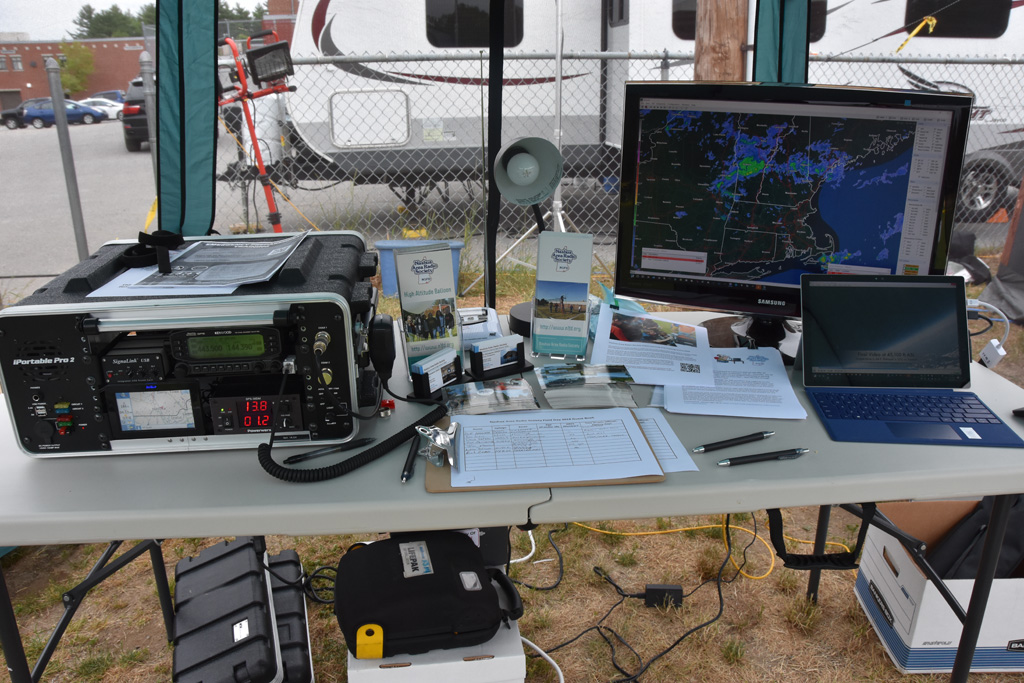
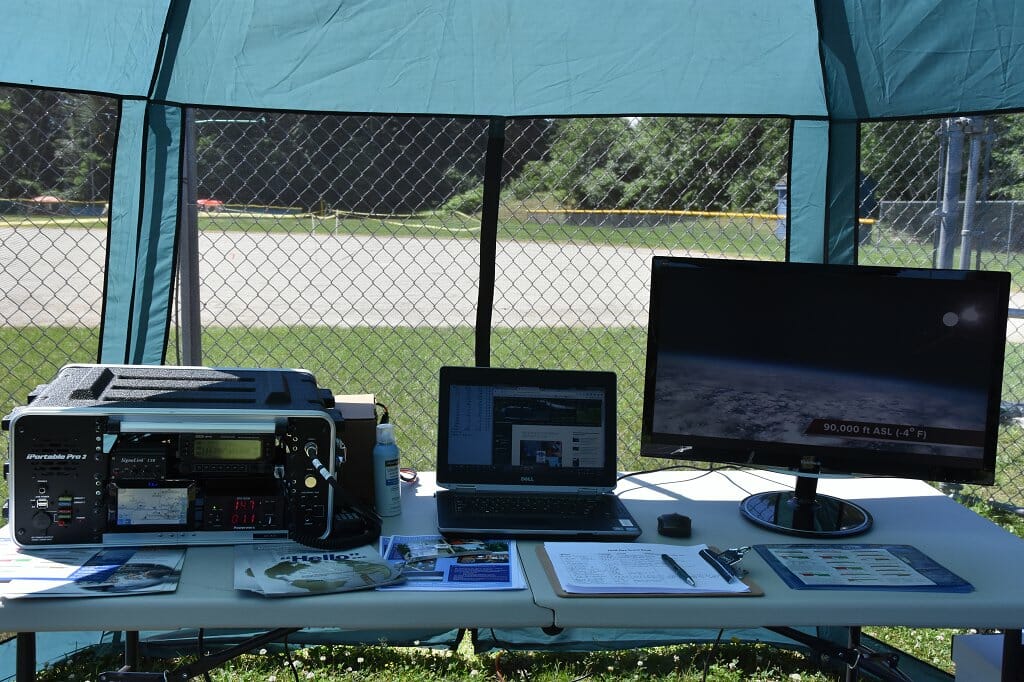
Guests could sign in and learn more about Field Day and the Nashua Area Radio Society at our Public Infomation Tent.  We also had an N1MM scoreboard and a weather radar display so we could be prepared for any incoming storms.

Team Finchum on the Air

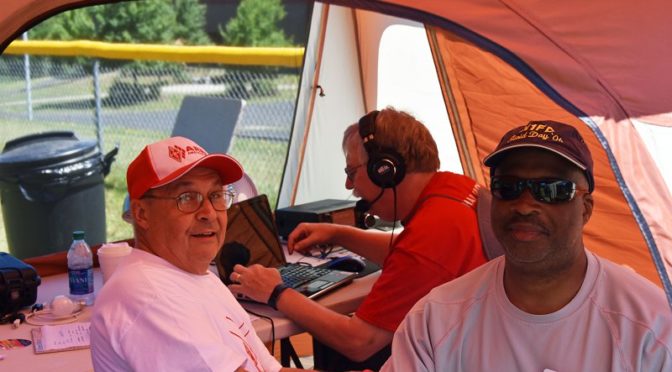
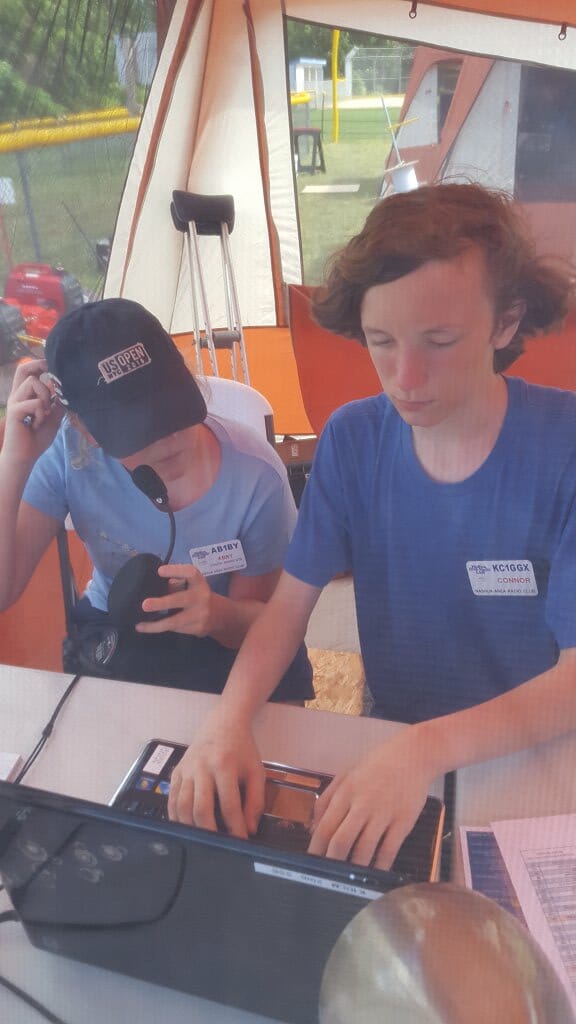
Jamey, AC1DC and Abby, AB1BY spent many hours on 20m and 40m SSB and made many QSOs!

Scott, NE1RD on 15 meter SSB

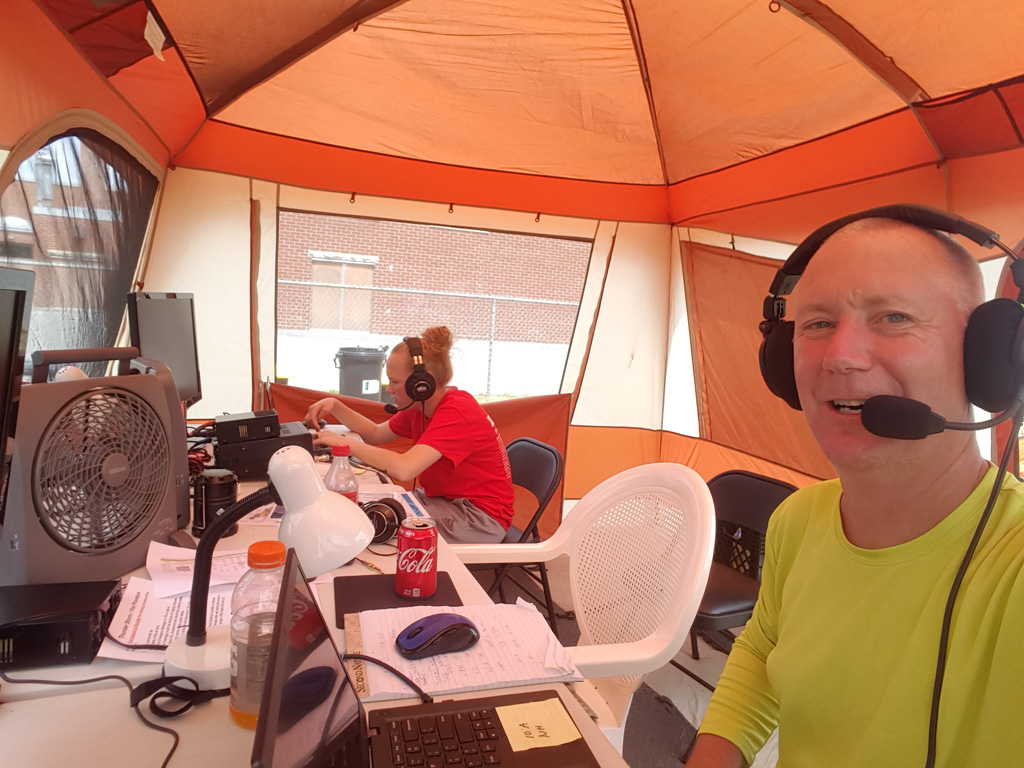
Scott, NE1RD was one of our top operators!

Keith, KC1IMK working Digital Modes

Keith, KC1IMK made his first digital contacts on PSK31.

CW at Field Day
CW at Field Day

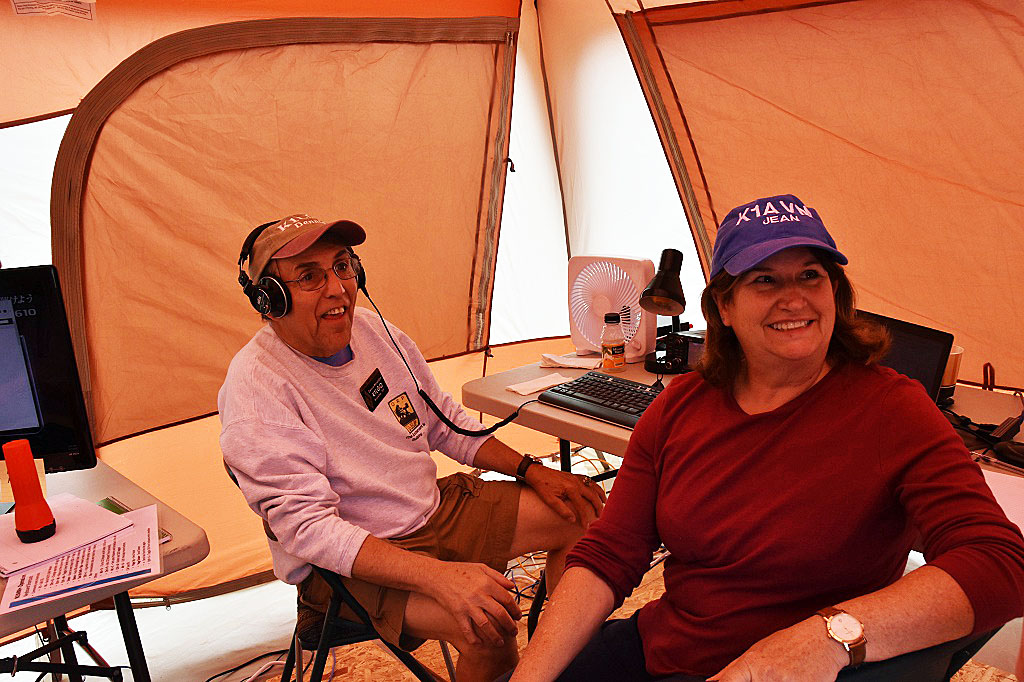
Dennis, K1LGQ and Jean K1AVM worked CW.

GOTA and 15 meter Digital Stations
GOTA and 15-meter Digital Stations

Here is Keith’s Dad, Mark, KC1IML with coach Ira, KC1EMJ making contacts on the GOTA station. Dave Merchant, K1DLM is working on the 15m Digital station.  Thanks to Dave for all the work he did in setting up and keeping the network and digital stations running!

Hamilton at the 10/15/80 meter CW Station

Hamilton, K1HMS, one of our 3 Field Day Chairpersons, worked CW QSOs on our 10/15/80 meter station.

Curtis, Charlie and Trish working the Satellites
Curtis, Charlie, and Trish working the Satellites

Curtis, N1CMD, Charlie, W1CBD, and Trish had fun working QSOs with other Field Day stations through Low Earth Orbit Satellites.

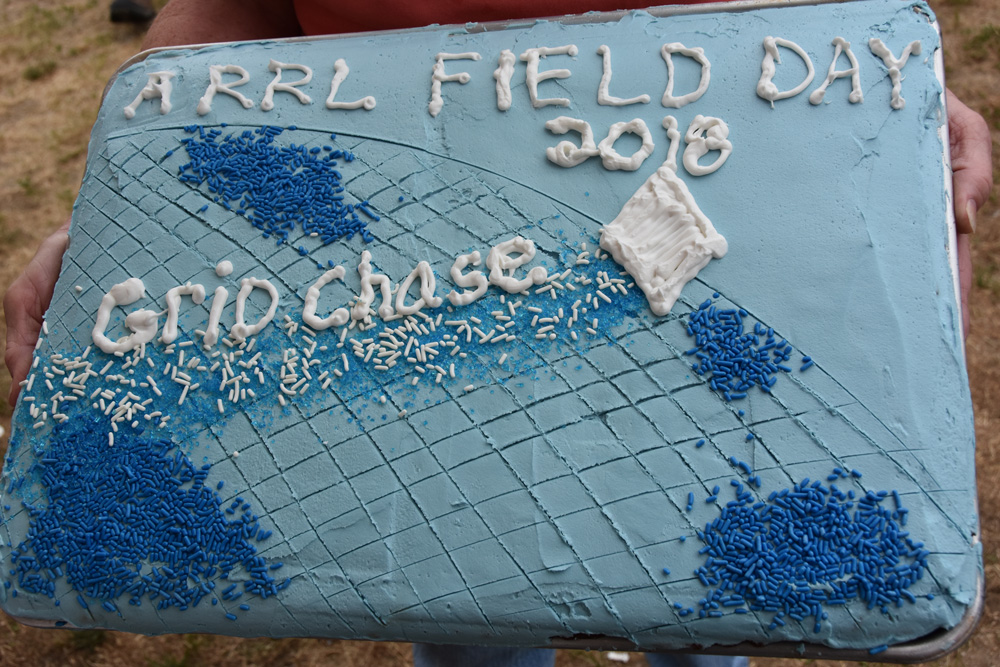
Field Day Cake
Field Day Cake

We had delicious food thanks to Valerie Merchant, who provide meals and drinks during setup as well as Field Day operations.

We are still working on the final scoring and we’ll have a final readout at the July 3rd membership meeting.

Please share any pictures or video that you have from Field Day to Fred, AB1OC.

Anita, AB1QB

Field Day 2018 is Almost Here!

Field Day is an Emergency Communication Preparedness, Communications Training, STEM Learning, and fun activity all rolled up into one event! Field Day 2018 is rapidly approaching and we’ve been working for over a month now to plan our 2018 operation. Field Day at the Nashua Area Radio Society is a major undertaking so we decided to share the Chairperson role among three members:

2018 Field Day Team Leaders
Team Leaders

It takes a great deal of support from our members to put together an operation at the level we do it at NARS. We’ve had many NARS members volunteer as Team Leaders to plan and pull together the many elements of our upcoming Field Day. Many, many thanks to all of our Team Leaders and to everyone who is contributing to support Field Day 2018!

Field Day 2018 Plans & Goals

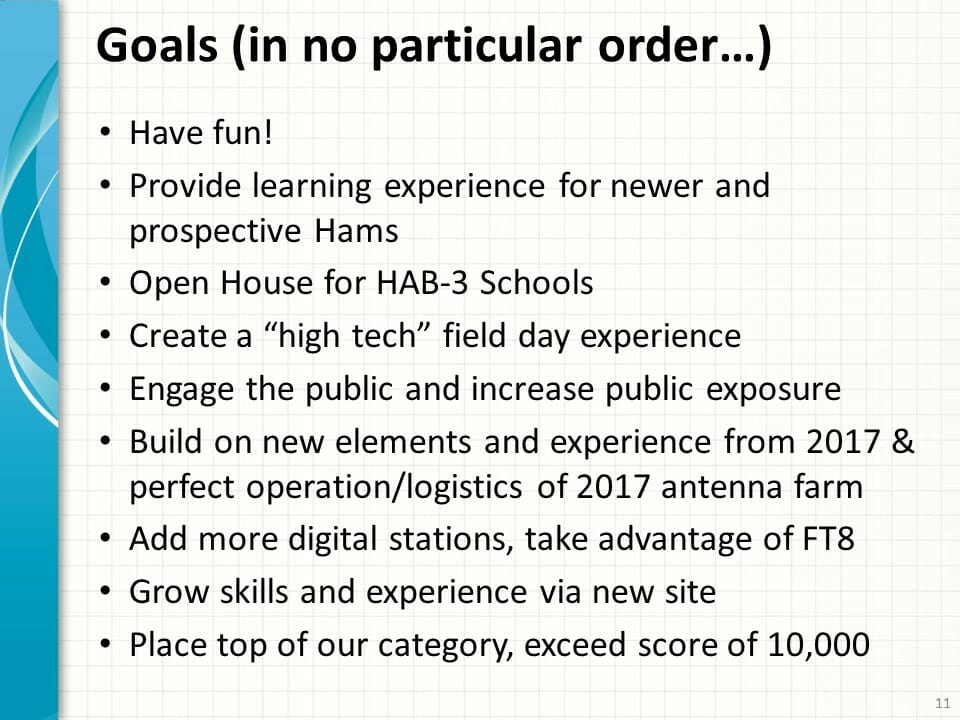
Our Goals for Field Day 2018
Our Goals

We began our planning by setting some goals for our operation. Field Day at NARS centers around being a learning experience for all involved with a special focus on getting new members, new Hams, and young people on the air.

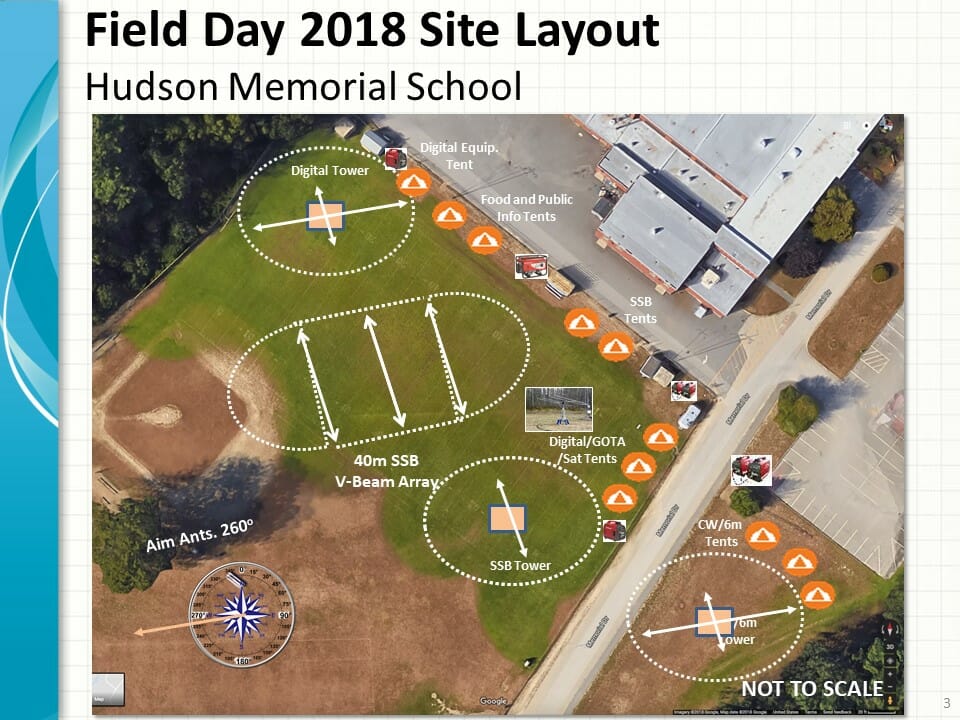
2018 Field Day Site Layout at Hudson Memorial School

Our new site at Hudson Memorial School in Hudson, NH gives us the opportunity to experience Field Day at a new site. Our 2018 operation will double as our Open House for our High-Altitude Balloon program schools.

Space Communications Ground Station

It will also provide an opportunity to test the space communications ground station that we are building to support an ISS Crew Contact with the students at Hudson Memorial School in the fall.

Station Plans

High Tech SDR System at Field Day
High Tech SDR System

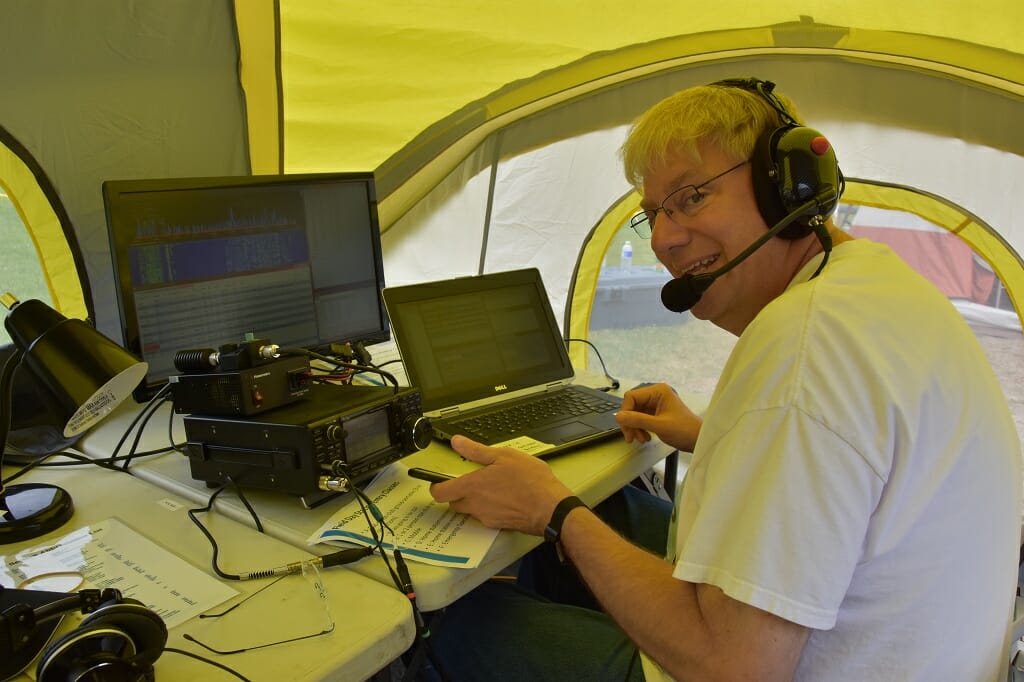
We always like to incorporate new elements into our setup each year. This year we’ll be increasing the scope of our Software Defined Radio Setup and using it to add more Digital Stations.

Field Day Digital Station

We are planning a 10 Alpha station for our 2018 operation. With the additional Get On The Air Station (GOTA), free VHF station on 6m and the additional satellite ground station and 2m/70cm GoKit for Talk-in and Messaging use, we will have a total of 14 transmitters on the air at Field Day 2018! Here’s the planned breakdown for station bands and mode:

  • SSB Stations – on 40m, 20m, 15m, and 10m/75m
  • CW Stations – on 40m, 20m, and 15m/10m/75m
  • Digital Stations – on 40m, 20m, and 15m/10m/75m
  • Free VHF Station – on 6m (all modes)
  • Satellite Station – on 2m/70cm/23cm (all modes)
  • GOTA Station – on 15m/10m/75m SSB
  • Talk-in/Messaging Station – on 2m/70cm FM
Field Day SDR-Based GOTA Station
SDR-Based GOTA Station

Our GOTA will also use our Software Defined Radio system and share antennas with the Digital Stations. This approach provides an easy to understand and high-tech view radio equipment and SSB voice operations on the HF bands.

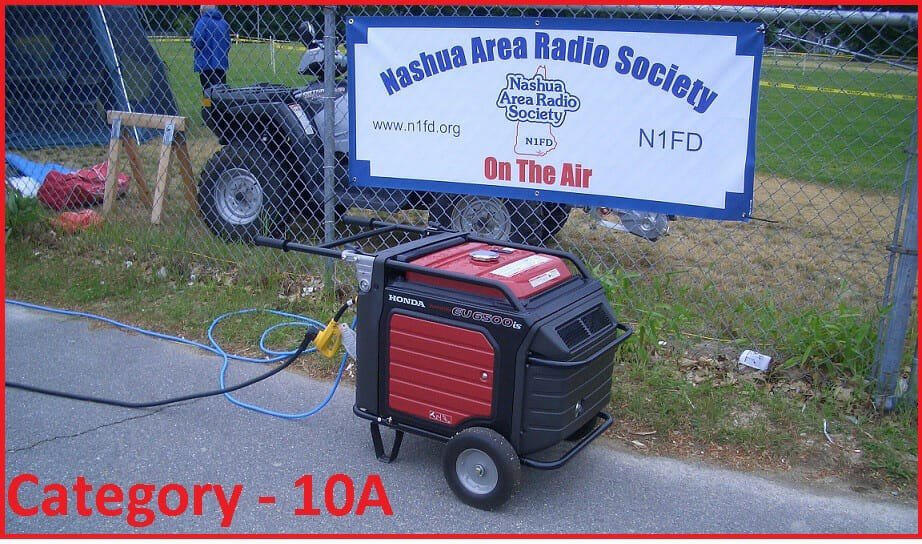
Generator Power at Field Day
Generator Power

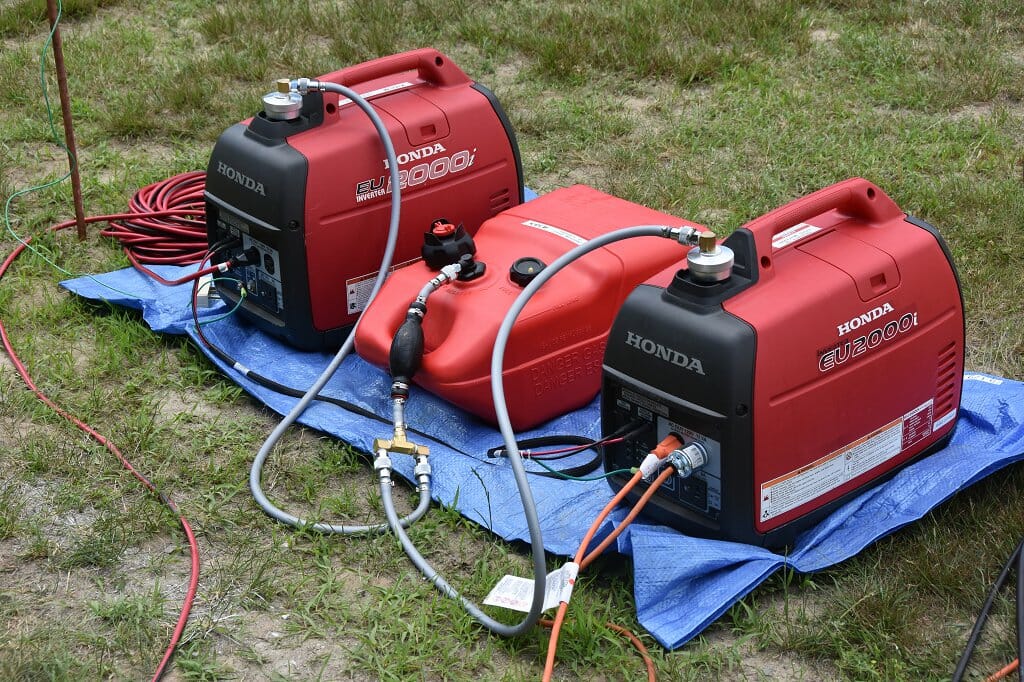
We will again be in the Alpha category using off-grid power via generators. We will also have a solar/battery setup that we will use to make some contacts.

Antenna Plans

60 ft Digital Tower
60 ft Digital Tower

Antennas are a large part of any Field Day station and NARS brings a lot of top-notch equipment. We are planning to put up three towers again this year and all three will have yagi antennas for 20m/15m/10m along with wire antennas for 80m and 40m.

40m V-Beam High-Performance Wire Antenna

The 40m V-Beam wire antenna will be back for SSB and it has been optimized both electrically and mechanically.

Learning Opportunities

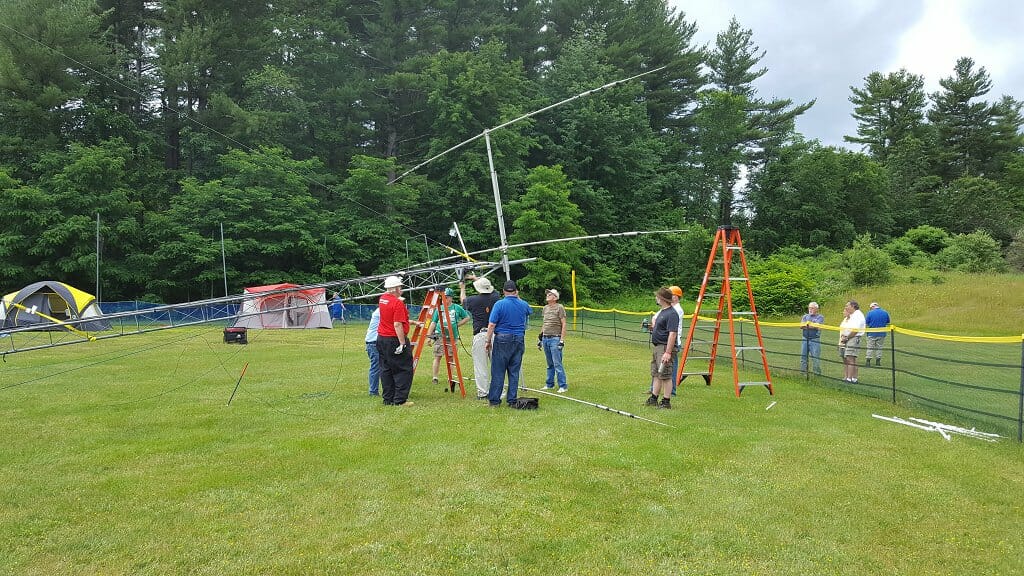
Setting up a Tower at Field Day

The setup of our antenna farm is a good example of one of the many learning opportunities at Field Day. Hamilton, K1HMS, and Jamey, AC1DC have been conducting Antenna Parties to give members a chance to learn how to build, setup, and tune our antennas. We’ll also be providing extensive training and information about all aspects of setup and how to operate during our June 5th Membership and June 12th Tech Night Meetings.

Team Operating at Field Day

Learning to operate is another important aspect of Field Day. It’s a lot of fun for folks who are new to Field Day or to a particular operating mode such as CW or Digital to team up with a more experienced operator to operate as a Team. Doing this for your first hour of operating time will help you get up to speed on how to use a station to operate. You can also help out the more experienced operator by helping to capture call signs and exchanges and to log contacts.

Food, Fun, and Videotape at Field Day…

A Feast at Field Day

Valerie Merchant has again volunteered to provide food for us during our operation. Valerie did a great job with this last year and we are very happy to have her do this again this year. THANK YOU, Valerie!

WK1V's Video Drone
WK1V’s Video Drone

Also, Desmond WK1V will be bringing his drone again this year. Desmond took some amazing aerial video of our 2017 operation. Check out the video which follows.

Our 2017 Field Day Highlights Video

Important: Sign Up & Don’t Miss These Meetings

Our Field Day sign-up for Station Setup/Takedown, Operating, and Meals is available in our Members Forum on n1fd.org (don’t forget to log in to our website to view this link). Take a minute to follow the previous link and sign-up to be part of Field Day 2018! If you are not a member or are having trouble accessing the sign-up, please contact us at [email protected] and we’ll answer your questions and help you to sign up.

Field Day Station Training
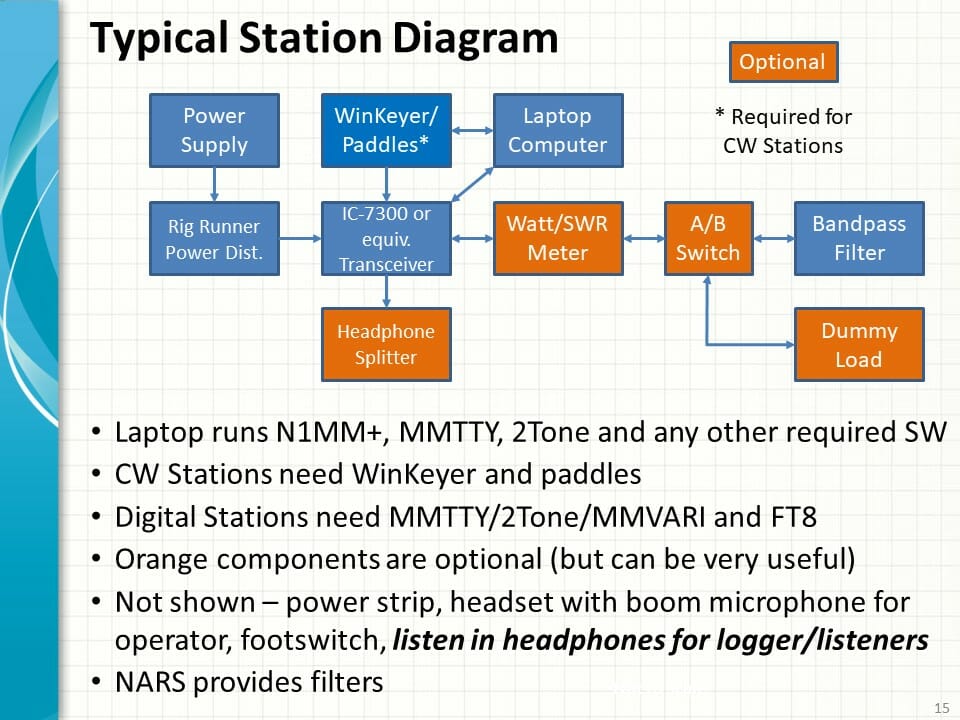
Field Day Station Elements and Training

Also, we’d like to see as many members as possible attend our June 5th Membership and June 12th Tech Night Meetings. We will be sharing lots of information and how-to material and training between these two meeting. Please try to attend both to learn and take full advantage of the fun at Field Day. You don’t have to be an old hand or even have ever participated in Field Day before to have a lot of fun. Just try to make it out to these meeting and we’ll get you up to speed and help you to participate!

Bring Your Family & Invite Your Friends

Field Day Public Info Tent
Public Info Tent – Videos, Information, and a Talk-in/Messaging Station

Field Day is also a great opportunity to showcase Amateur Radio to the general public. We set up and staff a Public Information tent as a starting point for visitors to learn about the Nashua Area Radio Society and what we are doing on-site. We will provide tours of the site, a chance to Get On The Air at our GOTA station, demos of the equipment we are using, and much more! Please bring your family and invite your friends to come out to Hudson Memorial School in Hudson, NH any time between 2 pm Saturday, June 23rd and 2 pm Sunday, June 24th, and visit our site. Here are some direction to our site (click below or refresh your browser if you don’t see the map) –

See you at Field Day 2018!!

Fred, AB1OC

Radio Amateurs Developing Skills Worldwide