I recently wrote an article about Nashua ARC’s 2017 Project Night (forgive my shameless self-promotion). In it, I expressed my awe of what our club members can do, and how it has inspired me to attempt my own first build.
The winter really is the best time to do this. And it’s time for me to embark on this journey of fun, learning, and frustration! So I turned to Mike (AB1YK) who knows about such things since he and I are attempting to organize a future summer weekend Tech Build Event for the club. The Pixie and the DSO138 oscilloscope are the warm-ups for this main-event. One suggestion Mike threw out was a Direct-Conversion Receiver (DCR) as advertised in the January 2015 issue of QRP Quarterly which you can actually download here (and as far as the application to the Tech Build goes, perhaps we only build parts of the DCR given time constraints). This article is entitled Let’s Build Something: Part I by Ben Kuo (KK6FUT) and Pete Juliano (N6QW).
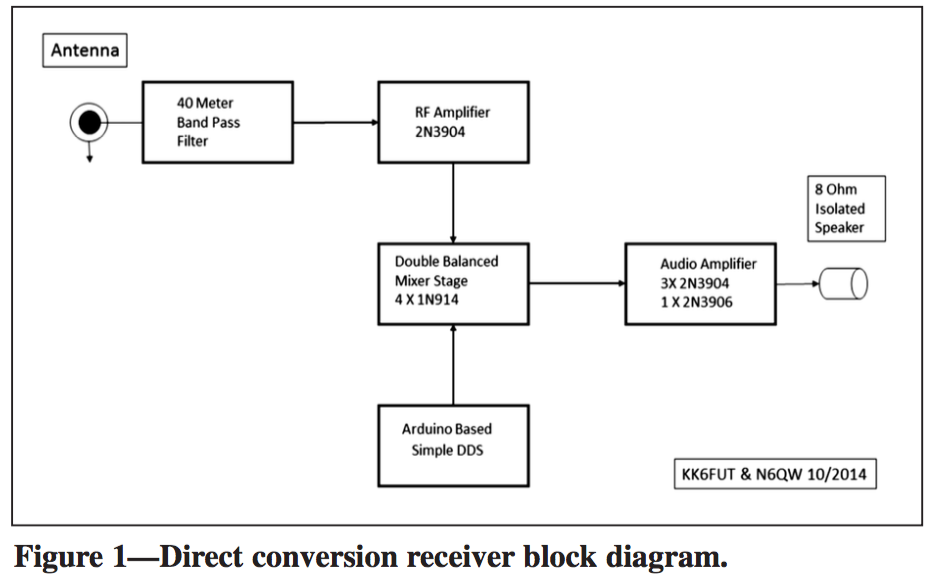
In it, they outline the main building blocks of the build. The nice thing about this build is once one is done, it is amenable to some modular alteration to turn it into a fully working QRP SSB transceiver! (Though I do not know how much wattage at this stage) The other nice thing about this build is all the parts are clearly labeled and Pete provides links at the end of the article for YouTube videos about the build. Maybe it’s just my noob eyes, but I find the videos moderately useful for someone starting from scratch, but I can see the utility for a more experienced builder. Additionally, this build utilizes the Manhattan style of building. I find this optimal for someone just starting out because I can easily visualize all the connections between the components and have relatively easy access to make measurements and tests with probes.
Let’s go through parts and I’ll tell you what I know (at a cursory level) and what I don’t
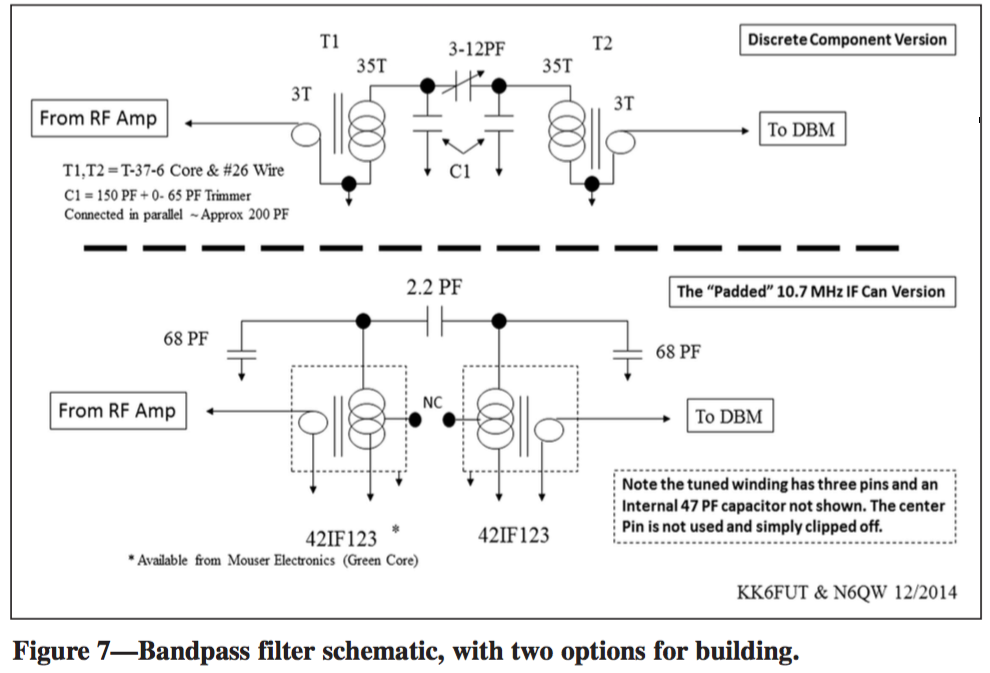
- 40m bandpass filter: Totally on this one. I’ve never built a filter before but looking forward to doing this. In fact, I need to build one for my ADS-B antenna at 1090 MHz, but it doesn’t seem feasible to do from components at that frequency. Any ideas anyone? I’m kind of stumped.
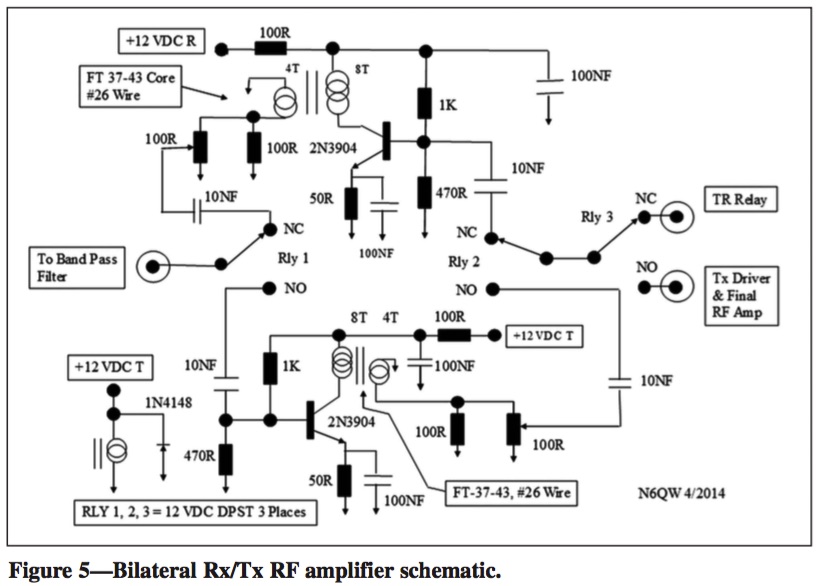
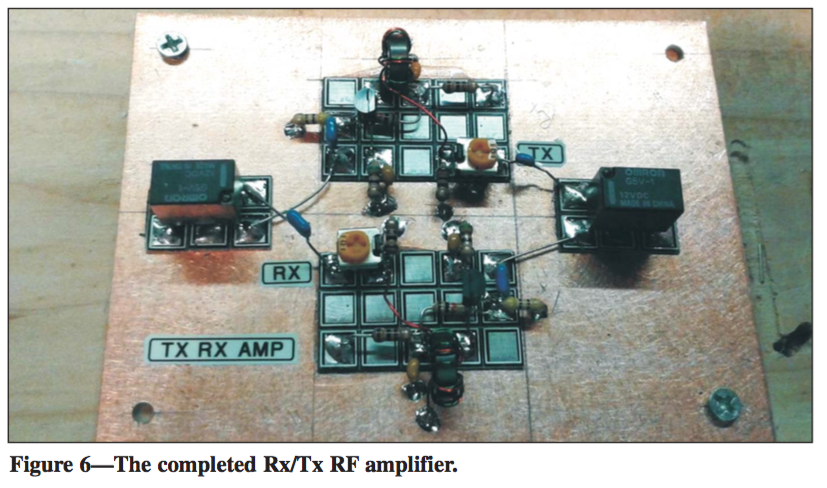
- RF amplifier: REALLY looking forward to tackling this one, but this won’t be the first thing I do. Makes sense to have for weak signals.
- Double-balanced mixer: Now I know something has to knock the RF down to an intermediate frequency (IF) and when I see mixer, this is where my brain goes. The double-balanced bit was foreign to me, but as advertised in the article (‘double balanced’ implies that the original signal and local oscillator frequencies are deliberately nulled out as part of the mixing process and do not appear at the output.)
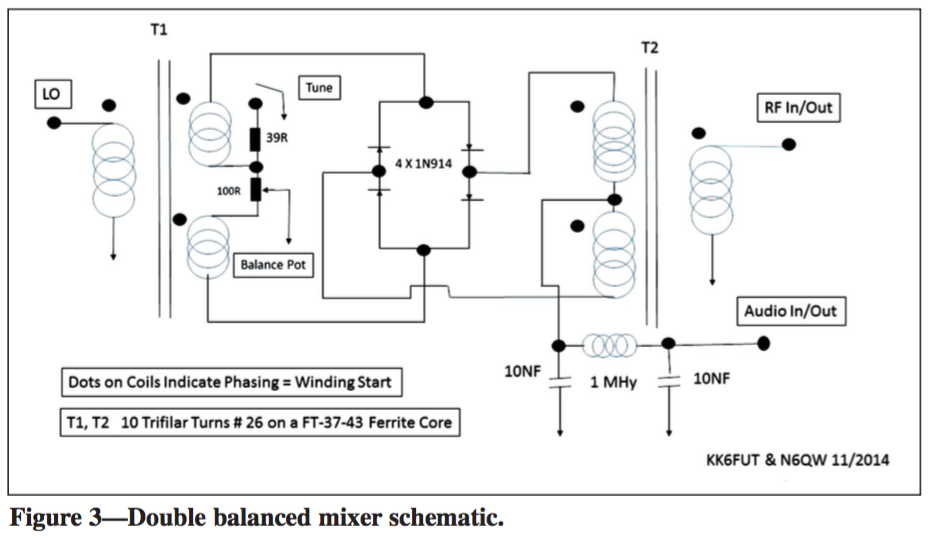
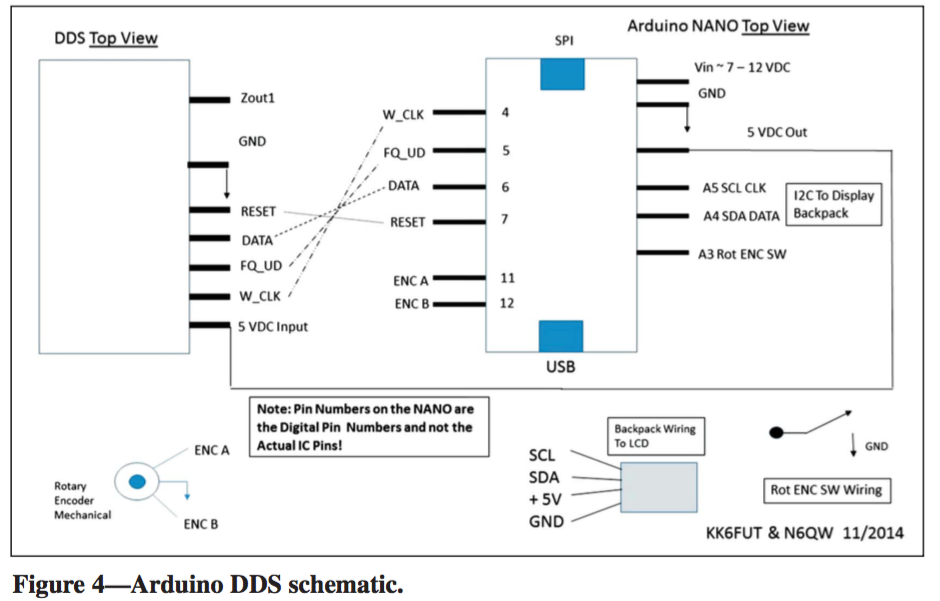
- Arduino Based Sample DDS: In order to even produce an IF, we need a local oscillator (LO). This is where the Arduino comes in. The authors argued they looked at a number of options for the LO including a VFO (variable frequency oscillator), a varactor tuned oscillator (should know this from my Extra exam — but full disclosure — I can’t help you now), and a DDS (direct digital synthesizer). They felt the simplest option was the DDS (hence the Arduino).
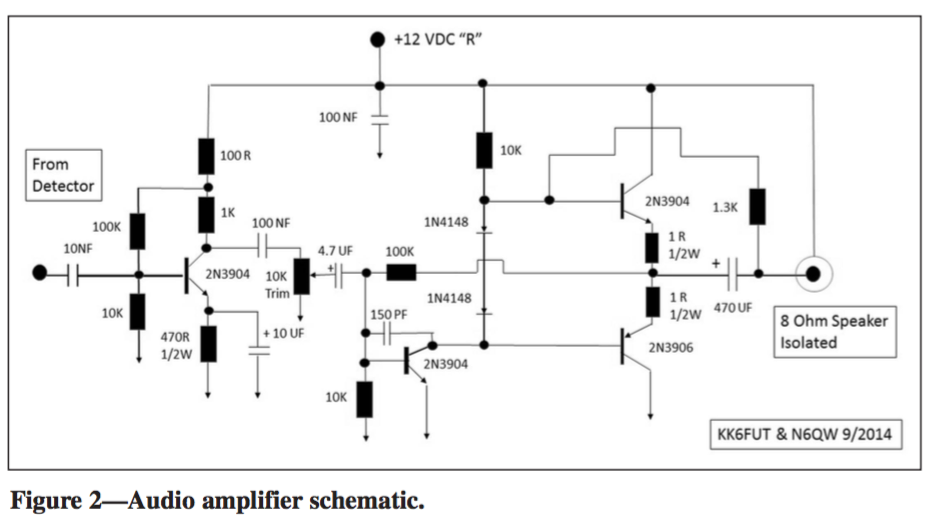
- Audio amplifier: We want to amplify the audio signal so we can hear it through our 8 Ohm speaker!
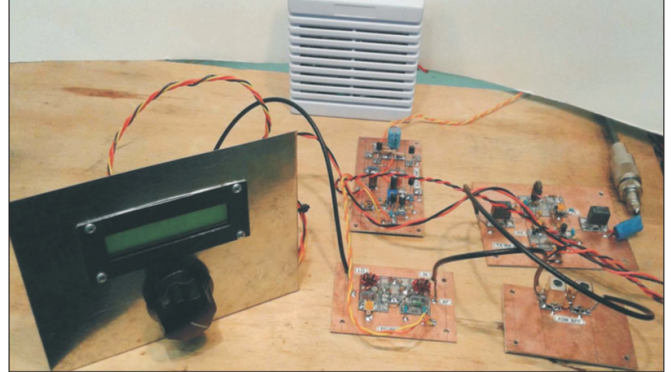
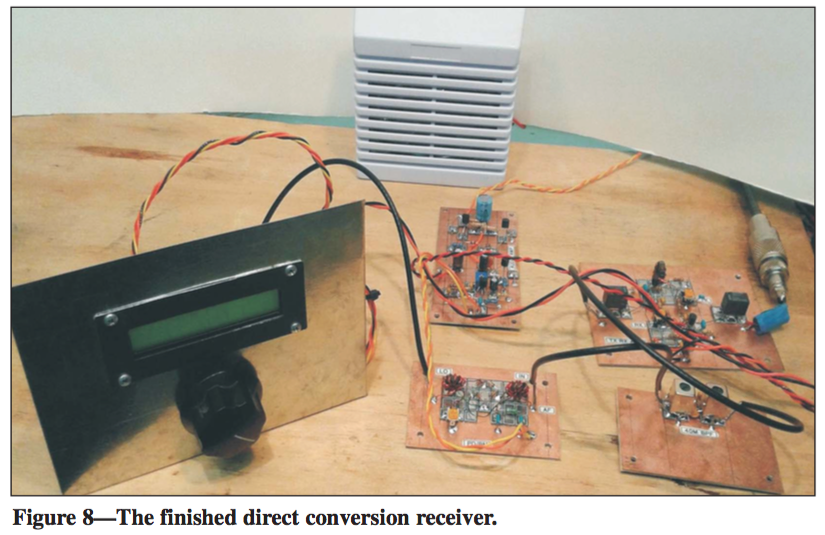
So now if you put all the components and modules together, you arrive at something which should look like:
I like this project for a few reasons.
- It’s a more interesting build and takes longer than 2 hours.
- It will have amateur radio applications in my shack. I do hope to work some pretty cool QRP with this rig (when I turn it into a full-on transceiver).
- I will learn A LOT about the electronic components integrated into the rig and be able to have an excuse to buy some test equipment.
- I get to work on my soldering skills.
- The modular design is attractive so that if I wish to make alterations in the future, it seems I will readily be able to do so without having to tear the entire rig apart.
- Understanding, at the end, how all of these parts function together to make my transceiver work. I look forward to sharing whatever knowledge I accrue during this build with future amateur radio hobbyists just breaking in.
I will certainly post articles as my progress commences. Currently, I am in the market to buy components and test equipment and will begin to build probably the simplest module first; currently, that seems to be the filter. And I have learned a very valuable lesson from being in the club and participating in its activities that I am applying to this build. Initially do things to set yourself up for the highest probability of success so that you keep your morale, interest, and momentum high. Nothing is worse than diving head-first into the hardest part of a project and losing any and all ambition when things begin to not work (and they will…).
73,
Brian, AB1ZO