Category Archives: Activities

Nashua Area Radio Society activities. Included is Field Day, our Annual Picnic, Tech Nights, On The Air Activations and much more.

Winter Field Day 2020 Is Coming

Winter Field Day 2020 is coming! The dates are January 24th – 26th, 2020. We had a lot of fun at Winter Field Day 2019 and we’re looking forward to the event again this year. The Nashua Area Radio Society will again be holding our operation at Keyes Memorial Park in Milford, NH. We are planning several new things this year. Here’s some more about our plans.

Our Planning Team
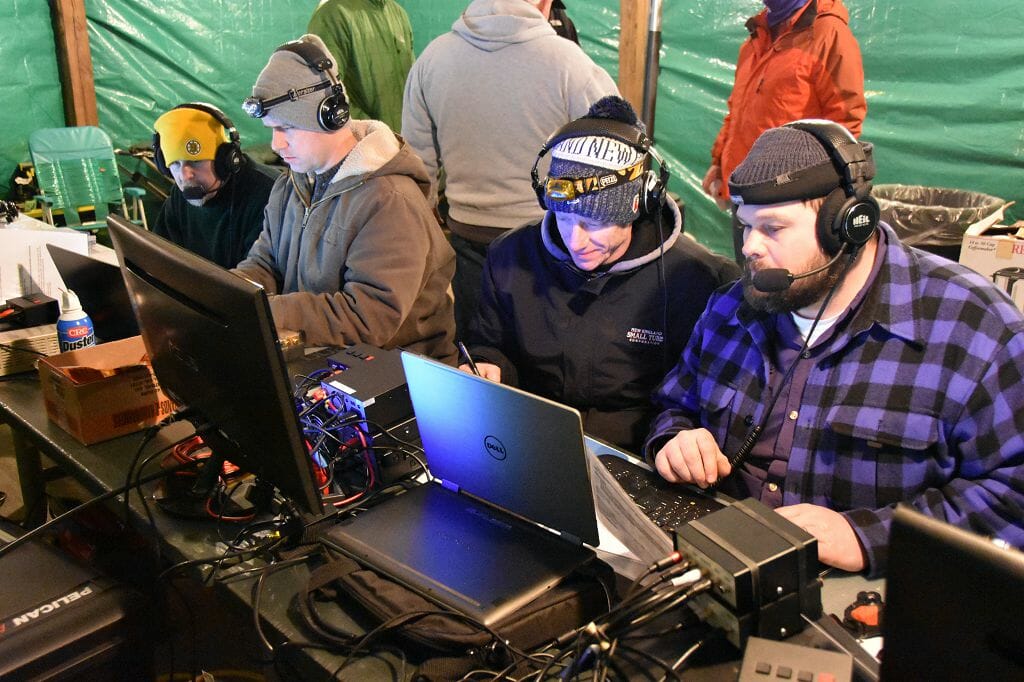
Operator Night Shift - The Most Interesting Hams In Amateur Radio...
WFD 2019 Operator Night Shift – The Most Interesting Hams In Amateur Radio…

A team has been working on our plans for Winter Field Day (WFD) 2020 for over a month now. The planning leads include:

  • Jerry Doty, K1OKD – WFD Overall Planning Leader
  • Craig Bailey, N1SFD – Antennas and Power Chairperson
  • Jon Turner, AC1EV – Station Chairperson
  • John Slater, KB1EEU – Shelter Chairperson
  • Fred Kemmerer, AB1OC – VHF+ Chairperson

Winter Field Day 2020 Plans?
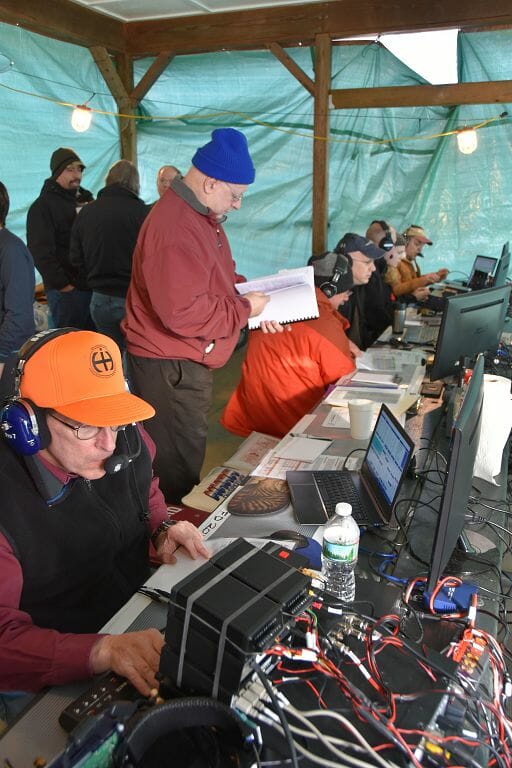
2 pm and We Are On The Air! Winter Field Day 2020
WFD 2019, 2 pm and We Are On The Air!

With help from many other members, our Winter Field Day 2020 planning team is putting together a really cool operation. Some of the highlights include:

  • We will be operating on all of the HF bands from 160m through 6m.
  • Our antenna farm will include a 40 ft tower with a tri-bander and wire antennas for 80m and 40m
  • Our antenna farm will also include a second 40m wire antenna (a Delta Loop) that will enable us to have two transmitters on 40m at the same time.
  • We are planning an additional transceiver and we will be entering as a 5O (five Tx Outdoor) station this year
  • We are adding quite a few new bands on VHF and above. We’ll be on 6m, 2m, 1.25m (222 MHz), 70cm, 33cm (902 MHz), and 23cm (1.2 GHz). We will have yagi antennas for all of these bands.
  • John Slater is working on an improved shelter and heating system to keep us warm and dry
  • We will be equipping Rover stations for the VHF+ bands (2m, 1.25m, 70cm, 33cm, and 23cm). These stations will have Phone, CW, and Digital capabilities. We hope this will provide opportunities for enhanced VHF+ activity for all of the Winter Field Day stations in our area.
  • Our computer-controlled satellite ground station will be back

Upcoming Activities
Winter Field Day 2020
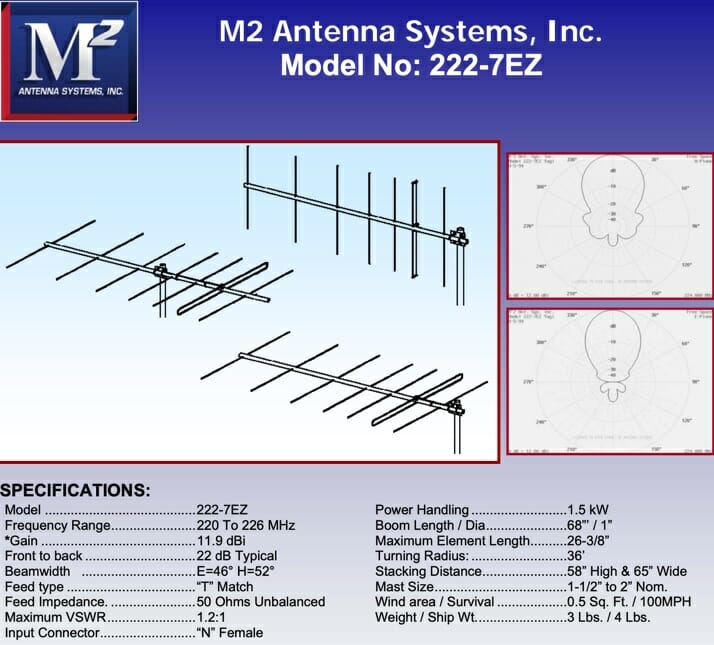
New for Winter Field Day 2020 – 1.25m Yagi

We have several activities leading up to Winter Field Day 2020. All NARS members are invited to join us for these activities. Planned activities include:

  • Saturday, November 23rd at 10 am – Yagi building party at AB1OC/AB1QB. We’ve secured several new Yagi’s to use for the VHF+ bands this year. We’ll be assembling the one for the 1.25m (220 MHz) band and testing in our shop. We’ll also recondition the driven element of a large 70cm yagi as well. This is a chance to see how a VHF+ weak signal antenna goes together.
  • Friday  November 29th at 9 am – VHF+ Mast Test at AB1OC/AB1QB. We are planning a second mast for our VHF+ antennas for Winter Field Day. During this session, we’ll be setting up the new mast with the antennas for 1.25m, 33cm, and 23cm to check it out and cut a new set of guy ropes.
  • Tuesday, December 10th at 7 pm – Winter Field Day 2020 Tech Night. We will be covering all aspects of antenna building, station setup, and operating for Winter Field Day 2020 at our December Tech Night.

We are also planning station tests for our HF and VHF+ stations in the near future.

Signups for setup and operating during Winter Field Day will be available at our December Membership Meeting.

We hope you’ll join us for our Winter Field Day activities and operation!

Fred, AB1OC

KC1XX Contest Station Visit

The Nashua Area Radio Society recently had the opportunity to visit Matt Strelow, KC1XX’s station in Mason, NH. Matt has assembled one of the top contest stations in the world along with a very skilled set of operators.

Matt and some of his team members spent an afternoon with us helping us learn about how a world-class multi-multi contest station is built and operated.

KC1XX Antenna Farm

Bob WA1Z Explaining the KC1XX Antenna Farm

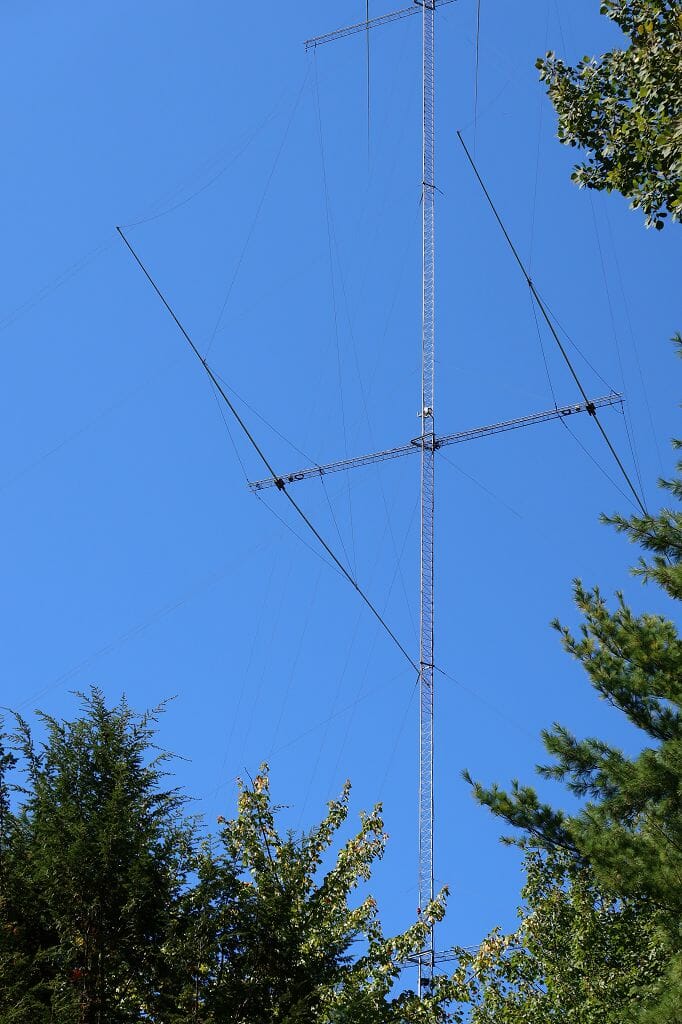
Our tour of the KC1XX Contest Station began with the antenna farm. Matt’s station is located on top of Hurricane Hill in Mason, NH, and sports some very impressive antenna hardware. Bob, WA1Z gave us a great overview of the impressive antenna hardware at Matt’s station. Matt has a total of 13 towers which include stacks of yagis on many of the HF bands.

KC1XX Contest Station
40m Tower at KC1XX

The photo above shows the 40m stack at KC1XX. This tower has two 40m, 4 element full-size yagis in a stack. The entire tower rotates at the base. As is the case with most of Matt’s towers, this one also includes antennas for other bands (in this case 6m and above).

Rotating Tower Base

It takes some heavy-duty hardware to rotate an entire tower. The photo above shows the rotator at the base of one of Matt’s rotatable towers. Rotatable towers are a great way to turn stacks of yagis which are fixed in the same direction on the same tower.

KC1XX Contest Station
2 Element 80 Antenna System on a 300 ft tower

Matt’s largest tower holds a pair of 80m delta loops that create an 80m directional antenna. A two-element loop antenna is equivalent in performance to a 3 element yagi. This tower is 300 ft tall, is painted red and white and has a flashing beacon at the top! The “booms” that support the element for Matt’s 80m directional antenna are made from a pair of tower sections that are mounted horizontally on this tower.

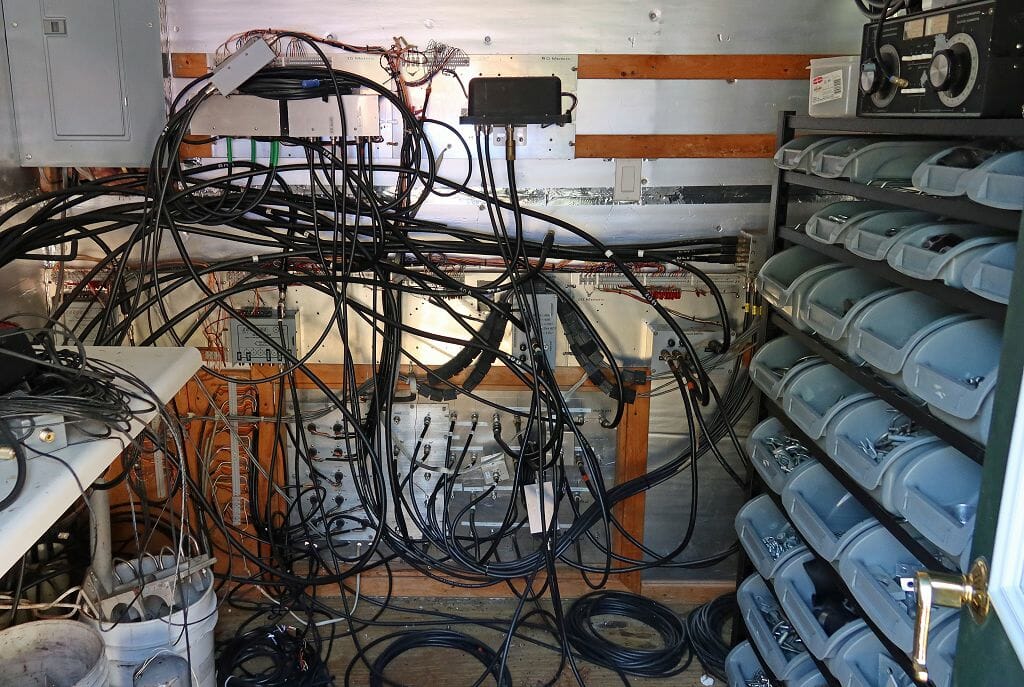
Feedline Patch Panel

Matt’s station has many antennas and all of the associated feedlines converge in a small building that houses a patch panel, remote antenna switches and supporting gear.

KC1XX Station

KC1XX Contest Station
Operating Positions at KC1XX

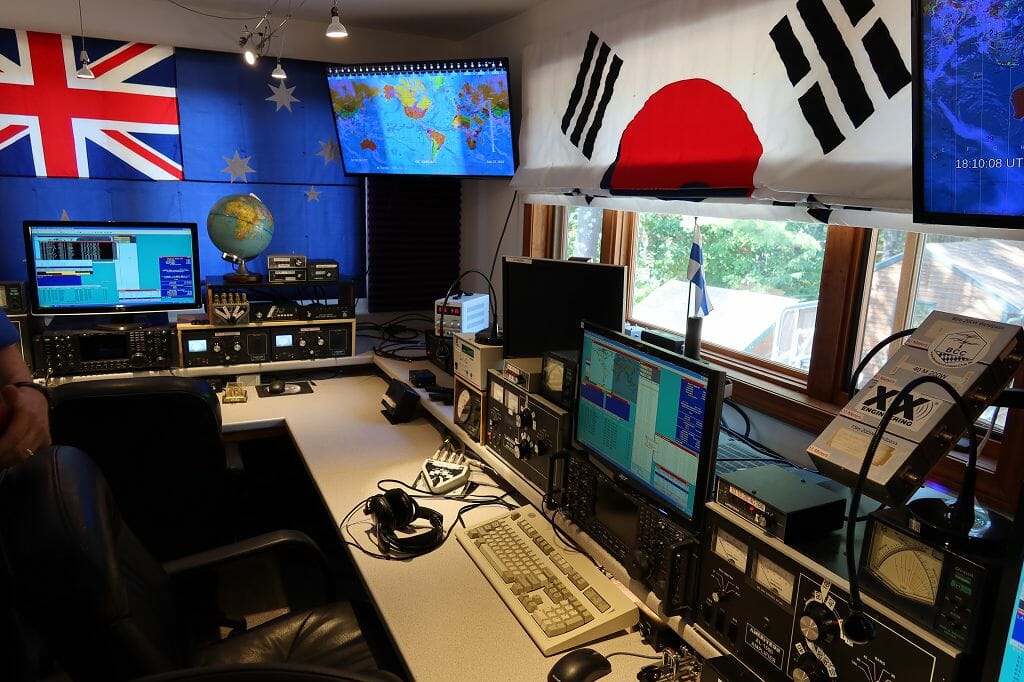
Matt’s “shack” is equally impressive. His station arranged in a multi-multi configuration with dedicated radios and operating positions for each band and major contest direction.

KC1XX Contest Station
Antenna Controls at KC1XX

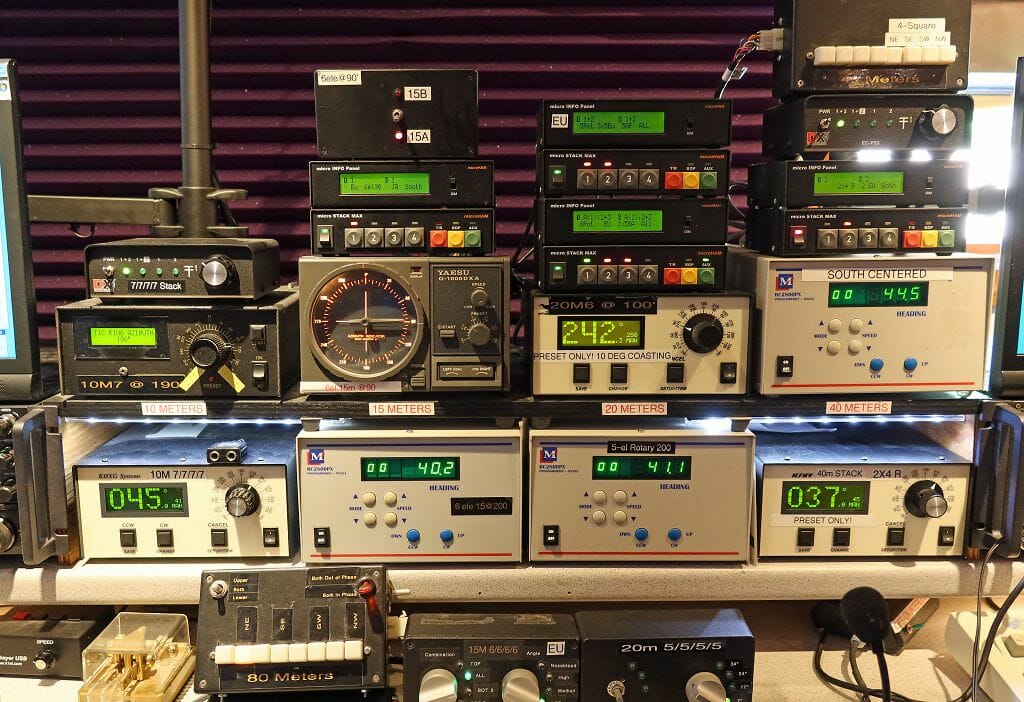
The antenna controls for the station are centrally located in Matt’s station. The antenna control system at KC1XX includes many antenna rotator boxes, antenna switches, and related controls. Centralized antenna controls allow all of the antennas to configured from one place in a way that best supports the band and contest conditions at any given time.

The Best Part of All

KC1XX Contest Station
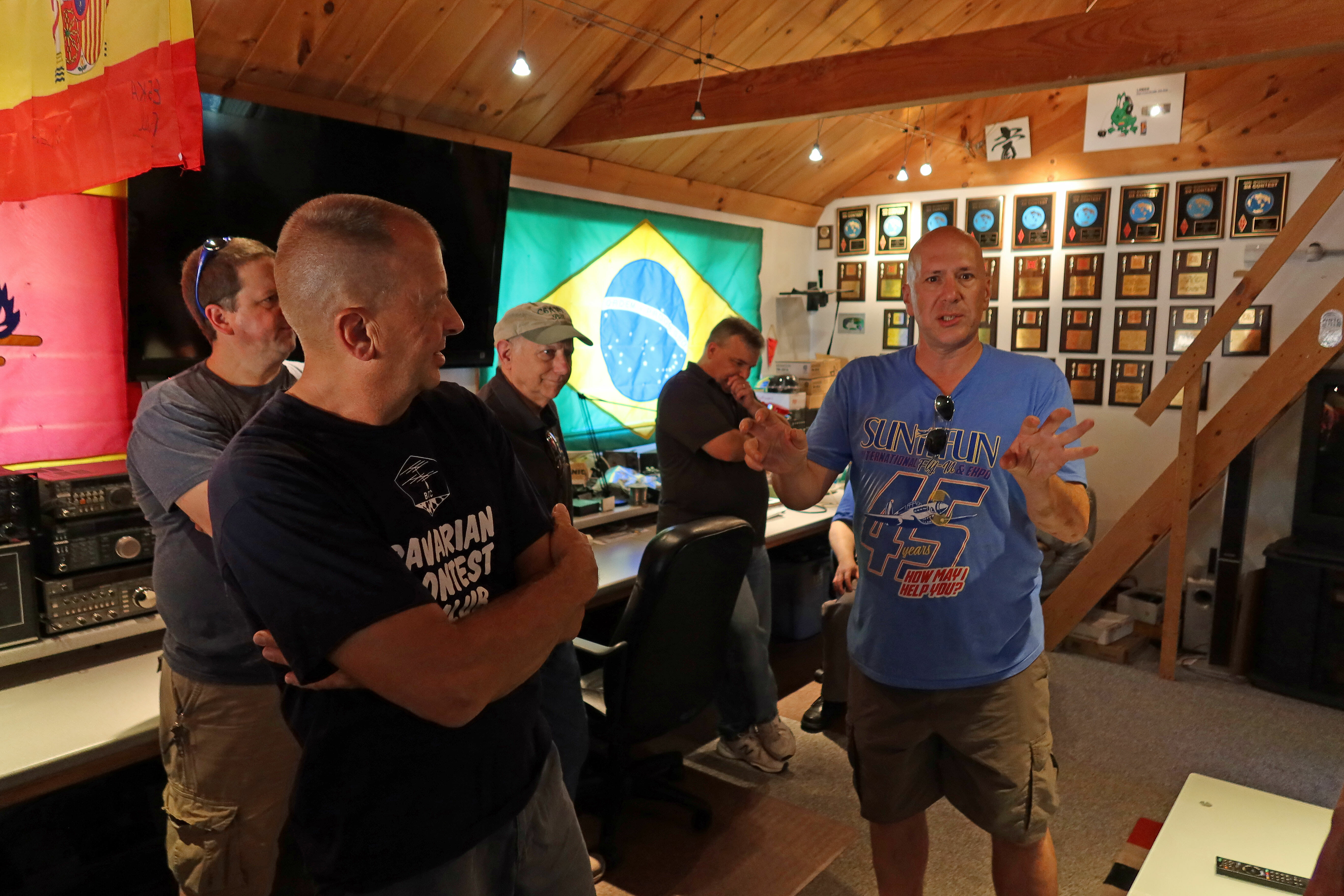
Dave KM3T and Matt KC1XX Explain the KC1XX Station and Contesting

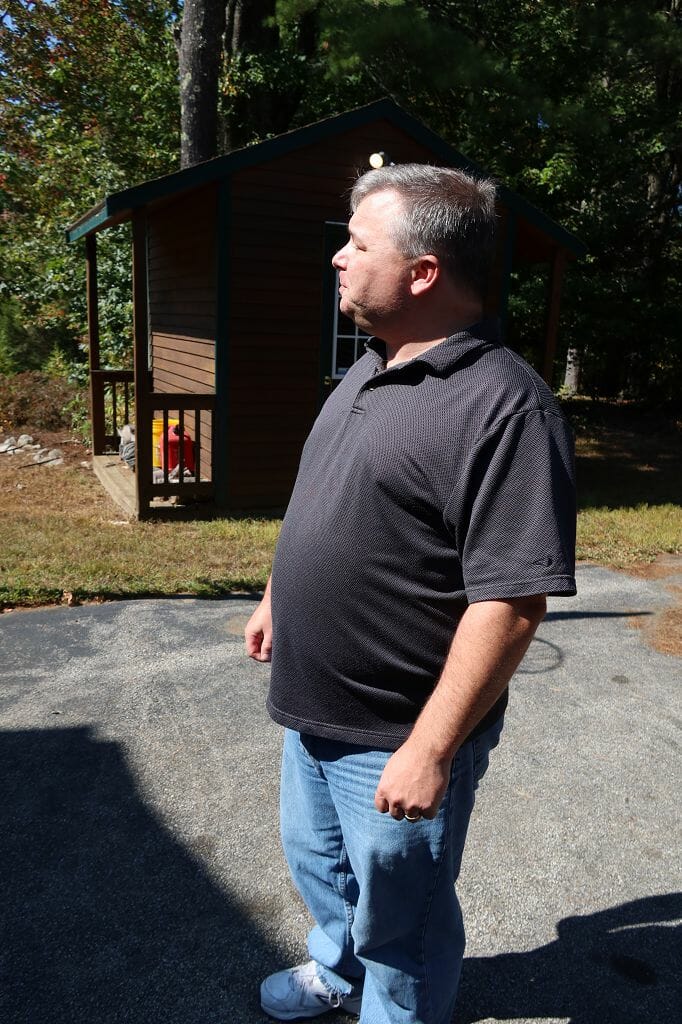
The best part of our visit was the time that Matt and his team spent with us talking about Amateur Radio and contesting. The photo above shows Dave, KM3T who is one of Matt’s team members explaining the station as everyone looks on. Dave is also a NARS member and it was great that he was able to join in our visit.

Matt created a really cool Amateur Radio quiz that we all did. It included questions involving recognizing call signs, propagation, and other areas of Amateur Radio operating.

We all really enjoyed the visit and we especially appreciate all of the time that Matt and his team spent getting to know us and sharing stories about everyone’s Amateur Radio experiences. We very much appreciate Matt’s and his team’s willingness to spend time with us sharing their knowledge and experience.

Fred, AB1OC

AMSAT 50th Aniversary Celebration – W3ZM/1 Activations in CT and RI

Burns, WB1FJ approached me a few weeks ago doing some portable satellite activations as part of the AMSAT 50th Aniversary Celebration. The idea was to use the AMSAT Callsign WZ3M/1 to put the states of CT and RI on satellites.

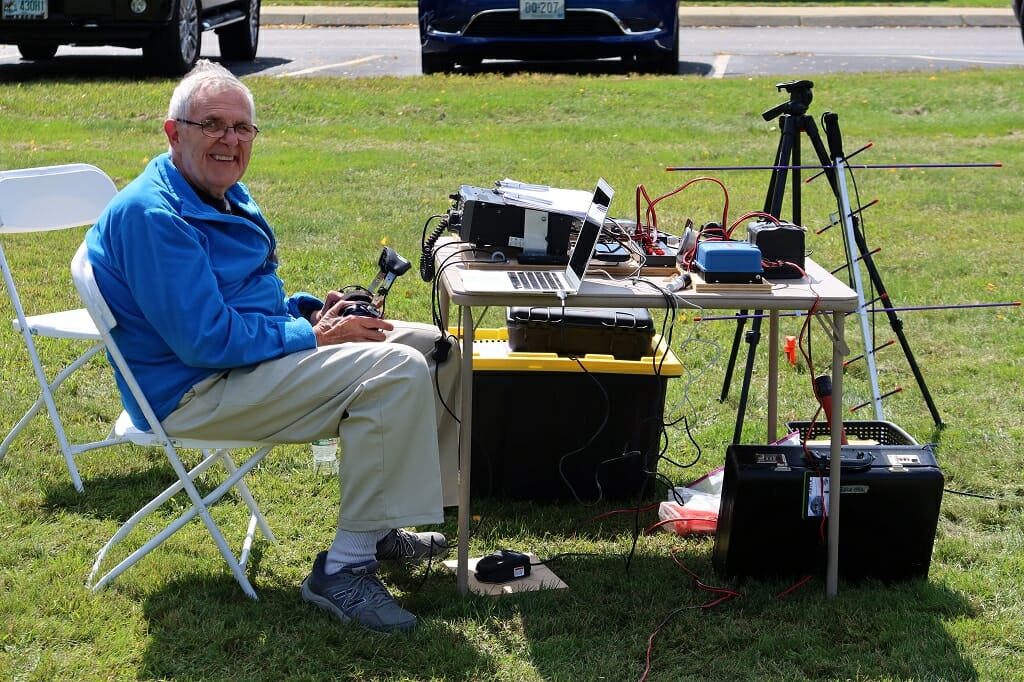
Simple Portable Satellite Station
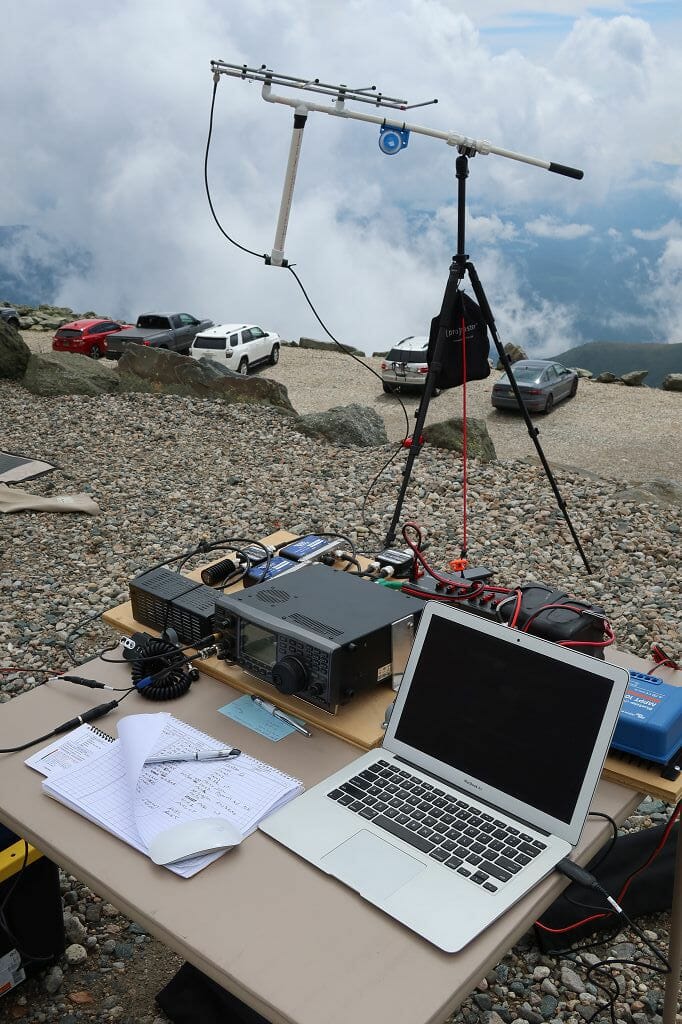
Portable Satellite Station on Mt. Washington

We had recently tested our portable satellite station during the Nashua Area Radio Society’s activation of Mt Washington. The WZ3M/1 activations were a great opportunity to continue testing our portable satellite station by making some more linear and FM contacts.

Radio Management via MacDoppler
MacDoppler Satellite Tracking Software

Preparations for our activations included creating a Pass Summary of predictions for the day of our activation using prediction data from MacDoopler. You can take a look at our pass summary here.

W3ZM/1 Activation
W3ZM/1 Activation in RI

Our first activation was near the fire station in Burrillville, RI. We found an open spot and set up our station, antenna, and solar power system. This was a great public spot and we had several visitors come by to take a look at our setup and ask questions about satellites and Amateur Radio.

We made quite a few contacts at this location using both FM satellites like AO-92, AO-92, and SO-50 as well as a few contacts using linear satellites like CAS-4A and CAS-4B.

W3ZM/1 Activation
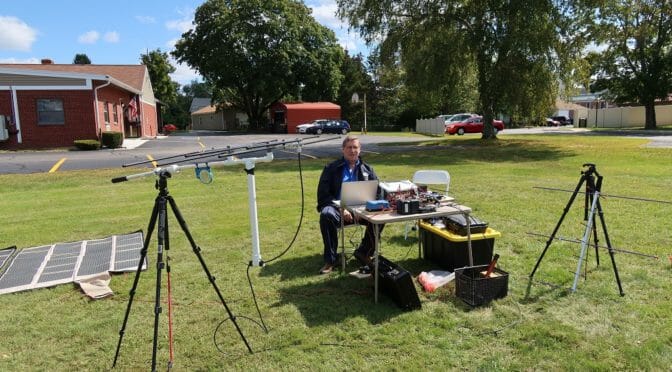
W3ZM/1 Activation in CT

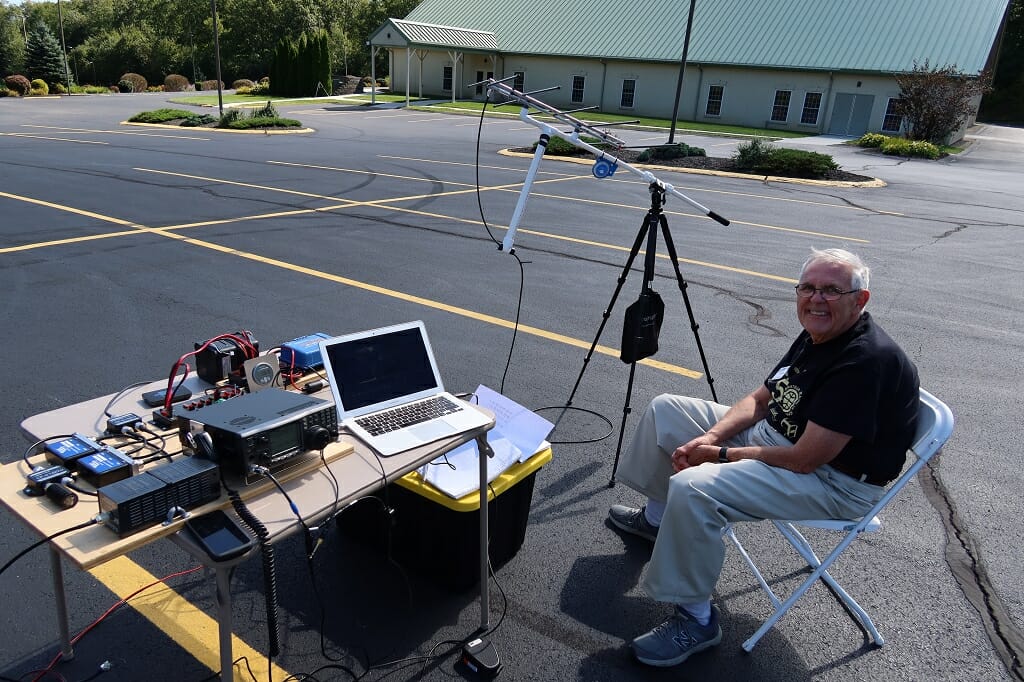
We moved to a Church in CT for the next part of our activation early in the afternoon. This site was a little less open than the first one but we were still able to make a number of contacts here.

The photo above shows a view of our portable setup which consisted of an Icom 910H transceiver, a MacBook Air Laptop running MacDoppler, and an Elk Log-periodic antenna on a tripod. The computer and MacDoppler controlled the radio VFOs to automatically correct for Doppler shift which enabled us to do contacts using linear satellites. We used an iPhone running a satellite tracking app to help point the antenna during satellite passes.

We used a pair of 90W portable solar panels, a pair of LIPO batteries, and an MPPT charging system to provide power for our radio and the computer. It was a sunny day and our solar power system kept our batteries fully charged through both activations.

We did pretty well overall making a total of 15 contacts between. The downlink side of our antenna system was the weakest link in the setup. Folks that we worked on linear satellites indicated that our uplink signals were solid but we had some trouble hearing weaker stations on the downlinks. We have some ideas for an improved antenna system for our next portable activation – stay tuned for more on this.

All in all, Burns and I were pretty pleased with these activations. We had a lot of fun, helped a few folks some new states, contributed to AMSAT’s 50th Celebration, and we learned some things that we can use to improve our portable station.

Fred, AB1OC

Radio Amateurs Developing Skills Worldwide