
All posts by Nashua Area Radio Society

Webmaster for the Nashua Area Radio Society

My Name Is Patrick…

By Dennis Marandos – K1LGQ

The excitement for warm time operations is just heating up and getting out is easier now than it was a while ago. And judging from what I have already heard on the air, the rivalry for band space is getting hotter and harder to find. Let me tell you about an episode I experienced in Nashua one warm, sunny day when the adrenaline was kicking in and the sun was shining brightly. In the back of my mind-set was the sheer fact that I am radio-active, have a valid license, am getting on the air is what I love so what could possibly go wrong?

I arrived at the local city greenery named Greeley Park (after Horace Greeley) in Nashua, NH and scouted for some tall, white pines for a wire antenna. Here in the northeast, pine trees are like blades of grass…they’re everywhere. Another friend of mine, we’ll call him Mike, and I spotted a pine tree at the edge of the 150-yard field and I took aim with my trust surgical-rubber sling-shot, bought at the local Wal-Mart emporium, and on the second try landed a nice 95 foot shot into the coniferous tower. With my mighty homebrew antenna, called the ‘Gusher,’ the tentacle was placed into combat readiness within fifteen minutes after arriving at the park. We mountain men of the northeast don’t waste any time in being prepared.

The yellow card table was unfolded, the collapsible chair was pushed into the ground for stability, and the tools of the day were unraveled. The NorCal 40a, a 40-meter homebrew transceiver, was attached dutifully to the MFJ-971 antenna tuner, which was then gingerly appended to the Gusher antenna, which culminated with a fully charged jolt of volts from the 7aH gel-cell battery. The log book was strategically placed to the right side, (I am left handed so all papers need to be in front of the writing hand and to the right. Smudges…you know.) Retractable Cross pen in hand, MFJ-24 hour clock blinking away, Vibroplex Bug (Original #2636801) adjusted, antenna swaying in the breeze—what’s left?

Contest time and the calls were loud and clear. My first contact was WA4CMI. Great, we’re getting out! Second QSO was with CH3Y (Canada), a special call for an event I’m still not sure about, dealing with the police department? I wonder if I can get a QSL or an acknowledgment from them…? My third contact was N2HMN in New Jersey, followed by KA3P in Pittsburgh, PA. It seems the RF was flowing to the north and south. The vertical long wire (a sloper) was still hanging in the tree pouring out two watts of pure, unadulterated New Hampshire power across the country…around the world. (I always like to think big.) Then another contact with K1TJ in Morristown, VA, followed by N2VPK in NY, WA4KAC in MD, W1XH in MA, K3AS in PA, N2YIY in PA, KF2HC in NJ, N1RXT on Mt. Monadnock, NH, N2SMH in NJ, AA6UL/4 in VA, W3BNB in MD, AA3LY in PA, WB3GCK in DL, K9UT in IN, KC1GS on Wachusett MT, MA, K8DSS in OH, AF3V in PA, W3GES in PA, K3TKS in MD, WK8S in MI, VE3FAO in Ont., VE3LCW in Ont., and K8JJC in MI. It was pretty exciting hearing and working all these good people on 40 meters and I wanted to thank each and everyone one of them…even the dupes.

Now, what could have gone wrong during such a brilliant contest in the park such as this? During the Saturday sunshine, while in Nashua’s public park, were also 35 to 50 fifteen to nineteen-year-old teenagers who were reenacting Dungeons and Dragons. Their crusade was to run, jump, whoop and yell it up. Okay, they were over THERE, and I was over HERE, about 150 yards apart; and we were worlds away from each other. WRONG! They wanted my space also. They wanted to “play” where I was and to see if I would notice them. Actually, they were the curious ones for many came to my table and asked, “Whatcha doin’?” while snapping their gum and starring at the QRP rig. Boys and girls who were holding duct-tape swords, mock malls and hammers in their hands, wanting to know why I was using Morse code and not a microphone. One brave young man, who looked like he needed a bath, said he had a radio too. My ears perked up and I asked him what his call was. He couldn’t remember but he was on channel 19 along with his divorced mother. “Oh,” I said and turned back to my CW.

After everyone had seen what they wanted to see, they left to conquer the world. Thank goodness for me, for now it is peace and quiet time. Well, not really. Standing in front of me, for minutes…not moving, was Patrick, a five year old boy who had no one to play with and deemed me his friend. HE WOULD NOT GO AWAY. He was inquisitive and pulled on the long wire which was connected to the MFJ-971, of which I said politely, “Please don’t touch anything.” He said okay, until he saw the cable from my gel-cell and wanted to know why it was red and black. I said politely, “Please don’t touch anything.” This appeased him until he saw inside my Xerox paper box filled with field strength meters, a frequency meter, coax, et al, something more interesting. Patrick wanted to see what else was inside and proceeded to empty, one piece at a time, the entire contents of what was there. “Wow, what are you doing?”…ran through my mind, but I looked at him and said politely, “Please don’t touch anything.” I, at this time, mentioned that his father was looking for him, or perhaps his mother wanted him too. Patrick said his mother wasn’t there in the park but that his father wanted him to play with that nice man in the corner of the field…me. My eye lit open and I said nicely, “Why don’t you go play with your friends.” He said he wanted to stay and watch me. Patrick then spied the Oreo cookies I had in my Tupperware container in my Xerox catch-all radio box. He said that they must taste good because he has had them before. I offered two cookies to him and said make sure your dad gives you permission to eat them. Patrick ran away with smiles on his face and a kick in his gait.

Patrick ran back ten minutes later, mouth all loaded with black cookie crumbs and said that they were so good he was wondering if there might be more. Again, he got another two cookies and off he went. That was the end of Patrick, until he came back for the third handout. I said, “I am sorry Patrick, but you ate them all and now you’ll have to leave here and not come back till I have over fifty contacts.” He didn’t understand what I meant but HE LEFT! Nice kid, but what a time to pick to be an inquisitive five year old!

Did I have a good time? YES! I can’t wait for the next QRP contest in the park, and I know a lot of us are waiting for the good times to continue. I have always said that amateur radio has to be instant gratification and that’s why I love it so much. This has got to be the best fraternity I’ve even been in and I love all you guys. You dudes are great and I want to work you all. And…Patrick, too!
Member Spotlight: Frank Swiech, N1DGQ

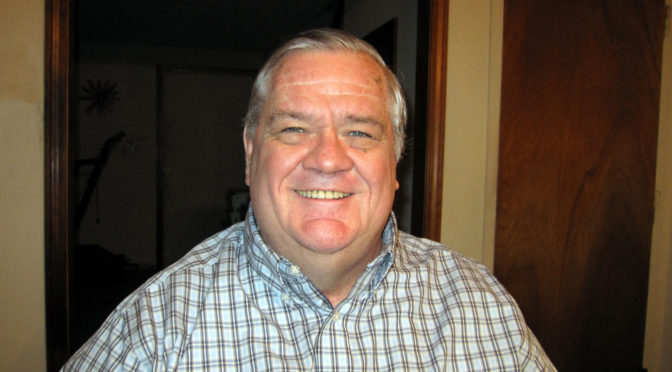
Name:  Francis A. Swiech

Elected Club Offices: Former Vice President and Former Secretary of the Nashua Area Radio Club

Appointed Club Office: Currently a member of the Nashua Area Radio Club Audit Committee

Call Sign: N1DGQ (licensed 32 years, since November 1984)

License Class: Extra

Current Age: 72 (April, 2017 – first licensed at age 40)

How I Became Licensed:

I was always interested in ham radio. When I was in the seventh grade, I visited the Novice station of a ham radio operator about my age.  He had a Heathkit DX 40 transmitter and a Hallicrafters receiver.  He operated crystal controlled on 40 meters CW.  Since I did not know the International Morse code, his demonstration CW QSO did not mean too much to me.  I did, however, get to see some of the interesting QSL cards he had collected.  A few years later, when I was in high school, my parents bought me a Hallicrafters SX-99 receiver.  This gave me the opportunity to explore short-wave radio listening, log distant broadcast band AM radio stations, and listen to many ham radio QSOs.  At that time the sunspot cycle was at its peak, 10 meters was open, and many hams were still using AM.  The Hallicrafters SX-99 was not a single side band (SSB) receiver, but I could copy SSB signals by switching the radio to the CW mode and adjusting the beat frequency oscillator (BFO).

Many years went by, and I continued to enjoy listening to short-wave broadcasts, ham QSOs on the high frequency (HF) bands, distant AM broadcast band stations, and 2 meter repeaters on a scanner. However, I did not pursue getting a ham radio license because of the code requirement that existed at the time.  Sometime in 1983 or 1984, I attended a ham radio picnic, sponsored by John Fryer (WA1THH – Silent Key) and the Nightly Nut Net at Greeley Park in Nashua.  At that picnic I met two older women who were grandmothers and also ham radio operators.  Listening to them talk, it became evident to me that I was smarter than these grandmothers.  If they could learn the code and get a ham radio license, so could I.

In June of 1984, on a local repeater, I heard that the Nashua Area Radio Club (NARC) Field Day was being held at Sanders Corporation on Spit Brook Road, so I went to visit and inquire about becoming a ham. I met the NARC President, Bill Burden (WB1BRE), who advised me to buy an ARRL Tune in the World book with a 5 WPM code practice cassette tape, and to learn the code over the summer.  NARC, specifically Maurice Cote (K1HDO – Silent Key), would be giving a ham radio and code class in the fall.  It so happened, that Maurice knew me.  He was one of the Project Engineers who worked on a microwave switch Research and Development contract that I managed when I was in the Air Force, assigned to the Air Force Avionics Laboratory at Wright Patterson AFB, Ohio.  Anyway, by the time the code class had begun, I had already learned to copy the code at a very basic level from the Tune in the World code practice tape.  Maurice invited me to his house to see his ham station and to give me some additional code practice.  He also put me in contact with the hams, who were giving one of the first Volunteer Exams at the ARRL New England Convention in Boxborough, MA that fall.  I made an appointment, and took the exam.  At that time walk-in candidates for the exam were not permitted.  After I had passed the 5 WPM code test, I was given the Novice written exam.  I explained that I did not want a Novice license, I wanted a Technician license and I needed the General written exam.  At that time there was no separate Technician written exam.  I was told that I had to first pass the Novice written exam before I could take the General written exam.  I had not understood this, and I had only glanced at the Novice test questions.  Fortunately, however, I passed both the Novice and the General written exams.  In November 1984 I received my N1DGQ call sign and Technician license in the mail.  With further code practice, mostly listening to a 13 WPM code tape and listening to the ARRL CW bulletins, I upgraded to Advanced and then to Extra in about three years.

Other Hams in Family: None

My Elmer: Dave Shaw (K1BXZ – Silent Key) was my CW Elmer.  He encouraged me to practice using the code and to upgrade my code speed.  He and I would have local CW practice QSOs on 15 meters, and sometimes on two meters FM using code oscillators.

How Often Do I Operate: Most every day

Bands I Operate: 2 meters, 220 MHz and 440 MHz FM, mostly repeaters.  I live in a condominium and I have antenna restrictions, which limit my ability to operate on the HF bands.

Types of Operation: Ragchew

My Station: Sparse

Do I Build Equipment: Very little, mostly J-pole, 2 meter antennas made from 300 ohm TV twin lead wire.

Other Ham Radio Activities:

Volunteer Examiner: I am a Volunteer Examiner with the ARRL and also W5YI.  I regularly assist in administering the Amateur Radio Exams in Nashua, NH and elsewhere as needed.

Former Database Manager and Member of the Staff of the New England Repeater Directory: I  gather information about New England amateur radio repeaters.  With inputs from others, I used to maintain and update the database for the New England Repeater Directory, until when a new daily automated update system was implemented.  Richard (W1RJC) maintains this Directory on his website, http://www.nerepeaters.com/ . This activity originally got started after I got a 220 MHz radio and jotted down a list of local 220 MHz repeaters on a single sheet of paper.  From there this list grew to a larger list of repeaters on various bands, maintained with a word processor using a Commodore 64 computer.  It has now become a web site of its own.

Has Ham Radio Influenced My Profession?: No.  I am retired from the Air Force and did not get licensed until near the end of my Air Force career.

Other Hobbies: I enjoy hiking local trails and small hills.  I walk very slowly, steadily and carefully, especially downhill.  I do not sleep outdoors overnight; I want to come home and sleep in my own bed.  I sometimes take a handheld radio and a spare battery with me when I go hiking, especially if I plan to climb a hill.  When I reach the top of the hill, I check the repeaters on the 2 meter, 220 MHz and 440 MHz bands to see which ones are actually on the air.  I use the information I gather to update the New England Repeater Directory.  But the most important thing I get from hiking is the exercise.

Frank, N1DGQ

Member Spotlight: #Rockin HAM Bio

Some time ago, myself and Layne, AE1N, thought it important and relevant to our club for its members to provide bios of ourselves. It’s useful to know where our collective interests lie and what our backgrounds are, so we can forge better connections with each other. In that spirit, I’ll pretend that someone asked me some questions and I’ll provide my response. And, like all bios, I suppose that it’ll be a cathartic release of what’s on my mind.

  1. How did you get involved in amateur radio? Totally by accident. I had a buddy (who got licensed as well) tell me he was driving through Salem, NH and saw a store called the HRO and asked if I wanted to check it out. After I walked in, I realized I was “in” about 50%. I went home, jumped online, and looked for local clubs. At the time the Nashua ARC site wasn’t exactly easy on the eyes, but I liked what I saw anyway so I attended my first meeting in Jan 2016 — project night. I felt like you guys were my people. I was “in” the remaining 50%. One year and change later, I earned an amateur extra license and am on the Board for the Nashua ARC. Not too shabby. I suppose you can say when I’m in, I’m all in.
  2. What’s your background and what other hobbies do you have? I suppose I identify as a physicist. At least that’s where all my training came from. Other young fellas growing up had posters of athletes, movie stars, and bikini models on their walls (full disclosure: I did have the model posters too), whereas I had Einstein, Feynman, and other physics giants. I read physics books and science lit whenever I could and nurtured the idea of being a professor of particle physics. I’ve been fortunate enough to at least get the particle/nuclear physics bit down. I’ve learned a lot of cool math and cool particle physics (like Quantum Chromodynamics, and some string theory), but that was a lifetime ago. Or so it feels like. When I’m actively not trying to figure out how to make a black hole swallow the Earth, I can be found in the kitchen or on the track. It’s true that I haven’t cooked as much in the past 2 years, but I have a TON of cooking equipment, and make a mean Chicken Tikka Masala.
  3. What are your goals in amateur radio? I don’t know if this is cliched or not, but I really enjoy building/improving my station and chasing DX. In fact I am VERY much looking forward to finishing my station this Spring (stupid impending Noreaster tomorrow). What I didn’t expect to find though was an opportunity to reignite my interest in teaching by being part of the club. I have been a part of teaching the license classes and am currently helping design a curriculum for the club’s HAB project with local area high school students. Lastly, I am trying to foster an ability in homebrewing electronics relevant to my shack. I’m looking forward to getting back to this after we launch the balloon.
  4. What do you like about being a member of NARC? Ok, this answer is certainly going to be cliched. It’s getting to build a rapport with the members and get the benefit of elmering from some incredibly talented and experienced people. Sometimes, I don’t always walk up to someone new at club meetings etc., because I’m not sure what to say. But if you can forgive any apparent awkwardness, I’d like to get to know you better. Camaraderie is an important aspect in the health of this club; it’s important (IMO) to nurture that.
  5. What should the Club’s priorities be in the next 12 months? At our March meeting, the Board outline the club’s goals for 2017. I won’t go through all of them again here. I will saw, however, that I believe it’s important to create a niche for as many diverse interests as we can. I’d like to have a “homebrewing” group, a “DXing” group, and other potential groups that I can’t ascribe a name to yet since I don’t have a sense of all the activities that you, our members, are interested in. I think it’s important that people find others within our club to gravitate towards with common interests. It’s another avenue for the club to organically grow and remain healthy.

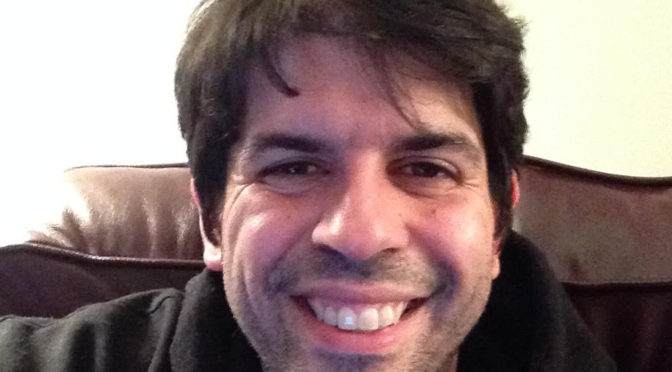
That’s my brief not-so-impromptu bio. Please forgive the photo of me in the featured image. Not because I haven’t shaved in a dog’s age, but because I don’t want to come off egotistical. I simply want to let you know what I look like so you can say “Oh I’ve seen that funny looking guy around before.” Thanks for reading. Now it’s your turn. Tell me about yourself.

73,

Brian, AB1ZO

Radio Amateurs Developing Skills Worldwide