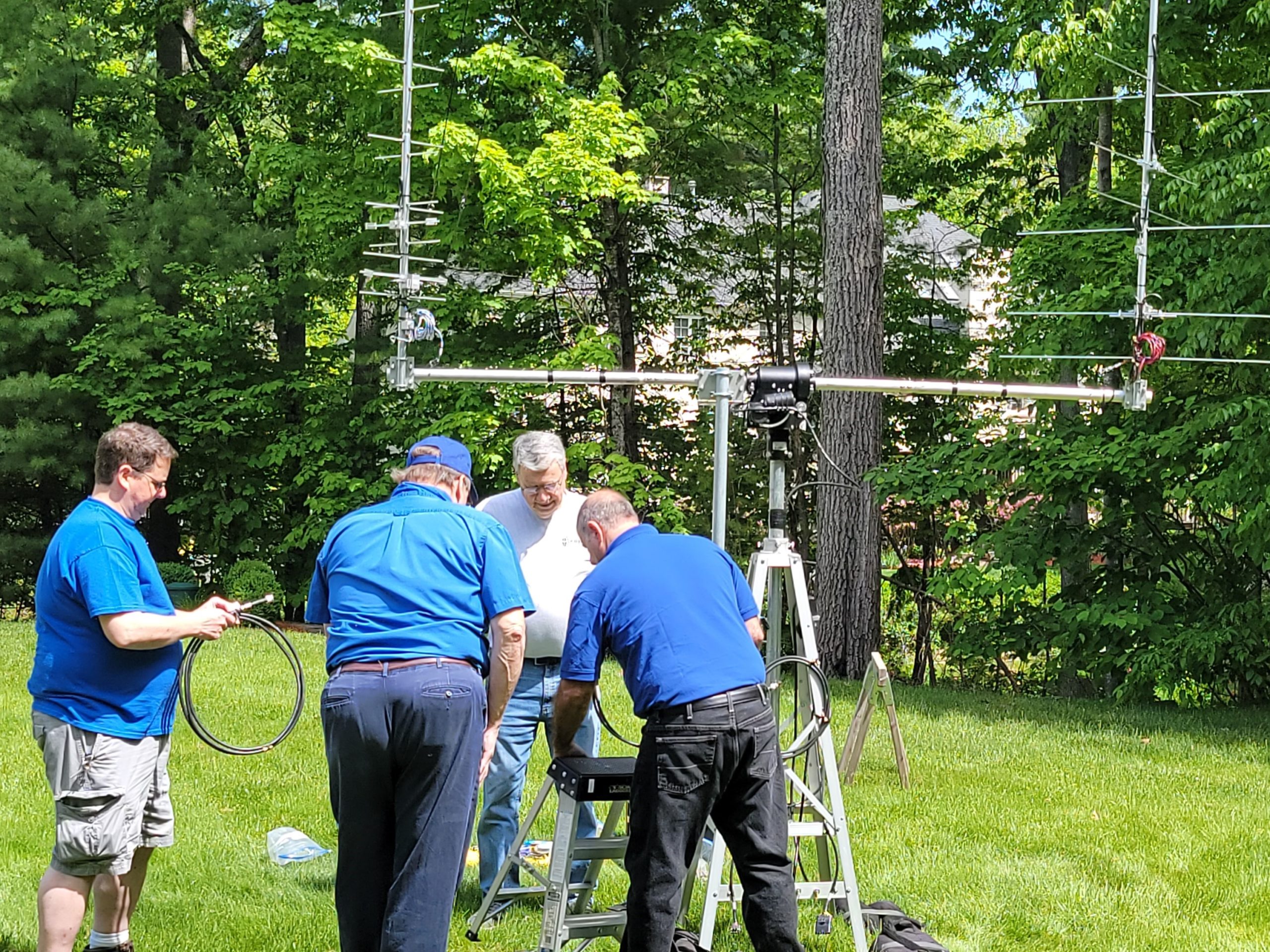
We are planning to have a Portable Computer-Controlled Satellite Station at Field Day 2021 this year. The station will use an IC-9700 Transceiver controlled by a Mac Computer to enable us to make Satellite Contacts during Field Day.
Portable Satellite Antennas for Field Day
Field Day Rules limit Field Days stations to a single contact on FM “EasySats” such as SO-50, AO-91, and the ISS. The addition of a computer enables us to make contacts using satellites that have Linear Transponders which use SSB. We can make as many contacts on these satellites as we wish.
Field Day 2021 Satellite Passes
We used the MacDoppler Satellite Tracking program to run predictions for the satellite passes that will take place during the Field Day 2021 operating period which is from 2 pm EDT on Saturday, June 26th through 2 pm EDT Sunday, June 27th. The summary above only includes those passes with elevations that exceed 20 degrees. As you can see, there are a lot of great Linear Satellite passes that we can work on Field Day!
Members will be able to sign up to operate our Field Day station in the near future. Watch the Field Day forum here in n1fd.org for sign-up details.
Satellite Station Training at Field Day
We will be offering hands-on Training on our Satellite Station at 12:30 pm EDT on Saturday, June 26th just before Field Day operations begin so come on out and learn about Satellite operations!
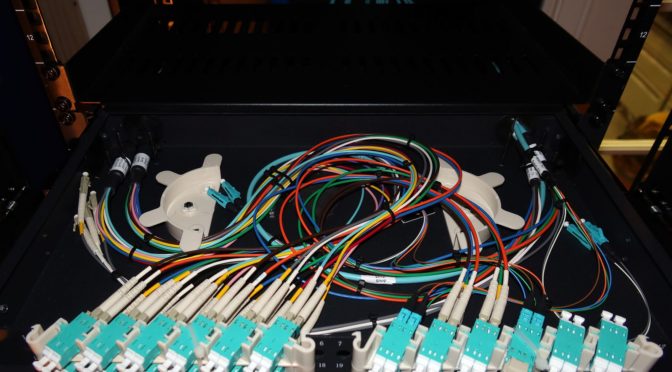
Many Hams (including this one) have problems with RF Interference (RFI) at their stations. Many RFI sources typically come from inside our own homes. One test we did was to shut down much of the ethernet network and associated devices here at our QTH. To our surprise, this lowered our noise floor on 2m some 6 dB, and eliminated many birdies in the EME section of the 2m Band! We decided to upgrade our network to fiber optics to eliminate the RFI and noise from…
We recently built an improved EME station for the 2m Band. We noticed a higher than ideal noise floor when operating 2m EME during initial testing of the new station. We decided to do some additional testing to see if we could isolate the source of the noise levels. One test we did was to shut down much of the ethernet network and associated devices here at our QTH.
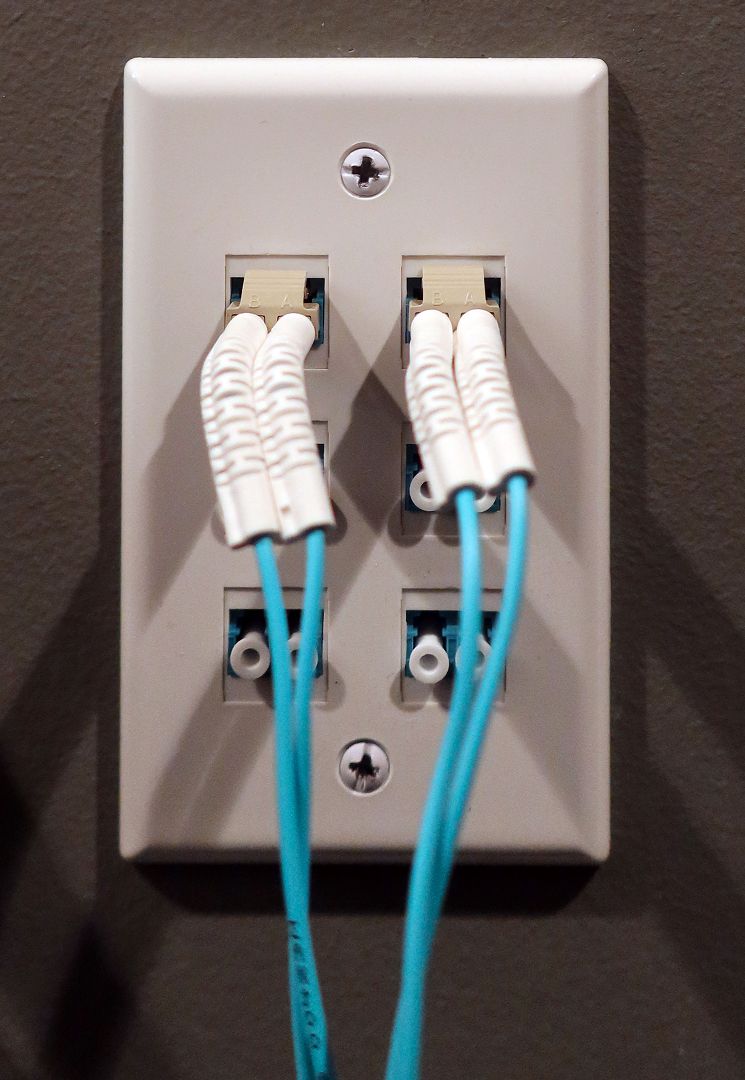
Fiber Optic Wall Outlet
We decided to upgrade the network at our QTH to use Fiber Optics and add a Management System to enable us to shut down some of the more problematic noise sources at our QTH. The resulting improvements were pretty dramatic – reducing RFI-related noise by some 6 dB on the 2m Band!
You can read all about our Fiber Optic Network Project via the link above.
We’ve been busy getting ready for Summer Field Day 2021 at the Nashua Area Radio Society. Our plans include putting up a Tower, a Computer-Controlled Satellite Station, and an upgraded 6m Field Day Station.
6m LFA Yagi
Our 6m Field Day station will be a portable setup and features a new antenna – a 3-Element Loop Fed Array (LFA) Yagi from InnoVAntennas. There are some advantages to LFA Yagi’s for the 6m band and above. In particular, Yagis using an LFA design are less susceptible to noise and interference which is a big advantage for weak-signal work on the 6m Band.
6m LFA Yagi on Mast
Our Yagi is lightweight which makes it ideal for portable applications like Field Day and Mount Topping. Aron, W1AKI, and Jamey, AC1DC helped me to assemble the antenna and put it up on a 25 ft fiberglass mast here at our QTH for testing. The antenna is fed with LMR-400uF coax and rigged with a rotator loop near the top of the mast so that the antenna can be pointed by rotating the mast at the base. The setup is easy to put up – it takes about an hour to do it.
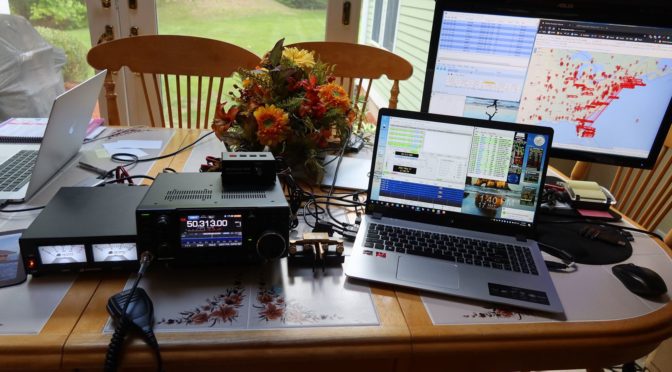
6m Field Day Station
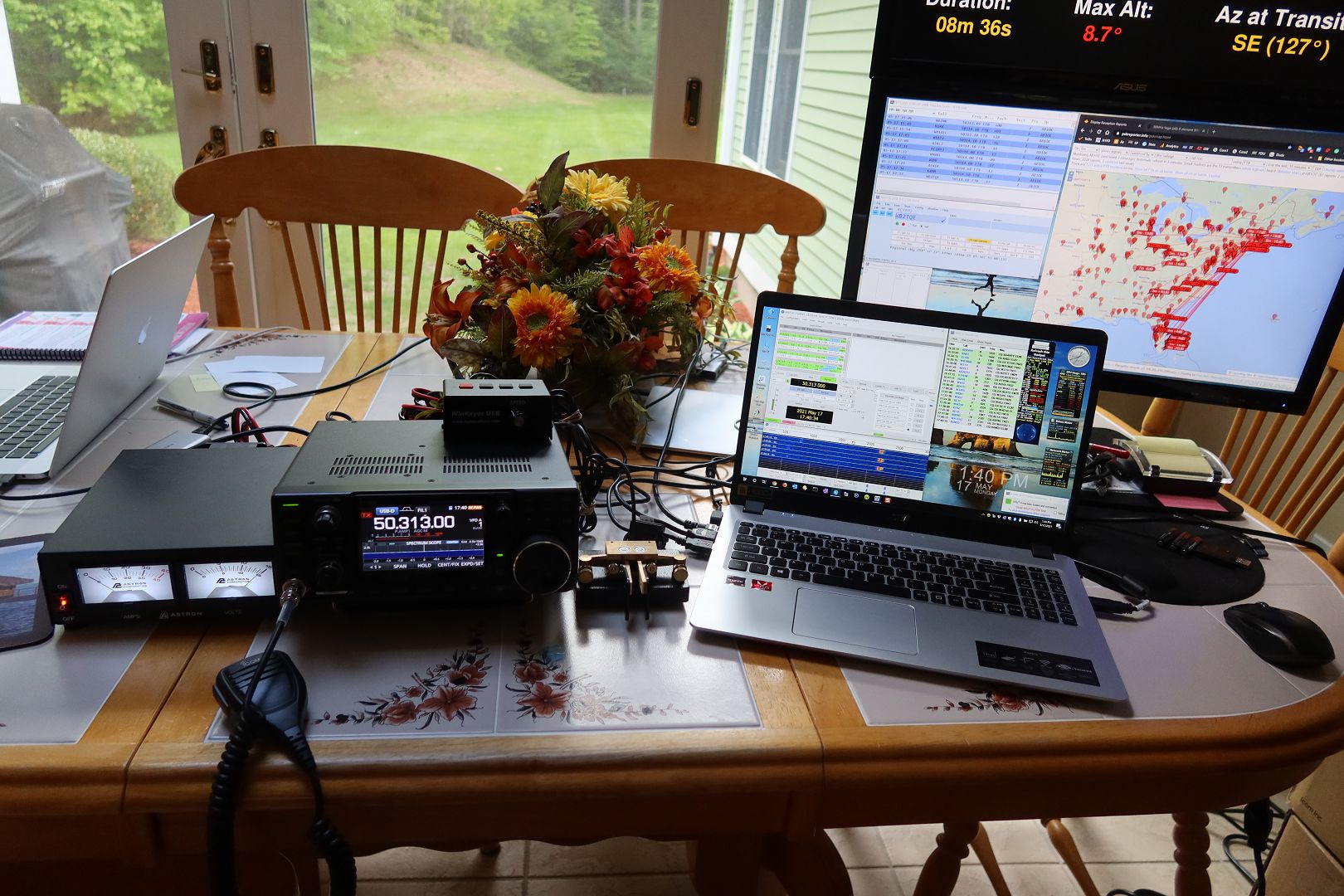
We also use the 6m LFA antenna project as an opportunity to assemble and test our 6m Station for Field Day. The station is an all-mode setup that can do SSB Phone, CW, and WSJT-X Digital (FT8/FT4, Q65, MSK144, etc.). The station will be generator powered at Field Day but it can also be run using a solar/battery setup when Mountain Topping.
The station features an IC-7300 Transceiver (100w), a Winkeyer and Paddles for CW, and a Windows laptop computer running the N1MM+ logger and WSJT-X. The station will also sport a second monitor for Field Day.
N1MM+ Logger on 6m
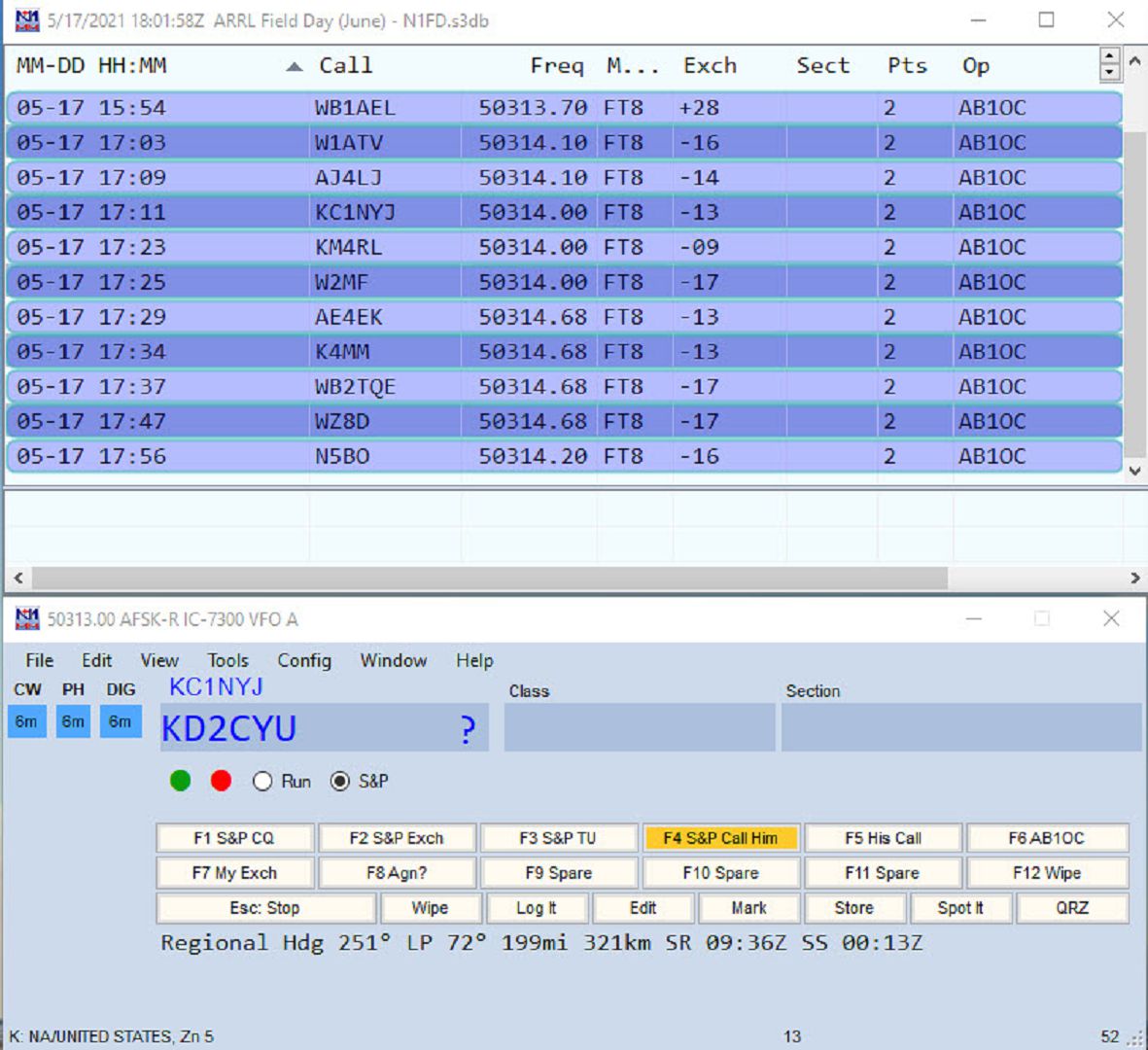
The N1MM+ Logger works great with the IC-7300 and WSJT-X digital. It supports the all-mode station configuration nicely and it is well integrated with WSJT-X making the logging of FT-8 and other Digital Mode contacts simple. N1MM+ also supports voice recording and keying of the IC-7300 which is a great aid during longer operating events like Field Day.
PSKReporter Test of Portable 6m Station
So how does the upgraded setup play on 6m? Very well! The image above is a snapshot from PSKReporter during our testing session. As you can see, we were using FT8 to test the station and we were heard up and down the eastern U.S. states.
WSJT-X FT8 Decode using 6m Portable Station
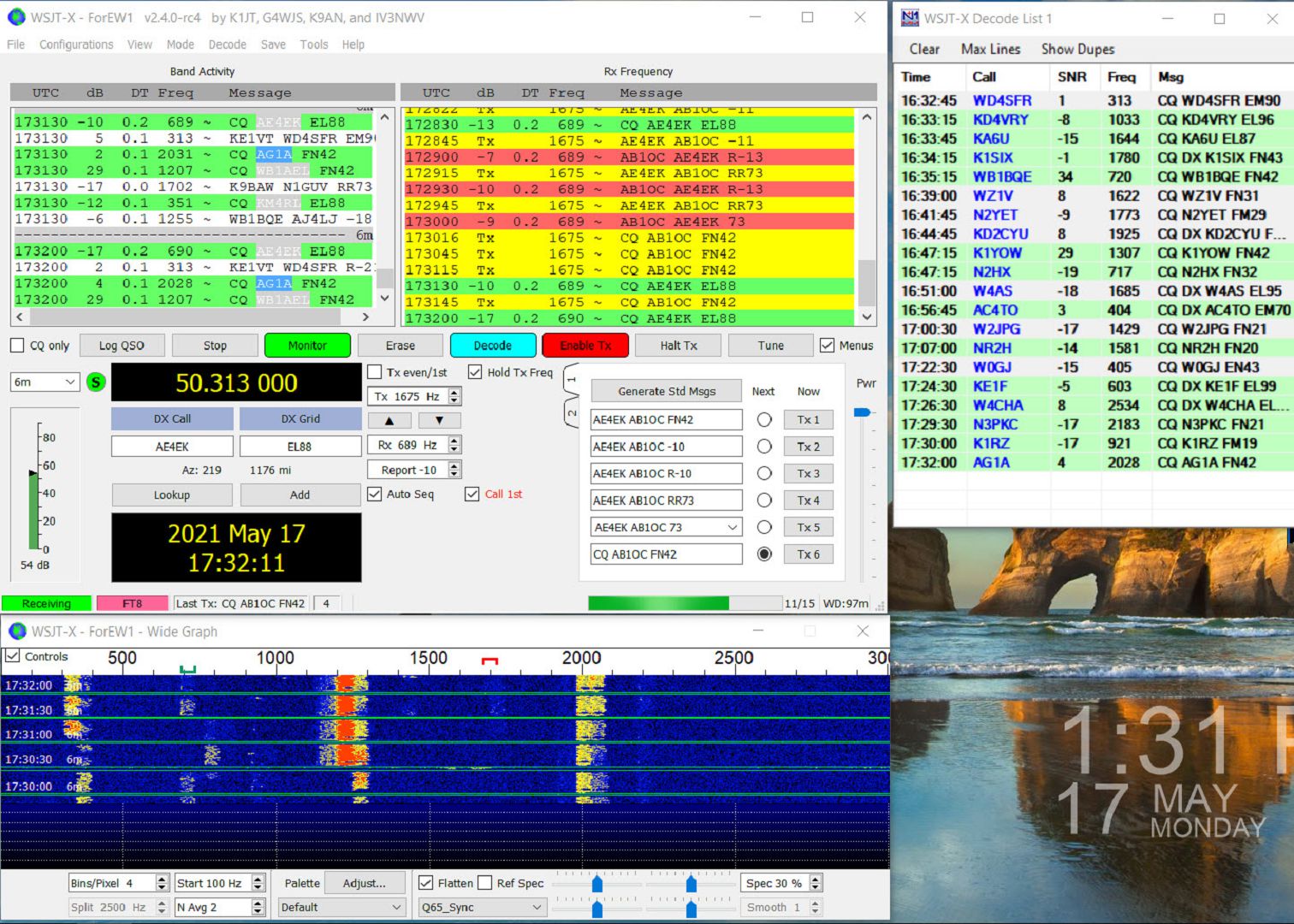
Signals were strong in WSJT-X FT8 mode and it was easy to make contacts. We made about 50 contacts during our testing of the 6m Feild Day Station.
The LFA Yagi hears really well making for reliable decodes of signals in the -18 range and often weaker.
6m Meteor Scatter Pings
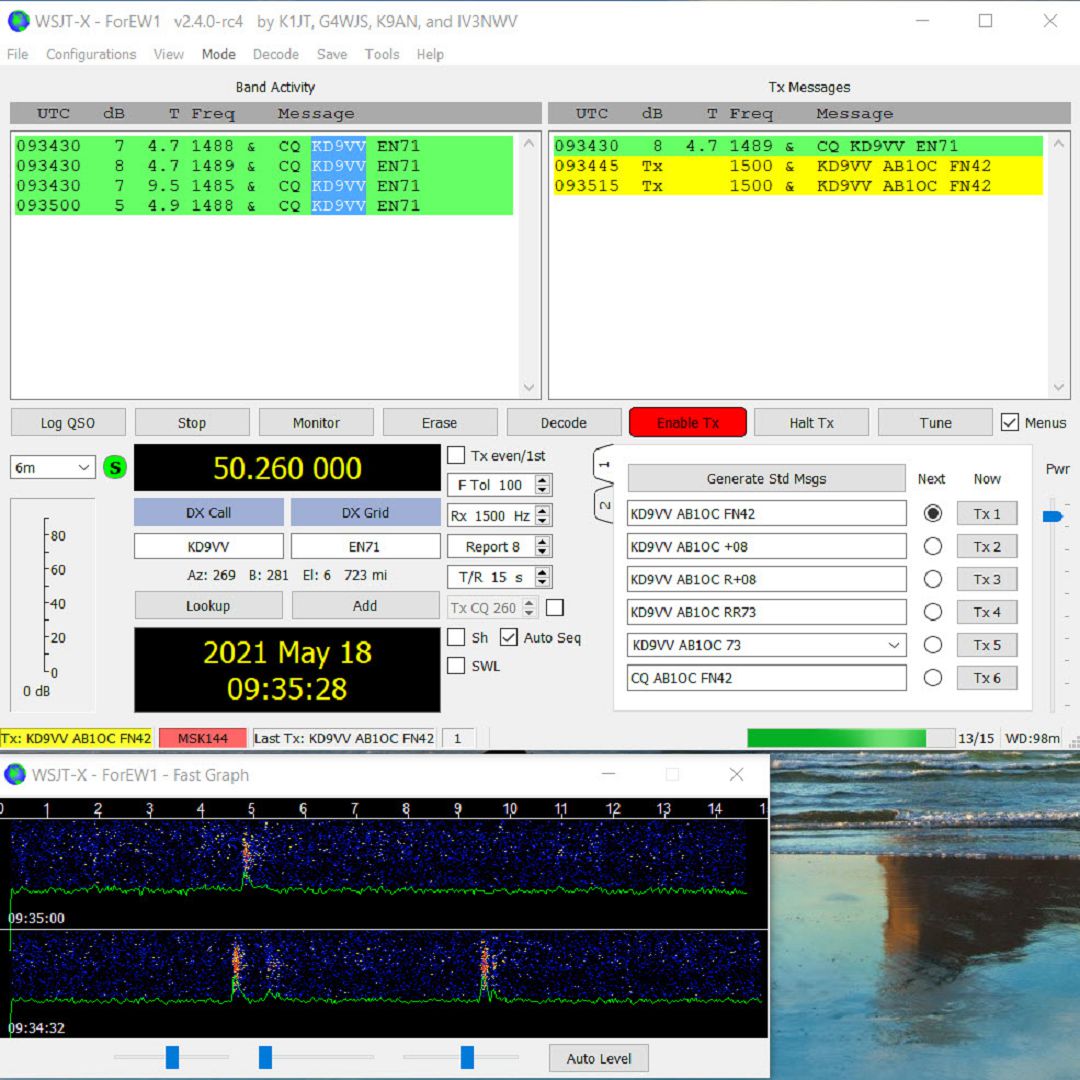
For fun, I decided to try some 6m Meteor Scatter contacts using the MSK144 mode. This is a challenge with a 100W station as Meteor Scatter general needs a bit of power to work well. As you can see from the image above, we had no problems decoding meteor pings from stations in the midwestern US. I even managed to complete a couple of contacts using Meteor Scatter on the 6m Band.
All in all, we are very pleased with the performance of our upgraded 6m Field Day Station. If we can get a similar Es opening to what we have been seeing here during the last two days, we should have a lot of fun on the Magic Band at Field Day!
We use cookies to ensure that we give you the best experience on our website. If you continue to use this site we will assume that you are happy with it.