We get quite a few requests from folks to explain how to get started with Amateur Radio Satellites. Requests for information on how to build a computer-controlled ground station for Linear Satellites are also pretty common. I recently got such a request from our CWA class so I decided to put together a session on this topic…
We recently put together a presentation and demonstration on Getting Started with Amateur Radio Satellites. We covered quite a bit of ground during the presentation including:
How to put together a simple station and work FM EasySats with HTs and a handheld antenna
A recorded demonstration of some contacts using FM EasySats
How-to build a computer-controlled station and work Linear Transponder Satellites
Fixed and Portable Satellite Station Antenna options
A recorded demonstration of some contacts using Linear Satellites
We recorded the session so that we could share it with folks. The link above will take you to our Blog where you can view the presentation video and Powerpoint. The post also includes links to many additional articles about building and operating Amateur Satellite Stations.
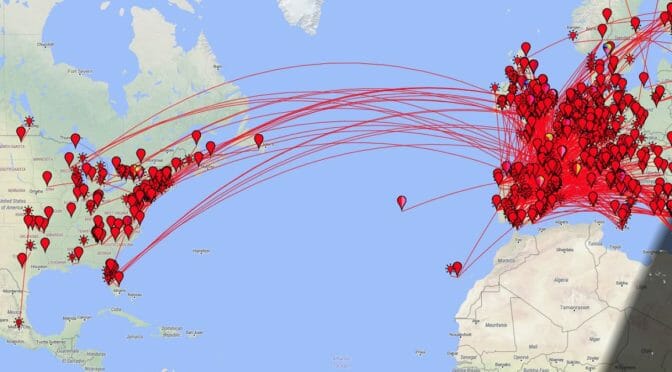
I’ve had a chance to operate on the 6m Band this past week. We are approaching the prime time for the summer Es (E-Skip) season here in the Northeastern United States. I was fortunate to catch a typical limited DX opening on the 6m band between our location here in New England and Europe…
The spring 6m Es season is well underway here in New England. We are beginning to see some DX opening to Europe daily. As a result, I thought that it might be a good time to share some information about 6m DX openings using some examples captured during a recent operating session here at AB1OC-AB1QB. The link above contains the details.
The article illustrates what a typical 6m opening to Europe from here in New England is like. It also includes some information about how to monitor the 6m band to spot short-lived DX openings when they occur.
FT8 mode, JTDX software, and PSKReporter are described in the article at the link above. These are useful tools for monitoring propagation and working contacts on the 6m Band.
I hope that you’ll give the 6m Magic Band a try this Es season!
We recently did a Tech Night Program about Getting Started in EME Communications (Moonbounce). I wanted to share the presentation and video from this Tech Night so that our readers might learn more about EME…
I wanted to share the presentation from our recent Tech Night on Getting Started in EME Communications. You can view the presentation and the video via the link above. Members can log in and find this and other Tech Night videos and presentations on our Tech Night page here.
The link also provides a path to learn about the design and construction of a new 2m EME station that Anita and I are building.
We use cookies to ensure that we give you the best experience on our website. If you continue to use this site we will assume that you are happy with it.