Tag Archives: Youth Outreach

You Can Talk to the ISS With Nothing But a Ham Radio

You’ve just got to time it right.

Source: You Can Talk to the ISS With Nothing But a Ham Radio

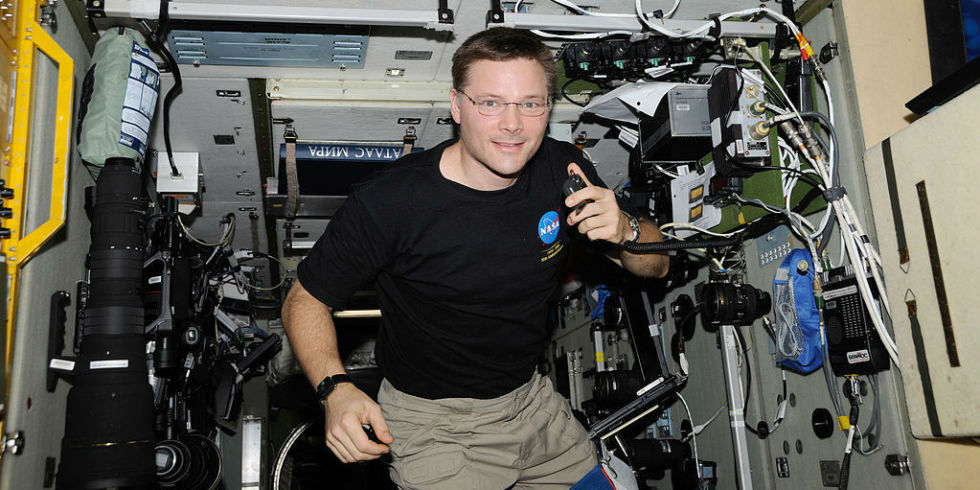
Adrian Lane of Gloucestershire, England, got in touch with the International Space Station the other day. Thanks to impeccable timing and a prime location under the ISS’s path above the Earth, Lane was able to have a brief conversation with space station’s crew via ham radio. It must be surreal to have a casual chat with humans who are floating up there in the void, but technologically, it’s really not even that hard….

This article is a fun read about a man in the U.K. who made a chance contact with an astronaut on the ISS. We are considering working local schools as we did with our HAB project to see if we can secure an ISS contact for a group of local students. If you are interested in working with us on this project, please contact me at via email at [email protected].

Fred, AB1OC

ARRL Board Explores Entry-Level License Options…

Looks like the ARRL Board is headed in the right direction on Amateur Radio License changes to make Amateur Radio more accessible to new people and you folks.

Reposted by: Fred, AB1OC

Source: ARRL Board Explores Entry-Level License Options, Ways to Face Future Challenges

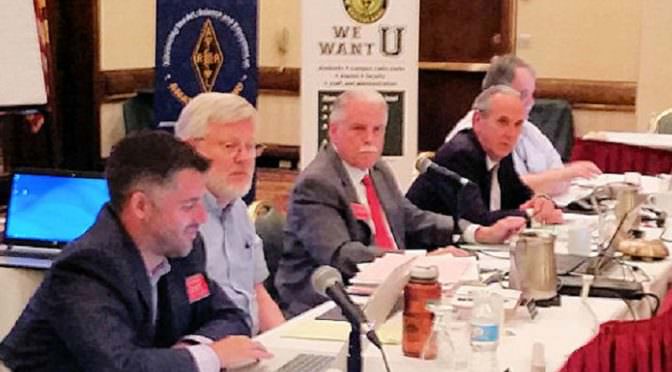
Meeting July 21-22 in Farmington, Connecticut, the ARRL Board of Directors took steps to chart a firmer future for Amateur Radio by enhancing the value of the entry-level license and by providing ongoing support for new licensees. ARRL President Rick Roderick, K5UR, chaired the second regular meeting of 2017.

“The general goal here is to have an entry-level license that offers a way for a newcomer to experience multiple facets of Amateur Radio,” the committee’s report said, “encouraging them to get on the air, meet other licensees, and engage in a lifetime of learning while using Amateur Radio.”ARRL New England Division Director Tom Frenaye, K1KI, presented the report of the Ad Hoc Entry-Level License Committee. He said the committee’s initial, informal survey attracted nearly 7,900 responses. A second random survey drew another 375 responses. “A clear majority favored a revision to the Technician rather than a new entry-level license,” the committee’s report said, noting that this would require no change to the Technician examination, which already covers more material than necessary for an entry-level examination.

“This choice requires the simplest revision to FCC rules,” the committee report said. The committee suggested expanded digital access on 80, 40, and 15 meters, where Technicians already have CW access, as well as the addition of Technician phone privileges on those bands. Frenaye pointed out that while the Amateur Radio population is growing, the annual rate of growth has stagnated at about 1%. “There is a general consensus…that something needs to happen,'” the committee’s report said, noting a generally favorable attitude toward attracting newcomers.

Later in the meeting, the Board charged the ARRL Executive Committee with developing a plan to implement the ad hoc committee’s recommendation to make the current Technician class license more attractive and useful by expanding its operating privileges on HF to include phone and digital modes. The Board asked the Ad Hoc Entry-Level License Committee to further research and develop the details of a second recommendation to improve successful outreach to prospective radio amateurs and help them through the licensing process.

Read more …

Academy for Science and Design SPARK Day

John Keslo, W1MBG, Jamey Finchum, KC1ENX, and I recently had the chance to again be part of SPARK Day at the Academy for Science and Design (ASD) in Nashua, New Hampshire. We attended SPARK Day to provide an Introduction to Amateur Radio for the students at ASD. ASD’s goal is to be a world-class school that specializes in science, engineering, mathematics, and design. The school provides education for students in grades 6-12. ASD periodically holds SPARK (Symposium Promoting Advancement of Real-world Knowledge) conferences, which enable ASD students to learn about areas which might help them to develop careers in Science, Technology, Engineering and/or Math (STEM).

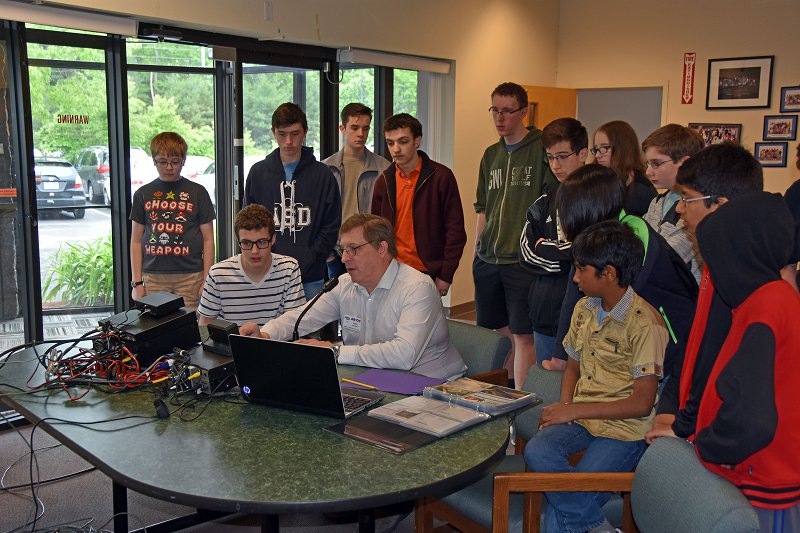
SPARK Day Group Learning About Amateur Radio
ASD Group Learning About Amateur Radio

The students at ASD are extremely bright and are highly motivated to develop STEM careers. We had about 65 students elect to attend the two sessions that we presented. The kids showed a lot of interested in our presentations and demonstrations.

SPARK Day Classroom Activities


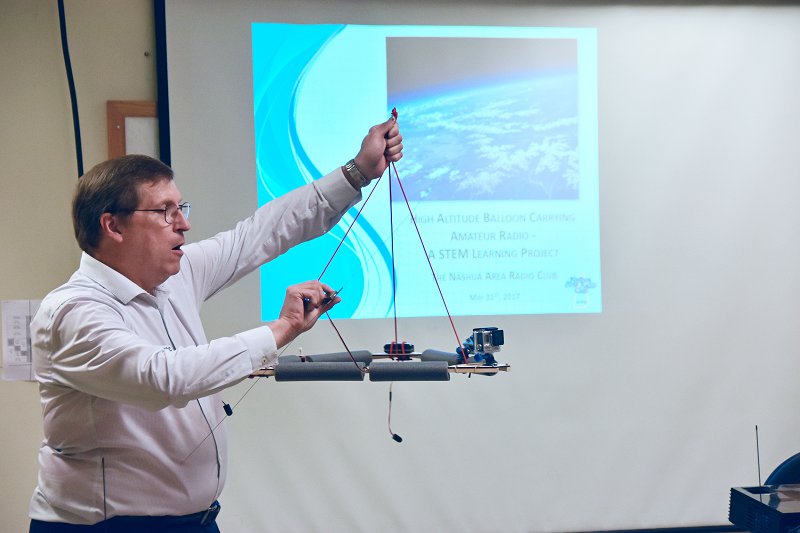
Explaining the HAB to the ASD Students at SPARK Day
Explaining the HAB to the ASD Students

We began each session with some classroom time where we explained what Amateur Radio is about and some of our club’s Amateur Radio projects. We talked about and showed components of our High Altitude Balloon Project, our Satellite Ground Station and our Field Day activities. The interest level among the kids was high and lots of questions were asked.

SPARK DAY GOTA Station


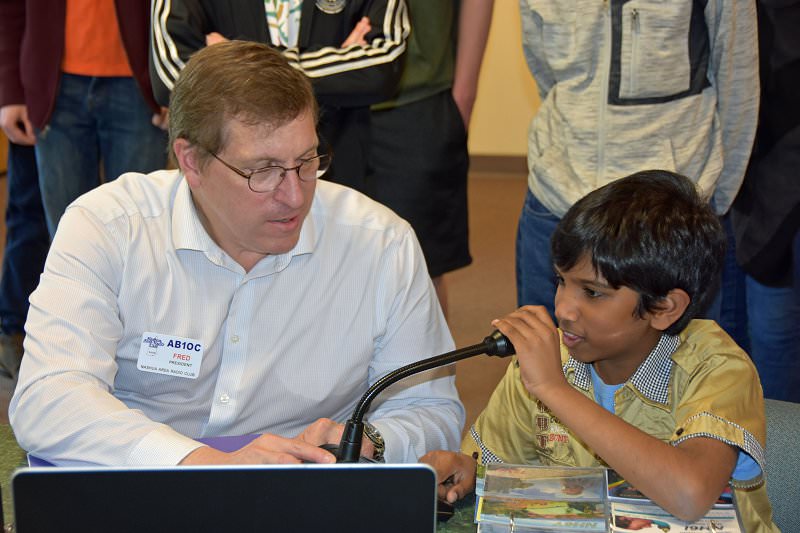
Making an HF Contact using our GOTA Station at SPARK Day
Making an HF Contact using our GOTA Station

We also put together an HF GOTA station in the lobby of the school. This gave the kids a chance to get on the air and experience Amateur Radio first hand. After the kids got over the usual “mic-fright”, they had a lot of fun.

We are looking forward to our next opportunity to participate in ASD’s SPARK Day in the fall. This is one of the most enjoyable events of the year for me.

Fred, AB1OC

Radio Amateurs Developing Skills Worldwide