Tag Archives: VHF/UHF

2 Meter Vertical Yagi for Better VHF Performance

Some Issues with 2 meters VHF

I have a VHF radio in my car with a mag-mount antenna. One of the things I like to do is join in the Nashua Area Radio Society’s Weekly Repeater Net. I enjoy it so much that I volunteer to be in the Net Control rotation. When it is my turn, I need to be sure I can reliably reach the repeater and there were a few times when my mobile setup let me down.
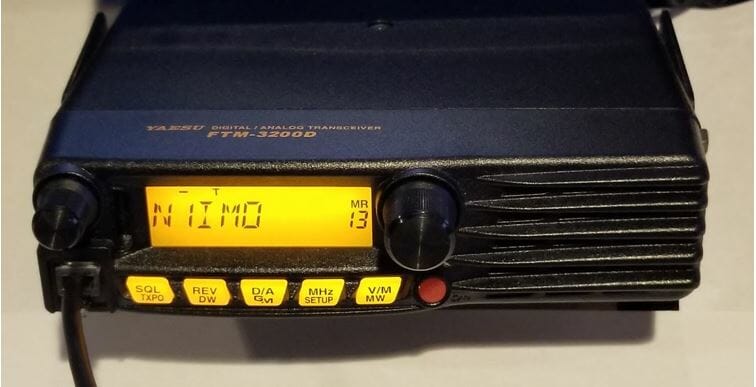
Yaesu FTM-3200D
Yaesu FTM-3200D

I recently updated my shack to include a Yaesu FTM-3200D 2-meter radio that has up to 65 Watts output on 2 meters.

Diamond X200A Dual Band VHF/UHF Antenna

I paired that with a Diamond X200A Dual Band VHF/UHF Antenna and things improved a bit, but there were still a few times when I was scheduled to be Net Control that I could not reliably connect to the repeater.    I did some research and here is what I learned.
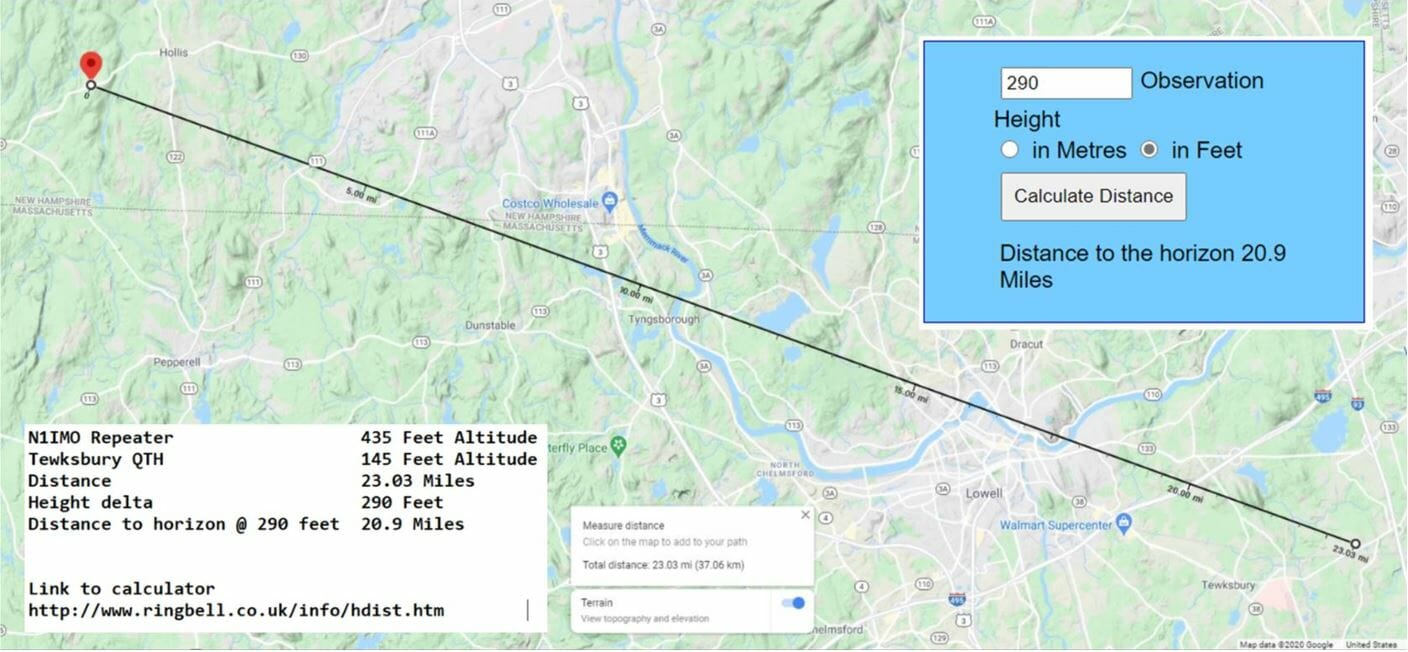
Distance and Line of Sight Calculator to Repeater

VHF, especially in the FM mode is mainly a line of sight band.  There are many propagation modes that go way beyond the line of sight, such as Sporadic-e, Tropospheric ducting, Auroral propagation, Meteor scatter, and Earth-Moon-Earth (EME), but they are not relevant to this discussion of connecting to a repeater.  The map above shows the approximate location of the repeater and my QTH in Tewksbury.  I looked up the height of the repeater antenna and my QTH and came up with a difference between them to help calculate the distance to the horizon from one point to the other.  Here is the link to the calculator in the blue box:  http://www.ringbell.co.uk/info/hdist.htm  Line of sight, as it applies to radio in this situation extends a bit beyond what the optical line of sight maybe, and that describes perfectly the situation shown above.  The repeater appears to be located about 10% beyond the optical line of sight from my QTH.

What can I do about it?

Most of the time, I can connect to the repeater.  Unfortunately, I cannot predict whether or not I will be able to connect.  The first thing I thought I could try was to raise the antenna at my QTH to extend the view over the horizon.  I checked on the LOS calculator and found that adding 10 feet to my antenna mast would only get me out to 21.2 miles or a .3-mile gain.  This approach would quickly reach the point of diminishing returns, so I needed another solution.  The next thing I thought about was improving the antenna.  2-meter yagi beam antennas are very reasonably priced, and I found the Diamond A144S10 Base Station Yagi Beam Antenna for under $95.00.  It has 11.6 dBi gain, so should work well.

A144S10 Base Station Yagi Beam - 2 meter yagi
A144S10 Base Station Yagi Beam

Any antenna project will include more than the price of the antenna but by using some parts I already had on hand and adding an inexpensive TV rotator, I was able to install the antenna at a reasonable cost.

Building the 2 Meter Yagi Antenna
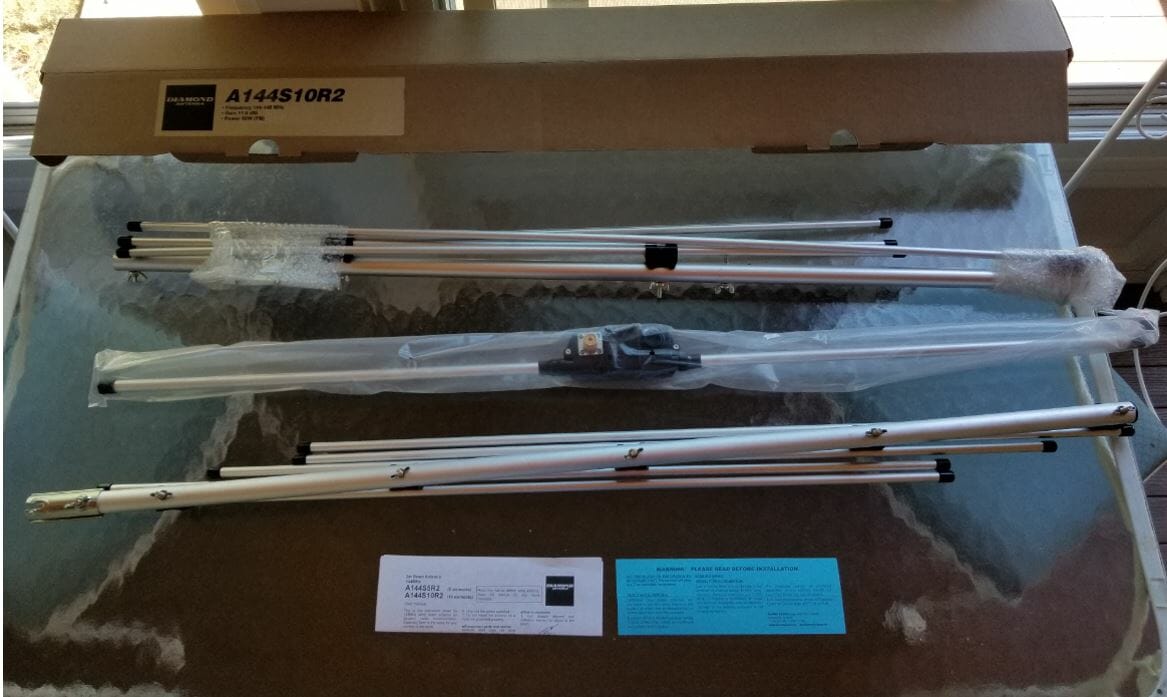
Antenna Unboxed - 2m Yagi
Antenna Unboxed

The antenna comes in a small box with many of the parts pre-assembled.
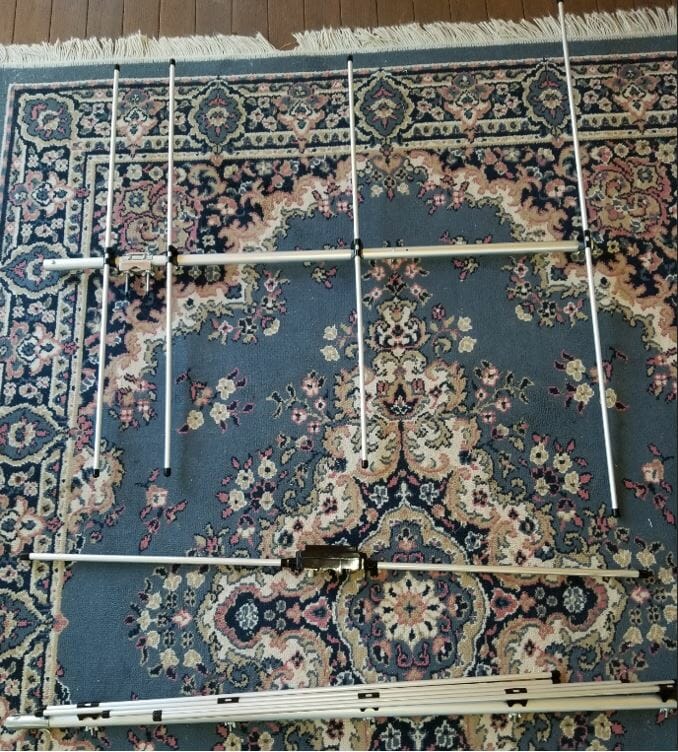
Beginning the Assembly - 2 meter Yagi
Beginning the Assembly

I twisted the elements of one section into position and tightened the wing nuts to hold them in place.

After repeating the process with the other elements and assembling the pieces I moved on to install the horizontal bracket on a piece of chain link top rail I used for the mast.
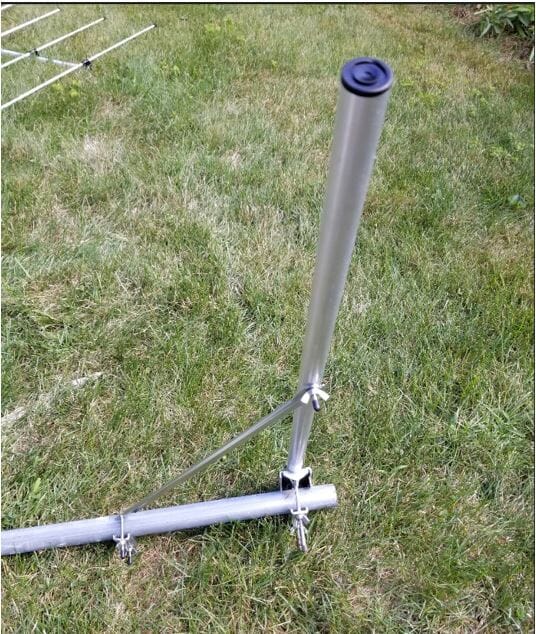
Stand-off Mounting Bracket

The stand-off bracket serves two functions.  First, it attaches the antenna to the mast in a vertical orientation and second, it moves the antenna away from the mast so that there is no interaction between the metal mast and the antenna elements.
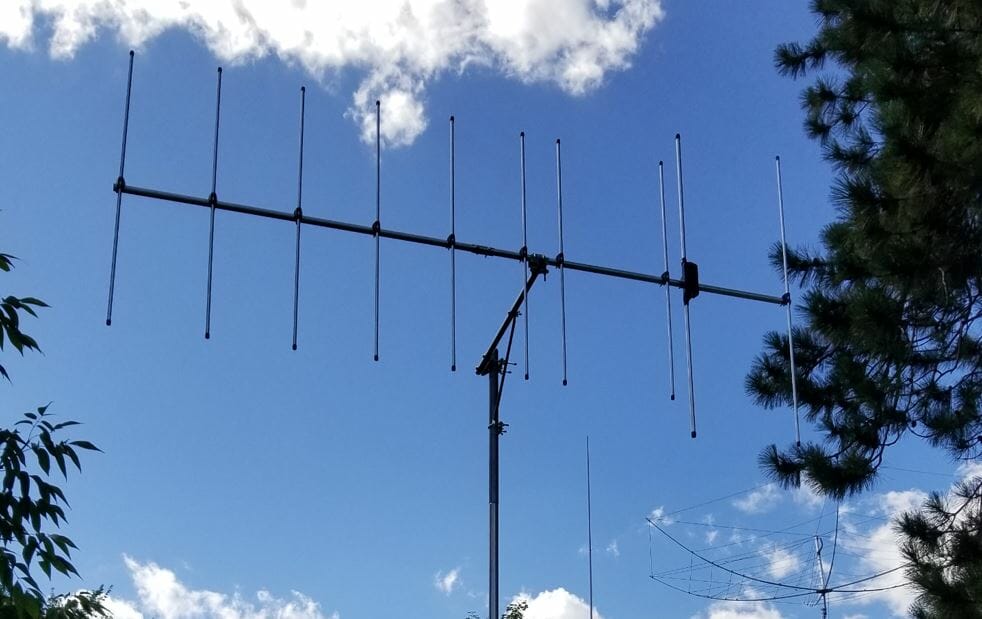
Completed Antenna Staged on Mast - 2 meter Yagi
Completed Antenna Staged on Mast

Here is the antenna staged without the rotator, prior to installation on the roof.

Preparing to install the antenna on the roof

It is a good idea to pre-wire the antenna rotator and calibrate it before going up on the roof.  The Hy-Gain AR-500 Rotator is easy to configure.
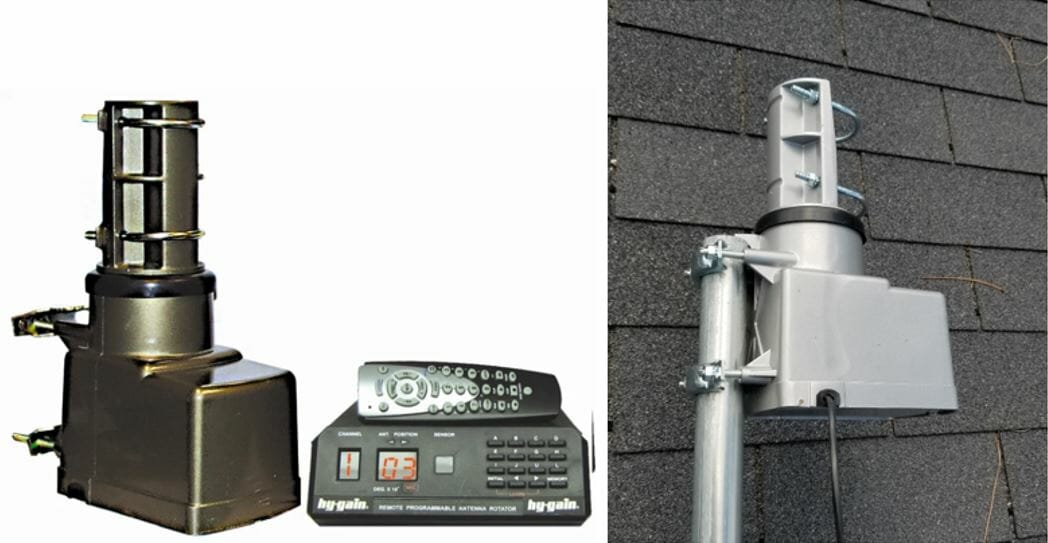
Hy-Gain AR-500 Rotator

I installed the tripod on the roof taking care to place the lag bolts into the rafters and waterproof them thoroughly.  Importantly, I used the level and the top rail to ensure that it would be vertical prior to mounting it to the roof.
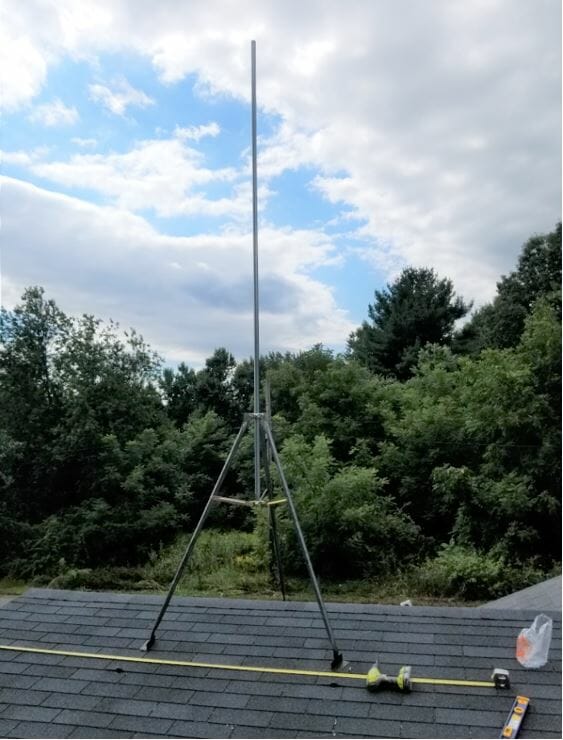
Tripod Base Mount
Tripod Base Mount
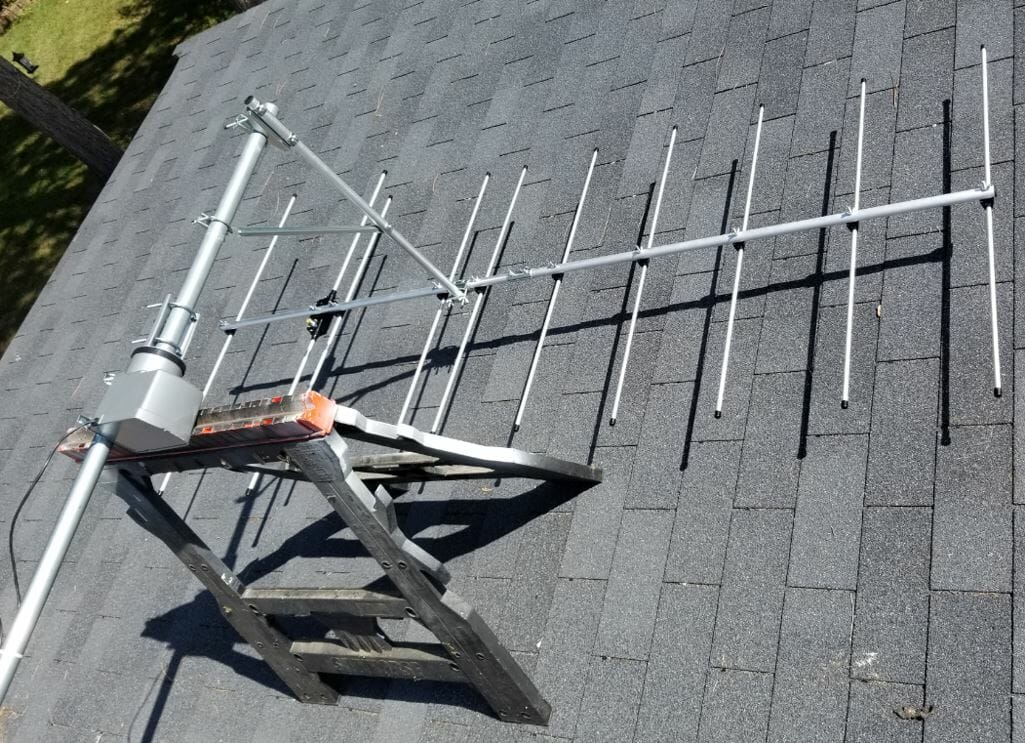
Antenna, Mast Sections and Rotator Assembled - 2 Meter Yagi
Antenna, Mast Sections, and Rotator Assembled

Assemble the Antenna, Mast, and Rotator.
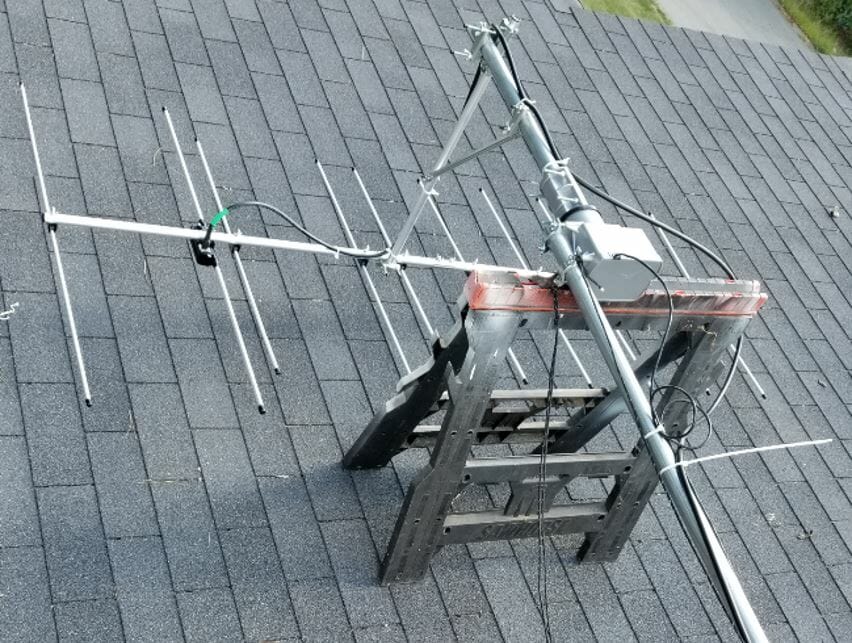
Attach Wires, Coax and Guy Lines - 2 Meter Yagi
Attach Wires, Coax, and Guy Lines

Next, attach all wires, coax, and guy lines while the antenna is in reach.

Install the 2 Meter Yagi antenna in the roof mount tripod
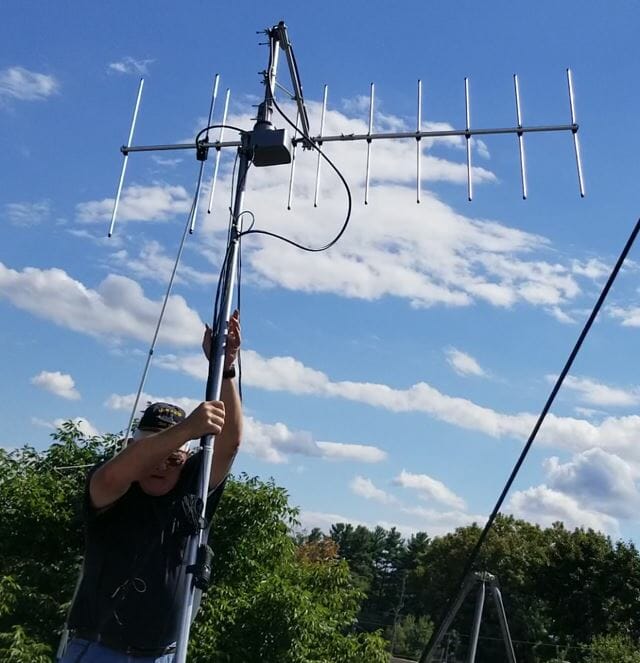
Lifting the Completed Antenna Assembly - 2 meter Yagi
Lifting the Completed Antenna Assembly

Lifting the completed assembly to mount it in the tripod.
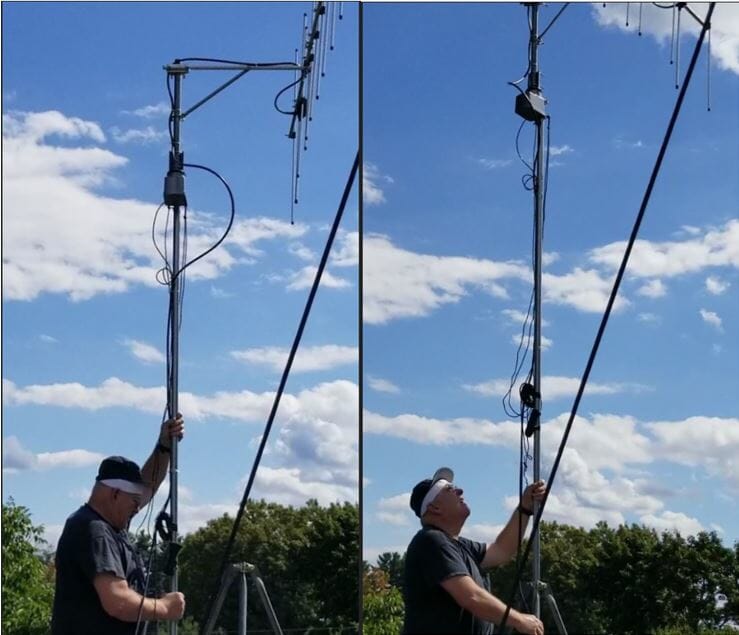
I lined up the whole assembly and carefully lifted it into the tripod mount.  If I ever do this again, I will have a helper!
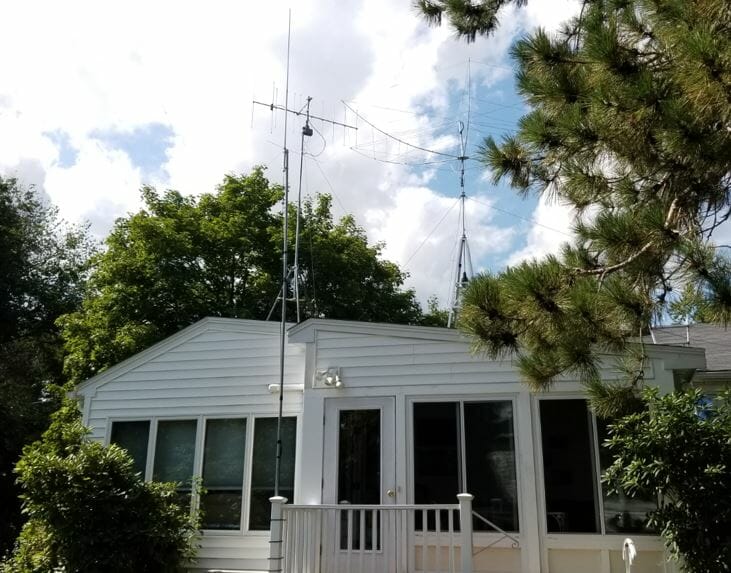
3 Antennas Over the House - 2 meter Yagi
3 Antennas Over the House
HF and VHF Antennas
HF and VHF Antennas

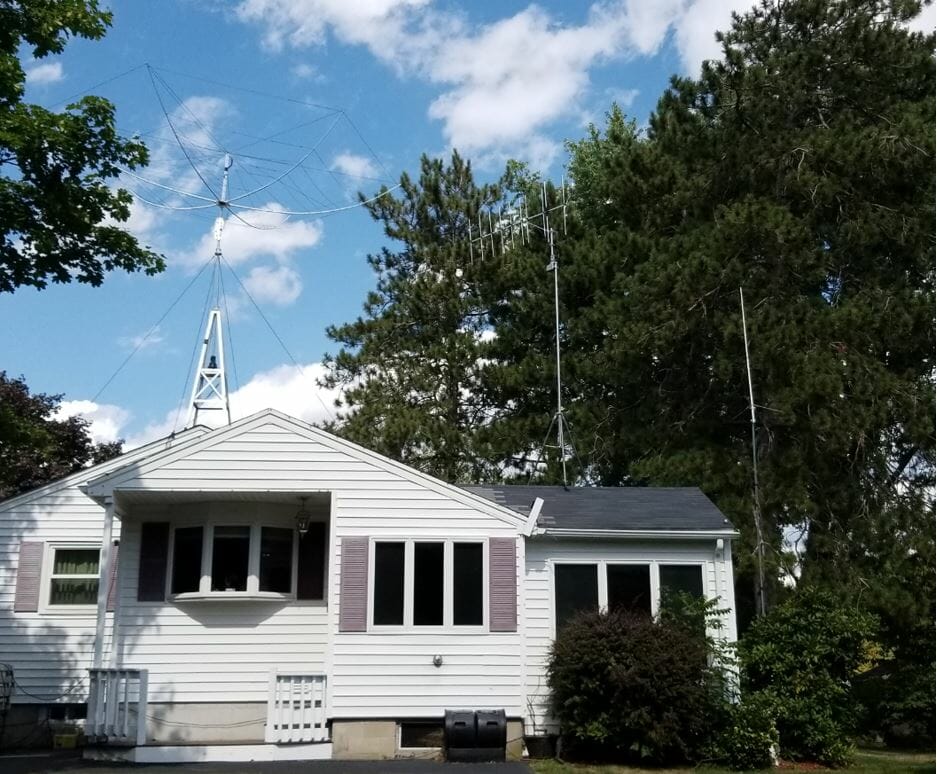
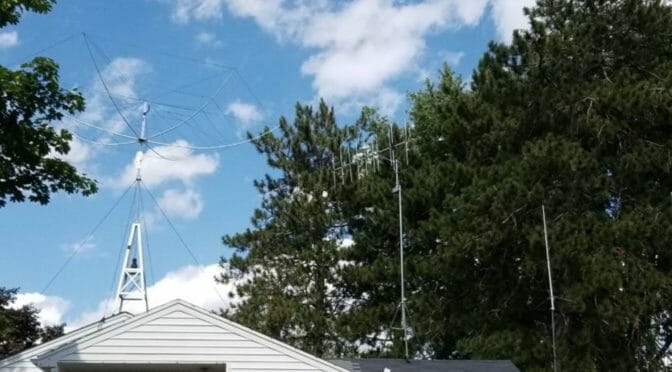
The Hex Beam is 33 feet up.  The new A144S10 10 element 2 meter Yagi is around 28 feet and the Diamond X200A is around 20 feet high at the feed point.

The results are in

Finally, I made arrangements with Fred, AB1OC to do some testing later that afternoon.  I oriented the antenna to the compass accurately and looked up the heading to the repeater.  Fred helped me with adjusting my mic gain and power output to make sure the radio was working properly.  After a few tweaks, we were both happy with the results. I hosted the Nashua Area Radio Society’s Weekly Repeater Net that night, which turned out to be a success.  I am looking forward to exploring the capabilities of this new antenna.

Jon, AC1EV
NARS QSO Party Update

The Nashua Area Radio Society is sponsoring the NARS QSO party on September 26th. This  QSO party is born from the frustration of not being able to have large groups of our members meet for the  SOTA, POTA, and IOTA  events that we had scheduled before the Pandemic.

There have been some important rules changes that you need to know about. We have adjusted the final exchange and scoring to make it easy for you to use the existing North American QSO Party set up in a contest logger such as N1MM+ to participate and score your operation in the NARS QSO Party.

Exchange and Multipliers

The exchange and multipliers for this contact are patterned after the North American QSO Party. Here’s a summary of what has changed:

  • The most important rule change is that this will be a phone contest only. It wasn’t possible to do an all-mode contest without having some issues in other areas related to using standard contest setups that are available in most loggers.
  • Also, the exchange will be the operator’s first name plus (state/DC/province/country).
  • Finally, the time window has been changed to 1600 UTC on September 26 to 04:00 UTC  September 27th. That’s Saturday 12:00 noon to midnight on the East coast.

Setting up N1MM+

I want to quickly go over how to set up N1MM+ to log contacts and score your entry correctly.  N1MM+ is a free logging software that will allow you to log contacts, score the contest for you and also provide you with a log in Cabrillo format as well.

When you are finished downloading open the software.

  • Go to file> new log in the database and choose NAQPSSB.
  • Change the start date and time.
  • Go down the options and change as needed taking special care with the sent exchange, mode, and operator information boxes.
  • Click ok at the bottom of the page. You come back to the logging screen.
  • The next important change to make is to right-click anywhere in the logging window and go down to change band panel display.
  • Click on this option and click on the VHF tab and the UHF tab. this will allow you to add contacts from 2 meters on up.

This explanation probably sounds kind of clunky but once you open the software it will make a lot more sense. I think you should have N1MM+ configured correctly if you follow the steps above. I have pictures that I took. Email [email protected] if you want a copy of the setup pics.

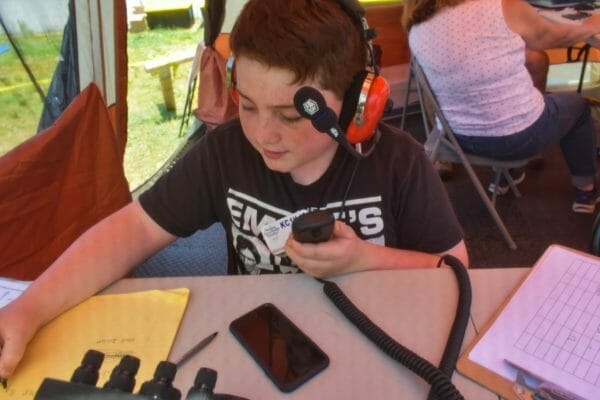
Ryan KC1KJS field day 2019

Summary of the Rules

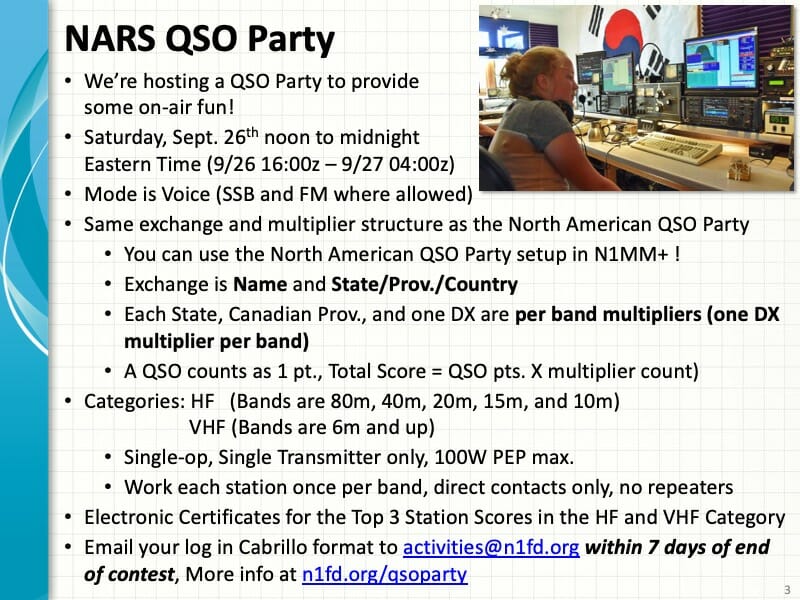
There will be two operating categories for the NARS QSO Party: HF and VHF and up.   A summary of the rules is below.

NARS QSO Party Rules

You should submit your final log as an Electronic Entry only and your submission should include a complete Cabrillo format log and your claimed score. Logs should include date and time in UTC, Frequency, Mode, Call Signs, and the Exchange for each of your contacts. Logs are due 7 days after the contest is finished.

Certificates will be awarded to the top 3 stations in each category.

Ham Nation
Ham Nation

Fred, AB1OC, and I will be on Ham Nation this Wednesday, September 23rd, starting at 9 PM Eastern Time, to publicize this so we should see plenty of activity on the air.

I hope to get you in my log!

73

Jim Lajoie, K1BRM

Ham Bootcamp is Going Online

Are you a newly licensed Technician, or a General or Extra and have never been on the air or built a station?  Are you a prospective ham but would like to learn more about Amateur Radio activities?  Ham Bootcamp is the program for you and this year Ham Bootcamp is Going Online!

Registration is open for the Nashua Area Radio Society’s Fall Ham Bootcamp.  This year, Ham Bootcamp is going online using Zoom web conferencing. Going online will allow us to help new Hams get on the air, in a safe way during the Coronavirus Pandemic.  This will also let us reach out to new Hams across the country.

Jamey, AC1DC, elmers Randall, KC1KSY as he makes an HF Contact
Jamey, AC1DC, Elmers Randall, N1KRB as he makes an HF Contact

The ARRL has published an article about our Ham Bootcamp program.  It is the cover story in the October 2020 QST, which is just reaching mailboxes this week.  If you haven’t received your copy yet, you can access the article online at This Month in QST.  If you like the article, you can vote for it to receive the Cover Plaque award at http://www.arrl.org/cover-plaque-poll

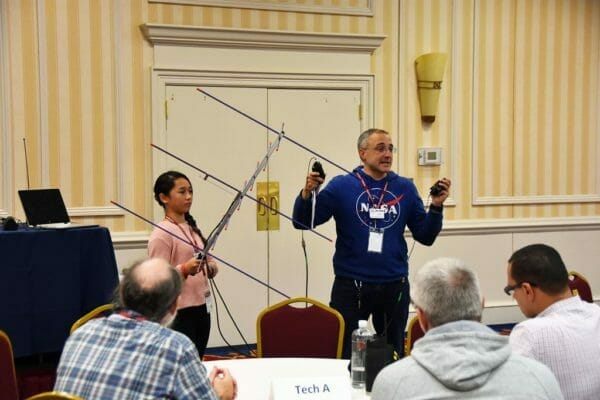
Dan and Kenzie Satellite Intro at Bootcamp

Our fall Ham Bootcamp will be held on Saturday, November 7th from 10:00 am to 6:00 pm Eastern Time.  The morning session will focus on Technician level activities and the afternoon session will focus on HF activities for General and above licensees.  Here is the agenda:

Repeaters and VHF/UHF Session Activities

  • Putting together a Station for Repeaters – How to pick an HT or  Mobile Radio and an Antenna
  • Radio Programming Tutorial
  • Getting started with EchoLink
  • Making Contacts and Joining a Repeater Net
  • Getting Started with Amateur Radio Satellites
  • Getting started with Fox Hunting
Jamey Explains HF Station Building

HF Session Activities

  • Putting together an HF Station for SSB, CW, and Digital
  • Picking and putting up an HF Antenna, Feedline, and Ground
  • Operating on the HF bands using SSB Voice
  • Software and setup for Logging Contacts via your computer
  • Getting started with WSJT-X and FT8 Digital
  • Finding DX and QSL’ing – Getting them in the log and confirmed

… and more!

Ham Bootcamp is Going Online on November 7th

Registration is now open for the November 7th session.  You can get more information about Ham Bootcamp at https://www.n1fd.org/ham-bootcamp/.

Each attendee should register separately using this link.   After registering, you will be sent a link that will allow you to register for the Zoom meeting.  Following the Zoom meeting registration, you will receive a personal Zoom link via email.

Any questions about Bootcamp?  Contact me at [email protected]

Radio Amateurs Developing Skills Worldwide