Tag Archives: VHF/UHF

Our January Visit to MakeIt Labs!

The highly publicized event — the event of the month — went off with a bang! On Jan. 28th, the Nashua Area Radio Club paid a visit to MakeIt Labs to promote Amateur Radio with maker folks. It’s a natural union if you think about. Technologists/scientists/engineers/self-taught DIY’sters and amateur radio folk are essentially one in the same beast. So why shouldn’t they be interested?
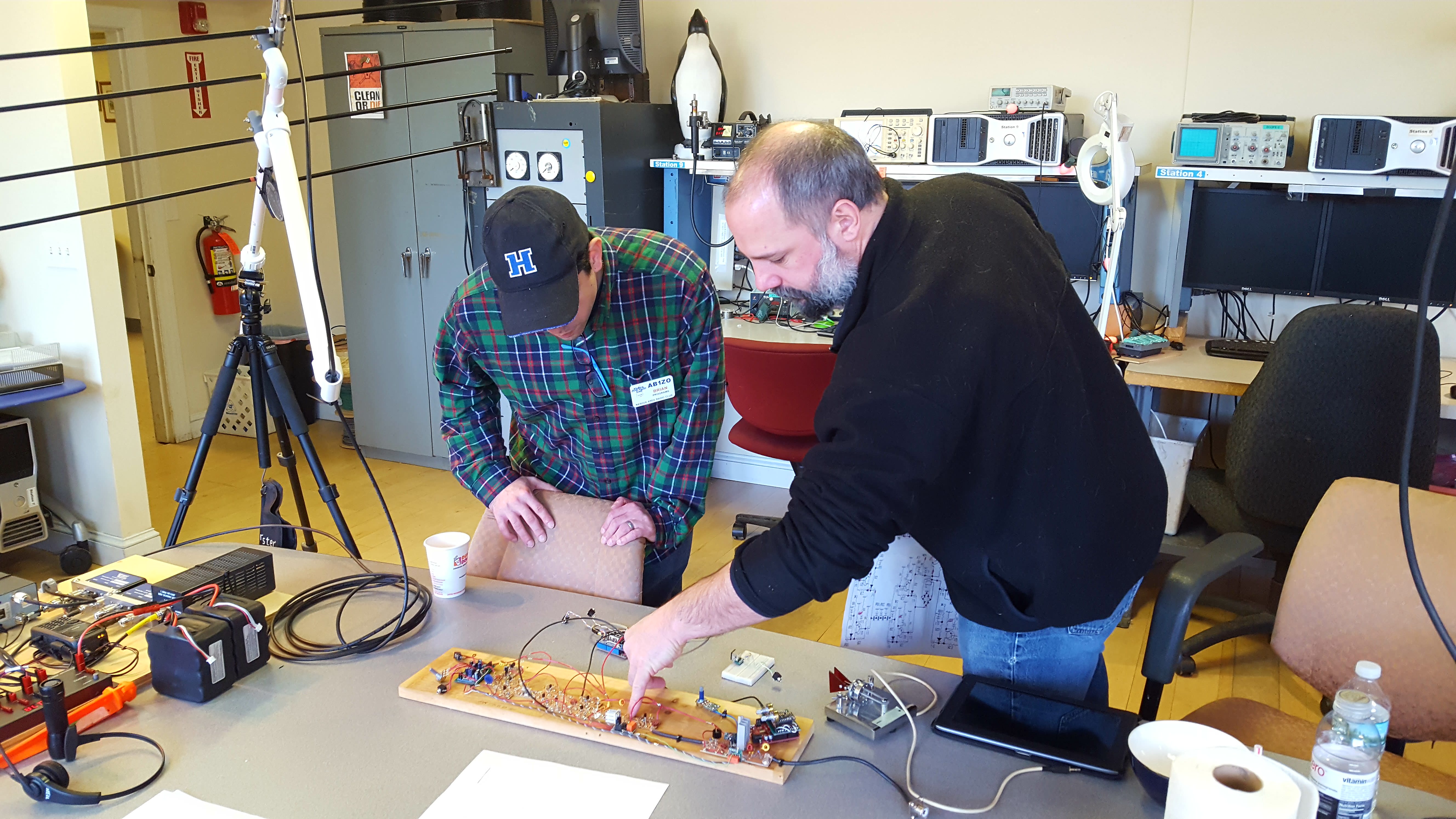
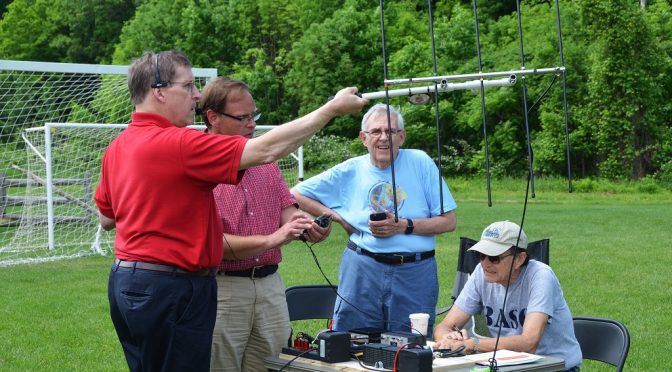
Brian (AB1ZO) and Mike (AB1YK) discussing details of Mike's home-brewed transceiver at MakeIt Labs
Brian (AB1ZO) and Mike (AB1YK) discussing details of Mike’s home-brewed transceiver

We had a super great turn out from many in the club and those external to the club or from MakeIt Labs itself. Representing the Nashua Area Radio Club, we had Fred (AB1OC), Anita (AB1QB), Jamey (KC1ENX), Abby (KC1FFX), Connor (KC1GGX), Brian (AB1ZO), Mike Struzik (AB1YK), Bill (W1TWO), Mike Ryan (K1WVO), Mike Rush (KU1V), and Tom (AB1NS) (Forgive me if I forgot you).
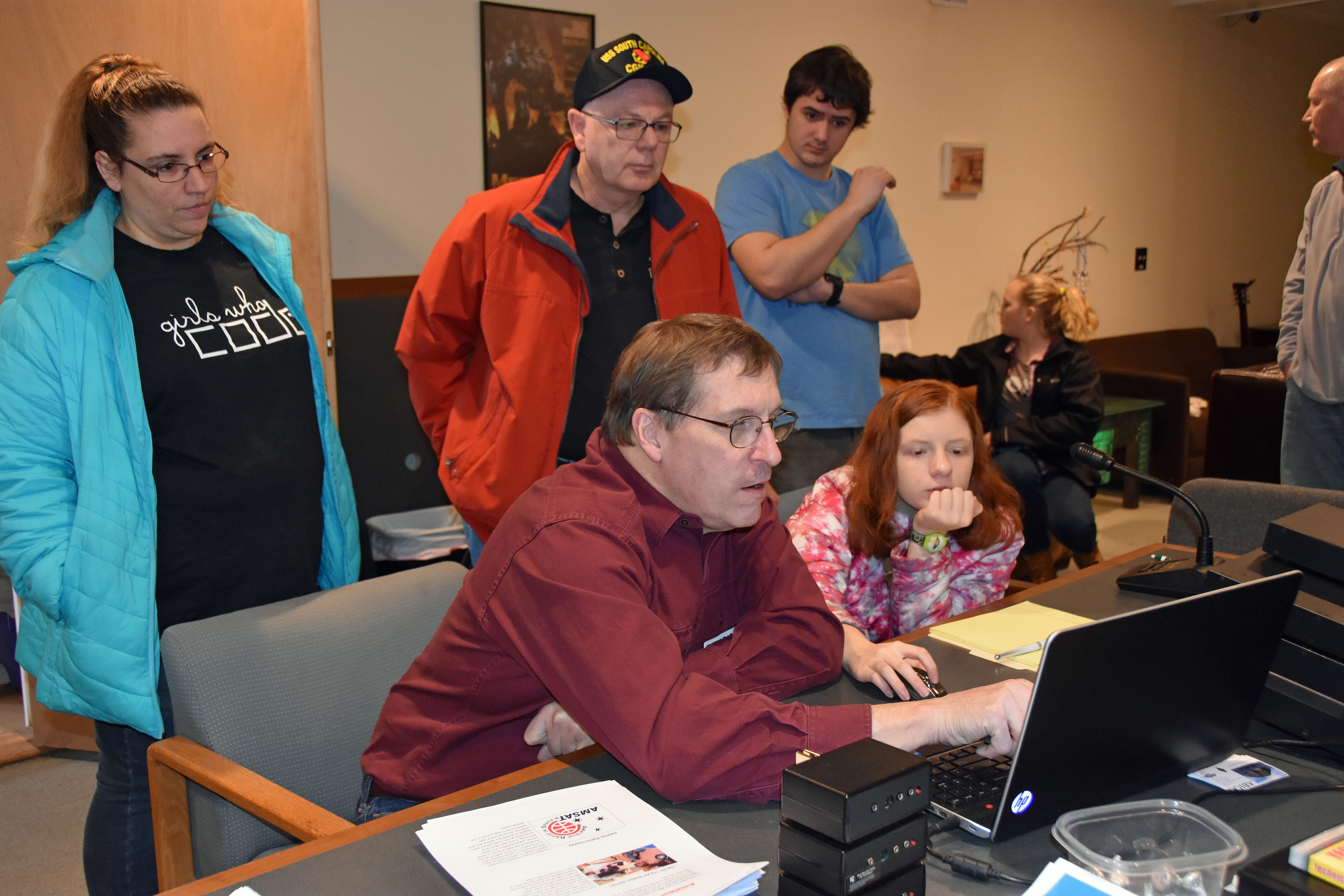
Fred (AB1OC) explaining the nuances of digital operation to a young, budding Ham at MakeIt Labs
Fred (AB1OC) explaining the nuances of digital operation to a young, budding HAM.

The idea was to set up the every-popular GOTA station, but also demonstrations of other amateur radio technology to hook the masses with. As a result, we had Fred’s digital amateur TV station, a tabletop satellite station, and Mike Struzik brought along his home-brewed BitX20 transceiver complete with plans, schematics, and a demo keyer. (Talk to Mike for further details/websites. He’s awesome about answering questions and exposing people to what they need to do to get started.)
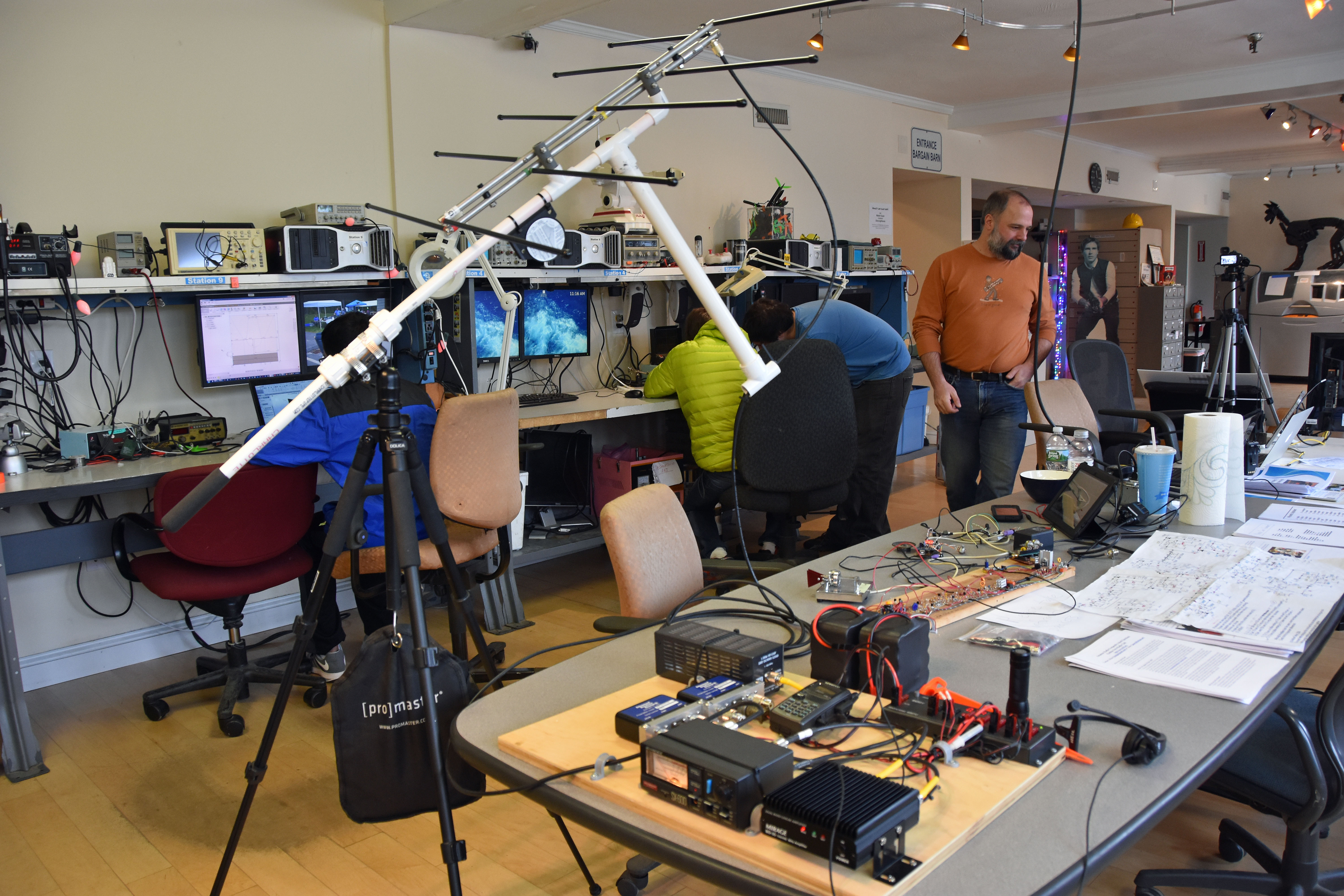
A view of the satellite station at MakeIt Labs
A view of the satellite station

We spent a solid 6-7 hours at the facility, even roping in some new interest from folks who happened to see our advertisements for the event both online and in stores/businesses around Nashua. It’s clear that word is spreading about the work that the Nashua Area Radio Club is trying to do; we are engendering interest slowly, but steadily. Essentially, the trend is upwards.
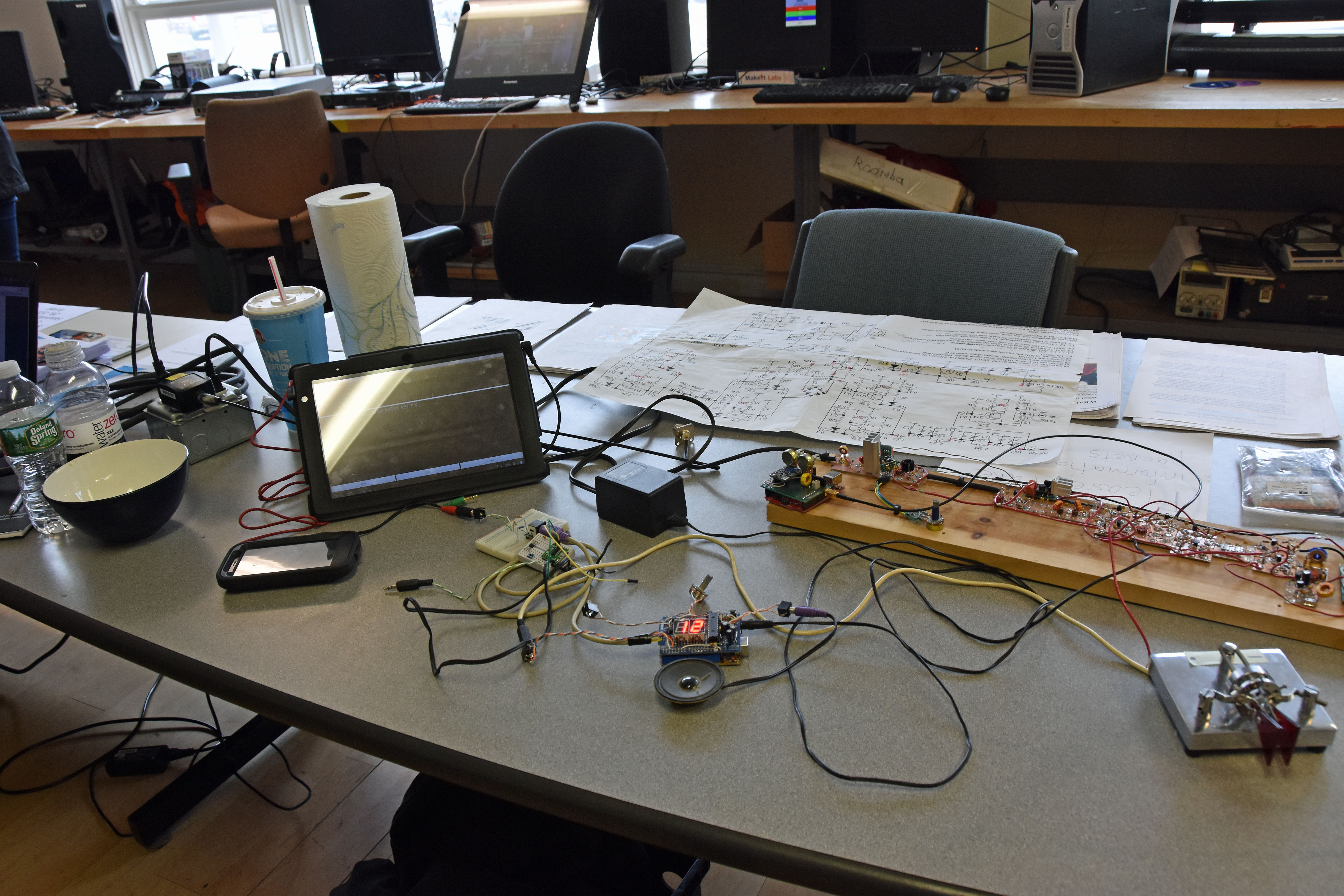
Close-up of Mike's (AB1YK) home-brewed BitX20 transceiver at MakeIt Labs
Close-up of Mike’s (AB1YK) home-brewed BitX20 transceiver

We hope that down the road, we can enjoy a lasting partnership with MakeIt Labs and encourage more members of our club to drop in, see the facility, hang-out for a bit, and explain to new folks about how this hobby is damn close to one of the best hobbies out there!
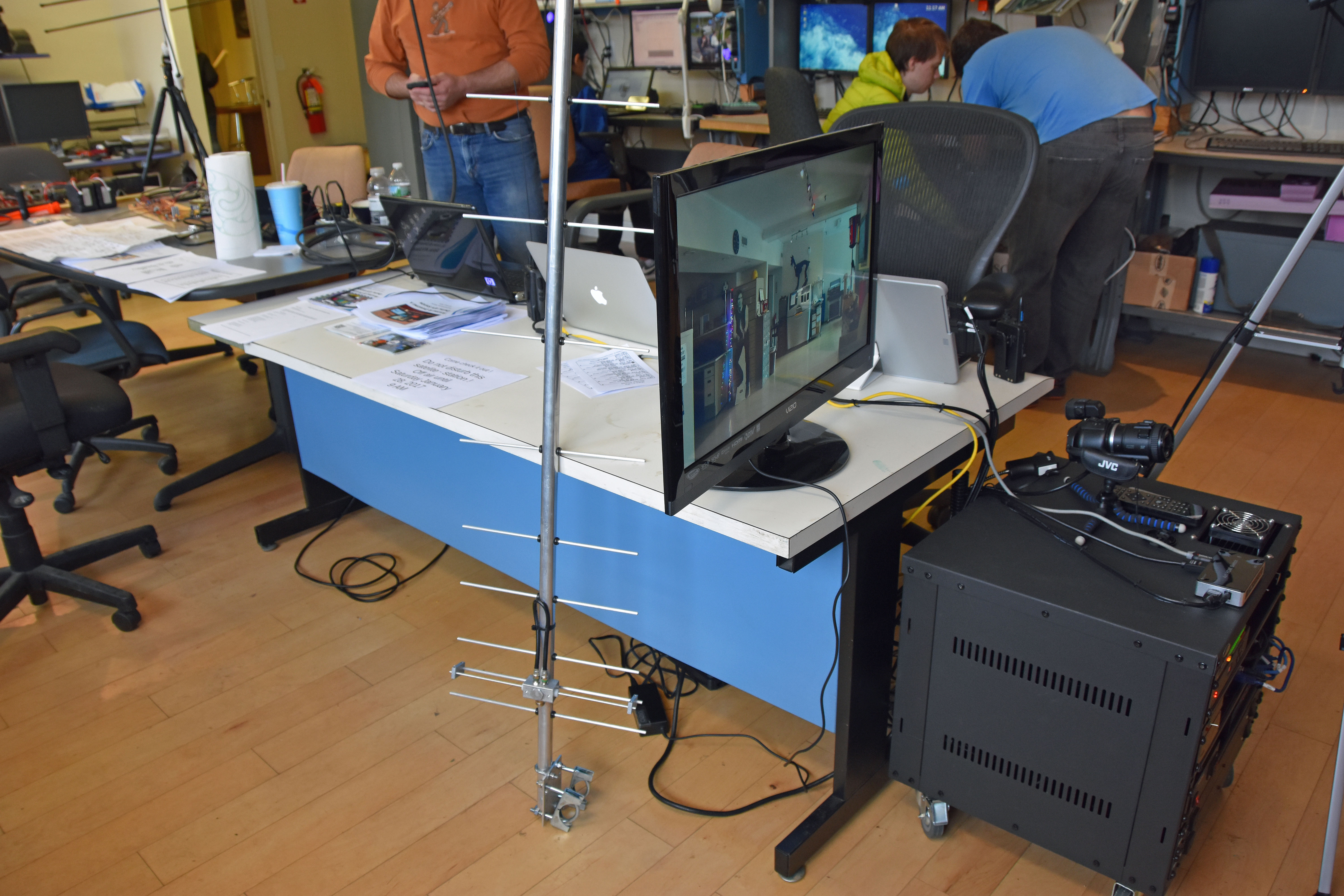
Fred's (AB1OC) DATV station at MakeIt Labs
Fred’s (AB1OC) DATV station

So, until next time, and until my next posting (and hopefully that one will be a bit witty’er — didn’t have enough coffee today), make sure you eat, sleep, “repeat”! (That’s what my t-shirt says that my wife bought me)

Brian, AB1ZO
A Portable Satellite Station Part 1 – A Simple Station for AO-85

Our club has quite a few members who are interested in space communications. We decided to build a simple portable satellite station last year for our 2016 Field Day operation to learn about satellite communications and to create something new for folks to work with during 2016 Field Day.

Simple Portable Satellite Station

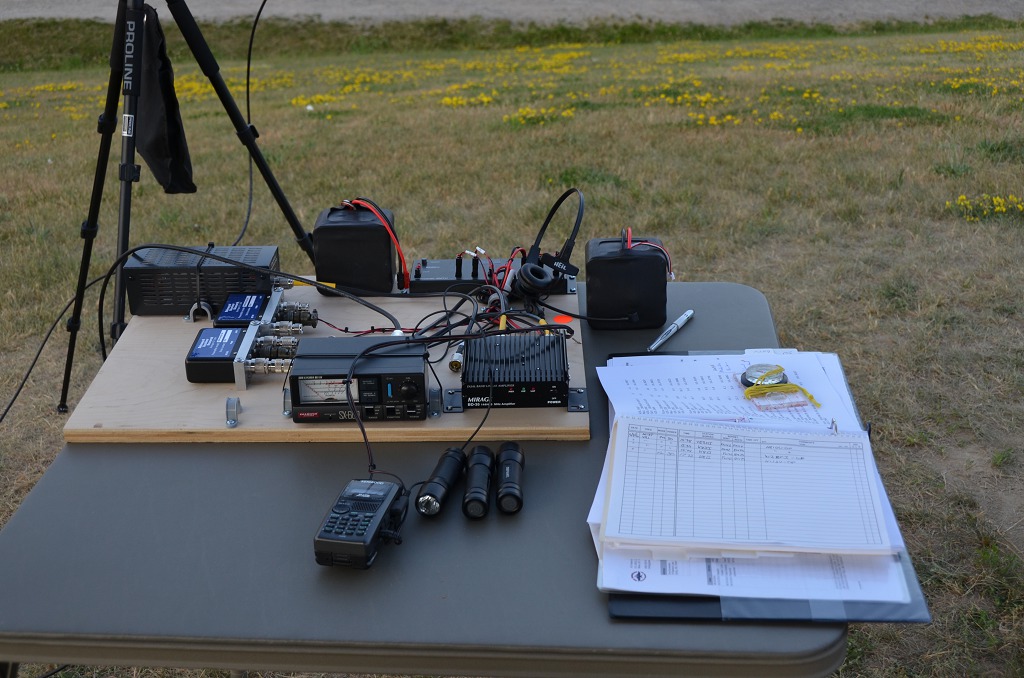
Our 1.0 Portable Satellite Station was a relatively simple setup built around an HT, an Elk 2m/70cm satellite antenna, and some gear to improve the receive performance and transmit power output of the HT. All of the gear was mounted on a board to make it easy to transport and it is powered by a LIPO rechargeable battery. The gear in our 1.0 station is made up of the following:

Improved Portable Satellite Station Antenna Support
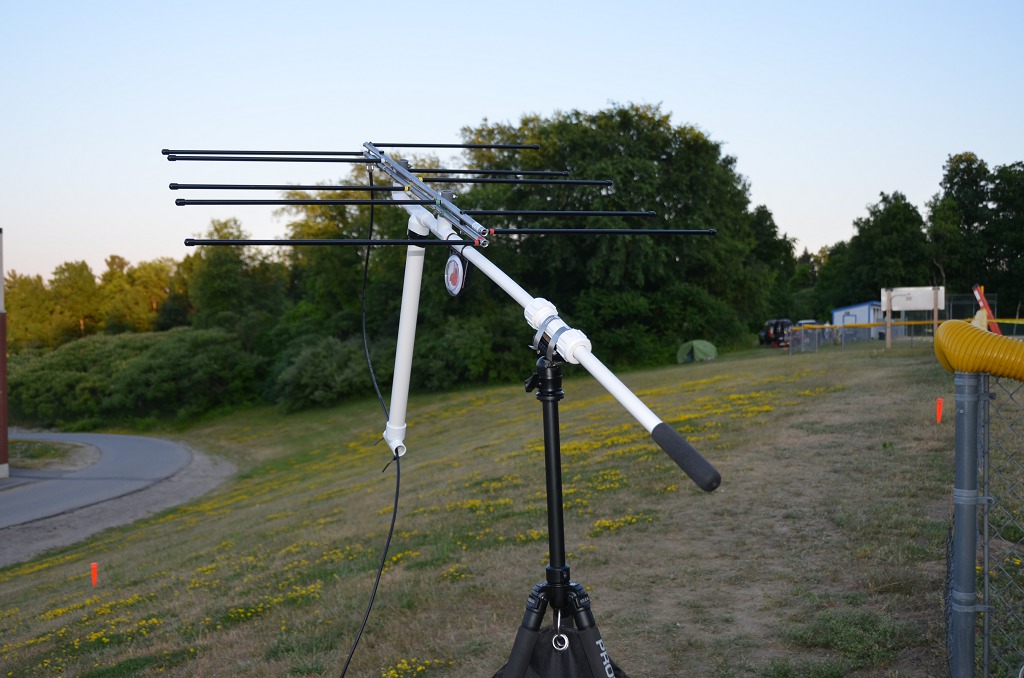
Improved Satellite Antenna Support

Our first contacts with our 1.0 station were made using the Elk Antenna hand-held. Later, we created a “plumber’s special” setup with a camera tripod to make pointing the antenna easier. Note the angle meter from a local hardware store which measures the elevation angle of the antenna.

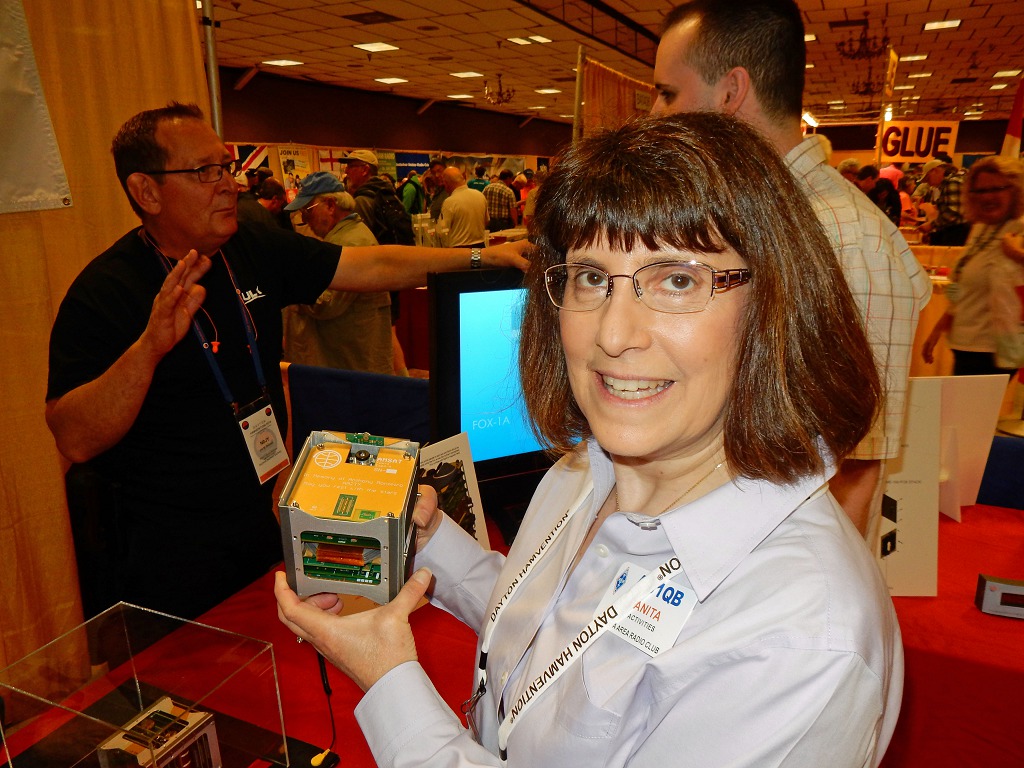
AO-85 (Fox-1A) U/V Mode FM Cube Satellite

This setup worked great for making FM contacts through AO-85 (Fox-1A), a  U/V mode FM EasySat. We used the 1.0 station on multiple occasions including Field Day 2016 and several of our club members used it to make their first satellite contacts. The Full-Duplex HT allowed us to hear our own signal coming back from the satellite which was an important tool to help with aiming the antenna properly. The ELK Dual-Band antenna is also a good choice because it uses a single feed point and a single polarization for both the 2m and 70cm bands.

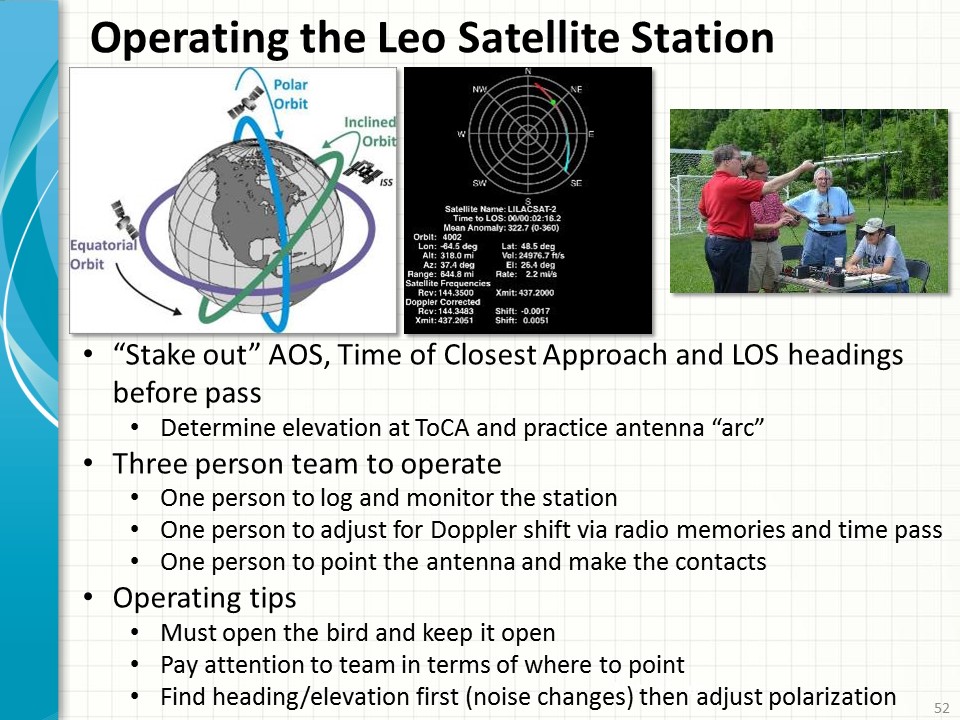
Portable Satellite Station Team Operating Approach
1.0 Station Team Operating Approach

We used the team operating approach outlined above. This worked especially well for new folks who had not made a satellite contact before as it enabled each of the three team members involved in making the contact to focus on a specific part of the contact. We used orange plastic tent stakes to make AOS, Time of Closest Approach, and EOS to mark headings for each satellite pass. Small flashlights used at the stakes made them glow for night-time passes.

We certainly had a lot of fun with our 1.0 Satellite Station and I expect that we’ll continue to use it. As we gained a little experience with AO-85, we decided that we wanted to build a more capable Portable Satellite Station which we could use to operate with linear transponder satellites and which included a tracking system and better antennas. I know from experience with our home satellite station that DX contacts are possible using higher altitude linear transponder satellites like FO-29.

We would also like to be able to use APRS and other digital modes through satellites as well as receive SSTV pictures from space.

These goals have become the basis for building our Portable Satellite Station 2.0. More on the new station in Part 2 of this series. Other articles in the series include:

You may also be interested in the satellite station at our home QTH. You can read more about that here.

73,

Fred (AB1OC)

First Amateur Radio Satellite in Geosynchronous Orbit in 2017?

Researchers at the Ted and Karyn Hume Center for National Security and Technology are preparing to send an amateur radio satellite into a geosynchronous orbit in 2017.

This will be a great opportunity for Amateur Radio satellite operators! Some preliminary information about this satellite may be found here.

The proposed frequency plan for the spacecraft is:
Uplinks: 5655-5665 MHz
Downlinks: 10455-10465 MHz

The amateur radio payload will comprise a Software Defined Transponder capable of supporting many different modes, including analog SSB.


Geosynchronous Amateur Radio Satellite Possible Orbit

Possible coverage of a Geosynchronous satellite at 74 degrees West – Credit NX5R


This satellite’s high altitude will create a very large coverage footprint. Also, see the following article on the ARRL website for more information.

According to AMSAT Vice President-Operations Drew Glasbrenner, KO4MA, the satellite’s potential footprint would extend over the US from the Mid-Pacific to Africa.

Source: First amateur radio in geosynchronous orbit will aid disaster communications

Radio Amateurs Developing Skills Worldwide