Tag Archives: Satellite

Field Day Satellite Station for 2021 – Setup and Test in Hollis

On Wednesday, May 25, Jon – AC1EV, Jeff – AC1FX, Jim – K1BRM, and Vince – KD2TMJ met at Fred – AB1OC’s QTH in Hollis, NH to set up and test the satellite antenna, radio, computers and other gear our club, Nashua Area Radio Society will be using this year at Summer Field Day. Here are some pictures of our Field Day Satellite Station test.
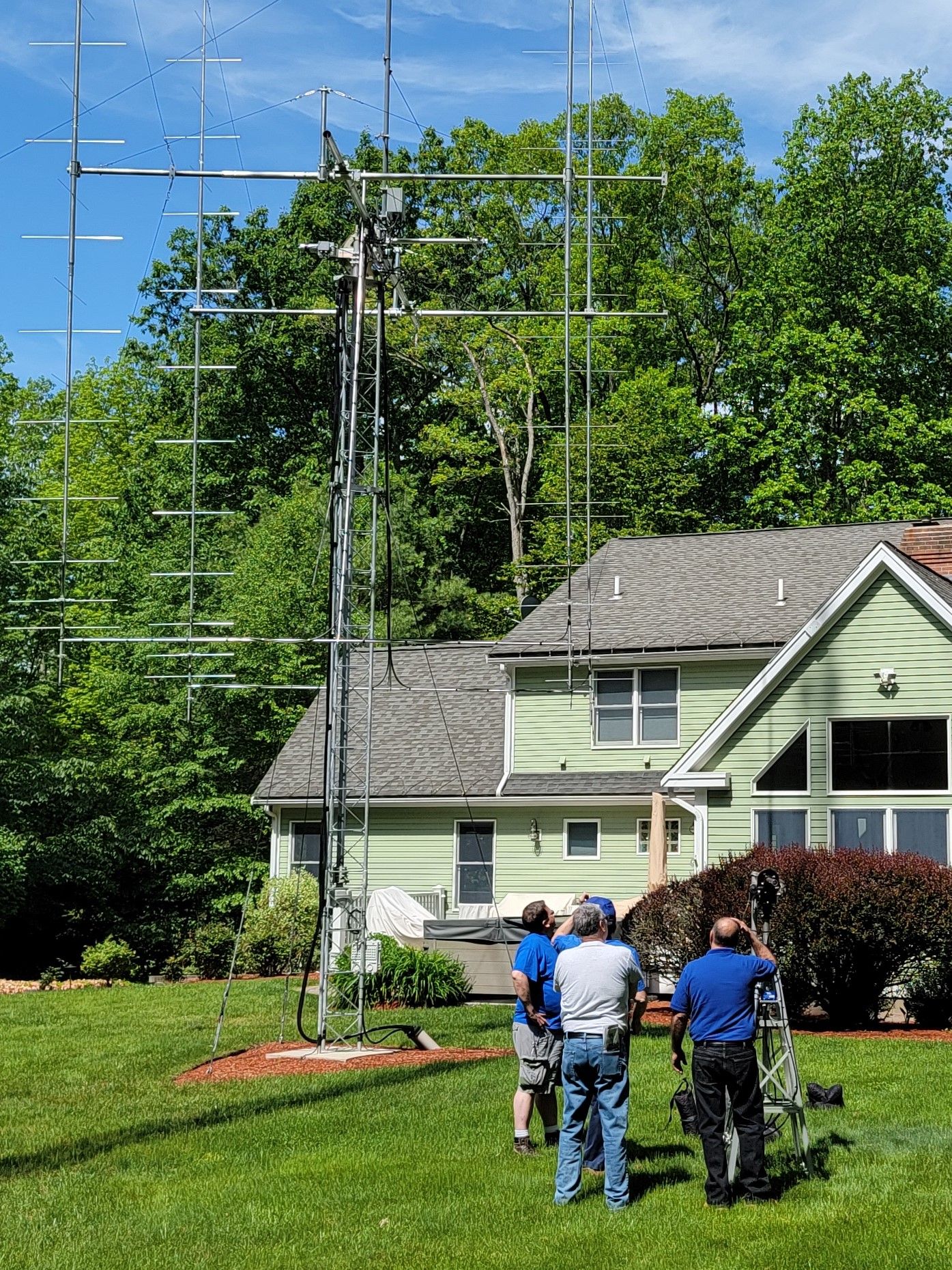
Satellite antenna Base

The satellite antenna base is on the lower right of the above picture. The much larger antenna on the left is an EME array and as you might guess, is not very portable.
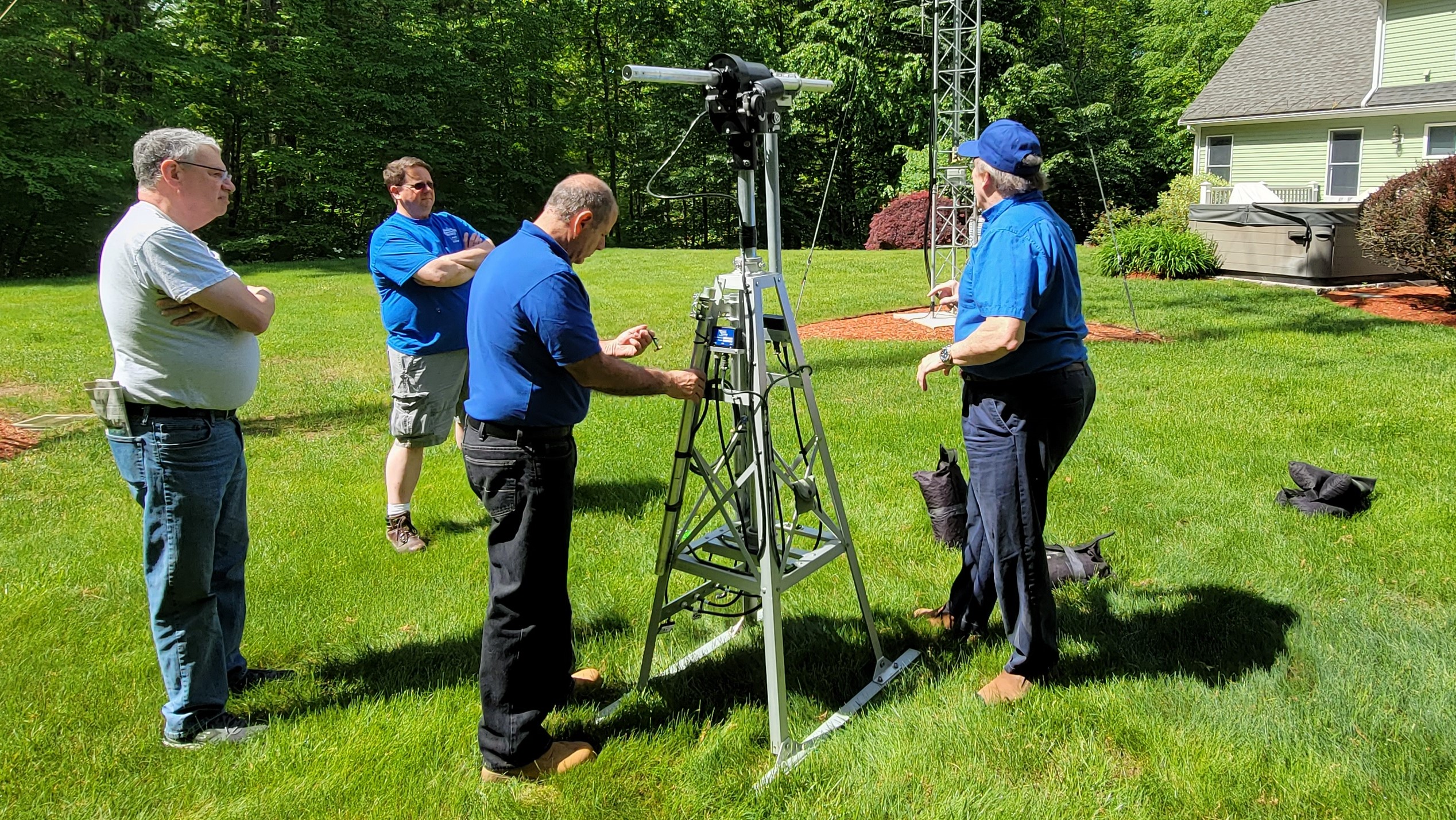
Preparing the base
Preparing the base

We placed the small Glen Martin tower with the AZ-EL rotators installed on the lawn and aligned it using a compass.
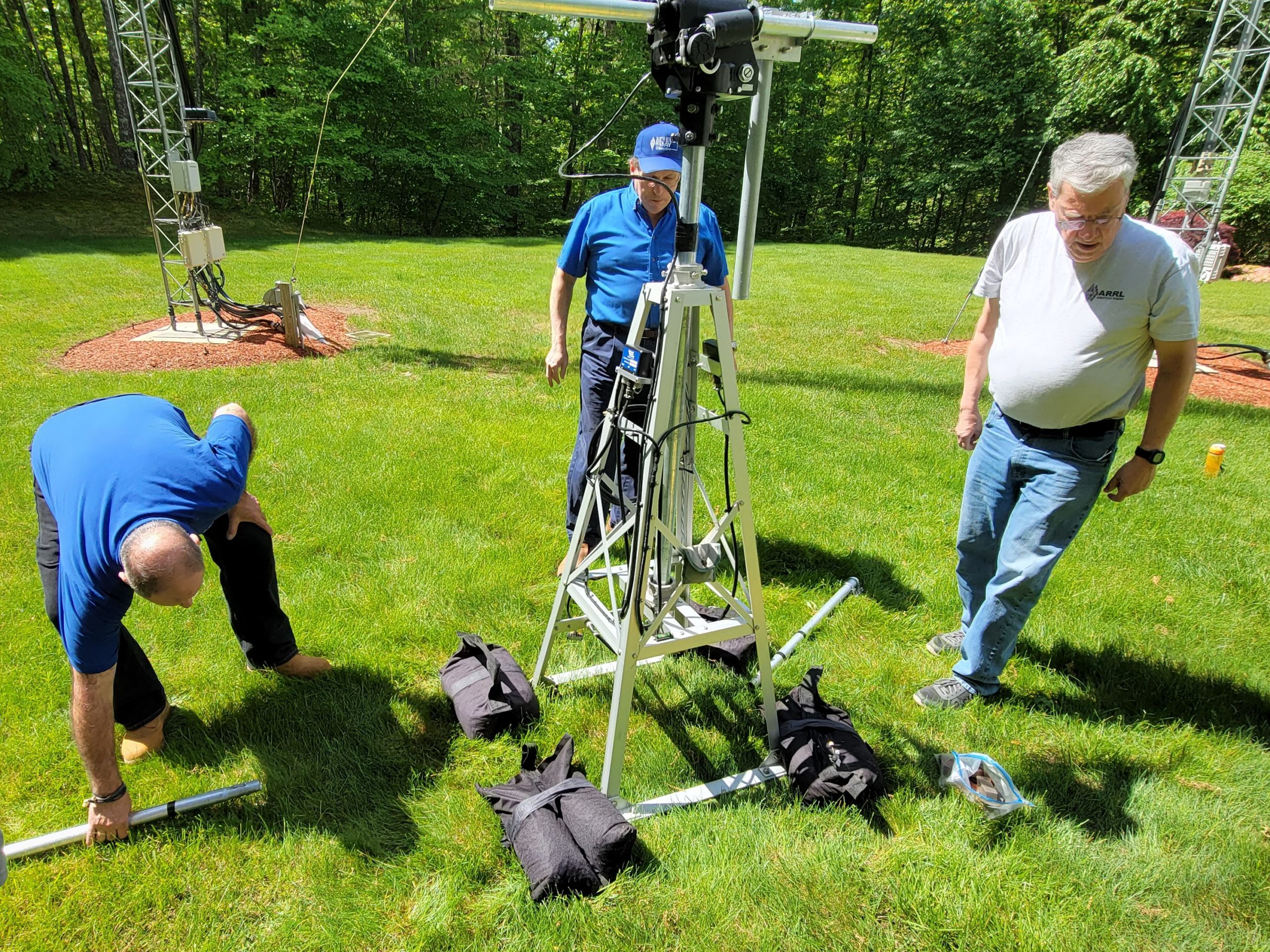
Field Day Satellite Station - Base aligned and leveled
Base aligned and leveled

We used doorstops under the tower legs to level it and sandbags to hold it steady. There are bubble levels on the tower to make it easy.
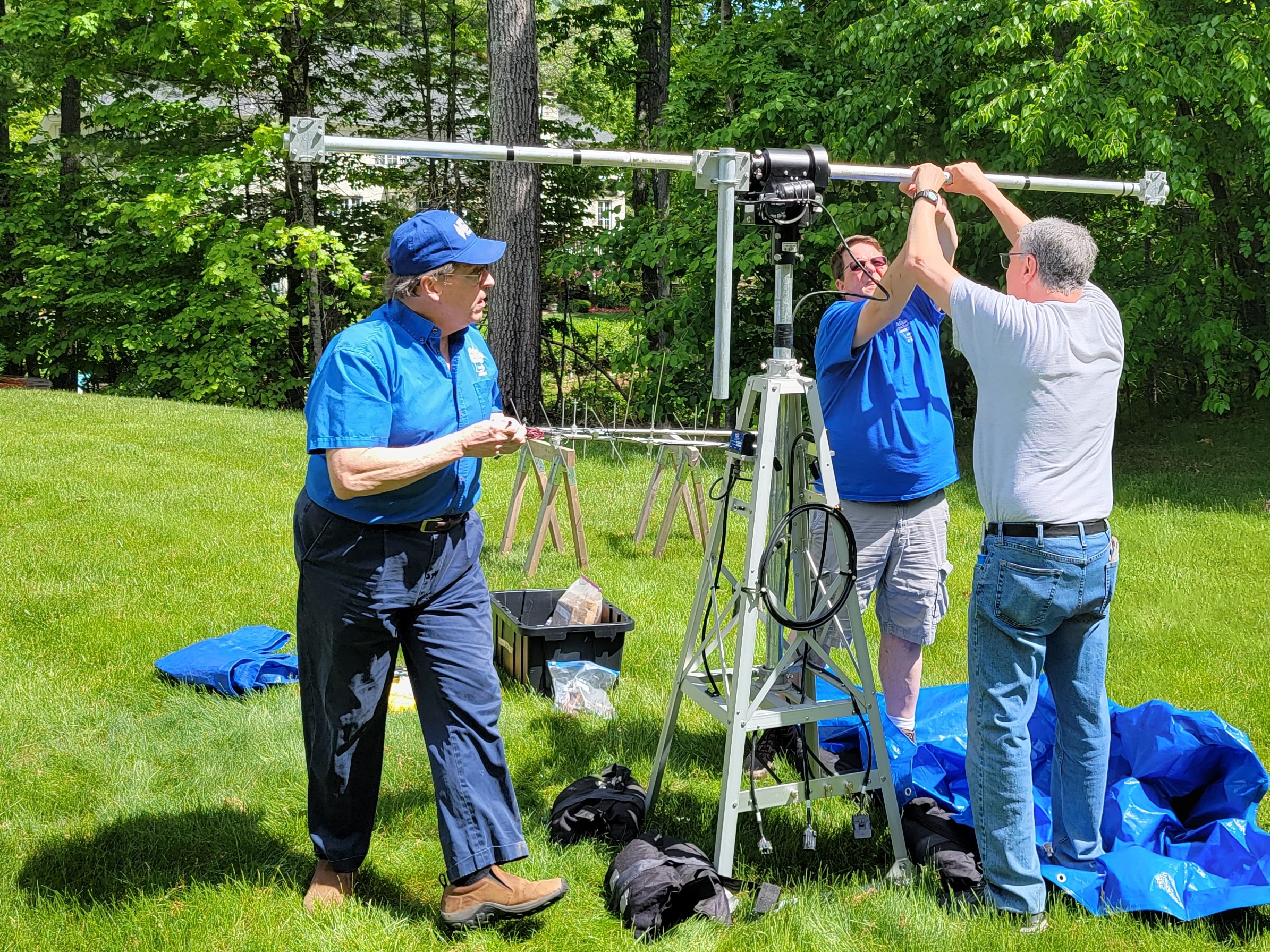
Install the support arms

The support arms will hold the antennas.
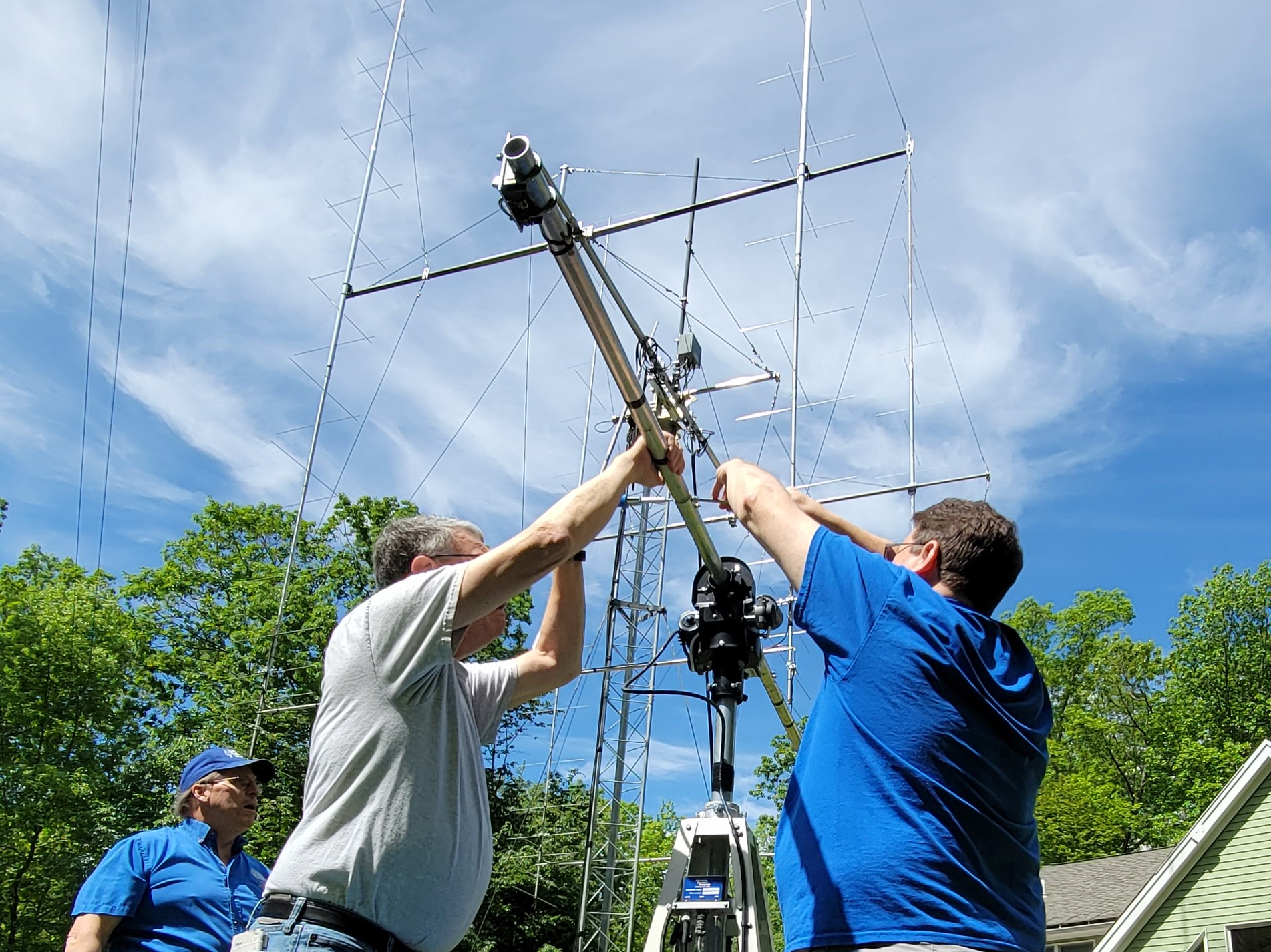
Tighten support arm bolts
Tightening the support arm bolts

All of the bolts need to be tight. The antenna moves quite a bit and needs to maintain its shape.

Field Day Satellite Station - Installing 70cm antenna
Installing 70cm antenna

Fred (AB1OC) installing the 70cm antenna and aligning it properly in its brackets.
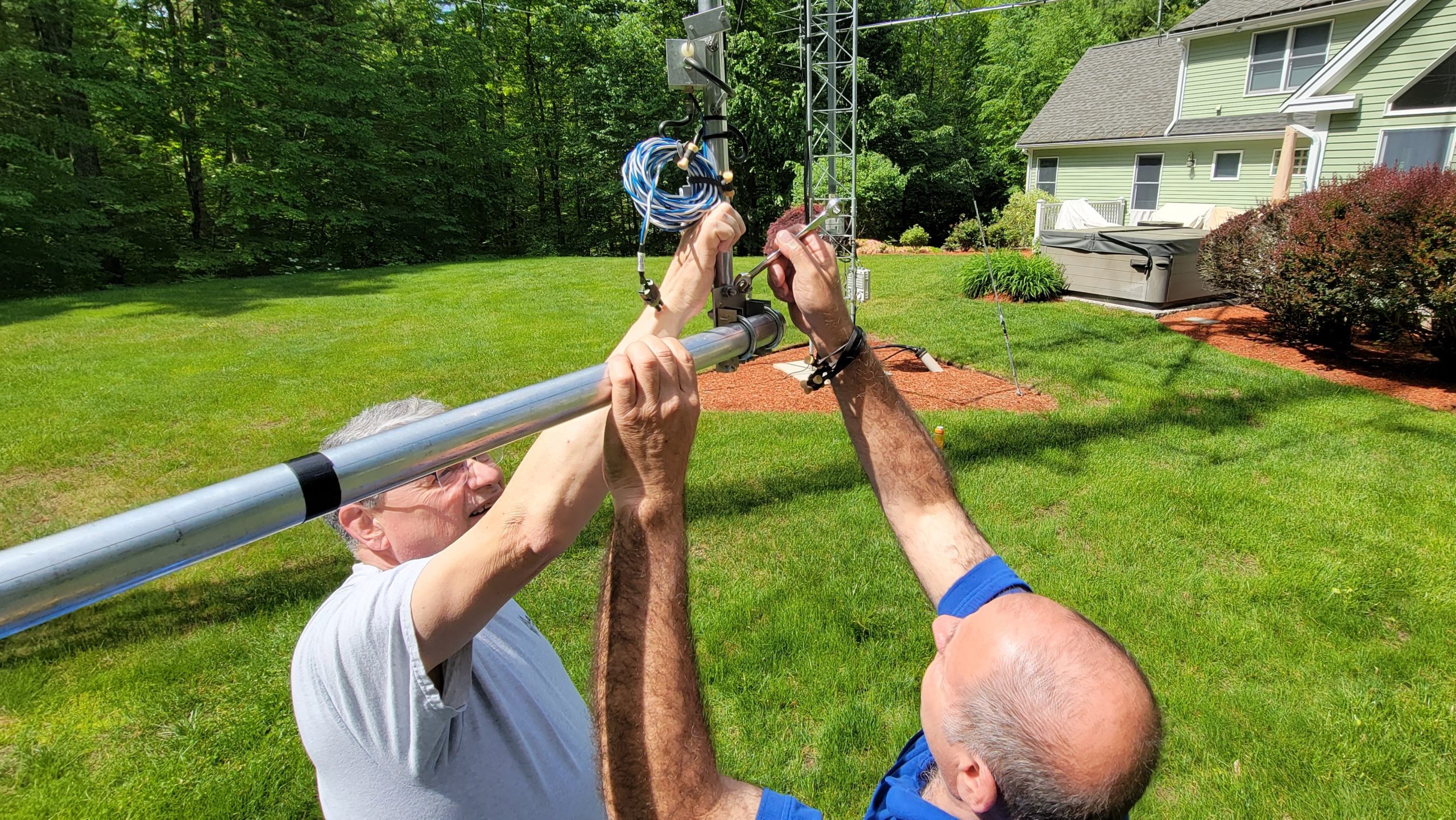
Tighten bolts on 70cm

Vince (KD2TMJ) and Jeff (AC1FX) tightening the bolts for the 70cm antenna.
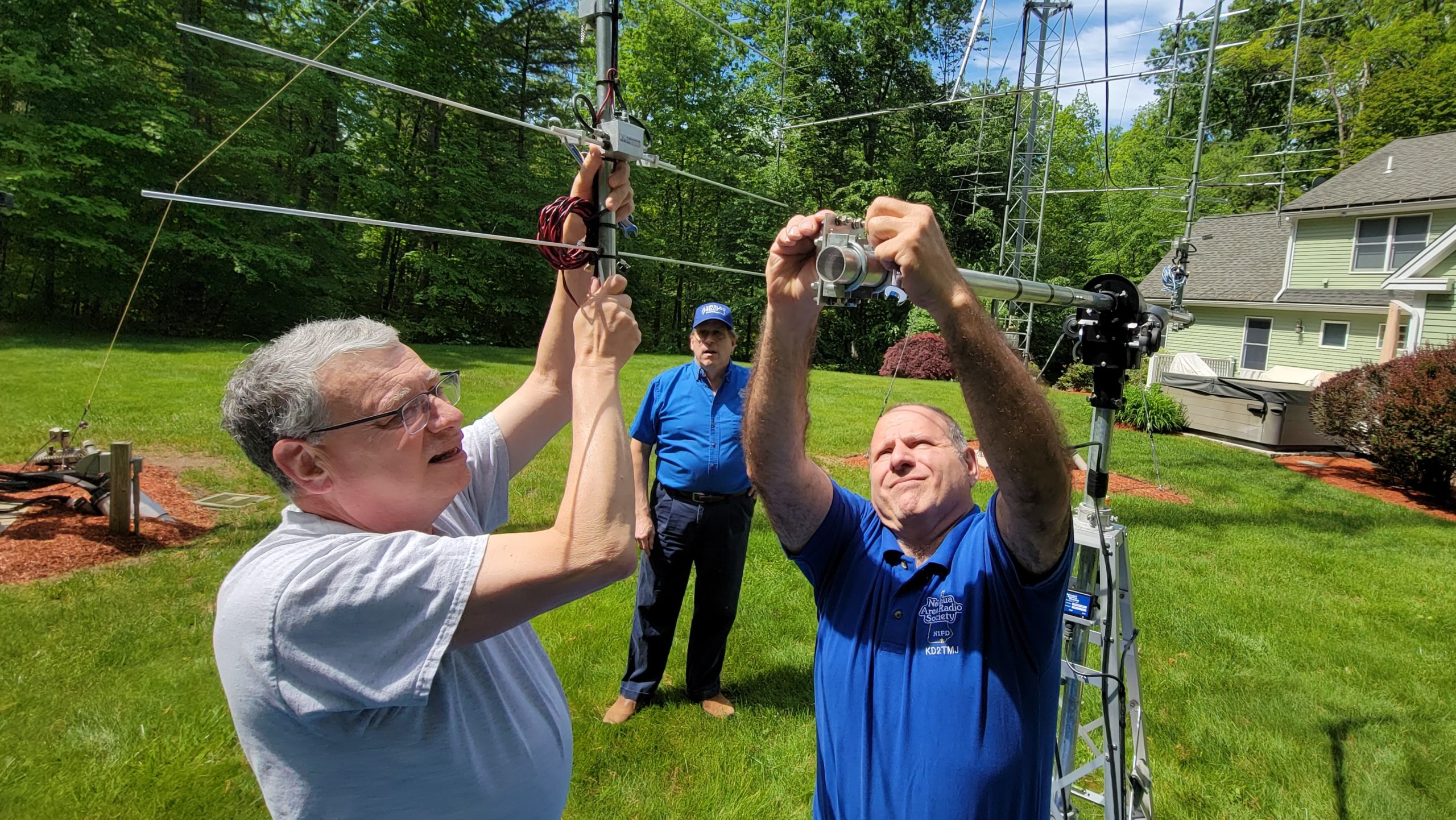
Install 2m antenna
Install 2m antenna

Vince (KD2TMJ) and Jeff (AC1FX) prepare to attach the 2m antenna.
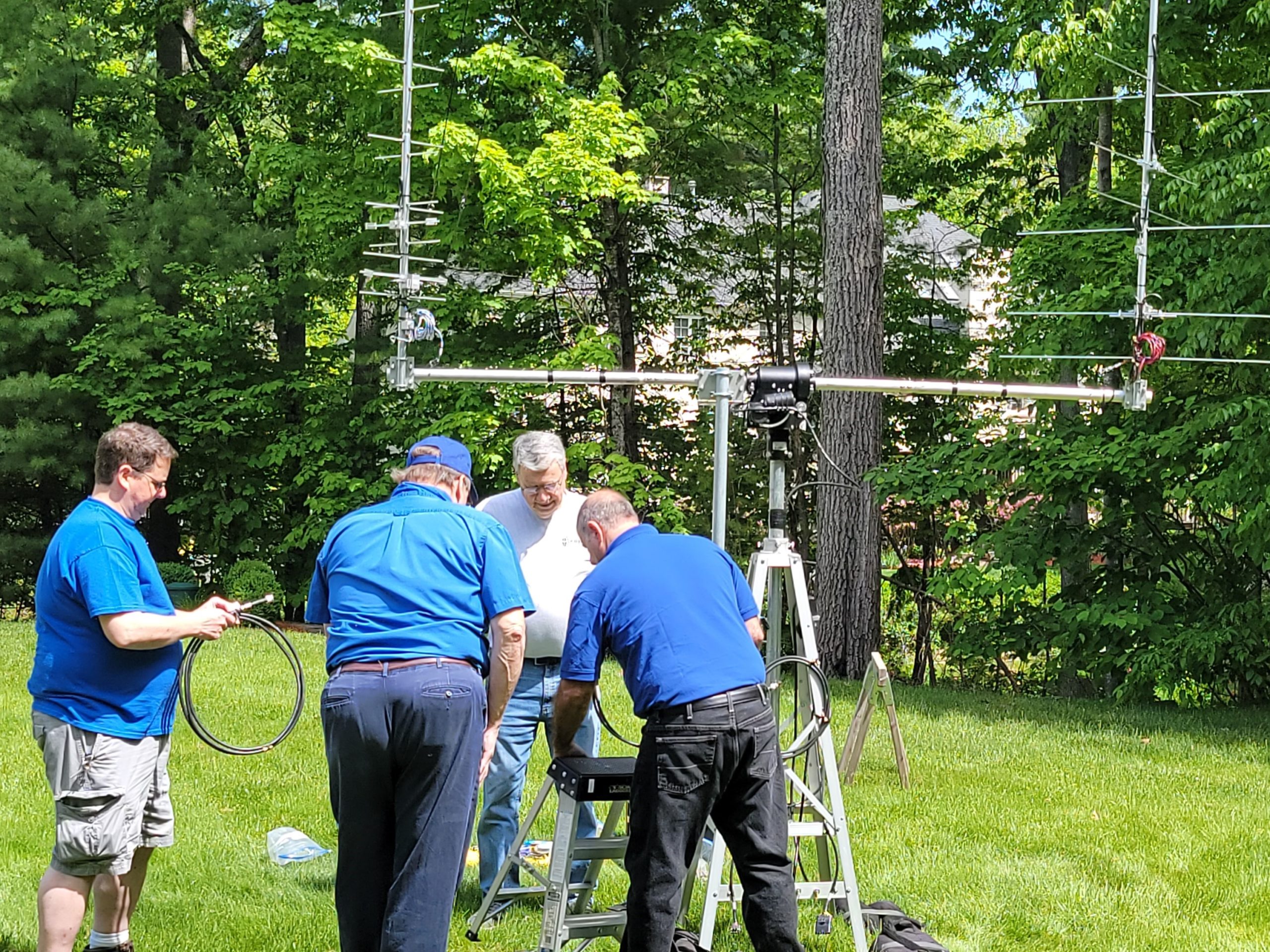
Field Day Satellite Station - Preparing to wire the antenna array
Preparing to wire the antenna array

There are many wires that need to be connected to the antenna array: control wires for the AZ-EL rotator, Coax for the antennas, control wires that shift the polarization of the antennas, etc. Every connection outside has a matching connection in the shack. There are some wires already connected to hardware that remains attached to the antenna tower, such as the pre-amplifiers.
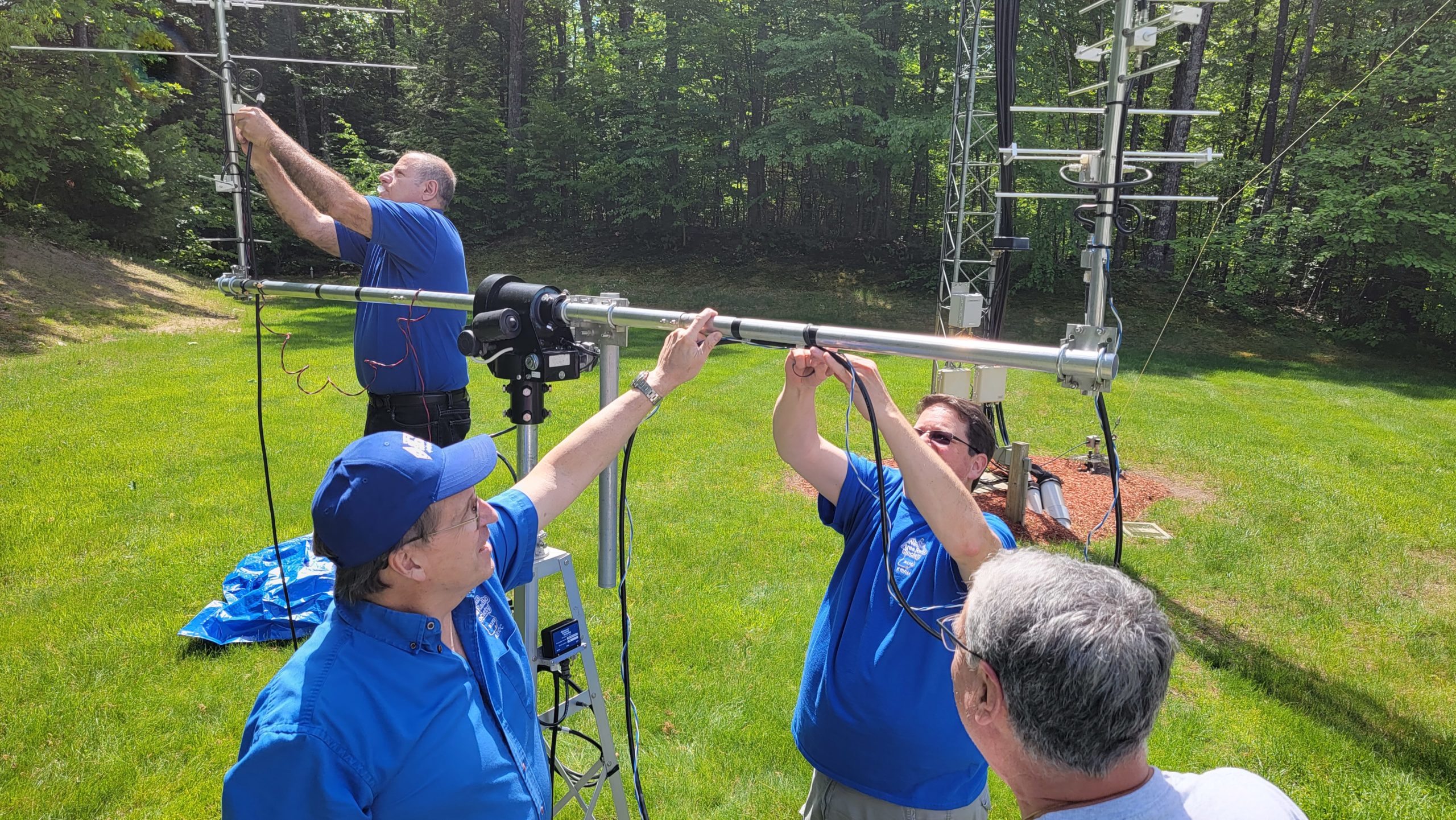
Dressing the wires
Dressing the wires

Since the antenna array can spin horizontally as well as tilt vertically all wires need to be secured so as not to tangle as the antenna moves. In addition, care needs to be taken to make sure each connection is correct to avoid any short circuits or other negative results. There needs to be enough slack to allow free movement for the antenna but not enough to allow any excess to become caught by moving parts.
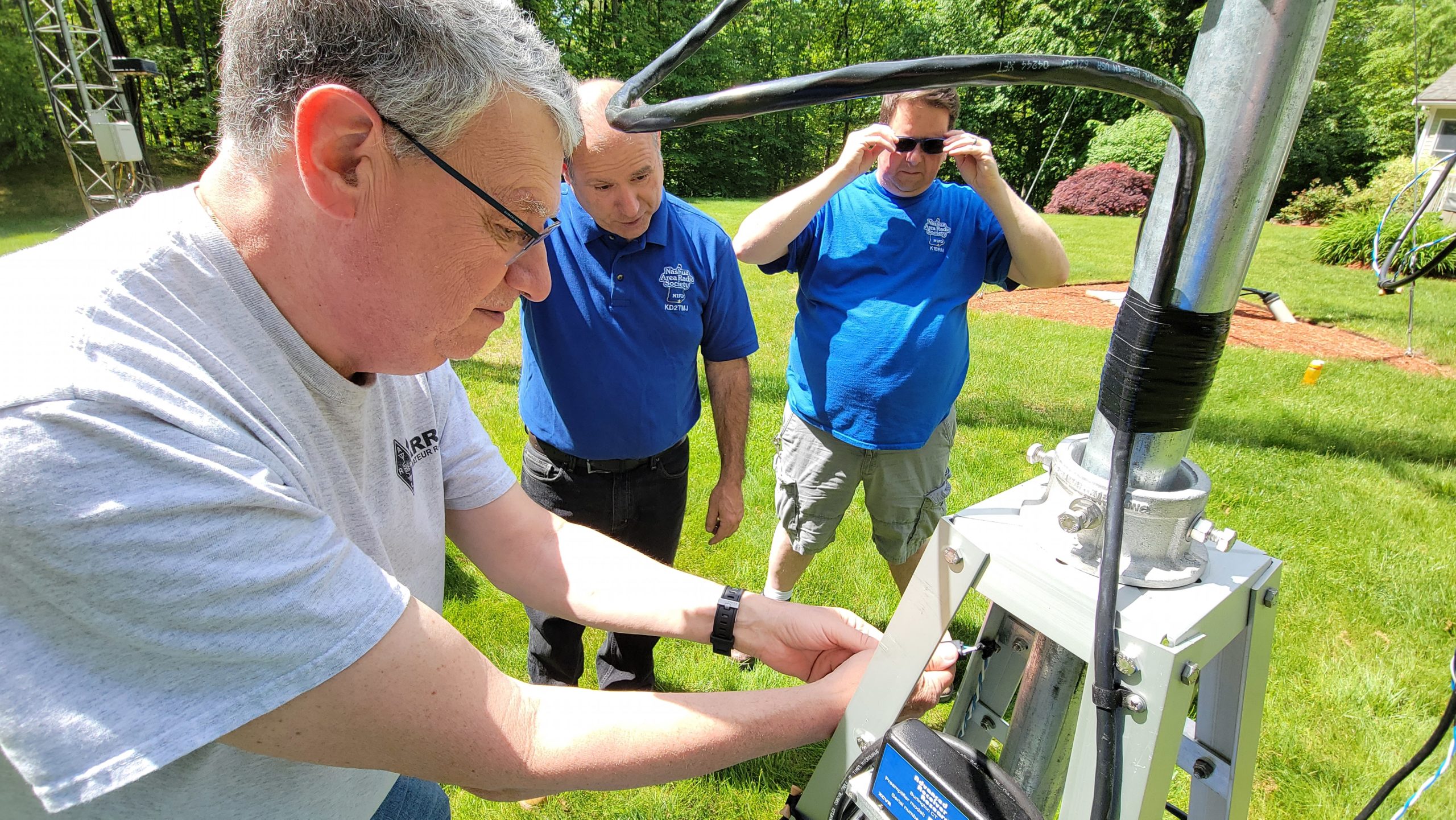
Plugging in polarity control line
Plugging in the polarity control line

Jim (K1BRM) and Vince (KD2TMJ) watch as Jeff (AC1FX) connects another control line.
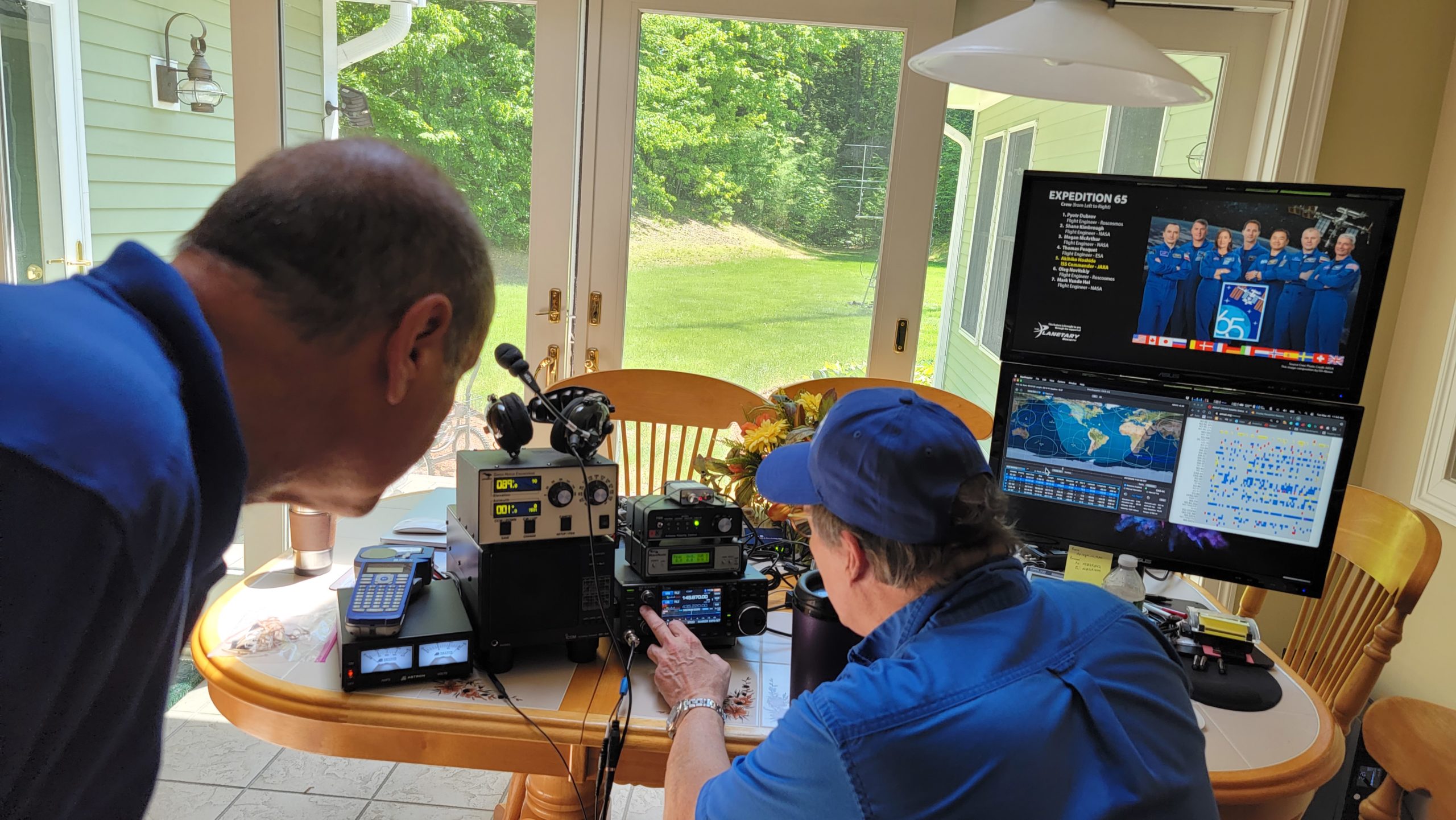
Field Day Satellite Station - Kitchen test setup
Field Day Satellite Station Test Setup

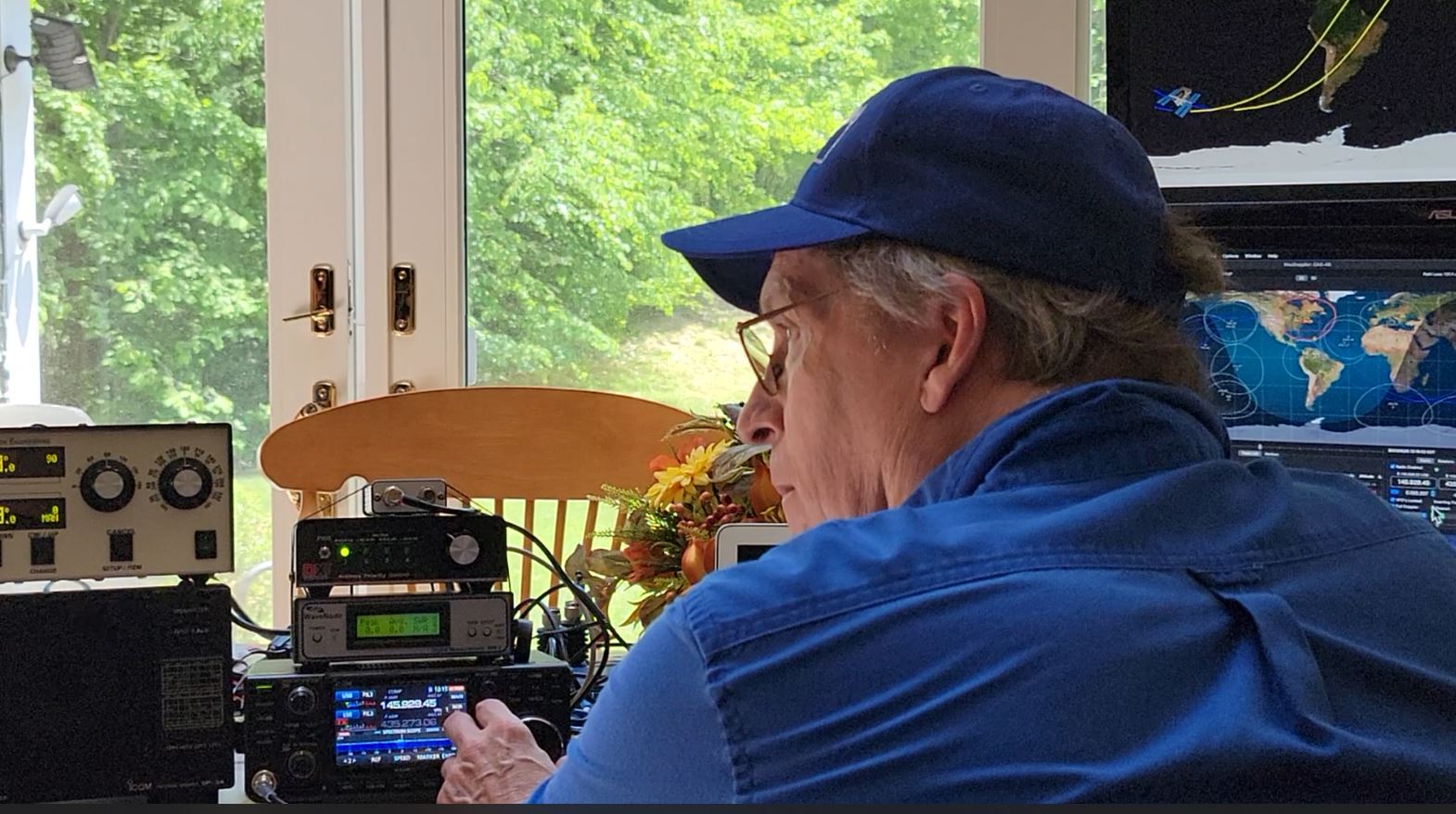
After the initial successful test of our Field Day Satellite Station, Fred (AB1OC) shows Vince (KD2TMJ) the radio setup and what he will do to make a QSO.
Fine Tuning on Successful Test

After a successful QSO Fred (AB1OC) makes a small adjustment by ear to a beacon from a satellite. On the monitor at the right of the screen, there are circles on the map that represent the locations on the ground that have a clear line of sight to the satellites. There is one red circle and that one indicates the satellite visible to our location and that the radio is tuned into.

ARRL Field Day is the most popular on-the-air event held annually in the US and Canada. On the fourth weekend of June, more than 35,000 radio amateurs gather with their clubs, groups, or simply with friends to operate from remote locations. There are many different ways hams participate. Some stay home and operate their normal stations’ others take their radios outside and create a simple temporary station. Small groups of friends can do likewise and take their equipment to an outdoor location and share the experience together. The Nashua Area Radio Society and many other clubs take It in steps beyond that. We have access to the equipment and skills to set up a multi-radio station that is networked together and equipped to allow multiple users to operate simultaneously. We set up towers with beam antennas to get the most out of the radios as possible. One of our primary goals for this event is to provide an opportunity for our members to operate in a sophisticated off-grid ham radio environment and we will have up to 50 different operating slots for our members to sign up to operate in. This way, even newly licensed hams with no equipment can have a chance to operate and join the rest of us in participating in this fun event.

Jon (AC1EV)
Satellite Station Antenna Upgrades

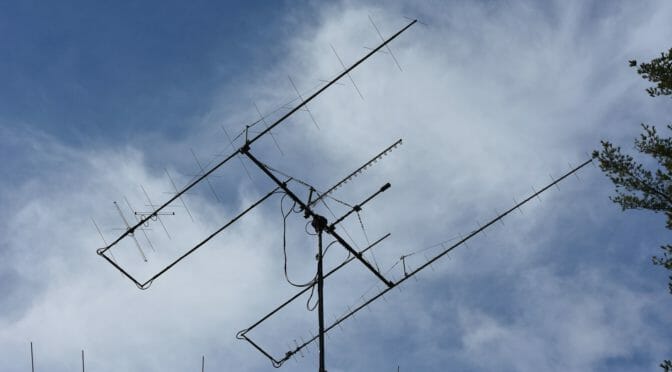
We’ve been making good use of our Satellite Ground Station. Our existing 2MCP14 and 436CP30 antennas have enabled us to make over 2,000 satellite contacts; working 49 of the 50 U.S. States, 290+ Grid Squares, and 31 DXCCs. Our station is also an ARISS Ground Station which enables us to help Schools around the world talk to astronauts on the ISS.

As you can tell, we are pretty active on Satellites so we decided to take our station up a level by upgrading our antennas. We choose larger yagis with booms over 18+ ft in length. The upgrade required us to improve the mechanical aspects of our Satellite Antenna System as well…

Source: Satellite Station 4.0 Part 12 – Antenna Upgrades

We’ve been pretty busy with antenna projects at AB1OC-AB1QB this fall. In addition to building a new EME Antenna System and Station, we’ve also been working on upgrading our Satellite Antennas.

Satellite Antenna Upgrade

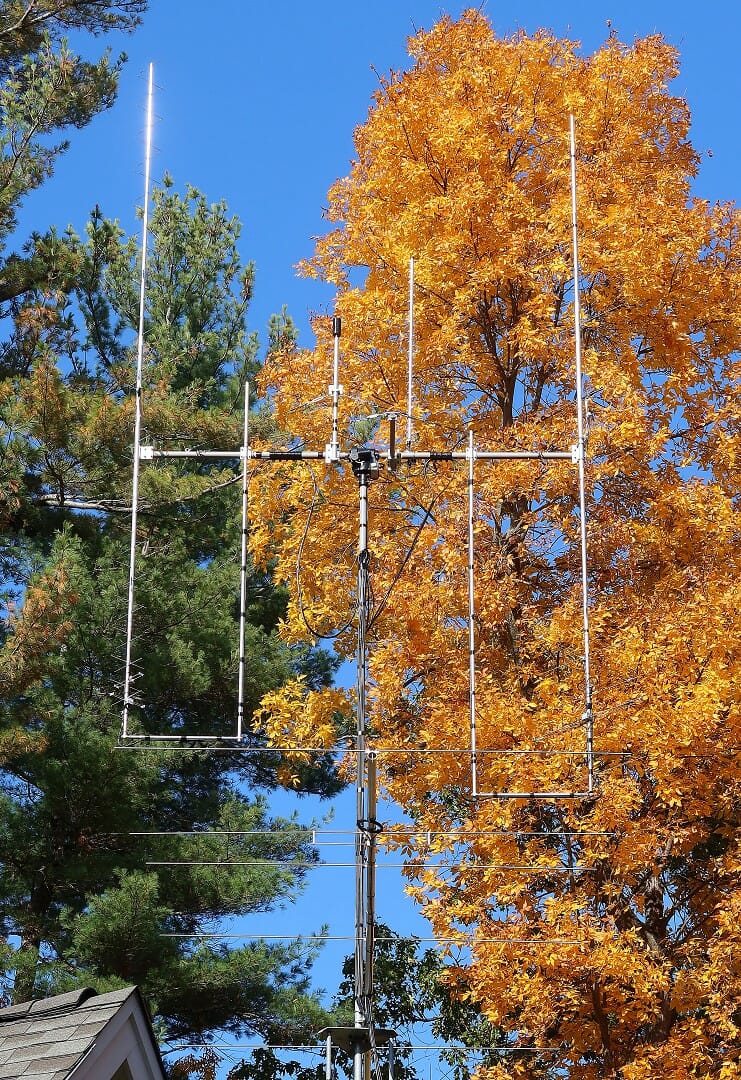
The Satellite Antenna project was a pretty challenging one. We opted for the largest available circularly satellite antennas available from M2 Antenna Systems.

Satellite Antennas On the Tower - Parked
Satellite Antennas On the Tower – Parked

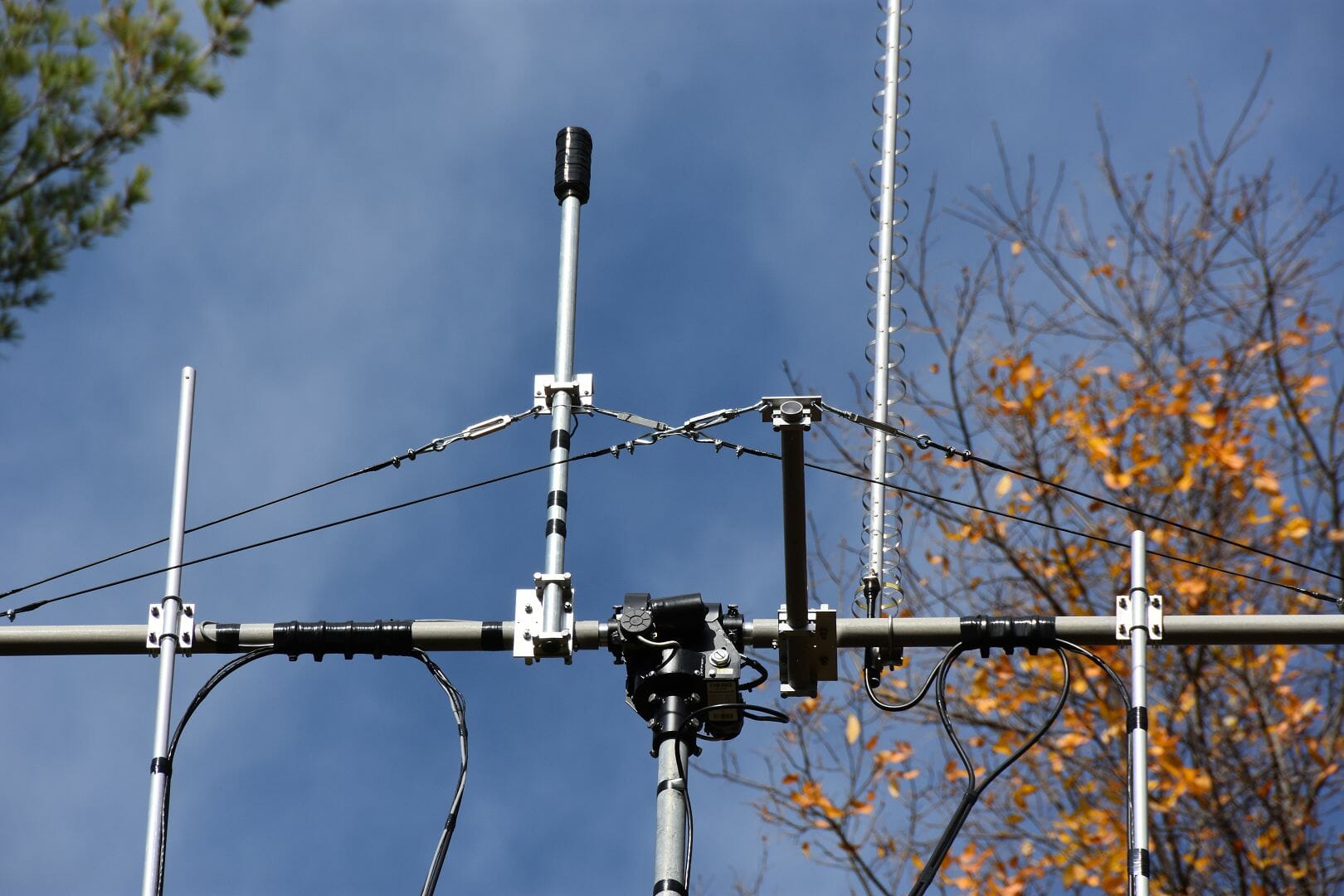
Getting these antennas to be mechanically reliable, properly aligned, and operating smoothly required us to make some custom modifications to the hardware associated with our Satellite Ground Station.

Cross Boom Counterweight and Trusses

The article above covers the construction and adjustment of the new antennas. It also covers several custom enhancements that we made to our satellite antenna support system.

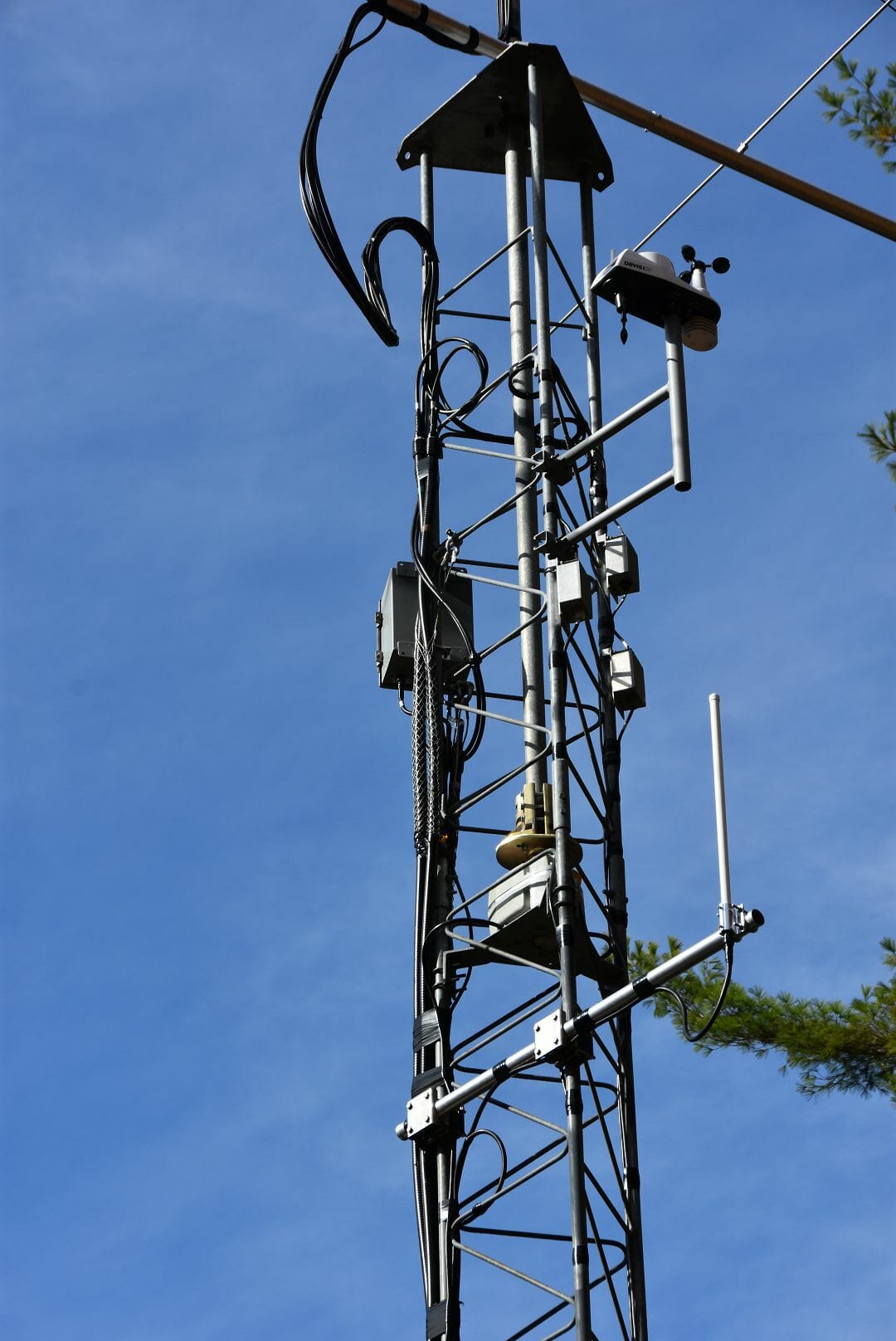
Aircraft Tracking Antenna System Addition

Satellite Tower Infrastructure including ADS-B Antenna

We also added an outdoor antenna for our FlightAware ADS-B Tracker as part of the project. ADS-B is a relatively recent aircraft tracking system. Our new ADS-B antenna has increased our Tracker’s contribution to the ADS-B network considerably.

If you’ve ever wondered what goes into building and putting up a high-performance satellite ground station, take a look at the article. The ideas shared there are applicable to the construction of any VHF and above antenna system – especially those that utilize elevation rotators and thus require balancing.

Fred, AB1OC

ISS Voice Repeater is QRV!

Thanks to some great work by the ARISS Team, a new Voice Repeater system is operating on the International Space Station (ISS)! Here is the access information…

Source: ISS Voice Repeater is QRV!

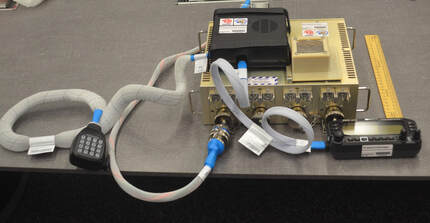
Thanks to some great work by the ARISS Team, a new FM Voice Repeater system is operating on the International Space Station!

ISS Voice Repeater Hardware

The link above provides the details and the information needed to access the ISS Voice Repeater.

I was able to work several stations using the new Voice Repeater this morning. It is very sensitive and uses 5 watts of downlink power with a good antenna on the ISS. I was able to make solid contacts using the Ground Station here using only 1.5 watts uplink power when the ISS was at 10 degrees above the horizon. At least one of my contacts was with a station using an HT with a whip antenna!

The voice repeater is sensitive enough and uses a power level that will enable folks with an HT and a whip antenna to make contacts using the ISS when its close to the horizon. It should also be easy to make contacts using mobile rigs that can support cross-band operation as well. Program your radios!

I’m looking forward to working you through the ISS!

Fred, AB1OC

Radio Amateurs Developing Skills Worldwide