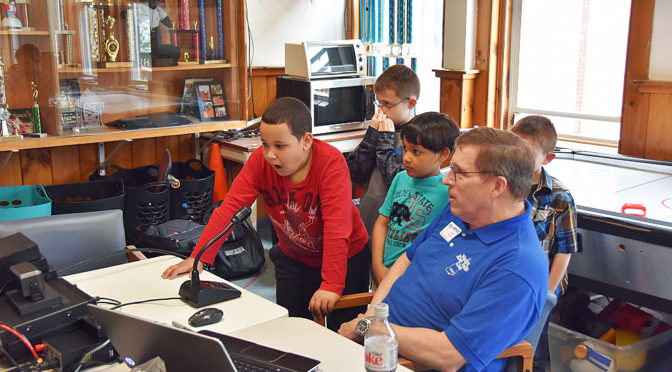
We recently received a request from the Police Athletic League (PAL) in Nashua, NH to put on a Get On The Air (GOTA) demonstration of Amateur Radio for the kids there. The folks at PAL are trying to create activities that promote STEM and Amateur Radio interest among kids.
GOTA Station
Jamey, KC1ENX and I went to PAL a little while back and set up our portable station using the screwdriver antenna on my truck.
Kids on the Air at Nashua PAL
We had some of the worst propagation conditions that we have seen in a while on the day we were at PAL, Fortunately, Mike, K1WVO got on to try to give the kids a few contacts.
QSL Cards
We also brought some QSL cards and Jamey spent some time with the kids explaining QSLs and some of the places that were contacted.
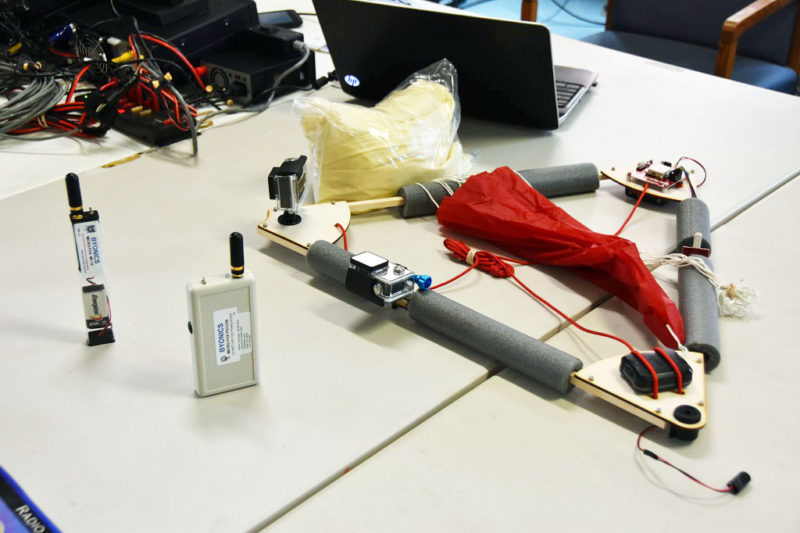
HAB and Foxes
We also brought our High Altitude Balloon (HAB) and our 2m Fox Hunt transmitters for the kids to see. There was lots of interest in the HAB platform and what it would be like to see the video that it will record.
Due to the poor propagation conditions, the kids did not get to make many contacts. The folks at PAL invited us to come back another time when the conditions are better and we plan to do that later this summer. We also invited the PAL folks to visit us during our Field Day operation coming up and try out the GOTA station there.
Special thanks to Jamey, Matt, and Mike for helping us with our GOTA event at PAL.
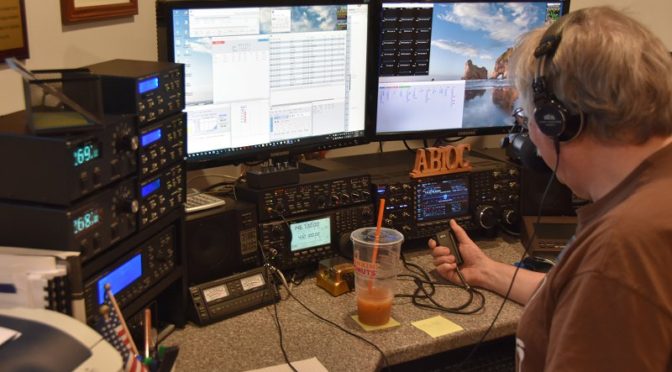
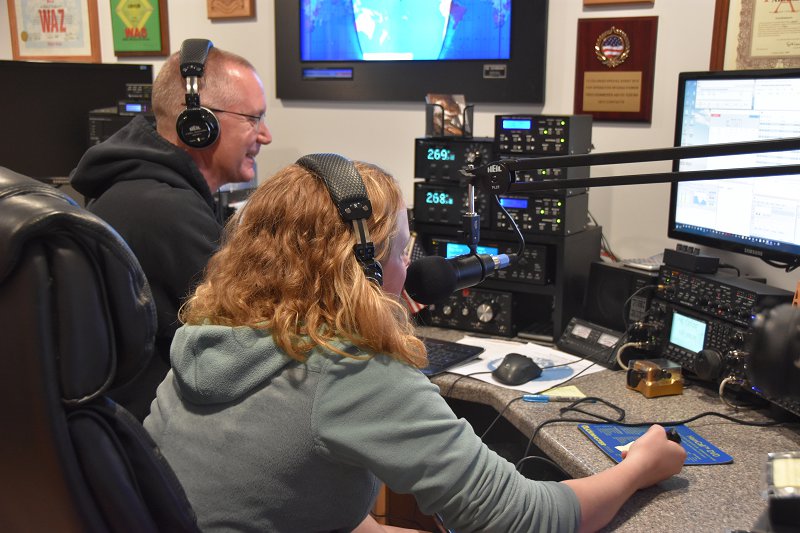
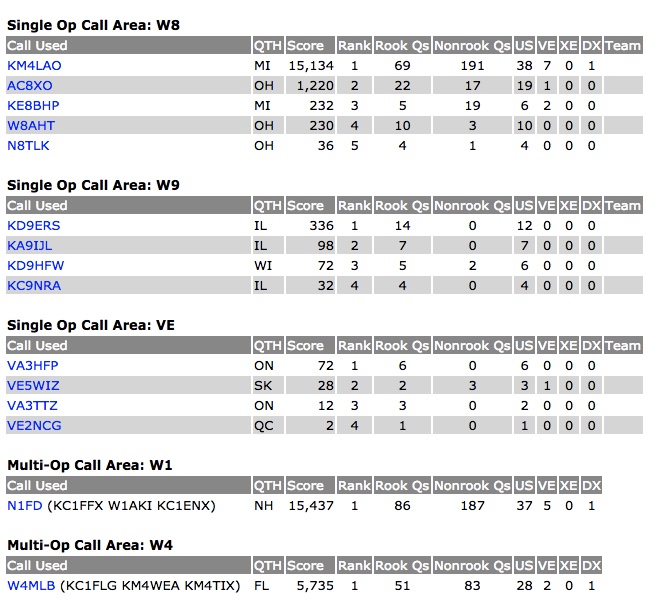
Aron, W1AKI, Abby, KC1FFX and her dad Jamey, KC1ENX operated in the ARRL Rookie Roundup on Sunday, April 16 as a Multi Op Entry from the AB1OC/AB1QB QTH. They had a constant stream of callers throughout the 6-hour contest and made a total of 273 QSOs and earned a score of 15,437.
This was the club’s 2nd consecutive year operating in the ARRL Rookie Roundup and it was great to see how Aron, Abby, and Jamey have improved their contesting skills over the past year! They are now seasoned contesters!
Jamey, KC1ENX and Abby, KC1FFX operating in the ARRL Rookie Roundup SSB
The N1FD team took first place in the Multi-Op Area 1 category and had the highest score of all entries in the contest, narrowly beating out KM4LAO, the top single op who was operating from Michigan.
2017 ARRL Rookie Roundup SSB Results
The full results can be found at http://www.b4h.net/arrlrr/rr_scores201704.php
Here are some comments on operating in the contest from Aron, W1AKI:
It was a lot of fun! The pileups weren’t too bad, and people were very patient, which made it a really friendly environment. Everyone could take their time to make sure that the exchange was made correctly. (This was especially important since there were several other contests going on over the same weekend.) We made a QSO with a KL7TH, rookie in Alaska and she seemed at least as excited to get NH as I was to get Alaska. I got a generous handful of calls from hams who got their licenses back in in the 1950s. I made a DX contact with someone in the Caribbean who got their first license a while back in the UK, and another DX contact with Italy.
Thanks go to Anita AB1QB and Fred AB1OC for the use of their station and for their guidance! We were all limited to 100W, but I could really hear the Alaska station come up loud and clear as I swung the 4 over 4 SteppIRs around to the right heading, and it became an easy QSO to make. I also got great signals from a few mobile stations and a few QRP stations.
Looking at the results, I am struck by two things: (1) KM4LAO, the YL in Michigan who came in a very close second to us did it working all by herself, and (2) there were so few entries! Whether it’s your first contest, or you’re working your way up the learning curve, or you want to help others learn what it is about contesting that you’ve been enjoying for years — and give them another point, the Rookie Roundups are a great opportunity. You don’t need to worry about “mic fright” because there are no serial numbers in the exchange: you give the same information to everyone.
The upcoming CW and RTTY Rookie Roundups are a great incentive for me to work on my code and to try out digital modes. There aren’t many better places to make your first contacts in a new mode.
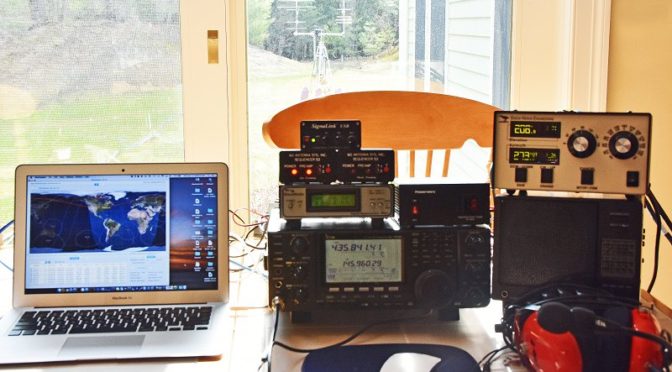
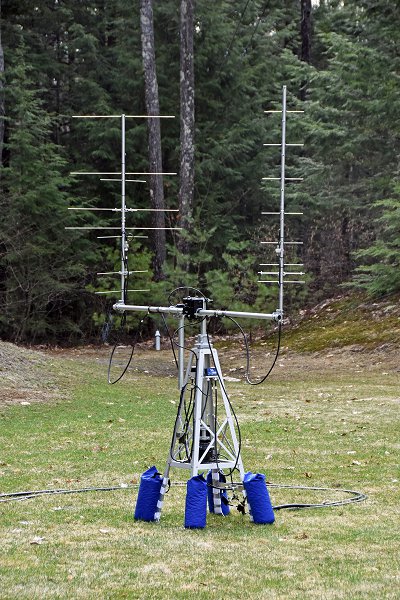
We decided to set up the station in our back yard about a week ago. The idea was to spend some more time learning to operate the station and to improve our satellite operating skills.
The past week has been a productive one. Here are some stats for our satellite operations during the last 7 days –
Contacts Made: 78
Modes Used: SSB Phone, FM Phone, CW and Packet (APRS FM)
Satellites Worked – 9 Total plus the ISS: AO-7, AO-85, ARISS (International Space Station), FO-29, SO-50, XW-2A, XW-2B, XW-2C, XW-2D, and XW-2F
States Worked: 23
Grids Worked: 49
The week began with a visit from Curtis, N1CMD who has quite a bit of experience with Digital Packet operation via the digipeater on the ISS. After some experimentation, Curtis helped me to find a setup using a SignaLink Sound Card and a second, windows computer that works well for Packet QSOs. I tested the setup using the terrestrial APRS network to get all of the hardware and software working correctly. The combination was then used to make a first packet contact using the ISS.
Operational LEO Satellites
The LEO satellites which are currently operational support a mix of split band modes. All of the satellites that we’ve worked so far use either 2M/70cm or 70cm/2M up and downlinks. The satellites support a variety of operating modes including via single channel FM, linear transponders, and APRS packet systems. Operating skills such as proper adjustment of up and downlink frequencies, Tx power management and setup of the digital packet system have been at least partially mastered this past week.
There are a great bunch of folks who are regulars on the satellites and we have made some new friends in our short time operating through satellites. The single channel FM satellites are usually too busy to support rag-chewing. The linear transponder satellites (there are many of these) support several conversations at the same time and we have had some nice rag-chew sessions on these birds.
There is also a good bit of DX to be had via satellites. This past week we have worked Patrick, FJ/N2IEN in Saint Barthelemy; Chris, 9Y4D in Trinidad and Tobago; Burt, FG8OJ in Guadeloupe; Fausto, HC9VF in Ecuador; and several stations in Canada.
We are planning to set up our portable satellite station at Field Day this year. Curtis will be the main operator/station master for our satellite station. If you are interested in learning more about satellite operations, please let Curtis or I know and we’ll help you to learn more during Field Day 2017.
We use cookies to ensure that we give you the best experience on our website. If you continue to use this site we will assume that you are happy with it.