Supporting your Club for Field Day in 2020

This year because of the pandemic, I’ll be participating with my club for Field Day as an operator from my QTH.  I usually help the club with the setting up field day, but I’m not that strong at manning the positions.  So, this year, I can’t help in the setup, but, I’ll be able to support the club in the overall number of calls but at my own pace.  That’s because the ARRL has changed the rules this year to accommodate for social distancing.  I’ve always participated in Field Day and filed my contacts, but I’ve never had enough contacts to even make honorable mention, but this year I will be allowed to participate in Field Day and my points can go to my club’s overall points.

Field Day plans from Antrim NH, W1XMM

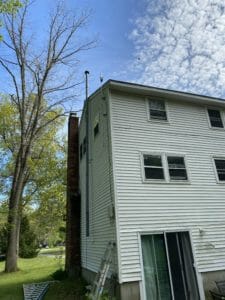
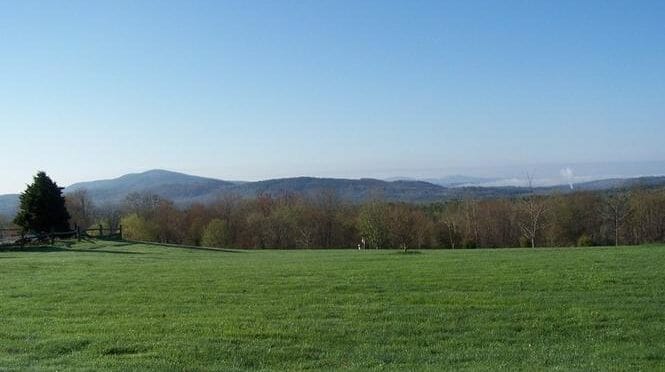
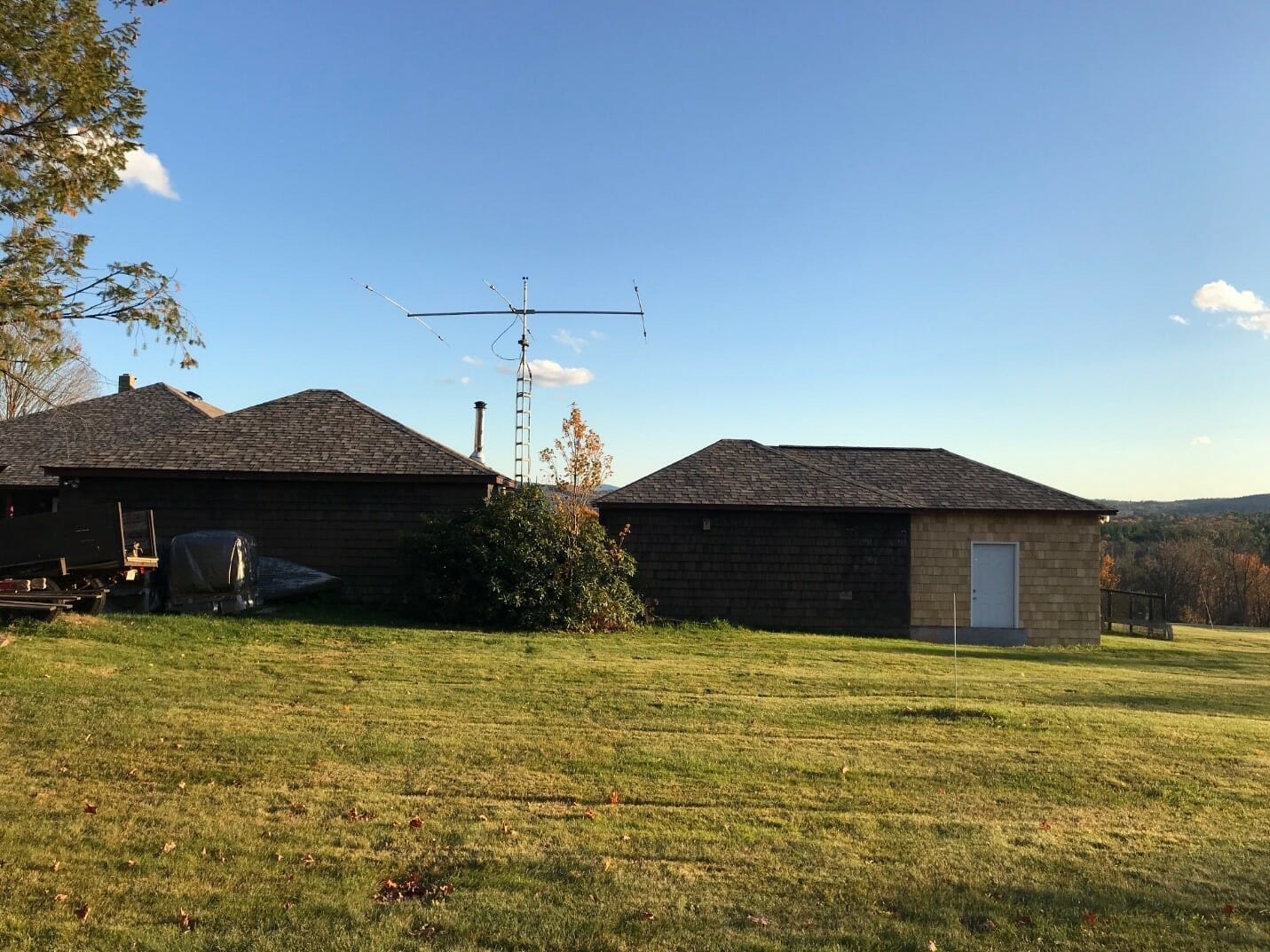
My QTH doesn’t have a large tower, but it doesn’t need to, I’m on top of a hill that looks out 270 degrees.  But along with that great view, I also get strong winds.  It’s not uncommon to get 47 MPH winds (at the top of the tower) as a front moves through.

20' Tower attached to garage - Club Field Day
20′ Tower attached to the garage

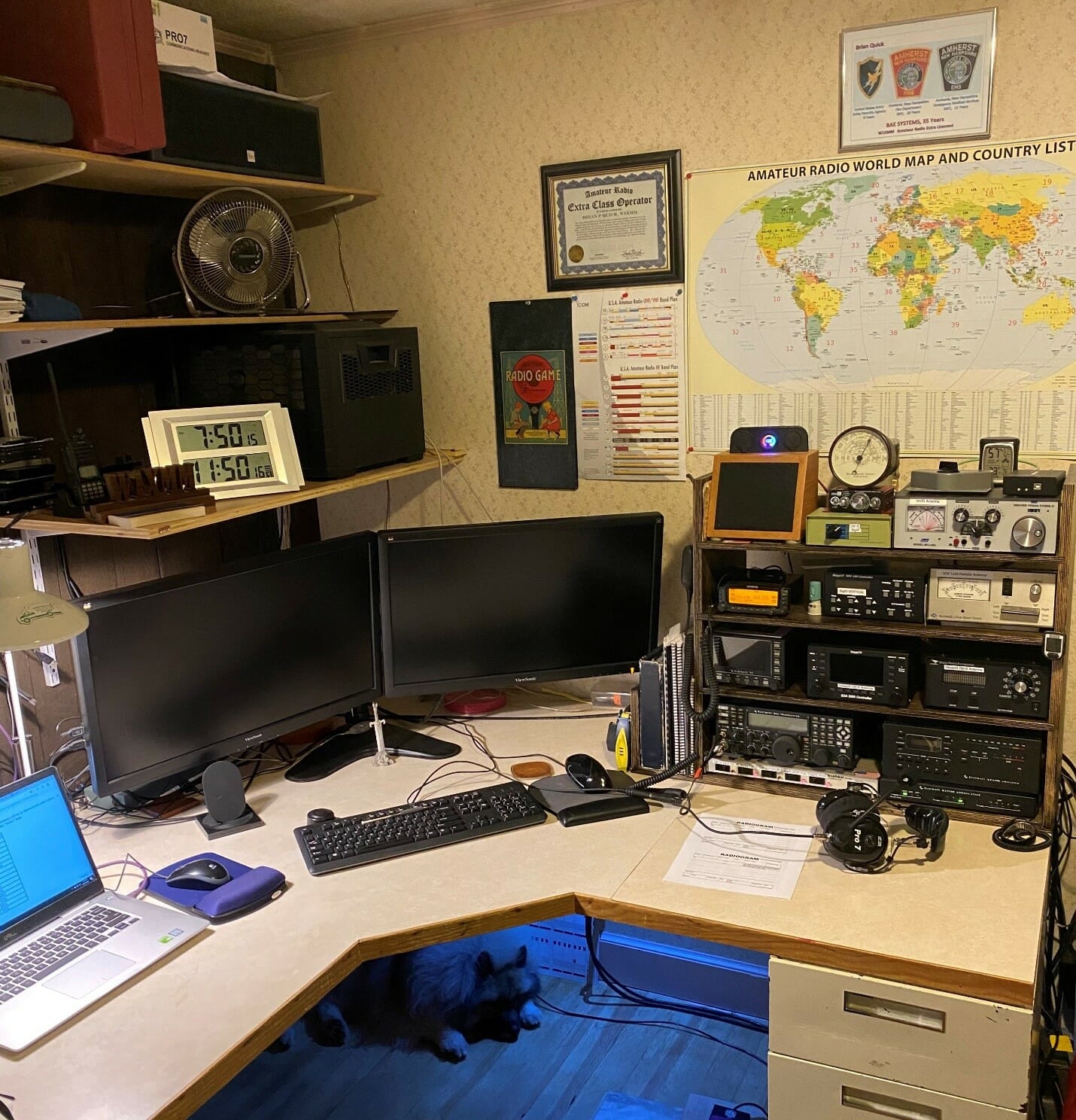
W1XMM HAM Shack

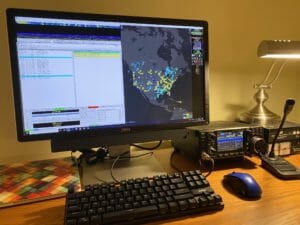
“The Shack” consists of an Elecraft K3S Transceiver, a P3 pan adapter, a 500Watt Amplifier (not planning to use for field day), and a KAT500 Antenna Tuner.  For antennas, I have a Big SteppIR MK IV Vertical (40M-6M), and a Mosley Classic CL-33-M (20,15,10M) on a 20’ mast.  I also plan to put up an NVIS antenna for 40M and 80M for both Field Day and 13 Colonies.    For VHF/UHF I have a Kenwood TM-D700.  The antenna for this radio is a Create Log Periodic which is mounted on a rotor located in my attic, short cable run, no need to elevate, and not subjected to weather (high winds).  I’ll be using a laptop running N1MM+ to capture my contacts.

"The Shack" - Club Field Day
“The Shack”

Emergency Power

For the duration of Field Day, I’ll be running on a generator.  It is an EM2500 watt Honda which will be enough for my station.

 Bonus Points

Bonus Points that I will be trying to obtain:

  • Transmitting with less than 150 Watts.
  • Working from Emergency Power 100% of the field day activities.
  • Providing an article about my field day plans to meet the “Social Media” and “Web Submission”
  • Participation in message handling
  • Passing a message to the ARRL Section Manager or Section Emergency Coordinator.
  • Coping the W1AW Bulletin.
  • Participation in Zoom meeting with elected government official as well as local Emergency Management representative.

My points add to the club’s points so I’m trying to maximize what I can do for my club.

73,

Brian

W1XMM

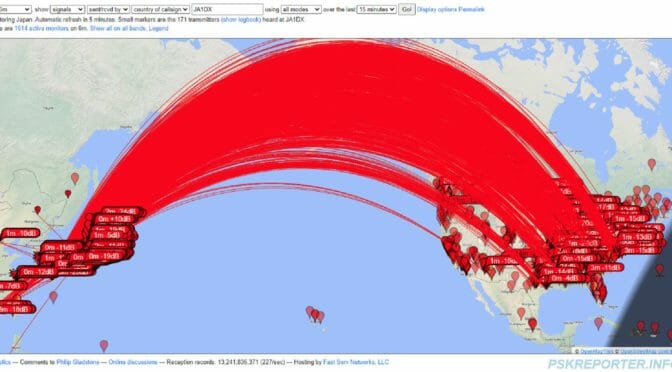
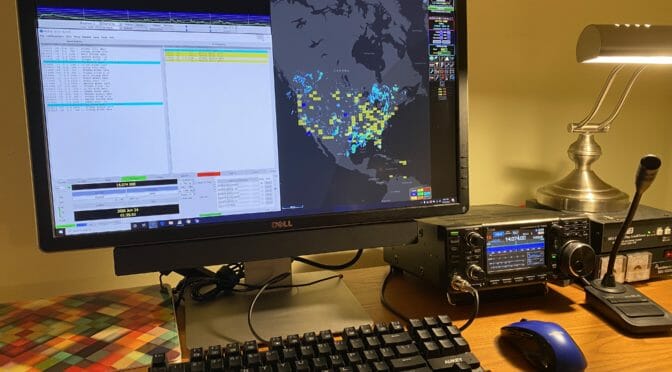
So Close – A 6m Opening to Japan from New England

Recently, we saw one of the best 6m openings between the United States and Japan that we have encountered here in New England. The image above shows contacts being made via the FT8 Digital Mode between Japan and the United States on June 18th, 2020 in the evening eastern time…

Source: So Close – A 6m Opening to Japan from New England

We’ve had a very good 6m Es Season this year. We’ve had almost daily openings to Europe and the Western United States. We recently came very close to a 6m opening from here in New England to Japan! The article shares information on contacts between the United States and Japan that were captured via PSK Reporter. The article above shares more about that opening.

Fred, AB1OC

Field Day 2020 Plans for N1CEO

For ARRL Field Day 2020, I plan to operate a 100 Watt HF transceiver and 50 Watt VHF/UHF transceiver from home using emergency power.

Emergency Power

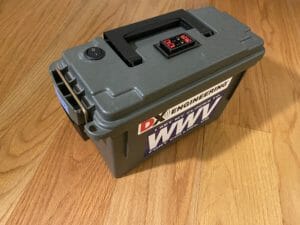
For emergency power, I plan to use the Bioenno BLF-1230A and Bioenno BLF-1215A Lithium Iron Phosphate (LiFePO4) batteries.  These batteries provide 30 Ampere-hours and 15 Ampere-hours, respectively.  Initially, I will use the 30 Ampere-hour battery to power my ICOM IC-7300, and the 15 Ampere-hour battery to power my ICOM ID-5100A.  I will measure the current and other battery parameters using a PowerWerx in-line Watt Meter and Power Analyzer.  Receive current for my ICOM IC-7300 transceiver and AH-4 tuner measures 1.2 Amperes.  I am a casual operator (i.e., non-competitive) so this configuration will provide plenty of power and flexibility for the 3 to 6 hours that I plan to operate.  If one of the batteries becomes discharged to the point where it is no longer wise to use it, I can use the other battery.

I plan to use a PowerWerx 110 Watt solar panel to charge the batteries during Field Day.

ARRL Field Day 2020

Antenna System

For my antenna system, I will be using an ICOM AH-4 with a fan dipole consisting of 16 foot and 31-foot length wires.

The antenna system is located in the attic and is not visible from the outside.

This antenna system provides me with the ability to communicate via amateur radio on 40, 30, 20, 17, and 15 meters.  For Field Day, I will not be using 30 and 17 meters; these are WARC bands and are not allowed for use on Field Day.

My Elmer, Scott Andersen, NE1RD, designed this antenna system for me.  He used a combination of EZNEC and CocoaNEC to analyze the radiation patterns.  We also needed to avoid multiples of 1/2 wavelengths for the wires.  On the AH-4, one set of wires (16 feet and 31 feet) is connected to the “Ground” terminal, and the other set (16 feet and 31 feet) is connected to the “Antenna Element” terminal.

When tuned, the SWR at the ICOM-7300 measures less than 1.1 in most situations and less than 1.4 in all situations.

To connect the Icom AH-4 in the attic to my Icom IC-7300 in an upstairs office, I used an Icom OPC-420 cable.  This cable is 10 meters long.  It is no longer sold by Icom, but it is still available from Japan via eBay.  Initially, I tried making my own cable, but I found that it is difficult to make a cable with the right flexibility and that the wire gauge and tinning on the ends of the cable make a difference in the ability to connect to the Icom AH-4.  So, if you plan to use the Icom AH-4, I recommend that you use an Icom cable.

The antenna system has been very successful.  I now have over 1500 confirmed contacts in my log, and I estimate that over half of these have been made with this antenna system.  By carefully observing propagation conditions and choosing the right times to operate, I have been able to make contacts with Hawaii, Australia, and Japan.  I have also been able to make contacts with nearby states Connecticut and Rhode Island, which is something that I was not able to do with my previous antenna, a 20-meter dipole.  I was able to achieve the Worked All States, CQ WPX Mixed, and CQ WPX Digital awards with this antenna system.

Transceivers and other equipment

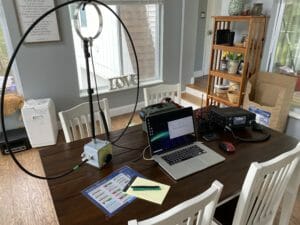
For HF work on Field Day, I will be using the ICOM-7300, plus a Winkeyer and Kent paddles for CW, plus a Heil Pro 7 headset for SSB.  A laptop computer will log contacts via N1MM+ and will operate the transceiver in FT8, FT4, and PSK31 digital modes.

For VHF/UHF work on Field Day, I will use my ICOM ID-5100A transceiver at home, along with my Kenwood TH-D72A and Icom ID-51A handheld transceivers.

More information about my station

If you are interested in more information about my home station, please visit my QRZ webpage at http://www.qrz.com/db/n1ceo.

Peter, N1CEO

Radio Amateurs Developing Skills Worldwide