WordPress 5.0 Brings A New Editor To n1fd.org

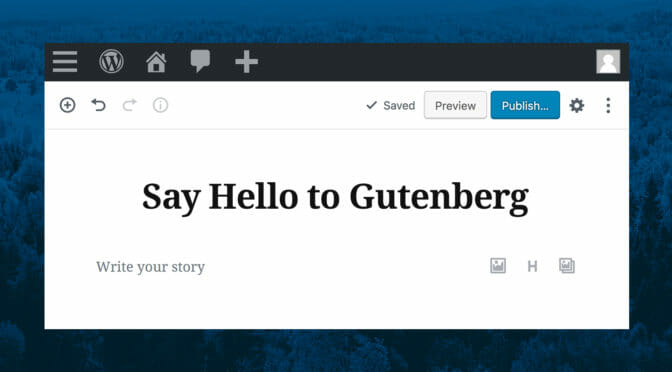
WordPress 5.0 has recently been released and it is now in use on n1fd.org. WordPress 5.0 brings a new content creation editor to WordPress. You may have seen the new editor referred to as Gutenberg on the Internet. Here’s a link to an overview of the new editor.

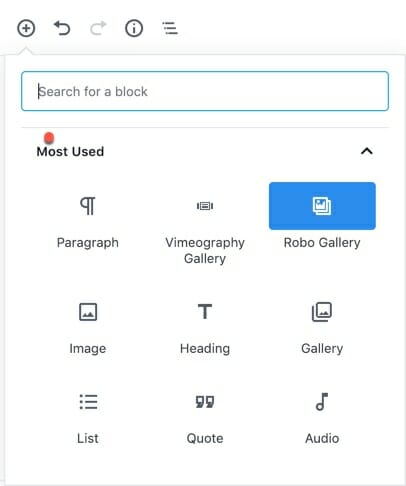
The new editor makes all of the rich formatting of text and graphics that modern websites can provide much easier to use when creating content. It does this via a concept called Blocks. The new editor creates posts using a series of Blocks.

Gutenberg Blocks
Gutenberg Blocks

Blocks are uniquely formatted components of posts such as articles on our Blog. Black can be formatted as text, headings, images, lists, and multimedia elements. You create the content for a post using a series of Blocks. This article uses Paragraph Blocks for text and Image Blocks for pictures.

Gutenberg Document Sidebar

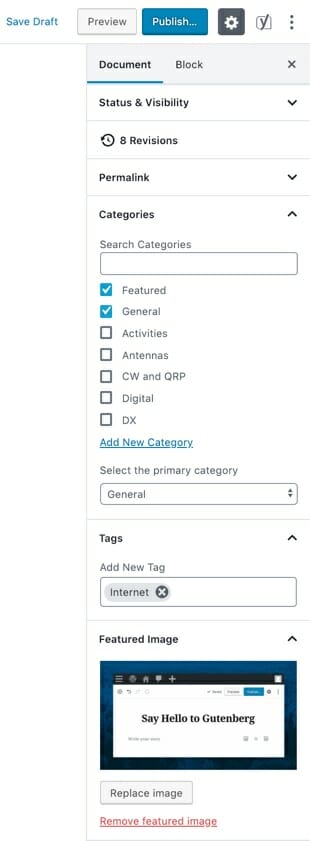
Most all of the functionality of the old editor is available in Gutenberg. For example, sidebar tabs for both Block options and the familiar Document options are available in tabs on the right sidebar in Gutenberg.

It is easy to get started with the new editor. Here’s a link to an article on how to begin.

Selecting The Gutenberg Editor

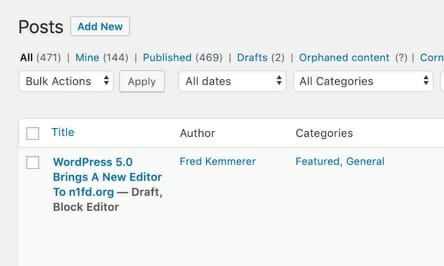
For now, n1fd.org will continue to use the Classic Editor as the default for new posts. You can try out Gutenberg by clicking on the Block Editor choice for your post. This option can be found in the Posts section of the backend of n1fd.org. We will probably change over to the new editor as the default for new posts sometime during the next few weeks. In the interim, I hope you’ll give the new editor a try.

Fred, AB1OC

Doing My Hobby At Work: Conclusion

Past Steps and Summary

In a previous post, I mentioned that myself and Jon Schoenberg AA1FH were teaching MIT Lincoln Laboratory’s first amateur radio course. The Lab strongly encourages professional education. Traditionally, these courses are centered around topics like Stochastic Estimation, Introduction to Electromagnetics, or Radar Principles. These courses tend to be very apropos to people’s day jobs and can sometimes be even more esoteric.

For this course, however, I embarked on something that was a bit more tangential — though relevant — to people’s day jobs. Spoiler alert: The class was a huge success! And I was pretty nervous overall to plan, manage, organize, and teach some of the classes. I remain shocked, stunned, and awed by the outpouring of interest people have for this hobby.

So what happy by-products resulted from this endeavor:

  • 6 people (that I know of so far) obtained their amateur license with 5 doing it through our club.
  • Our own Burns Fisher was a guest lecturer for the amateur satellite portion of the class! (Thanks, Burns!) Looking around the room, his talk noticeably engaged the students.
  • Our Weekly Bulletin featured the Amateur Radio course on the front page! This is excellent for coverage and exposure for when we offer this again in Fall 2019. One of our newly minted hams, KO5TI, had a truly wonderful quote: ““The Amateur Radio course is unique in that it uses learning a popular hobby as a vehicle for presenting relevant technical material. We’ve heard from world class experts on antennas, propagation, digital communications, and electronic design.”
  • We took interested folks from the class on the KC1XX (Matt Strelow) superstation tour to demonstrate what state-of-the-art looks like! This helped to maintain interest and get people excited about their own smaller-scale homebrew projects.
  • We generated enough interest for a part-two spin-off. It looks like it’s going to be a HAB project, ladies and gentlemen. This will be a fun hands-on project to get newly interested people involved in hardware and amateur radio. (But with the added benefit of data collection and analysis). We should have a good degree of success from the vast experience of folks at the Lab.

Next Steps

At work, the Technology Office is sponsoring a Build-Your-Own-X class, where X = (something fun). As an example, a Build-Your-Own-Radar currently exists. In this course, employees learn some radar theory, and then build their own radar, perform calibration, and do some testing on moving objects.

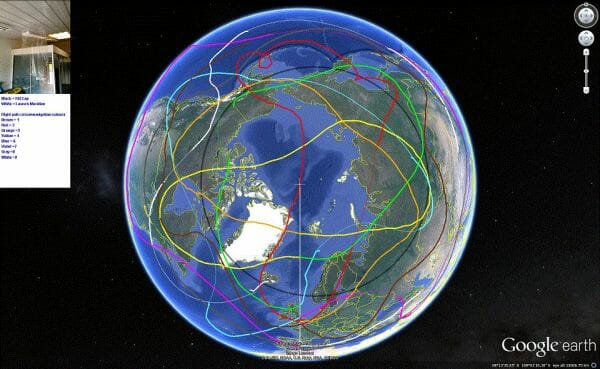
I took a shot and submitted a HABCAR (High-Altitude Balloon Carrying Amateur Radio) proposal. The wrinkle in this (which NARS has not done before) is for the flights to be global circumnavigations using WSPR. You can read a fair amount about this from the QRPLabs website and elsewhere on the web. In particular, M0XER has been quite busy; racking up a maximum number of 8 circumnavigations!

Luckily, many people at work have logged many hours flying and engineering the types of balloons needed for these flights. For instance, one has to use mylar balloons instead of latex since latex breaks down from long-term UV exposure. Additionally, one typically needs to worry about carrying ballast with these balloons. At night, as the air cools, the balloon has to release ballast in order to maintain a constant altitude.

After making a 4 minute elevator pitch, with some Q&A, I recently learned the HABCAR idea made it to the final round on January 18th. So, I need to think through more rigorously what a class built around this would look like in my presentation. I will have to present a Bill of Materials, list the support/help required, and outline the goals for each week of the class. It’s a lot of work. But it’ll be fun. Maybe after this project gets off the ground (pun intended), I can bring the lessons learned to NARS’ continuing STEM program.

Happy flying!

–Brian AB1ZO

January 2019 Contesting Notes

Jumpstarting the New Year

The big contests of the Fall are now behind us and the more sedate contests like QSO parties and youth-oriented on-air events begin. This month has five contests worth noting. (For a complete list of contests please see the contest calendar here.)

ARRL RTTY Roundup ~ 1800Z, Jan 5 to 2400Z, Jan 6

If you’re new to digital contesting this is a good place to begin. There are a number of members in the club that could serve as mentors to help you get going. And, Fred AB1OC and Anita AB1QB often host an effort from their station. See also the ARRL Kids Day event below.

Exchange: RST + State/Province

Contest information: http://www.arrl.org/rtty-roundup

ARRL Kids Day ~ 1800Z-2359Z, Jan 5

Here’s your chance to work a lot of young people on the air. And, if you are a young person just getting started, this is a great event to gain confidence.

Exchange: name + age + QTH + favorite color

Contest information: http://www.arrl.org/kids-day

North American QSO Party

CW ~ 1800Z, Jan 12 to 0559Z, Jan 13,

SSB ~ 1800Z, Jan 19 to 0559Z, Jan 20

This is one of my favorite contests. The pace is relaxed, people are friendly, and it is a great way to fill in the blanks on your Worked All States award.

Exchange: NA: Name + (state/DC/province/country)

Contest information: http://www.ncjweb.com/NAQP-Rules.pdf

Winter Field Day ~ 1900Z, Jan 26 to 1900Z, Jan 27

See the N1FD article here. The NARS club has a big effort planned for this event including multiple transmitters and a collection of antennas for everything from 160m to 10m. Operating will be done from a heated shelter so you can rack up points in comfort! Contact the team leaders for more information.

Exchange: Category (indoor/outdoor/home) and ARRL section.

Contest information: https://www.winterfieldday.com

Bottom of the solar cycle

Even though we are in the solar doldrums don’t get discouraged. The bands are surprisingly good when everybody gets on and enough call CQ. In fact, with the bands a little weak this is a great time to learn how to call CQ and handle callers. You won’t get a big pile-up (because conditions are not great), but you will get people coming back to your call. Be patient and hone your skills during this down part of the cycle. Then you’ll be ready when conditions improve!

Radio Amateurs Developing Skills Worldwide