Articles and other information about Ham Radio activities for young people. Our youth activities include GOTA events, our High Altitude Balloon project, help getting licensed and more.
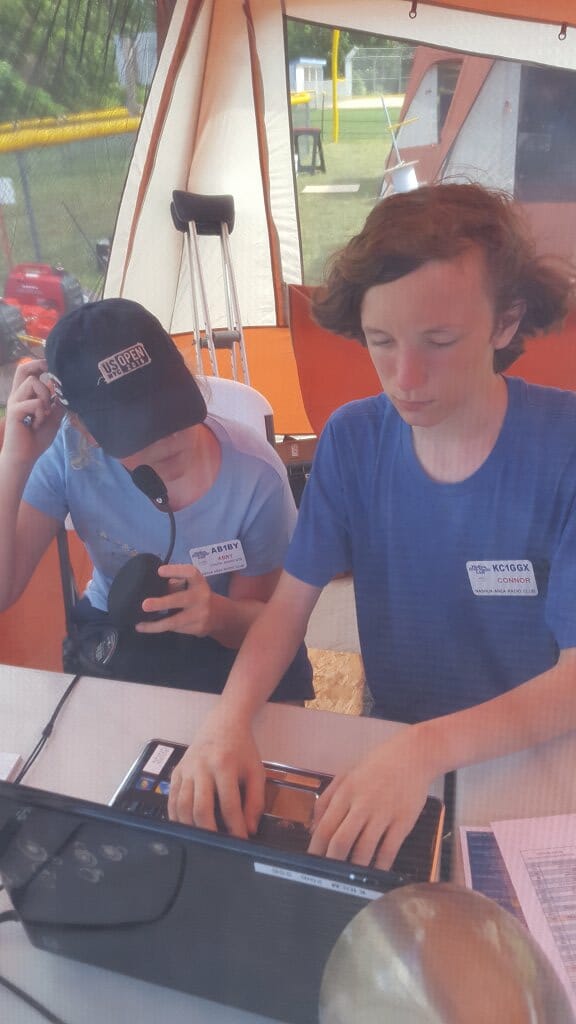
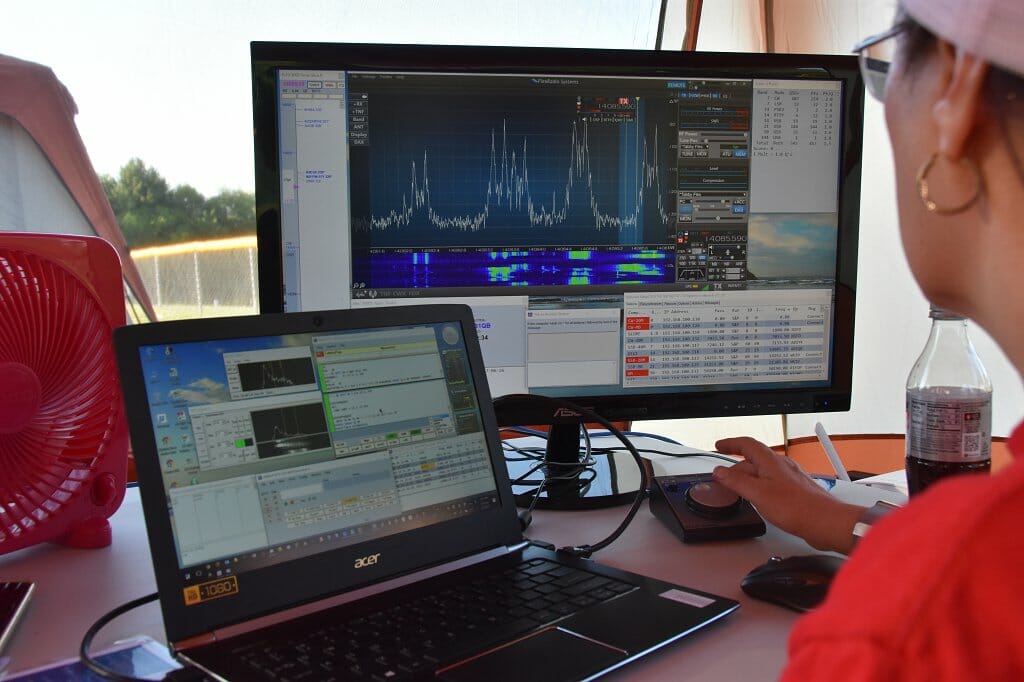
Congratulations to everyone for a wonderful Field Day this year. WMUR TV Channel 9 sent out a crew yesterday, and a story about our Field Day operation made it on the news last night at 6:00 PM. For those of you that didn’t see the show, I have copied the story and we’ve posted it on our home page. Thanks to John, W1SMN for inviting WMUR to our Field Day!
Our Field Day will be held at the Hudson Memorial School in Hudson, NH an will also feature an Amateur Radio Open House activity the students and parents that were part of our High Altitude Balloon Project 3. We will be supporting an ISS Crew Contact at Hudson Memorial School in November and we will have the primary ground station on-site at Field Day for satellite operations and testing. We are counting down to the beginning of our Field Day Operations –
[waiting name=”2018 Field Day”]
NARS members can still sign-up to operate or to be part of the setup teams at Field Day. Just log in to our website and follow the link to our online signup.
All Amateurs and the general public are welcome to visit our Field Day operation on Saturday or Sunday, June 23rd or 24th. Click on the white space below to see a map of our Field Day location. See you at Field Day!
We are planning the third launch of our High-Altitude Balloon (HAB-3) this Sunday, June 3rd between 10 am and 11 am ET. We will be launching locally from the Hollis-Brookline HS here in Hollis, NH. Read on to learn more about our HAB projects and how to track our HAB while it is in flight.
You can learn more about our HAB projects here on our website and you can view a video about our first two HAB launches above.
High-Altitude Balloon Launch Site and Weather
The weather and Jetstream conditions look good for our HAB-3 launch! The jet stream has been unusually tranquil the past couple of weeks and this is going to enable us to launch locally from the High-School here in Hollis, NH. Nashua Area Radio Society members and friends are invited to join us for our launch.
HAB Launch!
We have been working with students at the Hudson Memorial School and World Academy here in NH. The students and their teachers will handle HAB-3 launch preparations and the launch. Launch preparations will begin on site at 9:00 am ET.
HAB-3 Launch Weather
The weather forecast looks great for our launch on Sunday with mostly sunny skies and moderate winds. These conditions should enable us to capture some spectacular video from HAB-3 during its flight! We are also planning to live-stream video from our HAB-3 launch and recovery to the Nashua Area Radio Society Facebook page.
Tracking Our HAB
I wanted to share some information about tracking our HAB as it flies. Our balloon will carry’s a GPS receiver and a 2m APRS Transmitter.
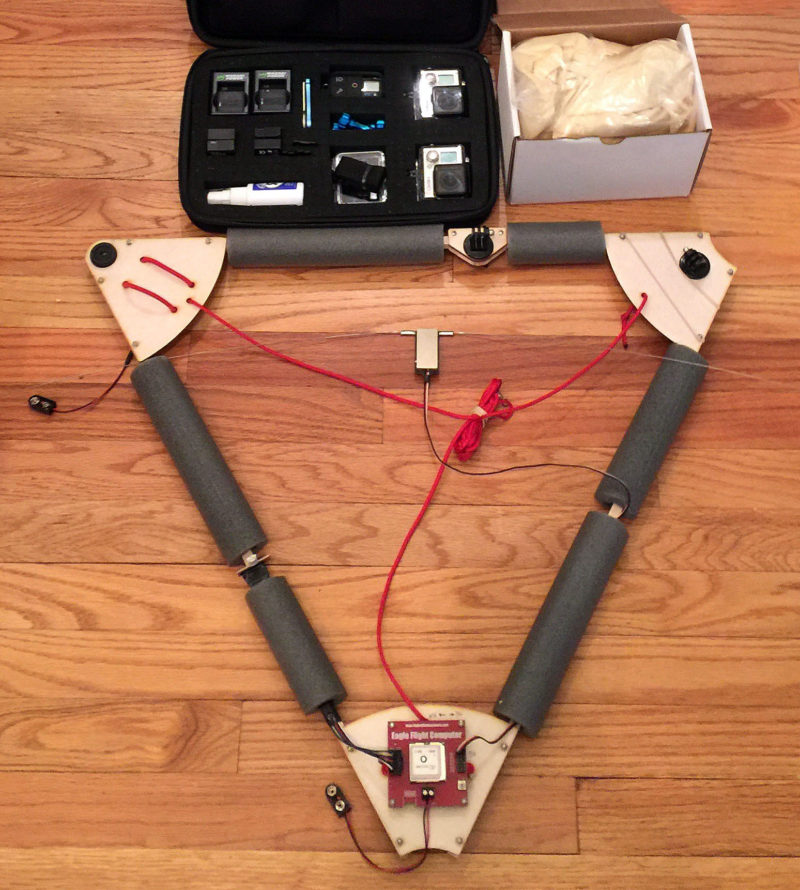
HAB Flight Platform
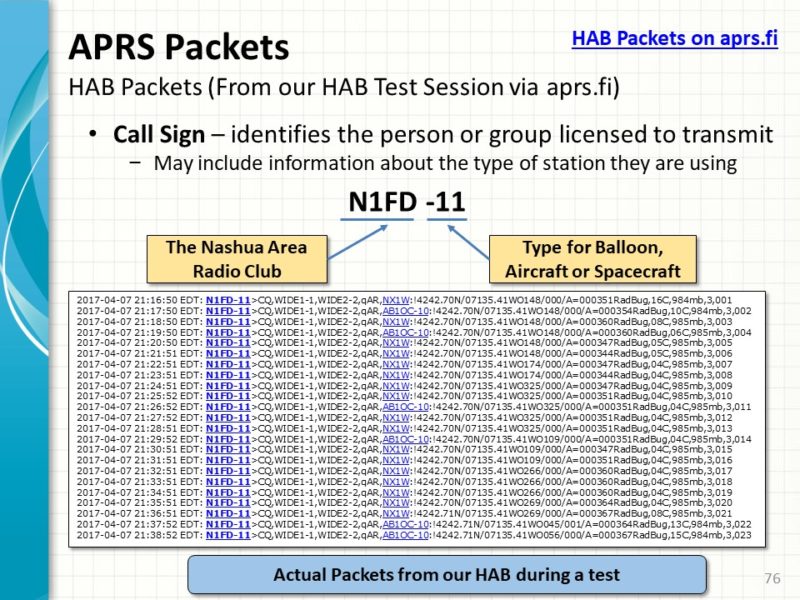
The onboard APRS transmitter will operate on the Amateur Radio standard terrestrial APRS frequency of 144.390 MHz and will transmit our HAB’s position, heading, speed, altitude and other telemetry data every minute during HAB-3’s flight. The transmitter is battery-powered and generates a 250 mW signal into a dipole antenna suspended from HAB’-2s flight platform. HAB-3 will use N1FD-11 as its call sign.
Based upon online HAB flight prediction calculators that we have been using, we expect the HAB’s flight to last a little more than 2 1/2 hours. The HAB should reach an altitude of over 110,000 ft before the balloon bursts and the parachute on the flight platform brings HAB-3 back to the ground at a safe speed. The above predictions will likely somewhat different from HAB-3’s actual flight path. Based upon the predictions, HAB-3 will be traveling approximately 25 km between its takeoff point and landing near Devens, MA.
HAB APRS Packet Information
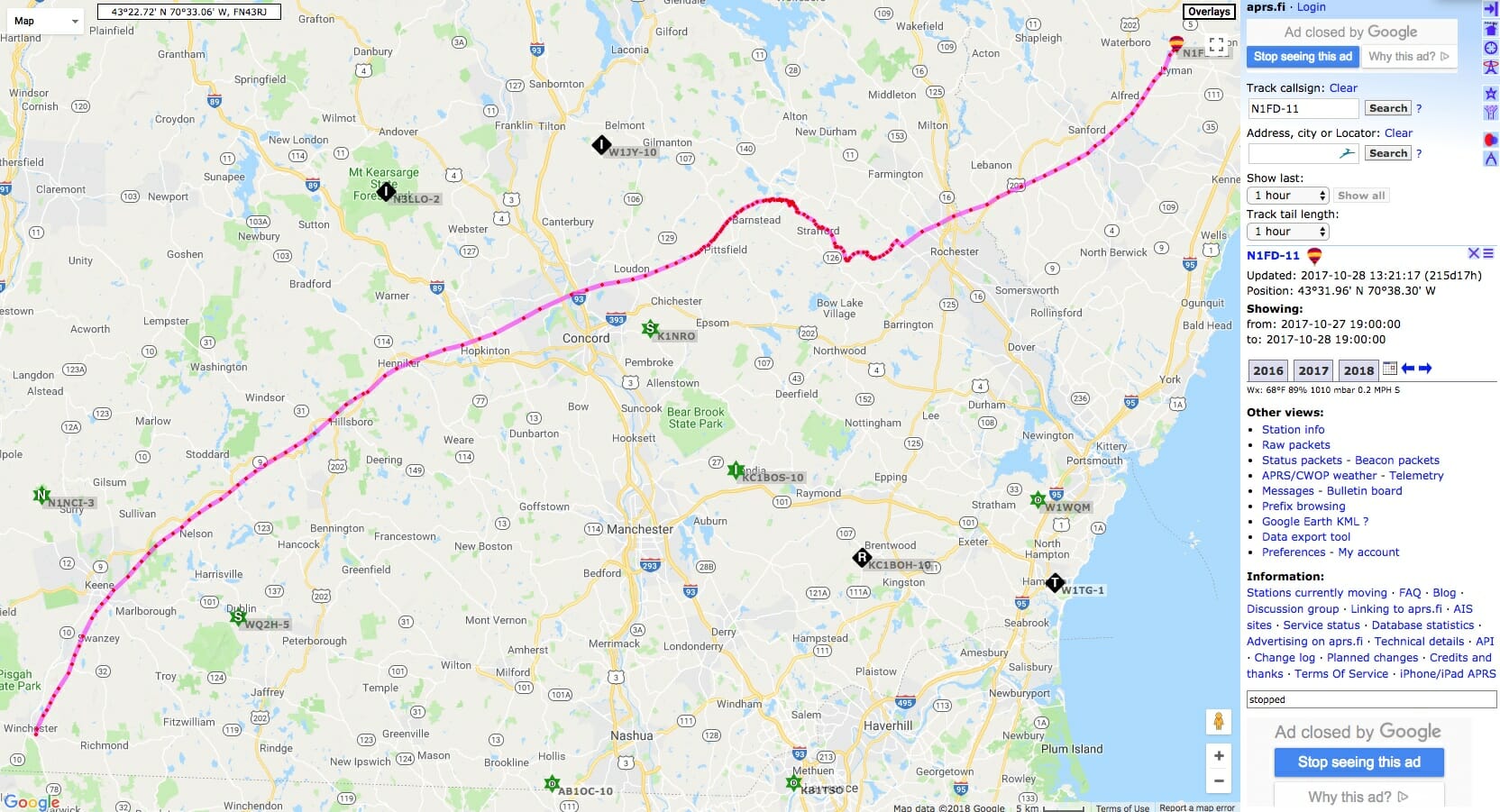
Aprs.fi will store and display a copy of all of the APRS AX.25 packets transmitted by HAB-3 during its flight. Of particular interest to the STEM element of the flight will be the Balloon’s data on atmospheric temperature and pressure conditions at different altitudes.
All you need to track HAB-3 during its flight is Internet access and a web browser. Just click on one of the aprs.fi links here to see HAB-3’s current location and altitude. If you have an APRS ground station, you may also be able to receive HAB-3’s telemetry directly during the flight.