Category Archives: Station Equipment

Articles about Radios, Amplifiers, Tuners and related Ham Station Equipment. Fixed, Portable and Mobile Station Equipment Articles are included.

A Portable Satellite Station Part 1 – A Simple Station for AO-85

Our club has quite a few members who are interested in space communications. We decided to build a simple portable satellite station last year for our 2016 Field Day operation to learn about satellite communications and to create something new for folks to work with during 2016 Field Day.
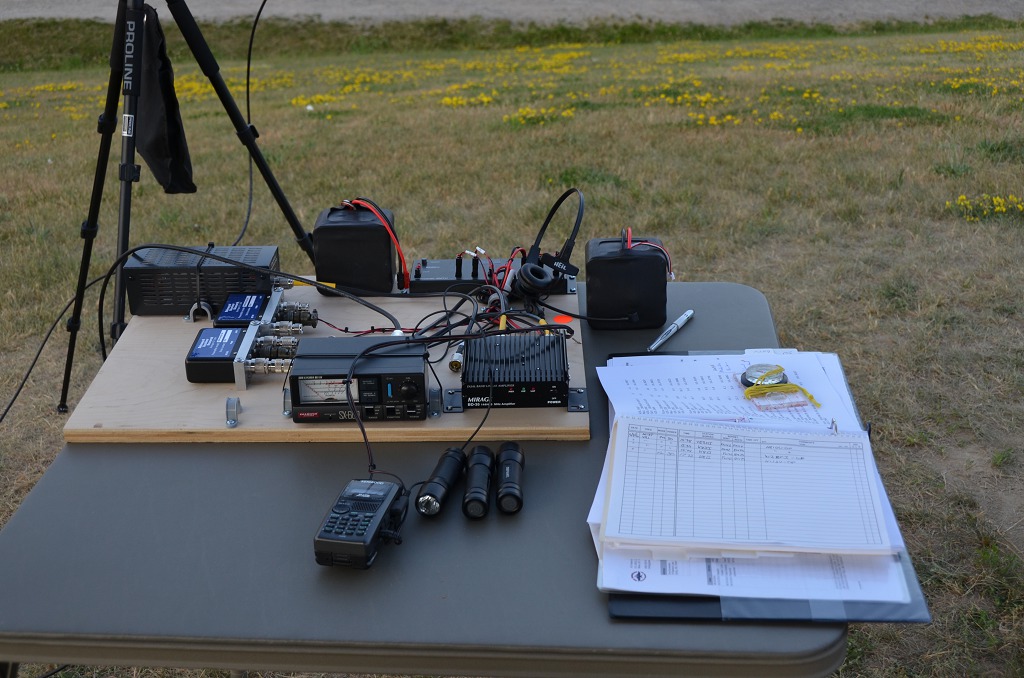
Simple Portable Satellite Station

Our 1.0 Portable Satellite Station was a relatively simple setup built around an HT, an Elk 2m/70cm satellite antenna, and some gear to improve the receive performance and transmit power output of the HT. All of the gear was mounted on a board to make it easy to transport and it is powered by a LIPO rechargeable battery. The gear in our 1.0 station is made up of the following:

Improved Portable Satellite Station Antenna Support
Improved Satellite Antenna Support

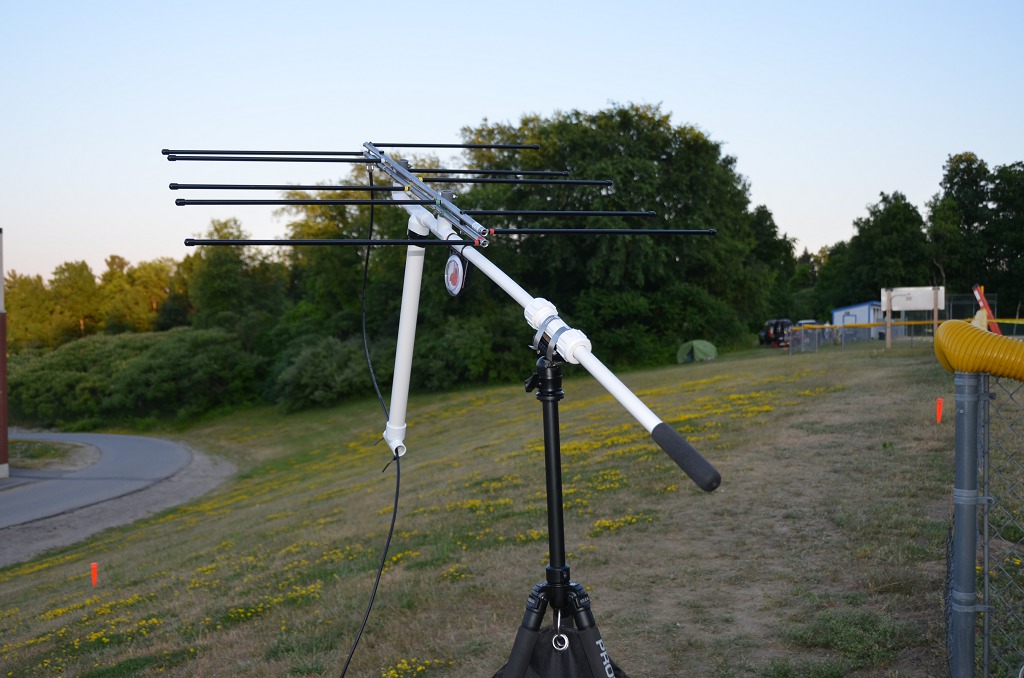
Our first contacts with our 1.0 station were made using the Elk Antenna hand-held. Later, we created a “plumber’s special” setup with a camera tripod to make pointing the antenna easier. Note the angle meter from a local hardware store which measures the elevation angle of the antenna.
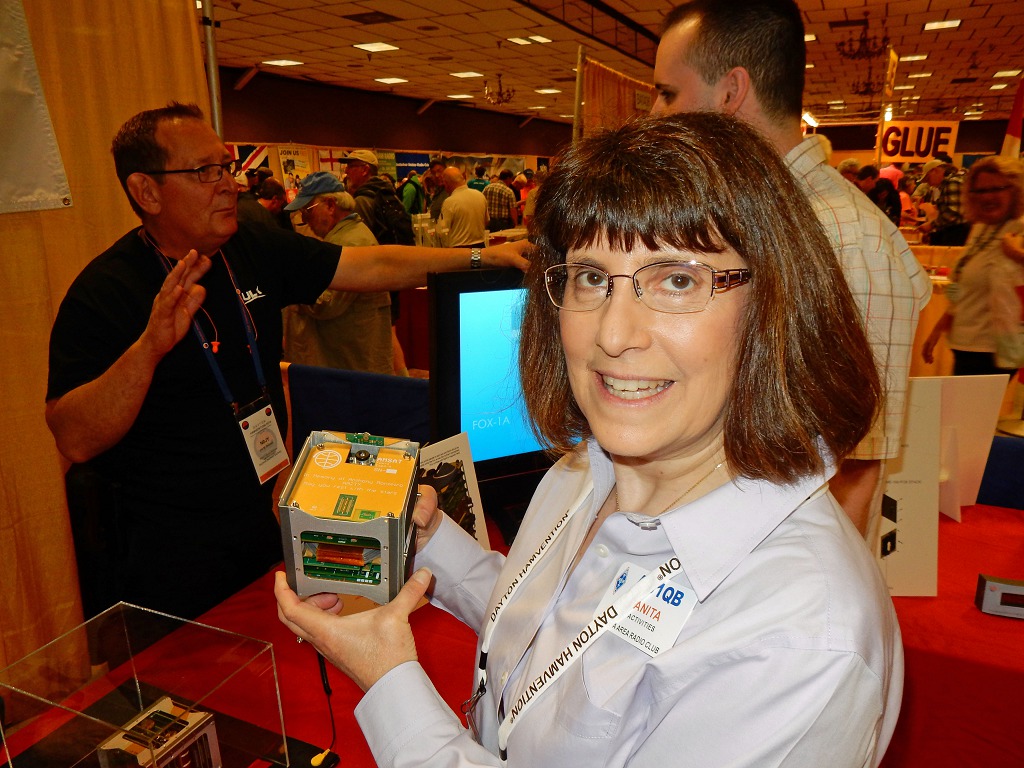
AO-85 (Fox-1A) U/V Mode FM Cube Satellite

This setup worked great for making FM contacts through AO-85 (Fox-1A), a  U/V mode FM EasySat. We used the 1.0 station on multiple occasions including Field Day 2016 and several of our club members used it to make their first satellite contacts. The Full-Duplex HT allowed us to hear our own signal coming back from the satellite which was an important tool to help with aiming the antenna properly. The ELK Dual-Band antenna is also a good choice because it uses a single feed point and a single polarization for both the 2m and 70cm bands.
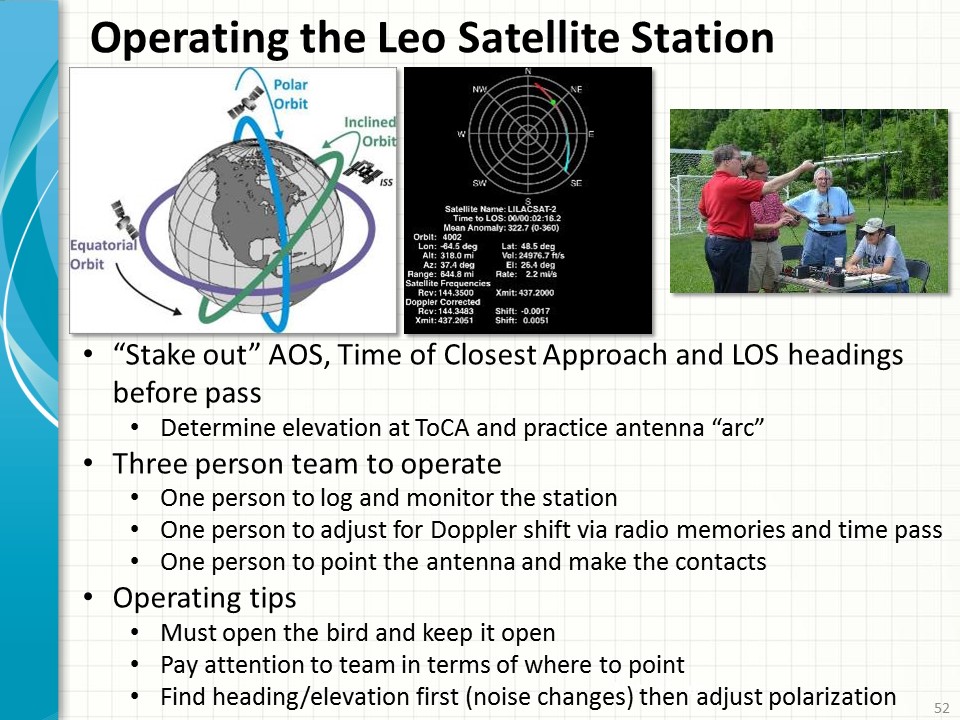
Portable Satellite Station Team Operating Approach
1.0 Station Team Operating Approach

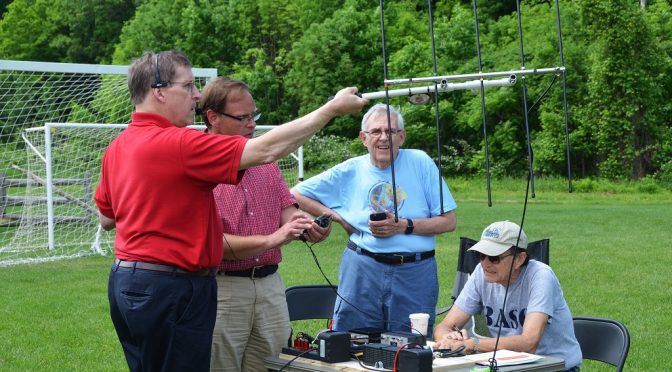
We used the team operating approach outlined above. This worked especially well for new folks who had not made a satellite contact before as it enabled each of the three team members involved in making the contact to focus on a specific part of the contact. We used orange plastic tent stakes to make AOS, Time of Closest Approach, and EOS to mark headings for each satellite pass. Small flashlights used at the stakes made them glow for night-time passes.

We certainly had a lot of fun with our 1.0 Satellite Station and I expect that we’ll continue to use it. As we gained a little experience with AO-85, we decided that we wanted to build a more capable Portable Satellite Station which we could use to operate with linear transponder satellites and which included a tracking system and better antennas. I know from experience with our home satellite station that DX contacts are possible using higher altitude linear transponder satellites like FO-29.

We would also like to be able to use APRS and other digital modes through satellites as well as receive SSTV pictures from space.

These goals have become the basis for building our Portable Satellite Station 2.0. More on the new station in Part 2 of this series. Other articles in the series include:

You may also be interested in the satellite station at our home QTH. You can read more about that here.

73,

Fred (AB1OC)
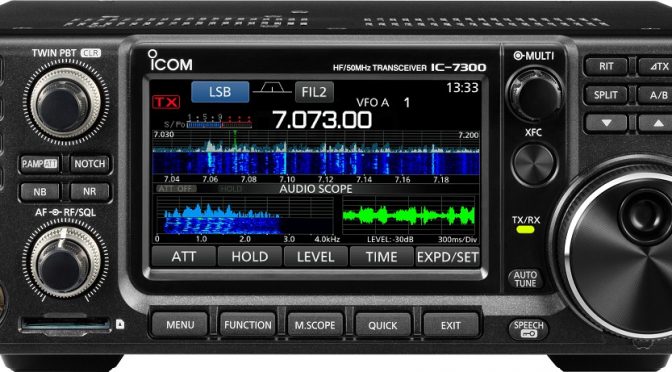
January Tech Night Making the Most of Your HF transceiver

The January Tech night was about getting the most out of your HF transceiver. Fred had an interesting  PowerPoint presentation where he demonstrated how to do just that. For anyone else new to HF, I wanted to comment on it here. In his presentation, he described how you should use filtering first and digital signal processing (DSP) as a last resort. That’s the exact mistake I was doing. if you use a lot  DSP with a narrow filter selected the audio sounds hollow and really difficult to listen to. If you turn off the DSP  select the narrow filter and then bring up the DSP if needed you get less noise and a pleasing audio output. Also turning down the AF gain can be your friend too!

73 and good DXing

-Jim.   K1BMR

First Homebrew Contact on my Scratch Built BitX20 SSB Transceiver

About a year ago I decided to build an SSB transceiver for making contacts with other amateur radio operators on the HF bands.  I was given good advice from both Bill and Pete from the SolderSmoke Podcast to start out with a direct conversion receiver then go with the BitX20 as a first SSB rig.  I am very happy that they gave me that advice and I would agree that the BitX is not a good first project.

After getting all the proper adjustments made and confirming proper operation with a dummy load it was time to put this rig on the air (I don’t need a case)!   I tried calling CQ using SSB voice but no one came back.  I then decided to add some relays and other modifications to allow digital modes.

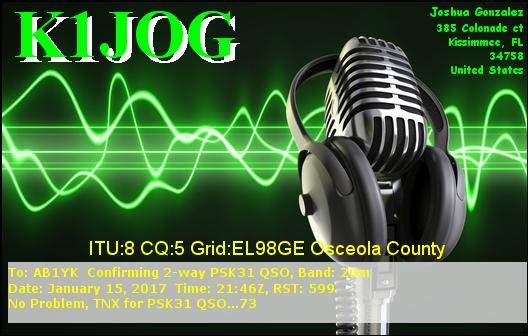
On January 15, 2017, at 21:46z I answered a psk31 CQ from Josh K1JOG in Kissimmee, FL.  Little did he know that he would be making history (maybe just for me) in my first home brew QSO.  Below is his eQSL card to me.

BitX20 First Contact QSL
Thank you, Josh K1JOG for the contact!

If you are interested in scratch building this rig you can follow the photo link  below:

BitX20 Homebrewed Transceiver
BitX by Ashhar Farhan, VU2ESE

Ashhar Farhan also sells a BitX40 at http://www.hfsigs.com/

The units he has built in India are almost ready to put on the air.  You build the case/box or just go open board style!  You can’t beat the $59 price for a rig!

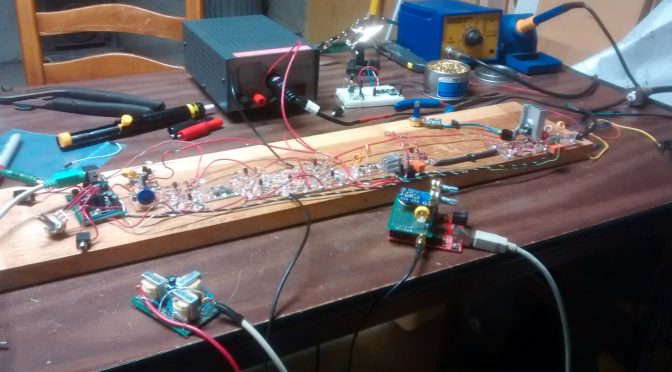
Below are some photos of my project:

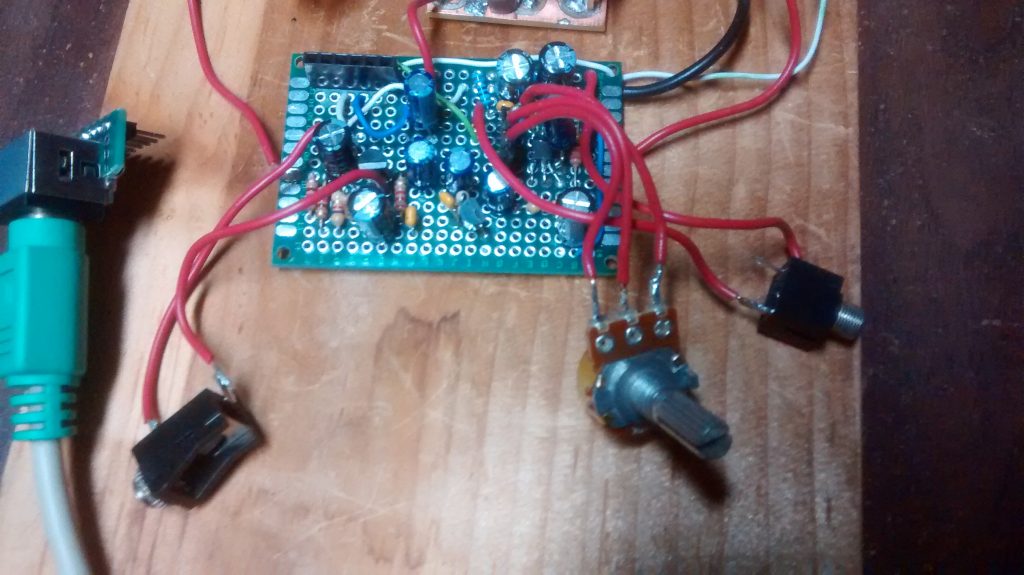
BitX20 Mic amp on the left LM386 audio amp on the right
Mic amp on the left LM386 audio amp on the right

A good place to start is the Audio “end”.  I built mine using perf prototype board.  FYI the 10k ohm resistor on the mic amp needs to be 39k ohm for proper bias.

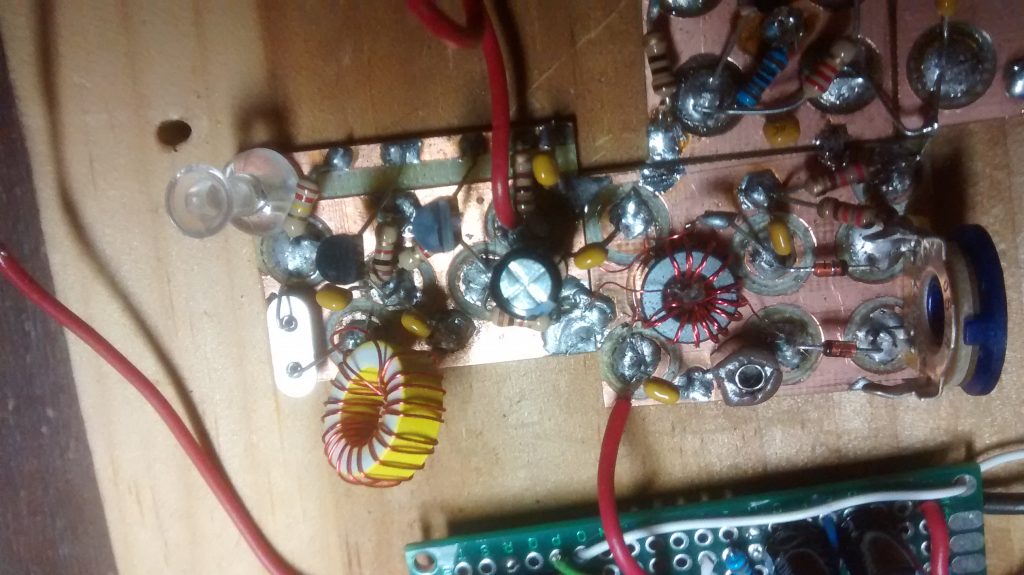
BitX20 Balanced Modulator
Balanced Modulator

On the balanced modulator, I used a mystery toroid core because I have a bunch of them and they did not cost much!

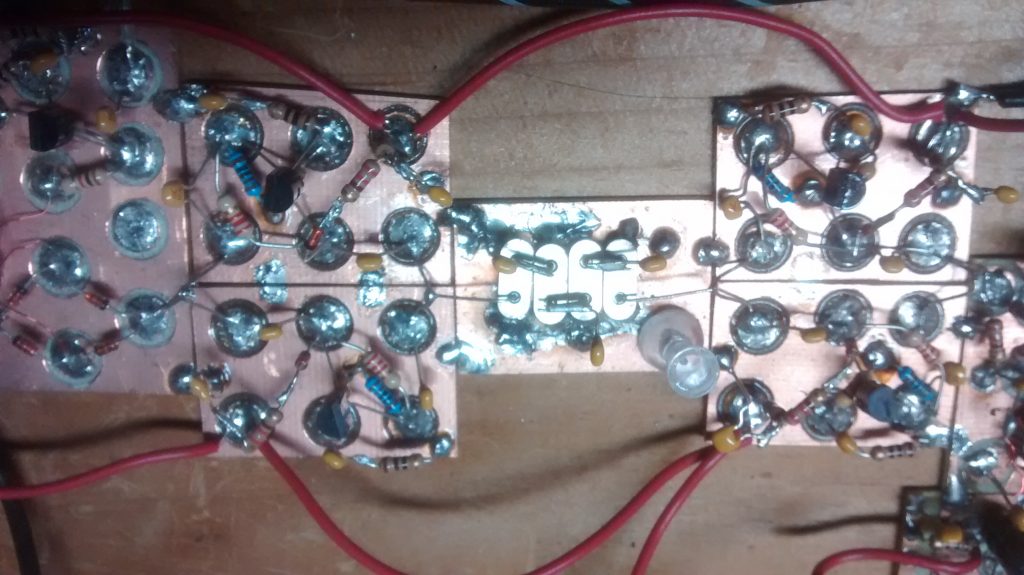
BitX 10 MHz crystal filter
10 MHz crystal filter

In this photo, you can see some transmit and receive amplifiers and the crystal filter.  I built some test equipment and used a frequency counter to make a matched set of crystals.

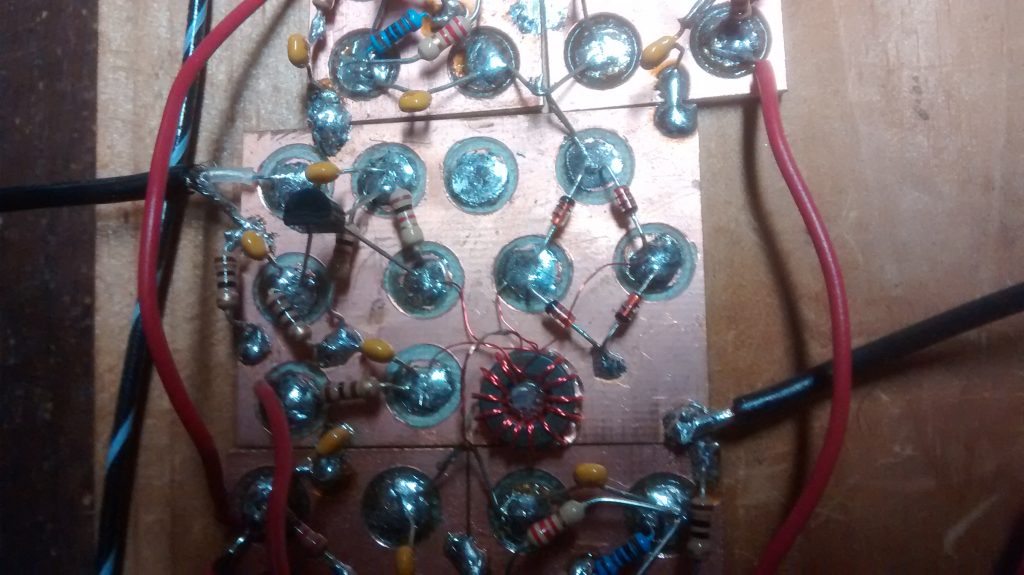
BitX20 Mixer circuit
Mixer circuit

The mixer circuit is shown here with some coax to the left that is from the VFO.

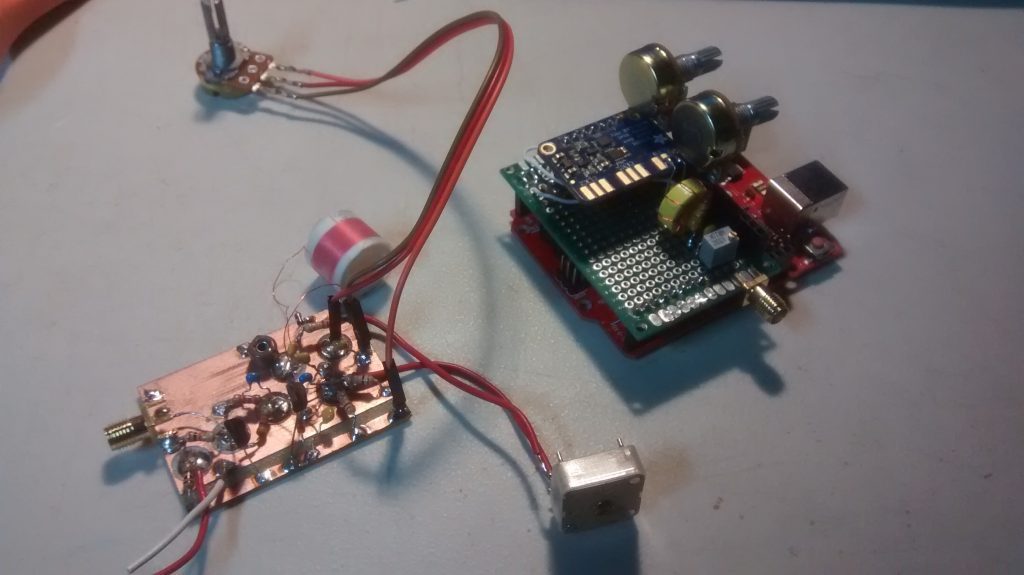
BitX20 VFO
Original VFO design on the left. Filtered SI5351 clock generator on the right

You can see the benefit of building small modules.  With SMA connectors, I can quickly swap out the VFO “soul” of this rig!  No more drift with the SI5351 chip! I ordered mine from Adafruit. I added a small LC filter to the output to make a nice sine wave.  I am not sure it is needed.

BitX20 Bandpass Filter
Band Pass Filter by Pete N6QW

Now I had trouble with the original band pass filter.  I’m not sure why but a quick google search on 20m band pass filter and I found a replacement circuit on his website.  When I told Pete about this he sent me a new updated design to try.  My PTT relays are 5v so the small heatsink is for the voltage regulator.  I also included diode protection for the replays.

BitX20 Power Amplifier
Irf510 power amplifier

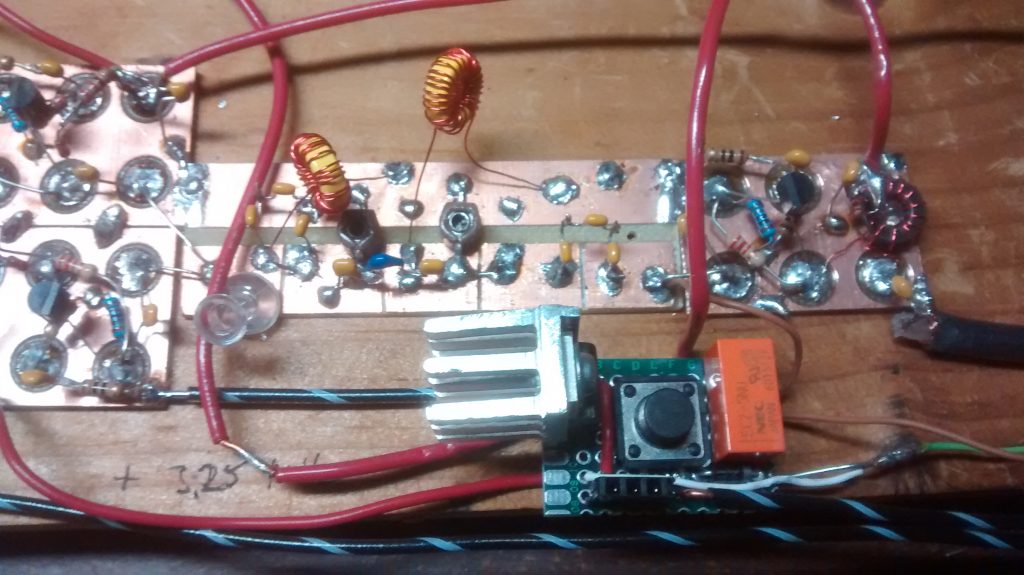
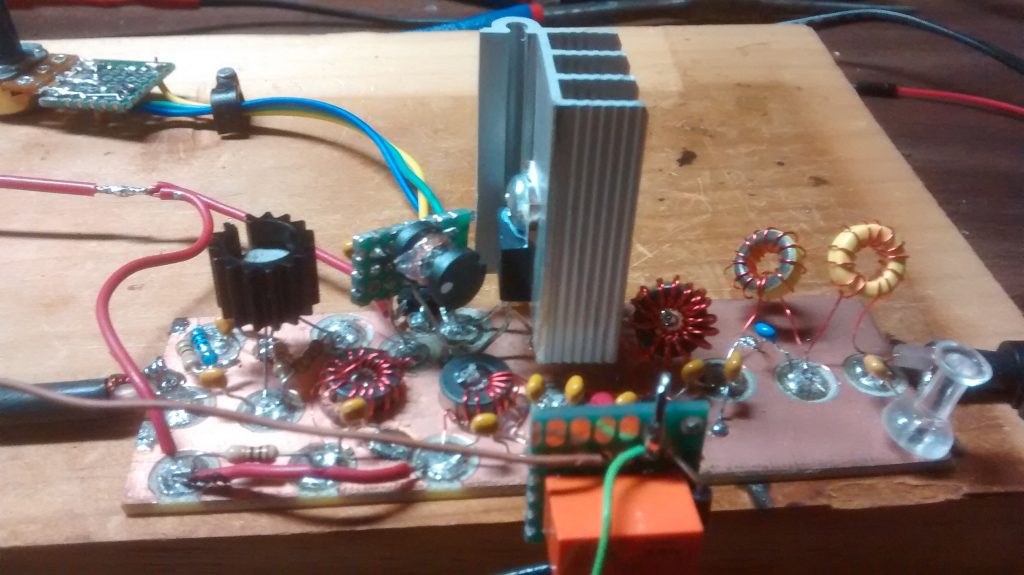
The IRF510 is more of a switch and not designed for linear RF amplification but it is cheap and works great for QRP.  They have different bias requirements from one unit to the next.  That is why you carefully set the bias level with a trim pot.  The large heat sink was part of an old high power LED driver that died.  I used T37-6 toroid cores for the low pass filter on the right. The 2nd relay was needed to prevent the output of the IRF510 feeding back into the original PTT switch and back into a nasty loop.

I am not sure if this rig will ever get a case or future modifications but I do know that I would like to see if I can make more contacts with it.

I would like to end this article with a quote I very much like from a video with Rev. George Dobbs, G3RJV

“Radio construction is rather like a pilgrimage where the journey is often more important than the destination”.

73,

Mike,  AB1YK

Radio Amateurs Developing Skills Worldwide