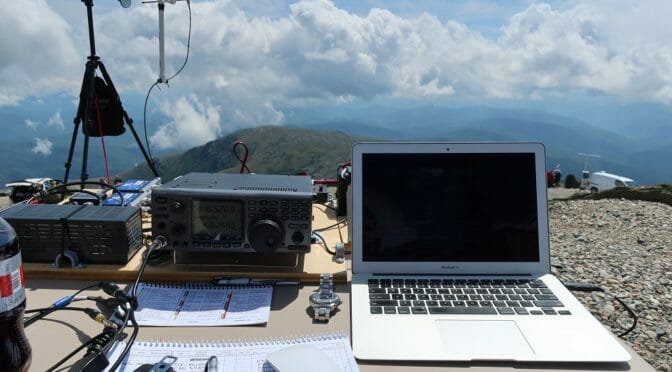
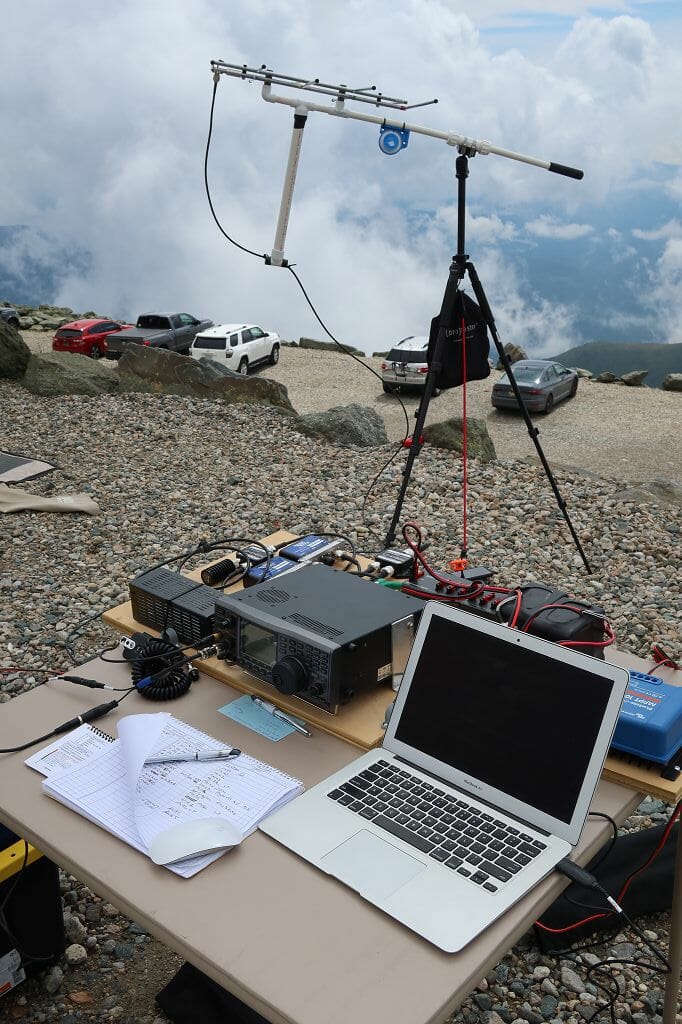
This white paper was presented to the Four Days in May conference held by QRP Amateur Radio Club International in conjunction with the Dayton Hamvention in 2010. A few photographs have been added to the text for this publication.
For more information on DXpeditions and talks I’ve given please see my website www.bsandersen.com
Synopsis
Traveling with your radio to some exotic, or at least fun, destination can be one of the most enjoyable activities in the hobby. Mounting DXpeditions need not be left only to large groups with shipping containers and six figure budgets. A successful DXpedition can be mounted with very little expense, and a small set of carefully selected equipment. This paper discusses lightweight DXpeditioning, the planning and execution of a trip, and the joy of operating from the other side of the pile-up.
Two S-units
About a decade ago, three avid DXpeditioners, James Brooks, 9V1YC, Trey Garlough, N5KO, and Declan Craig, EI6FR, had watched the DXpeditions of their time grow in size, effort, and expense. The VK0IR DXpedition helicopter-lifted 34 tons of equipment onto Heard Island, for example. At a time when each succeeding DXpedition was bigger, costlier, and more complicated, these three had an almost heretical idea: mount a DXpedition with only lightweight transceivers, a small contingent of operators, and with a limited budget. There would be no pilots, no advanced publicity, and no amplifiers. In other words, “No more Mr. Kilowatt!”i The Penguin Microlite DXpedition Team was created in 1999 and that group targeted South Georgia and Southern Thule Island in Antarctica as their first destinations.
Using small radios, low power, small generators, and vertical antennas, the first Penguin Microlite DXpedition team put 26,698 contacts into the log from Thule, and over 40,000 more from South Georgia. Just a few of days were all that were necessary to knock these two remote regions of the Earth off the DXCC’s top ten “most wanted” list. Though power was limited and antennas were simple, the team made no excuses; they just got it done.
The difference between 1500 watts and 100 watts, the output power used by this innovative DXpedition team, is only a factor of 15, 12 dB, or just 2 S-units. This ratio, 2 S-units, is something any avid QRP enthusiast will quickly dismiss as a mere trifle. The difference between 100 watts and QRP’s typical 5 watts is 13 dB, or about 2 S-units. Five watts, a reasonable antenna, and a good operator can work the world. If the Penguin Microlite DXpedition team can give up two S-units and have that level of success, a well-organized QRP operation should be able to give up just a couple more S-units and have at least modest results.
The 100 Pound DXpedition
Not long ago, airlines provided each passenger with a baggage allocation of two checked bags, each not to exceed 50 pounds, and with dimensions (length + width + height) not to exceed 62 inches. Two bags at 50 pounds each made a total of 100 pounds. Thus was the genesis of the name and the form of the 100 Pound DXpedition.
The general idea of the 100 Pound DXpedition is that one should be able to pack radios, antennas, coax, and other equipment into checked bags and, with only the addition of an airline ticket and passport, travel to some exotic, or at least fun, place in the world to operate. This limit may sound draconian, but, as artists say, “form is freeing.” Such limits narrow considerably the types of things eligible for selection. Large, heavy, or bulky items cannot go. Just as the Penguin Microlite DXpedition Teamreturned to the basics, so, too, must the 100 Pound DXpeditioner.