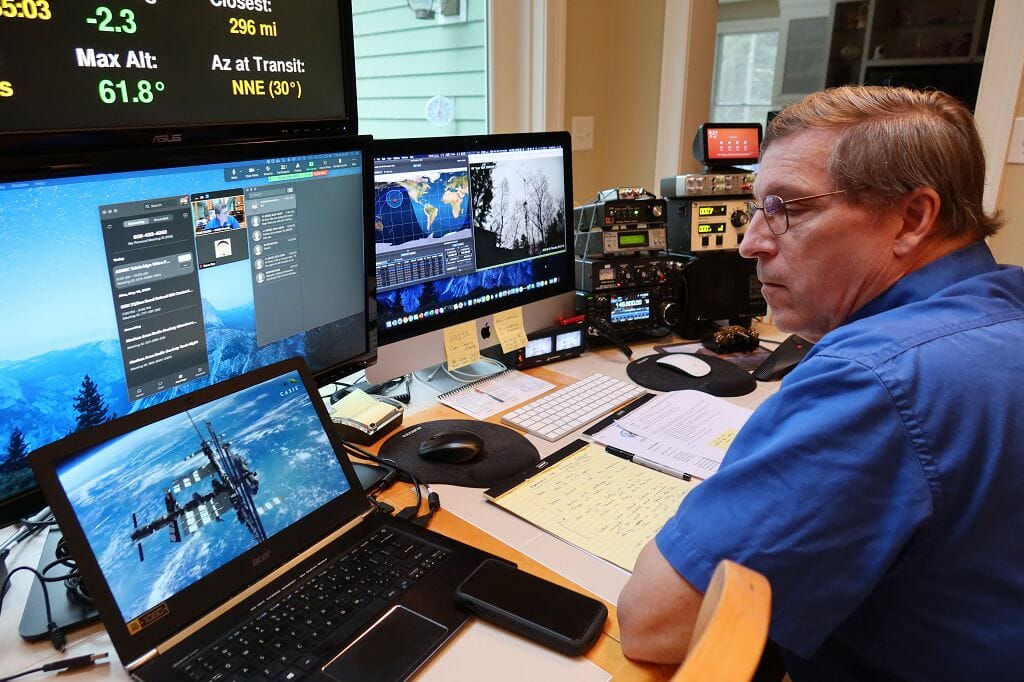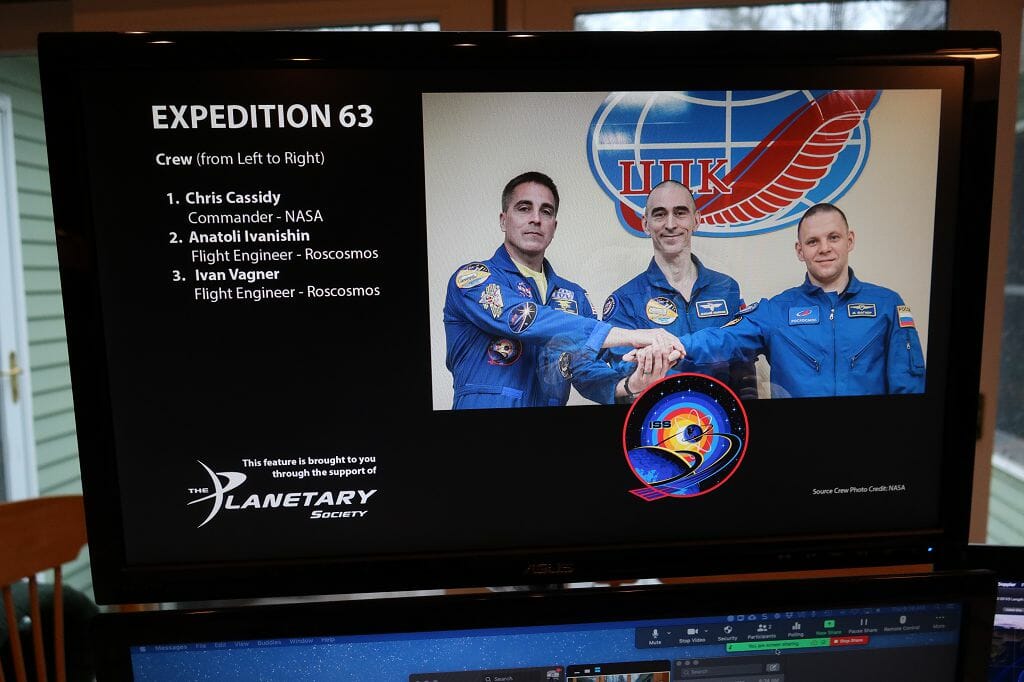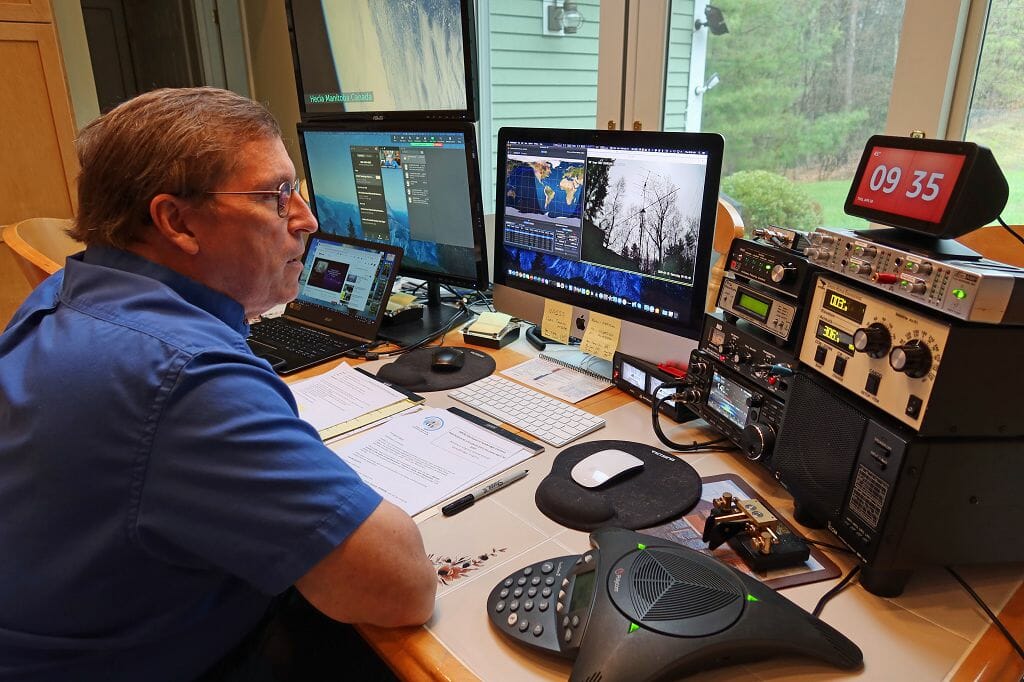
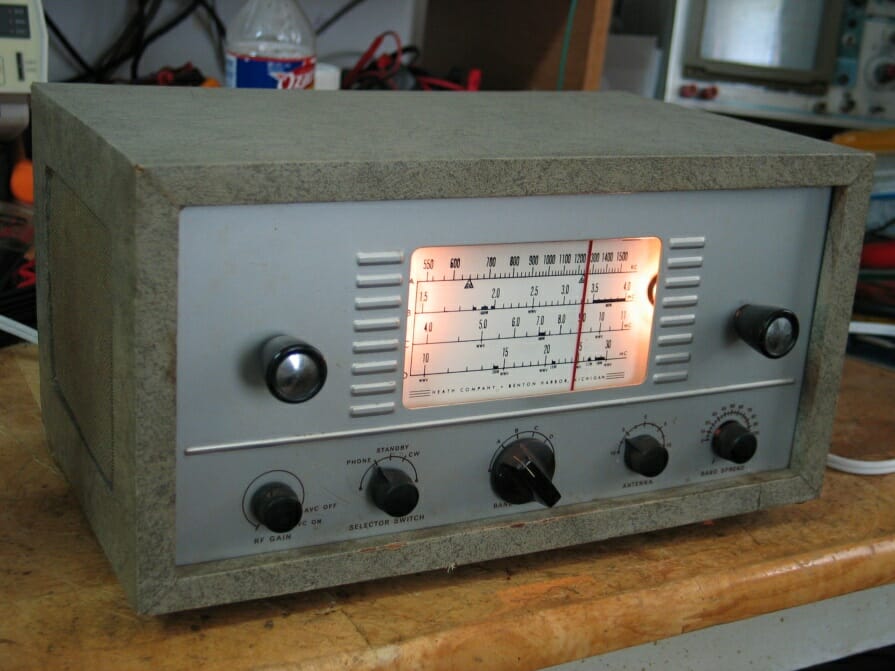
I obtained my FCC Novice license in 1957 at age 13. At that time, I didn’t yet have a station, so I set out to remedy that situation. I had been using a Heathkit AR-3 receiver (4 tube superhet, $29.95 in kit form, cabinet $4.95 extra) I built prior to obtaining my license; while OK for SWLing, it wasn’t well suited to amateur radio work. My first priority was building a homebrew transmitter while looking for a more suitable but affordable receiver. While I was building the transmitter, my father borrowed a WWII German military receiver from a colleague at work for me to use temporarily. I didn’t know it at the time, but this receiver was a quite sophisticated design. I used this receiver for several months (including for my first ever QSO), but didn’t pay much attention to the details as most of the labeling was in a language I didn’t understand, and I had no manual, other documentation, or knowledgeable guidance.
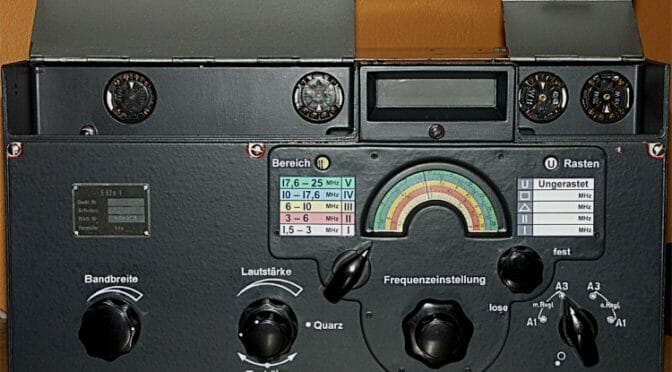
I recently decided to see if I could more precisely identify this receiver based on my recall of a few unique features of the design. One very clear recollection is that the frequency display was projected onto a ground glass screen on the front panel. This turned out to be the definitive clue in identifying this receiver. Another recollection is the strange-looking (to me, at least) vacuum tubes, the bases of some of which could be seen by opening two flip-up covers on the front panel. Using these clues, it was easy, with some internet research, to zero in on the make and model of the receiver. It was a Tekefunken E52 series manufactured in several variations mainly for the German Luftwaffe between about 1942 and 1945. At the time, I had no understanding of the advanced nature of this design; it was way ahead of its time, and only about 2500 were built. Below are some photos, snippets, and links from the websites I visited. While likely of limited interest to newer hams, in these days of pandemics, lockdowns, and self-isolating, perhaps an interesting diversion. Much more information on the web for those so inclined.
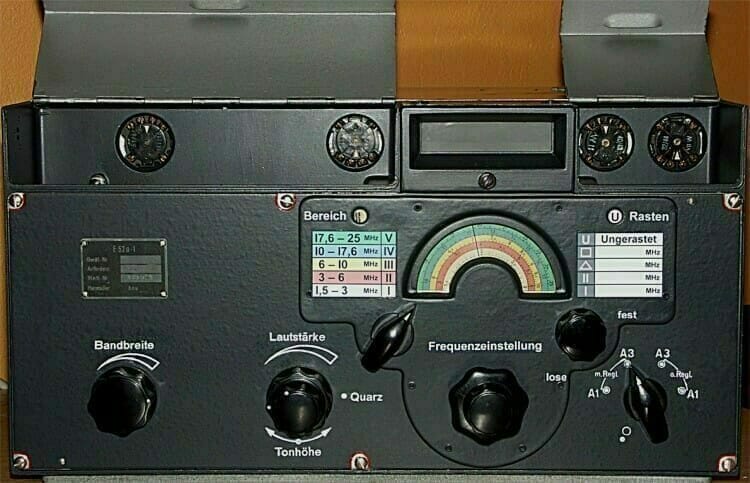
Telefunken E52 (Koln)
“This is one of the most studied, written about, and discussed receivers in the world”
History:
Empfänger 52 was specified by the Reichsluftfahrtministerium (RLM) in 1939 as one in a series of five similar receivers covering the entire frequency spectrum from LF to UHF, intended for use in the Luftwaffe ground stations, but also for other services and authorities. A request for quotation went out to a few German electronics manufacturers and Telefunken developed and built a prototype of the short wave receiver Köln in the beginning of 1941. Telefunken was chosen to manufacture the series of receivers according to their specification ”Luftboden-Empf.-Programm 2 – 7500 m für die Bodenausrüstung der Deutschen Luftwaffe”, Telefunken Berlin-Zehlendorf 5.5.1941.
Out of four specified receivers E51 Leipzig (LF), E52 Köln (HF), E53 Ulm (VHF), and E54 Kulm (UHF) only Köln was built in large series. In total around 2500 receivers were built from July 1942 to March 1945. The E52 was made in 10 models, of which the E52a-1 (simplified with automatic tuning) and E52b-2 (simplified with manual tuning and unified scale) were the most common. Of all the E52s built there are probably 300 – 500 left, of these perhaps 50 in their original state.
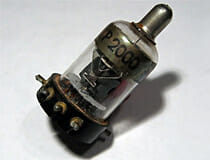
The receiver is modularised, the modules are mounted in a molded aluminum chassis and all connections between the modules are through connectors in a backplane! Both the construction and the performance were far ahead of its time. Only one type of valve, the RV12P2000, was used in the receiver except for the power rectifiers. The intention was that all modules and valves should be interchangeable in the field without the need for realignment. The first test series of around 20 receivers were made in Sachsenwerk in Radeberg from July 1942 of the simplified type E52a-1 and possibly also the type E52b-1. The manufacture was not up to speed until the beginning of 1943. The assembly and alignment were made in Sachsenwerk Niedersedlitz while the modules were made in several different electronics industries.
Receiver data:
The receiver is an advanced single superheterodyne with two RF stages, a mixer/local oscillator, three IF stages, a detector/BFO/AF amplifier, and an output stage for headphones. In total there are 6 tuned circuits in the RF/mixer/oscillator part and the receiver has very high sensitivity and selectivity. The IF stages have a 6-circuit filter plus 4 tunable circuits in a variable crystal filter, the bandwidth is variable from +/- 5 kHz down to +/- 200 Hz @-3dB with very steep slopes, damping 100 times at +/- 10 kHz in wide. The tuning has a coarse scale and a fine-scale projected from a micro photo disc with very high resolution and accuracy. The oscillator has very accurate temperature compensation and thus high stability. Frequency coverage is 1.5 to 25 Mhz in five bands, the sensitivity for AM 3 – 5 uV, CW wide 1.0 uV, and CW narrow 0.3 uV for 5 V output. Mirror frequency damping is at least 50000 and the IF damping is better than 100000 at 1.5 MHz. The stability is better than 30x 10E-6/degree C, which is 30 Hz/MHz/degree C for a freerunning oscillator! Even today this is competitive against many modern receivers comparing sensitivity, selectivity, and stability.
Link: https://kriegsfunker.com/radios/E52_b2.html
Rick, K8EZB