Category Archives: General

Articles about Amateur Radio and the Nashua Area Radio Society. This is a general category which includes most articles on our website.

Our November 2016 Youth Outreach Event

Since the summer time, many of you have seen a flurry of activity on the website regarding our efforts to attract more young people and especially kids into the hobby. And let’s not kid ourselves, this is by no means an easy feat. It’s a legitimately difficult problem that many clubs all over the country are facing and is large enough such that it is recognized by the ARRL. It’s the lifeblood of the hobby — passing the torch on, teaching what we can and what we know. In my humble view, I feel an almost civic duty to actively recruit these younger folks and what is advantageous to us is that we can sell the club and its activities under the STEM (science, technology, engineering, and mathematics) movement. This means we can open up the study of electronics, robotics, radios, physics, and the AdS/CFT correspondence (relating 4D strongly coupled quantum gauge theories to 5D classical string theories in curved spacetimes…pretty trivial stuff) to the younger crowd. So now that I’ve set the stage for you, the remainder of this blog will talk about what we, your fearless youth outreach crew (see figure below), have been up to.

The youth outreach crew

Our activities were planned from 9 am – 5 pm on November 19. The day, of course, started earlier — around 830am where we began to set up the ubiquitous GOTA station at the Dartmouth-Hitchcock facility in Nashua as well as the litany of other activities we had planned. We had decided that the best set of activities would be:

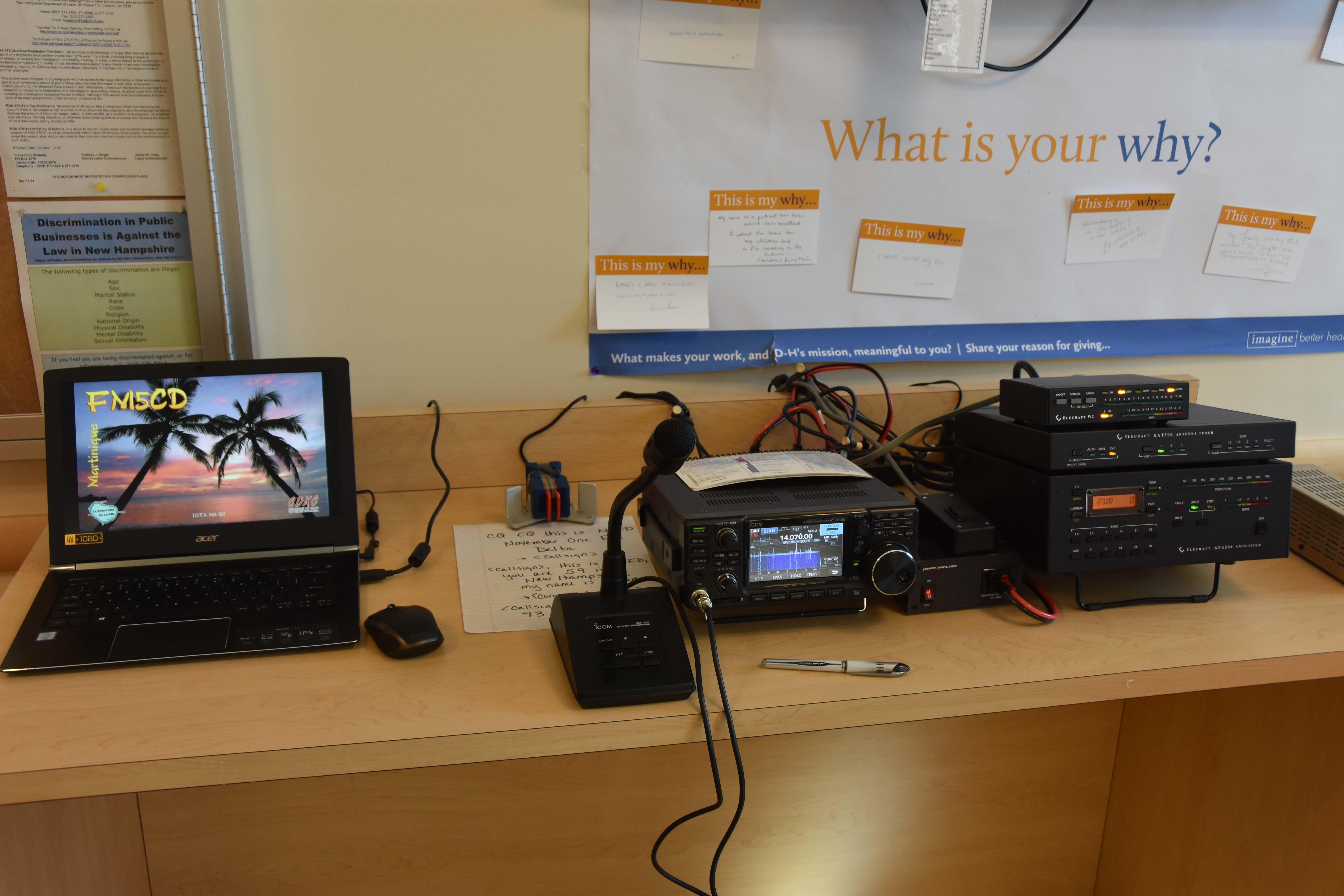
  • GOTA station (the infamous IC-7300 making another appearance)
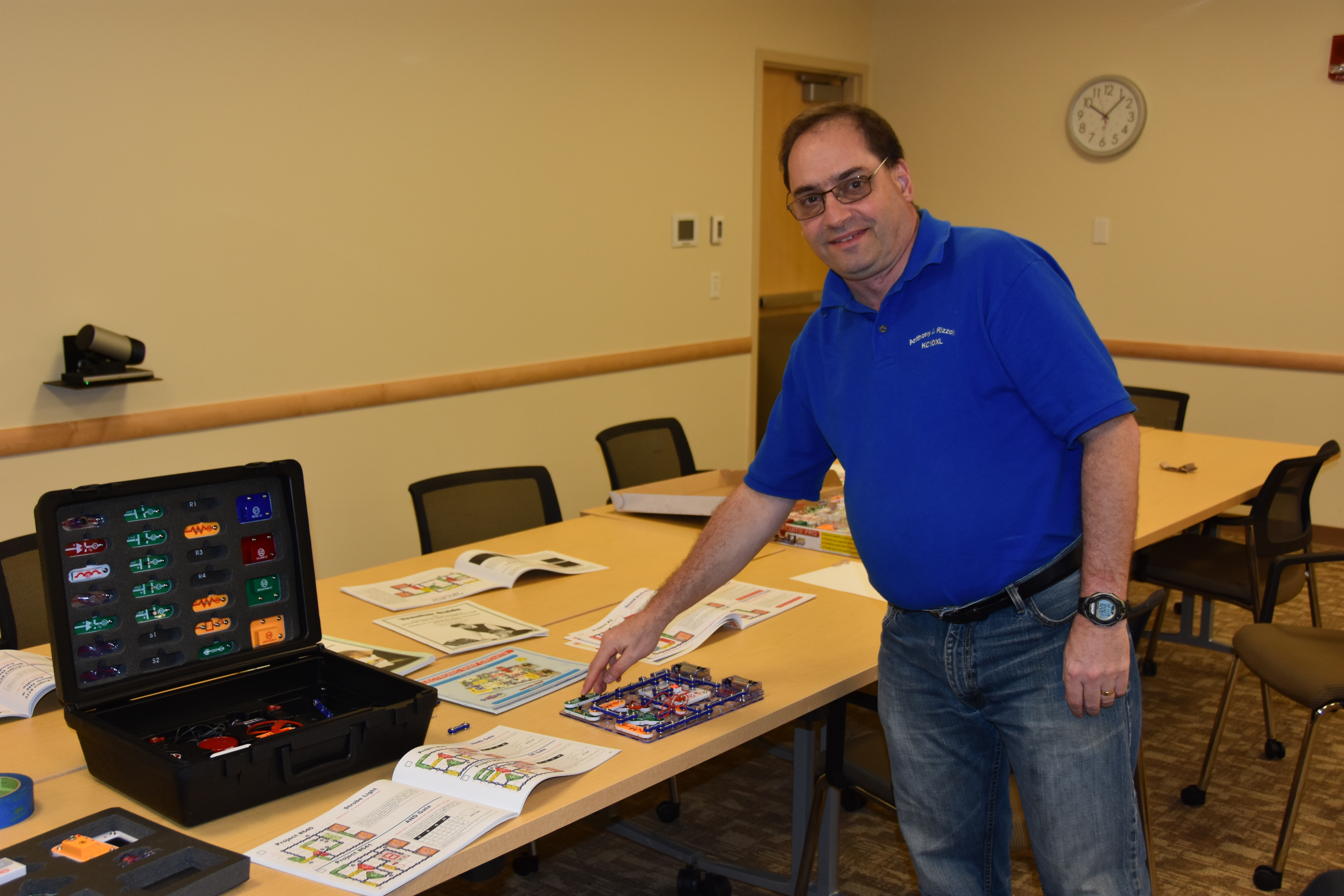
  • Electronic snap circuit stations where folks could experiment with the projects supplied with the kits
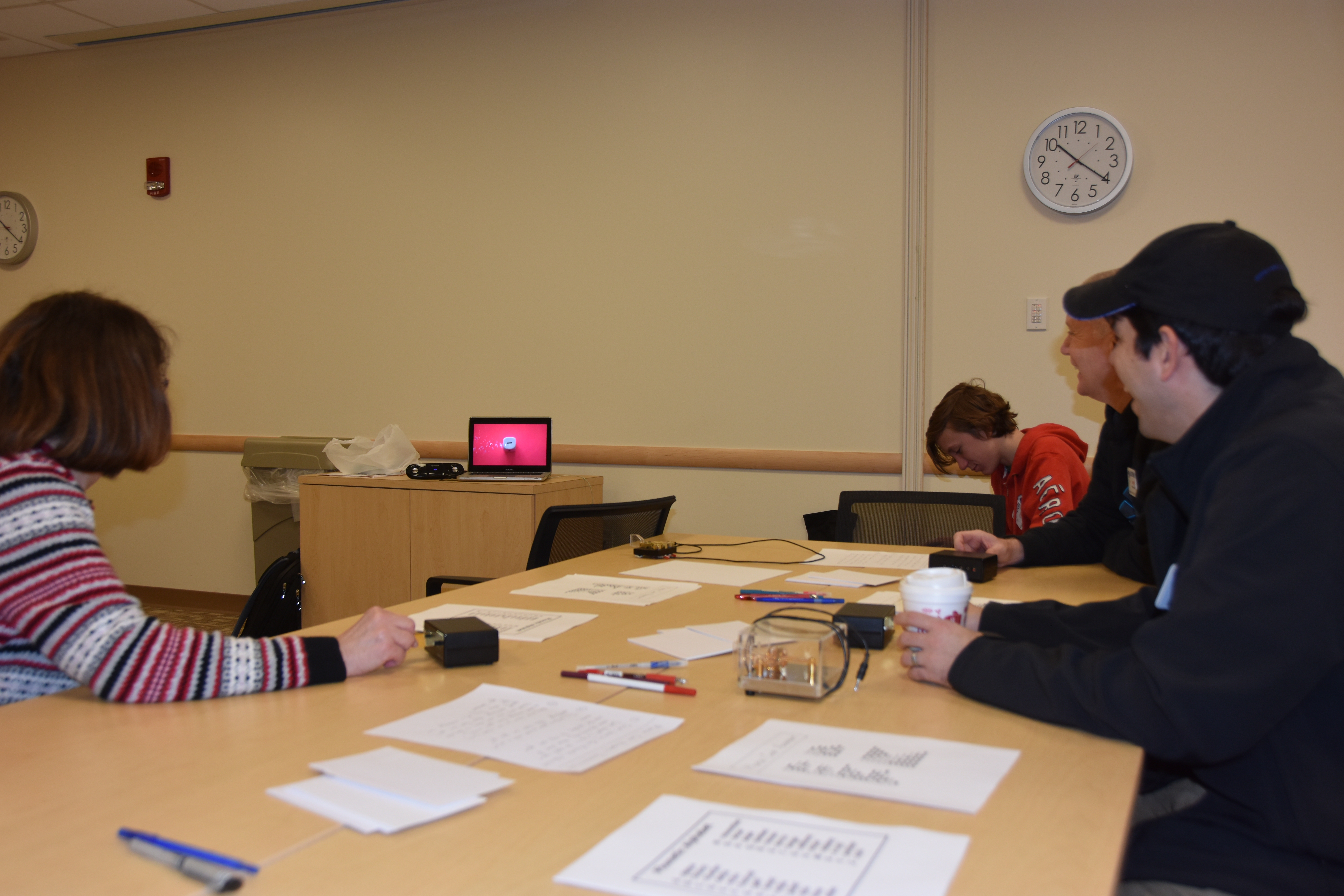
  • Morse code station where kids could follow along with “The Rhythm of the Code” and then eventually build up to sending more difficult messages. (Disclaimer: This video is annoying and useful all at the same time. Consumer beware :)
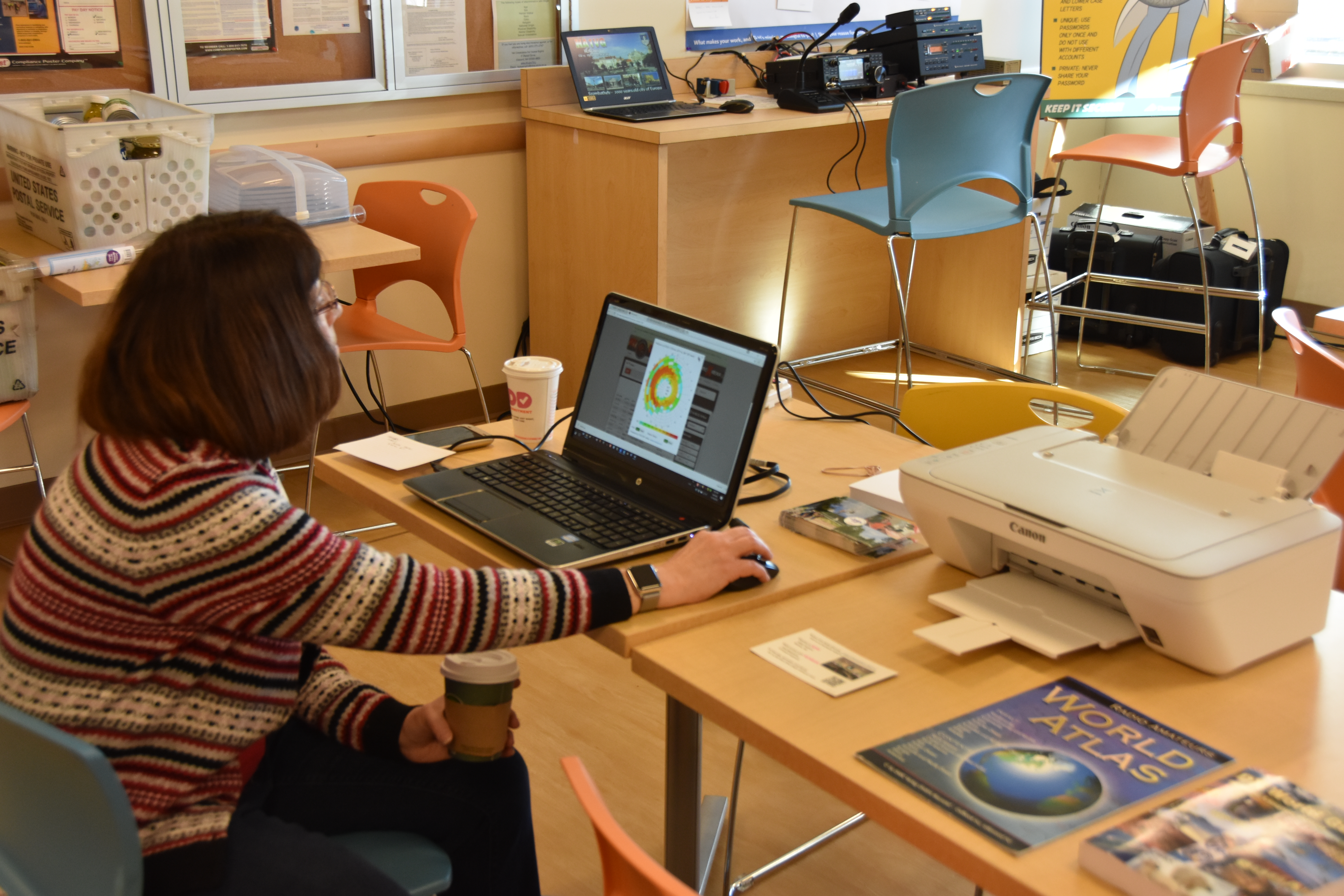
  • QSL card station: After making a QSO, we posted the locale on a world map next to the station and printed out a memento of the contact on the back of our NARC QSL cards!
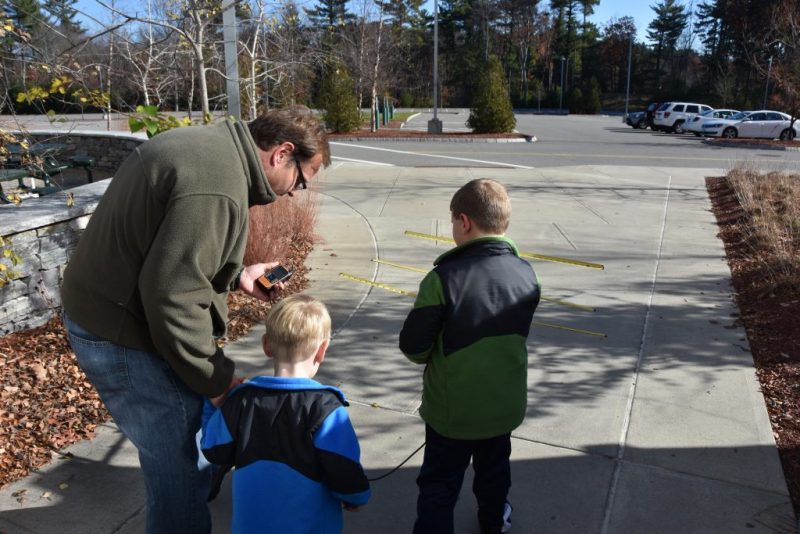
  • Foxhunting: Everyone loves a good fox hunt. From ham radio enthusiasts to Quentin T. Butternuts, Esq. and his gaggle of British compatriots (No foxes were hurt in the hunt itself).

Some pics of our activities are below:
The youth outreach crew GOTA station
GOTA station
Youth Outreach QSL card station manned by Anita
QSL card station manned by Anita
Tony rockin a pose next to the snap circuits. Youth Outreach project.
Tony rock’in a pose next to the snap circuits. He’s practicing for the Ralph Lauren Winter collection
Youth Outreach - Perhaps at the point of insanity from the Rhythm of the code
Perhaps at the point of insanity from the Rhythm of the code
Greg (W1TEN), and his two little ones, enjoying a fox hunt
Greg (W1TEN), and his two little ones enjoying a fox hunt
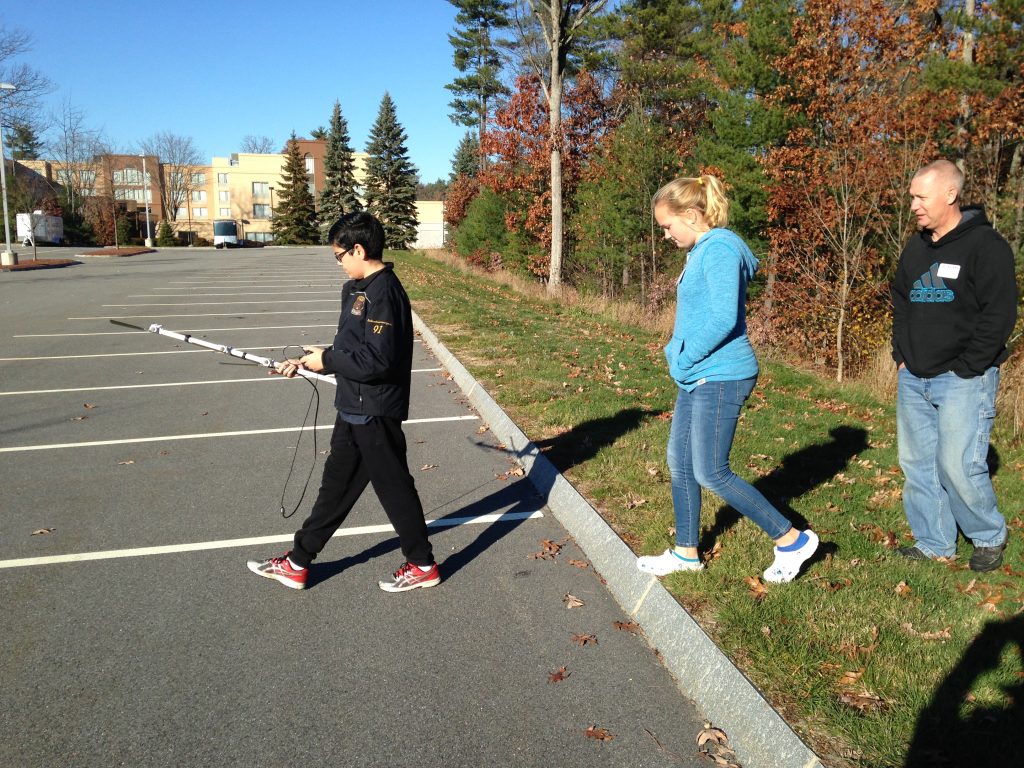
Youth Outreach - Abby and one of our guests, Kailas, enjoying a foxhunt in the awesome weather
Abby and one of our guests, Kailas, enjoying a fox hunt in the awesome weather. It almost kind of reminds me of the Abbey Road cover.

Volunteers present at the event, from the club, were: Brian (AB1ZO), Jamey (KC1ENX), Abby (KC1FFX), Connor (KC1GGX), Fred (AB1OC), Anita (AB1QB), Tony (KC1DXL), Wayne (KB1HYL). All in all, we enjoyed hosting 13 people! 7 internal to our club and 6 external. Our internal members were Greg (W1TEN) and his 2 kids, Ira (KC1EMJ) and his grandson, and Don (KC1CRK) with his wife (they LOVED the snap circuits…thank you!).

I think we had a hit! Two families in particular (new to the world of amateur radio) stayed with us for most of the day and we were very grateful for their participation! They graciously provided us with additional avenues to explore and other people to contact to engender more interest in our target population. Our numbers from outside NARC are beginning to grow, and as such, we are always looking for help/advice from you, our club members.

Lastly, we did learn several lessons from this event.

  1. We need to continue to proselytize our message. We understand that not everyone is available to come volunteer and help out physically at the events themselves. What we do need however that is a HUGE help is having our members spread our word, flyers, pamphlets, and any literature we can distribute. The two people I would really like to recognize for their contributions are John (W1SMN) and Tony Rizzolo’s (KC1DXL) wife Josephine. They really went to bat for us and sent out our flyers everywhere. Because of our event, we made new contacts with folks from the Boys and Girls Club in Nashua and also MakeIt labs in Nashua, as well as some local charter schools. We intend on bringing the fight to these places, do some demonstrations, and recruit more kids to do additional activities with us. All in all, in addition to what we are doing, we value your input, so please send an email to myself or Jamey (KC1ENX) with your thoughts.
  2. Pick hands-on activities. I think one reason our activities at this event were successful is that the kids were engaged the whole time. Thinking down the road, we need to keep this momentum moving forward with well-thought out activities. Some of these which occurred to us were kit-building electronics afternoons. I could see this being fun during the Winter months. Projects with Arduinos and Raspberry Pis, with some emphasis on amateur radio application. Or, even a high-altitude balloon build: we could imagine putting a transmitter on one of these and ask the kids to design/build/execute over the course of several weekends. (This is of course once achieving critical mass). The point is, we do not have to gear every activity towards amateur radio, but rather gear it towards the STEM aspects of the hobby that we all find appealing.
  3. Get buy-in from the parents. The parents are the masters of their children’s schedule. If they feel the time is not worth it, our efforts are for naught. We need to remember while cultivating a child’s interest, we also need to do so for the parents.

Jamey and I will be regrouping in the coming weeks to figure out our next steps/strategies — both short-term and long-term. You will certainly see future blog posts from us, so please stay tuned and let us know if we can pique your curiosity to join us during some of our upcoming events.

Best and 73,

Brian, AB1ZO

Moxons in the Attic (Part 2)

 It has been a couple of months since I wrote about my project to build a Moxon antenna for 15 and 17 meters in the attic of my garage.  The weather has since cooled down to where I can work in the attic without sweat dripping in my eyes and my hands slipping on everything.  When I wrote about my initial measurements in the last article, I was experiencing erratic SWR readings on the 15-meter beam with the lowest SWR being around 23 MHz.  I did some recomputing and figured I would need to lengthen each element by 24 inches to bring resonance down to 21.1 MHz.  I was not too thrilled with the idea of having to solder wires in the cramped space of the attic so I decided to check the SWR behavior again.

There is an old adage in carpentry that says measure twice, cut once.  The same applies for adjusting antenna elements except “twice” becomes “until consistent”.  When I connected my analyzer to the 15-meter beam, I did the flex test of the connecting cable.  Lo and behold, the SWR started jumping around.  I checked the connector hardware and noticed the PL-259 reducer shell was loose.  Once I tightened it, I found the resonant point to be way down at 19.0 MHz.  My antenna was too long; it would have to be SHORTENED by 24 inches.

Armed with the new readings, I shortened each element accordingly and measured the antenna again.  My efforts paid off with a reading of 1.1:1 at 21.2 MHz and a 2:1 bandwidth from 20.8 to 22.78 MHz.  I was now ready to move on to final installation.

I needed more coax, a couple of baluns, and a remote antenna switch to complete the project.  A hamfest scheduled for the first weekend in October in Melbourne, FL looked like a good prospect for finding what I needed.  Unfortunately, Hurricane Matthew had other plans and forced a postponement of two weeks.  When I attended the hamfest, many vendors were absent due to conflicting plans so pickings were slim.  I did manage to find the baluns and more coax but the switch would have to be ordered.

I found an Ameritron RCS-4 online at a reasonable price and ordered it.  I had used this model for many years when in NH so I was familiar with its reliability.  When the switch arrived, I hooked it up to check it out before installing it.  Murphy said hello to me with a non-functioning control unit.  I called the company I bought it from and they arranged to have it returned for a replacement.  I finally received a working unit two days before Thanksgiving.  With the CQ WW CW contest coming up, it came just in time.

I routed a 50-foot run of coax from my shack around the front of the house and into the garage attic.  Figure 1 shows the coax run.  If you can’t see it, good; I do not want the Village Vigilantes to come knocking on the door to question the aesthetics of the cable.  Figure 2 shows a closer view of the coax entering my attic.  So far, the XYL hasn’t noticed it so I’m safe.

Stealth Antenna - Coax Run Across Front of House
Figure 1. Coax Run Across Front of House
Stealth Antenna - Coax into the Attic (Upper Left)
Figure 2. Coax into the Attic (Upper Left)

The next step involved hooking up the baluns and the remote switch which was a straightforward process.  Once everything was in place, I fired up the rig on 17 meters and found a spot for UA0ZC.  I was happy to hear him and gave Val a call.  A minute later I had a rare one in the log without having to hammer away indefinitely.  I checked 15 meters and did not find much activity.  The operational SWR was a bit higher than my measurements but still under 2:1.

At least, it started out that way.  I got on the air the next day and found the SWR on 15 meters hitting 6:1 and higher.  I made a trip up to the attic to find out what was going on.  At first glance, nothing appeared amiss.  I plugged the analyzer into the 15-meter beam and noticed the SWR jumping around.  Flexing the cable made some difference but not much.  My initial thought had been some incomplete switching in the switch unit but the SWR behavior when directly connected to the analyzer ruled that out.  I tried swapping baluns between the two beams to no avail.  With other pressing holiday matters to attend to, I decided to remove a balun from the 17-meter beam in favor of the 15-meter beam.  (During my troubleshooting efforts, I noticed the 17-meter beam behaved as designed, with or without a balun.)  The 15-meter beam shows no discernible difference in performance with or without the balun.  Figure 3 shows the present feed point installation with the switch on the attic floor.

Figure 3. Feed Points and Switch

I have to admit that I am stumped at this point.  There is some consolation, however, in that my K3 tuner easily matches up the 6:1 SWR imbalance.  I imagine there is interaction with the other structures in the attic (house wiring, AC ducts, 17-meter beams, etc.) that are making a good match difficult to achieve.  At any rate, I am happy to have a worthwhile antenna for 17 meters vice my low inverted V.  As the sunspots continue to degrade, 17 meters may well end up as the MUF.

Ed, K2TE


Radio Amateurs Developing Skills Worldwide