Category Archives: Featured

This category is for featured articles that we want to include in the sidebars and other areas on our website.

Ham Bootcamp

Ham Bootcamp includes a series of demonstrations and tutorials designed to help prospective and newly licensed Technician, General, and Extra class license holders get on the air and use their amateur radio license. It is also a great opportunity for prospective hams who are interested in seeing what the hobby has to offer.Our Bootcamp activities are provided online via a series of sessions geared towards Technicians and prospective Hams and General class licenses and higher Hams. Bootcamp participants will find all of this material interesting and fun no matter what their focus or license level.

We are continuing to provide our Bootcamp program during the COVID-19 pandemic. We are providing Ham Bootcamp in an online format using Zoom. Our online Ham Bootcamp program is available to all licensed and prospective Hams in North America. Please contact us to sign up for our next online Ham Bootcamp via email to [email protected].

Repeaters and VHF/UHF Session Activities

  • Putting together a Station for Repeaters – How to pick an HT or  Mobile Radio and an Antenna
  • Radio Programming Tutorial
  • Getting started with EchoLink
  • Making Contacts and Joining a Repeater Net
  • Getting Started with Amateur Radio Satellites
  • Getting started with Fox Hunting

HF Session Activities

  • Putting together an HF Station for SSB, CW, and Digital
  • Picking and putting up an HF Antenna, Feedline, and Ground
  • Operating on the HF bands using SSB Voice
  • Software and setup for Logging Contacts via your computer
  • Getting started with WSJT-X and FT8 Digital
  • Finding DX and QSL’ing – Getting them in the log and confirmed

… and more!

Virtual Ham Radio Shopping Trip

  • Join us for a guided tour of all of the gear and goodies that are available to build or expand your station.
  • Ask questions and get answers from NARS experts on what gear might be best for your situation.
  • We provide the Virtual Shopping Trip via a follow-on Zoom session shortly after Bootcamp. Information on how to join us for this event will be shared at our next Bootcamp session.

Articles About Ham Bootcamp

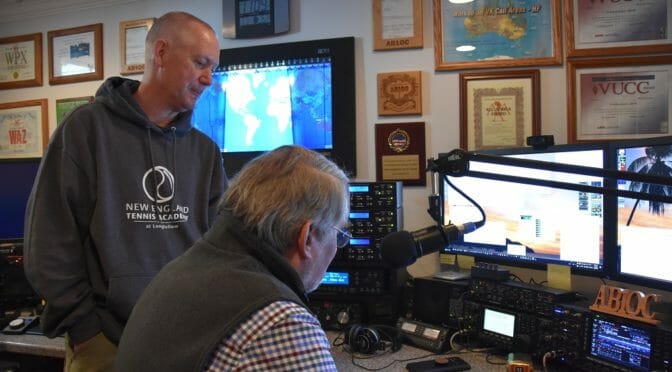
Are you interested in learning more about our Ham Bootcamp program? We’ve written quite a few articles about Bootcamp here on our Blog. You can read them via this link. Also, check out the article about a  recent Ham Bootcamp at the New England HamXposition.

Bootcamp has also been featured in the October 2020 edition of QST Magazine. You can view the article here.

Sign Up for Ham Bootcamp

Don’t miss this twice a year opportunity to learn more about Amateur Radio, improve your station, expand your skills, and get on the air.

Our Fall 2020 Ham Bootcamp session will be held online via Zoom on Saturday, November 7th from 10 am – 6 pm Eastern Time.

See you at Ham Bootcamp! You can contact us to sign up for our next Bootcamp via email to [email protected].

Support Ham Bootcamp

The Nashua Area Radio Society provides many training and skills development activities for new Hams and Young People. We also have many programs to enable folks young and old alike to join the Amateur Radio service. Please consider supporting our programs and our work by making a donation via the GoFundMe campaign which follows.
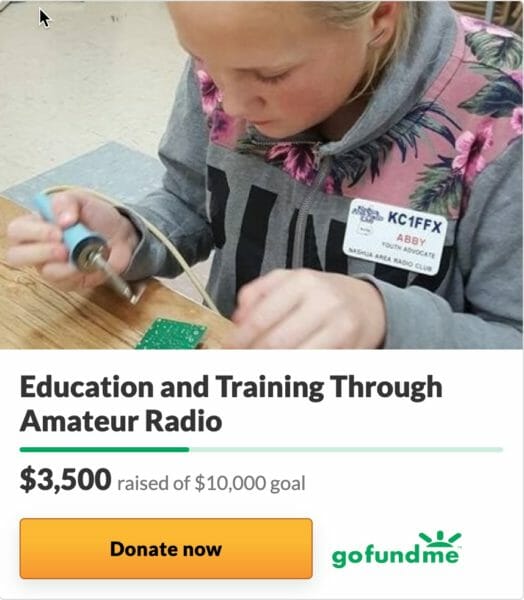
The Nashua Area Radio Society is a 501c(3) non-profit charity.

Fred, AB1OC

September Contest Notes

On the Doorstep

CQ WW SSB, the biggest phone contest of the year, is a little under two months away. Solar conditions have not been kind to us this year, and there’s little chance for a big improvement in the next few weeks, but there’s still DX to be found. Now is a good time to familiarize yourself with websites that can help you gauge propagation during the nadir of the cycle. 

spaceweather.com provides current solar conditions and forecasts, especially for geomagnetic storms. One interesting thing on this site is the “Spotless Days” tally. As of this writing, we’ve had 23 days without a sunspot. As we all know, no sunspots, no big fun on the high bands! But there might be _some_ fun, maybe a little, so always check 10m and 15m when you operate. You might be rewarded. And when not in a contest always give 17m a look. Often when 20m is open you’ll find 17m has some activity, too.

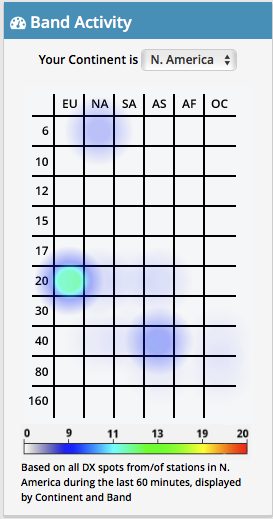
Maybe your logging program already has an interface to the DX spotting network (mine, MacLoggerDX does, for example) but several websites also offer views and it is worth giving these resources a look. DXHeat.com claims to have 43 million DX spots in their database. They’ve been at it a while, so it sounds plausible. Check out the “Band Activity” display by selecting “N. America” as your continent. The display aggregates the DX spots into a by-band, by-continent intensity display. 

DXHeat band activity map

Click the DX Cluster button and then play with the filters. You can select one or many bands, one or more modes, even which continents you are interested in hearing from and which continent posted the spot. To cut down on all the chatter click the NA button under De to see only North American spots of DX.

There are a number of online DX spotting network websites, all of which offer something unique. I suggest looking at one band and one mode at a time at different times during the day. This will give you a very good idea of what is possible during your next on-air adventure.

September Highlights

Tennessee QSO Party [1800Z Sep 1 to 0300Z Sep 2]

Exchange: TN stations give RS(T) + county, others RS(T) + state/province/country

For those of us in New England, Tennessee is in that sweet spot that’s not too close, and not too far away. If you put some effort into this contest you could probably do a clean sweep of all 95 counties. That would put you well on your way to a County Hunters award.

All Asian DX Contest [0000Z Sep 7 to 2400Z Sep 8]

Exchange: RS + 2-digit age

I know my log is a little light when it comes to Asia, so this would be a good chance for me to put more callsigns and prefixes into my log. It is also a great way to see how propagation to Asia might be during CQ WW. It is worth a look.

National Contest Journal Sprints

CW [0000Z-0400Z Sep 8]

RTTY [0000Z-0400Z Sep 15]

Exchange: [other station’s call] + [your call] + [serial no.] + [your name] + [your state/province/country]

Sprints are fun, especially if you’re a little nervous calling CQ. You work somebody calling CQ, then they clear off and it is your frequency to call CQ and make a QSO. Everybody takes turns.

As always, check out www.contesting.com and the linked calendar for a complete list of on-air contest.

New Hampshire QSO Party [1600Z Sep 21 to 0400Z Sep 22 and 1600Z-2200Z Sep 22]

Exchange:

NH: RS(T) + county

others RS(T) + state/province

DX: RST(T) + “DX”

This is our time to shine! It is fun to be the one sought after. And, this is a great way to warm-up to the big contesting season.

The End of Summer

Get those last-minute antenna projects done, check out all your equipment, maybe even make that last-minute run to Ham Radio Outlet! Summer might be ending but contesting season is in the wings. Get ready!

Scott, NE1RD

Upgraded Portable Satellite Station Test on Mt. Washington

We were up on Mt. Washington here in New Hampshire this past weekend and we decided to use the SOTA activation as a test for our upgraded Simple Portable Satellite Station. It turned out that the station was also a great SOTA and Grid Square Activation station for terrestrial contacts…

Source: Satellite Station 4.0 Part 9 – Upgraded Simple Portable Station

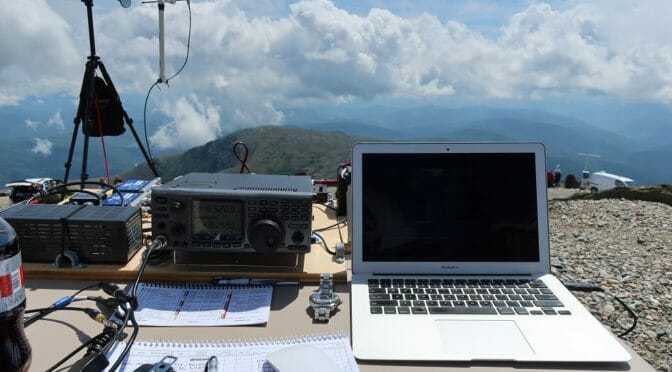
The Nashua Area Radio Society did our Mt. Washington SOTA activation this past weekend. Jamey, AC1DC put together a great trip to the summit again this year. We used the SOTA as an opportunity to test our upgraded simple portable satellite station.

Simple Portable Satellite Station
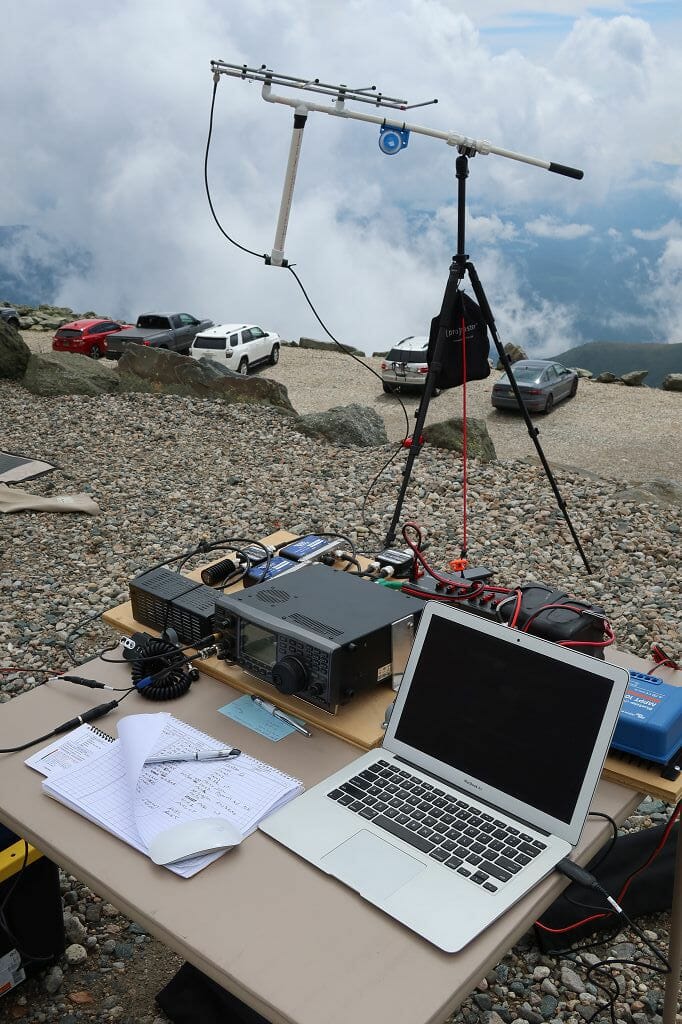
Portable Station on Mt. Washington

The station performed very well making some 75 contacts during our activation. We confirmed that the station worked well for FM satellite contacts and also verified the operation of the computer controls to enable us to make contacts through linear satellites.

We were surprised to find that the station also worked extremely well for 2m terrestrial contacts. We were able to work many mobile and base stations using 2m FM. We also worked quite a few stations using 2m SSB. The flexibility of the simple portable antenna system that is part of the updated station made this very easy to do.

The link above contains some information about how the upgraded station is put together and what we learned during our initial test.

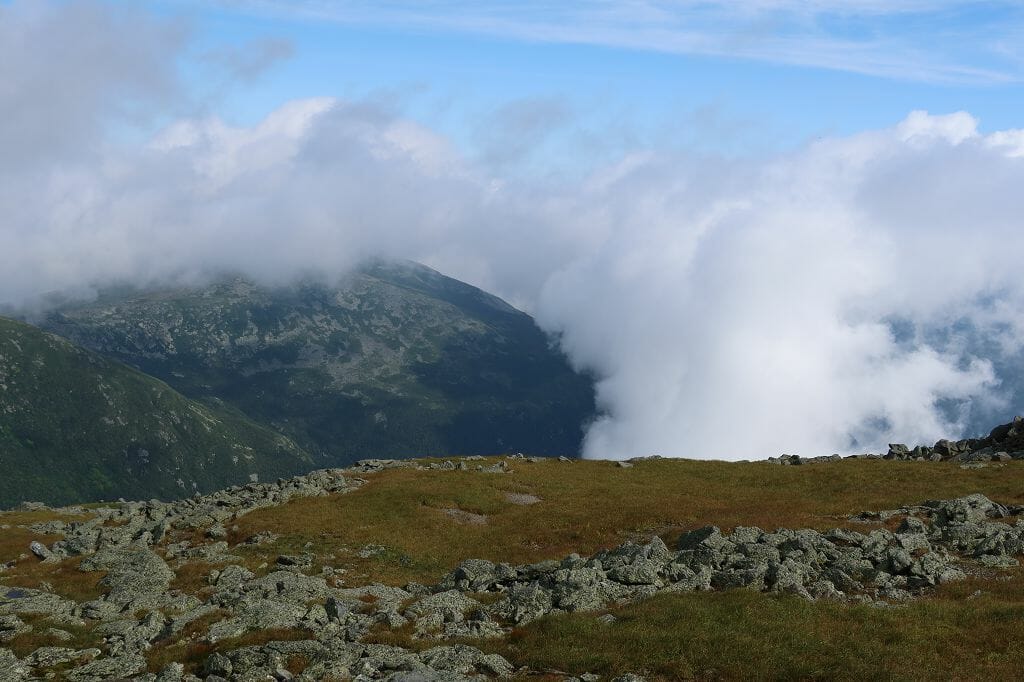
View from Mt. Washington Summit

We had near-perfect weather on the Summit for our SOTA activation. All in all, it was a great day!

Fred, AB1OC

Radio Amateurs Developing Skills Worldwide