Category Archives: Antennas

Articles about Antennas, Feedlines, Towers and related equipment. Fixed, Portable and Mobile Antenna Articles are included.

Try Rookie Contesting

New England QSO Party, Revisited

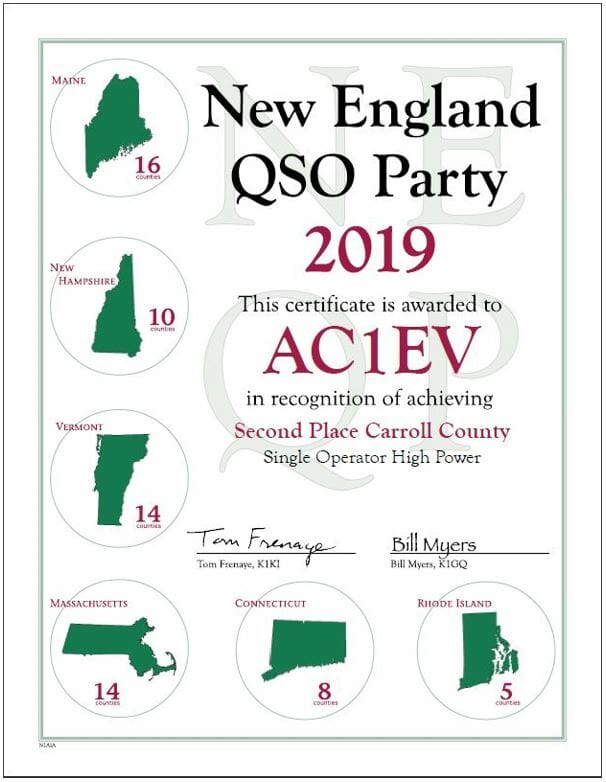
At the end of April this year I wrote an article about my experience with the New England QSO Party.  The event took place in May 2019.  At the time, my station at my NH QTH was IC-7300, 500 Watts, and EFHW antenna at 50 feet.  When I received the certificate from the NEQP it was for second place in Carroll County, NH, and I got a big kick out of it.  I examined the details of the event and learned more about my competition. I found out that there was a total of 4 entries from Carroll County and only two of us were in the HP category.  This means that I also came-in the last place for High Power!  Still, I had fun and a certificate, so no complaints.  It also prompted me to enter the 2020 NEQP as Low Power, which would give me a chance to come in first in that category for Carroll County.

Checking on results from other contests

Not all contests will send you your results.  I expect the big guns who finish at the top may hear something, but not every contest will let each minor award winner know about it.  A fellow ham sent me this link to use to check on results from ARRL events.

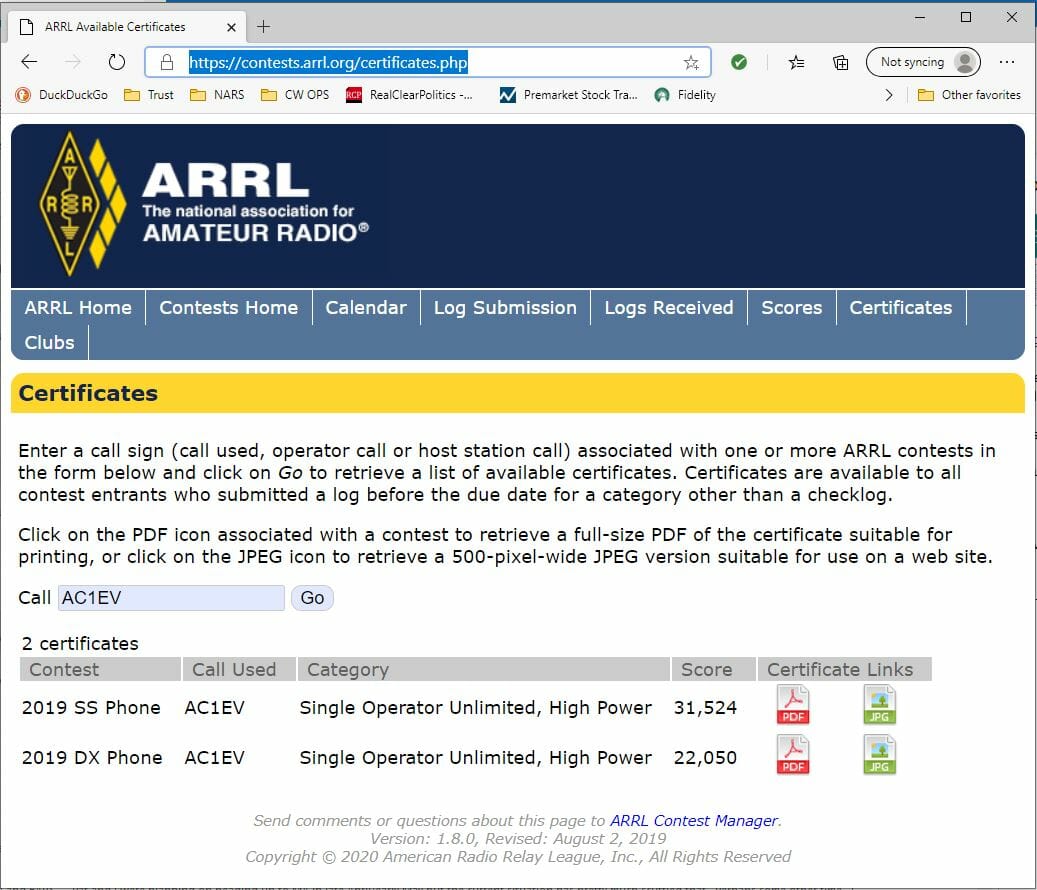
https://contests.arrl.org/certificates.php

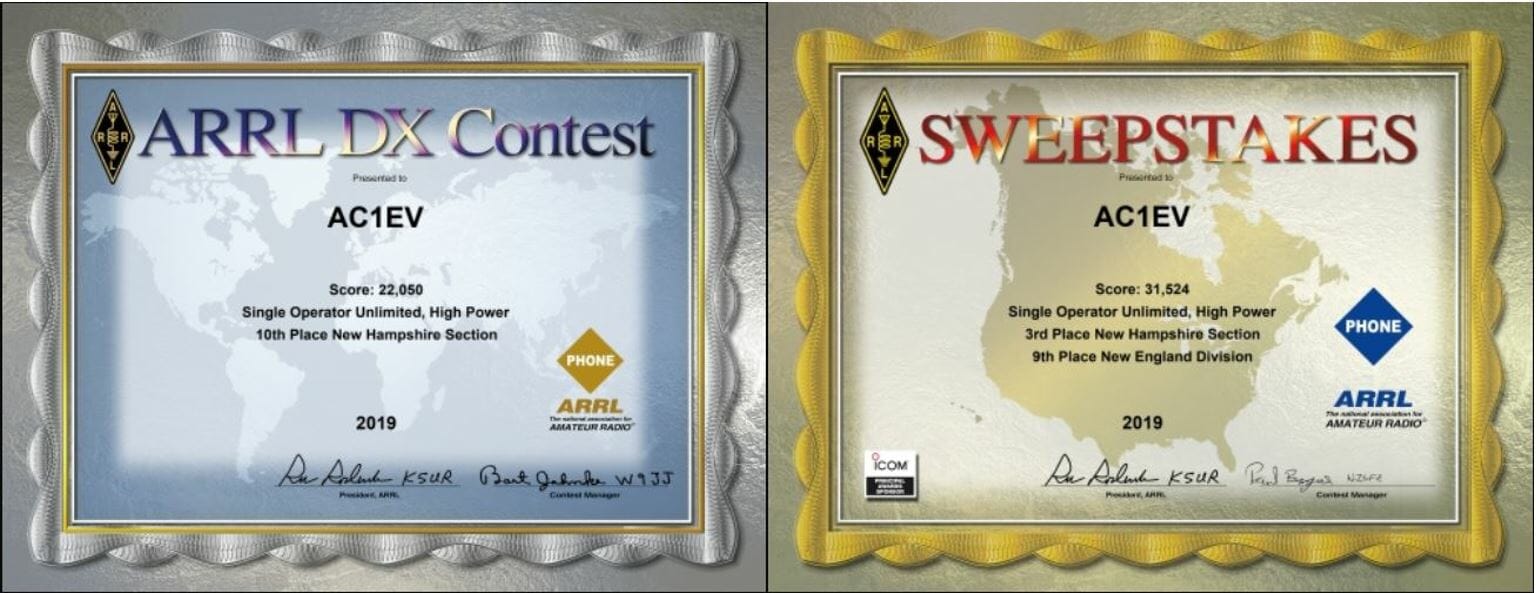
Enter your call and you will get a list of PDFs suitable for printing or framing. Any that you earned a certificate for as well as any multi-operator stations you have participated with. Be sure to also enter any of your ex-calls. I found 2 certificates that I did not know about!
ARRL Certificate Search
ARRL Certificates
ARRL Certificates

When I entered these ARRL contests my goal was to make QSOs and then import them into my QRZ log.  I did not really participate at a serious level and probably spent less than 10 hours on each one.  I wanted my contacts to count for the other participants, so I logged with N1MM+ and submitted the logs as if I was in it to win it.  When I entered the 2019 CQ World-Wide DX Contest SSB, I decided to give it more effort and operated for 15.2 hours out of 40 hours available.

Rookie Contesting

Many contests have an option for operators who have their licenses for under 3 years to enter with a Rookie Overlay.  I highly recommend that any hams who qualify for this do it.  In addition to competing against all the entrants in the contest, your score will also be ranked against just Rookies.  Competing against highly experienced operators with advanced contest stations is tough and there are many that are in that class.  Entering as a Rookie may give you a chance to compete against other operators who match your skills and equipment.  You can set the option in the contest set up in N1MM.
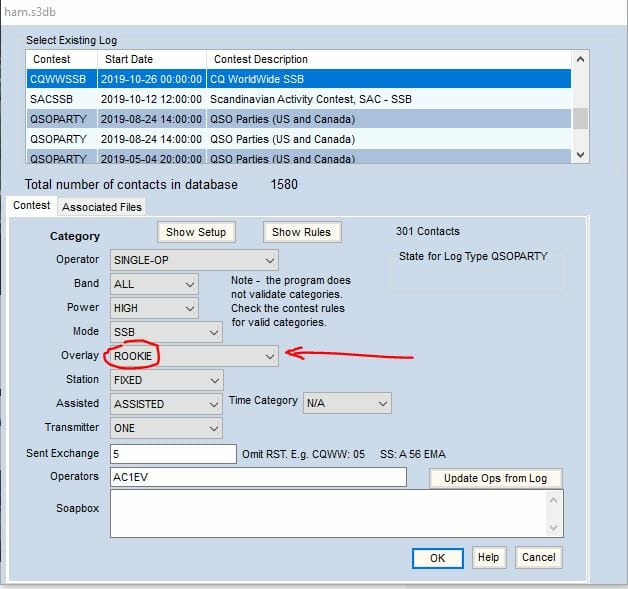
Rookie Contesting
Rookie Overlay

I Raised my Antenna for Better Performance

The 2019 CQ World-Wide DX Contest SSB was held in October.  I obtained spousal approval to put in more time on this one than any other contests I worked.  I was operating from my NH QTH with my IC-7300 and 500 Watts of power.  My 8010 EFHW antenna was installed at 50 feet.  My previous experience with the antenna was OK and I made many QSOs with it.  When I tried in the contest environment, it was not meeting my expectations.  I could not break into pileups reliably.  On 80 meters, I was only able to make QSOs out to around 1500 miles.  I decided to take the end of the antenna down from the tree at 50 feet and use my new Bigshot Slingshot Throwline Launcher to raise the end as much as possible.  I wrote about this in an article I posted on the NARS website.    It took me around an hour to raise the antenna to 70 feet and it made a BIG difference!  All bands showed noticeable improvement with 80 meters being the most dramatic.  My first QSO on 80 was to Ukraine, over 4000 miles away.

NH QTH Topography

My QTH in Mirror Lake, NH is located close to the top of a long ridge.  The land falls off sharply from 80 to 100 feet within a half-mile or less to the NE to SW.  It falls off less sharply for most of the rest of the compass points.  The arrow points to my antenna and how it is oriented below.
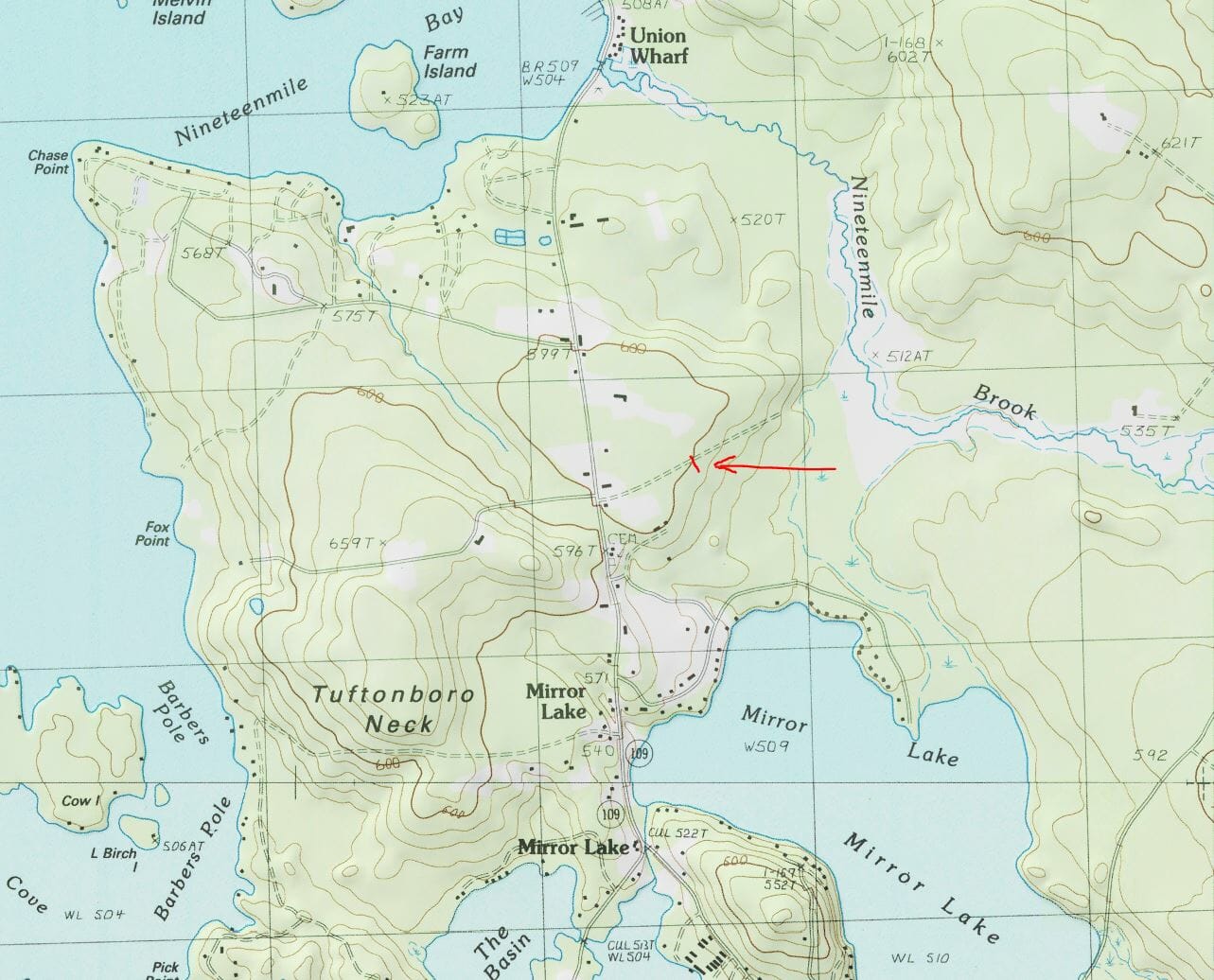
NH QTH Topographic Map

I am not sure precisely how much this added elevation adds to the apparent height of my antenna, but I’m pretty sure it makes it seem like it is even higher than the 70 feet it is up in the tree.  Additionally, the ground under the antenna is moist and mineral-rich and should be better than the average ground.

My Results!
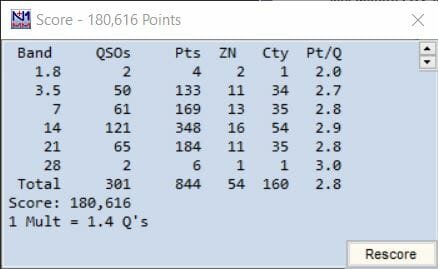
Raw Score
Raw Score

Here is my raw score from N1MM for the contest.  I only had 301 QSOs, but many multipliers, and that really boosted the score.  The contest organizers sent me an email a few months after the contest. They asked me to provide details about when I was first licensed. I replied to them with my info and a screenshot of my ULS listing.  After that, I just forgot about it.  Once I learned about checking on results with the ARRL link, I decided to check and see how I did in the 2019 CQ World-Wide DX Contest SSB contest.
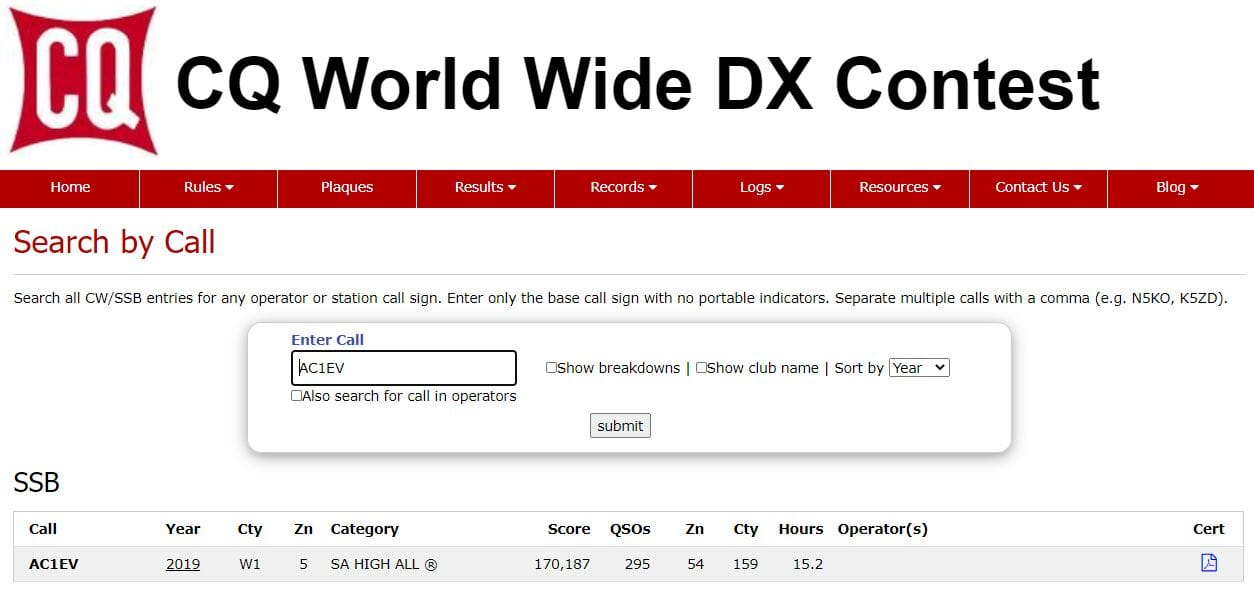
CQ DX WW SSB lookup
CQ DX WW SSB lookup

I saw there was a Cert available, so something was good.  I downloaded the certificate and found out I did way better than come in second out of two entrants in my small county.  Here is how I did:
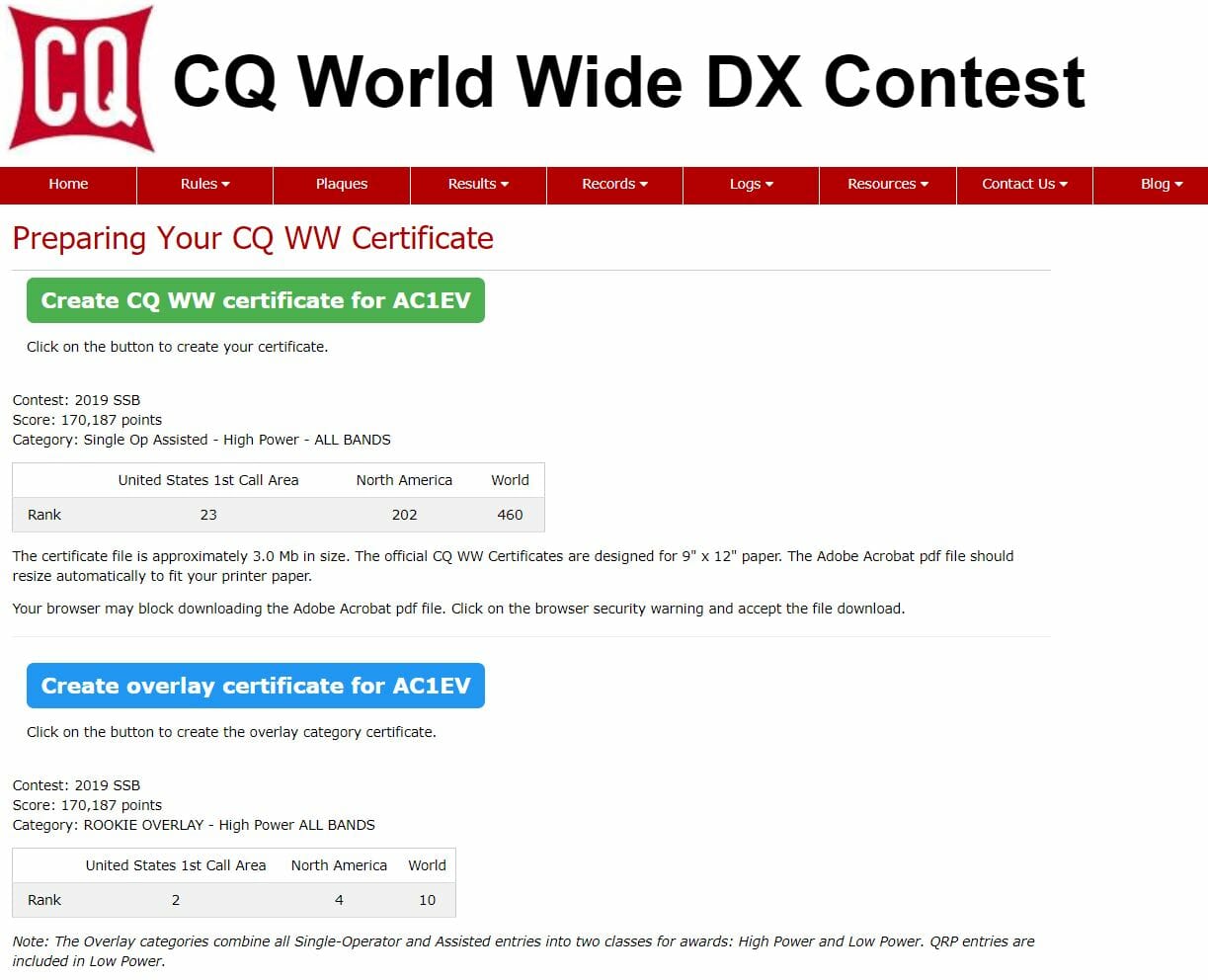
CQ WW DX Contest Results

I printed this certificate, suitable for framing!
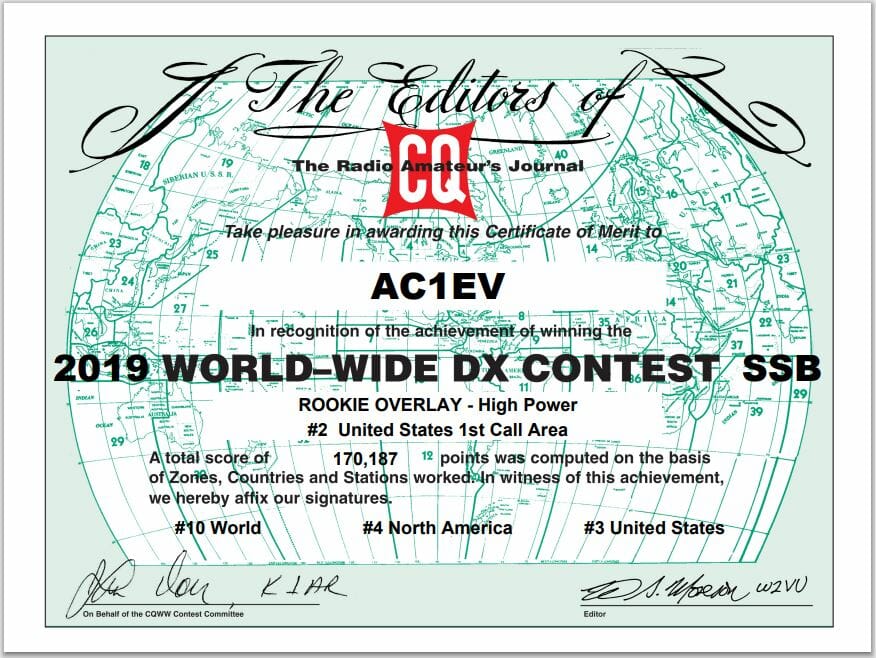
Certificate of Merit - Rookie Contesting
Certificate of Merit

I was thrilled to see this and am very motivated to give maximum effort for the upcoming 2020 contest.  Now I plan to upgrade to a HEX Beam or Spider Beam for my NH QTH. If the location worked so well with an EFHW antenna I can only imagine how well it will work with a Yagi.  If I add more time in the chair and operate for closer to the maximum allowable time, I should be able to improve on this result dramatically.

Try Rookie Contesting

I would have been quite happy with my results scored without the Rookie Contesting Overlay but having a competitive result as a Rookie is very motivating and satisfying.  My three years as a Rookie last until the end of the year so I intend on entering a few more contests while I can.  If you qualify as a Rookie, you should try this out.

Jon, AC1EV

June Meeting – The K3LR Super Station

Don’t miss our June membership meeting, where we welcome Tim Duffy, K3LR who will speak about the K3LR Super Station.

Tim’s station is one of the top Multi-Multi Contest Stations in the world.  He is also the CEO of DX Engineering.  Tim’s accomplishments in Amateur Radio include the following and more:

  • Founder and Chairman of Contest University
  • President of the Mercer County Amateur Radio Club
  • Active in RACES, ACS and ARES
  • Hosted Youth Contest teams at the K3LR Super Station for major contests
  • Member of the CQ Contest Hall of Fame
  • Was on Team USA for the World Radio Team Championship (WRTC) five times.
  • Chairman of the World Wide Radio Operators Foundation (WWROF)
  • Recipient of the 2015 Amateur of the Year Award presented by the Dayton Hamvention® Awards Committee and the 2016 YASME Excellence Award.
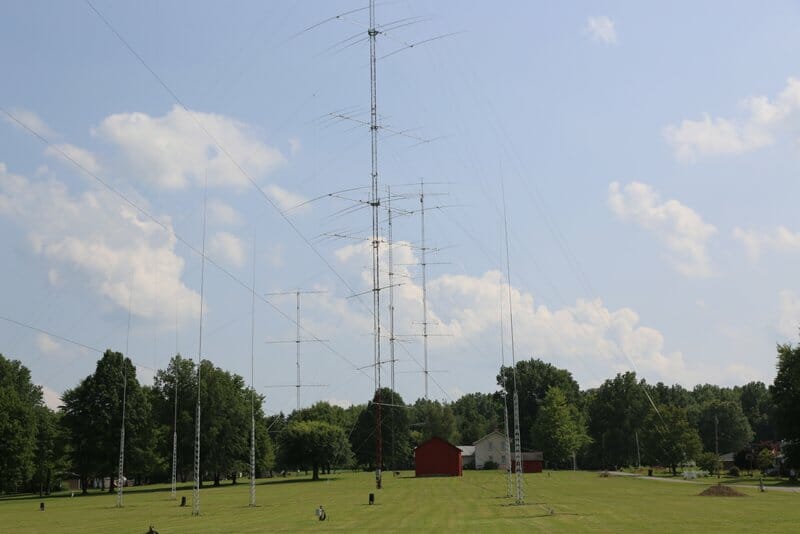
K3LR Super Station Photo from QRZ.com

The meeting will be held on Tuesday, June 2nd starting at 7:00 pm and will be held online via a Zoom Conference.  You can find the Zoom link on our main page, n1fd.org.  Scroll down to the meeting announcement to see the link.  If you have not been on a Zoom meeting before, I would recommend joining at least 15 minutes early.

Join us on Tuesday, June 2nd to hear all about the K3LR Super Station.  Hope to see you on Zoom!

Bigshot Slingshot Throwline Launcher for Raising Wire Antennas

Bigshot Slingshot to launch a line for an antenna

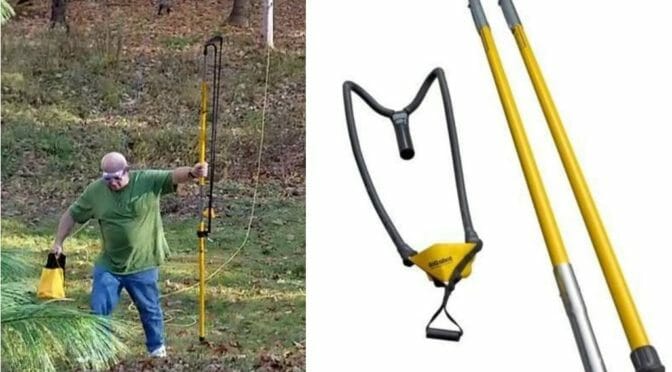
There are several tall trees at my NH QTH and I decided to put an antenna up as high as possible in one of them. I needed a way to accurately put a wire high up into the tree. I read about spud cannons used to launch a line up for an antenna and considered buying or borrowing one for the project. Around this time, I saw a device called a Bigshot Slingshot Throwline Launcher on a TV show about building treehouses and it intrigued me. It is heavy duty and can throw a 10 oz. or 12 oz. weight with a 3/8 inch line attached up 100 feet or more.

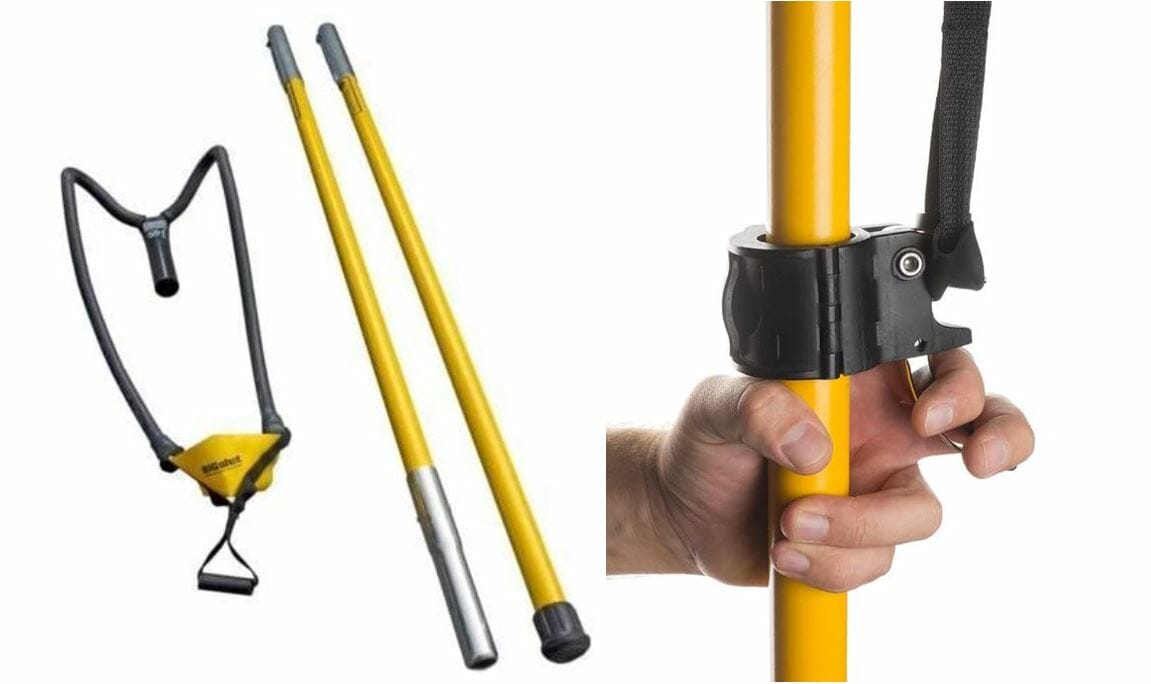
Bigshot Slingshot
Bigshot Line Launcher

I found a deluxe kit on Amazon which contained the slingshot and trigger assembly along with spare elastic bands, throw weights, line, line bag, and carrying case. It is built robustly, to commercial standards and I was eager to try it out. I did a few dry runs and learned that it could easily launch the weight 75 feet up. For more height, set the trigger assembly lower on the pole to stretch the elastics more and launch even higher.

Caution!

An Important Word of Caution Here!! This device is powerful and can cause injury if not used carefully. Read all the instructions, wear eye protection, and like a gun, point it away from anything you do not want to break. I am 6’2” and 275 lbs. when cocking the elastics and straining against their pull this device lifted me from the ground and pulled me off balance with ease. I have a lot of respect for the power it has and you should too.

End Fed Half Wave Antenna at 50 Feet

I previously used this line launcher to install a MyAntennas.com 8010 EFHW antenna in my NH QTH backyard with the endpoint up in a tree 50 feet high. I was happy with the performance there for 6 months until I tried working in the CQ SSB DX WW contest. Before the contest, I logged QSOs on 20 and 40 meters all over the US, South America, Africa, and Europe, along with some 80 meter QSOs out to around 1500 miles. However, during the contest, I had difficulty breaking pileups, so I decided to try and raise the tree end of the antenna.

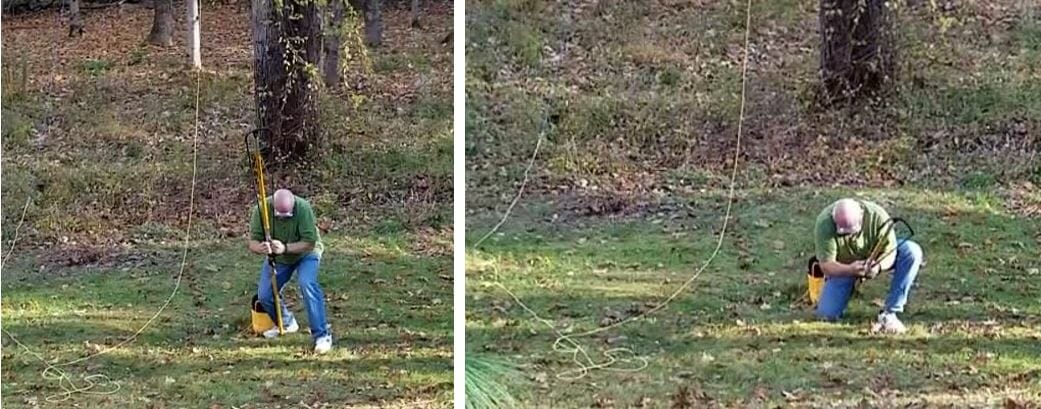
Preparing to launch the line

Bigshot Slingshot
Old rope in the tree

The line hanging from the tree is what held the antenna at 50 feet. I will tie the line to the throw line when I shoot it up to the higher branch.

Cocking the catapult

I was trying for maximum height on this launch, so I moved the trigger assembly down on the shaft of the launcher a bit more than usual. It took serious effort to cock the launcher. Note, I am wearing eye protection and pointing the device away from my body.

Launching the line

Bigshot Slingshot
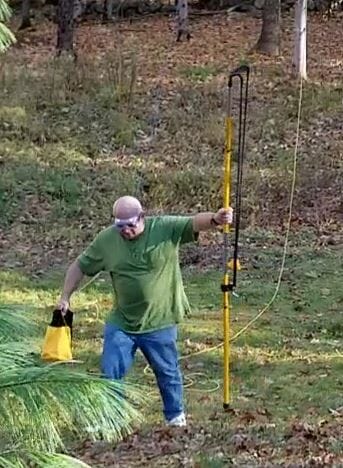
Move to launch position

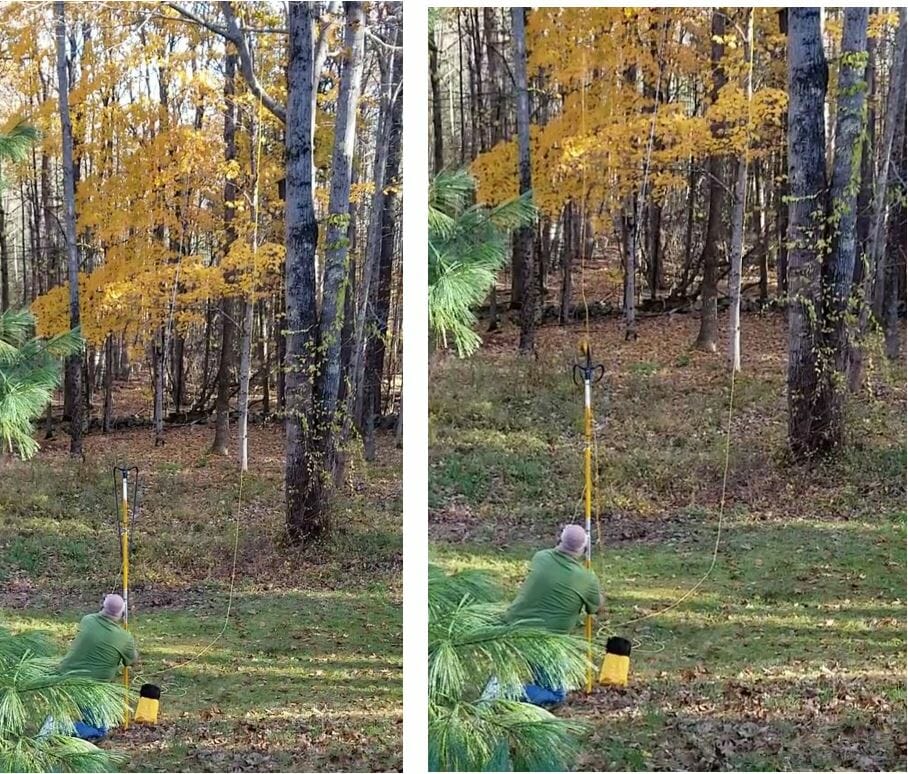
First, you must untangle the throw line before launch. Carefully coil it into the throw bag so it will come out smoothly. The launch should be almost vertical to be able to get the maximum height out of it. Launching at 45 degrees or 60 degrees gets a long distance, but disappointing height. As a result, I think I was launching at 75 or 80 degrees here.

Launching the line
Launching the line

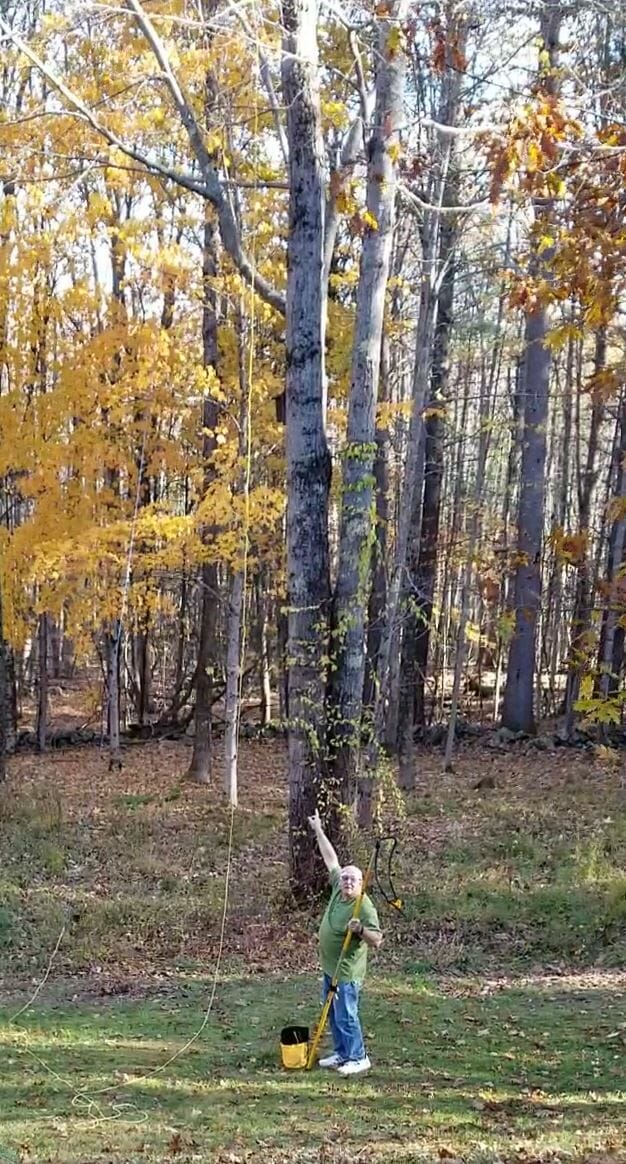
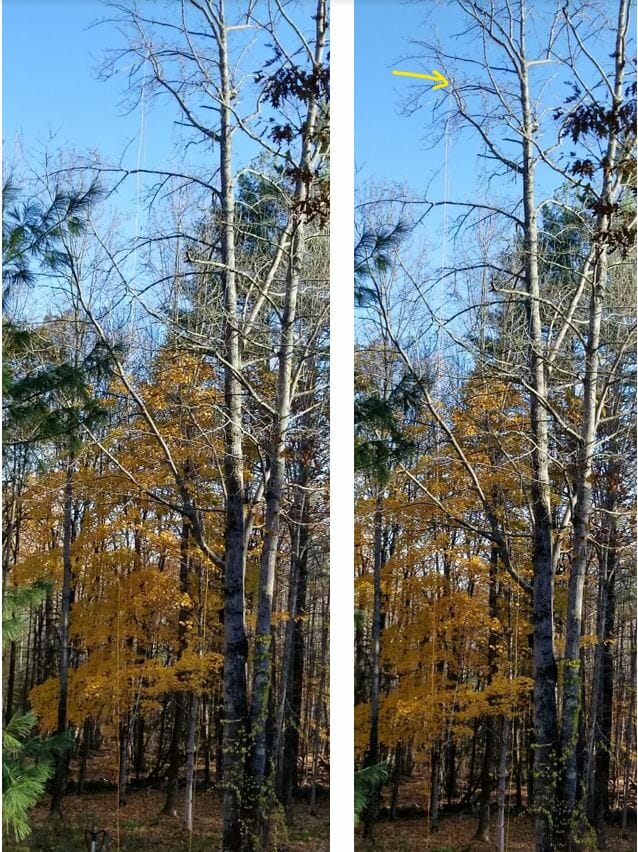
Success, the line is up around 70 feet in the tree

These two pictures fully show the tree to give some scale to how high the end of the antenna is.

Success 70 feet high

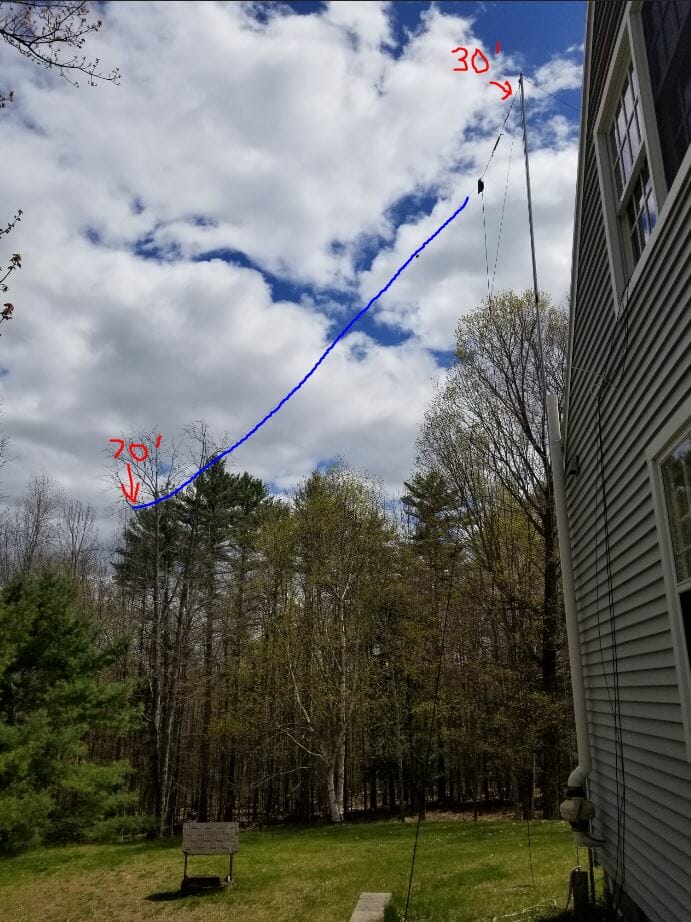
This picture, looking South, shows the antenna feed point around 30 feet high at the house. There are three 10-foot chain link fence top rail sections attached to the corner of the house with a line holding the antenna. From there the ground slopes downhill around twenty feet. The end of the 135-foot wire antenna is hung at seventy feet in the tree. It is running North and South with a little bias to the West.

NH QTH EFHW at 70 feet

Did it work?

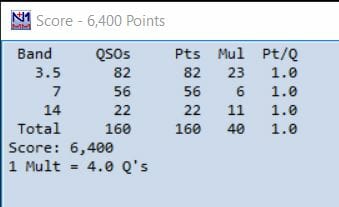
I was eager to find out if it was going to make a noticeable difference in the contest. It did! On the 20 and 40 meter bands I can get through pileups, often on the first or second try. My first QSO on 80 meters was to Ukraine, around 4500 miles away. In the beginning of May, during the NE QSO Party, for instance, I had replies to my CQ on 80 meters with only 100 watts from Italy and Uruguay.  80 meters was my most productive band in the contest.

NEQP 2020 Score Box
NEQP 2020 Score Box

Good for Christmas lights, too!

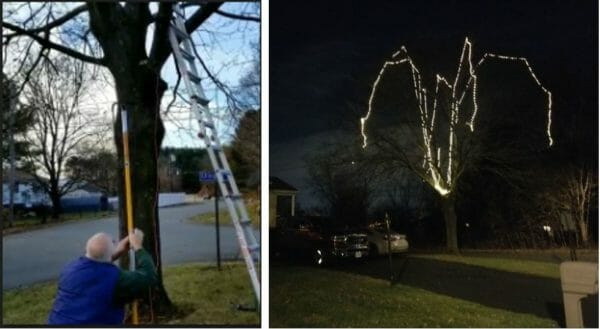
Here is a quick look at the throwline launcher in action. I am sending a line up in a tree to pull up some Christmas lights. Click on the picture to view the video. Each string of lights in the picture on the right represents the arc of the throw-weight and line. The max height in the tree is around 35 feet.

Christmas Lights
Christmas Lights

NARS Winter Field Day 2020

During setup for the Nashua Area Radio Society’s 2020 Winter Field Day the spud launcher, we were using broke after setting up a 40-meter delta loop antenna. We still had to set up the 160 Meter Transmit Antenna. It was a dipole, fed at around 50 feet with each end to be installed around 40 feet high. I made a quick trip home to fetch the throwline launcher. Upon my return it was easy to secure the ends of the dipole up in the trees.

Jon, AC1EV

Radio Amateurs Developing Skills Worldwide