All posts by Nashua Area Radio Society

Webmaster for the Nashua Area Radio Society

A Blast from the Past …

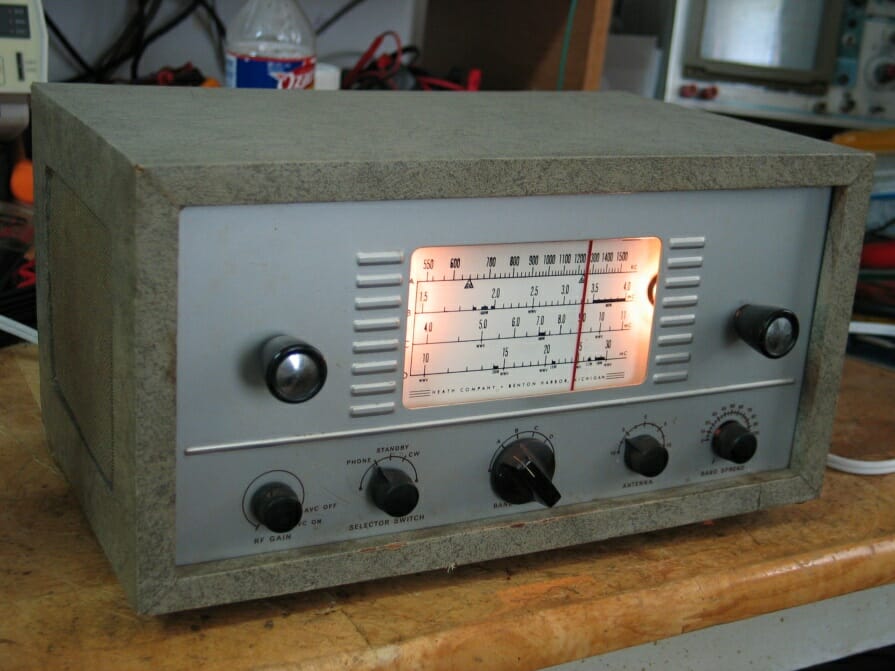
I obtained my FCC Novice license in 1957 at age 13. At that time, I didn’t yet have a station, so I set out to remedy that situation. I had been using a Heathkit AR-3 receiver (4 tube superhet, $29.95 in kit form, cabinet $4.95 extra) I built prior to obtaining my license; while OK for SWLing,  it wasn’t well suited to amateur radio work. My first priority was building a homebrew transmitter while looking for a more suitable but affordable receiver. While I was building the transmitter, my father borrowed a WWII German military receiver from a colleague at work for me to use temporarily. I didn’t know it at the time, but this receiver was a quite sophisticated design. I used this receiver for several months (including for my first ever QSO), but didn’t pay much attention to the details as most of the labeling was in a language I didn’t understand, and I had no manual, other documentation, or knowledgeable guidance.

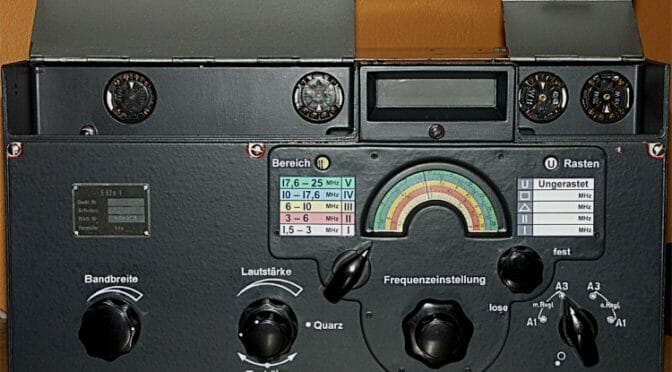
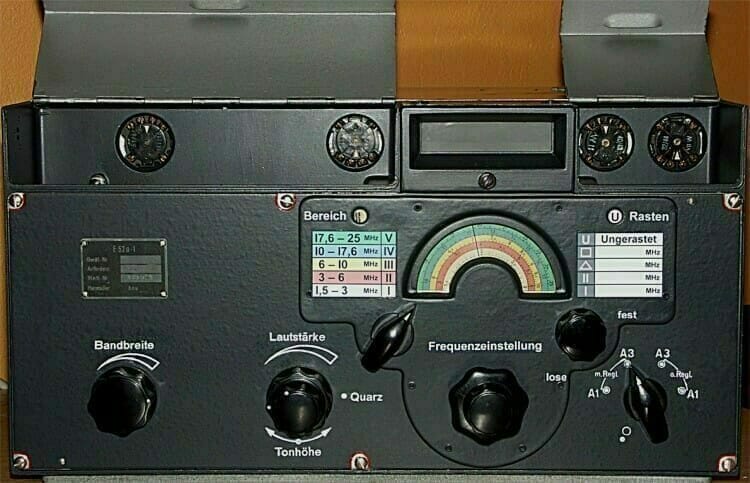
I recently decided to see if I could more precisely identify this receiver based on my recall of a few unique features of the design.  One very clear recollection is that the frequency display was projected onto a ground glass screen on the front panel.  This turned out to be the definitive clue in identifying this receiver. Another recollection is the strange-looking (to me, at least) vacuum tubes, the bases of some of which could be seen by opening two flip-up covers on the front panel. Using these clues, it was easy, with some internet research,  to zero in on the make and model of the receiver. It was a Tekefunken E52 series manufactured in several variations mainly for the German Luftwaffe between about 1942 and 1945. At the time, I had no understanding of the advanced nature of this design; it was way ahead of its time, and only about 2500 were built. Below are some photos, snippets, and links from the websites I visited. While likely of limited interest to newer hams, in these days of pandemics, lockdowns, and self-isolating, perhaps an interesting diversion. Much more information on the web for those so inclined.
K8EZB Past
Heathkit AR-3
K8EZB Past
Telefunken E52a-1
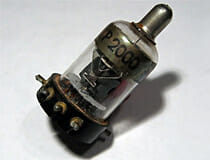
Telefunken RV12P2000 Vacuum Tube

Telefunken E52 (Koln)

“This is one of the most studied, written about, and discussed receivers in the world”

History:
Empfänger 52 was specified by the Reichsluftfahrtministerium (RLM) in 1939 as one in a series of five similar receivers covering the entire frequency spectrum from LF to UHF, intended for use in the Luftwaffe ground stations, but also for other services and authorities. A request for quotation went out to a few German electronics manufacturers and Telefunken developed and built a prototype of the short wave receiver Köln in the beginning of 1941. Telefunken was chosen to manufacture the series of receivers according to their specification ”Luftboden-Empf.-Programm 2 – 7500 m für die Bodenausrüstung der Deutschen Luftwaffe”, Telefunken Berlin-Zehlendorf  5.5.1941.

Out of four specified receivers E51 Leipzig (LF), E52 Köln (HF), E53 Ulm (VHF), and E54 Kulm (UHF) only Köln was built in large series. In total around 2500 receivers were built from July 1942 to March 1945. The E52 was made in 10 models, of which the E52a-1 (simplified with automatic tuning) and E52b-2 (simplified with manual tuning and unified scale) were the most common. Of all the E52s built there are probably 300 – 500 left, of these perhaps 50 in their original state.

The receiver is modularised, the modules are mounted in a molded aluminum chassis and all connections between the modules are through connectors in a backplane! Both the construction and the performance were far ahead of its time. Only one type of valve, the RV12P2000, was used in the receiver except for the power rectifiers. The intention was that all modules and valves should be interchangeable in the field without the need for realignment. The first test series of around 20 receivers were made in Sachsenwerk in Radeberg from July 1942 of the simplified type E52a-1 and possibly also the type E52b-1. The manufacture was not up to speed until the beginning of 1943. The assembly and alignment were made in Sachsenwerk Niedersedlitz while the modules were made in several different electronics industries.

Receiver data:
The receiver is an advanced single superheterodyne with two RF stages, a mixer/local oscillator, three IF stages, a detector/BFO/AF amplifier, and an output stage for headphones. In total there are 6 tuned circuits in the RF/mixer/oscillator part and the receiver has very high sensitivity and selectivity. The IF stages have a 6-circuit filter plus 4 tunable circuits in a variable crystal filter, the bandwidth is variable from +/- 5 kHz down to +/- 200 Hz @-3dB with very steep slopes, damping 100 times at +/- 10 kHz in wide. The tuning has a coarse scale and a fine-scale projected from a micro photo disc with very high resolution and accuracy. The oscillator has very accurate temperature compensation and thus high stability. Frequency coverage is 1.5 to 25 Mhz in five bands, the sensitivity for AM 3 – 5 uV, CW wide 1.0 uV, and CW narrow 0.3 uV for 5 V output. Mirror frequency damping is at least 50000 and the IF damping is better than 100000 at 1.5 MHz. The stability is better than 30x 10E-6/degree C, which is 30 Hz/MHz/degree C for a freerunning oscillator! Even today this is competitive against many modern receivers comparing sensitivity, selectivity, and stability.

Link: https://kriegsfunker.com/radios/E52_b2.html

Rick, K8EZB

NEQP 2019 Contest With A Surprise!

I have been a ham for a little over two years now. In that short time, I have had a chance to try out many of the different things one can do. One exciting thing to do is to participate in a contest. Many of us have seen pictures and read articles of serious contesting stations and may even drool a bit for all the high-end hardware and giant antenna farms. I plead guilty myself.

As a new ham, my station has, for the most part, been a basic one. I have an excellent radio in the IC-7300, which priced to be available as a high-end entry-level radio. At this stage in my ham radio adventure, I am not sure I can appreciate the advanced features found in the higher end radios, yet. In the beginning, using my IC-7300 and a Buckmaster 7 Band Off-Center Fed Dipole and running 100 watts many of the stations I was able to contact were contesting stations. Their great antennas and sensitive receivers could pull out my signal with ease. Time passed and my station is improved, now with 500 watts and a hex beam or wire antenna up over 45 feet high and I can compete for attention in a pile-up in a contest.

Unless things are quiet or slow due to the hour, I haven’t had great results running on a frequency in a contest, but search and pounce, where the operator finds a station and replies to their CQ, works well and I am often heard first try. Just that bit is loads of fun and satisfying. I enjoy seeing how my radio performs and contacting people in different places, so entering a contest is fun, even though I know I am not going to be competitive. It is obvious, but I will say it anyway, there are lots of people on the air during a contest. That means it is a great time to make QSOs, even though you are not going to rag chew or be a contender.

Operating From AB1OC-AB1QB

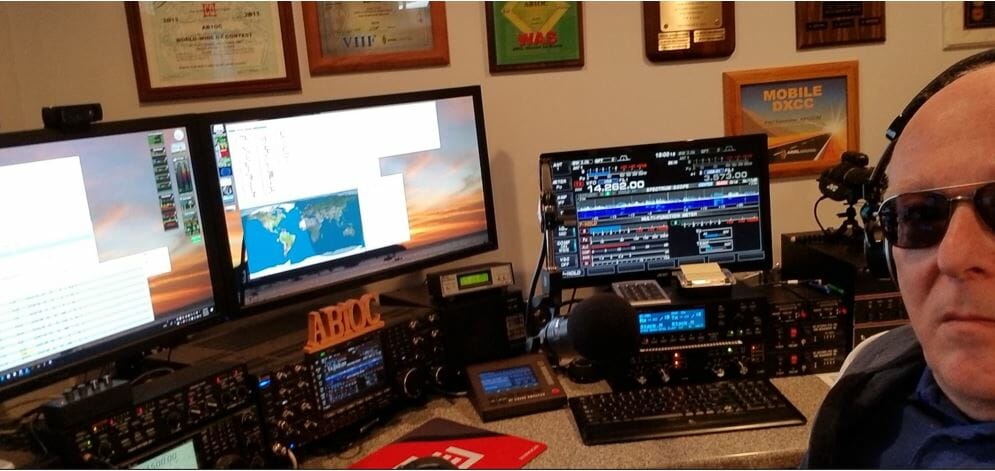
I had a chance to operate from a contest grade station last year for around 4 hours during a CQ WW SSB contest. Thanks to AB1OC Fred and AB1QB Anita for their generosity.

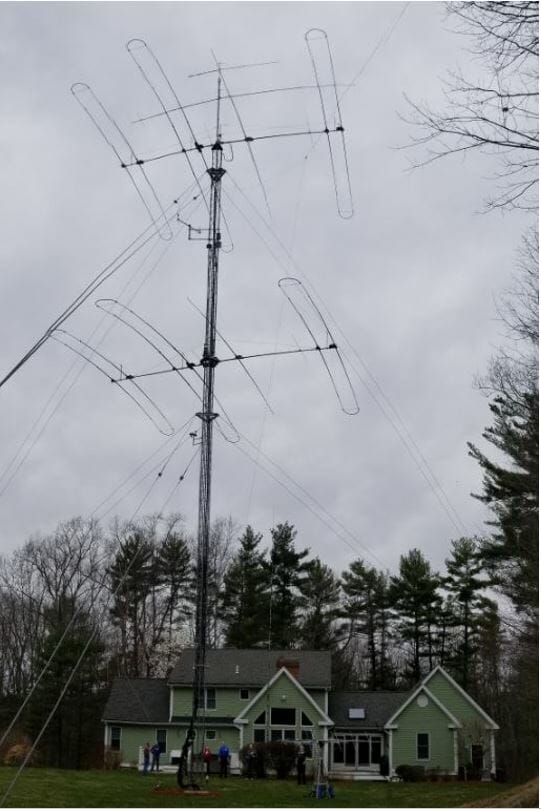
Stacked Steppirs
Stacked SteppIRs

Their station had stacked Steppir antennas and 1500 watts of power so when I talked, people heard me!

Operating from AB1OC Station

Operating From My QTH

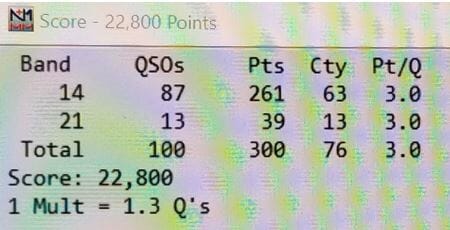
In those 4 hours, I made 99 QSOs on SSB and got 78 different countries! 6 new ones for me, too! It was exciting, so when the North America QSO Party contest came around, I decided I would see how I could do on my own station in the same amount of time. It turned out that I was able to make 100 QSOs and 76 multipliers in 4 hours for that contest, which I thought was respectable given the difference between our stations.

North America QSO Party

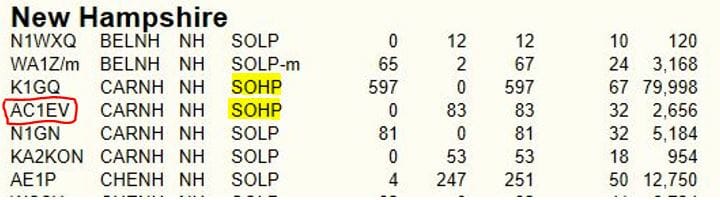
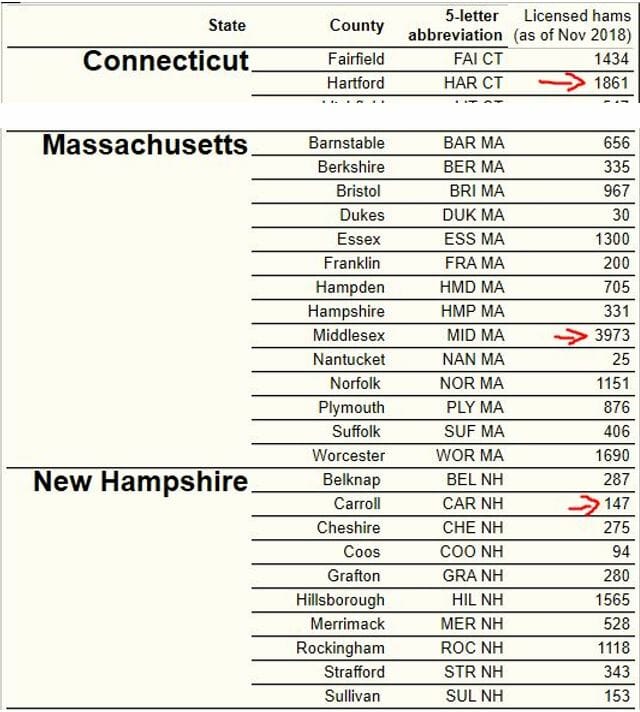
As I described above, I only dabbled a bit with contests, yet I had lots of fun. I strongly suggest that you try it out for yourself. I also strongly suggest that you participate fully and submit an official log to the contest when it is over. The first reason is that it makes your QSOs count for the people you contact and the other is that you might be surprised and get a certificate! For new hams, you might be able to submit as a rookie and then you are competing against other rookies and not the big guns. Some contests have other “side” contests in their scoring, so you might pick up something there. Last year I spent around 9 hours in the New England QSO Party contest from my second house, which is in Carroll County, New Hampshire. There are only 147 licensed hams in Carroll county and only 4 entered the contest.

2019 NEQP Competition

NEQP NH Counties
NEQP NH Counties

You can see in the tables below the populations of licensed hams by county. Middlesex County, Massachusetts has the largest amount of licensed hams in New England! I admit I did not know that, but after thinking about it, it is not surprising. The next largest county is Hartford, CT and it is only half of Middlesex. If you are trying to win a ham radio contest from one of these counties, you will need a serious station and be willing to spend lots of time in the chair.

CT MA NH Counties
CT MA NH Counties

Remote Contest Logging

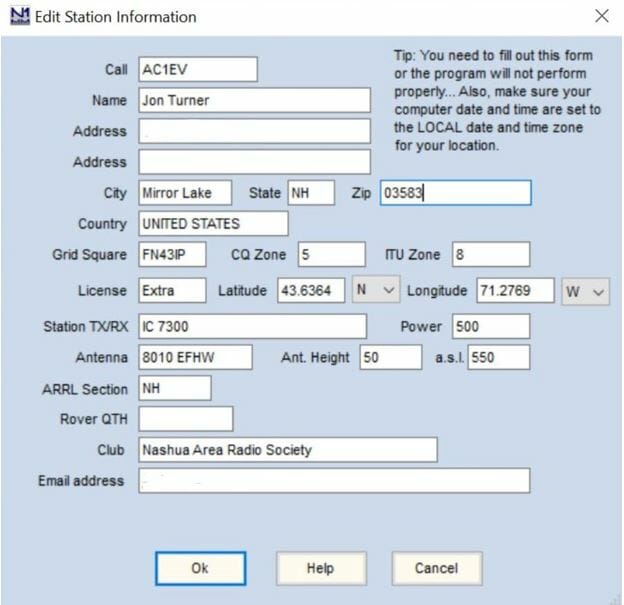
When you operate in a contest you enter your station information in the logger and that is how your location is determined. My home QTH for my license is in Tewksbury, MA but the contest logger needs to have the location of the station you are operating for the contest. When I participated in the NE QSO Party in May 2019 I setup N1MM+ logger like this:

N1MM Station Info NH QTH

I was not trying to win the contest. I thought it would be a good opportunity to make lots of contacts and when you encounter someone you contacted in the contest in a future QSO, you have a good start on beginning a rag chew.

Overall NEQP 2019 Results

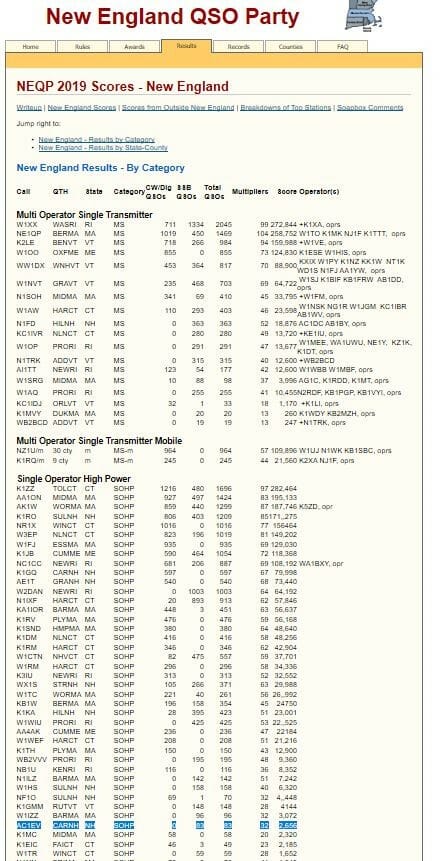
Here are the results of the 2019 NEQP. It may be worth looking at previous years’ results for contests you want to compete in to see how the top finishers scored. If you can choose the location you will operate from, this can help as well.

NEQP 2019 Scores
NEQP 2019 Scores

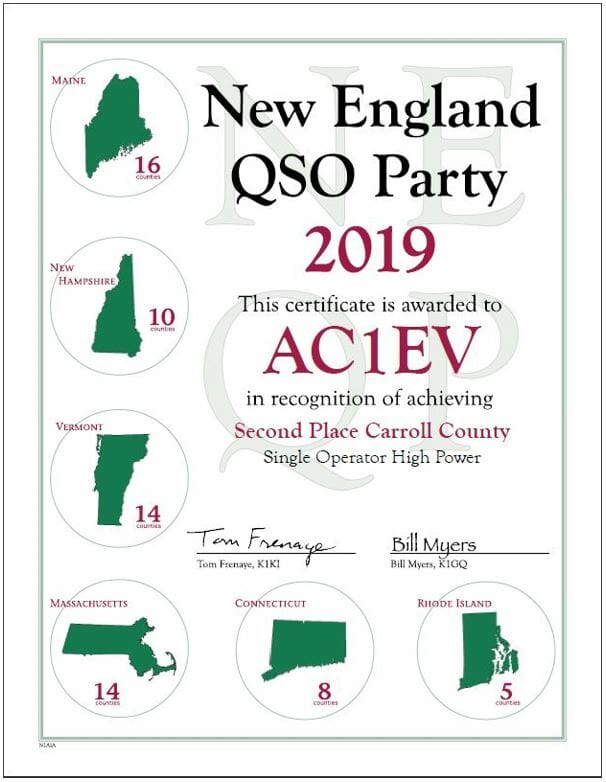
Here is the surprise I received from the 2019 NE QSOP, which prompted this article.   The 2020 NEQP is May 2 – 3, give it a try.

New England QSO Party Certificate

Jon, AC1EV

Remote Operation

While isolated in our homes I am finding amateur radio a very therapeutic distraction from all the chaos in the world. I look forward to Contest Weekends and like a lot of you, I am looking for new projects and adventures in amateur radio. One recently came my way – Remote Operation over the Internet.

Last weekend I got the opportunity to set up my computer to work Fred and Anita’s (AB1OC/AB1QB) station remotely. Fred and Anita have an amazing station at their QTH and you can find more information on it here. Of course, I was game to test Remote Operation out! Fred and Anita would like to open their station up remotely for the Nashua Area Radio Society’s Student/Teacher Contest Series as some of the Youth and Teachers in the contest do not have access to a station at their homes and of course, no one is getting together in groups right now.

Software and Networking

The first thing we had to do was to load the software on my computer and make sure we could communicate properly. Luckily, last week Connor (KC1GGX) and I ran CAT 5e cable from our router through the ceiling in the basement to the computer in our shack. See what I mean about looking for projects! This gave us a good internet connection to work with.

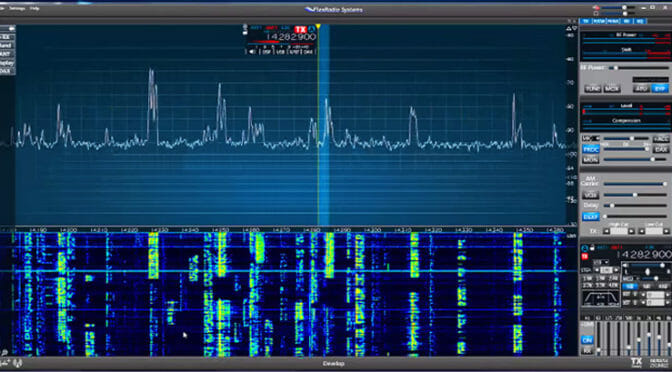
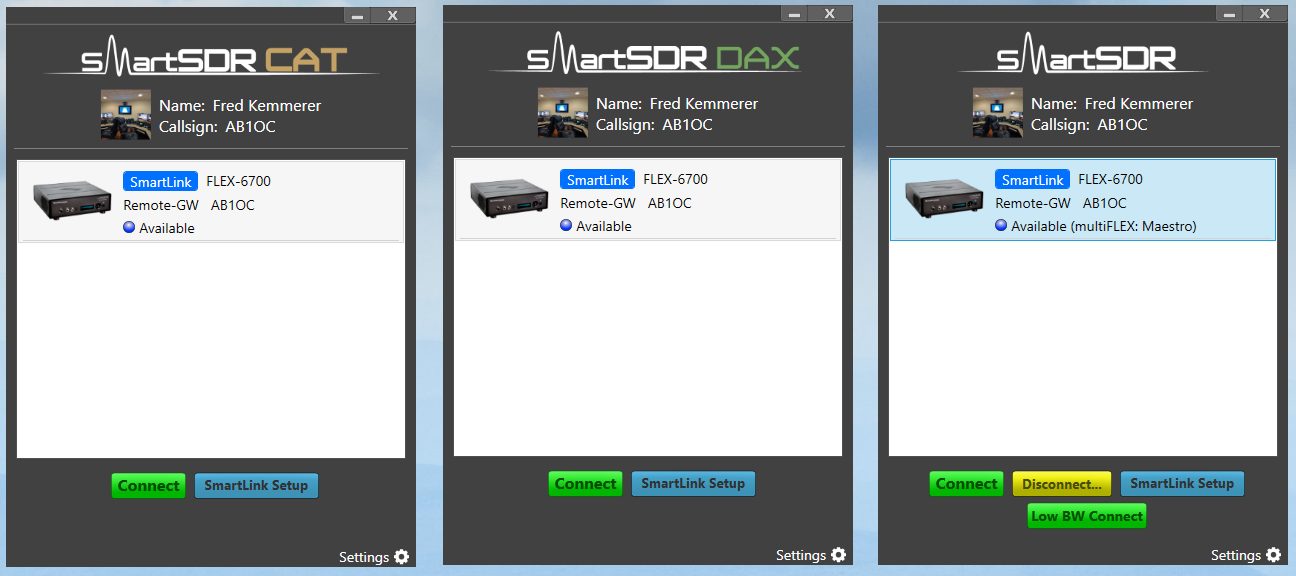
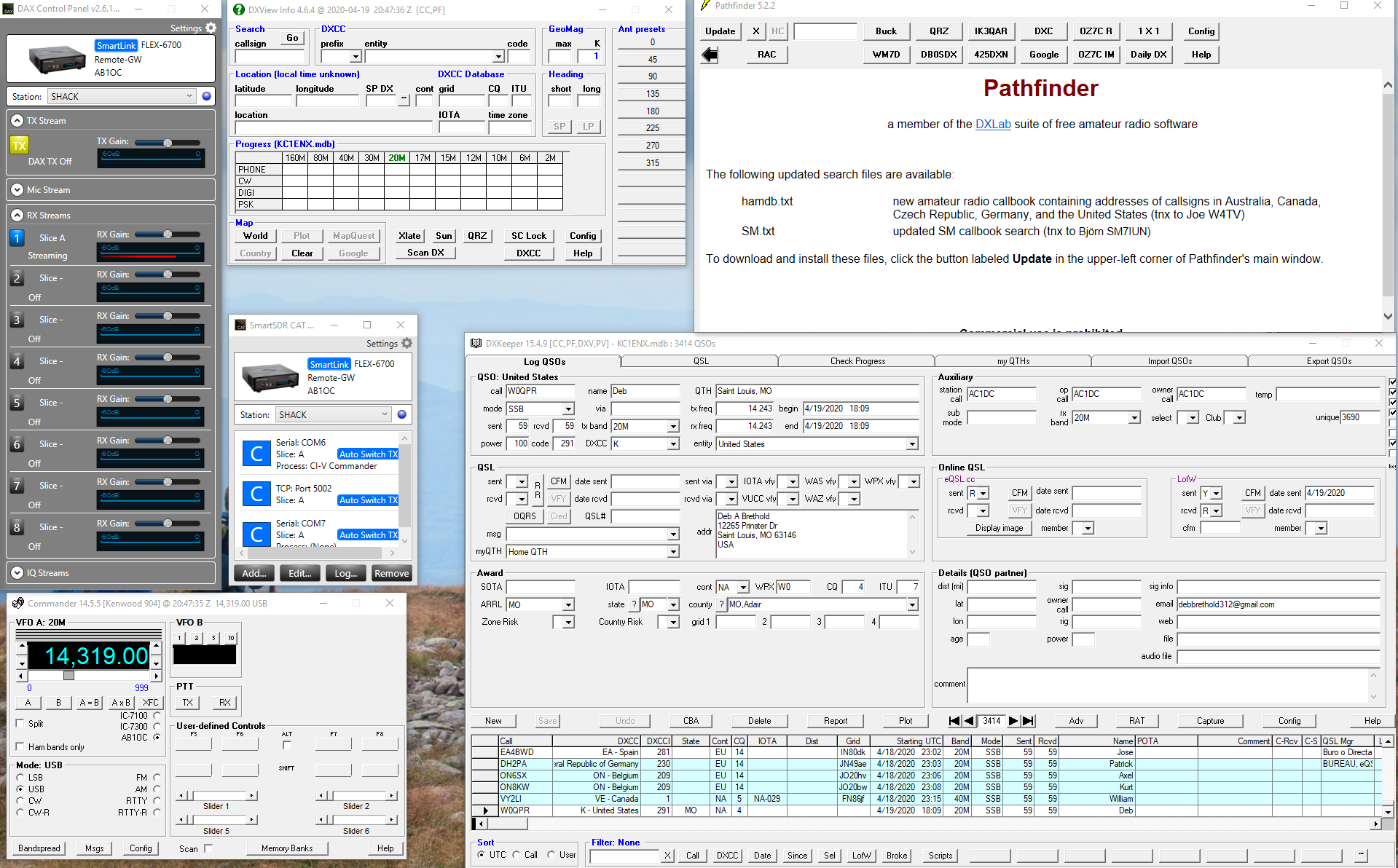
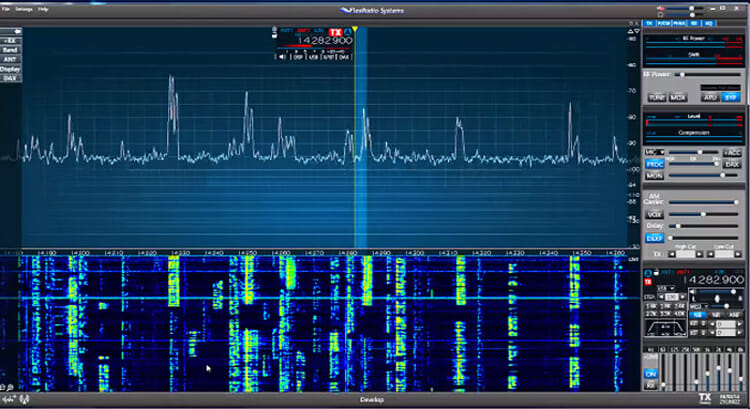
We used the program SmartSDR for Windows to control Fred’s station. The download is pretty straight forward and Fred handled the process of connecting my computer to his station via the web. The SmartSDR has three modules. SmartSDR is the panadapter and “virtual” control face of the transceiver, SmartCAT which controls the interface between your logger and the radio and SmartDAX which is for controlling digital operations.

Remote Operation

Once Fred got it all configured and talking to my logging software – I am using DX Lab Suite – it was time to test it out and see what it could do.

Operating Using An SDR

The signals were very clear and strong and using an SDR really gives you great control of being able to adjust your filters and bandwidth. I was able to move frequencies, change bands, and pretty much anything else I would have been able to do from the AB1OC/AB1QB shack… except rotating the antennas.  We didn’t quite use the “arm-strong” method (moving and antenna manually as we’ve done for Winter Field Day on our VHF antennas), but I would call Fred on the phone and ask to have the antennas pointed in another direction.

Remote Operation

Remote Operation

Pointing Rotating Antennas

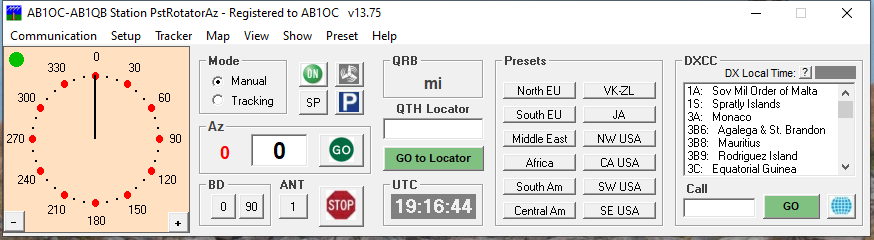
A couple of days later, Fred found a solution for rotating the antennas as well with a program called PstRotatorAz.  This gives complete control of moving the antennas while working remotely.

Remote Operation

Abby, AB1BY, and I operated from AB1OC/AB1QB’s station remotely over the weekend and had a great time. The only drawback we found is when switching between the SDR window and the logging window you would lose the ability to use the space bar as your PTT, which meant a lot of moving the mouse around and clicking.

Getting Ready To Contest

Mark, KC1IML, and Keith, KC1IMK have also set up their station to work remotely with Fred and Anita’s station and have come up with a solution to the PTT problem as well. They used an old USB to serial adapter and soldered the leads from a footswitch to a few pins on the serial adapter and they have the footswitch working.

This has been a lot of fun to try out and big thanks out to Fred for putting in all the time to get Remote Operation up and working!

Jamey, AC1DC

Radio Amateurs Developing Skills Worldwide