AC1EV is operating 1E for Summer Field Day this year. I would have loved to operate in an ambitious club organized remote field day like we did last year, but Covid-19 social distancing requirements canceled that. I hoped to exercise my mobile setup and operate near saltwater, but again restrictions due to the virus made that difficult. I have a full house generator, so I will operate my home station on emergency power as class 1E. Here is how I am setup.
Power
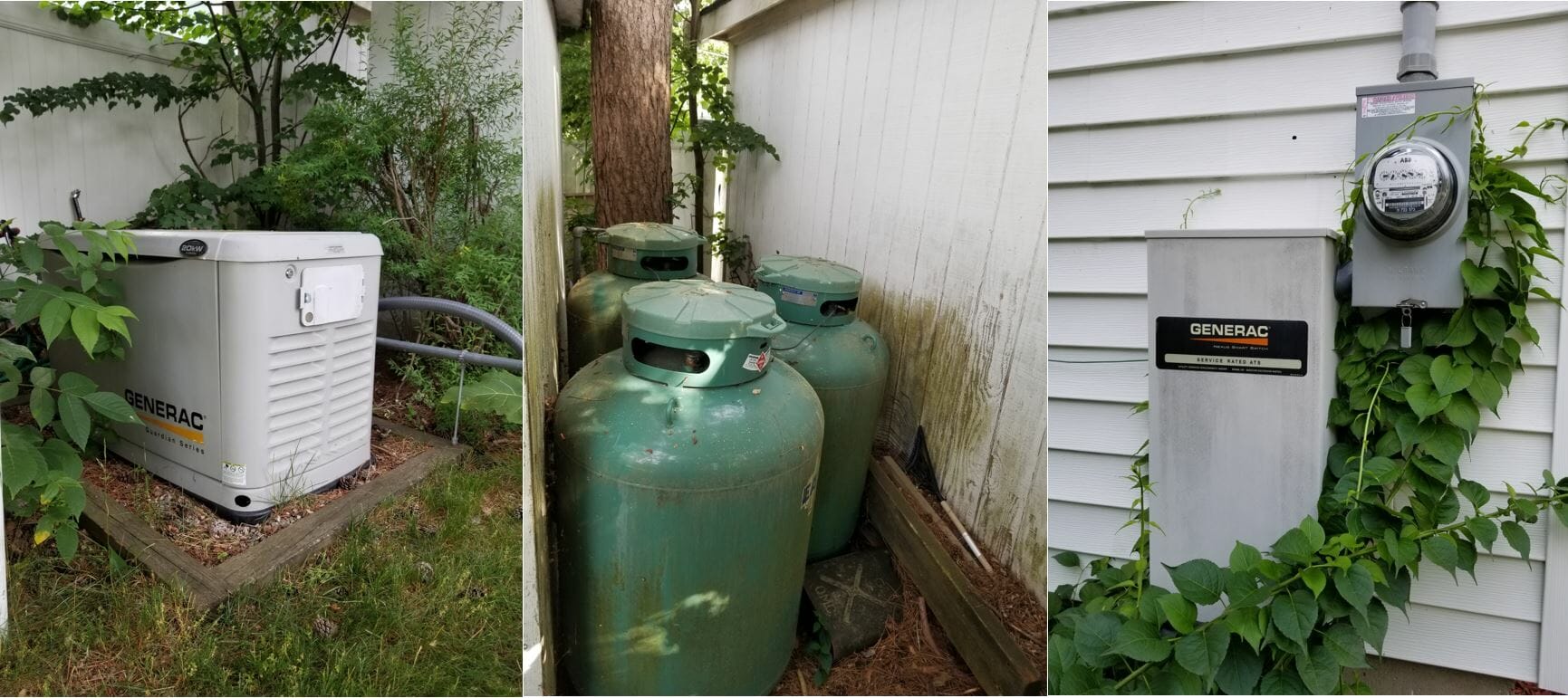
17KW generator with 3 x 120-gallon propane tanks and Transfer switch
Power
Antennas
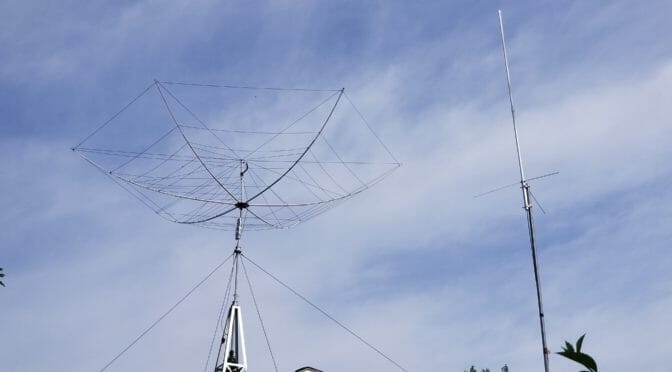
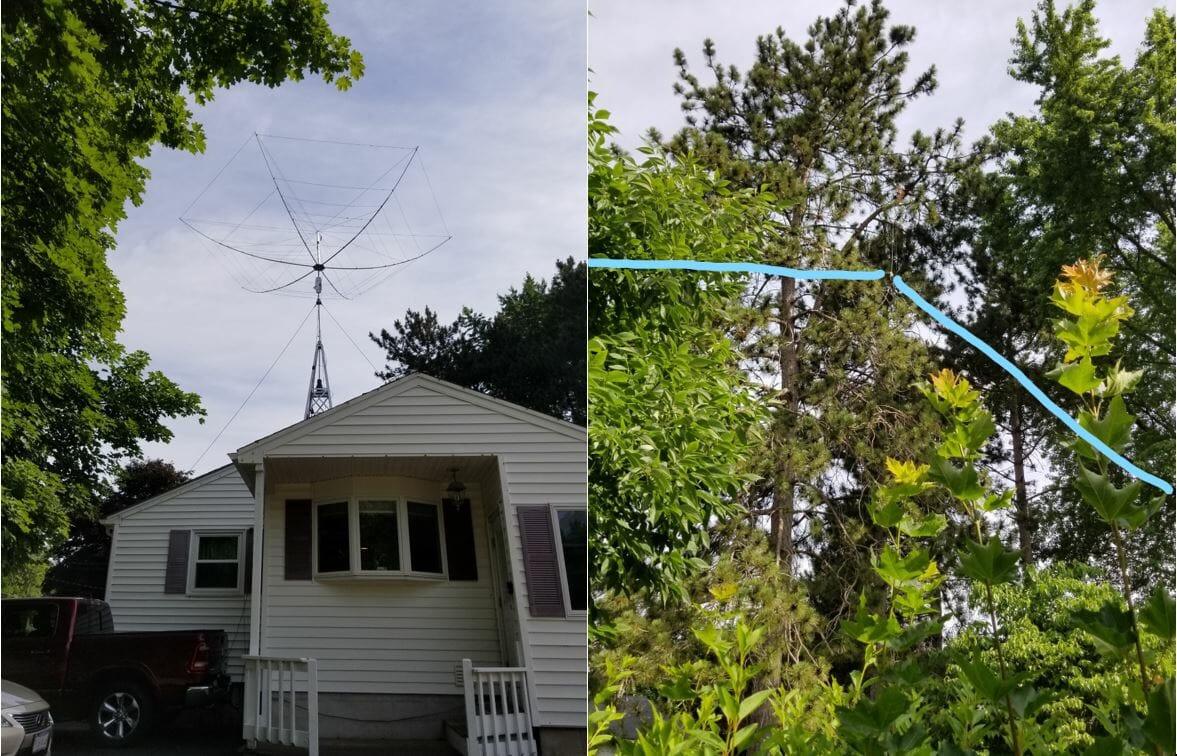
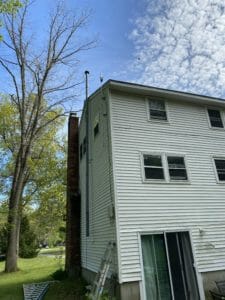
K4KIO Hex Beam, 6 meters through 20 meters @33 feet and Alpha Delta 40/80 Dipole as an inverted V @ 45 feet.
Antennas
AC1EV Field Day Station
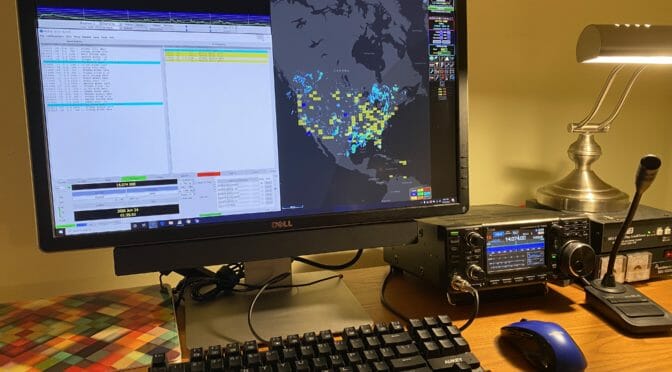
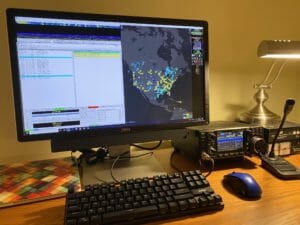
Here is my shack in Tewksbury. I have an Icom IC-7300 with an Elecraft KPA500 amplifier along with an Elecraft KAT500 antenna tuner. Top that off with a Heil Pro 7 headset. The tuner allows me to select between the antennas. I have N1MM+ running on my laptop with two additional monitors leftover from my days as an IT Guru.
As a new ham, I have been eagerly anticipating the ARRL Field Day 2020 and the opportunity to learn from my fellow club members. While plans have changed due to social distancing measures surrounding the COVID-19 outbreak, the challenge of planning the logistics of my first Field Day at home has me just as excited. I plan to divide my time between my home station, and a small park in my neighborhood (weather permitting). The following is what I am planning for W1YCZ’s first Field Day.
Home Station on Emergency Power
W1YCZ Home Station Operating Position
I will be operating from my home station for most of the Field Day period. I will be using an Icom IC-7300 Transceiver at up to 100W. The antenna is a MyAntennas End Fed Half Wave Antenna, mounted about 40 feet up from the roofline of my house into the tree line across my yard. With this setup, I can reasonably cover 80m through 10m with the 100W of power provided by my transceiver. I have had great success with this station so far. While operating from my home, I will be operating SSB and will spend a fair of time in the FT8 and FT4 digital modes.
Primary Antenna – MyAntennas End Fed Half Wave Antenna (EFHW8010) covering 80m through 10m
The emergency power source for my station will be an 8kW portable generator connected via a transfer switch. The generator will provide power for all essential circuits in the home for the duration of my Field Day operation.
Portable Station on Battery Power
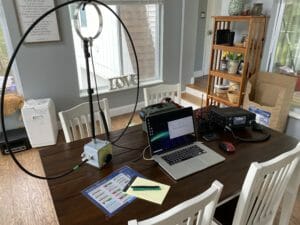
Typical Portable Station setup for W1YCZ | Icom IC7300, Chalemeon F-Loop 2.0, 15Ah Bioenno LiFePo Battery
Depending on the weather, I may spend some time operating at a small park down the street from my home. When operating away from home I bring my Icom IC-7300, a portable antenna, and a battery pack. My antenna is the Chameleon F-Loop 2.0, which covers 80m through 10m. The antenna admittedly has relatively low power limits (10W full duty-cycle, 25W SSB). Though I would love to run a full 100 watts when operating in the field, operating QRP is a fun challenge. I will primarily operate SSB with this setup.
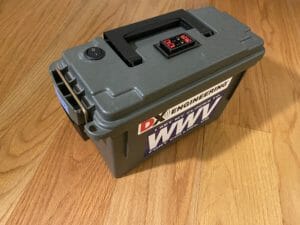
15Ah Bioenno LiFePo Battery mounted in a mini ammo box
Power for my portable station is provided by a 15Ah Bioenno Lithium Iron Phosphate battery. I recently built an enclosure for the battery using a mini ammo box. I mounted the battery inside the box and added a bank of Anderson Powerpole connectors to the top of the box. The box is light, only takes up a small amount of space at my operating position, and protects the battery from the elements.
More Information about W1YCZ
If you are interested in more information about me, please visit my QRZ webpage at http://www.truland.net.
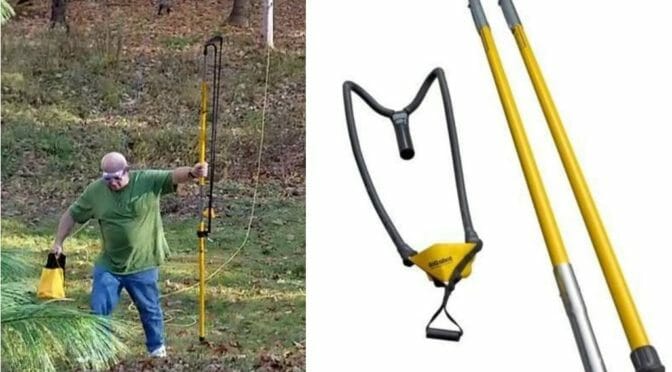
There are several tall trees at my NH QTH and I decided to put an antenna up as high as possible in one of them. I needed a way to accurately put a wire high up into the tree. I read about spud cannons used to launch a line up for an antenna and considered buying or borrowing one for the project. Around this time, I saw a device called a Bigshot Slingshot Throwline Launcher on a TV show about building treehouses and it intrigued me. It is heavy duty and can throw a 10 oz. or 12 oz. weight with a 3/8 inch line attached up 100 feet or more.
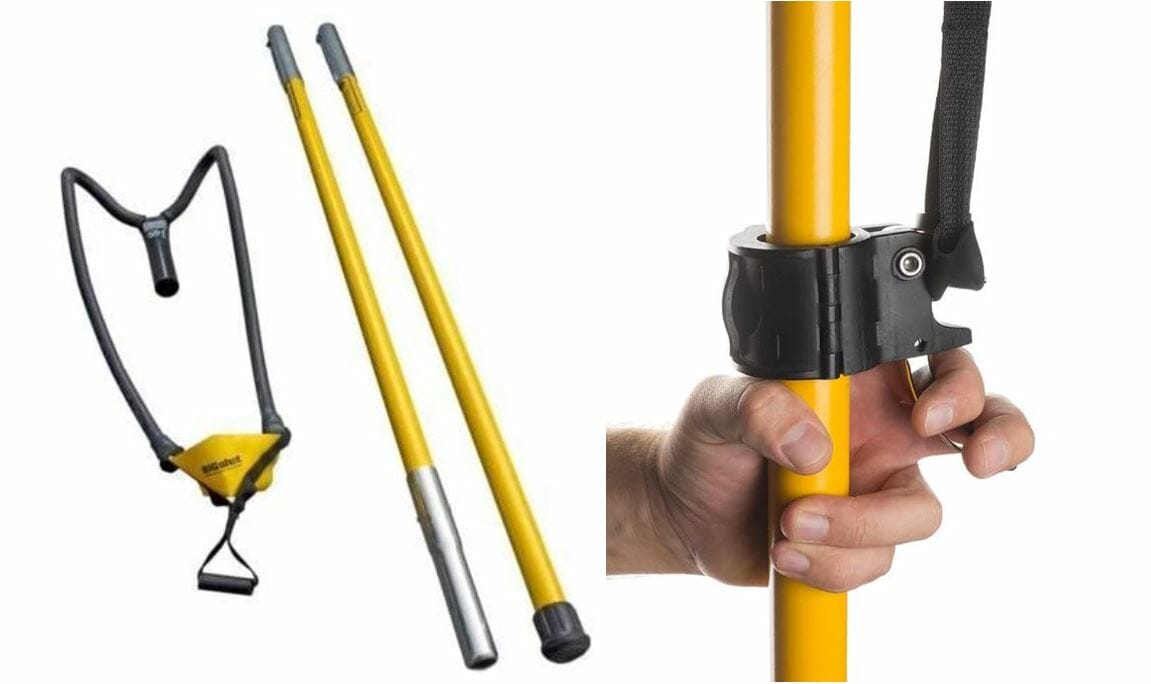
Bigshot Line Launcher
I found a deluxe kit on Amazon which contained the slingshot and trigger assembly along with spare elastic bands, throw weights, line, line bag, and carrying case. It is built robustly, to commercial standards and I was eager to try it out. I did a few dry runs and learned that it could easily launch the weight 75 feet up. For more height, set the trigger assembly lower on the pole to stretch the elastics more and launch even higher.
Caution!
An Important Word of Caution Here!! This device is powerful and can cause injury if not used carefully. Read all the instructions, wear eye protection, and like a gun, point it away from anything you do not want to break. I am 6’2” and 275 lbs. when cocking the elastics and straining against their pull this device lifted me from the ground and pulled me off balance with ease. I have a lot of respect for the power it has and you should too.
End Fed Half Wave Antenna at 50 Feet
I previously used this line launcher to install a MyAntennas.com 8010 EFHW antenna in my NH QTH backyard with the endpoint up in a tree 50 feet high. I was happy with the performance there for 6 months until I tried working in the CQ SSB DX WW contest. Before the contest, I logged QSOs on 20 and 40 meters all over the US, South America, Africa, and Europe, along with some 80 meter QSOs out to around 1500 miles. However, during the contest, I had difficulty breaking pileups, so I decided to try and raise the tree end of the antenna.
Preparing to launch the line
Old rope in the tree
The line hanging from the tree is what held the antenna at 50 feet. I will tie the line to the throw line when I shoot it up to the higher branch.
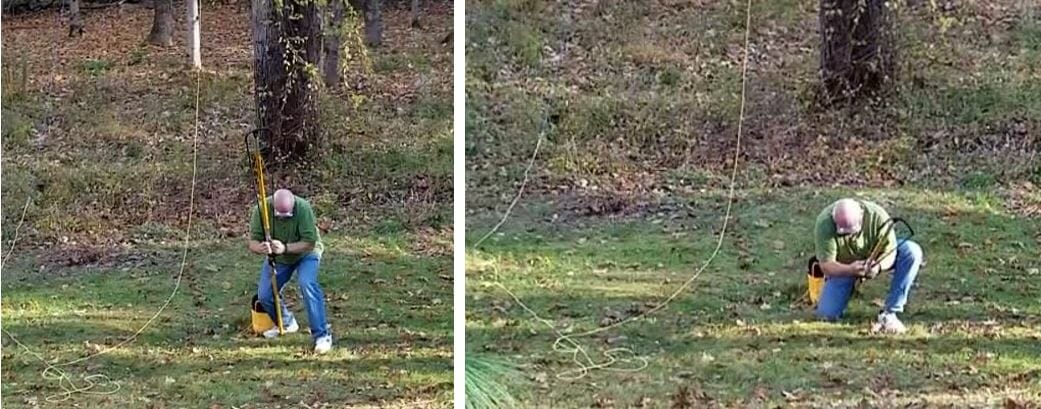
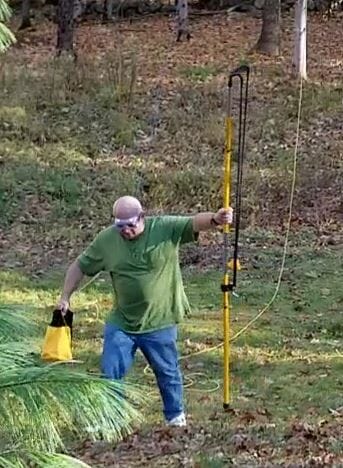
Cocking the catapult
I was trying for maximum height on this launch, so I moved the trigger assembly down on the shaft of the launcher a bit more than usual. It took serious effort to cock the launcher. Note, I am wearing eye protection and pointing the device away from my body.
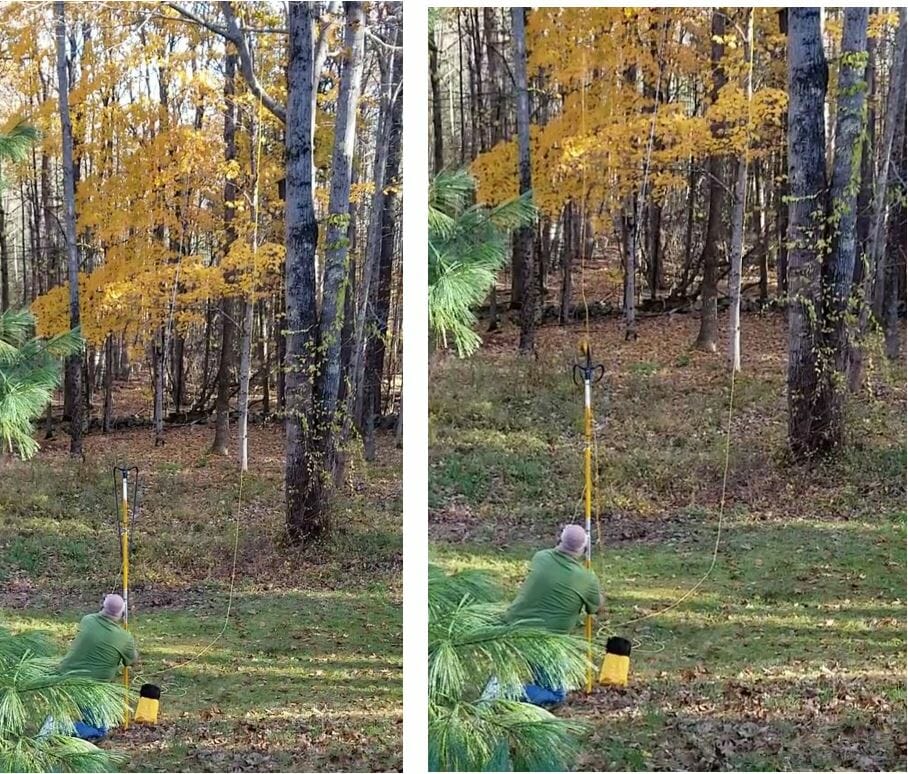
Launching the line
Move to launch position
First, you must untangle the throw line before launch. Carefully coil it into the throw bag so it will come out smoothly. The launch should be almost vertical to be able to get the maximum height out of it. Launching at 45 degrees or 60 degrees gets a long distance, but disappointing height. As a result, I think I was launching at 75 or 80 degrees here.
Launching the line
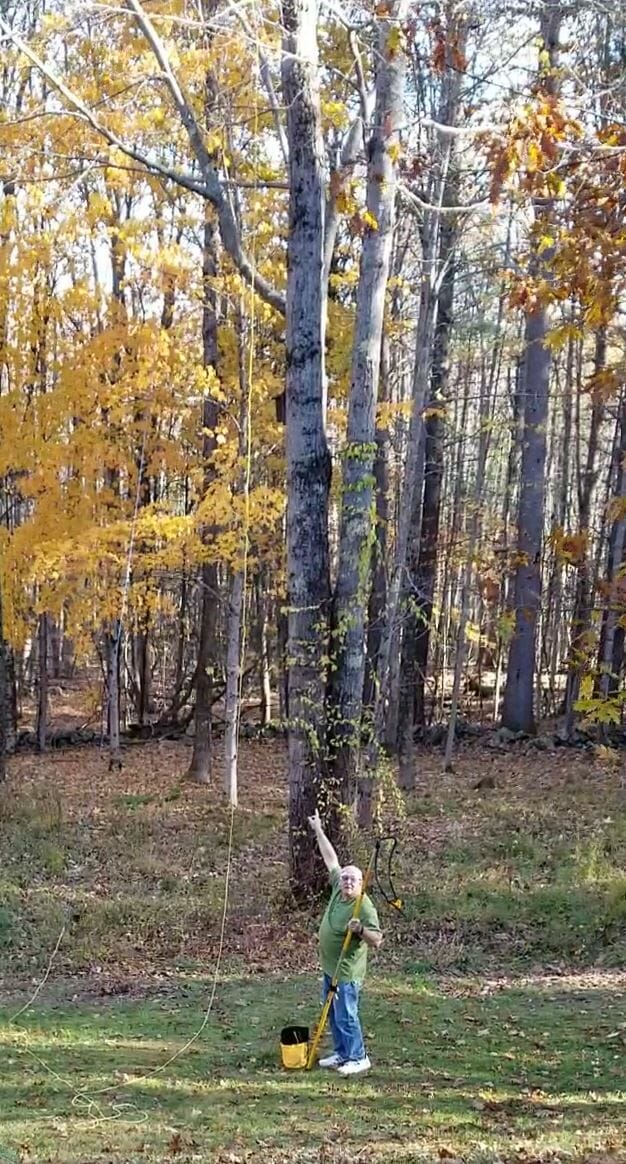
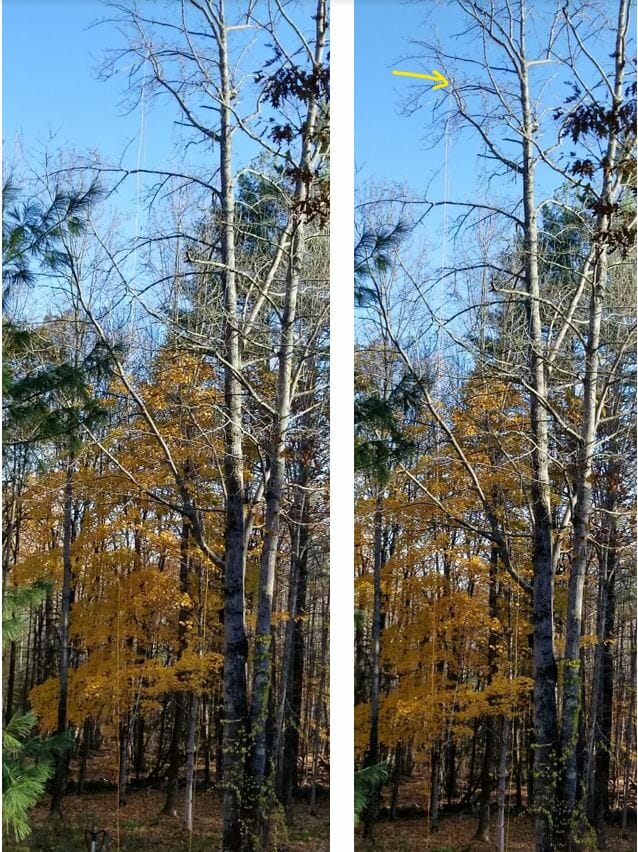
Success, the line is up around 70 feet in the tree
These two pictures fully show the tree to give some scale to how high the end of the antenna is.
Success 70 feet high
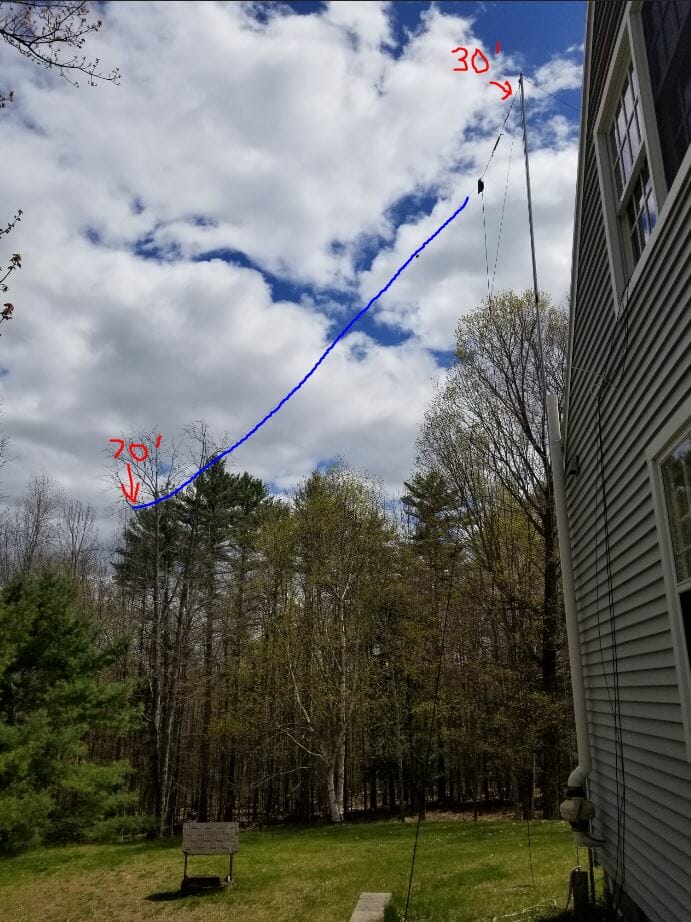
This picture, looking South, shows the antenna feed point around 30 feet high at the house. There are three 10-foot chain link fence top rail sections attached to the corner of the house with a line holding the antenna. From there the ground slopes downhill around twenty feet. The end of the 135-foot wire antenna is hung at seventy feet in the tree. It is running North and South with a little bias to the West.
NH QTH EFHW at 70 feet
Did it work?
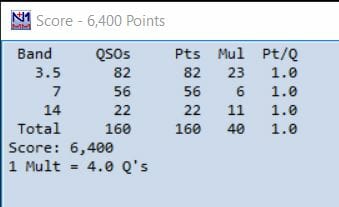
I was eager to find out if it was going to make a noticeable difference in the contest. It did! On the 20 and 40 meter bands I can get through pileups, often on the first or second try. My first QSO on 80 meters was to Ukraine, around 4500 miles away. In the beginning of May, during the NE QSO Party, for instance, I had replies to my CQ on 80 meters with only 100 watts from Italy and Uruguay. 80 meters was my most productive band in the contest.
NEQP 2020 Score Box
Good for Christmas lights, too!
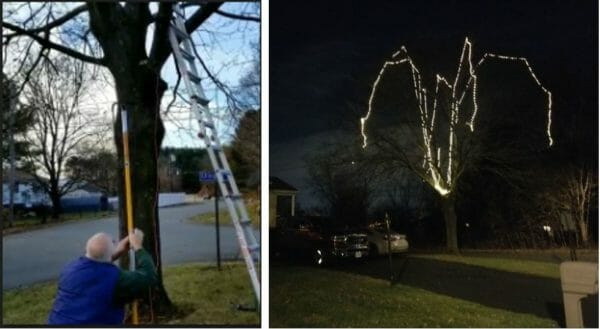
Here is a quick look at the throwline launcher in action. I am sending a line up in a tree to pull up some Christmas lights. Click on the picture to view the video. Each string of lights in the picture on the right represents the arc of the throw-weight and line. The max height in the tree is around 35 feet.
Christmas Lights
NARS Winter Field Day 2020
During setup for the Nashua Area Radio Society’s 2020 Winter Field Day the spud launcher, we were using broke after setting up a 40-meter delta loop antenna. We still had to set up the 160 Meter Transmit Antenna. It was a dipole, fed at around 50 feet with each end to be installed around 40 feet high. I made a quick trip home to fetch the throwline launcher. Upon my return it was easy to secure the ends of the dipole up in the trees.
We use cookies to ensure that we give you the best experience on our website. If you continue to use this site we will assume that you are happy with it.