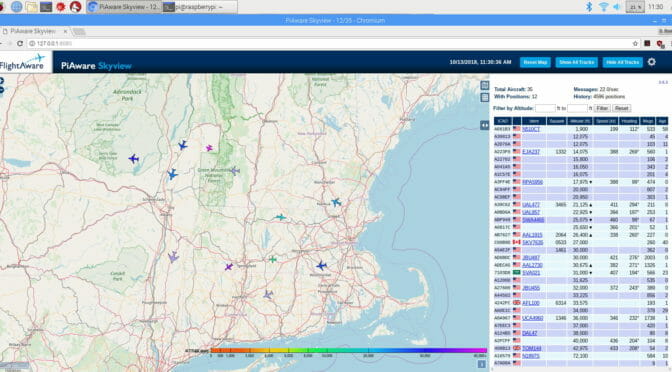
December will bring Thomas Kavanaugh, KC1ELF, for a presentation on Plane Tracking with ADS-B. This is something you can do in your own shack for very little cost if you’re willing to do a little work. Mr. Kavanaugh will provide us with a great overview in December’s General Meeting, and I’ll follow that up with a Tech Night RTL-SDR Workshop where we’ll make, among other things, a software defined radio to receive ADS-B signals.
In this article I’m going to show you how to make an antenna for ADS-B using just a little coax with a BNC connector, a bottle cap, a little wire, and a hot glue gun.
Designing an antenna for 1090 MHz
ADS-B is transmitted on 1090 MHz. For most of us, that frequency range is outside our experience. Fear not. Everything you know about making a dipole still works for this. The frequency is 1080 MHz so the length of each side of the dipole should be 234/1080 = 0.217 feet, or 2.6 inches. Not very big!
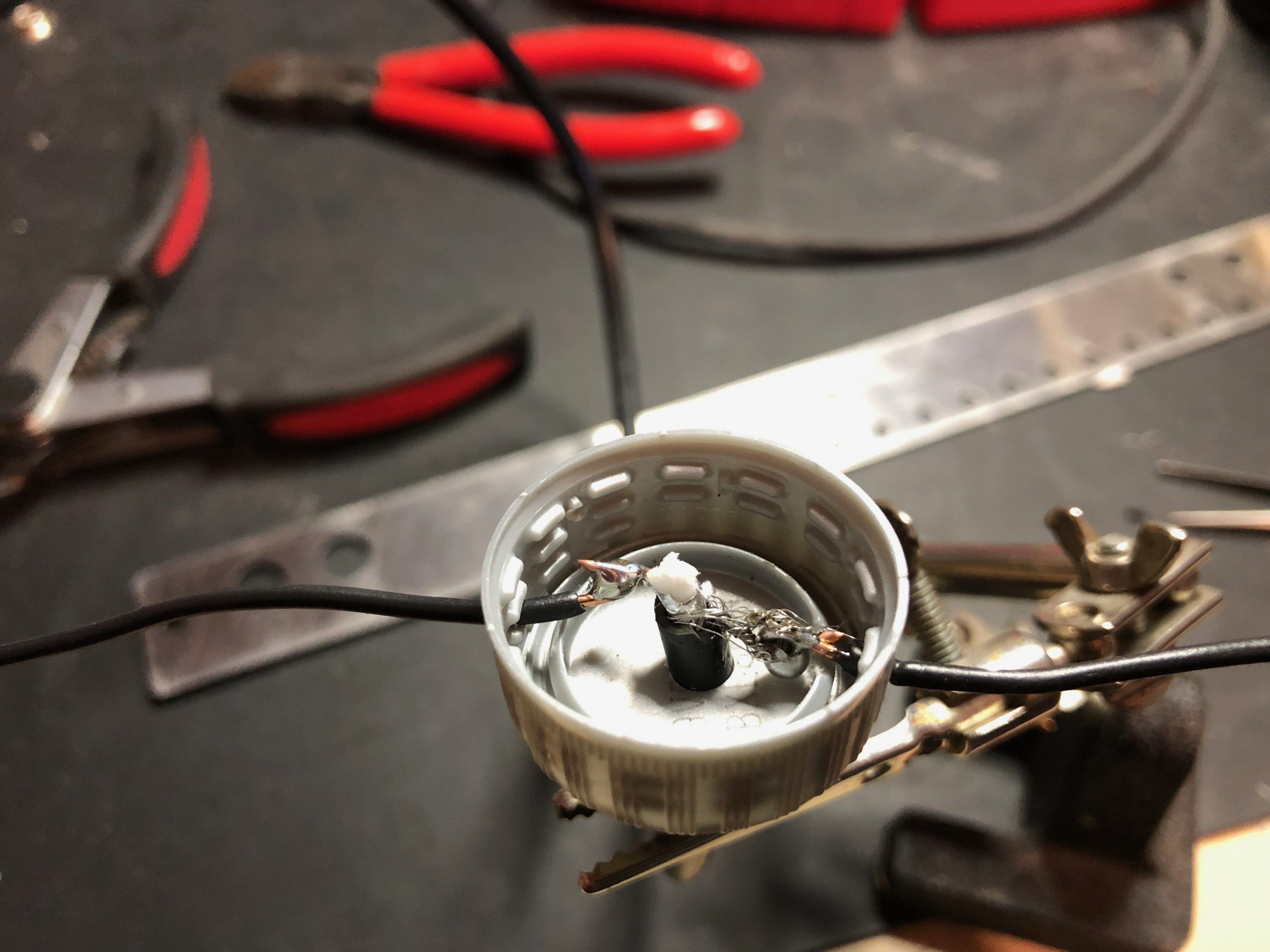
An antenna that small needs to have something solid to hold it to the coax. Below is my solution. I cut two wires to a little more than 2-1/2 inches in length. Then I took a plastic bottle cap and drilled holes for coax through the top and the two wires on the side. Figure 1 below shows this partially assembled.
Figure 1. Coax to dipole wire connections.
I began with a short coax jumper fitted with two male BNC connectors. I just cut one of the connectors off and fed the bare end through the top of the bottle cap. Then I soldered the short wires to the center conductor and braid of the coax. It was a tight fit in there, and the braid of this coax really didn’t like to be soldered, but the final connection was good enough to proceed.
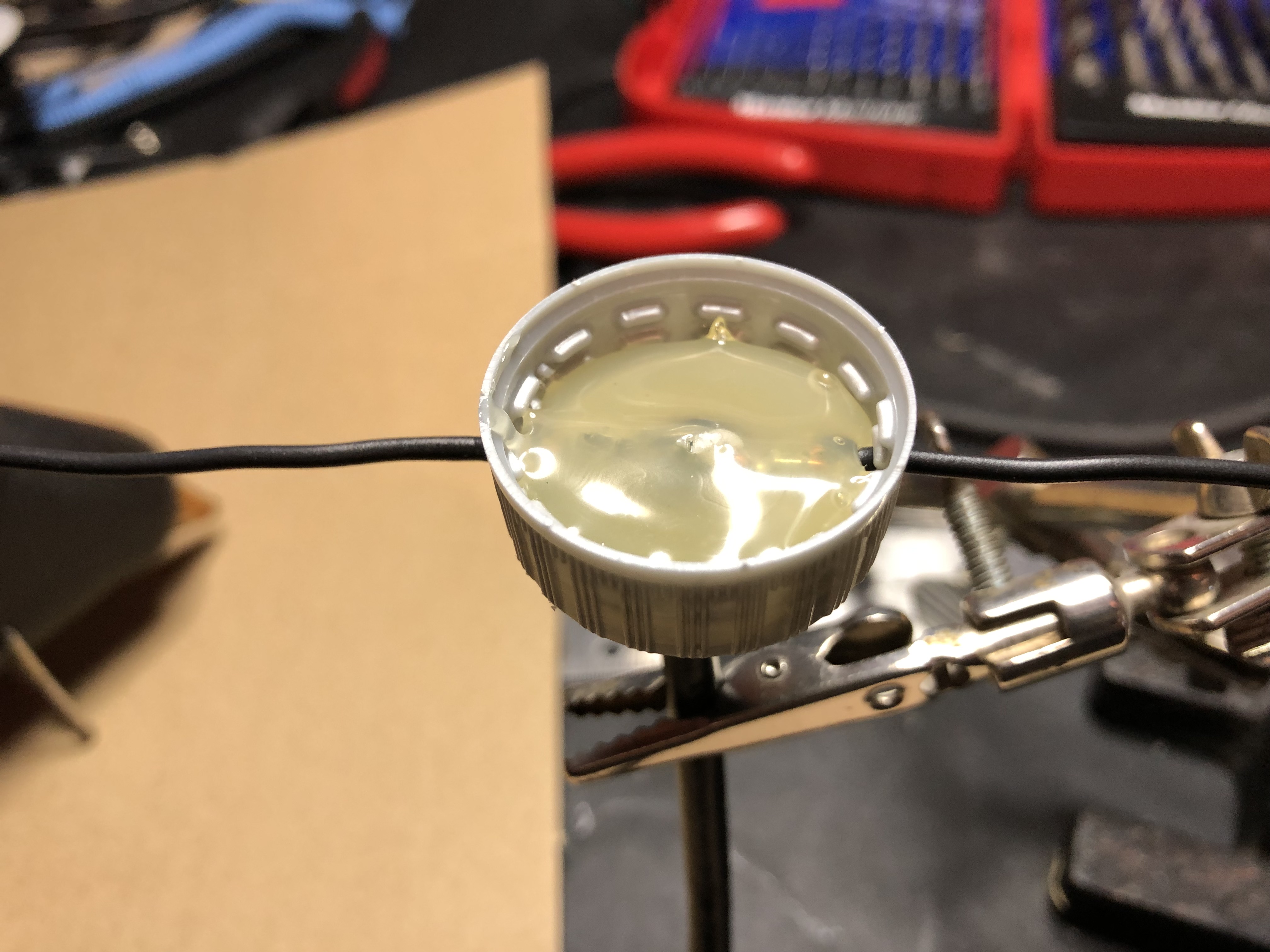
Finally, we want to fix all these connection into something solid. For that I used a hot glue gun to partially fill the bottle cap. This is shown in Figure 2 below.
Figure 2. Connections potted with hot glue
Installing the antenna
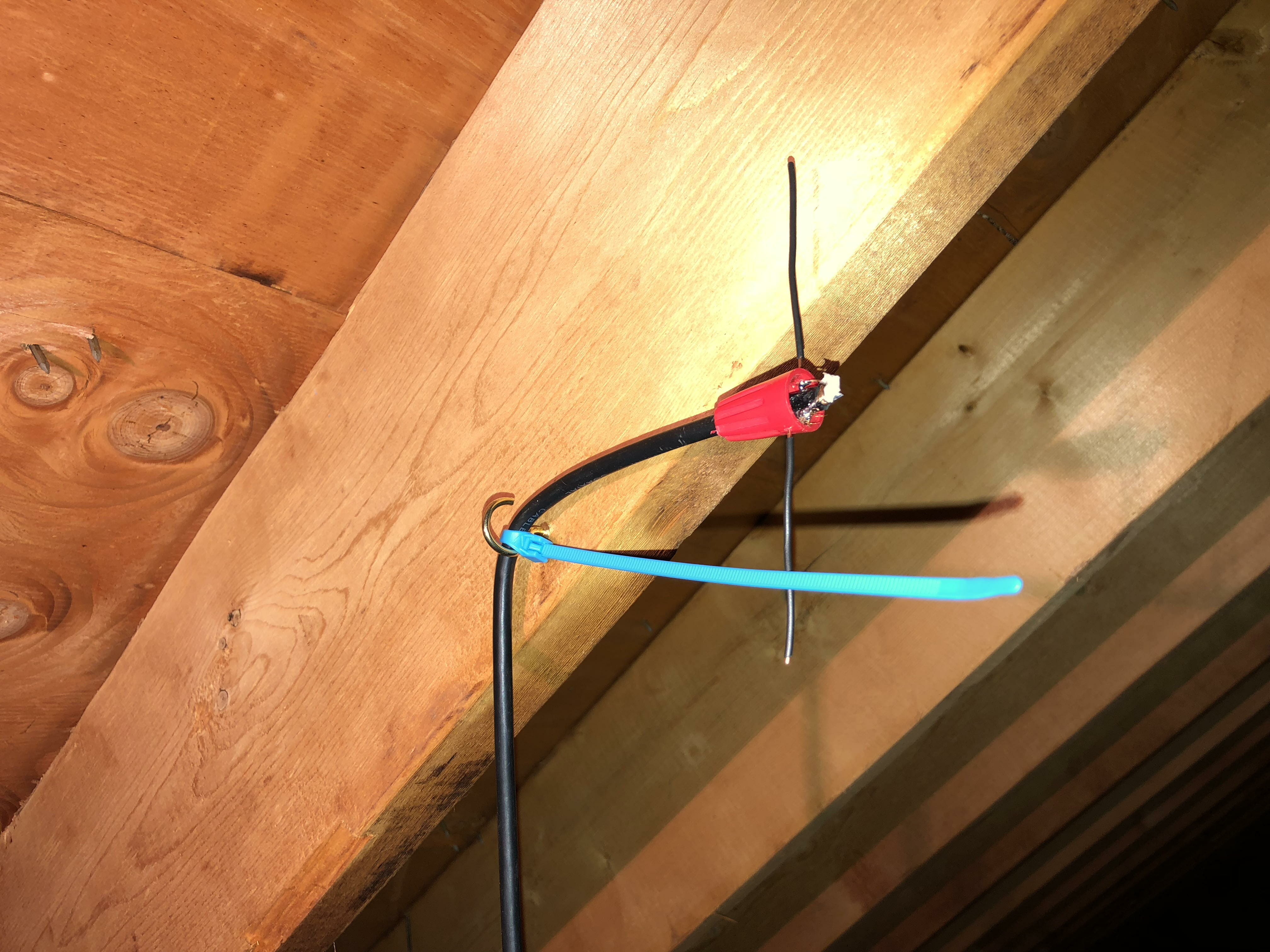
ADS-B transmissions are vertically polarized so it is important to hang the dipole with the elements in a vertical orientation. Here’s an earlier prototype of mine hanging in my attic. Just a single brass hook (and a zip tie) was all it took to get the antenna installed. See Figure 3.
Figure 3. Installing the antenna for vertical polarization.
Looking Ahead
I’ll be doing an article on building a Raspberry Pi computer capable of doing flight tracking later this month. It will need an antenna like this to work, though, so here’s your chance to do your homework early!
The last full weekend of October kicks off the contesting year for amateur radio. The big one is the CQ WW SSB contest sponsored by CQ Magazine. I’ll cover some basics for this contest along with some strategy and etiquette, and give a preview of what to plan for in November.
CQ WW SSB Contest (00:00Z October 27 to 24:00 October 28)
The CQ WW SSB and CW contests are two of the biggest contests of the year. SSB is always held the last full weekend in October. The CW version of the contest is held a month later (often colliding with the Thanksgiving weekend). Last year over 8600 logs were submitted for the phone contest. That is a target rich environment if you are contesting, or just in the event to get QSOs for chasing awards.
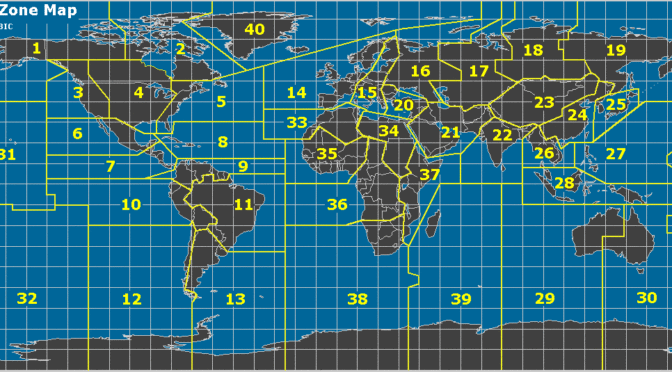
The exchange for the contest is pretty simple: a signal report (always 59) and your CQ Zone (see the map at the top of this post). We’re in zone 5. The Caribbean is in zone 8. Europe is mostly in zones 14 and 15. We hear a lot of Brazil in these contests, too, so expect to hear from zone 11, also.
Guide to the CQ Worldwide DX Contest
With many thousands of hams on the bands, things can get crowded. Here’s what you need to know. The big stations with stacked Yagi arrays, full legal limit (or beyond, as is often alleged), and multiple operators will camp out on frequencies low in the band. They will be loud, and they’ll sit on those frequencies for the whole contest. Unless you’ve got a station like I’ve described (and a small army of volunteers to operate) you can’t compete with that. You can only work them. Remember our two operating styles described in an earlier post? You’ll almost certainly be using search-and-pounce (S&P) to get your QSOs.
Take a moment and look over how the points and multipliers work for this contest. (That’s good advice for any contest!) Points go like this:
Contacts between stations on different continents count three (3) points.
Contacts between stations on the same continent but in different countries count one (1) point. Exception: Contacts between stations in different countries within the North American boundaries count two (2) points.
Contacts between stations in the same country have zero (0) QSO point value, but are permitted for zone or country multiplier credit.
That last bullet point is important. Signals from within the United States will often be the strongest, especially here at the bottom of the solar cycle, but they are worth zero points. As you might imagine, calling a station and asking for a QSO when you offer no points is a tough sell. Don’t call US stations in this contest.
Multipliers are zones and countries (each band counts separately). So, variety is the spice of life — and the secret for success in CQ WW. Try to work as many countries as you can and the zones will almost always take care of themselves.
Here’s my one exception to the “don’t call US stations” guidance above: at the end of a contest, in those last few hours Sunday afternoon, if I’m missing a zone 3, 4, or 5 on a given band, and if I find a US station in that zone, I’ll call them for a “zero pointer” and be sure to say “thanks for the mult.” I only do it if the other station is lonely (has called CQ for a while with no takers). It is a little unsavory, but missing a multiplier that you can hear is awful. In general, you should be able to work Canadian stations for these mults. I call a US station only if all else has failed.
My final suggestion is this: keep calls simple, and the exchange short. You call them, they give you their exchange, and you say only “595”. That’s it. No chit-chat! There are very serious competitors in these contests and every second counts. Be respectful of other people’s time.
November Contests
November is the first full month of the contesting season and there are a couple of good ones on the docket. They are:
I typically take an index card and write out everything above (except the serial number) and tape it to the top of the computer monitor. That way I don’t need to think. All I need to do is read. So, my card has:
___serial___ A NE1RD 02 NH
As with any contest, I’ll suggest to anybody new to listen, listen, listen! Listen to how the exchange sounds. Get a feeling for the rhythm of the QSOs. Once you’ve got it, do a little S&P and get some points.
QSO Parties and other contests
Typically QSO parties run during months without big contests, so there aren’t any in November. But, there are some other international contests that might be fun including:
Ukrainian DX Contest (November 3-4)
10-10 International Fall Contest digital (November 10-11)
OK/OM DX Contest, CW (November 10-11)
LZ DX Contest (November 17-18)
ARRL 160-Meter Contest
For details on these contests, or a complete listing of contests for November (or anytime) see the contestcalendar.com website.
Good Luck
Contesting is a great way to have some fun on the air. You’ll have plenty of people to talk to, and you know the conversation won’t drag! I used many of those contests early in my time as a ham working toward awards like DXCC. You don’t even have to submit your log to the contest sponsor if you don’t want to. Just get on and have fun. Good luck and 73 de NE1RD.
In my last post, I discussed how to add an SDR to your station using the built-in capabilities of your radio. If your radio doesn’t have this fancy antenna switching and selection feature, you can still integrate an SDR pan adapter into your shack using the handy MFJ-1708B or MFJ-1708B-SDRS devices.
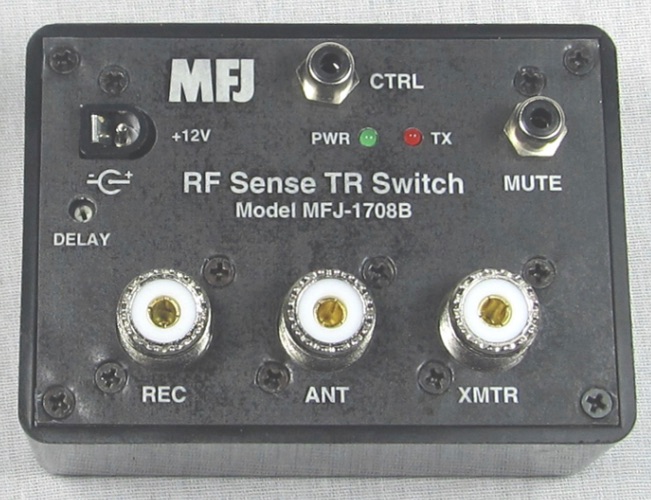
Antenna sharing device from MFJ
These devices can be used to allow your SDR to share the same antenna as your transceiver while protecting it from transmitted signals. It does this in one of two ways (or a combination).
Key down input. Transceivers have a line that is used to trigger external amplifiers called key down or key out line. Usually, this line goes to ground when the transmitter is transmitting. (You should read your radio’s manual to verify this.) If you connect this device to this radio output then it will disconnect the SDR while you transmit.
The device also has an RF sensing circuit that will disconnect the SDR from the antenna if it detects the transceiver transmitting.
Because these units use relays you might want to have a slight delay before reconnecting the SDR to the antenna after a transmission. That delay time can be selected by turning the “DELAY” control near the left edge.
The unit is simple to configure: connect power (12v) and your radio key out signal to “CTRL”, then connect your transceiver, SDR, and antenna connections to the proper ports. Finally, adjust the delay control until it works for your style of operating. That’s it!
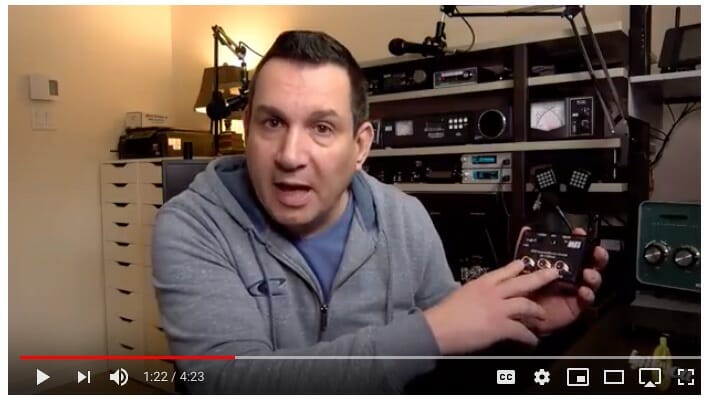
Here’s Pascal, VA2PV, with a quick overview of an earlier version of these devices.
Click the video above to see Pascal describe these devices
Note that Pascal is reviewing one of the earlier models of this device. MFJ made some improvements to these units almost immediately after they began shipping. Be sure to get the one with a “B” after the numbers to ensure you get the new-and-improved model.
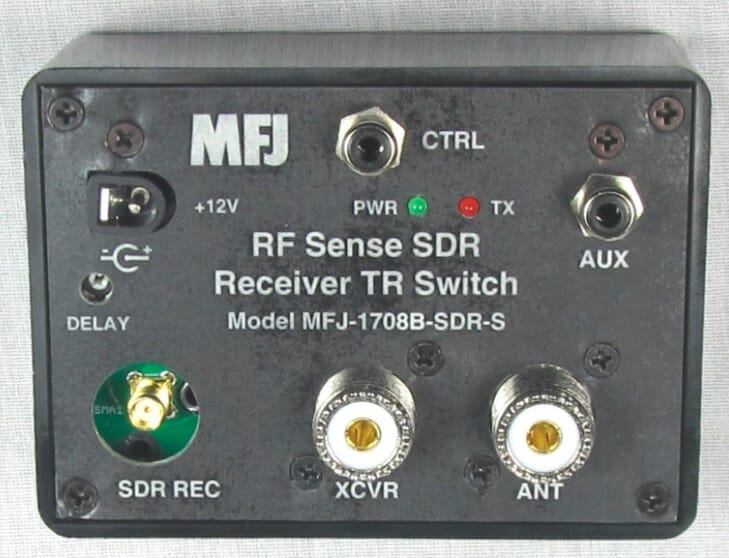
MFJ actually makes two versions of the new model: one with a regular SO-239 connector for the SDR, and one with an SMA connector for the SDR. The SMA version is shown below.
SMA version of the unit
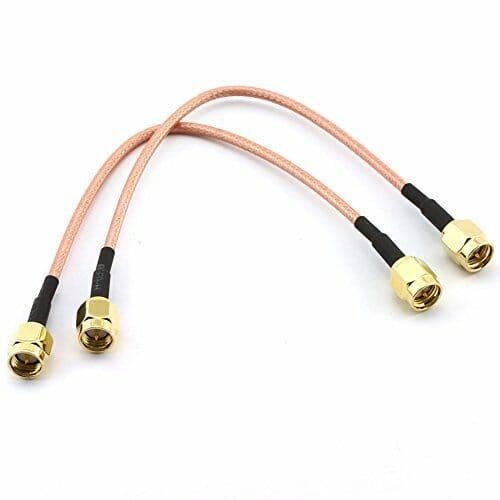
Amazon has some nice patch cables for very little money to complete the project.
SMA patch cables
Note: If you do have an external amplifier be sure to put the MFJ unit between your transceiver and the amplifier!
I’ll post a few more notes on SDRs and uses for them in your shack over the next month or so. Please plan to join us for the December 11th Tech Night SDR workshop where we’ll help you get your computer and SDR talking.
Radio Amateurs Developing Skills Worldwide
We use cookies to ensure that we give you the best experience on our website. If you continue to use this site we will assume that you are happy with it.


![Add SDR Capabilities to Your Radio [part 2]](https://www.n1fd.org/wp-content/uploads/2018/10/MFJ-1708B-651x372.jpg)