All posts by Nashua Area Radio Society

Webmaster for the Nashua Area Radio Society

ARRL Teachers Institute 2: A Week Devoted to Remote Sensing and Satellite Communication

For the second year in a row, I was blessed with the opportunity to attend the American Radio Relay League Teacher Institute in Newington, Connecticut.   This summer I attended TI – 2 from July 8 – 12th.  Thanks to the generous donations of ARRL members, I was afforded the chance to further explore ways in which I can bring Amateur Radio into the classroom.
ARRL Teachers Institute

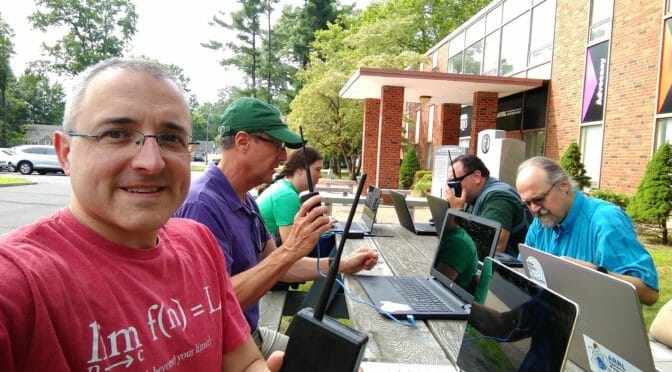
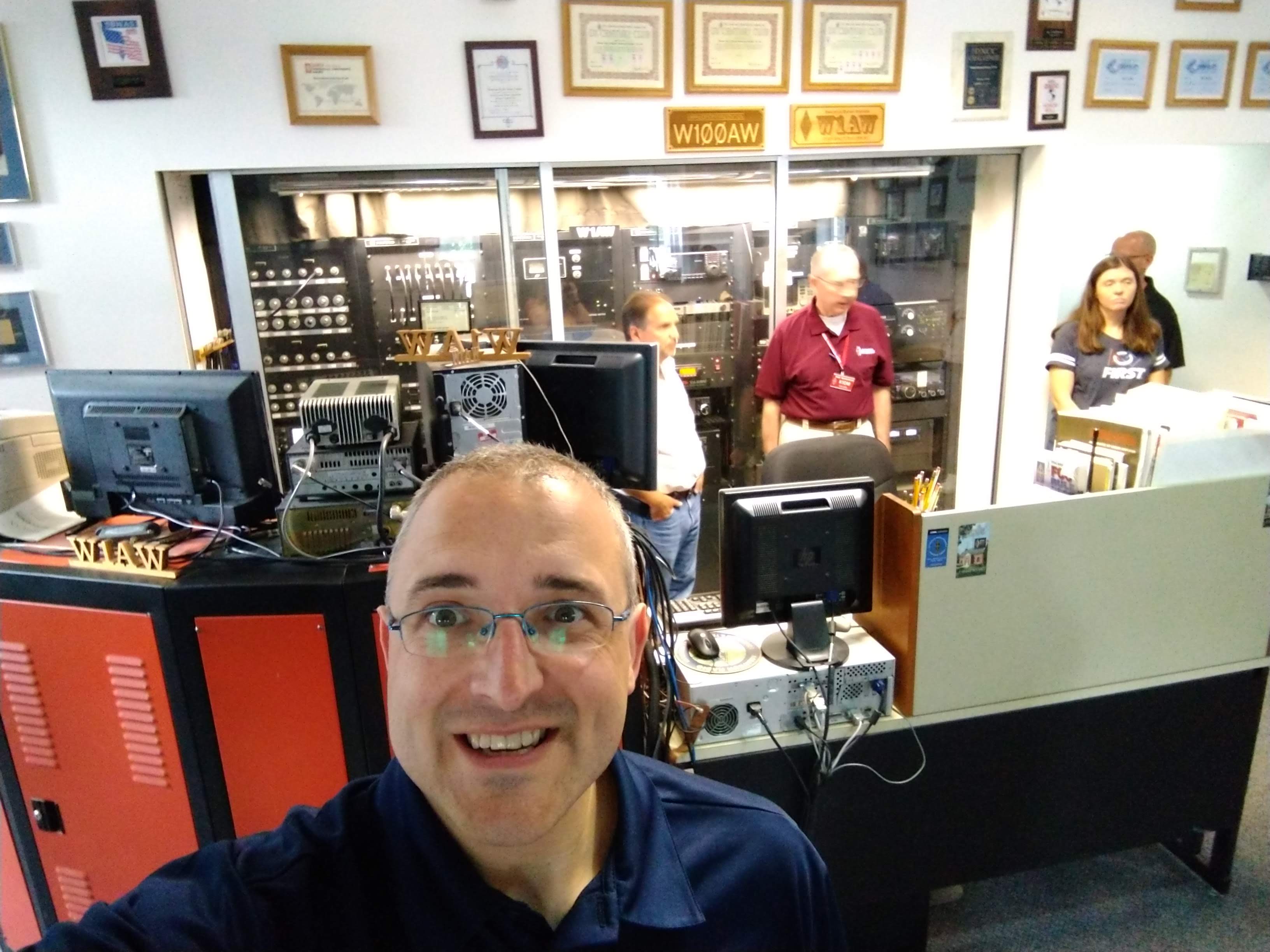
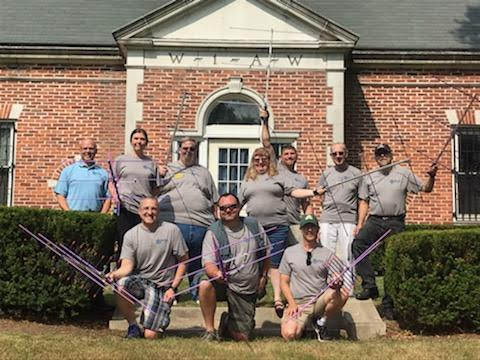
The second year of Teacher Institute helped me delve further into Remote Sensing and using radio to bring Space into the classroom.  Throughout the week, seven other participants and I were offered the chance to operate W1AW, take tours of the ARRL Headquarters, and learn new ways for us to bring HAM radio alive for students.
ARRL Teachers Institute

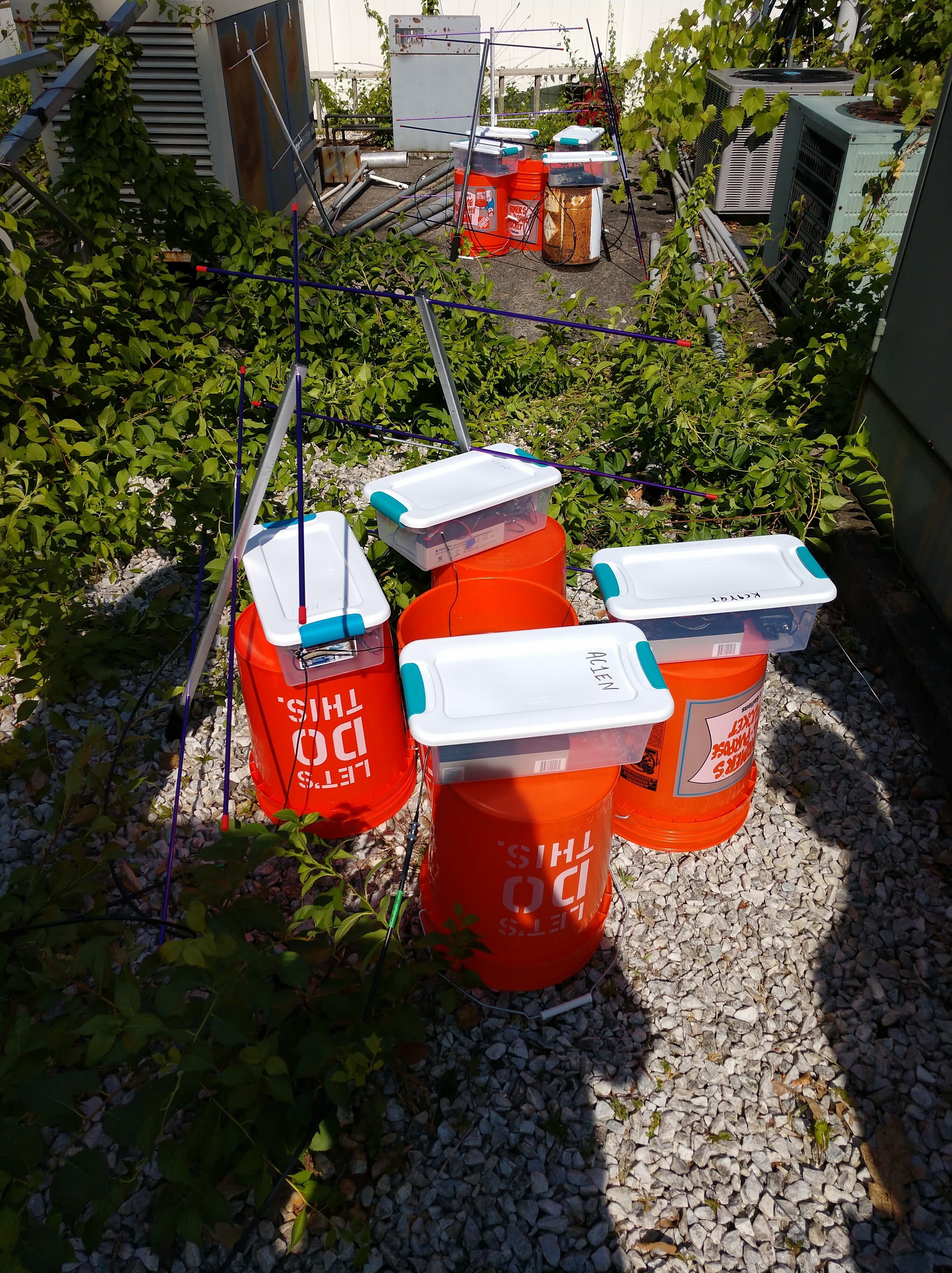
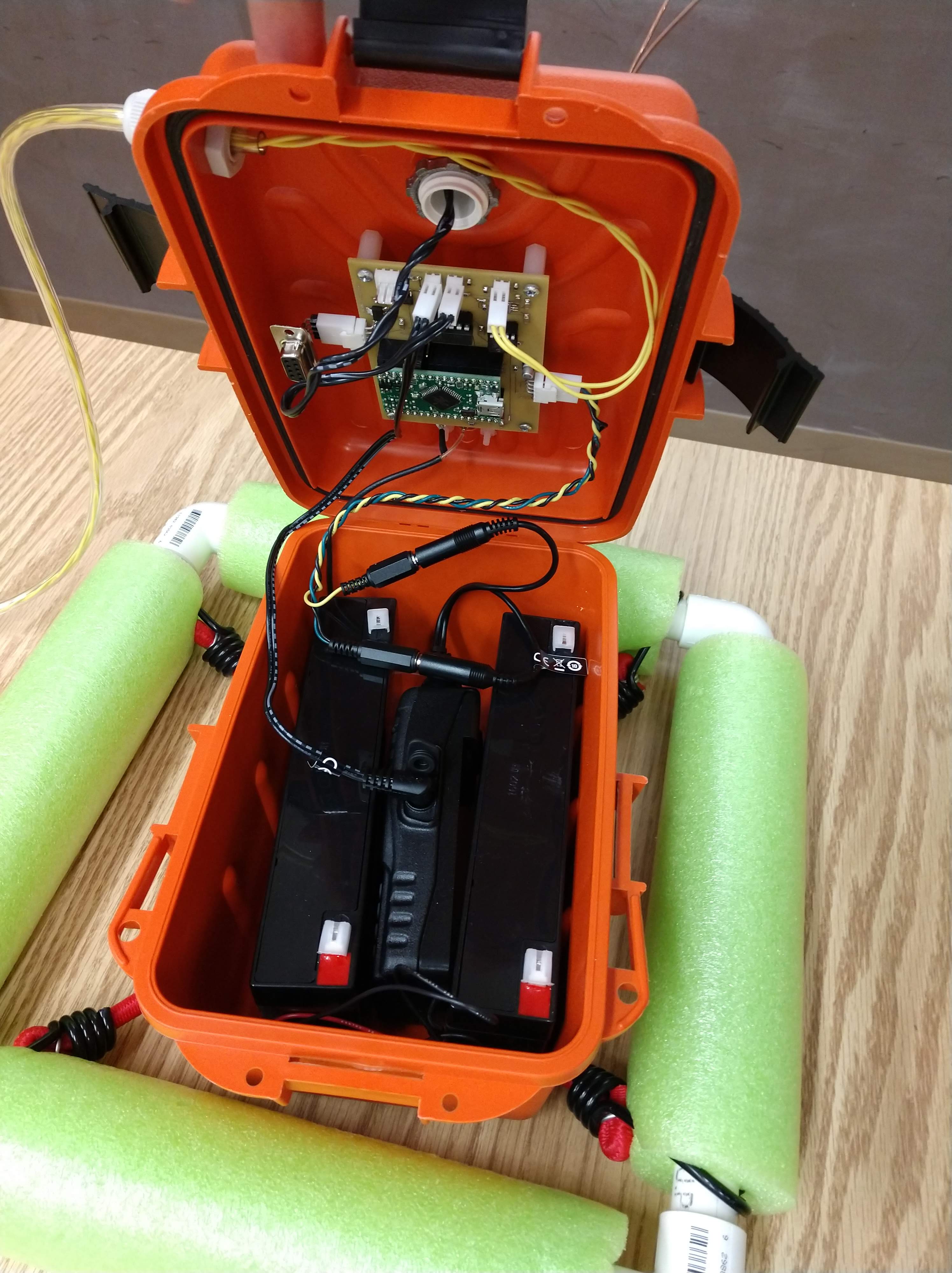
Over the course of the week, Instructor Matt Severin brought participants through building a remote sensing buoy using an Arduino and sensors that included GPS, Pressure, Altitude, and Temperature.  Participants programmed their buoy to relay information through the APRS system.  Using a Yaesu FT-60R and 12-volt battery, the buoys were set outside overnight.  Each participant’s buoy sent over 20 hours of data through APRS.  Participants then copied the data into Excel and created several graphs that showed the change in temperature inside and outside the buoy over the course of time.  We were also able to see the health of the battery and other measurements over the course of the same time.  I believe one use for my new buoy will allow me to have students utilize local data while studying statistics in mathematics class.
ARRL Teachers Institute

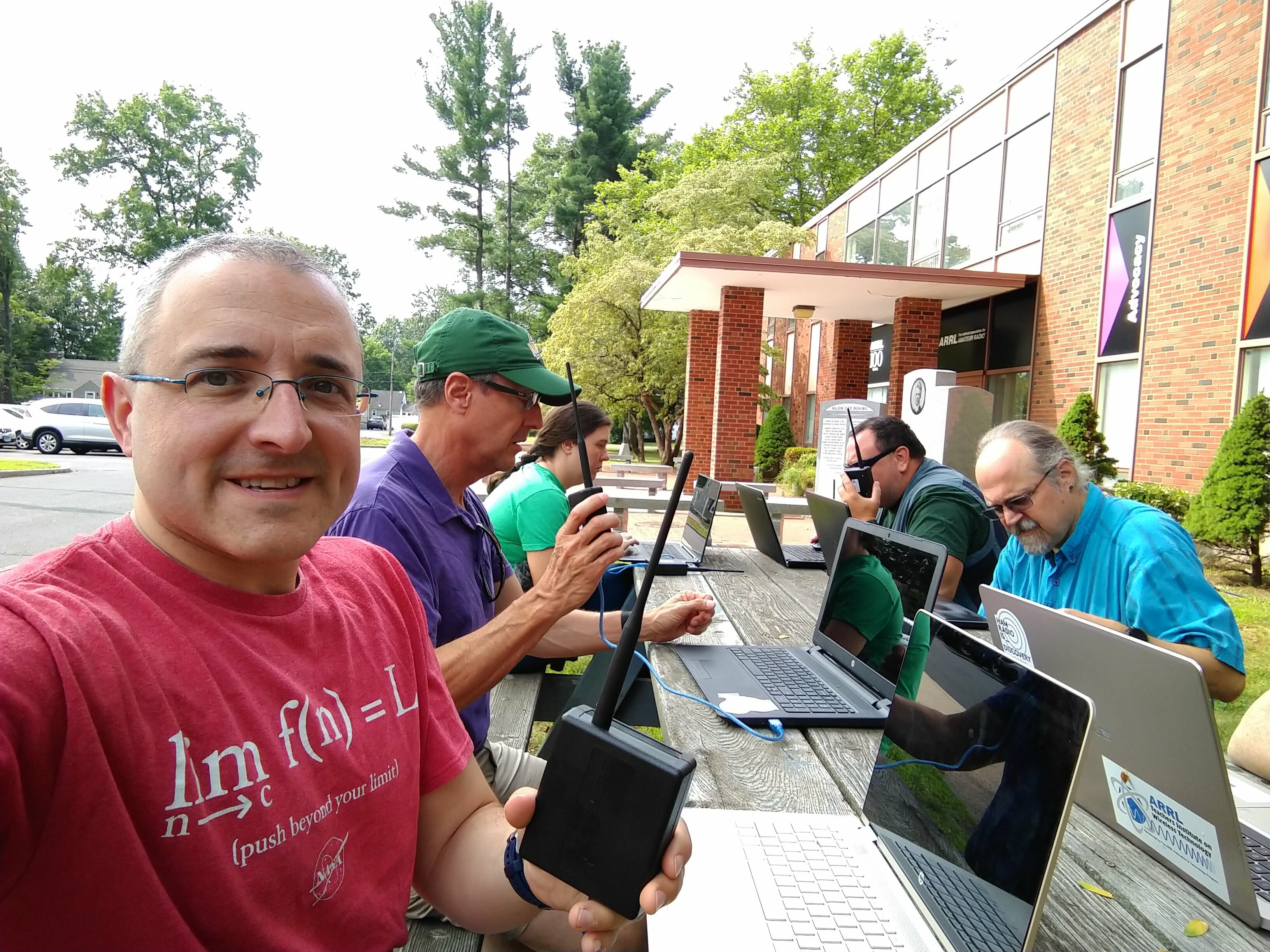
Participants also explored how amateur radio could easily be brought into the classroom through the use of SDR radio.  By connecting an SDR to a laptop in conjunction with the program  HDSDR I was able to hear local radio stations, the NOAA weather updates, and packets being transmitted through the air.
ARRL Teachers Institute

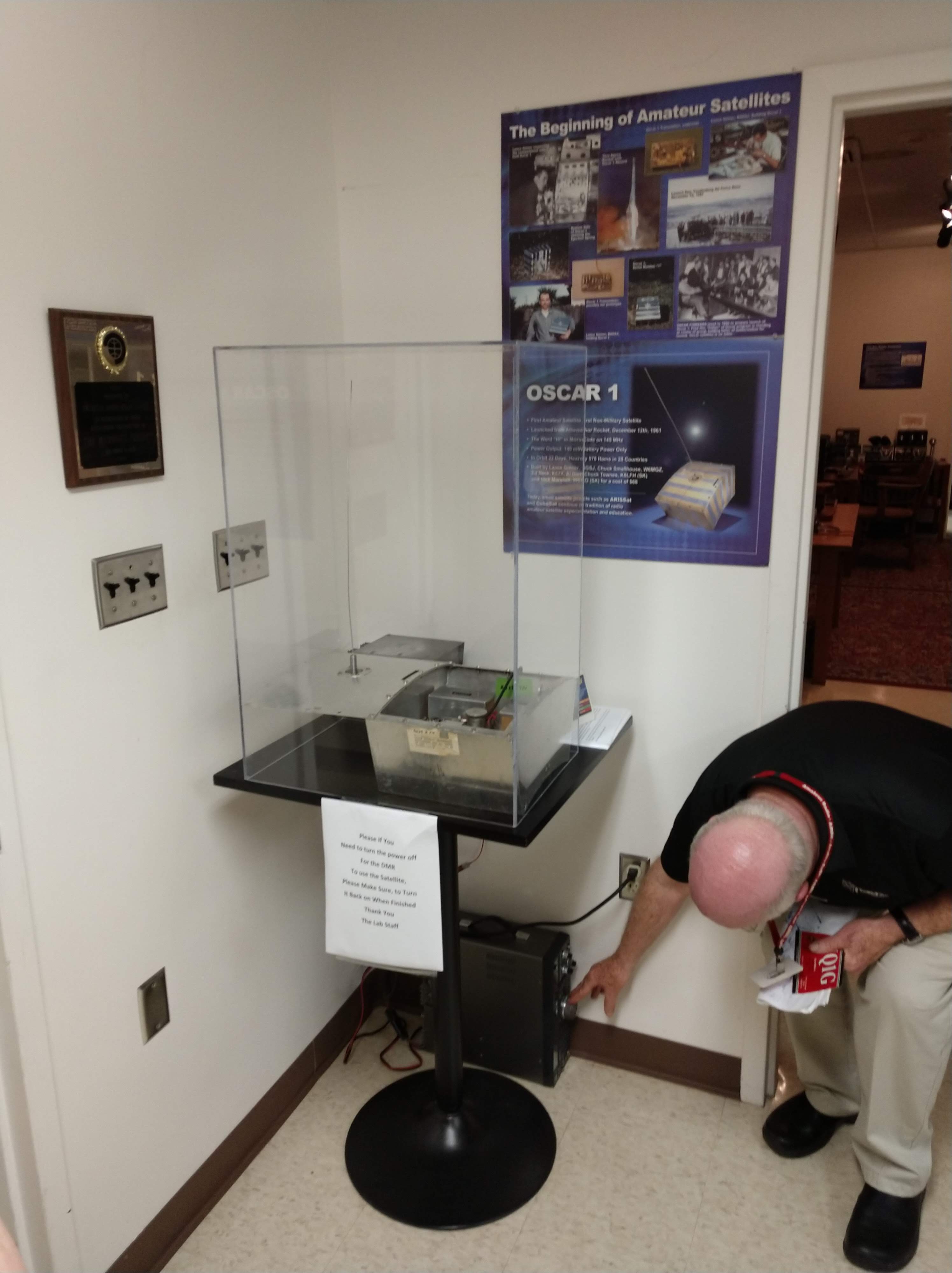
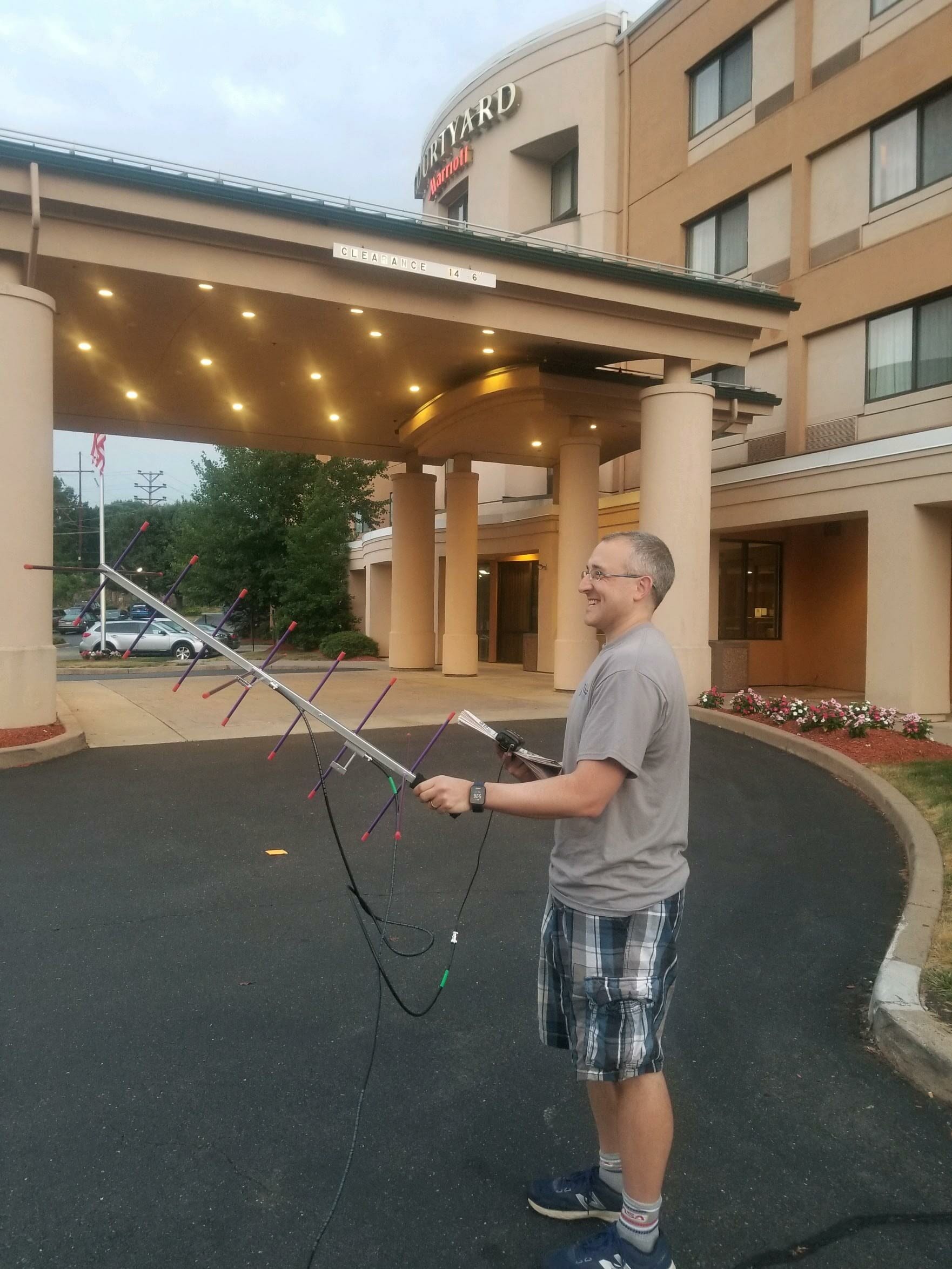
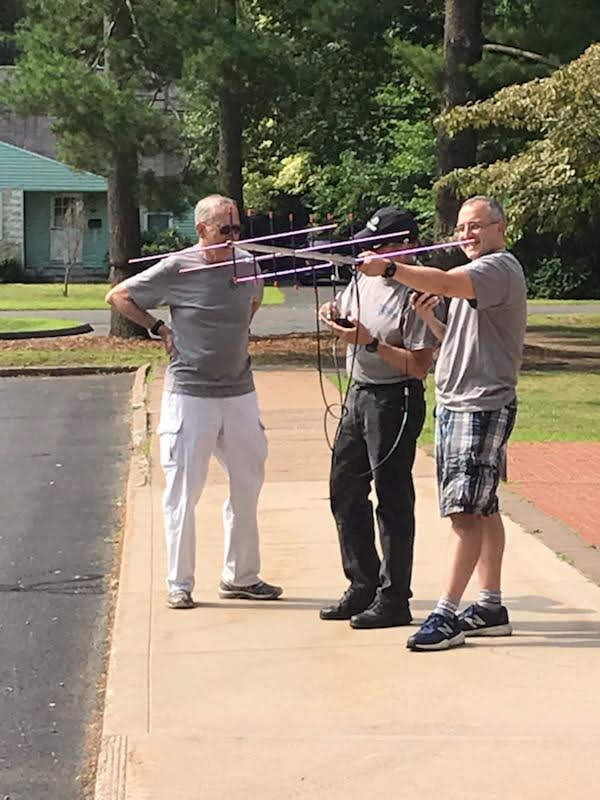
The item that I found most exciting was the use of our new Arrow Antennas to make satellite contacts.  During the course of the week, participants went outside of headquarters several times to attempt contacts through SO – 50, AO 91, and AO-92.  Being rather new to ham radio, I found this very challenging as the airways on a good pass are very noisy.  I also discovered that I am far too polite to interrupt others.  To get over this, myself and another participant took our radio and Arrow antennas back to the hotel and attempted a contact in the early morning.  I am pleased to report that I was able to make my first satellite contact on SO-50 at 7:10 am in the morning.  Okay, I stand corrected.  It was really my second satellite contact since I did get to contact the International Space Station with my students last December.
ARRL Teachers Institute

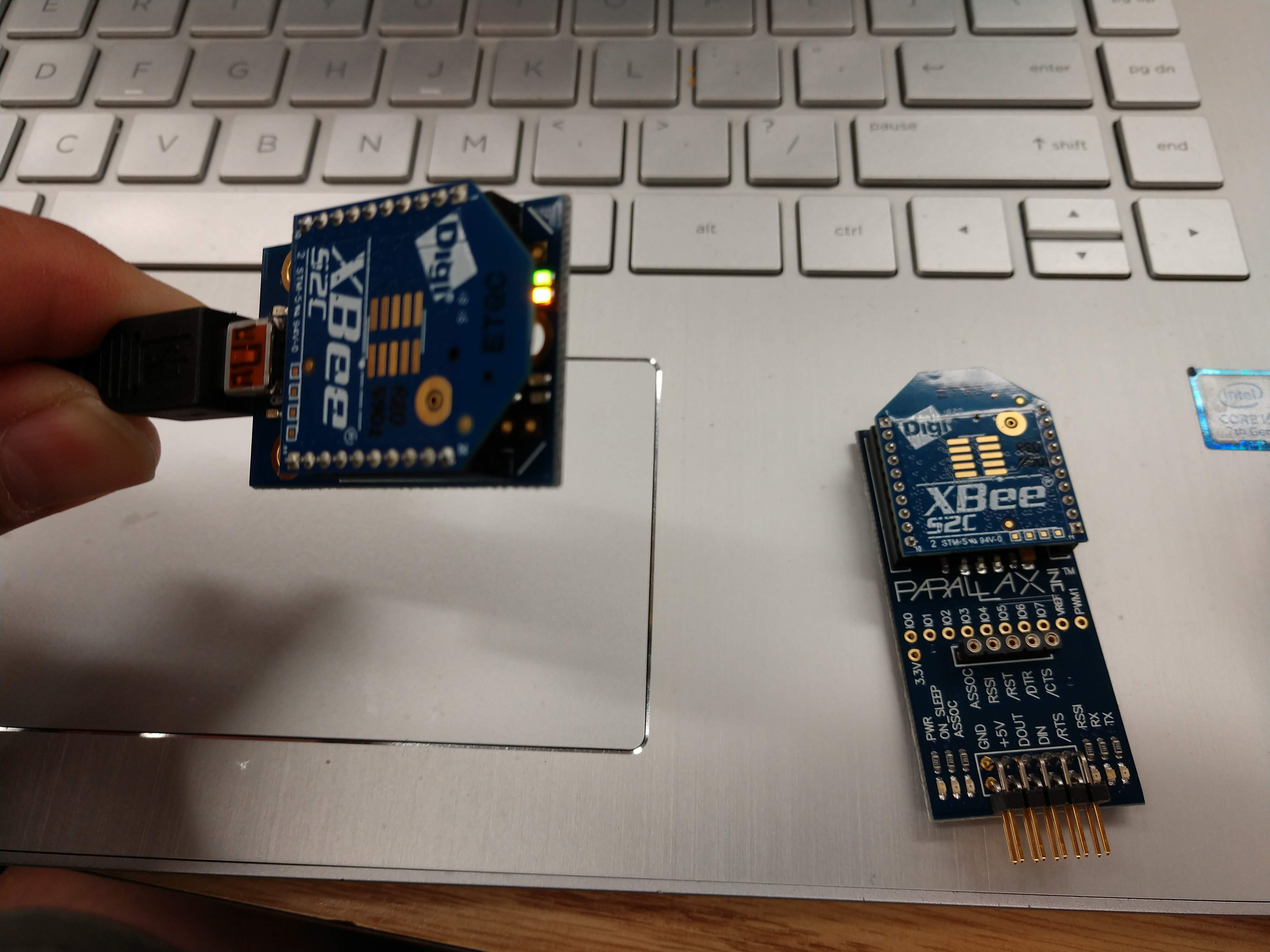
Another thing I found interesting was using my Arrow and SDR radio to collect data packets from the passing satellites.  On one pass AO-91 turned on its picture transmission so that we could attempt to collect the packets.  I was able to collect 6 of the packets but did not get a picture. We then looked at the telemetry that we were able to collect from the satellites.
ARRL Teachers Institute ARRL Teachers Institute

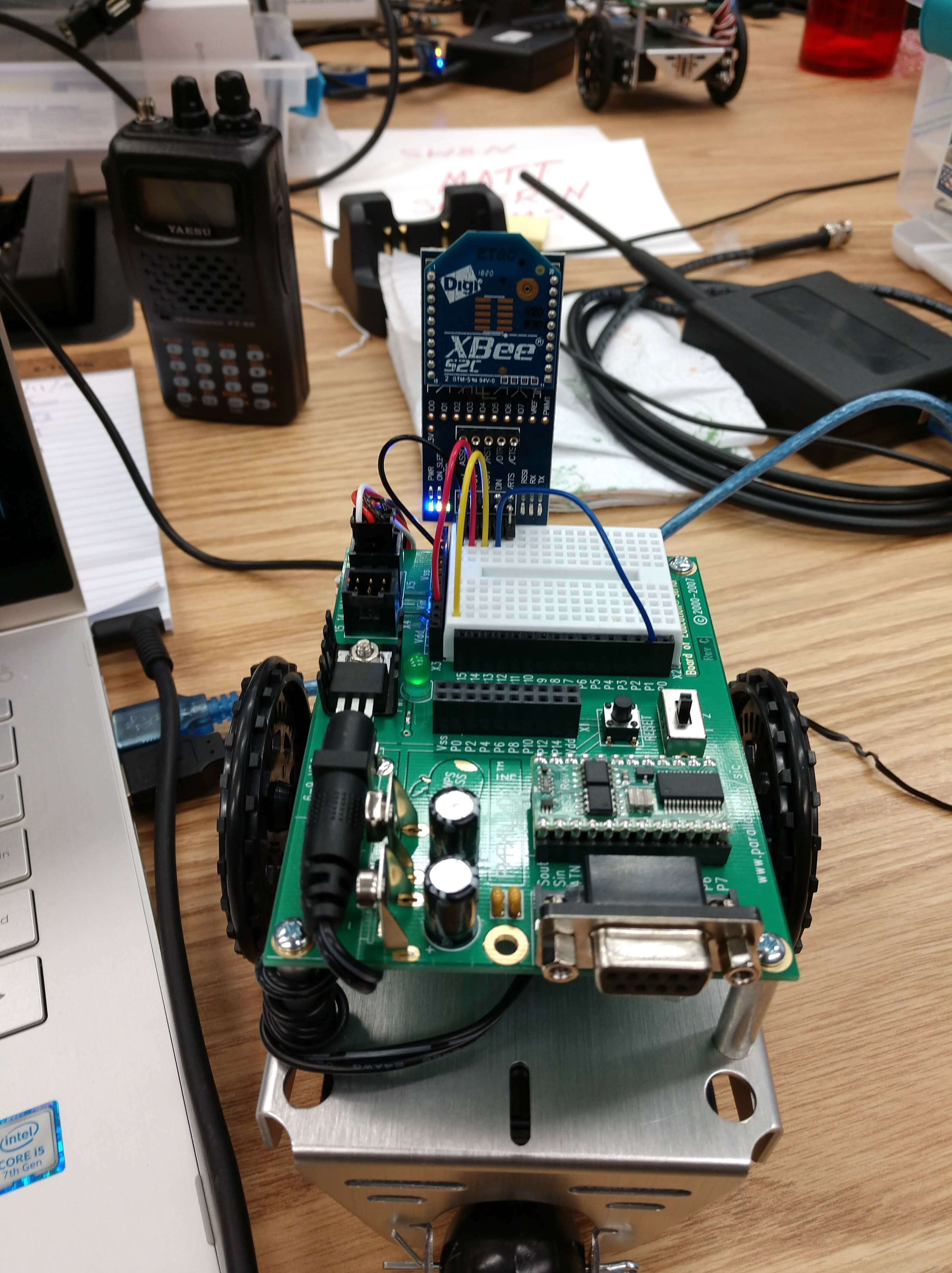
On the last day, we once again used the APRS system.  This time we used the MAREA protocol to send commands to the same Arduino robots that we built last year.  With a few extra pieces we were able to send our robots’ instructions to move forward, backward, left, and right.  The MAREA protocol was a great demonstration of how NASA controls rovers that have been sent to the moon and Mars.
ARRL Teachers Institute

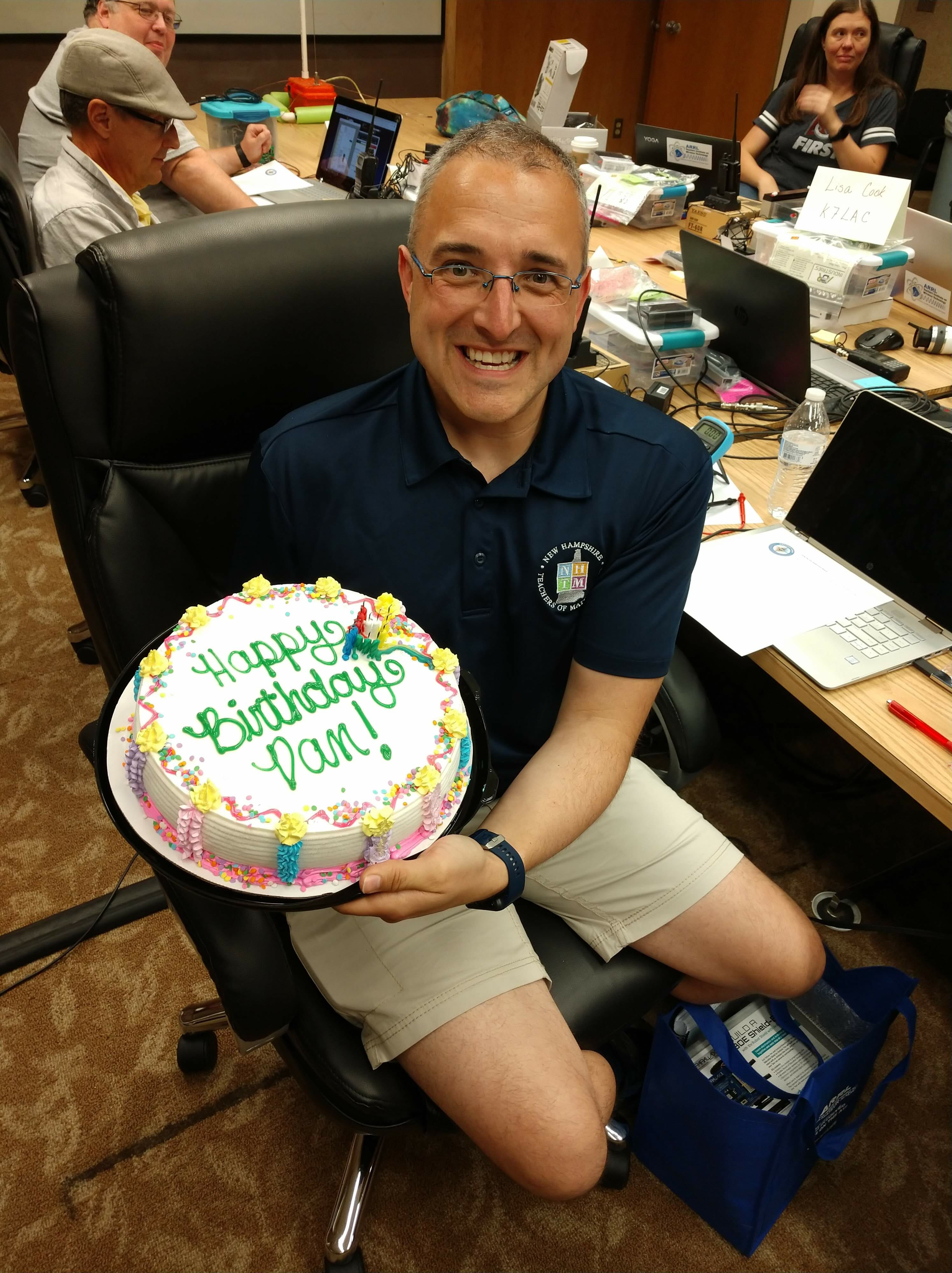
I would like to thank all of those ARRL members whose contributions made these two years of professional development possible.  I will remember this forever.  It was even more special to me as the first day of this workshop landed on a day that many others dread.  I turned 40 on July 8th.  While I was not with my family, I gained a whole new family of educator friends that I know will continue to support each other as we bring Amateur Radio to a whole new generation.  Thank you, Ally, Kris, ARRL, and the Nashua Area Radio Club Members who continue to support me through my continued discovery of Amateur Radio.

Dan, AC1EN

Buddipole 15m 2-element Yagi with 8-foot boom

There was a query after the September newsletter was published regarding the antenna pictured in my 100 Pound DXpedition article. Here are the details.

15m 2-Element Buddipole Yagi

The standard Buddipole Deluxe kit can be augmented to produce a very effective two-element 15 meter Yagi. This antenna was used on St. Thomas, USVI, during the 2010 CQ WPX Phone contest by NE1RD to generate nearly 800 QSOs using only 5 watts (QRP). This note provides assembly instructions for this antenna.

Necessary Components

The components necessary to construct this antenna are:

  • 1x ~ Buddipole Yagi converter kit
  • 8x ~ 22” Antenna accessory arms
    • 2x arms for the driven element
    • 2x arms for the reflector element
    • 4x arms for the antenna boom
  • 2x ~ 11” Antenna accessory arms
  • 4x ~ 9.5 fool long Buddipole whips
  • Buddipole Deluxe System
    • Rotating arm kit (RAK) knobs with nylon washers
      • One knob holds the reflector to the end of the boom
      • The other knob holds the center IT adapter to the mast
    • Buddipole VersaTee
    • Coax feed-line with banana plugs
    • Velcro strap (and additional strapping to secure the feed line to the boom)
    • 8-foot mast
    • Tripod
    • Guying system or very heavy weight on the bottom of the tripod to prevent tipping

Antenna Design

The basic design of the antenna is illustrated in Figure 1.

Figure 1. Buddipole 15m 2-el Yagi

Construction Details

  1. Begin by constructing the boom. Locate one of the IT adapters that came with the Buddipole Yagi kit. Screw a 22” arm into each side of the IT adapter. Add a second 22” arm to each side to produce a boom nearly 8-feet in length.
  2. Construct the reflector by locating the second IT adapter. Screw a 22” inch arm into each side of the IT adapter. Attach an 11” arm to each side of this assembly. There should be approximately 34” of arms on each side of the IT adapter. Locate two 9.5’ Buddipole long whips and, with the whips collapsed, attach a whip to each side of the reflector assembly.
  3. Construct the driven element by locating the threaded 3/8” x 24 threaded rod. Screw this rod into the top of the VersaTee. Attach the Yagi collar to one end of the boom. Attach the VersaTee to the boom and mate with the Yagi collar. Be sure to have the VersaTee in the same plane as the boom’s IT adapter so that the elements will be horizontal with respect to the ground when the antenna is mounted. Attach 22” arms to each side of the VersaTee. Locate two 9.5’ Buddipole whips and, with the whips collapsed, attach the whips to the ends of those arms.
  4. Attach the reflector to the boom by first fixing the second Yagi collar on to the other end of the boom. Then attach the reflector, ensuring it is properly aligned with respect to the boom’s IT adapter, using one of the large RAK knobs.
  5. Attach the feed line to the VersaTee with black and red wires going to the corresponding colored banana plug mounts on the VersaTee. Secure with Velcro straps. (Additional straps, or other means of routing the feed line back to the center IT adapter may be necessary).
  6. Set up the tripod and mast as you would for a standard Buddipole deployment. Guy as necessary, or weigh down the tripod with a heavy rock or other weight.
  7. Locate the mast collar from the Buddipole Yagi kit and attach it to the top of the mast. Use the second RAK knob to secure the antenna to the mast.

Tuning The Antenna

The lengths of the elements are such that the antenna can be tuned easily. Extend each whip to full length, then retract the outer-most section 6 or 7 inches. Make small adjustments to the reflector to tune. The author found that even guesses (no rulers) for the element lengths were good enough for creating a good match.

SWR and 2:1 Bandwidth

A properly tuned antenna will provide a good match across the band. The two plots below are from the author’s installation on St. Thomas in March of 2010 (Figures 2 and 3).

Figure 2. 15m Yagi SWR plot

Figure 3. 15m Yagi Smith Chart plot

The small green line along the real axis between 50 and 75 Ohms is the plot for the antenna. Pure resistive load, no reactance, resonant.

Results From KP2/NE1RD Deployment

The author made 977 contacts on this antenna including 808 in the CQ WPX SSB contest (794  unique stations after duplicates were removed). He worked 48 states (missing ND and WY), and 58 DXCC entities in 17 zones in just a few days of operation. All contest contacts were made QRP (5 watts)!

Scott, NE1RD

September Contest Notes

On the Doorstep

CQ WW SSB, the biggest phone contest of the year, is a little under two months away. Solar conditions have not been kind to us this year, and there’s little chance for a big improvement in the next few weeks, but there’s still DX to be found. Now is a good time to familiarize yourself with websites that can help you gauge propagation during the nadir of the cycle. 

spaceweather.com provides current solar conditions and forecasts, especially for geomagnetic storms. One interesting thing on this site is the “Spotless Days” tally. As of this writing, we’ve had 23 days without a sunspot. As we all know, no sunspots, no big fun on the high bands! But there might be _some_ fun, maybe a little, so always check 10m and 15m when you operate. You might be rewarded. And when not in a contest always give 17m a look. Often when 20m is open you’ll find 17m has some activity, too.

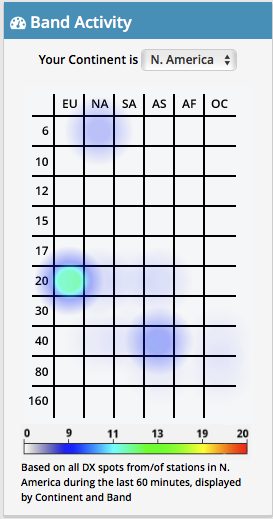
Maybe your logging program already has an interface to the DX spotting network (mine, MacLoggerDX does, for example) but several websites also offer views and it is worth giving these resources a look. DXHeat.com claims to have 43 million DX spots in their database. They’ve been at it a while, so it sounds plausible. Check out the “Band Activity” display by selecting “N. America” as your continent. The display aggregates the DX spots into a by-band, by-continent intensity display. 

DXHeat band activity map

Click the DX Cluster button and then play with the filters. You can select one or many bands, one or more modes, even which continents you are interested in hearing from and which continent posted the spot. To cut down on all the chatter click the NA button under De to see only North American spots of DX.

There are a number of online DX spotting network websites, all of which offer something unique. I suggest looking at one band and one mode at a time at different times during the day. This will give you a very good idea of what is possible during your next on-air adventure.

September Highlights

Tennessee QSO Party [1800Z Sep 1 to 0300Z Sep 2]

Exchange: TN stations give RS(T) + county, others RS(T) + state/province/country

For those of us in New England, Tennessee is in that sweet spot that’s not too close, and not too far away. If you put some effort into this contest you could probably do a clean sweep of all 95 counties. That would put you well on your way to a County Hunters award.

All Asian DX Contest [0000Z Sep 7 to 2400Z Sep 8]

Exchange: RS + 2-digit age

I know my log is a little light when it comes to Asia, so this would be a good chance for me to put more callsigns and prefixes into my log. It is also a great way to see how propagation to Asia might be during CQ WW. It is worth a look.

National Contest Journal Sprints

CW [0000Z-0400Z Sep 8]

RTTY [0000Z-0400Z Sep 15]

Exchange: [other station’s call] + [your call] + [serial no.] + [your name] + [your state/province/country]

Sprints are fun, especially if you’re a little nervous calling CQ. You work somebody calling CQ, then they clear off and it is your frequency to call CQ and make a QSO. Everybody takes turns.

As always, check out www.contesting.com and the linked calendar for a complete list of on-air contest.

New Hampshire QSO Party [1600Z Sep 21 to 0400Z Sep 22 and 1600Z-2200Z Sep 22]

Exchange:

NH: RS(T) + county

others RS(T) + state/province

DX: RST(T) + “DX”

This is our time to shine! It is fun to be the one sought after. And, this is a great way to warm-up to the big contesting season.

The End of Summer

Get those last-minute antenna projects done, check out all your equipment, maybe even make that last-minute run to Ham Radio Outlet! Summer might be ending but contesting season is in the wings. Get ready!

Scott, NE1RD

Radio Amateurs Developing Skills Worldwide