A Ham Radio operator that has received his or her first license in 2015, 2016 or 2017
A Ham Radio operator that has never operated before in the mode of the current ARRL Rookie Roundup.
Are you a rookie? Join us for the ARRL Rookie Roundup SSB on Sunday, April 16 from 18:00z to 23:59z (that is 2 pm – 8 pm local time). The Rookie Roundup is a contest sponsored by the ARRL specifically for new hams.
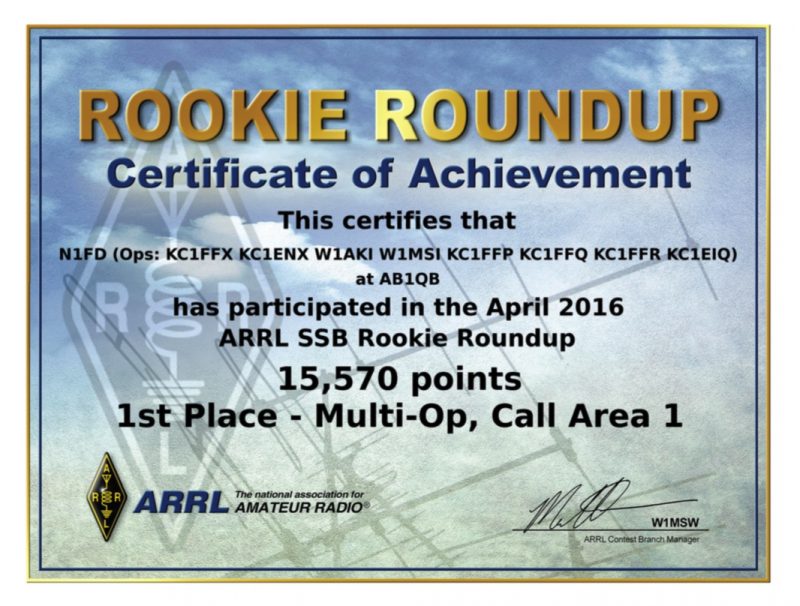
N1FD Certificate from the 2016 ARRL Rookie Roundup SSB
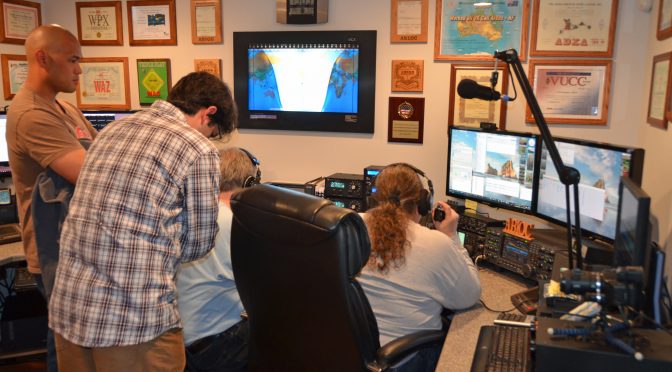
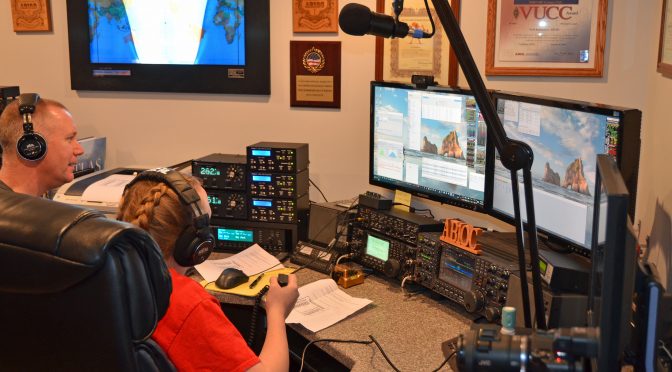
We will be hosting a multi-op entry using the club callsign, N1FD from the AB1OC/AB1QB QTH. Help us defend our title from last year as #1 Multi-Op Area 1. This is an opportunity to get on the HF bands if you just got your license and don’t have a station setup yet, or a chance to get some practice if you want to try running some pile-ups before Field Day.
If you have never operated from our station before, we will hold an elmering session on Saturday, April 15 from 2 pm – 4 pm, also at our QTH.
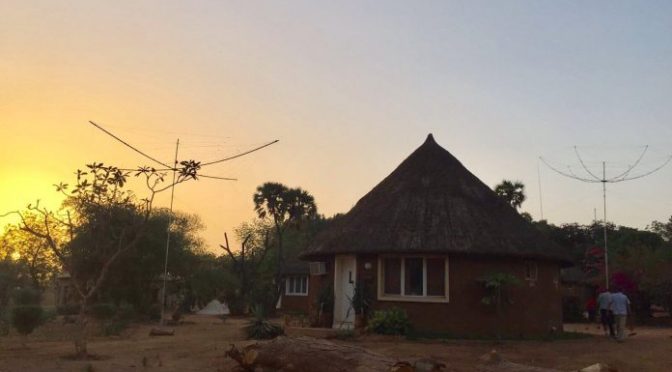
A 12-man team will be active from Niger as 5U5R between March 9-21, 2017. QRV on 6 to 160 meters; CW, SSB and RTTY with at least 4 stations on the air simultaneously. Full details here
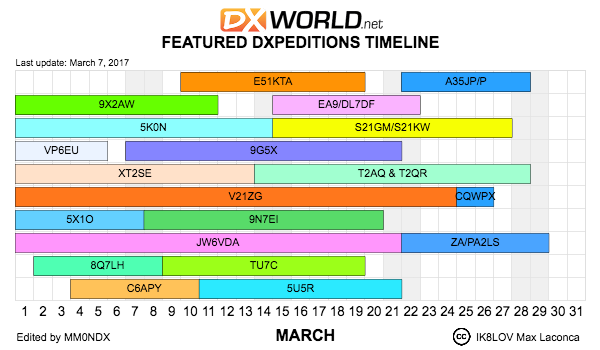
DX World DXpedition Calendar for March
Like to chase DX? There is quite a bit of good DX on the air this week. I just worked 5U5R from Niger, which was an ATNO (All Time New One) for me! 9N7EI from Nepal and TU7C from Cote D’Ivoire are also on the air.
The DX World website has a calendar for the month which shows all of the DXpeditions for the month. It also has announcements for upcoming DXpeditions.
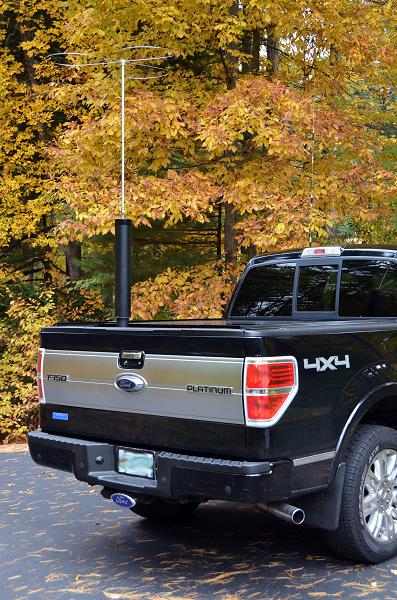
Sometimes I drive Fred’s truck into work and people ask me what that big antenna on the back of the truck is for. I explain to them that it is for Ham Radio. But the reply is usually “Why ham radio?” Isn’t that outdated technology? We have cell phones and IM, etc…what do we need Ham Radio for? Here are my thoughts as a relatively new Ham about why I enjoy spending much of my time with Ham Radio.
Amateur Radio for Public Service
Public Service
The number one reason we still need Ham Radio along with all the other technology is for public service. When there is a disaster and cell phones, television, … are all not working, Ham Radio operators provide critical communication.
Ham Radio operators help locally to keep hospitals and first responders in contact with each other to help those affected by the disaster.
We also use our ability to communicate around the world to help family members to get in touch with loved ones affected by a disaster.
Ham Radio operators have been on the scene helping in every disaster from the earthquakes in Nepal to the recent flooding in California.
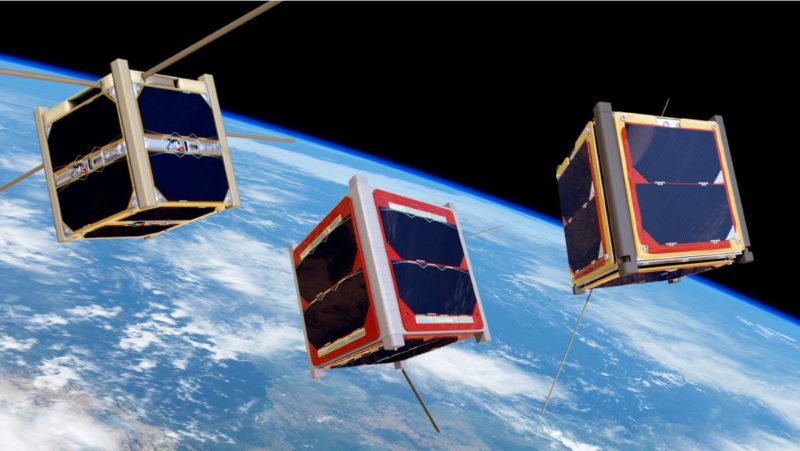
Amateur Radio Cube Satellites
Technology and the Maker Movement
I only became a Ham 5 years ago but many of my fellow Ham Radio operators got their license when they were in their early teens. Some have used what they learned to launch their careers. Many have had successful careers in STEM fields, all launched by their interest in Ham Radio at a young age. As technology advances so does the technology used in our hobby. We even have a Nobel laureate, Joe Taylor K1JT who is a ham. Joe has developed weak signal digital communication modes that let us communicate by bouncing signals off the moon!
As technology has advanced, so has the use of it in Ham Radio. Most Ham Radio operators have one or more computers in their shack. Many also have a software designed radio (SDR), where much of the radio functionality is implemented using Software. Hams use sound cards to run digital modes, which are a lot like texting over the radio. We use the internet extensively as part of operating. We can also make contacts through satellites orbiting the earth and even the International Space Station.
Homebrewing
Most hams love do-it-yourself technical projects – building a station, home brewing an antenna, building a radio or other station component. In my day job, I am a program manager for software development projects. It has been a while since I have built anything myself. As a Ham, I taught myself how to code in Python and about the Raspberry Pi and I built the DX Alarm Clock.
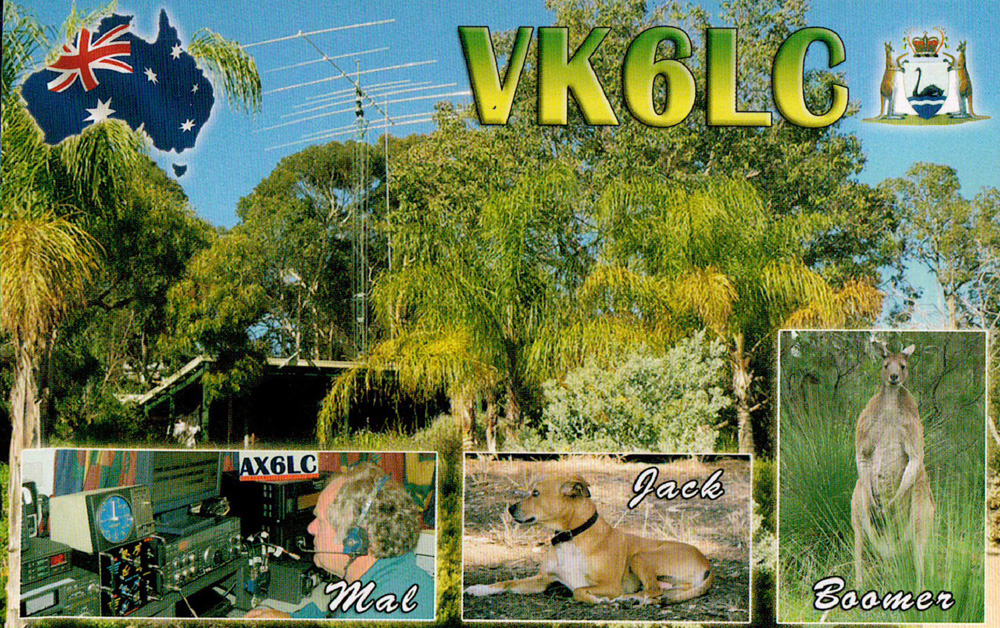
QSL Card from VK6LC in Western Australia
International Camaraderie
One of the coolest things about being an amateur radio operator is that you can communicate with other hams all over the world. Ham Radio is an international community where we all have something in common to talk about. That is our stations and why we enjoy ham radio. The QSL card above is from a memorable QSO with Mal, VK6LC, from Western Australia, who was the last contact that I needed for a Worked All Zones award. I must have talked to him for 1/2 hour about his town in Australia and his pet kangaroos!
Amateur Radio Map of the World
Geography Lesson
I have learned much about geography from being on the air and trying to contact as many countries as I can. There are 339 DX Entities, which are countries or other geographical entities. I have learned where each one is in order to understand where propagation will allow me to make a contact. I have learned a great deal about world geography. Through exchanging QSL cards often get to see photos from so many areas of the world.
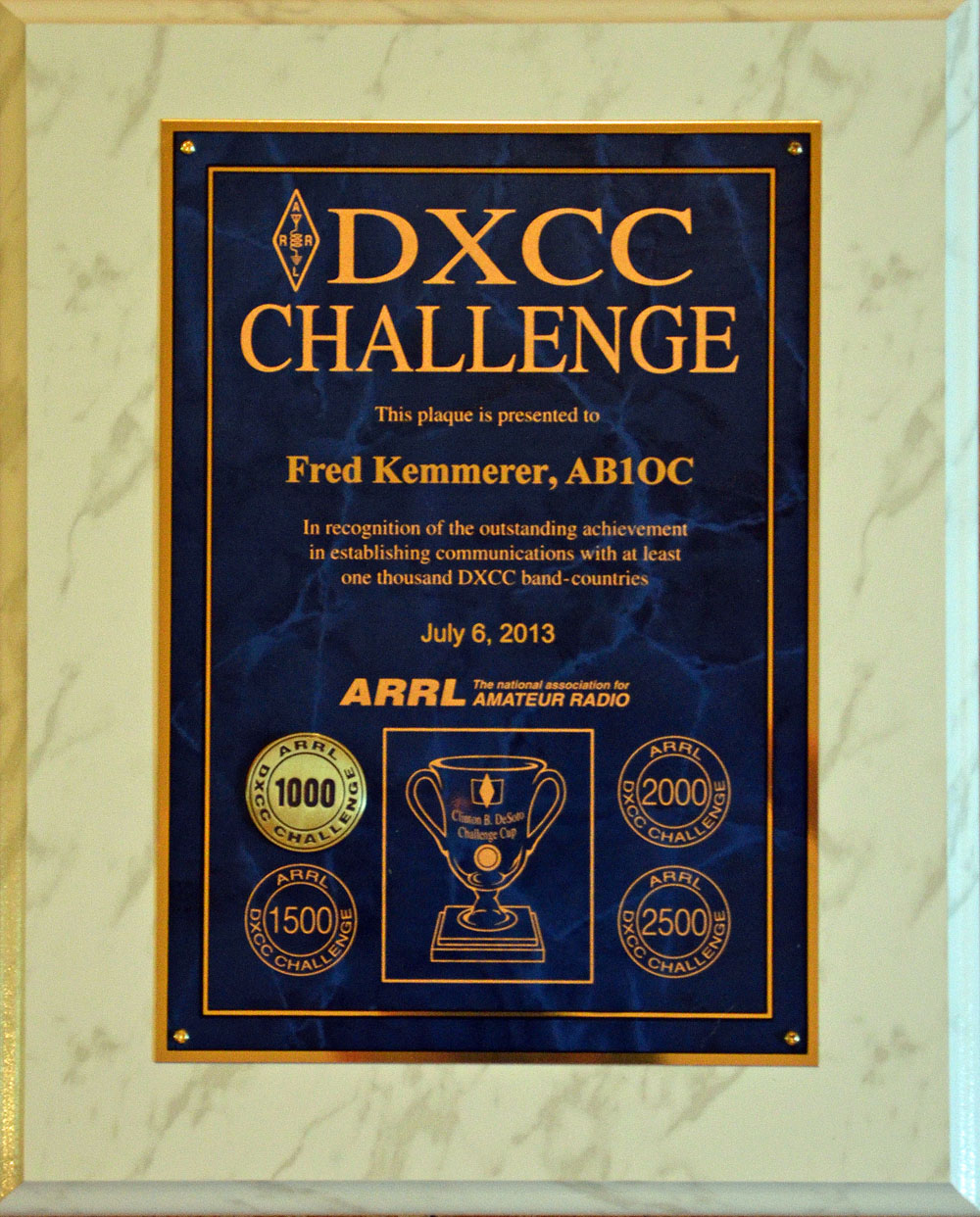
DXCC Challenge Award Plaque
Achievement – DXing and Contesting
DXing and Contesting provide a sense of achievement and exciting opportunity for competition. Many Hams work toward operating awards. You can get an operating award for contacting all 50 states or contacting 100 or more countries. There are also awards for contacting Islands, cities in Japan, countries in Asia, or anything else you can imagine. Each of these operating awards provides a sense of accomplishment and helps to build skills. Contesting builds skills through competition among Hams to see who can make the most contacts with the most places in 24 or 48 hours. Contesting also improves our operating skills and teaches us to copy callsigns and additional data accurately.
Teaching a License Class
Teaching Licensing Classes – Passing it On
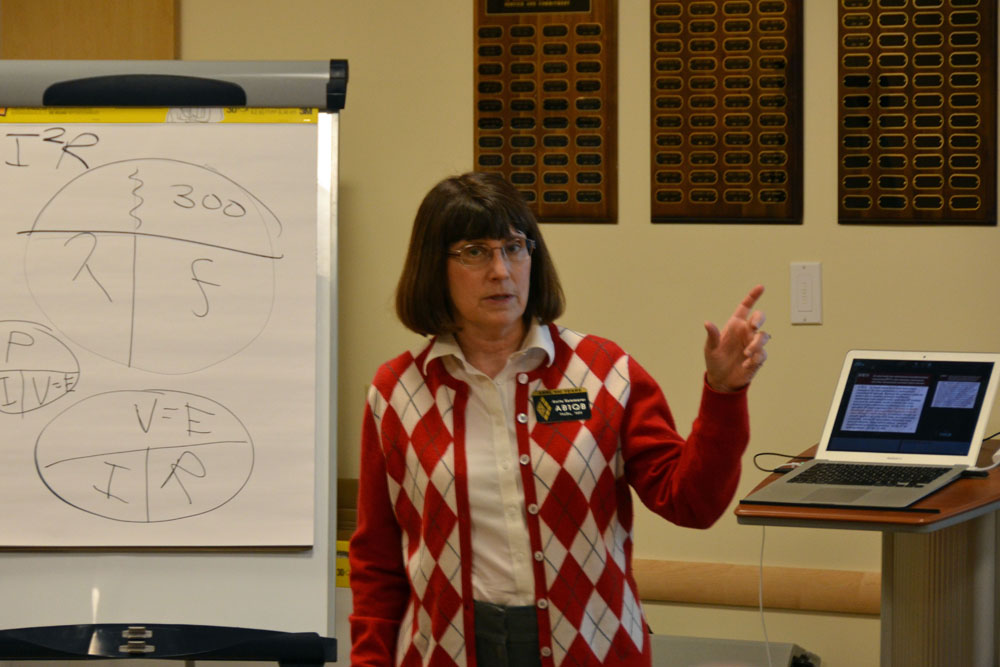
Recently I joined a team of club members who teach license classes to others who want to get licensed or upgrade their existing licenses. Teaching provides a way to improve my presentation skills. It also helps me to really understand the material that we teach about Amateur Radio. It is a thrill at the end of the class to see many people earn their licenses or upgrades.
There are so many interesting aspects of Ham Radio which are what makes it such a great hobby. Getting your license can open up a world of possibilities. Upgrading to a new license class provides more opportunities to communicate over longer distances. Our club provides many resources to help you get your first license, upgrade to a new license class, and learn about the many aspects of our hobby.
We use cookies to ensure that we give you the best experience on our website. If you continue to use this site we will assume that you are happy with it.