WSJT-X developer Joe Taylor, K1JT, weighed in to express his appreciation to all who shared their ideas and experiences using JT9 and JT65 modes during recent multi-hop E-skip openings on 6 meters.
“We are very much aware that a mode with most of the excellent characteristics of JT65, but with faster turnaround time, would be a big winner in such situations,” Taylor commented on behalf of the WSJT-X development team. “We are experimenting with several such possibilities. Tentative goals include 15-second T/R sequences, sensitivity around S/N = –20 dB, occupied bandwidth less than that of JT65, and capability to decode as many as 10 or 20 signals in a 2-kHz bandwidth.”…
This is something to follow if you are interested in the JT modes for HF and VHF communications. Our experience is that a new JT variant that would trade S/N margin for a faster QSO segment speed would be just the ticket on many of the HF bands as well as 6m.
I wanted to share some information about our tracking our High Altitude Balloon as it flies. Our balloon will carry’s a GPS receiver and a 2m APRS Transmitter.
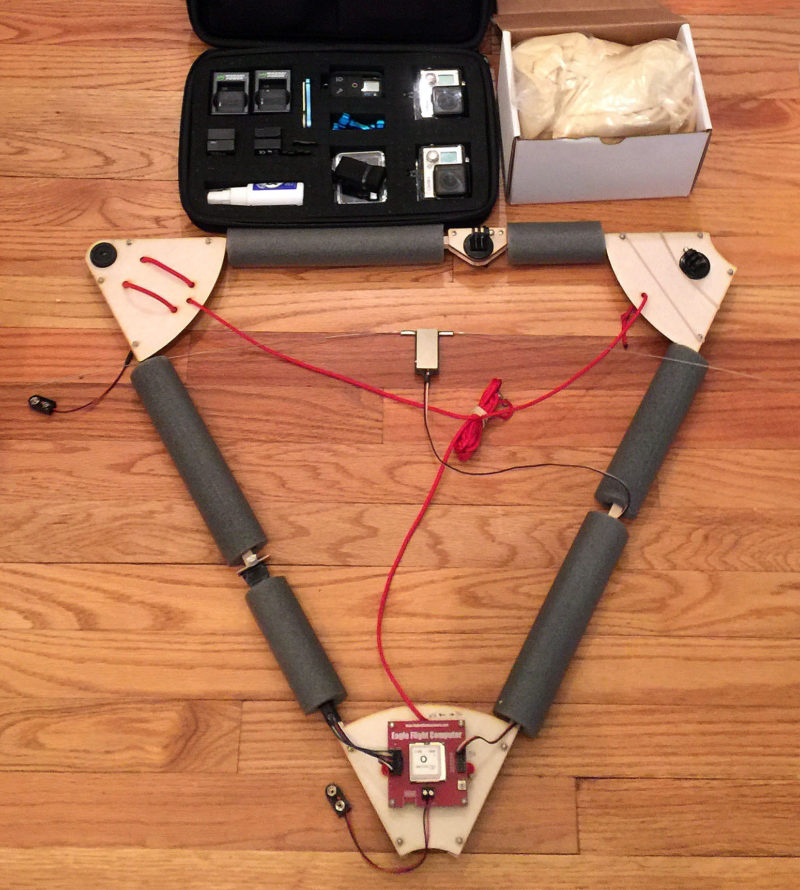
HAB Flight Platform
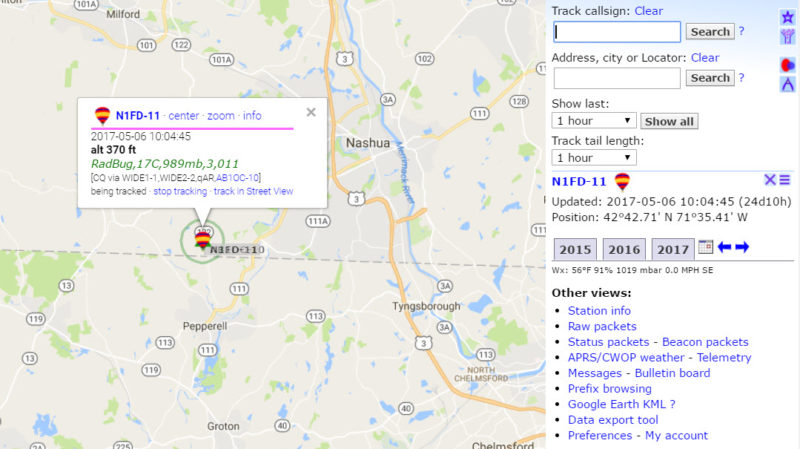
The on board APRS transmitter will operate on the Amateur Radio standard terrestrial APRS frequency of 144.390 MHz and will transmit our HAB’s position, heading, speed, altitude and other telemetry data every minute during the HAB’s flight. The transmitter is battery-powered and generates a 250 mW signal into a dipole antenna suspended from the HAB’s flight platform. The HAB will use N1FD-11 as its call sign.
Based upon online HAB flight prediction calculators that we have been using, we expect the HAB’s flight to last a little less than 2 1/2 hours. The HAB should reach an altitude of over 102,000 ft before the balloon bursts and the parachute on the flight platform brings it back to the ground at a safe speed. The above prediction will likely change as we get closer to an actual launch but most predictions have our HAB traveling approximately 100 km between its takeoff point and landing.
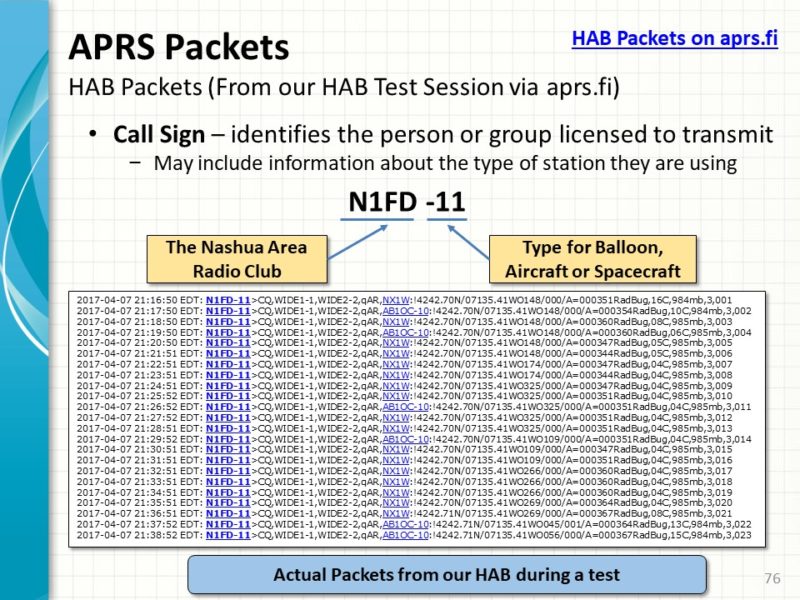
HAB APRS Packet Information
Aprs.fi will also store and display a copy of all of the APRS AX.25 packets transmitted by the HAB during its flight. Of particular interest to the STEM element of the flight will be the Balloon’s data on atmospheric temperature and pressure conditions at different altitudes.
All you need to track our HAB during its flight is Internet access and a web browser. Just click on one of the aprs.fi links here to see the HAB’s current location and altitude. If you have an APRS ground station, you may also be able to receive our HAB’s telemetry directly during the flight.
We need cloud cover which is less than 50% and ground wind speeds below 15 mph to launch our HAB. Will will post a final launch date and plans in the Youth Forum on our website. Our next possible launch window is on Saturday, June 3rd. We are all pulling for good weather so that we can launch!
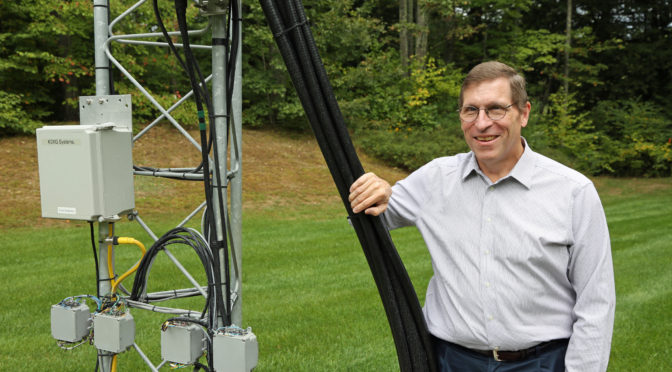
I am a Purdue University graduate (MSEE) and I spent most of my working life at AT&T Bell Laboratories/Lucent where I worked on Wireless Systems, Broadband Access, Data Networking and VoIP products in a variety of engineering and business management roles. I also served as the Chief Technology Officer for a mid-sized VoIP and Wireless company in Dallas, TX for about 7 years.
When did you become licensed and build your first station?
I have wanted to be involved in Amateur Radio since I was about 8 years old. Growing up in a rural area of Pennsylvania, I did not have anyone who could really help me to learn code and become licensed. School, work, and other things took up most of my attention until late in 2010 when I looked seriously at Amateur Radio again and decided to earn my license.
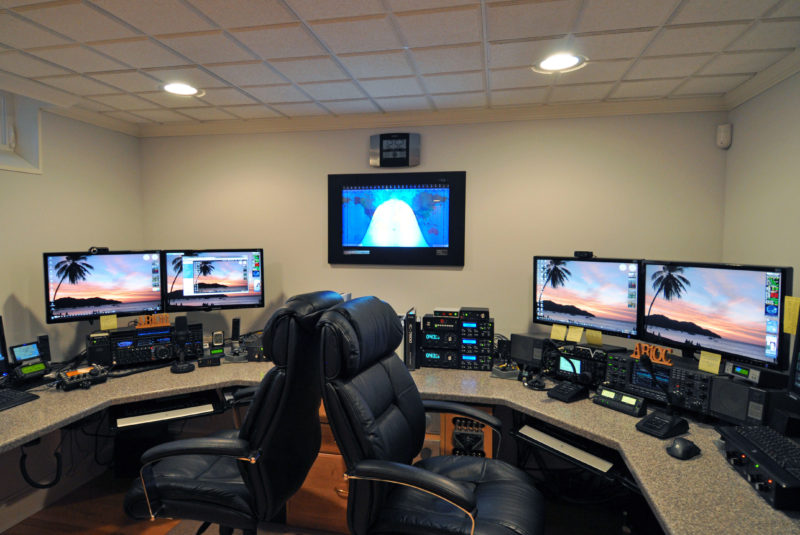
AB1OC/AB1QB Shack
Anita, AB1QB and I built our home station in 2012. The project included a 100 ft tower which covers all of the bands from 160m through 70cm and a dedicated shack which is set up for multi-one contesting and DXing. We added a satellite ground station and equipment for EME late in 2012.
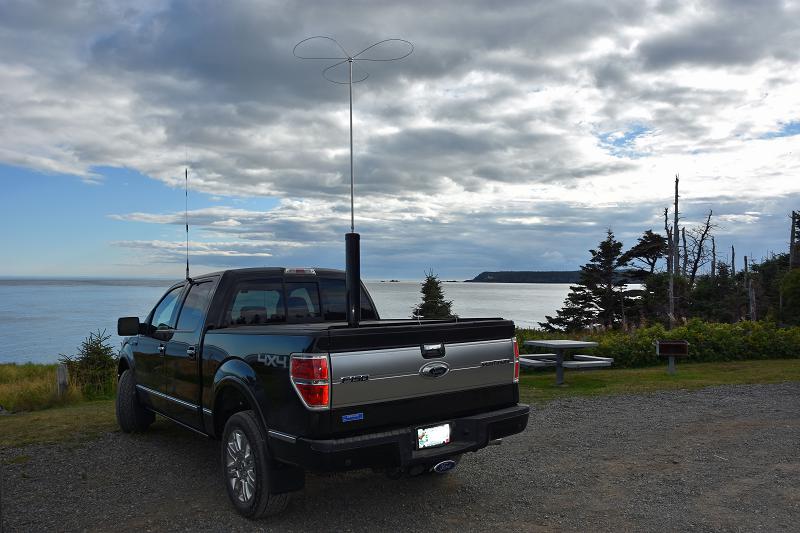
Our Mobile HF Station
In 2015, we built our Mobile HF station. I enjoy working DX, running counties and doing special events like National Parks on the Air using Mobile HF. I am QRV on all bands from 160m through 10m in the mobile. We also have 2m/70cm FM setups in both of our vehicles.
What do you like to do most with Amateur Radio?
I really enjoy station and antenna building. I also enjoy Field Day, Contesting, Space Communications and Mobile HF.
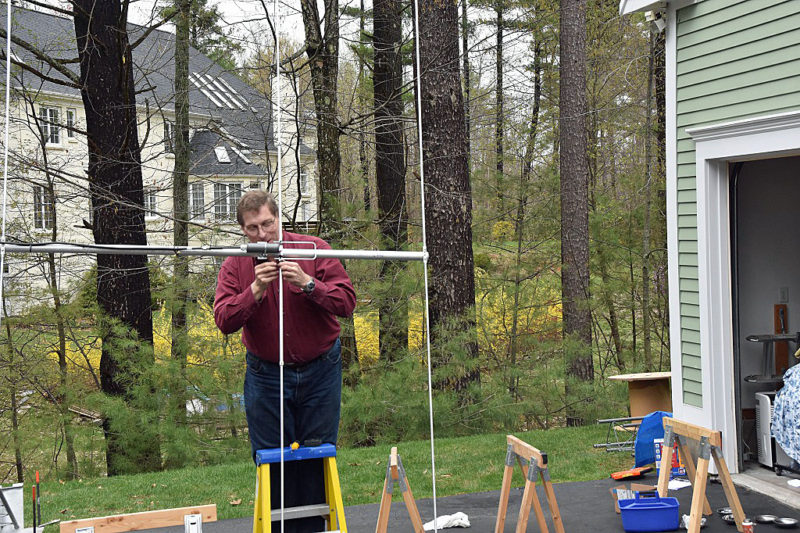
Tuning a 6M Yagi
I enjoy helping others to learn about and have fun with Amateur Radio. Finally, I am the NH State Manager for the Thirteen Colonies Special Event and I have a lot of fun every year operating during the Thirteen Colonies Special Event.
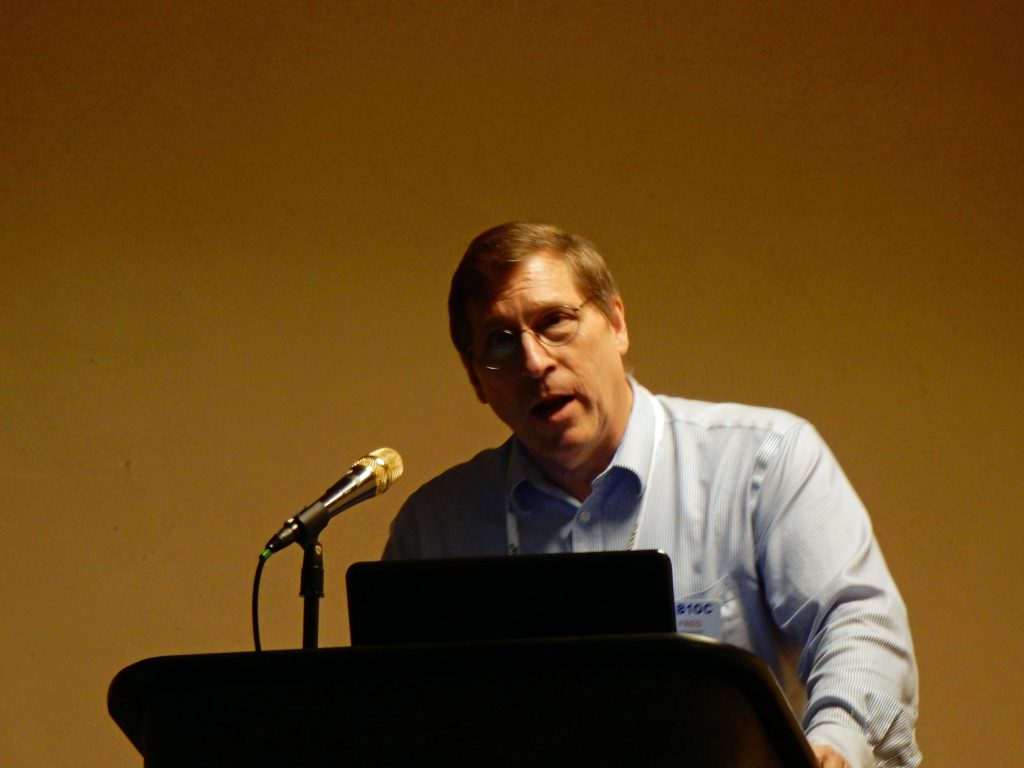
Presentation at the Dayton Contest Forum
I also enjoy speaking about Amateur Radio station building and related topics at Hamvention and club meetings. I have had the opportunity to speak on these topics on many occasions including at our and other clubs meetings, and at Boxboro, Dayton and the ARRL 100th Anniversary Hamvention.
I write also write a Blog about Amateur Radio Station Building and related topics. This is a great way to encourage and help others to do Amateur Radio projects similar to the one that we have enjoyed.
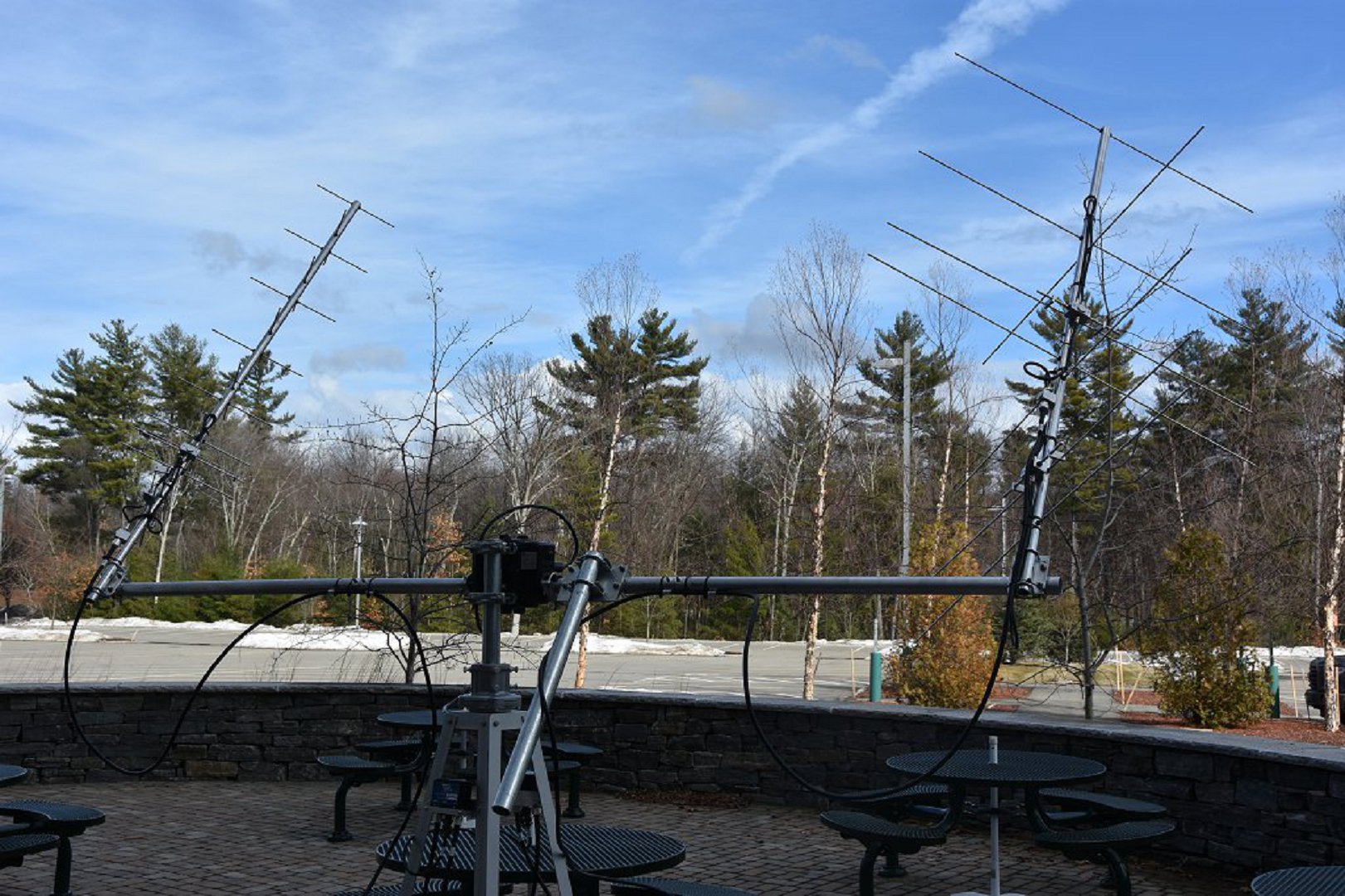
Satellite Station Antennas
Recent projects include portable HF and Satellite stations which we built to share at club events, license class, and GOTA opportunities. I am also working on learning CW.
AB1OC Operating In CQ WPX SSB
I have been fortunate to do a lot of operating in the 5 1/2 years since becoming licensed.
What are some of your most memorable experiences in connection with Amateur Radio?
Early in 2012, my company provided a trip to Bora Bora Island in French Polynesia. Anita suggested that we take a radio and portable antenna on the trip and do a holiday style DXpedition.
QSL Card from FO/AB1OC and FO/AB1QB from Bora Bora
We had almost no SSB phone experience prior to this trip. The response (and the pile-ups) were amazing on Bora Bora and I was able to earn a Worked All States from French Polynesia in just 5 days of operating from there. I came home totally hooked on running pile-ups and operating SSB phone in contests and during special events.
I was one of the W1AW/1 operators for the ARRL 100 Centennial Special event and had a ball operating during both periods when NH was on the air as W1AW/1.
My most memorable contact ever was working Japan for the first time on 75m SSB phone from my truck using Mobile HF.
75m SSB Contact to Japan via Mobile HF
All involved in this contact were very surprised that such a short antenna (I use a screwdriver antenna with a 4 ft rod and a cap hat) could be used to make such a contact.
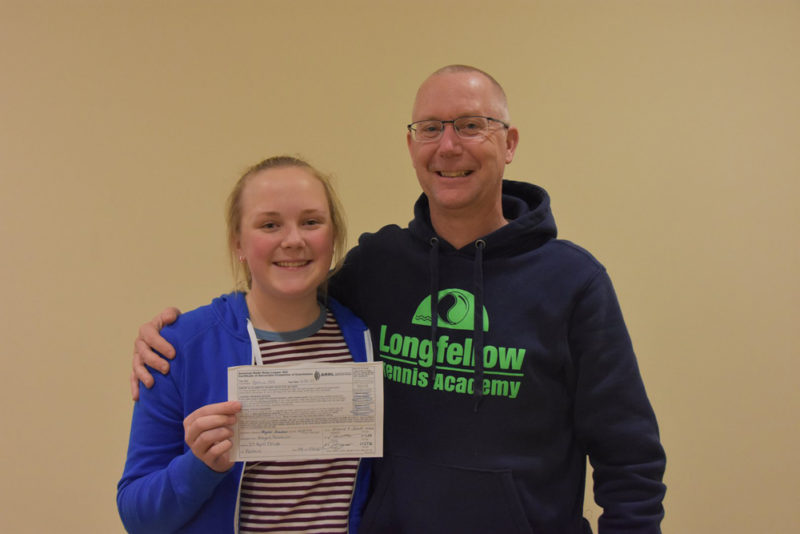
Abby, KC1FFX earns her Extra Class License
The experiences that mean the most to me are those involving our work to bring young people and new Amateurs into our hobby. Being able to make a difference for people and aid them to learn means a great deal to me.
What do you like to do with the Club?
I really enjoy participating in and contributing to our Tech Night programs. It’s great to be in a position to learn about the many aspects of Amateur Radio and to help others to do the same. We have a tremendous knowledge base among our club members and our Tech Night program provides a way for us to share everyone’s knowledge and experience for the benefit of the entire club.
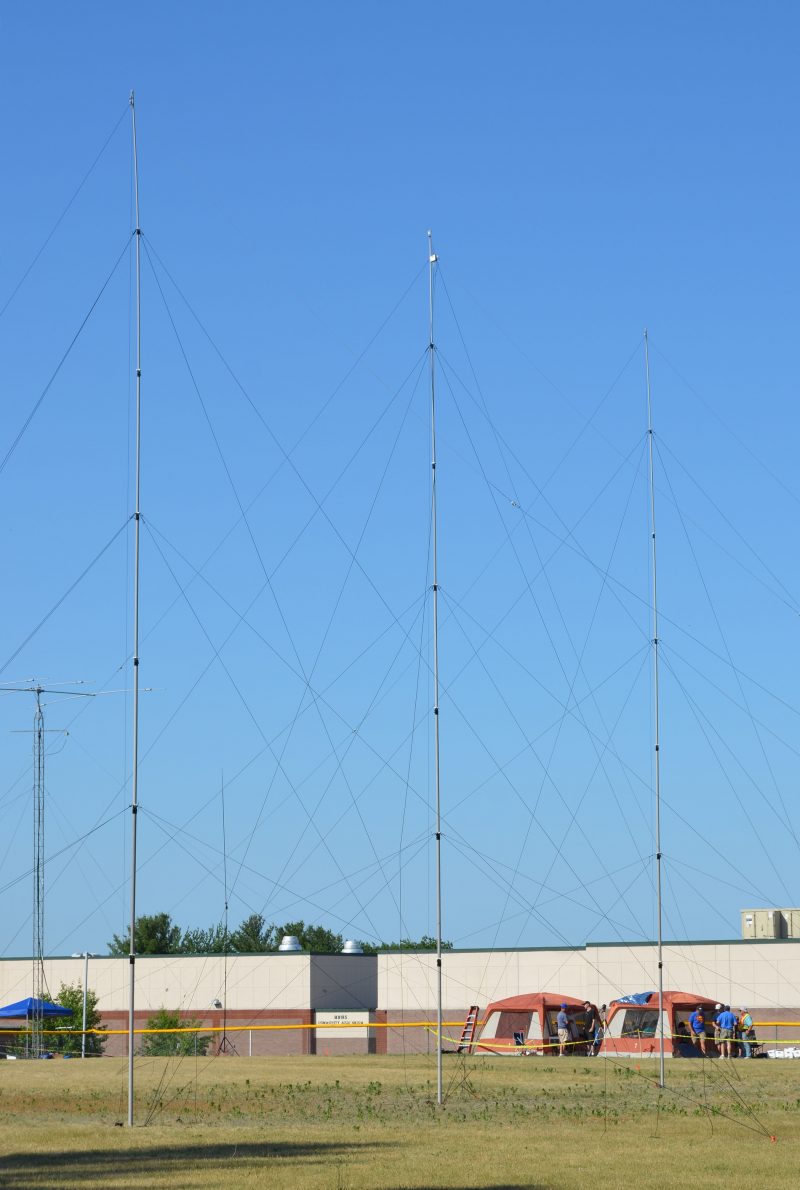
40m V-Beam at Field Day 2016
I also really enjoy our yearly Field Day. It ‘s a lot of fun to plan, build and operate a multi-multi station with as many transmitters and towers as we typically put up for our club’s Field Day operation.
Bishop-Guertin High School HAB Project Students
Our club’s High Altitude Balloon Project has been a lot of fun. It was fun to be part of delivering the STEM classroom program associated with this project.
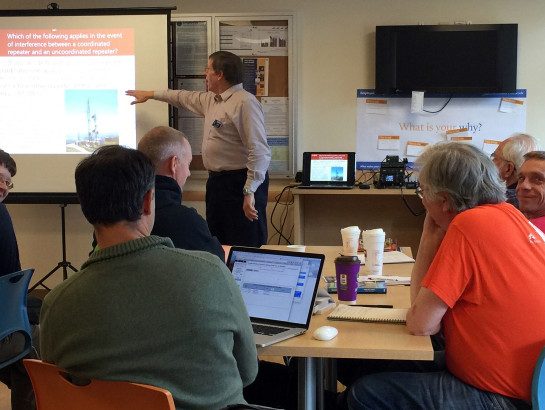
Teaching Amateur Radio Licence Classes
FInally, I really enjoy contributing to the license classes that our club offers. There is nothing that I find more rewarding than to help someone new into Amateur Radio or to help an Amateur earn a license upgrade so they can expand their participation in Amateur Radio.
We use cookies to ensure that we give you the best experience on our website. If you continue to use this site we will assume that you are happy with it.